
Intro
Faction, the athlete-driven ski collective born in Verbier, Switzerland, has had a cult following behind their Agent ski for several years. The Agent, a freeride backcountry offering, never tempted me, as it clocked in several weight classes above my interests. I knew from skiing their alpine skis at resorts in Utah that Faction could make a fun freeride ski when weight wasn’t a consideration, but these days, who can’t?
Enter the La Machine series: a five-ski lineup from 91 to 126 mm underfoot, pitched as an ‘ultra-light’ ski for free touring. I came by a pair of these skis for a song as online retailer Curated.com went out of business, and I have been nothing but impressed.
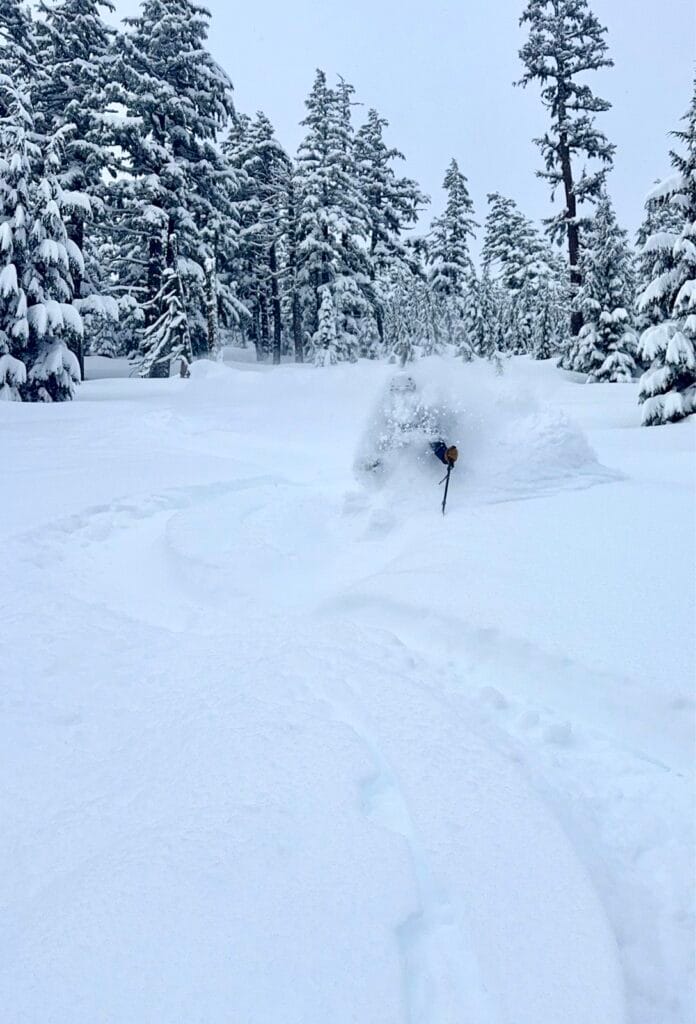
Of the past seven winters, I spent five touring in the snowy perfection of the Wasatch and then transplanted for the last two winters to the variable maritime snowpack of the Pacific Northwest. In Utah, I skied very light skis, favoring the Movement Alp Tracks 94 and 106, skis with piddling weights around 1100 grams. But skiing 8% pow is easy, and it’s fun on almost anything. When matched against the more variable and demanding skiing of full-season Oregon volcanoes, the truly light skis become a liability, deflecting, hooking, and chattering their way to a bad time.
In the La Machine Mini, I’ve found a daily driver that delivers excellent skiing characteristics and a fully-featured design at a very respectable weight (1390g).
Design Highlights
Construction
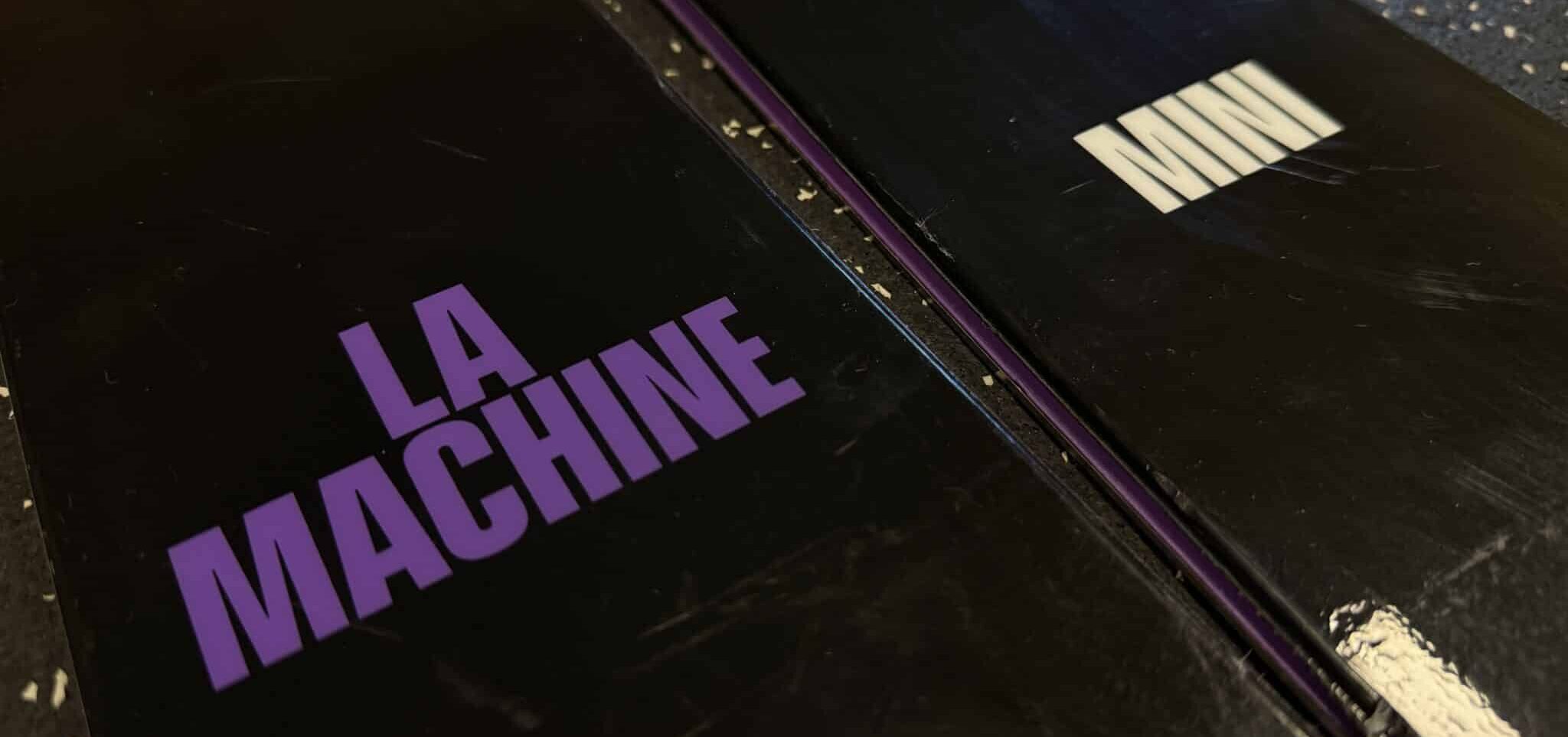
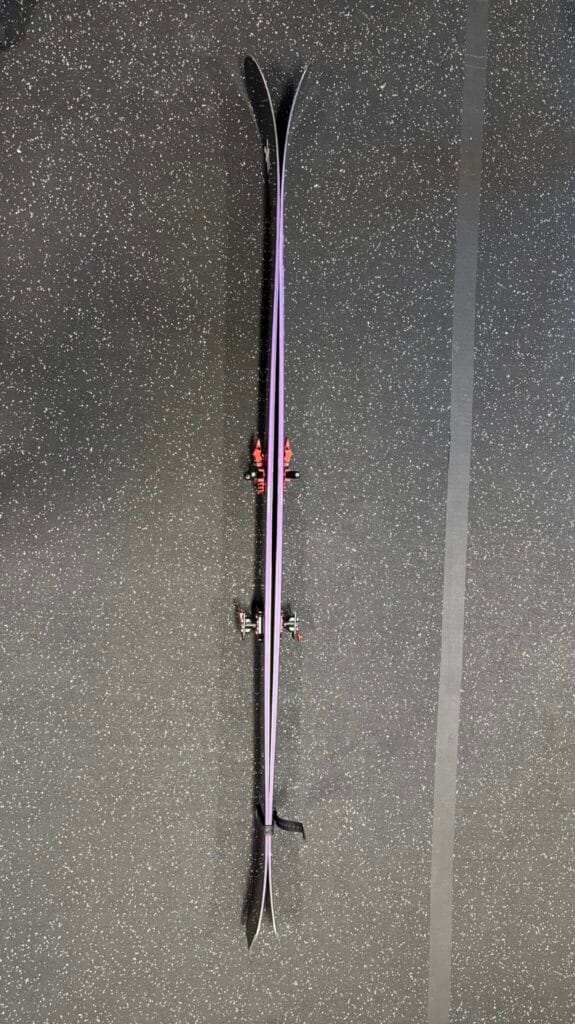
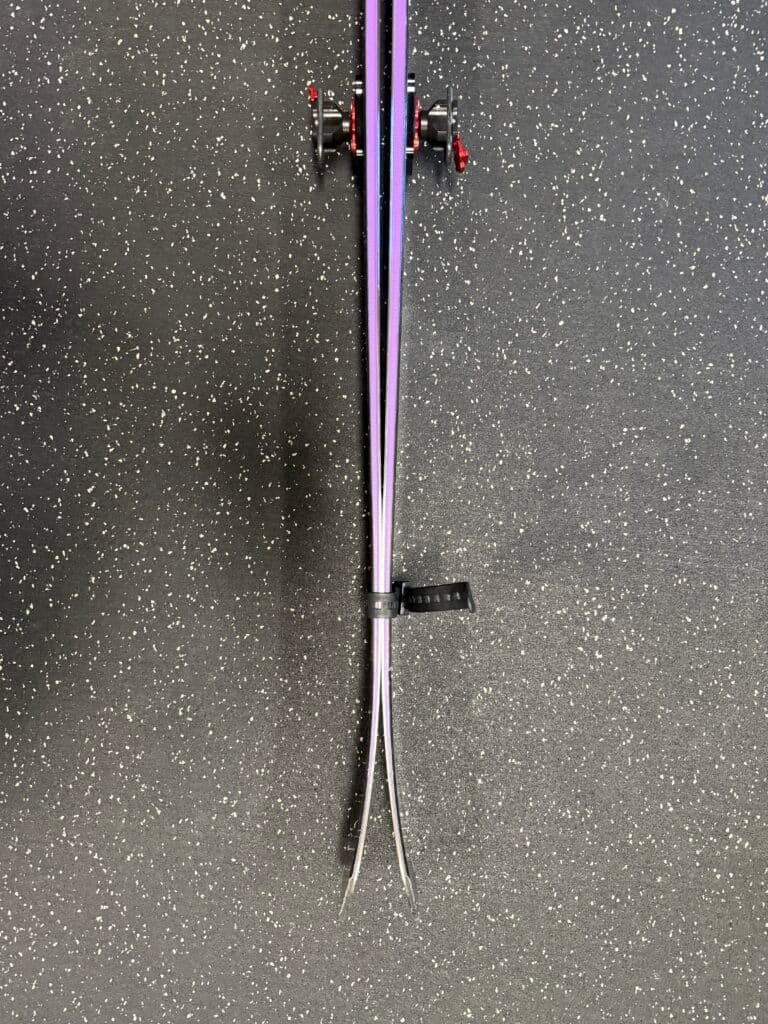
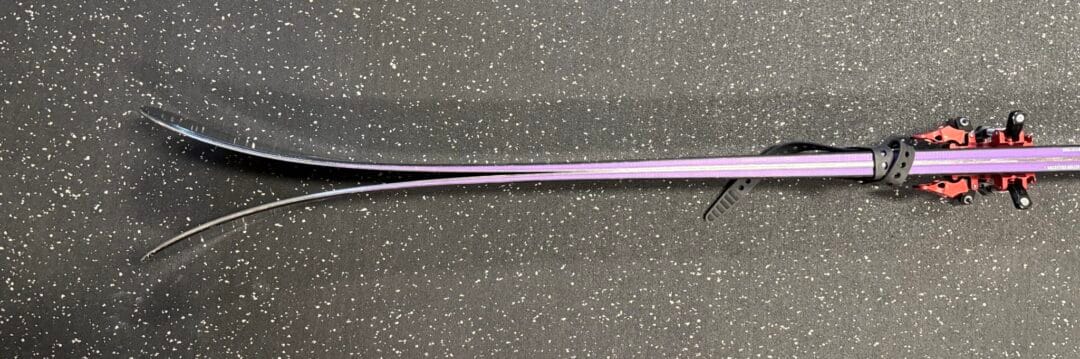
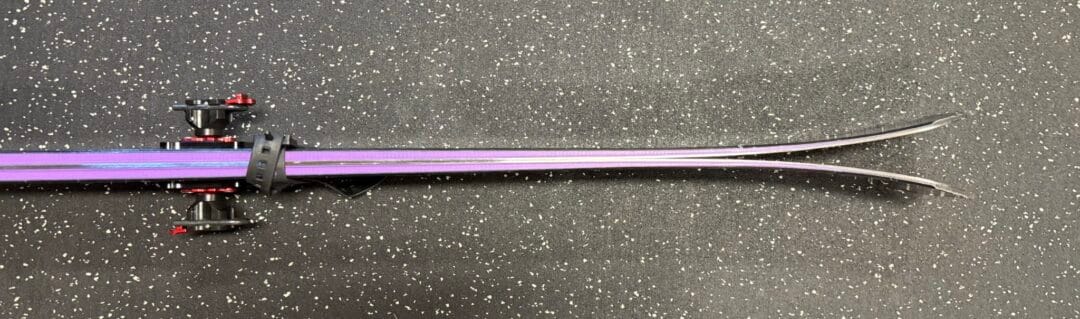
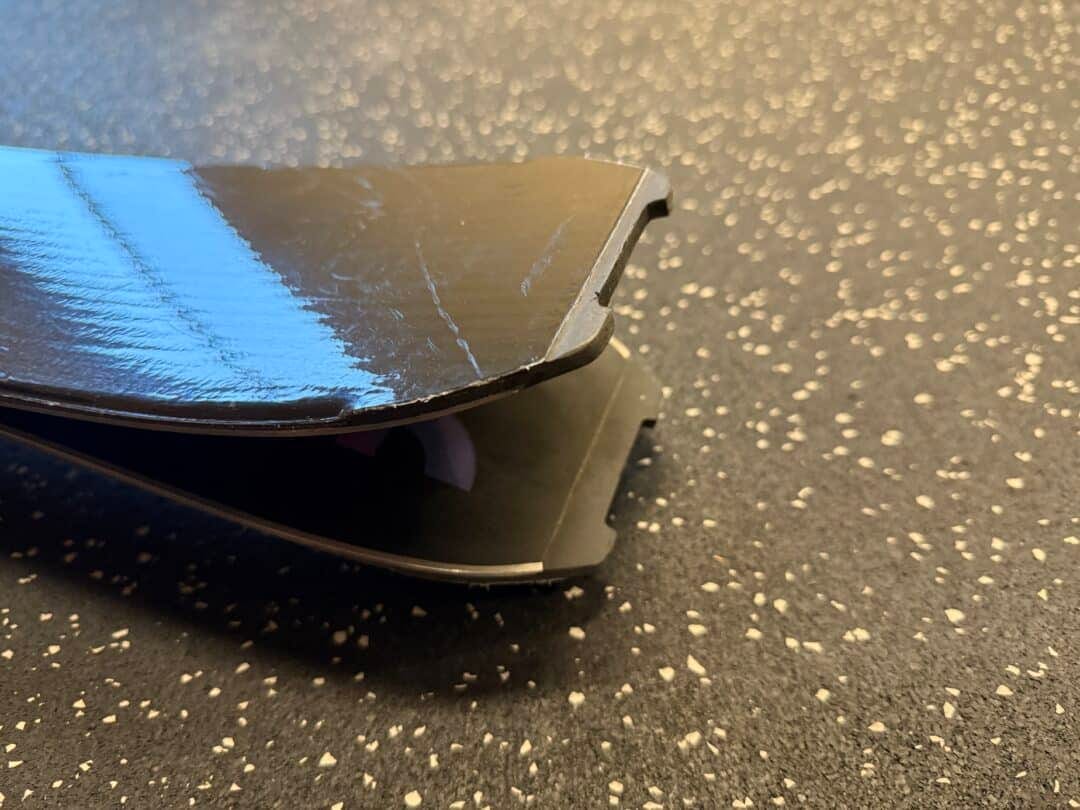
With a full-length sidewall and full-thickness edge that wraps the tip, the Mini looks more like an alpine ski on a diet than a weight-scrimping upsize of a race ski. The topsheet is glossy black and thick, sitting atop a purple sidewall that tapers to almost nothing at the tip and tail. On the inside, two full size carbon layers sandwich a lightweight paulownia wood core. The tail is protected by a composite bumper and features a small notch to keep a skin clip in place.
Shape
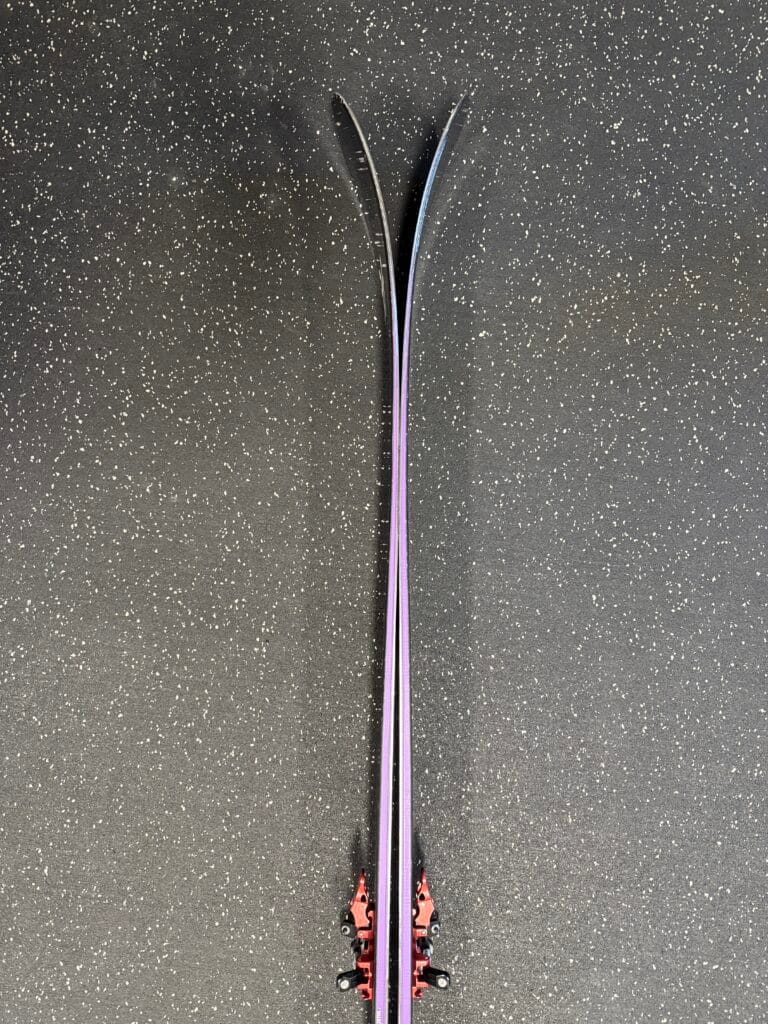
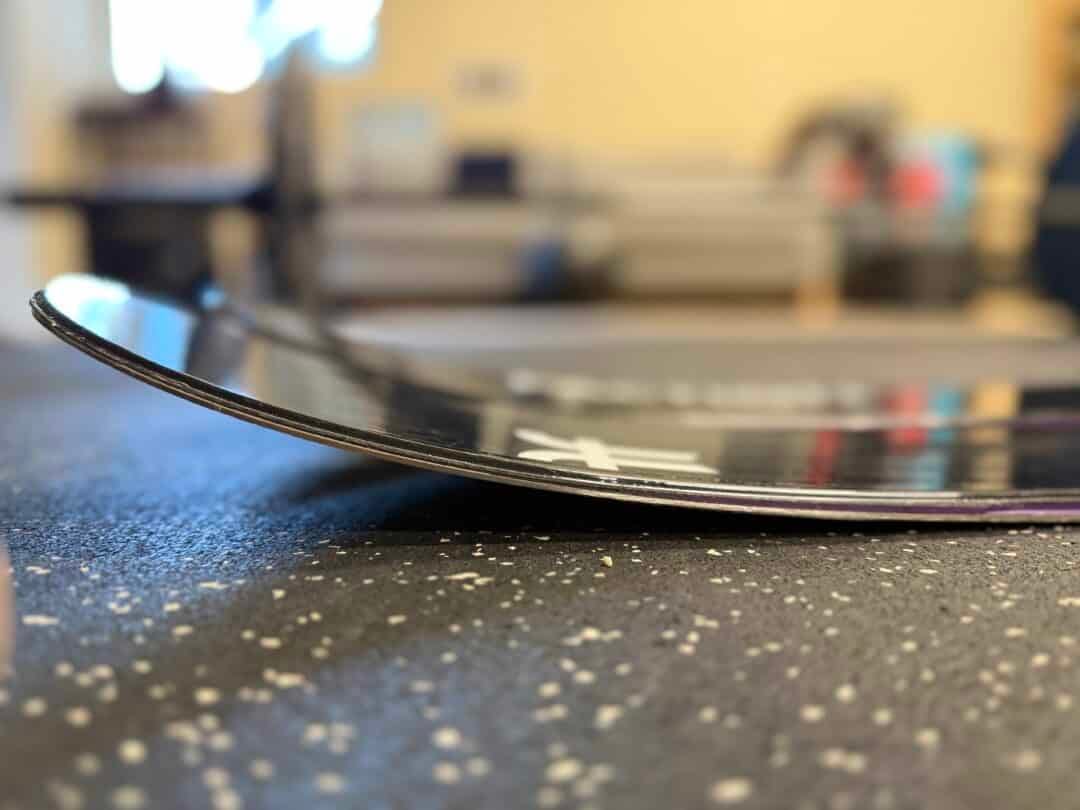
The Mini is a play on the ever-popular “fun shape” ski, with a bit of traditional camber underfoot paired with tip and tail rocker. Unlike models with more freeride flavor, the Mini has a flatter tail, though it retains a generous tip rocker. Moderately stiff underfoot, the tips and tails are soft.
Durability
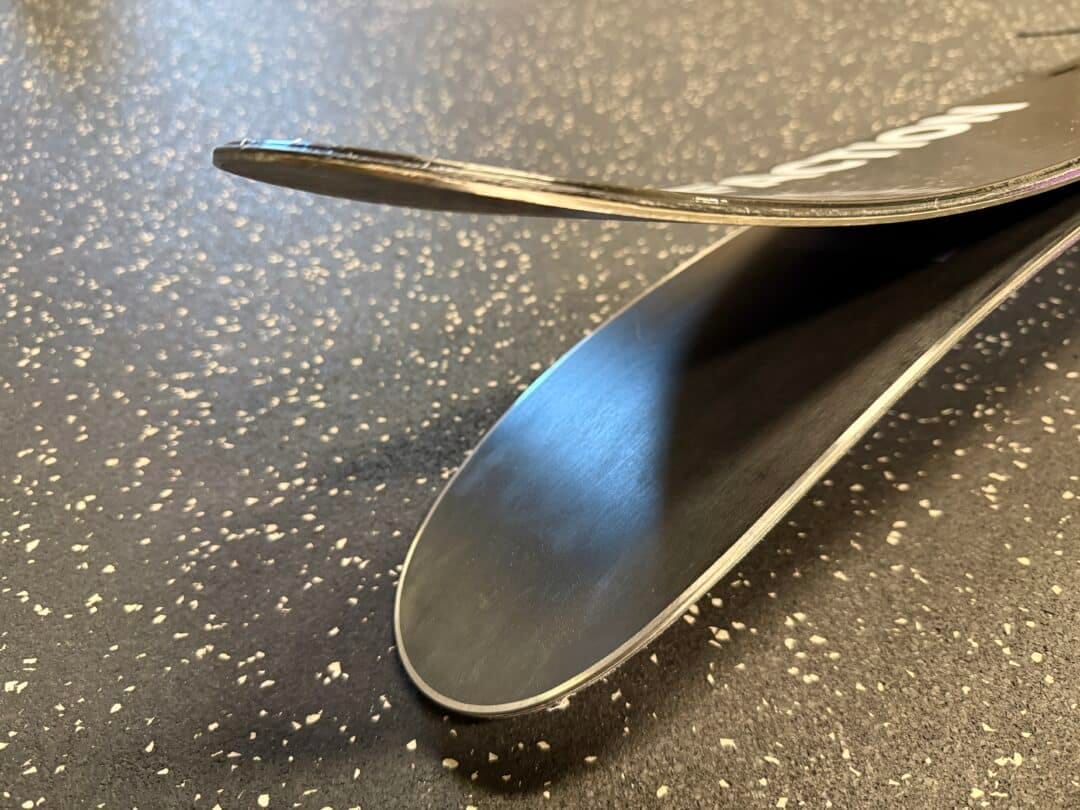
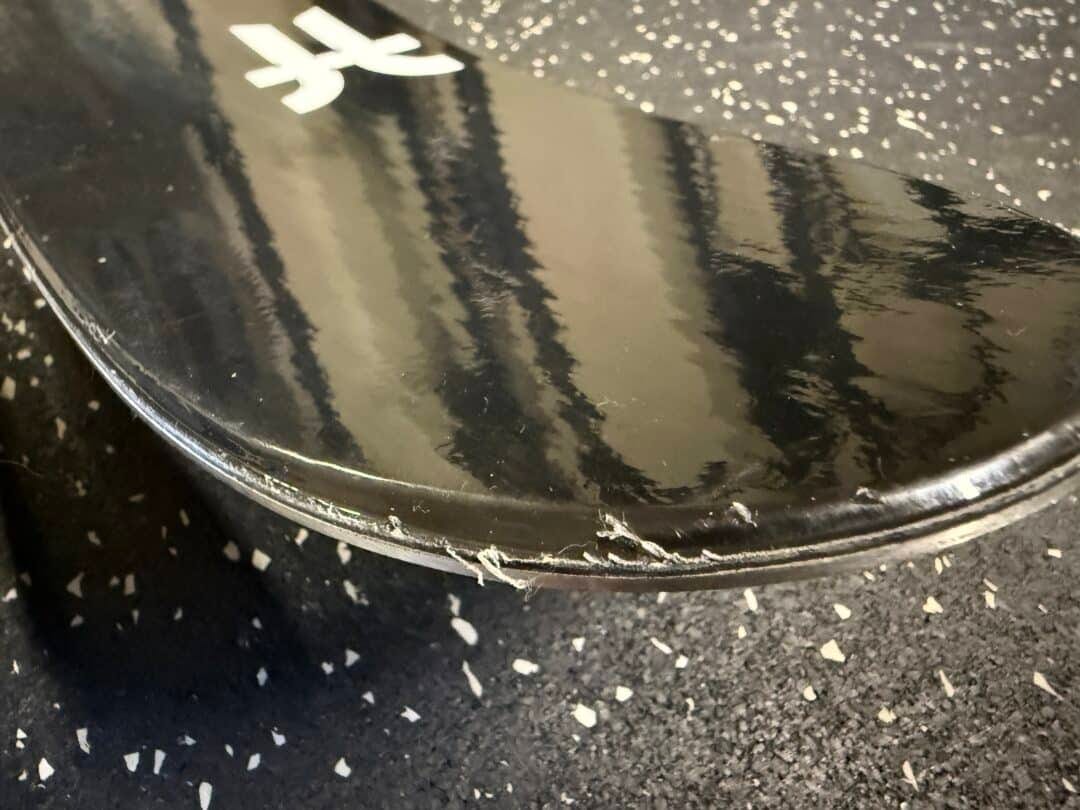
With a thick edge, full sidewall, and solid topsheet, the Mini is designed to be more durable than your typical light touring ski, a feature that Faction touts as part of their sustainability efforts. The tip is fully wrapped with edge, and the tip also sports an invisible layer of extra topsheet material to protect the ski where ski-to-ski contact and chipping is most common. After 40-50 days on the skis, they still look great. I’ve had only glancing meetings with rocks, but haven’t sustained any edge compressions or core shots.
Testing Setup
I opted for the 177 cm as a daily driver length. I’m 5’11” and 160 lbs, and I know that many my size would opt for the 183 cm, and if I could have both, I would. I ski a balanced stance, and generally opt for shorter radius turns. I wanted to ensure I didn’t have too much ski in tighter trees, and I like the shorter length when spring comes around as well. I know from my experience with the Movement Alp Tracks 106 that a well-shaped ski can rip in a slightly shorter length, so I took the risk and chose the weight savings of the shorter ski.
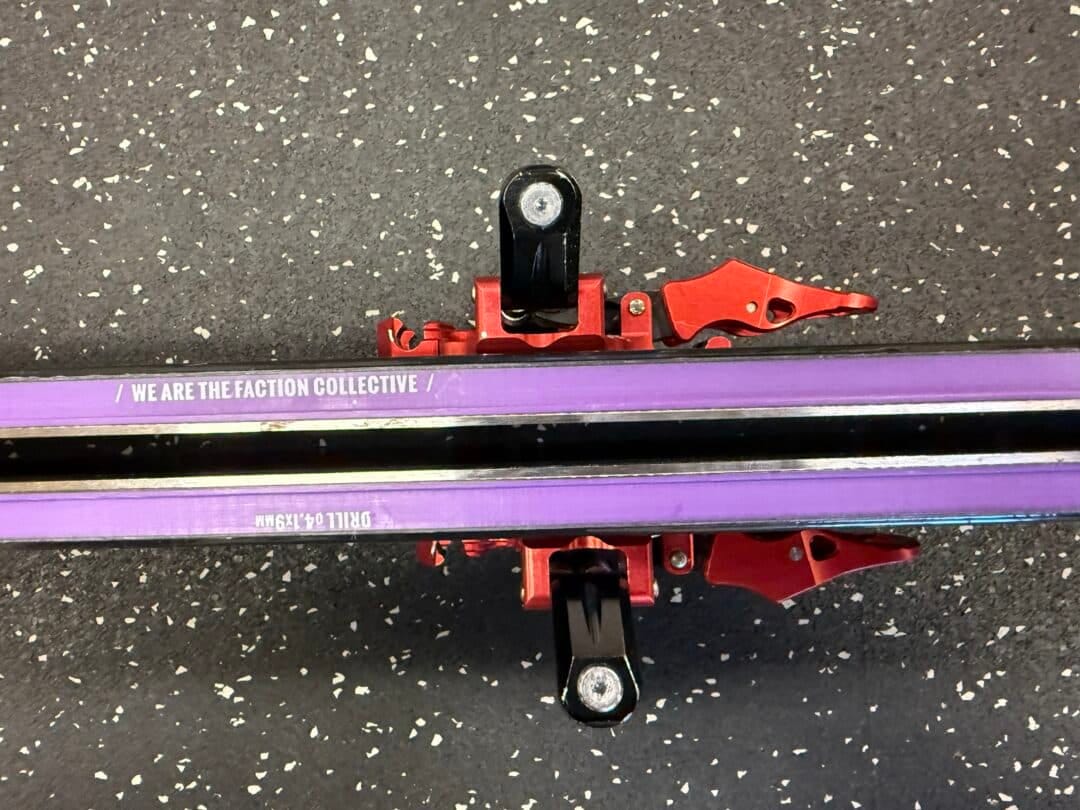
Interested in keeping the overall weight as well as stack height of the setup low, I paired the La Machine Mini with the time-tested Plum R170, a race tech binding with a release value of around 8, and heel adjustment to accommodate a variety of boots. I mounted the skis at the recommended “progressive” mount, favoring stability and a bit of playfulness over the “new school” and “traditional” mount points.
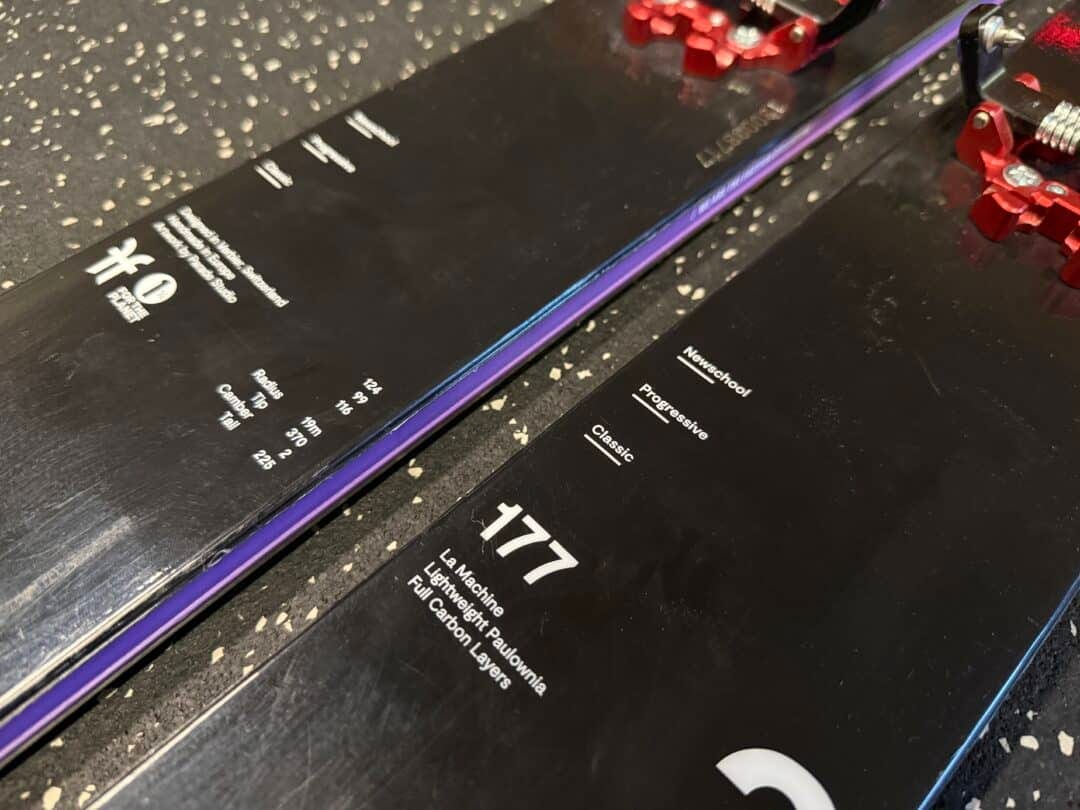
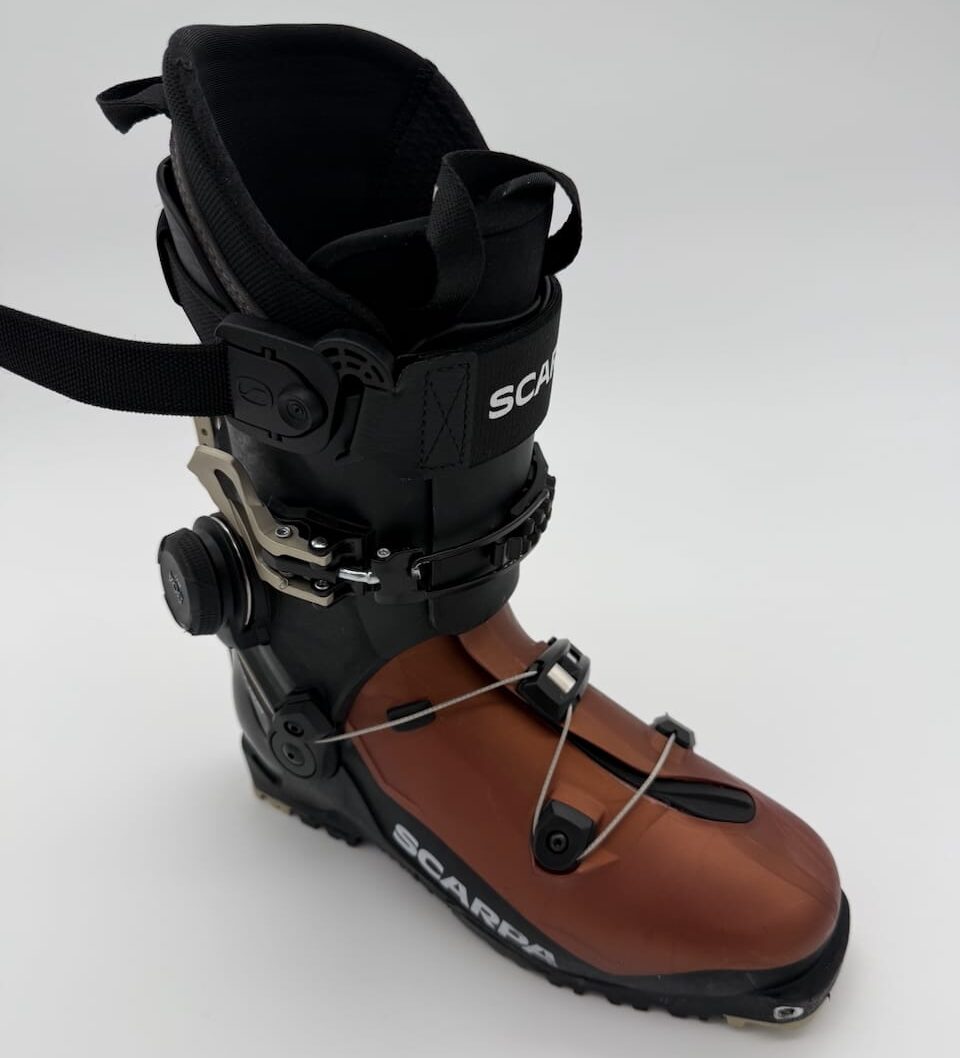
I toured these skis with the La Sportiva Skorpius (1st gen) and the Dynafit Ridge Pro to get a sense of how the ski would feel with both the rigidity of a lightweight boot like the Sportiva, and the deeper, progressive power of the Ridge Pro. Both boots play nice (more on that below).
Out of thrift, I threw the same Pomoca Climb Pro Glide skins on the Mini that I used on my 94-waisted AlpTracks, which use a fairly typical tip loop and tail throw, both of which worked fine on the Mini.
Field Testing
Soft/Powder Snow
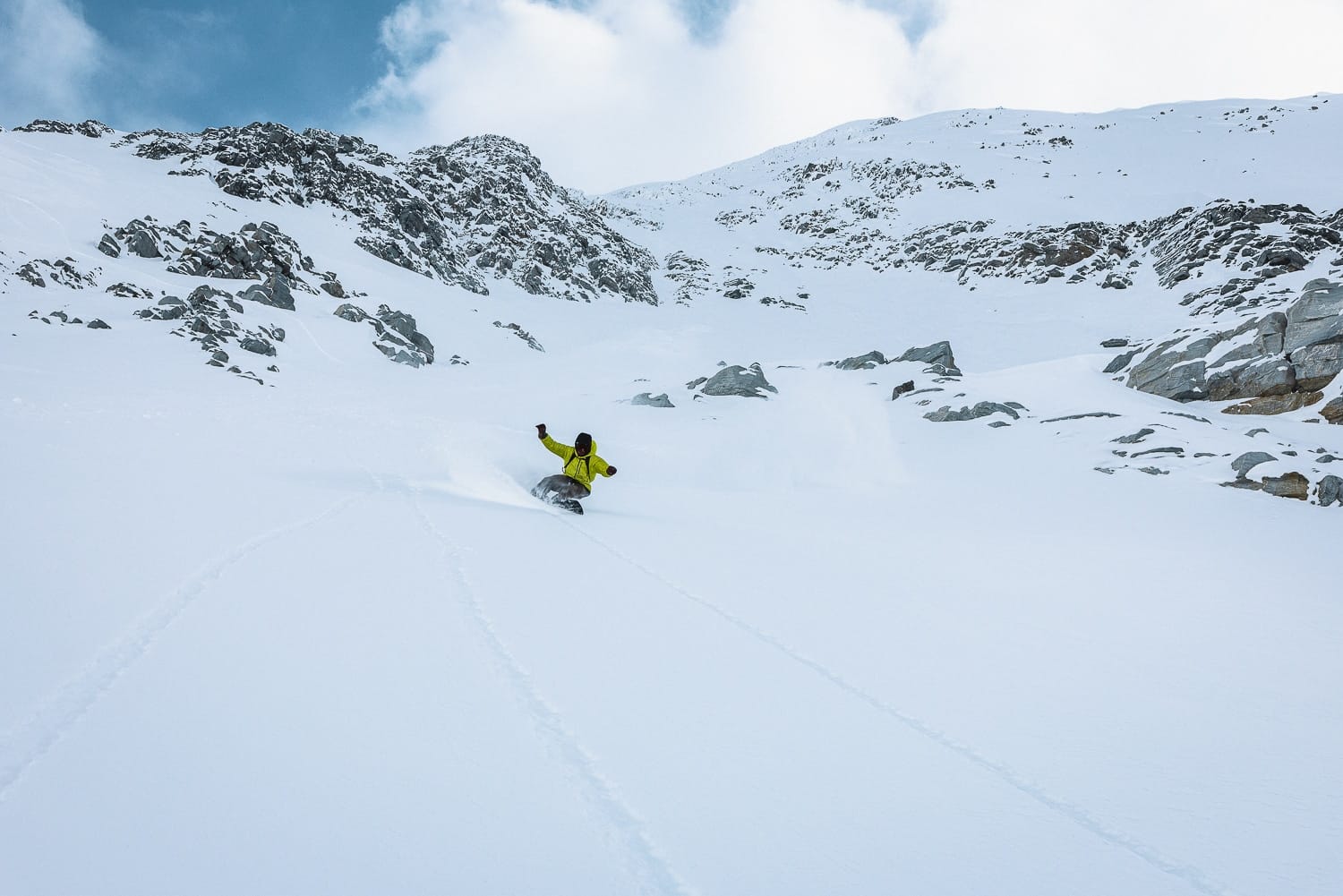
Despite getting leveled for half of last season by unplanned back surgery, I still had 20+ days skiing the Mini in powder, from a few inches of fresh on a soft base, to bottomless steep pow and hot spring mashers. I like a ski of around 95-100 mm underfoot as a daily ski, as it’s enough float for most days, but it’s not an unwieldy width for skiing or skinning on firmer snow. At 99 mm under foot and with 124 mm in the tip, the Mini has plenty of area to create lift on the deeper days. While basically anyone would choose a bigger ski for bottomless, perfect pow, the Mini’s long tip rocker and softer tip make it easy to ski in powder without having to lean like a gangster to keep the tips up.
“Skiing this ski with the Ridge Pro boot is as close a feeling as I’ve had to skiing an alpine ski in the backcountry, but with delicious weight savings.”
The turn feeling in deep snow is a damp springiness. It’s not vigorously poppy or given to a very bouncy turn style, but it’s also not a pair of lifeless surfboards. Turns initiate easily, and it’s a choose-your-own radius ski in the soft stuff. Coming out of the apex, it returns some energy to take into the next turn. It feels downright good arcing bigger turns, but the bit of tail rocker lets you shut things down and switch to a smaller radius when you reach the tree line. Skiing this ski with the Ridge Pro boot is as close a feeling as I’ve had to skiing an alpine ski in the backcountry, but with delicious weight savings.
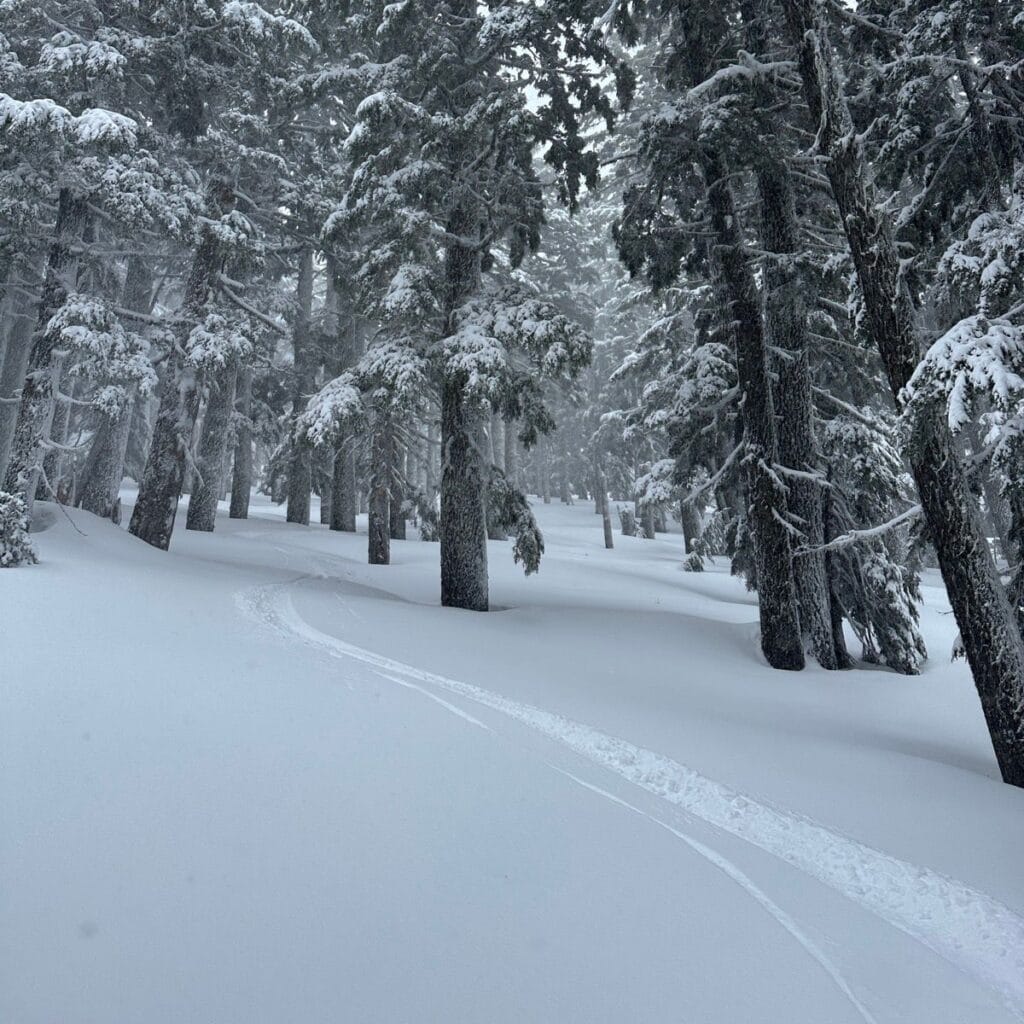
The progressiveness and power of the Ridge Pro let me ski the Mini fast, or bounce off of pillows and small cliffs with joy. There’s enough ski there to save my bacon when my technique isn’t perfect, but not so much that it wants to run the show when skied with a lighter boot. With the Skorpius, the ski is slightly more demanding, but if not for skiing the Ridge Pro, I wouldn’t know what I was missing. The ski and binding pairing is light enough to be driven by the stiff, light boot, and with flex in the tips and tails, the lack of progression in the Skorpius is forgiven by flex in the ski.
Crud/Variable
Fun-shape skis are generally as well-suited to variable conditions as any can be. The tip rocker helps to keep the tips free in mank, while the tail rocker keeps the ski from getting locked into a fixed turn radius in crust or heavy snow. The Mini performs predictably in these conditions but carries enough heft to punch through thinner crusts and minimize deflection in variable snow.
With more weight and area than the Movement 94 that I had been skiing in similar conditions, the Mini requires more input, more energy to drive in challenging conditions. Still, it rewards that energy with the predictability that comes with a heftier ski.
I did find that my skiing performance deteriorated along with my energy levels when skiing the Mini with my Skorpius boots in tough conditions. Because the ski wants more of a driver, laziness in stiff and unforgiving boots leaves me feeling like the Mini is in small degree choosing where it would like to go and taking me along for the ride, but it’s not a demanding ski and if I’m not absolutely exhausted, I’d still choose it over a lighter cousin when the going gets weird.
Firm/Steep
I had around 15-20 days of all of the firmness that Oregon volcanoes can provide, from wind-swept alpine sastrugi to beautiful, steep spring corn. The Mini’s faults on very firm snow are predicted by its shape. With the long tip rocker and modest tail rocker, the effective length of the ski is short on hard snow. Because of this, it prefers a sliding turn on icy snow to a edge-forward railroad track turn, but that sentence could describe my personal preferences as well.
Don’t think that I’m badmouthing the Mini’s performance on hard snow. If anything, I am impressed. The dampness in the ski makes it chatter-free, which I’ve never encountered in a ski of similar weight. The 99mm width is not so wide that edge control is challenging on steep and firm slopes. The softer flex helps to increase the edge contact on the steeps, but it’s not so soft that the tail is unsupportive. The full-width carbon layering gives the ski a torsional rigidity that made me realize how much my lighter skis had been twisting. The Mini holds its own.
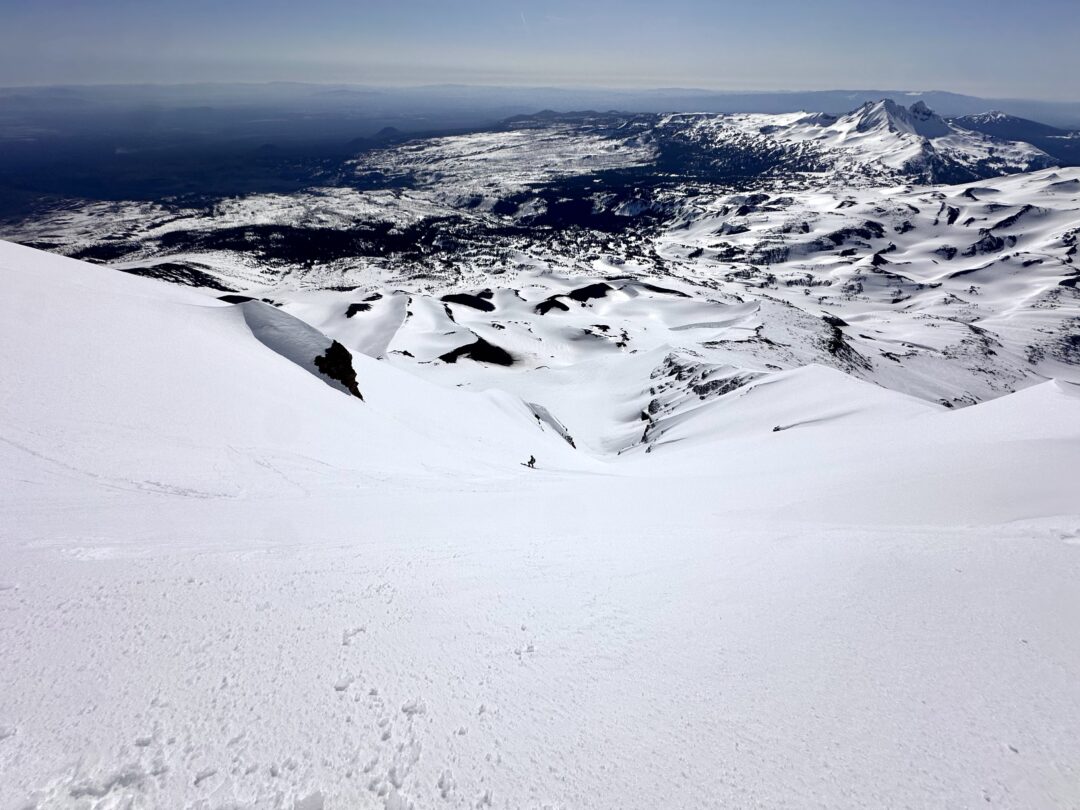
I skied the Mini on Middle Sister’s Diller headwall with Jason last spring and enjoyed the feeling of jump-turning it on the first, consequential turns. The ski has enough tail to keep you centered on the ski and to pop into a jump turn, but it’s flex makes pivoting into the landing and controlling the movement feel intuitive. I didn’t feel like I was suspended between tip and tail contact but instead had a controlled arc of edge underfoot. This kind of flex might be less-fun in a tight couloir with a sharply concave shape, but for a daily driver ski the Mini is enjoyable and feels safe on the steep stuff.
Resort/Groomer
I only skied a few days on-piste with the Mini when initially testing the setup. While lightweight skis are usually atrocious on hard, groomed snow, the Mini performed admirably. As I’ve intoned elsewhere in this review, the dampness and torsional rigidity of the ski feel more like an alpine ski than a light touring ski. While I wouldn’t choose this ski, or the Plum R170 binding for that matter, as a regular visitor to the resort, it makes for a reasonable inbound lap and will rail soft groomers, pop off cat roads, and butter across tabletops without looking like a skimo ski that got lost.
Conclusion
After a season’s skiing in a variety of conditions, I am unreasonably fond of the La Machine Mini as a daily driver ski. It is a playful ski that can both charge bigger turns and maneuver pillows in the woods. While not type-cast for steep skiing, they have enough spine to remained composed when it’s needed. For a small weight penalty over their superlight cousins, the Mini delivers a composed ski with alpine feel that is a blast to ride.
On the deepest days and in lower-density snow, I’ll still reach for a bigger ski. For long missions across high peaks, a smaller, stiffer ski would be a better tool. But for me, this is the one ski I’ll leave in my truck as my go-to, and it has reset my sense of how much ski performance can be squeezed out of a few extra grams.
Specs
Available lengths (cm): 157, 164, 171, 177 (tested), 183
Weight: 1390g (verified)
Side cut: 124-99-116
Turn radius: 19 m
Core: Paulownia with two full-width carbon layups.
Build Comments: full sidewall, thick edges, shallow tail notch.
Shape: extended tip rocker, “moustache” shape, with a fairly flat tail.
Recommended Mount Point: Three marked, “newschool”, “progressive” (tested), “classic”.
Drill size: 4.1 x 9 mm
Similar Models: Dynafit Free 97, Elan Ripstick Tour 94, DPS Pagoda Tour 100
Price: $899.00
Leave a Reply
You must be logged in to post a comment.