
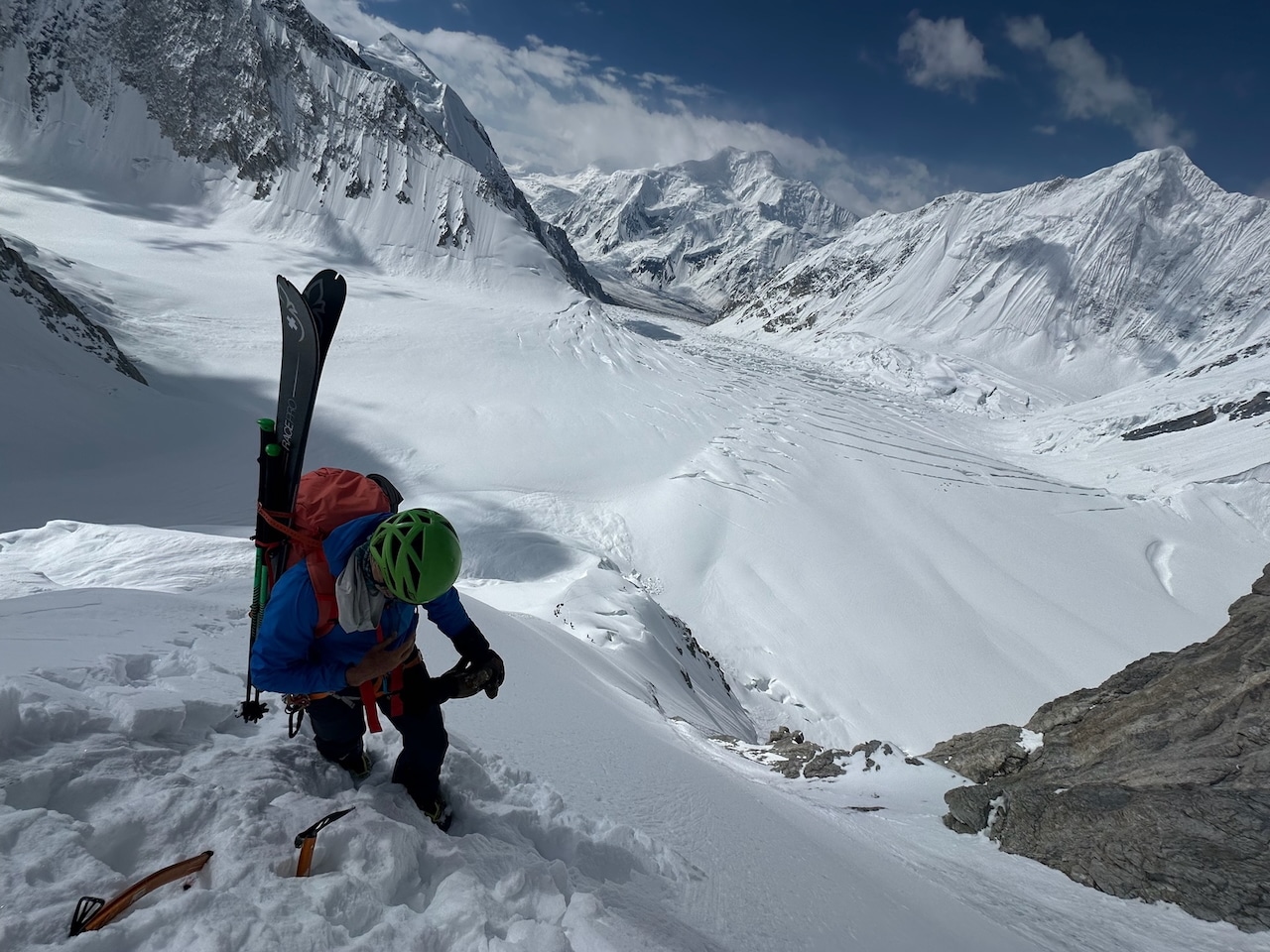
This summer, as part of a larger project exploring the evolution of expeditionary skiing and riding, we connected with Haas, a THR founder/contributor, to discuss certain aspects of the big mountain scene. In part one of our conversation, which can be found here, we frame what Haas refers to as a mindset shift when thinking about and entering larger, higher, and potentially more extreme mountain environments. Part 2, found here, focuses on frontloading psychologically and experientially for big mountain terrain. Before we get started, here’s how Haas, generally, defined big-mountain terrain, in part one: “In my opinion, the most important variable when moving into, or actually defining, a big mountain setting, is the lack of available information. This ‘information desert’ is what really differentiates your standard winter-powder scheme in known ranges.
It Takes at Least Two to Tango
THR: Here’s a question: we’re really gearing this series toward people ready to take the next step. And taking that next step usually requires a partner or two. What are you looking for in a partner?
Billy: I think Adam Fabrikant, my longtime partner, would say this too, that the number one thing I’m looking for in partners is personality. The second biggest thing I’m looking for is their ability to move up and down the mountain safely. And yes, just so we get this out of the way, fitness and technical systems matter too.
Let’s dig into personalities. I consider things like, will they be fun? Do I like them? Are they good people? Are they easy to get along with? That’s usually what I zero in on first. And then, depending on the expedition or the objective, I’ll focus on the fitness, movement, and technical proficiency side of the coin.
If fitness and downhill movement are prioritized on a trip/objective, I don’t care if they’re a rope wizard. Oftentimes, we don’t have a ton of rope work in the ski mountaineering world. It’s usually not that difficult, but the systems and best practices should be hardwired.
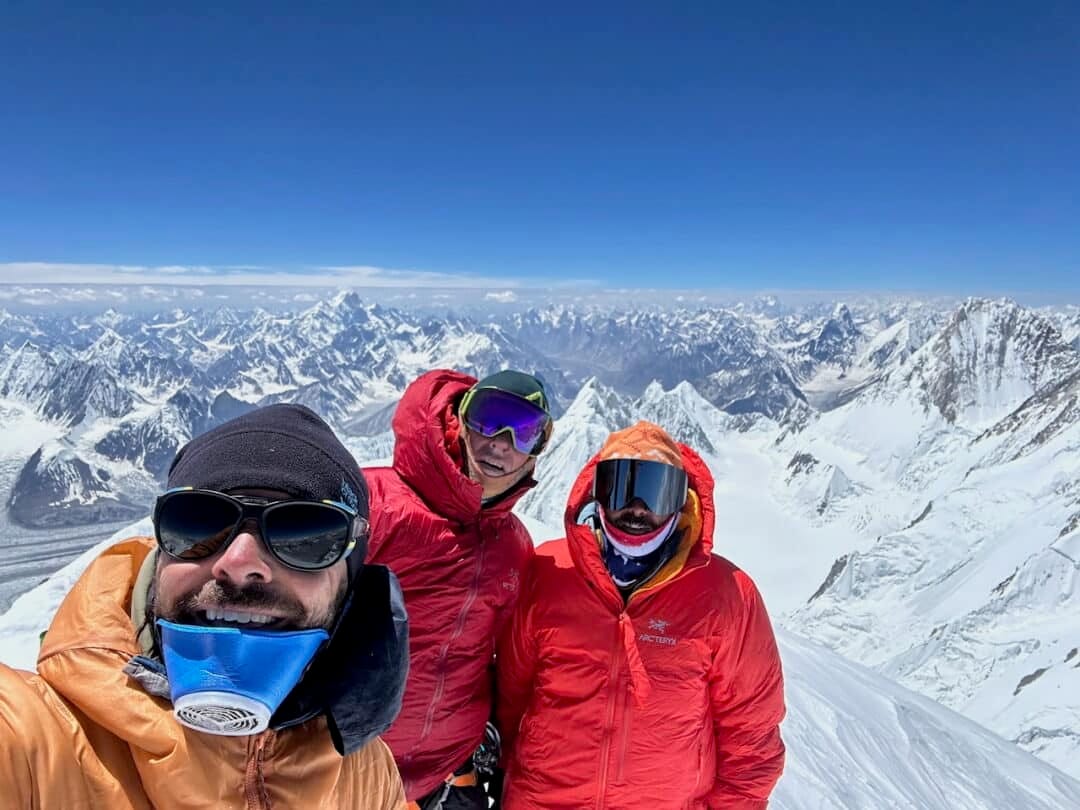
Let’s get even more granular here. On these longer, deeper trips into the mountains, I’ve got to consider if a partner can winter camp. But up to a certain point, that’s not that hard. People can learn and build skills in a few days, and I can help with that. Or, in the case you are both novices, you can learn those skills together. I’m sure readers can come up with some instances, but kitchen and camping accidents are not exactly front and center on an expedition. You could get burned, cut with a sharp utensil, or asphyxiated in a poorly ventilated area where you are cooking. But generally, expeditions aren’t ruined because someone stunk at running a stove. It’s a bonus, for example, but I don’t care if someone’s a wizard with their expeditionary repair kit. Good people with high levels of movement, that’s what I want to see for an expedition partner.
THR: Well, let’s cut to the chase. What about the asshole who moves exceptionally?
Billy: I’ve been there. I’ve been the asshole. This spring, I was not the nicest person in the world on an Alaskan ski trip, but generally, no, I’m not that person. Life’s way too short to go on trips with people you don’t care for, no matter how proficient they are at moving through the mountains.
Jason: In part two of this series, you talked about “sending,” as in the send versus the no send. Sometimes the calculus might be that the “send” is paramount, and one might be more likely to emphasize getting something done and go with the highly motivated sender, even though the vibes, so to speak, are not ideal.
Billy: I’m lucky at this point, I have enough friends that I don’t really need to deal with that. As some people know, Adam and I have known each other for years, long before we became expedition partners. We essentially cut our teeth together. Which means we have had successes and failures, highs and lows. Which means it’s a full relationship where we know we have one another’s back, but there is room for disagreement and challenging one another’s perspective. Of course, we have had arguments, but we don’t hold grudges.
Jason: We all meet partners, some of whom become long-term adventure partners in places we don’t exactly expect. And today, well, there’s Reddit, and a host of other special media platforms to connect on. But any rules of thumb that arise regarding partners?
Billy: Here’s a good rule of thumb. I don’t think big trips are the best time for a first date.
Oddly, or maybe it’s no surprise, it’s more common than you think. I’ve tried them, and they didn’t go well. Adam and I, when we first started, we were both kinda jokes, we were Kooks, but we learned together. We developed our systems together. We developed trust and a comfortable working relationship. And I don’t think everyone needs a childhood friend they got into this with; that’s rare. That said, it should not be a last-minute decision. If you want to go on a trip with someone, start putting in the work together.
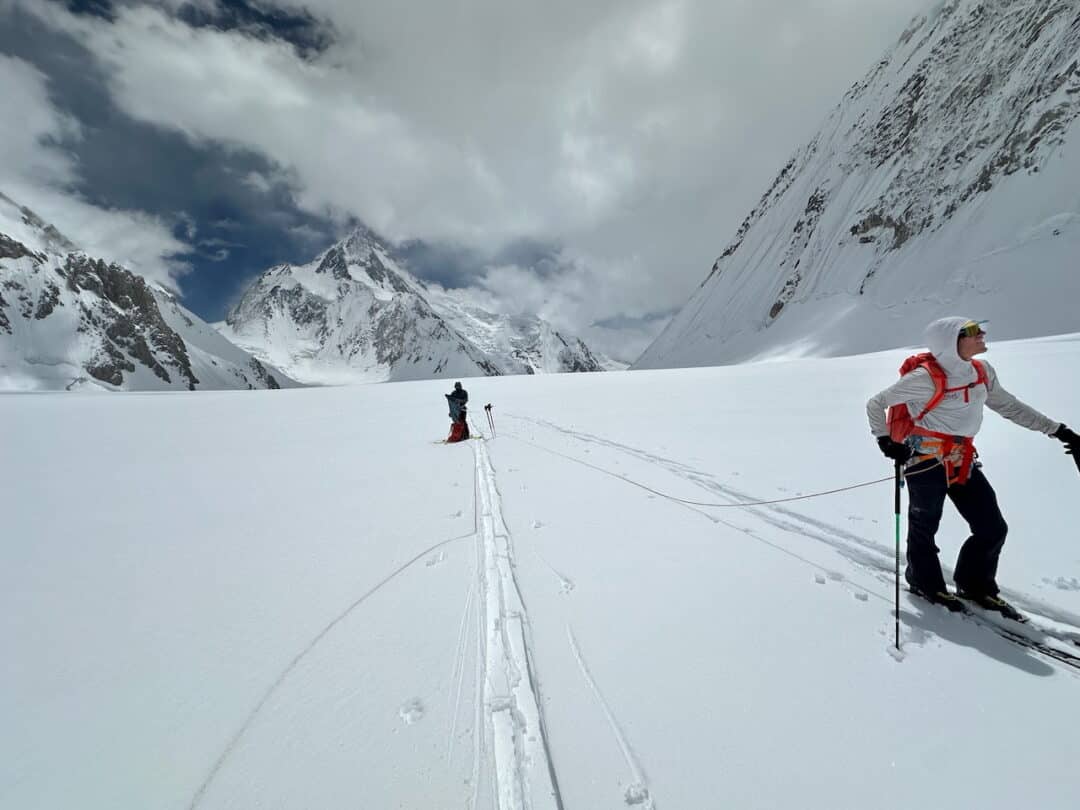
Jason: Let’s pivot here and discuss some of your observations from last season in Alaska. There were several incidents involving skiers—incidents where individuals were descending on skis and either slipped and fell, were killed, injured, or avalanched. Did you see anything that caught you off guard, for example, up on Denali?
Billy: I’d reiterate this from our past discussion: the biggest thing I see is people underestimating the seriousness of the terrain, the weather, and the potential for avalanche conditions. This might sound harsh, but it’s almost like I see people up there at 14 Camp thinking there’s a route and a track and the mountain looks white, so I can go do it. They do the math, and it’s a 3000-foot climb to the next camp over, maybe four miles. On paper, that’s not that far. You might think, I could do that in an hour and a half. I’ve seen people after it just snowed a foot, or it’s been snowing for a week straight, and then it was really windy, and they’re just going to punch it up through a massive piece of avalanche train. I’m repeating myself, but it’s a data-poor environment up there.
And thinking about your partner choice, it’s also a theater up there, where all these bad and good things can happen. There are plenty of noted personalities, and people talk and talk. With all that talk, you have to ensure you and your partner stay grounded and don’t let your guard down. Because of the number of people up there and all the chatter, you can convince yourself that something might be in condition. I say this a lot, but make decisions for yourself and don’t let someone else’s decision become your own.
I think what happens, too, is that most people are walking on a single well worn track; they’re not touching or experiencing all the different aspects or pieces of the terrain. In your home range, you are likely better able to filter out all the noise (like the literal noise at 14 Camp) and cooperate, making better decisions together. It’s good to remember that there’s this perception of high use, of a lot of people, but in reality, most often you’re not getting any more or more diverse information than from the 100 other people on the same track.
I think, in particular, high on Denali’s main climbing route, skiers make the mistake of making assessments around where the climbing route goes: it ascends the least avalanche-prone area for a reason. As skiers, we’re accessing terrain off the climbing line. So we don’t have much information on it. Like, at the end of the day, even if there’s 20 skiers or riders out on one run above 14 Camp, that’s not the same level of information as you have in the Wasatch or Whimpies in the Tetons.
I’ll explain. We have a sense in the home range of learned patterns, of how things avalanche. We’ve all heard, “It always seems to go right there, that one lip right there, that rollover.” We have historical data as well, but we obviously don’t have a broad historical perspective on skiers, riders, and avalanches on Denali.
This is something I learned over time, but data isn’t just from snowpack observations and weather station data—there’s more to it than that. We all know institutional knowledge of our local communities, data like where a skin track should or shouldn’t be set. We don’t have that information in a remote location. It’s often about scanning terrain and thinking, we could go toward that path to the left, or we could go up that ridge to the right. In your home range, it’s probably already been decided by people who have been doing that over time, making mistakes or having successes.
THR: Let’s go back to the beginning. What was your first big mountain experience that got you thinking about a mindset shift?
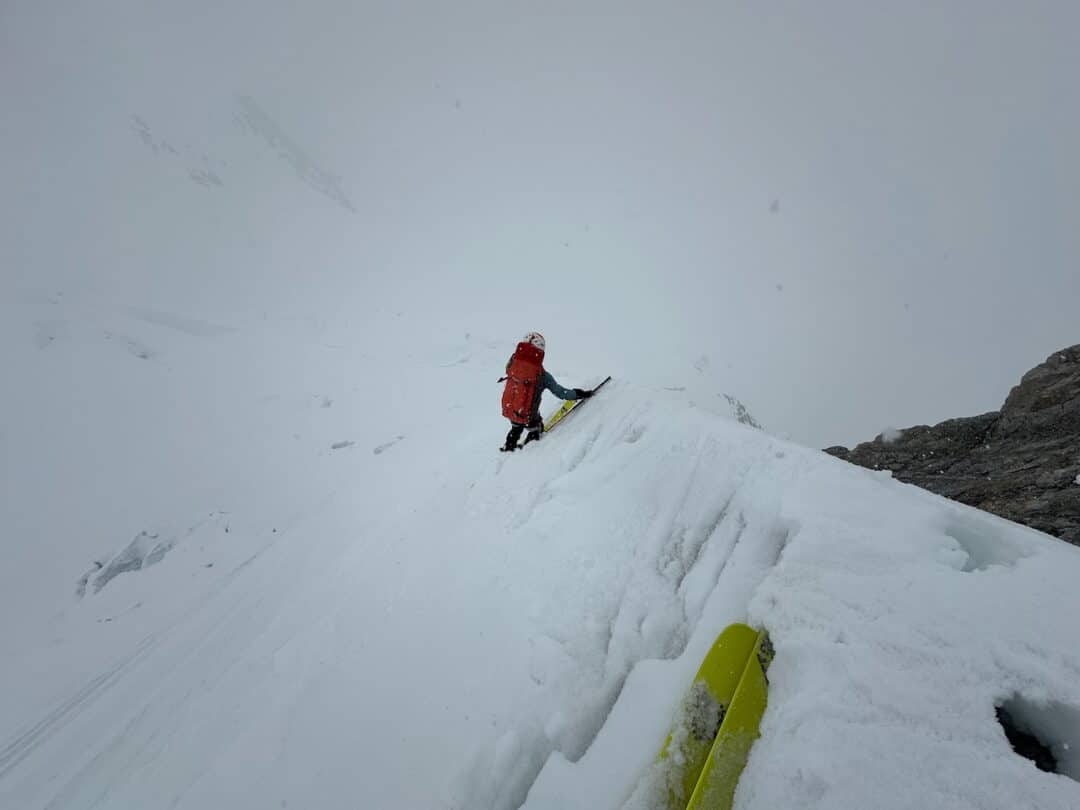
Billy: In my mind, it was New Hampshire’s Mount Washington. I am kind of joking here but I really do practice what I preach. I can’t help but do my research before I do something “big”. Before I went and did Tuckerman Ravine on my own, there was a website called A Time for Tuckerman. I read that site all the time. It was a website made in the 90s or something, and it had blogs and observations. I checked it all the time. I decided to go up there with my buddy Andre to ski the left Gully. I did my research. I knew all the runs in the bowl, the names of every feature.
I’m with my buddy Andre, but Andre doesn’t know anything, but I had taken my Level 1 avalanche class. I was the expert. I was the one leading the crew. I think I was a junior in college, and this was my first time doing it on my own. I had skied Washington before, only once in winter, when I took my avalanche class, and we went into the bowl, but I had never gone above the top of the bowl.
I read everything I could find. I drew up a plan, set a start time…, of course, we started in the dark. I remember arriving at the Hermit Lake Shelter at first light, which was way too freaking early.
THR: For the setting, that’s the shelter, at the base of the Tuckerman’s?
Billy: That’s right. And it was March with powder. But I was like a crazy person, stuck on the idea that we need to start early. And we booted all the way up from the base at Pinkham Notch. We put these big Black Diamond cyborg crampons on at Pinkham Notch and slogged.
I obsessed over it, and then went and executed. And I skied, in my mind, knee-deep powder. Realistically, it was probably like half-boot-top powder down from the upper snow fields and down the left Gully. And it was the moment that changed my life. When I look back on it, I wonder why it worked. But I kept doing deep dives into the available information and establishing myself in places where I might need to shift my thinking, too. Which eventually happened in places like Rainer, the Alaska Range, and beyond.
Leave a Reply
You must be logged in to post a comment.