
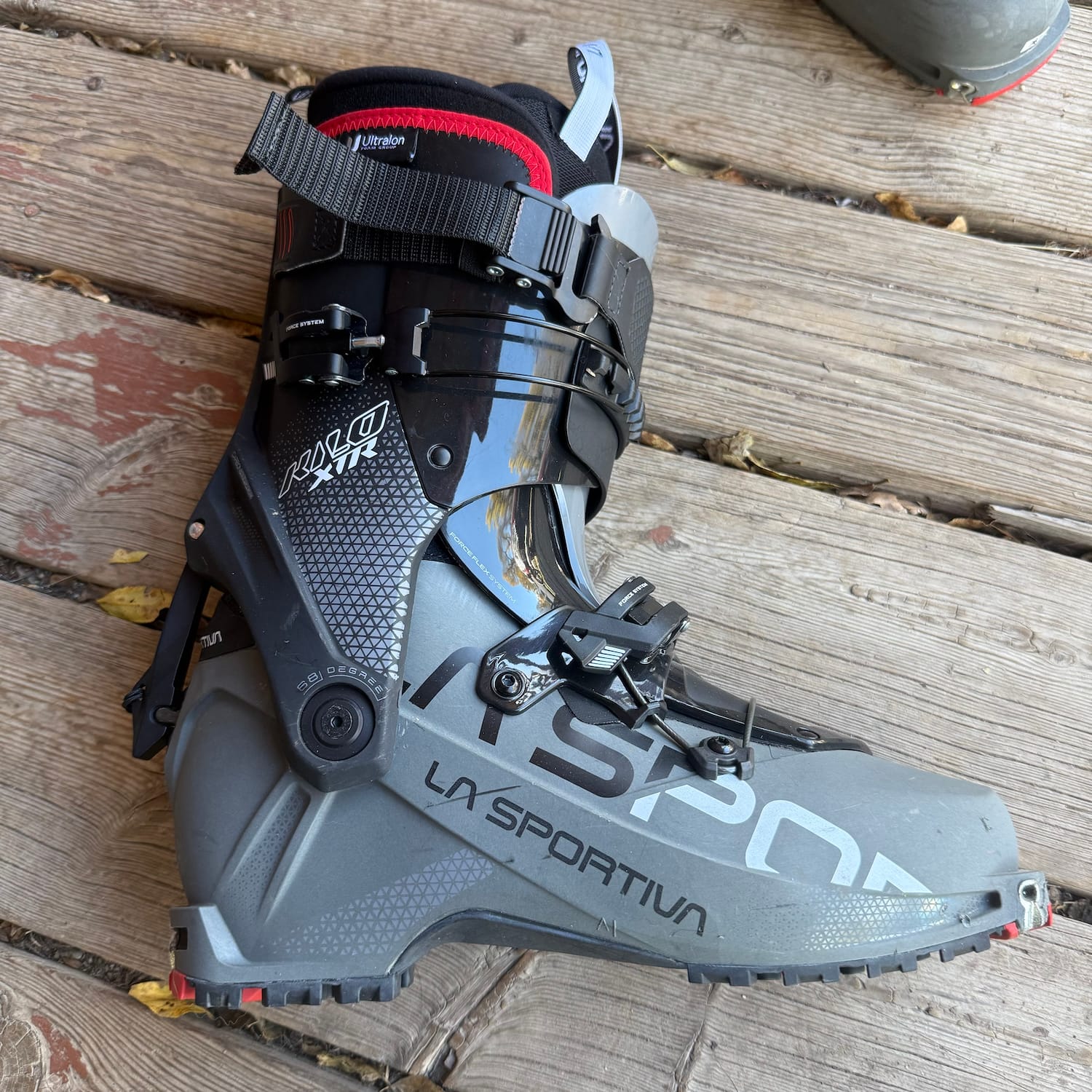
We’ve had no shortage of La Sportiva boot content on THR over the last 14 months or so. Between the fan favorite Skorpius line, the Kilo, Stratos Hybrid, and now Kilo XTR, La Sportiva ski boots are on the up and up, in my view. Historically, La Sportiva is near or at the top of the market for all of the footwear they make– climbing shoes, mountain boots, running shoes, and approach shoes are all somewhere between dominated by La Sportiva or at least in the conversation of top products. Ski boots, on the other hand, haven’t been their best category. When I started working in a ski shop, I pictured Sportiva boots as either very complicated and always breaking, or very soft and unexceptional, lightweight boots. That was a decade ago, and until last winter, I hadn’t given Sportiva a chance when looking at ski boots.
Getting the chance to try the Stratos Hybrid last winter (and ongoing…) was my gateway drug. It has an elegant simplicity that I appreciate, and the fit is spot on for me. Dedicated skimo racers could probably have told me that Sportiva has been making great race boots for some time (they are on iteration 6 of the well-loved full-carbon Stratos boot), but now I found out for myself. Given my enjoyment of the Stratos Hybrid and my ever-evolving search for an excellent daily-driver mid-weight touring boot, I had to get my hands on the Kilo XTR when I started hearing about it last spring.
Kilo XTR Design Highlights
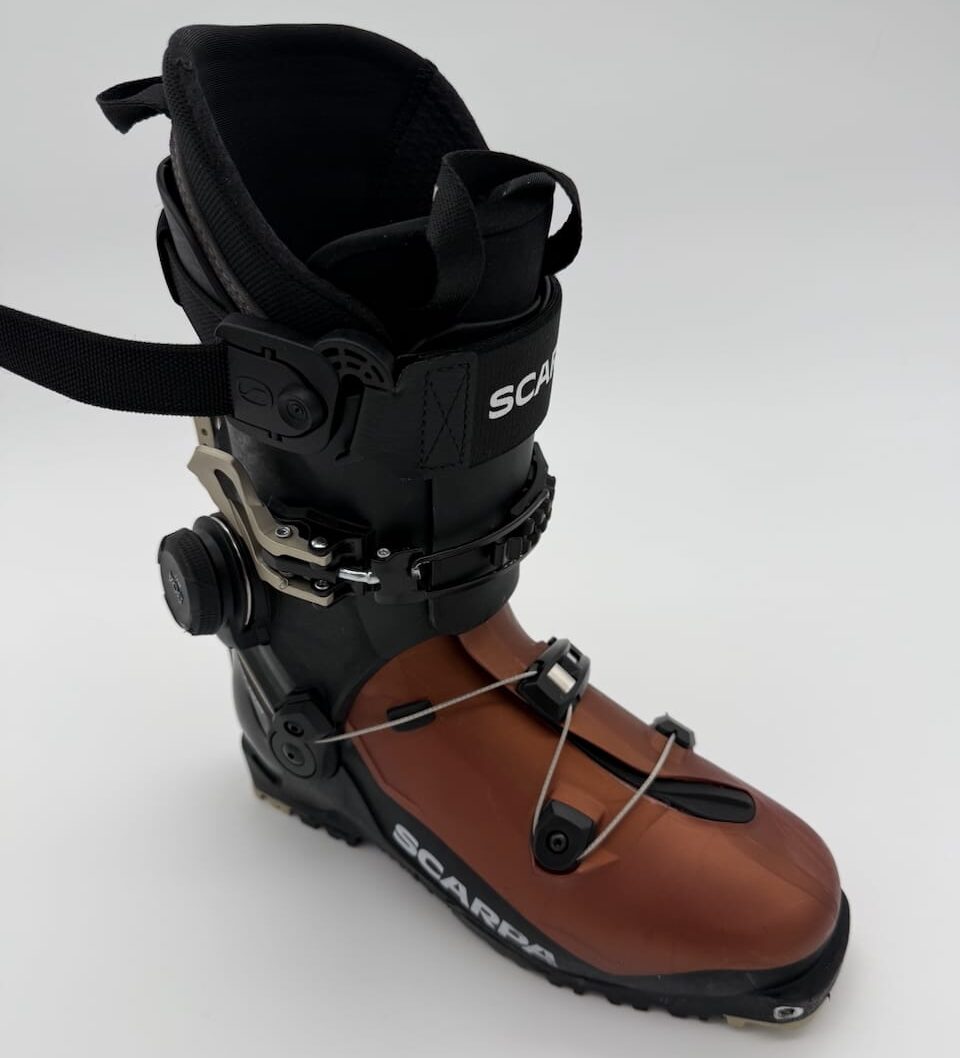
Many readers will already know this from our previous coverage, but the Kilo XTR is essentially a Kilo with an added tongue for better ski performance. Zooming out, it’s a similar concept to the Dynafit Blacklight 2.0/Ridge or perhaps the Scarpa F1 LT/XT.
While the tongue is the big story, there are a few details that change with the XTR as well. First, the instep buckle is beefed up a bit, adding a nice Z element, and features a beefier plastic plate that engages the tongue and does a decent job of securing the instep and providing a bit of heel hold. Second, there is a more minimal gaiter in the XTR, given that the tongue handles the majority of the waterproofing workload in the lower shell, which is great for durability and ease of liner in/outs.
Compared to my Stratos Hybrid, the walk mechanism is spring-loaded and notably tighter, solving the play that is a nuisance with the race boot but would be a deal breaker with the XTR. The upper buckle uses a stiff wire latch that ought to improve durability and is easy to use, and the power strap is non-elastic and uses a nice aluminum G-Hook cam buckle.
The stock liner is marginal—there’s some stiff-ish plastic around the calf area and tongue, but otherwise it’s somewhat thin, and the foam feels pretty low-density. I quickly swapped it for my Zipfit Espresso with good effect, and an Intuition tour tongue would be a good choice as well.
The tech fittings are Sportiva-proprietary and notable because they allow a hands-free step-in to my Ski Trab bindings, which is a fun party trick when I remember it’s an option.
Transitions are a 4-move affair with the XTR: snug up the instep buckle, close the upper cuff buckle, tighten the power strap, and flip the ski-walk lever. That process and fiddle-level feel about standard at this point, with everything from the Zero G Peak and F1 XT to the F1 RS and Atomic Backland XTD sharing a similar process. To simplify, one must go to a Dynafit Hoji lock boot or a race-style boot like the Stratos Hybrid or Alien RS. Having only one buckle each on the lower/upper definitely improves my transition experience compared to a 4-buckle + power strap + walk/ski lever boot like the Zero G or Quattro.
Kilo XTR Fit and Bootfitting
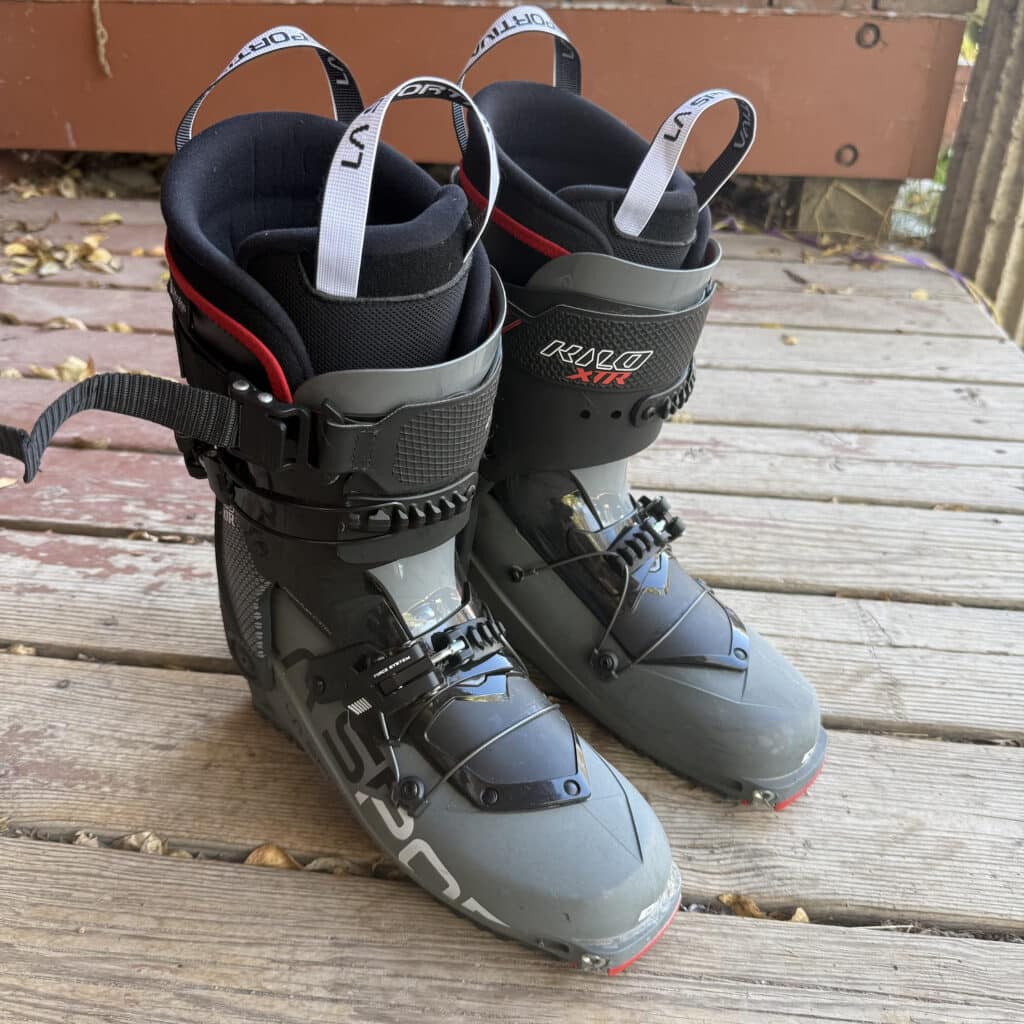
The fit, notably, is identical to that of the Kilo and Stratos Hybrid, which fit me quite well. A quick reminder of what that fit is… the forefoot is relatively wide and foot-shaped, and there is no notable constriction in the metatarsal area (something that bothers me some on the Zero G and Quattro). The overall volume and height are medium, and the instep buckle does a good job compressing the tongue and taking up some vertical space. The heel pocket is a touch roomier than I’d prefer, but it gets the job done with a decent liner to lock down my Achilles area.
I’m wearing the 28/28.5 size, which fits similarly, length-wise, to my Technica and Dynafit 28/28.5 boots. The BSL is 307mm, which is within 1-2mm of both my Zero G Peaks and Ridge/Blacklights. I’m oh-so-close to being able to do a race mount and use a whole plethora of boots, but alas, not quite close enough.
The Grilamid shell doesn’t present any notable obstacles to bootfitting and normal punches/alterations. I wouldn’t expect to get a ton of added shape/performance from heat molding the stock liner, though I’m sure it would help some.
Kilo XTR Field Testing
As mentioned, I quickly swapped in my Zipfit Espresso for a bit of added performance in heel hold and overall fit. That was a big upgrade, and I would guess many folks will want to plan on an aftermarket liner for the XTR.
The walking performance of the XTR is pretty darn similar to the Zero G Tour Pro. It has a hair less friction (but more than the Ridge or F1 RS) overall, and the range of motion is somewhat biased toward the rear. For my normal race binding program with just one heel riser, the lack of forward ROM was a bit troublesome, and definitely felt inhibiting trail breaking or on steeper skin tracks. In the rearward direction, the ROM was on par with the Ridge and was quite enjoyable for flat walking. On the whole, I wasn’t overly impressed with the walking performance of the XTR, though it is adequate for a well-performing downhill boot, and I’ll admit to being a bit picky about such matters.
Meanwhile, the ski performance is quite good overall. The XTR can absolutely hold its own with bigger skis and/or more challenging conditions for most ski tourists, though they probably lack the overall stiffness/support for the full-on freeriding some folks are doing in boots like the Zero G and Quattro Pro.
Similar to some other tongue-laden touring boots like the Ridge and Quattro, the XTR has a nice, engaged feel throughout its flex profile—as soon as you pressure the front of the boot, you can feel the support and damping the tongue provides. I enjoy that immediate engagement, as it feels easier to maintain shin pressure and absorb knocks and bumps without getting tossed around by some of the harsher boots out there. On the flipside, the overall support and progressiveness are less than those of boots with more overlapping plastic elements like the Zero G and Quattro Pro. With the latter, the stiffness and support ramp up the more you flex into the boot. Conversely, the XTR feels a bit more linear over its flex pattern. While I never had the folding/overflexing feeling while skiing the XTR aggressively, I would say it isn’t particularly conducive to truly aggressive skiing for larger skiers. For more “normal” skiing and skiers (such as myself), they do an excellent job of handling imperfect snow and feel more supportive than tongueless 2+ buckle boots like the Blacklight or Backland XTD, while adding the engaged and forgiving feel that makes the Ridge and Quattro feel so good on the way down.
While the Kilo XTR is a bit less flashy in its innovation than the Ridge, they have a lot in common. While I’m a believer in Hoji Lock and won’t be giving up on my Blacklights anytime soon, the XTR ought to be a much easier fit than the Ridge for folks with higher insteps.
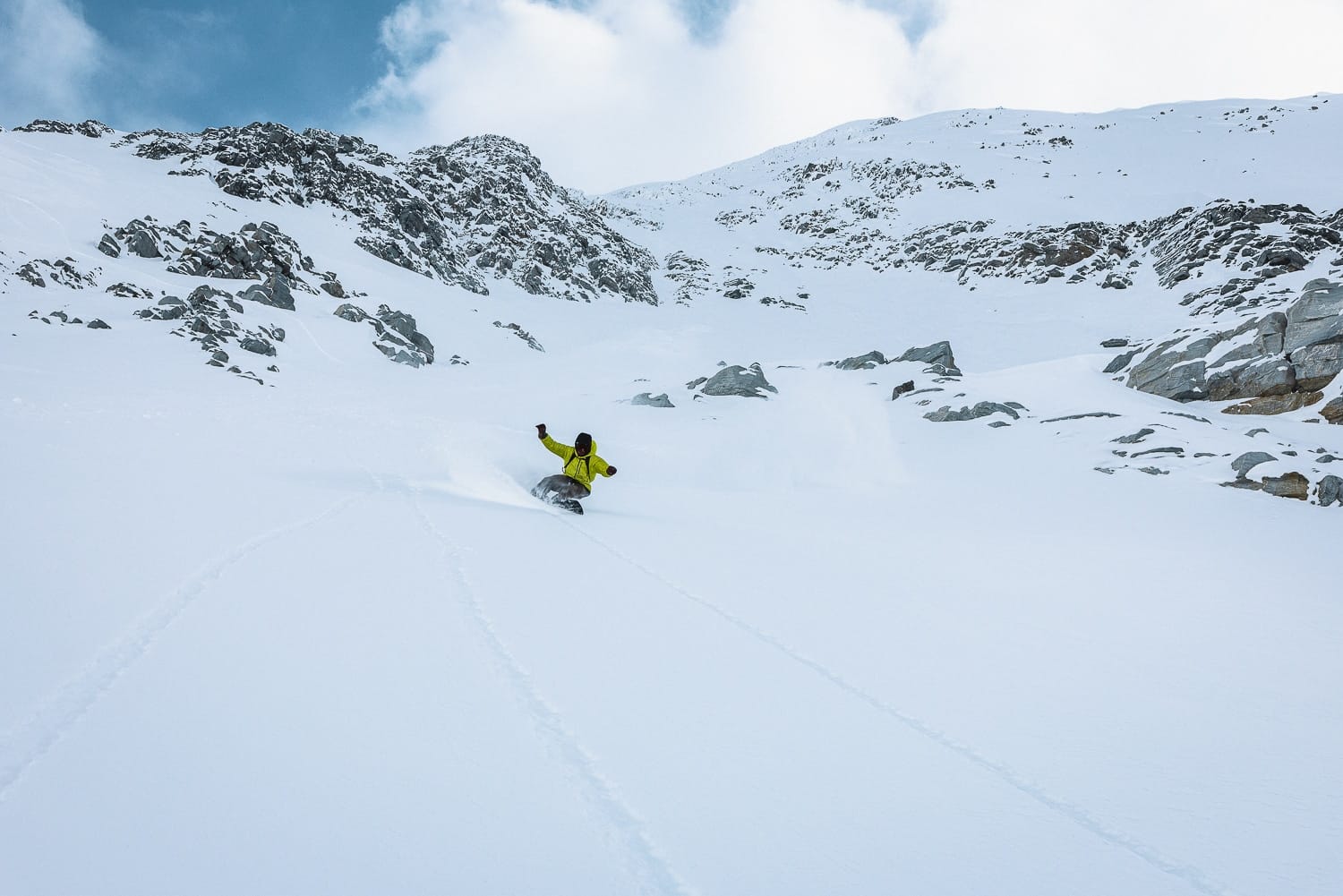
I spent most of my days skiing the XTR with the 4FRNT Nevar, though I also paired it with the Heritage Lab BC120, Atomic Backland 109, and Black Crows Solis for a few days each. The XTR felt well-suited to any of these medium-wide, mid-weight skis. I’m having trouble thinking of a ski/setup the XTR wouldn’t perform well with, though I’d lean toward the wider/heavier end of the spectrum since they could feel a bit much/clunky with light/small skis, say under 1200g/90mm. The Nevar felt like a good spot—I could see running this combo as an all-purpose daily driver combo and being quite pleased with it over a variety of tours and conditions.
The XTR worked great with my Blue Ice, Dynafit, and Petzl crampons. It has an ISO 9523 sole, so it will work with tech and MNC-style bindings like the Shift/ATK HY.
I didn’t experience any durability issues with the XTR. I expect the pivots and ski/walk mechanism will develop some play over time, but alas, not yet. The gaiter is small and riveted to the tongue, which mostly alleviates folding/snagging when putting the liners into the shell. I imagine it will hold up for the long haul. The lower buckle uses a flexible wire for the Z, while the upper uses a stiff wire. These flexible wires are sometimes a durability issue, though they don’t have any notable wear at the moment. All the hardware is user serviceable with a mix of T20 and 4mm allen bolts (once again, why not all T20?!). That includes the cuff pivots. The forward lean can be adjusted between 13 and 17 degrees by flipping the male part of the ski/walk mechanism.
Conclusion
We’ve said it before, and I’ll say it again. We are living in quite the golden era of ski gear. There are a bunch of companies making some truly excellent touring boots that fit a wide range of feet and use cases. Gone are the days when everyone at the trailhead is in Zero Gs, TLT6s/5s, and whatever the one was before that (leather? My age is showing…). For somewhat wider-footed folks looking for an ergonomic fit, great day-to-day ski performance, and decent walking, the Kilo XTR might just be the ticket.
With some of these shared-mold models, I’m not convinced that having multiple models in a boot quiver makes sense—they are often similar enough that you likely just want one. I’m impressed with Sportiva here; they have managed to make three boots with the same lower mold that fit totally different categories and use cases. One could, in a somewhat reasonable world, own all three models from the race boot to the 1kg Kilo and the beefed-up XTR and have what I would consider a reasonable quiver without crazy overlap. For folks whose feet get along well with the Kilo fit, it sure would be an easy way to have well-fitting boots over a whole quiver, rather than having different issues and needs for each boot with a totally different fit, even if they are the same brand.
Specs
Total Weight: 1343g [28/28.5]
Sole Norm/Compatibility: ISO 9523, S4 inserts (Ski Trab step in compatible)
Materials: Grilamid, Carbon-Loaded Grilamid
Fitting Notes: Medium volume, ergonomic, medium-wide forefoot, medium instep, and medium heel width. It’s all medium.


Leave a Reply
You must be logged in to post a comment.