
Intro
Atomic is and has long been one of the biggest players in the ski game. In more recent times, the Bent series—Chris Bentchetler’s signature line—has been among the most popular resort skis on the market. While generally marketed as resort skis in widths between 90mm and 120mm, the 120mm variant is both the line’s long-standing flagship and a powder ski with a very competitive weight of around 1800g. While these specs have always had me curious, my Venn diagram of skiing style has very little overlap with the playful jib-master behind the Benchetler line, which led me to some skepticism as to whether these skis were really meant for a wanna be powder freerider like myself.
Design Highlights
The Bentchetler is a bit of a benchmark ski in the realm of playful skis that blend a freestyle-oriented mount point and rocker profile with a powder-ski width and rocker profile, plus enough backbone to go fast and handle variable conditions. The overall design is more of a generalist than some of the backcountry powder-specific designs like the 4FRNT Renegade that I’ve gravitated toward over the years.
I often reference the skiers who influence a ski’s design to get a baseline for what to expect from a model. When you watch Hoji pivot and slash his way down a techy pillow line, it does the Renegade justice and really embodies its character. Watch Chris Benchetler ski, and he is likely on his Bent 120s, doing anything from hitting backcountry booters, straightlining minigolf couloirs in the Sierra, or skiing inbounds chop and making it look smooth and effortless. I’m not sure what all that is supposed to tell me, aside from that Chris Benchetler is a remarkable skier. Perhaps the best assumptions you can glean from watching Benchetler ski are that they are quite versatile skis and likely have a pretty centered mount point; at various times he is clearly tail-gunning a bit to keep the tips up in powder.
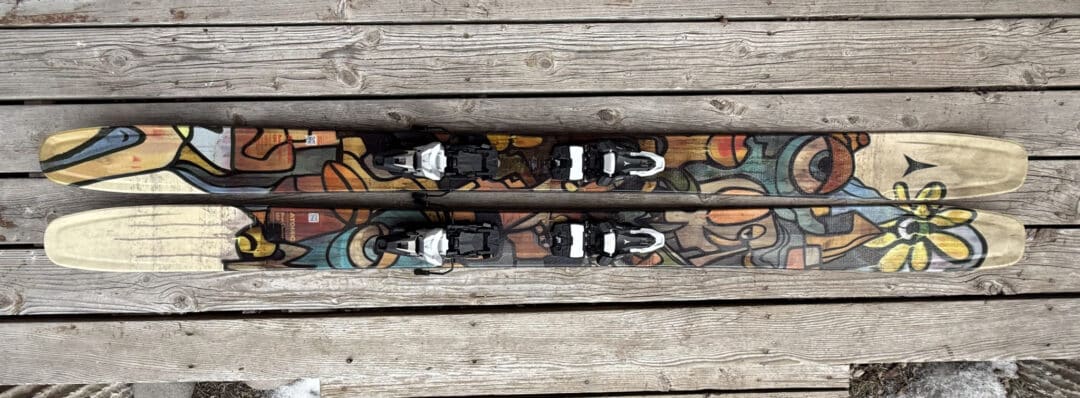
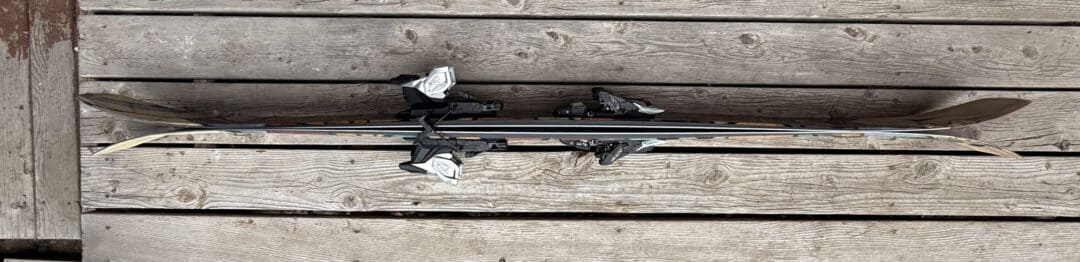
Thankfully, I’ve got the Bent 120’ sitting here as I write—no need to make too many guesses based on watching the skis in their happy place. My set is 192cm, which makes for an altogether massive set of skis. They look and feel somewhat significantly bigger than my 191cm 4FNRT Renegades. I think the HRZN tip might have something to do with this, as the Backland 109 I reviewed last year had a similar big ski feel in hand/underfoot. The difference being that dimensionally, the 120mm/192cm Benchetlers are actually the biggest skis in my quiver.
The rocker profile, as one might expect from a big ‘ol freestyle powder ski, is quite pronounced. They have a fairly symmetrical, large splay and long rocker in the tip and tail. Unlike my other (mostly reverse camber) powder skis, the Bents have a medium-height, decently strong camber pocket underfoot–akin to the Backland 109, though that camber pocket was both higher and stronger. For powder touring, I don’t necessarily view camber as a positive; it certainly makes a ski feel less loose and drifty. For more adverse conditions like tracked snow, anything remotely firm, or taking 3D snow at speed, camber can be pretty darn nice.
The Bents have a slight tip-to-tail taper, with only a 9mm differential, adding to their front-to-back similarity. The tips and tails have a moderately tapered shape (sidenote: we should really come up with a new way to describe one of the ‘taper’ terms in ski shape… it’s confusing). A 20m sidecut rounds out the shape that could be described as pretty darn average across the board, with a shorter radius than many powder touring skis but plenty of rocker to remain at least somewhat loose on the snow.
Overall, the Bents are a medium-stiffness build, with soft but not floppy tips and tails, decent underfoot stiffness, and good torsional stiffness. They certainly lack the rigid, carbon-laden feel of many lightweight touring skis, opting instead for a somewhat softer, more damp feeling construction that fits the bill nicely for more variable conditions. It feels in contrast to some lighter, more rigid powder touring skis we’ve tested, and certainly a different vibe from stiff, light, steep skiing-oriented setups that make up a big chunk of my ski shed.
Testing Setup
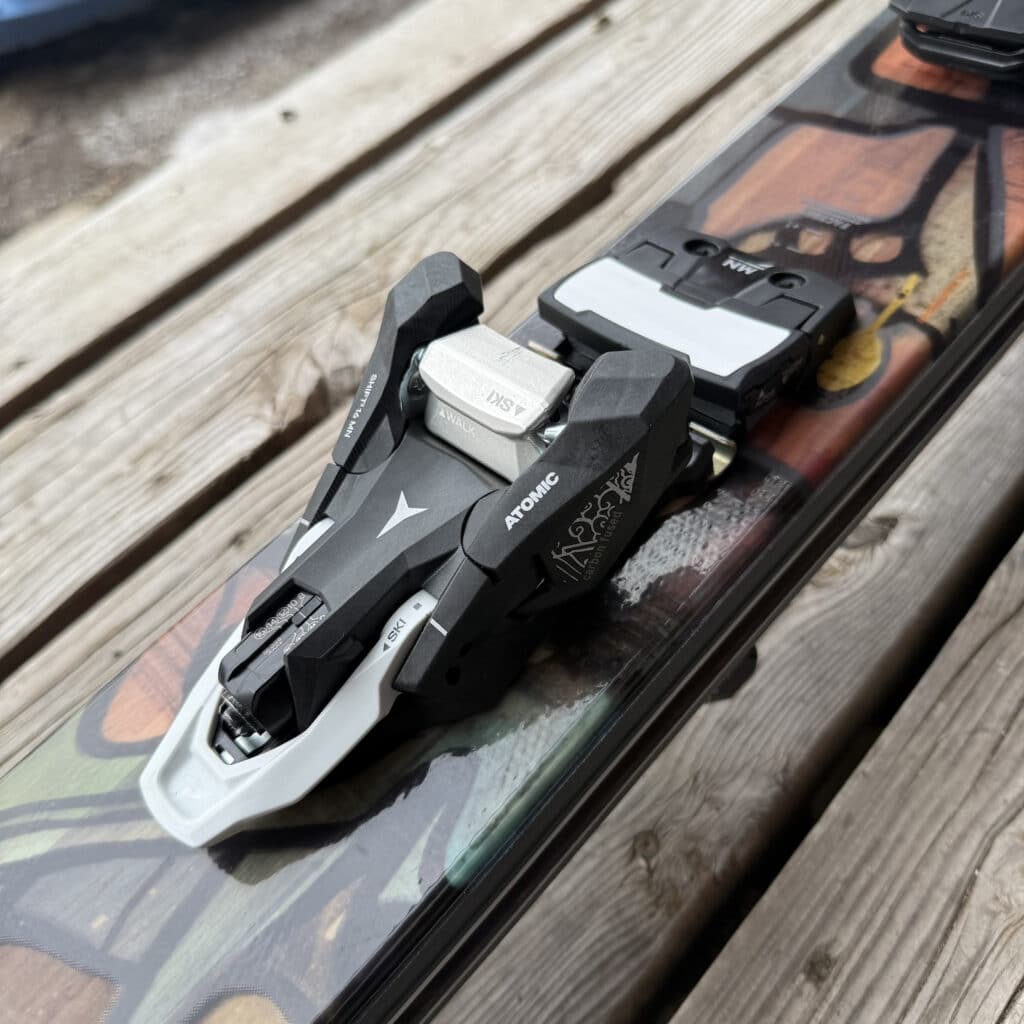
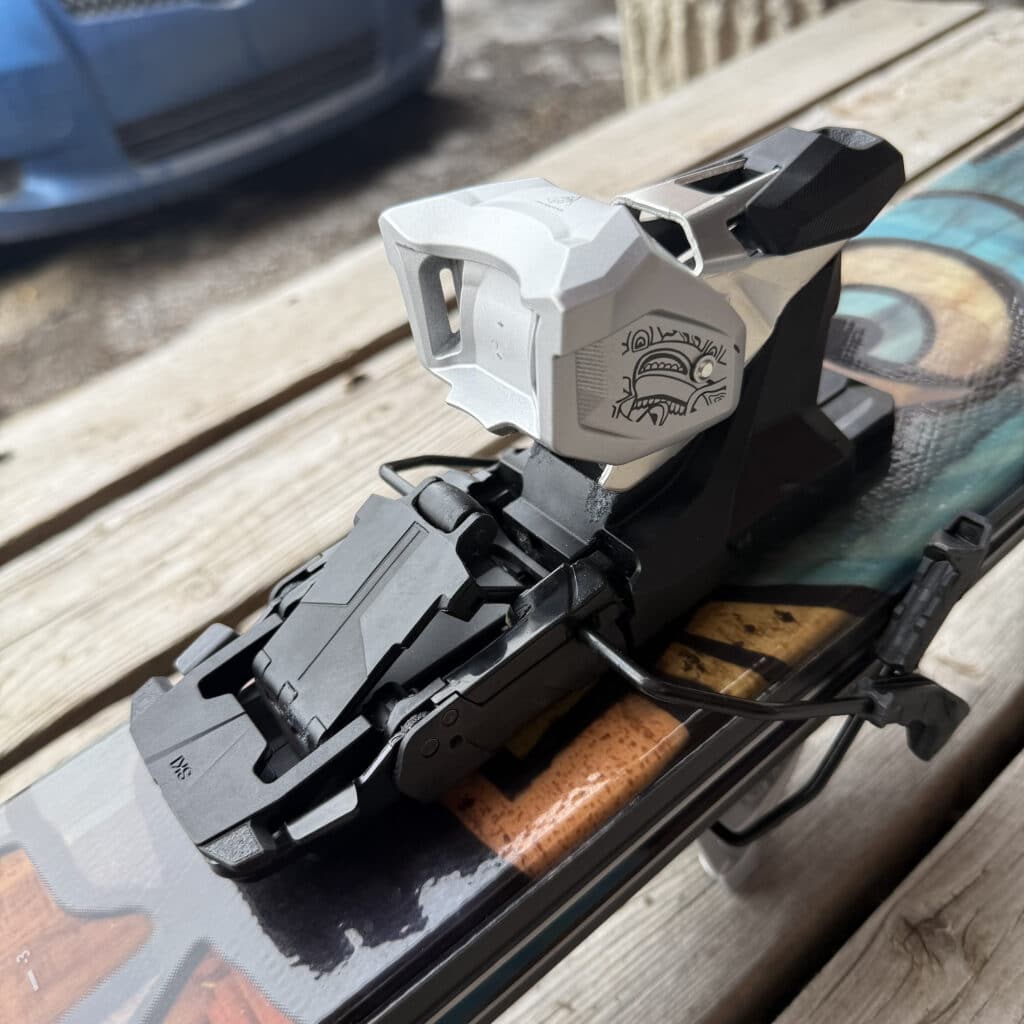
In a shift from my usual big-ski, light-binding strategy, I got a set of Atomic Shift 16 bindings to pair with the Bents. As the heaviest binding I’ve toured on in a decade, that took some adjusting to.
I mounted the Bents at -3 cm from recommended, which puts me at -6cm from center. That was the going recommendation on the TGR Forum for non-freestyle/powder-oriented skiing on the Bent 120. The recommended mount seems focused on swing weight for spins and more freestyle moves; way out of my wheelhouse. The -6cm mount should allow for a more forward stance when skiing powder, rather than needing to be centered or a little backseat to keep the tips up in deep snow. I think this is the most progressive recommended mount point model that I’ve skied; I’m often one to go ahead of recommended on more directional skis, and generally enjoy skis with -6 to -9cm mount points best—treading into new waters here.
I’ll keep it relatively brief on the Shift, as I am not necessarily an authority on the hybrid binding options (yet!). On one hand, the 16 DIN iteration is wicked heavy, at 1210g/foot. We are talking about 10x the weight of my day to day go to’s. On the other hand, price aside, I can’t see much benefit to a full alpine binding in a performance or durability sense with this option available. It seems as though most of the previous issues with the Shift, particularly in its function as an alpine binding, have been resolved. The machined aluminum AFD adjustment is still a bit trickier to set up than most alpine binding adjustments, but it feels more solid and less vague about whether it’s locked into the spot you’ve set. The forward pressure adjustment doesn’t seem to have changed at all, but the pro tip of over-tightening and loosening to the right pressure (a bit more forward pressure than the indicator would recommend, perhaps) has given me consistently correct forward pressure without pre-release issues. All these changes, I believe, happened with the update to Shift2, rather than just the 16 DIN offering. The 16 DIN binding gets you a mostly metal heel construction along with the higher DIN settings. The toe seems unchanged, materials-wise, from the Shift2 13.
Coming from normal touring bindings, touring on the Shift is still not for the faint of heart. I had one day in Japan last winter with ~6k’ of skinning on mostly firm, wind-affected surfaces that I thought would be the death of me. Both because of the added height/torque of wide skis and an elevated toe, and the death of my hip flexors lugging around 3kg of ski+binding on each foot. Transitions are also a thing; it’s not possible to keep skis on while transitioning to downhill mode, and I found it challenging sometimes to get a hold of the central toe block to flip into touring mode. Similarly, the heel is still prone to ice and snow blocking the brake from locking into touring mode. All to say, the Shift2 16 has improved its alpine binding performance, but still isn’t a good daily-driver ski touring binding for most. I’d guess that this update will be a thorn in the side of CAST and the Marker Duke PT, not something that will likely cut into ATK HY or Raider sales.
I mostly wore the Scarpa Quattro Pro, then briefly the Technica Decoy in some spring slush toward the end of the winter. More on this in my field testing notes, but this felt like a good setup that played to the strengths of heavier, more damp boots. Certainly the bindings had something to do with that decision as well, and I could see a world where the progressive mount point of the Bents could work well for some skiers in lightweight touring boots, but you would lose most of the crud-busting benefits and suspension that sets the Bent apart from a reverse camber powder touring ski.
Field Testing
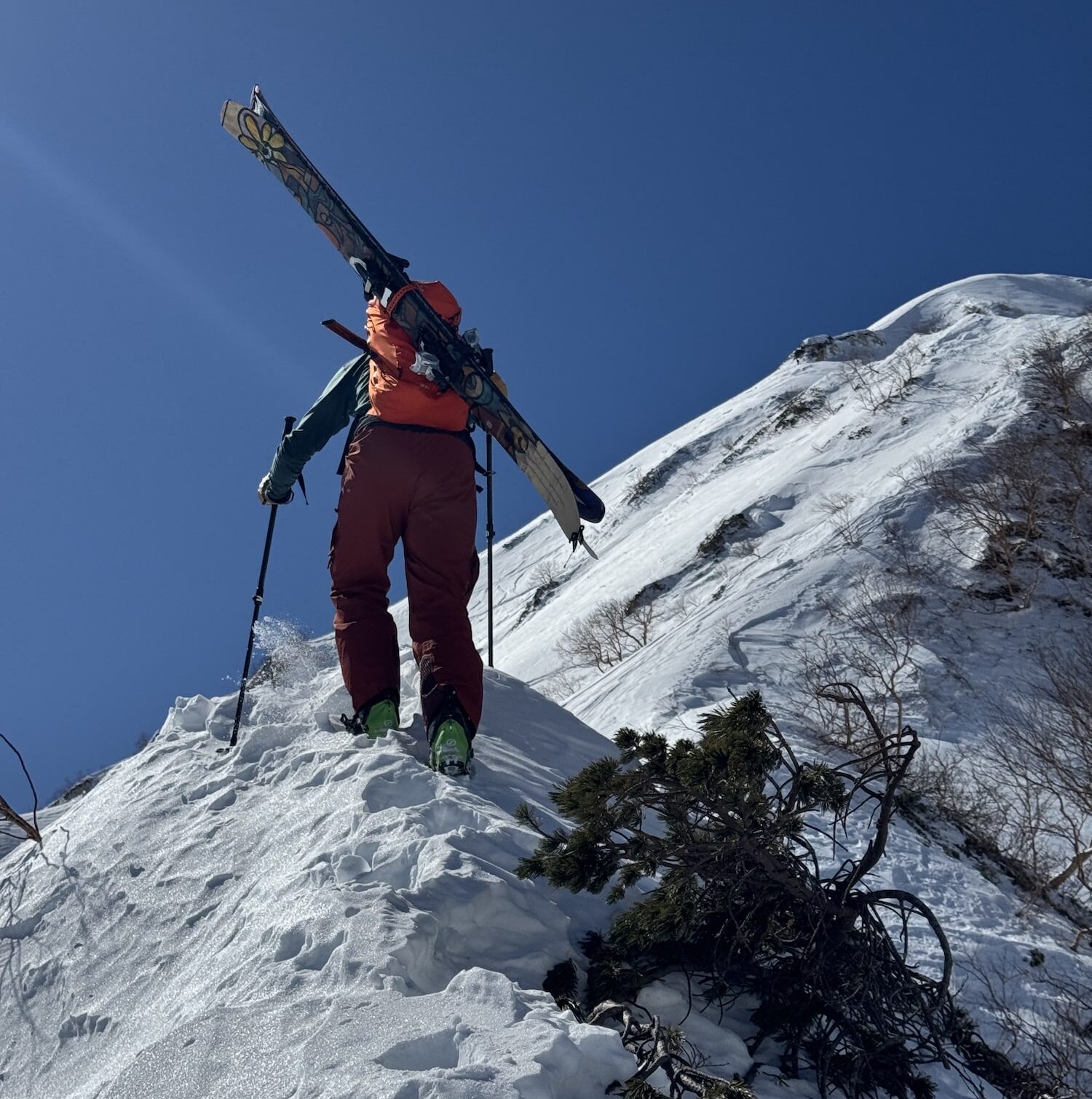
It’s a bit self-centered to think this way, but sometimes I feel like winter weather just doesn’t want to cooperate with the gear I’m excited about testing any given year. When I get psyched for powder skis, we have a dry winter. When I get psyched on skinny and light gear, we ski powder for four months straight. So it goes. As anyone in the Western US knows all too well, last winter didn’t provide copious powder-ski testing opportunities. Most of my days on the Bent 120s happened in Japan over a two-week spell mid to late February, where it did, in fact, snow.
Powder/soft snow
It seems safe to say that most folks considering a 120mm ski hope to ski lots of powder. This is where the Bents ought to shine, and they do pretty well. I was thankful to have the Bents mounted at -6cm from center in deeper snow–I could see tip dive being an issue, despite their size, at more forward mounts in deep or heavy snow. At -6cm, they floated and surfed well, but not as well as I might have expected, given their big dimensions.
Preconceptions may have something to do with this, but with the Backland 109, I was really impressed with how loose and surfy they felt despite the loads of camber. With the Bent 120, I felt pretty locked into more carvy/slarvy turn shapes, and it felt more effortful to pivot and slide through deep snow than I may have expected. This led to copious fun in good powder and more open terrain, but it felt challenging and a bit of a handful to muscle around while bombing through tight trees and the like. Overall, I would say the powder skiing performance is good, but not in the same mind-blowing way as some more dedicated powder ski shapes.
Crud/tracked/variable snow
A little disappointed at the moderate marks of the Bent in powder, the cruddy snow category is a great chance for redemption. For their relatively light weight, I felt like I could absolutely hammer through tracked, cruddy snow. This is where a bit of camber and the big stable platform really shined. Whether in Japan or another powdery yet heavily trafficked locale like Teton Pass or the Wasatch, when the tracks converged and the going got a little rough, I could still blast through soft or not-so-soft bumps, tracks, and trenches at full speed with ease and comfortable suspension. Camber and overall size are probably the main contributors to success here, but I reckon smaller details like the flex profile, HRZN tip, overall tip and tail shapes, and medium 20m turn radius all balance nicely to let the Bent float over some imperfections and absorb others comfortably.
To take full advantage here, burlier boots are probably a must. Something like a Zero G Tour Pro would be a good pairing, with a Scarpa F1 RS or Atomic Backland XTD as light as you’d likely want to go while still getting decent performance in these conditions.
In more wild snow conditions, particularly upside down or breakable crust, the Bent 120 is pretty sub-optimal. The 192 length and softer tips seem to get deflected and overpowered when you try to push through crusts/upside-down weirdness, and I had to resort to muscling around jump turns to get them around when breakable was the reality. I often say breakable crust is either a pass or fail for a ski: it works or it doesn’t. The Bents fail this test.
Firm Snow/Steeps
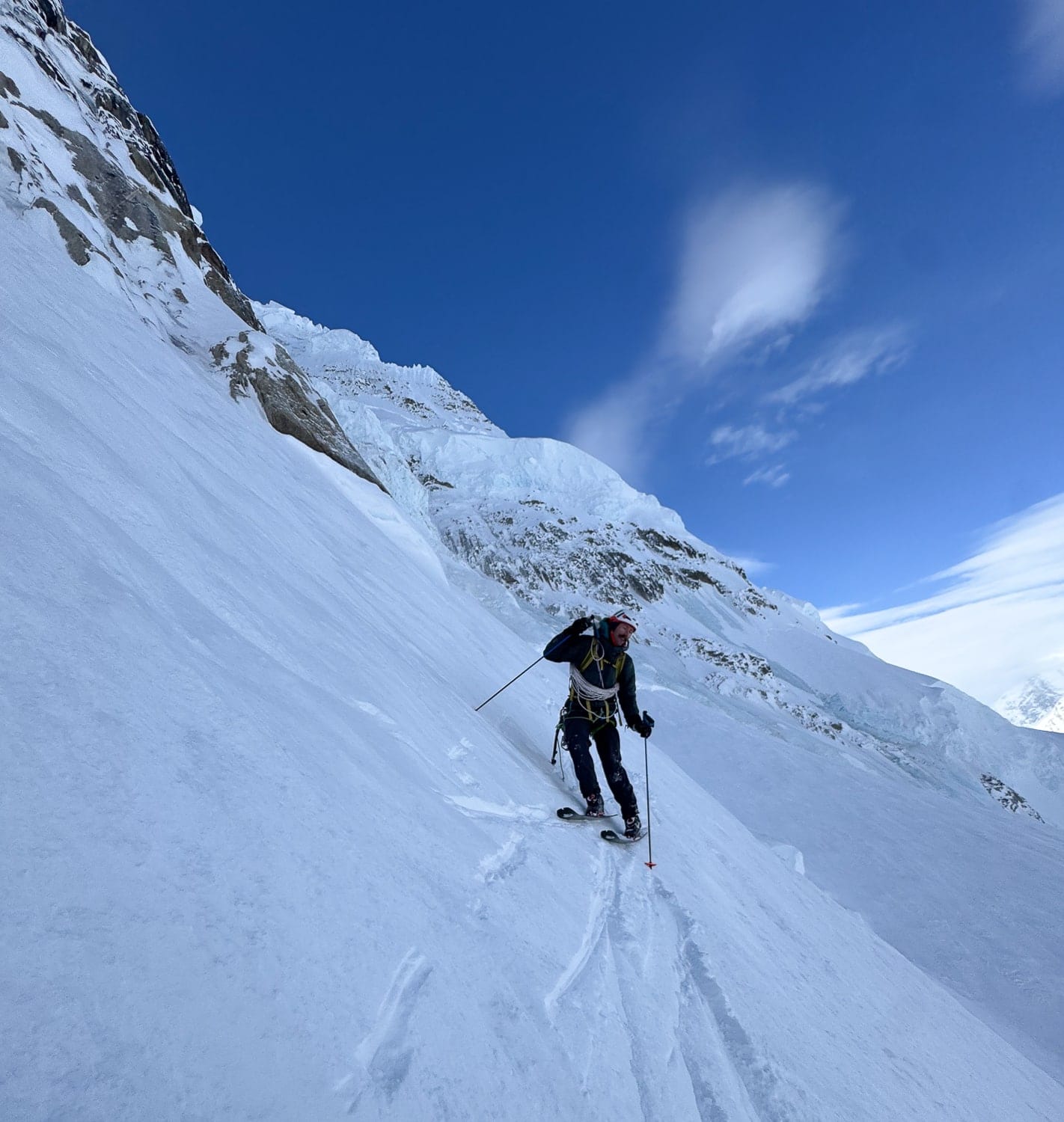
No surprise that a 120mm freestyle powder ski isn’t exactly the firm snow/steep skiing weapon of choice most of the time. However, I had the pleasure of standing atop a wind-buffed, steep-ish run high in the Japanese Alps with the Bent 120s on my feet, and things went pretty well. The firm sections of this run were a bit grabby, and I was skiing much faster than I might normally, taking advantage of the big, heavy setup. All to say, the Bent held up really well and felt confidence-inspiring while making a few firm, scratchy steep turns at the top of the run. It’s always good to have confidence in a ski to handle unexpected firm like that, since it’s not uncommon to hit a few high-consequence, firm turns while chasing high-alpine powder runs.
Resort Skiing/groomers
Well, I think the Bent is mostly marketed as a resort ski. I mostly used my most resort-oriented boots and certainly my most resort-oriented bindings with these skis. The Bent can hang as a resort ski. One morning in Japan, I spent time making some high-speed groomers and inbounds runs on the Bents; they did great. I was impressed with their edge hold and ability to lay it over pretty darn well for a 120mm ski. For forays off the groomers and into moguls, chop, and little side hits and whatnot, the oft-described blend of playfulness and good composure at speed was appreciated. While the 192 Bent wasn’t at home making slow-speed turns through moguls, I could scrub speed as needed while trying to be a little faster and more creative, catching transitions and finding alleys with great control and stability. Good times.
Conclusion
The Bent 120 is an interesting beast. While it doesn’t necessarily hold its own as a modern backcountry powder ski, I reckon it has a place in many folks’ quivers as either a travel ski or a do-it-all soft snow ski. In either context, it seems well suited to hybrid-style, or at least more beefy, bindings that can handle some resort mileage.
For a skier with trips to places like Japan, Canadian/Alaskan heli-skiing, or combo touring/resort sidecountry trips in places like Jackson, Kicking Horse, the Wasatch, etc., the Bent 120 could check all the boxes pretty darn well. Meanwhile, for someone who skis in Jackson, Interior BC, Alyeska, etc., the Bent 120 could cover resort powder days and some powder touring duty a bit better than some reverse-camber touring skis that will beat you up skiing chop and crud.
Last but not least, if any THR readers are building jumps in the backcountry, skiing switch often, or doing big spinny, flippy tricks, I imagine the Bent 120s would be great for all that.
Specs
Available lengths (cm): 176cm, 184cm, 192cm
Weight: 1950g
Dimensions (mm): 144-120-135
Turn radius (m): 20m
Core: Poplar
Build Comments: Hybrid cap-mini sidewall construction. HRZN 3D tip/tail
Shape: Quite symmetric twin tip/rocker. Medium turn radius and tip/tail taper.
Recommended Mount Point (cm from center): -3cm
Drill size: 3.9 x 9.5 mm
Similar Models: Blizzard Canvas 118, Faction Studio 120, Moment Wildcat 118
Price: $1100
If you are keen on speaking with a real person about gear, check out the good folks at Cripple Creek Backcountry—they support our reader-first mission online and in print.
(The above is not an affiliate link.)
Leave a Reply
You must be logged in to post a comment.