
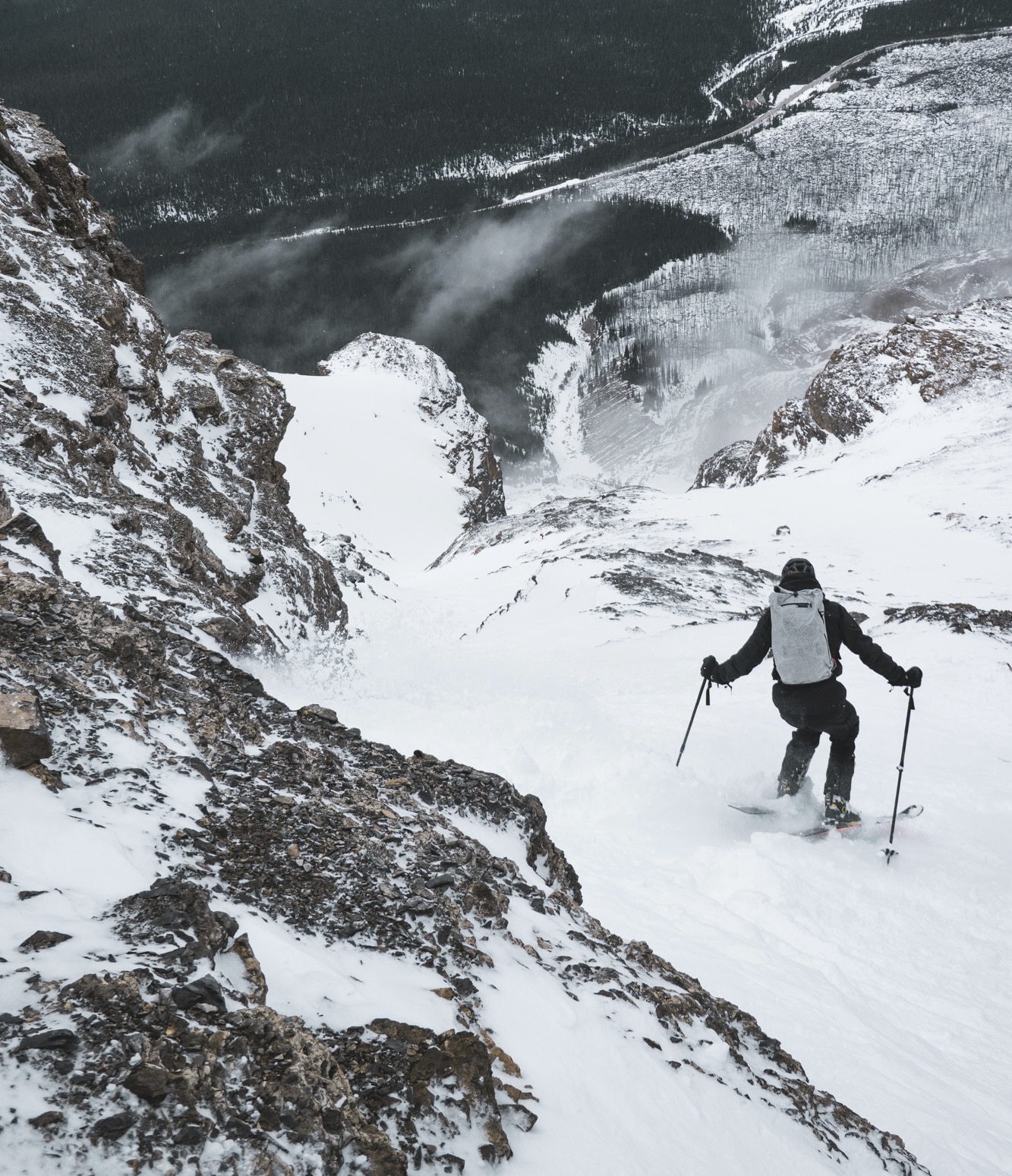
Overview/Brand Overview
A few years back, whispers of a new generation of Eric Hjorlefsen-designed boots started to permeate the ski world. Between the Vulcan and Hoji boot lines, which had/have some die-hard supporters and undoubtedly some cool innovation, it was exciting to hear something new was on the horizon.
As is often the case with ski boots, good design is an important starting point, but fit can make or break an otherwise well-designed boot. Hoji’s new boot, which I first got my hands on in 2024, is just a bit too snug in the instep area to work for me–not a problem I’ve ever had with a boot before. Aside from this fit issue, the Ridge is a wonderful touring boot; it walks well, skis well, and has a low fiddle-factor. For ‘25/26, Dynafit graced us with a Ridge-variation in the Blacklight 2.0, and it answered many of my prayers.
Design Highlights
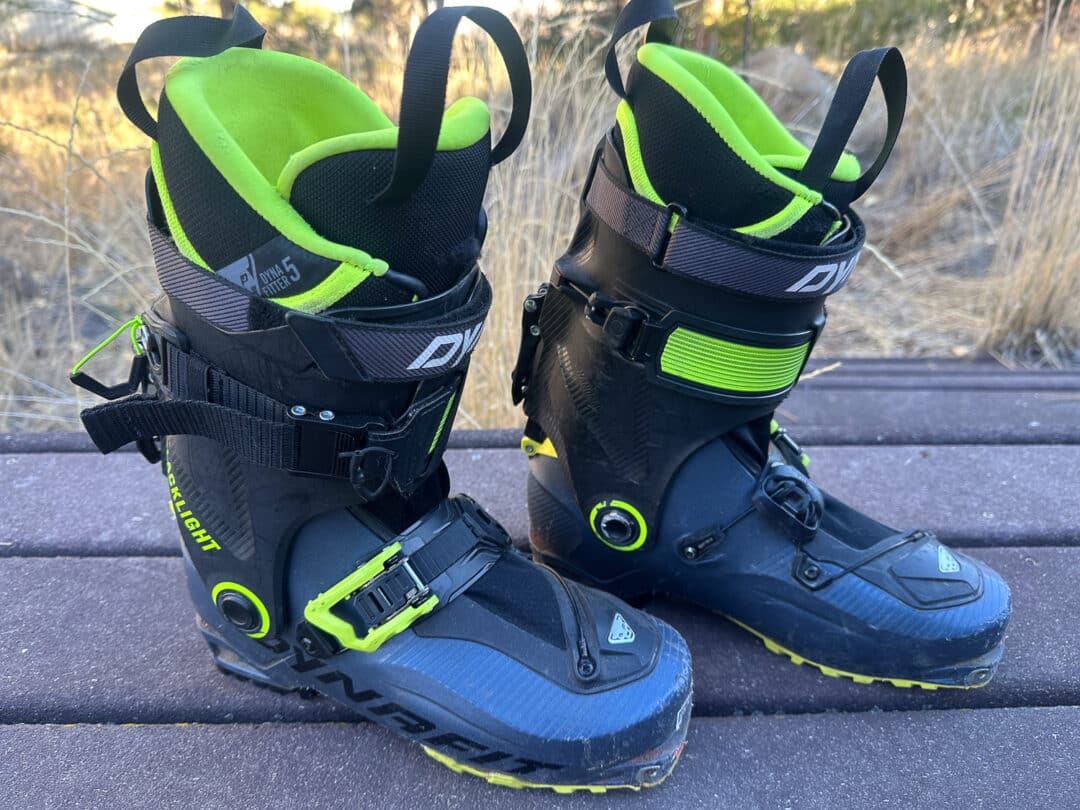
We’ve talked a bit about various boot makers (La Sportiva standing out lately) using the same mold sets to produce various boot models. In some cases, these shared-mold boots offer a wide range of performance across different categories. In others, including the Blacklight 2.0/Ridge in question, there is a lot of overlap. I don’t think this is a bad thing, but it serves different purposes. It may be a slight over-simplification, but the Blacklight 2.0 is essentially a tongueless Ridge with an updated/refined buckle system. If the Ridge fits into the upper performance/weight echelons of the 2 Buckle+ category we’ve been discussing over the past few years, the Blacklight fits into the lower end of that same category.
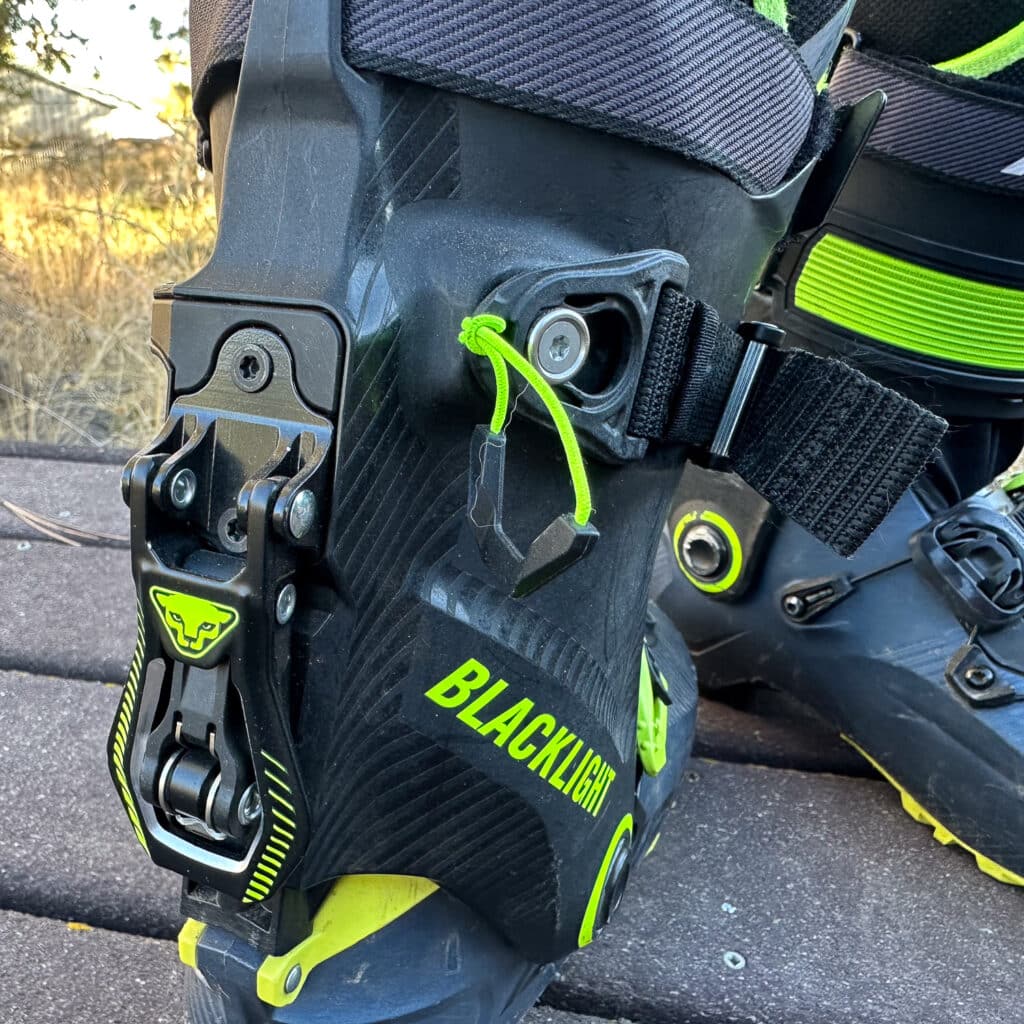
For those unfamiliar with the Ridge or Dynafit’s heavier 2+ to 4-buckle boot offerings over the last few years, Hoji Lock steals the show. The Blacklight is the lightest boot to feature Hoji Lock thus far, and it continues to be an impressive system. The marketing for Hoji Lock is often focused on the ‘one move transition’ where the power strap/upper buckle is connected to the walk mode, similar to a skimo race boot. That part is cool, but I still often have to fiddle to get things just right before a bigger descent. For me, the real selling point of the Hoji Lock is the play-free interface it creates between the upper and lower cuffs. After a season of heavy use, there is zero play in ski mode, and from day one it feels more solid and connected than lightweight boots with less contact area between the upper and lower. The combination of lightweight walking performance with the Hoji Lock interface and feel is really awesome.
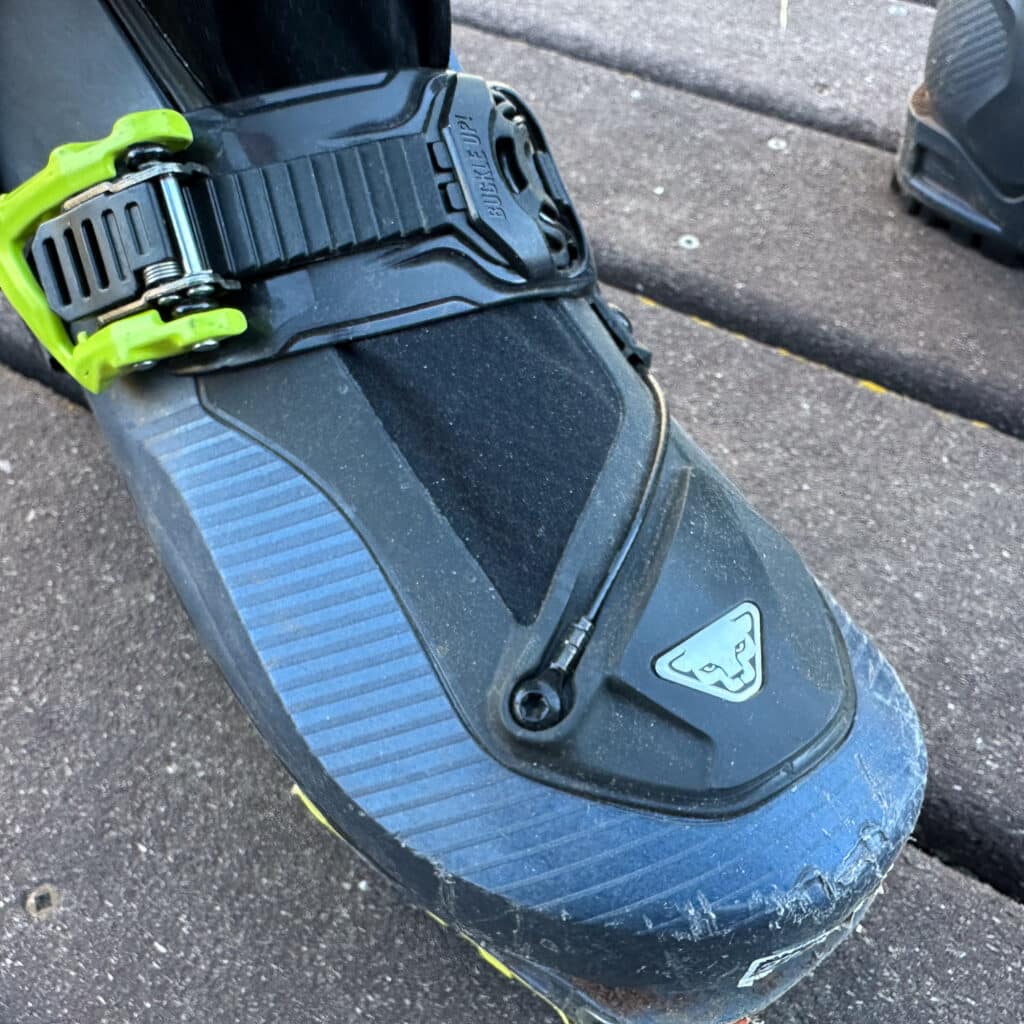
The Blacklight not only has a tongueless design, but it also trades the twistfit (BOA-adjacent) lower closure for a ratchet-strap buckle over the instep. This instep buckle has a bit of a ‘Z’ element that spreads pressure further down the midfoot than it might otherwise. I would say it does a less-good job than the La Sportiva Z buckles on the Kilo line at foot wrapping; it’s more of a pressure point, certainly a different feel than the full foot-wrapping feel of the Twistfit on the Ridge, or especially the BOA on the Scarpa F1 RS. Which are obviously a fair bit heavier….
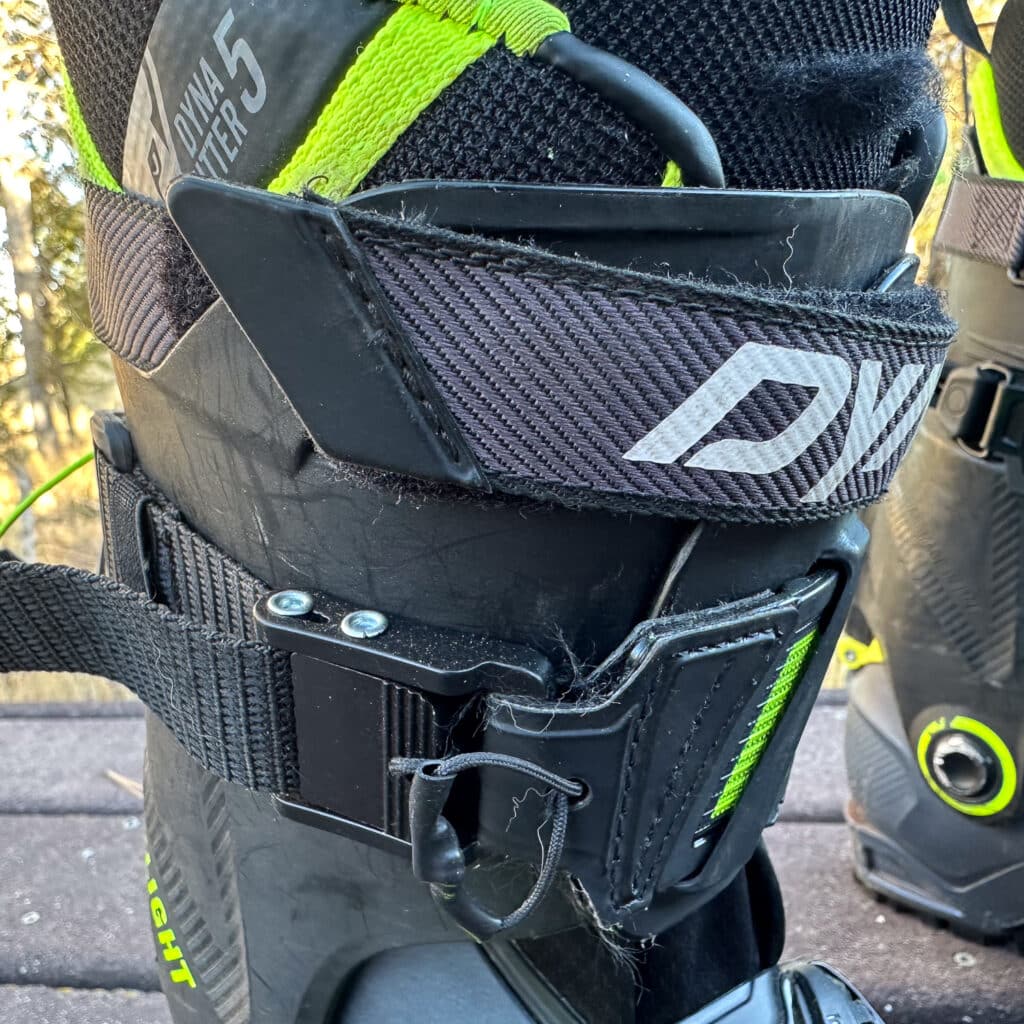
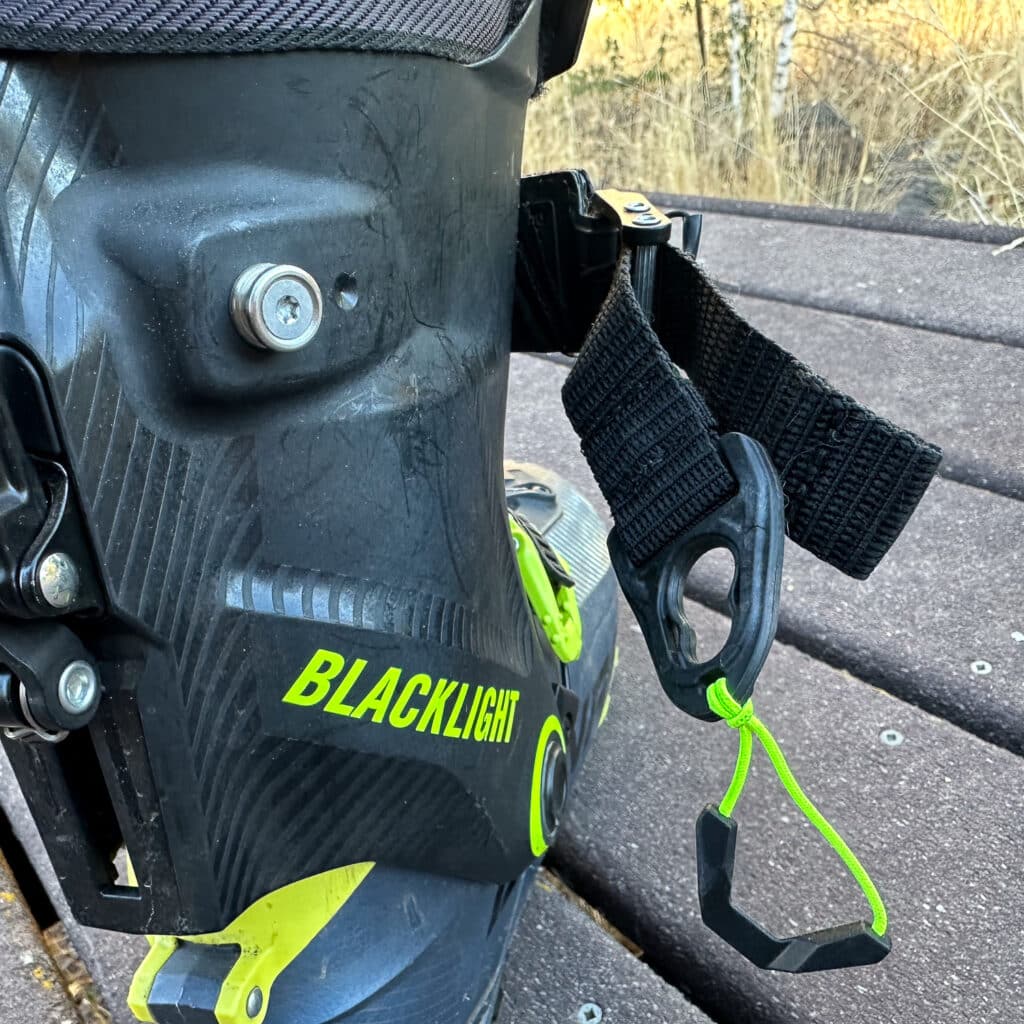
The upper cuff forgoes a buckle altogether, using a plastic-ey power strap with a cam buckle and a nifty quick-release system instead. Perhaps this takes the Blacklight out of the 2-buckle boot category altogether; it really only has one buckle… I am psyched they switched to a cam strap style over the Velcro on the Ridge; oh, how I despise Velcro. It is easier to adjust and doesn’t suffer any slipping or the same level of wear and tear that Velcro suffers and can cause. This power strap is attached to the Hoji lock and snugs up once the lever is closed into ski mode, which works pretty well after some tension tuning. It can be a one-step transition without lifting a pant cuff.
A thin Velcro power strap is also included, and the shell has a slot for said power strap. I never used the Velcro strap, but I have been using a Voile strap through that hole with great effect. More on that later.
The sole is a non-norm/tech-only affair, as is usual for this weight class. Thankfully, it has a toe welt for crampon compatibility, perhaps the last time I’ll mention the abominable speed nose that adorned many of Dynafit’s boots over the last decade. That seems to be gone and forgotten. Thank god. I used the Blacklight extensively with Blue Ice and Dynafit crampons, and I don’t foresee any fitment issues with the normal range of modern ski-oriented spikes.
The Blacklight does have a gaiter to protect the instep and ankle from snow ingress. It’s a little baggy compared to, say, a Scarpa F1 XT or Technica Zero G Peak gaiter, which seems like an advantage here. It is easy to get liners in and out and doesn’t impact the walk mode like it does in the Peak.
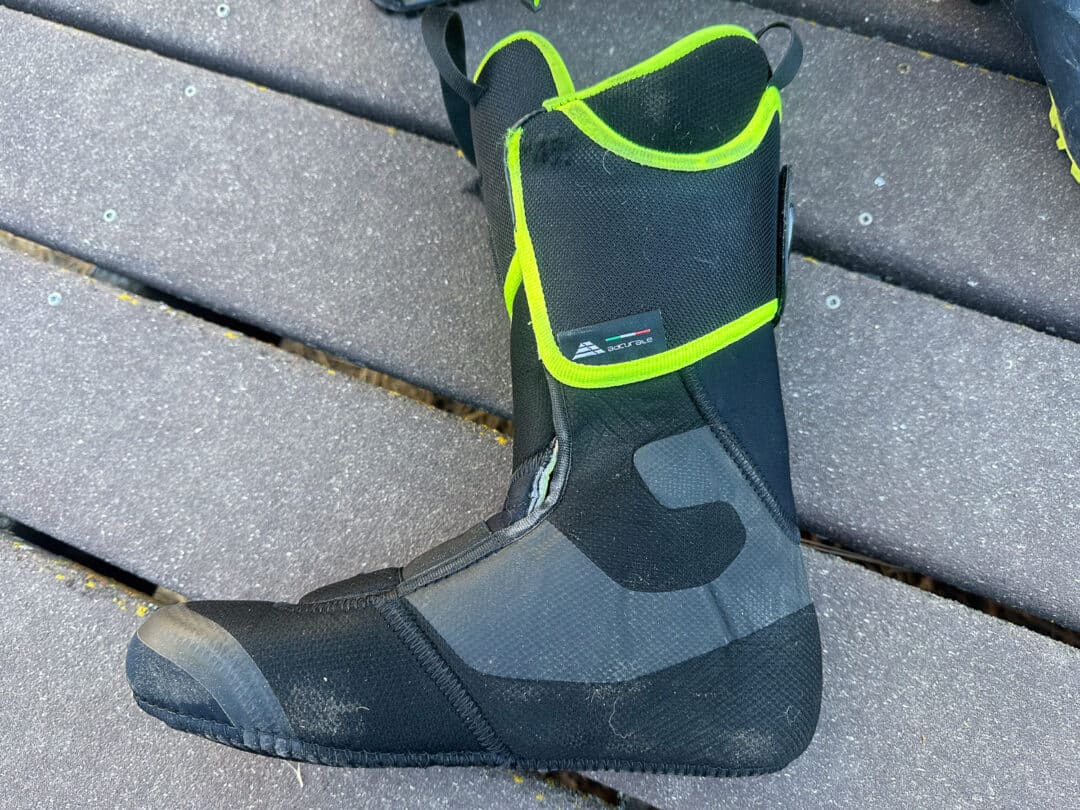
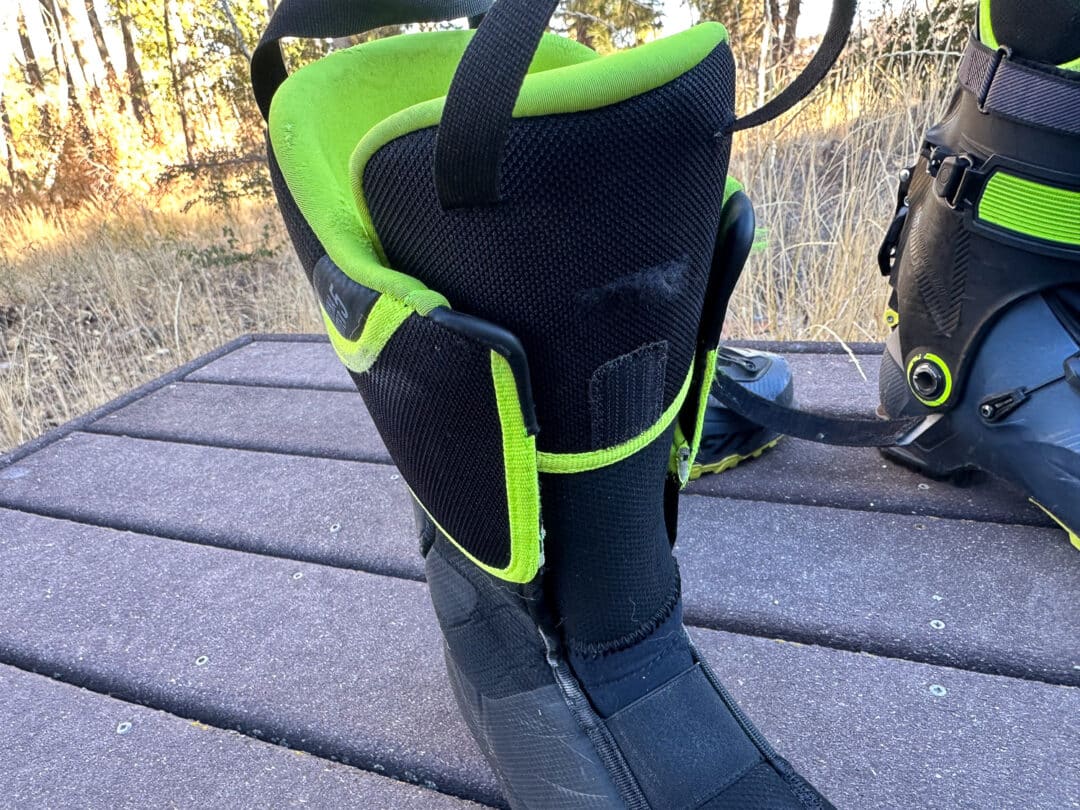
Perhaps Jason will comment on the stock liner, as I didn’t use it much. It is among the nicer Dynafit stock liners I’ve seen,, though, with thick, robust foam around the ankle and tongue and an overall more substantial feel than the liner in the Ridge.
Fit and Bootfitting
Sharing shell molds with the Ridge, there are a lot of similarities between the Blacklight and Ridge fit, with one major caveat: the Blacklight’s tongueless design opens up tons of room for different instep heights. This seems to solve the most common problem with the Ridge fit.
Beyond that, the Blacklight has a relatively wide, medium-low-height toe box. Not quite Radical Pro wide, but on par with or a touch wider than the Zero G Peak. I struggled at times with 5th metatarsal pain when they were tightly buckled, which I think is more about the buckle placement squeezing that zone than a shell-shape issue; with the lower buckle loosened for walking, it never bothered me. The heel/ankle area isn’t cavernous, but it is a little voluptuous for my skinny heels and ankles; it makes for a great fit with my Zipfit Espresso liners, though.
Though it can be a bit tricky to mod carbon-grilamid shells, I don’t foresee a skilled touring boot-fitter having any issues adjusting the Blacklight.
Field Testing
I’ll be honest, I struggled a bit with the Blacklight’s ski performance right off the bat. It took a little while to figure out the root cause, because on paper and on carpet I expected really good ski performance, but I struggled to replicate it out in the field. At first I blamed the short cuff height, maybe my tibias are just too long for a shorter-cuffed boot. Though this wasn’t something I had struggled with before (and taking measurements, they just aren’t as short as they look).
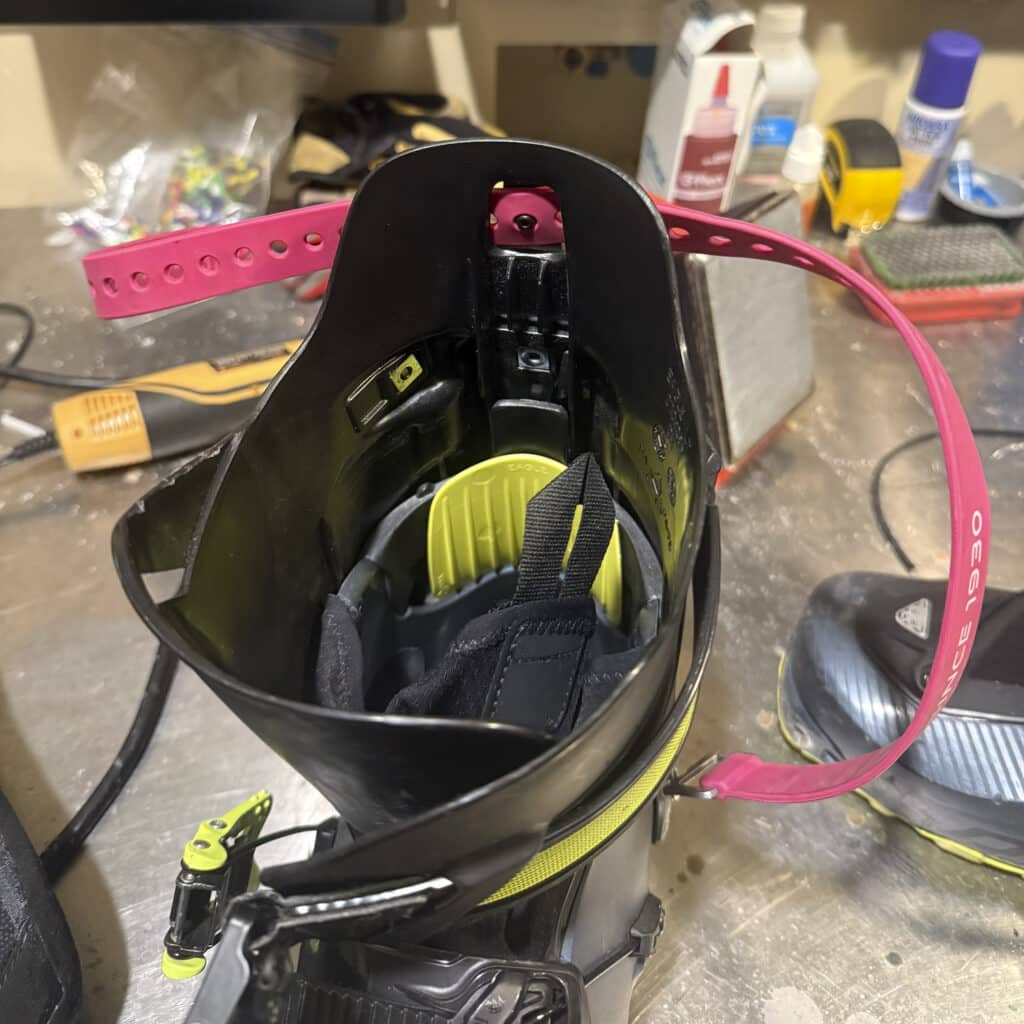
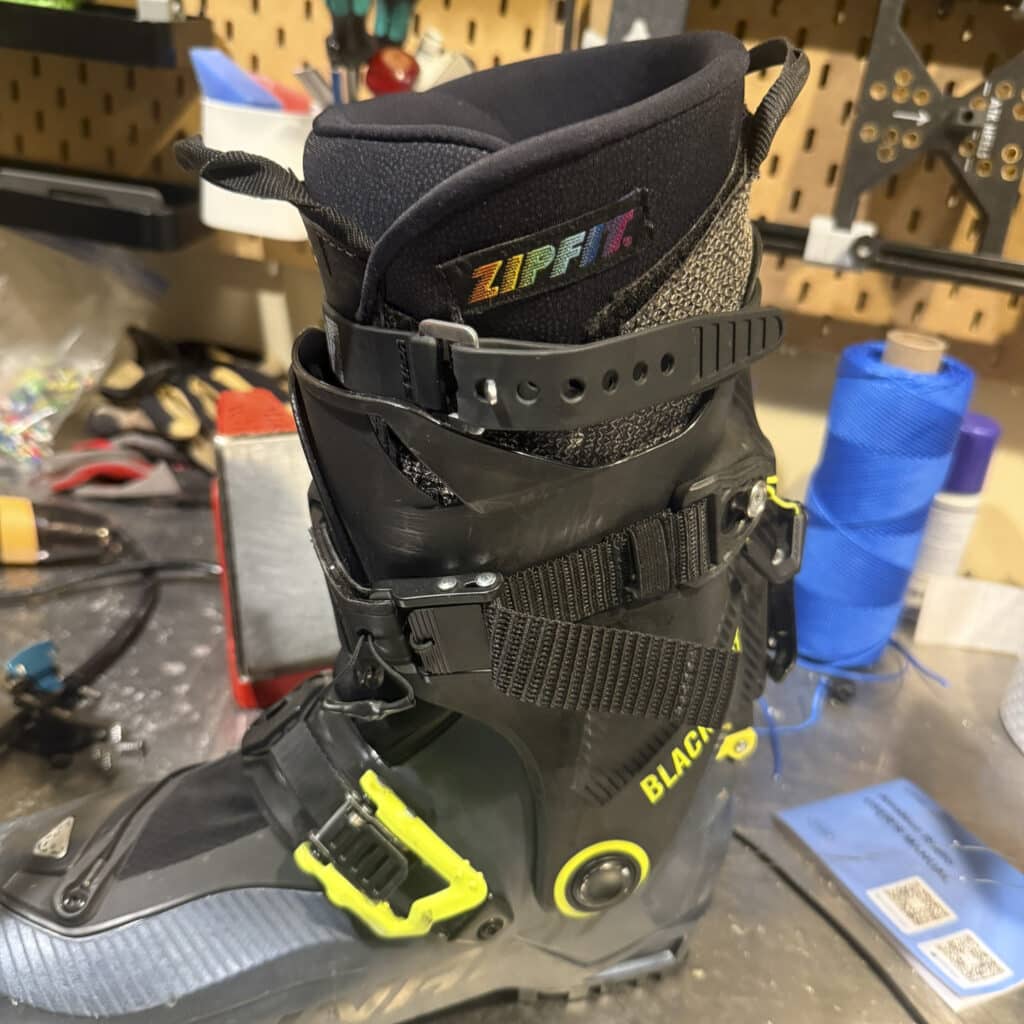
Eventually, my friend and bootfitting/modding whiz Jake Skeen tipped me off to using a voile strap in the power strap position on the Blacklight. Once I tried this simple fix, I realized the issue was keeping the liner/shell in contact with my shin/calf. The somewhat low, single powerstrap upper ‘buckle’ configuration wasn’t providing quite enough tightening pressure, and the position was a bit too low to get solid contact between the upper few inches of the cuff and my lower leg inside it. While the voile strap mod adds a step (and pant leg lift) to transitions, it transformed my skiing experience in the Blacklight. My assessment from here assumes the mod is in place.
It is fair to say that removing a plastic tongue from a boot model will affect the dampness and suspension of a ski boot. That is no different going from the Ridge to Blacklight. I was impressed at how little this affected the skiing performance in this case, though. I’d ballpark a 15% reduction in ski performance/suspension with the Blacklight. And for me, the walking performance is worth it.
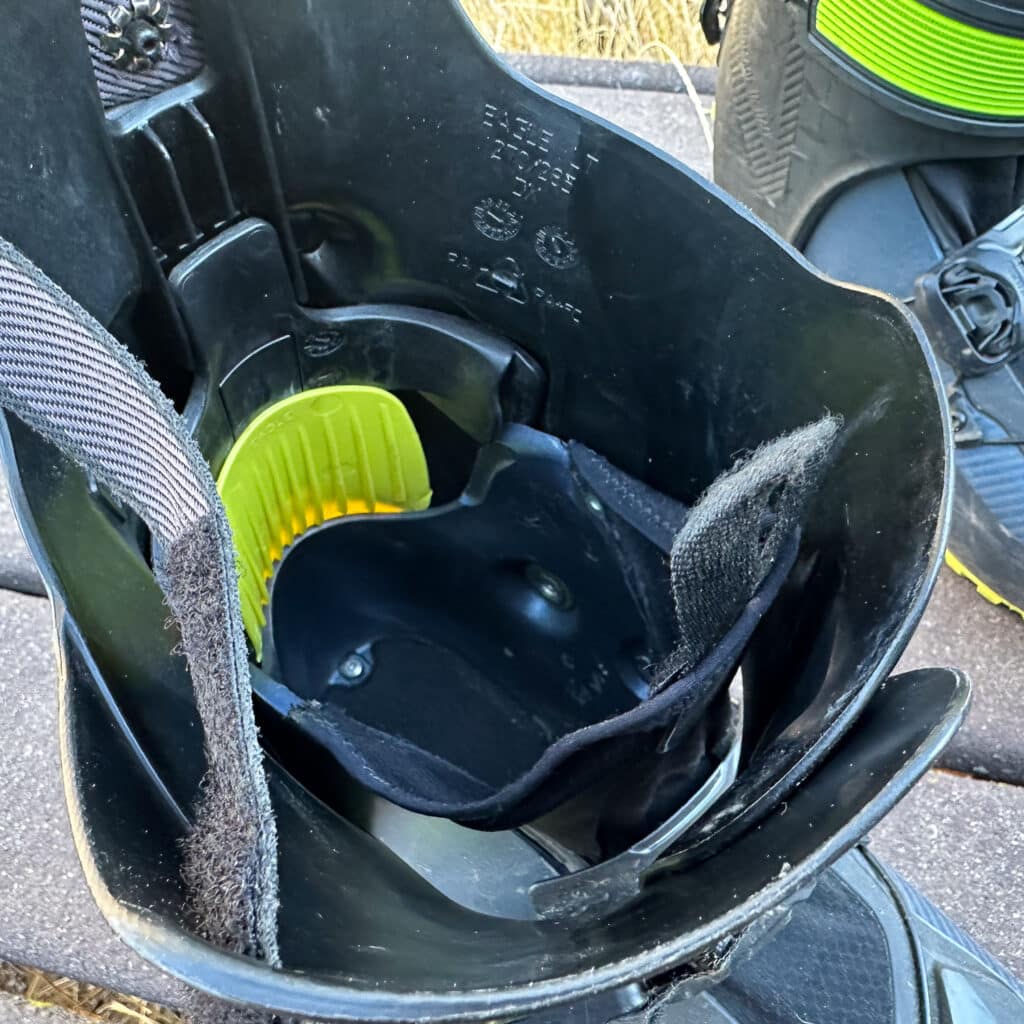
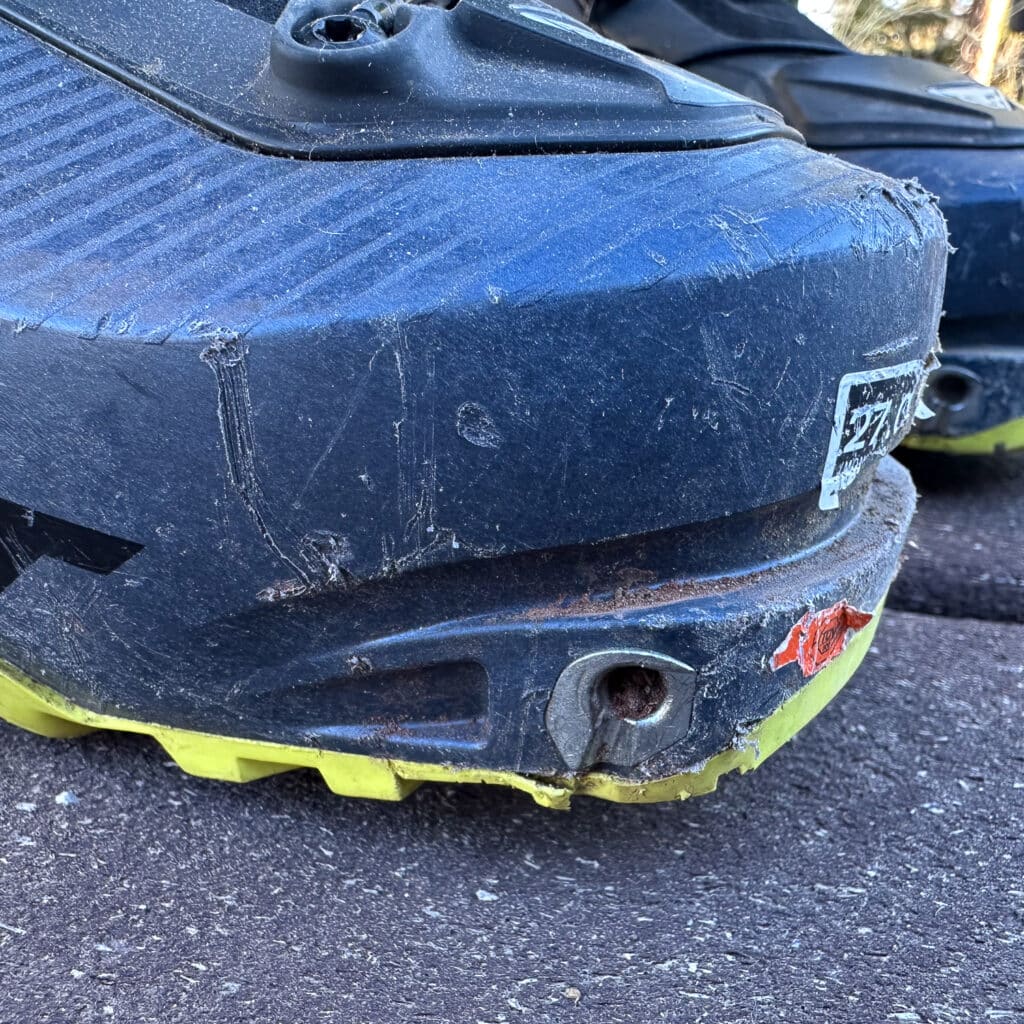
Speaking of walking performance, I found the Blacklight extremely low friction, and its range of motion is larger than my ankle can handle. It walks better than the Zero G Peak and is best compared to boots in the 1kg class. Without a liner, it offers very little resistance to cuff pivoting, so liner choice will likely be the biggest factor in limiting or allowing this ROM to run free. It blows other 2+ buckle boots like the F1 RS and Kilo XTR out of the water, despite their relatively good walking performance. The only 2+ buckle boot that comes close to the Blacklight’s walking performance is the Backland XTD, though the Blacklight is still a fair bit better.
If the walking performance is an outlier relative to the Blacklight’s weight, the skiing performance is right where it should be, as it correlates with weight. Relative to 1kg models, it feels refined and damp, with a somewhat progressive flex pattern and less harshness than a Zero G Peak, F1 LT, etc. Meanwhile, it feels less contiguous and supportive than its big brother Ridge, which, for me, sets the bar for ski performance in the 1300-1400g weight class. Relative to other 2+ buckle models, the cuff feels shorter and a bit less supportive, despite Jason’s measurements proving it pretty similar. The F1 RS and Kilo XTR both feel more substantial and connected in challenging snow or aggressive skiing. While the Blacklight is stiffer overall, the ski experience isn’t too different from the Backland XTD, at least before the XTD developed significant pivot slop.
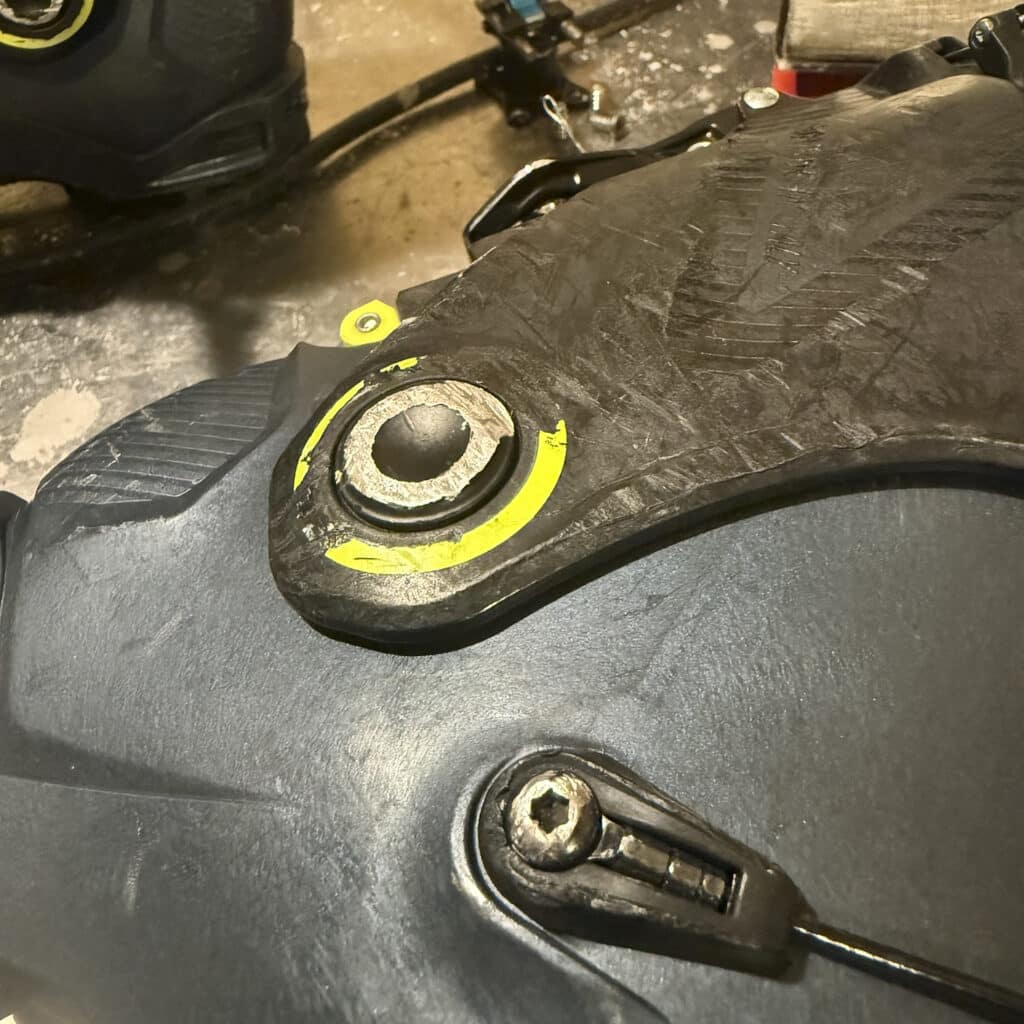
The Blacklight has developed a hint of play in the walk/ski mechanism; surprising only because I expected the Hoji lock to be play-free for the long haul. It’s not noticeable while skiing, only aggressively carpet flexing.
Conclusion
Overall, the Blacklight provides an impressive level of walking performance with great skiing performance for its svelte weight. It harkens back to a few years ago, when 2+ buckle boots like the Backland XTD shifted my paradigm toward prioritizing walkability over weight, but the Blacklight sweetens the deal with meaningfully less mass than other 2+ buckle contenders.
The Blacklight really blurs the lines categorically, and I think it would be well suited to many skiers for this reason. The Blacklight could be a good fit for a 1kg boot skier looking for better downhill performance without sacrificing walkability. It may also work for skiers who prefer a lightweight option but usually choose a heavier, more damp boot like the Zero G or more. These folks will need far less adjustment compared to switching to a stiffer, more upright 1kg boot.
With a Zipfit Espresso, the Blacklight was my daily driver throughout last winter, particularly until the F1 RS showed up and started stealing my attention. While there are always more boots to review, I have no intention of giving up the versatility and amazing walking performance in a “real” ski boot that the Blacklight offers.
Specs
Total Weight: ~1284g (expect weight to bump up with an aftermarket insole and an Espresso liner)
Shell Weight: 1004g (size 27.5)
Liner Weight: 280g (size 27.5 stock insole)
Sole Norm/Compatibility: Tech only
Materials: Carbon-Grilamid
Fitting Notes: Wide, low-height toe box, accommodating instep, roomy heel/ankle
If you are keen on speaking with a real person about gear, check out the good folks at Cripple Creek Backcountry—they support our reader-first mission online and in print.
(The above is not an affiliate link.)
Leave a Reply
You must be logged in to post a comment.