
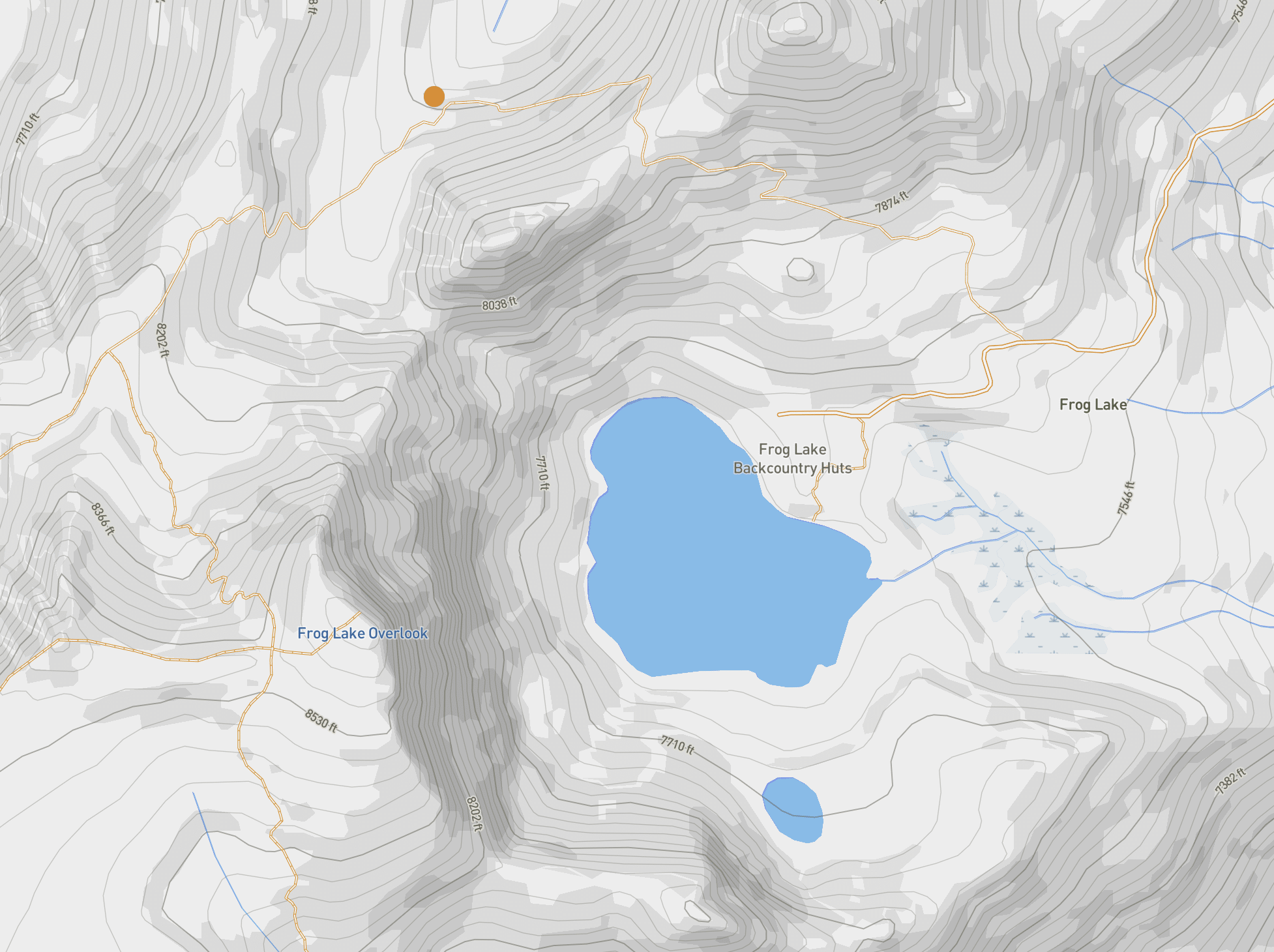
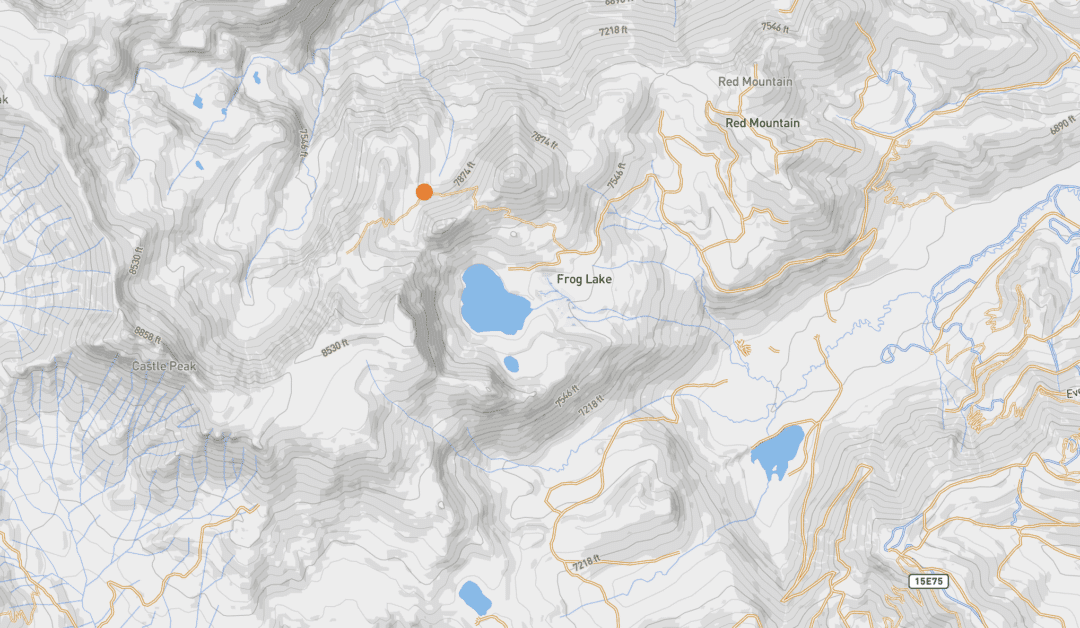
Wednesday afternoon, the Nevada County Sheriff’s Office held a press conference with several agencies involved with rescue and recovery efforts relating to the avalanche near Donner Summit. The press conference infilled some outstanding details relating to the accident and the subsequent search and rescue mission into the Frog Lake area adjacent to Castle Peak. The peak, a popular backcountry zone, sits just north of I-80 on Donner Summit. While Frog Lake lies a bit northeast of the peak.
Nevada County Sheriff Shannon Moon stated that the original manifest for the trip listed 16 total tourers. However, shortly before the trip, one person backed out. Moon went on to state that of the six individuals rescued, one was a guide, while the remaining five were clients. Of the nine total individuals taken by the avalanche, eight have been located and confirmed deceased, while a ninth remains unlocated.
As noted, this was a guided trip, with four guides total—three of whom are included among the nine remaining tourers in the incident zone. The ninth individual is also presumed deceased.
Initial Response
A SOS distress call was received by the county dispatch around 11:30 am on the 17th. Response teams were activated, with nearly 50 search-and-rescue members dispatched to north and south staging areas. According to Moon, a snowcat inched within two miles of the accident site before it became clear that ski travel was mandatory. A SAR group set off on skis and by 5:30 pm made contact with the six survivors. Two of the six suffered injuries that prevented them from walking/skiing on their own and required assistance, while the remaining four could ski to the awaiting snowcat under their own power. The two injured tourers were brought to the hospital; one has been released, while the other incurred non-life-threatening injuries and is expected to be released shortly.
What is also clear now is that the surviving guide was able to use the iPhone’s satellite communication capabilities to send and receive text.
The Scene
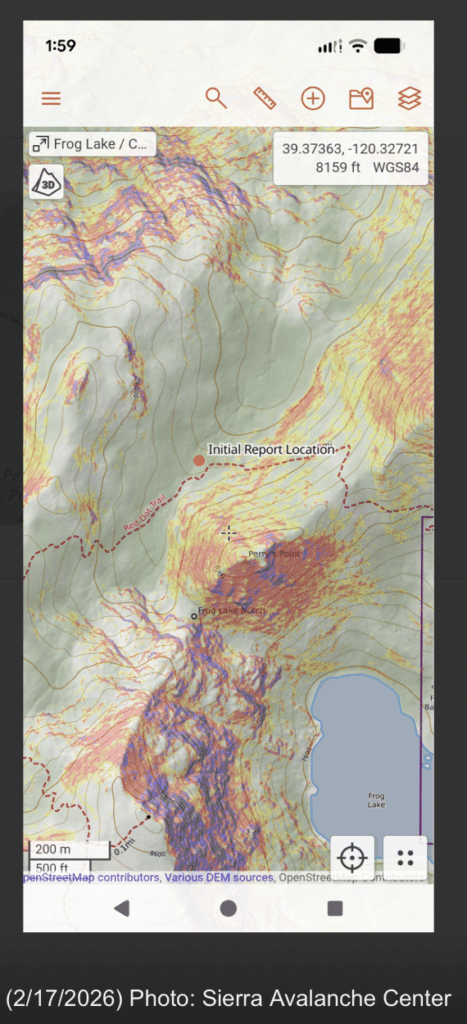
A member of the Sheriff’s Department stated that as the group was attempting to exit the Frog Lake area, the tourers were fairly close together, moving as a group, when a member saw the avalanche, “yelled avalanche,” and the moving snow quickly overtook the group. No other details regarding the scene immediately after the avalanche were given. However, it was confirmed that by the time the six survivors awaited rescue, they had located three members of their group, all of whom were deceased. Upon the arrival of the search and rescue team, and after the group of six were stabilized, five more bodies were discovered.
The Forest Supervisor for the Tahoe National Forest, the forest that hosts the Sierra Avalanche Center, Chris Feutrier, said the avalanche was approximately a football field in size. He continued, “A persistent weak layer had a large load of snow over the top of it. That persistent weak layer is still there and has reloaded with another three feet of snow. The hazard remains high.”
The Sierra Avalanche Center’s Instagram posted this statement on Feb 18, “The Feb. 10 facet layer exists on NW-N-NE aspects in mostly wind-protected terrain above around 7500 feet. The avalanche accident that occurred yesterday may have involved this weak layer. Avalanches involving this weak layer would be large to very large in size, could break wider than expected, and could be triggered mid-slope or below.”
On the Sierra Avalanche Center’s site, it lists the following characteristics about the avalanche:
Aspect: North
Elevation: 8,300 ft.
Vertical Fall: 450 ft.
Destructive Size: D2.5
Problem Type: Storm Slab
Trigger: Unknown
Terminus: Bottom of path
Leave a Reply
You must be logged in to post a comment.