
This season might put a dent in the participant numbers, but if you didn’t already know, backcountry riding’s popularity is on the rise. Most beginners with the means to do so take a Recreational Avalanche Level 1 course. These courses are offered seemingly every day around the country. On the AIARE website alone, for the remainder of the season there are 225 courses to choose from. You would have to do some slick traveling, but starting today and running until May 3rd, you could matriculate in an level 1 avalanche course every single day.
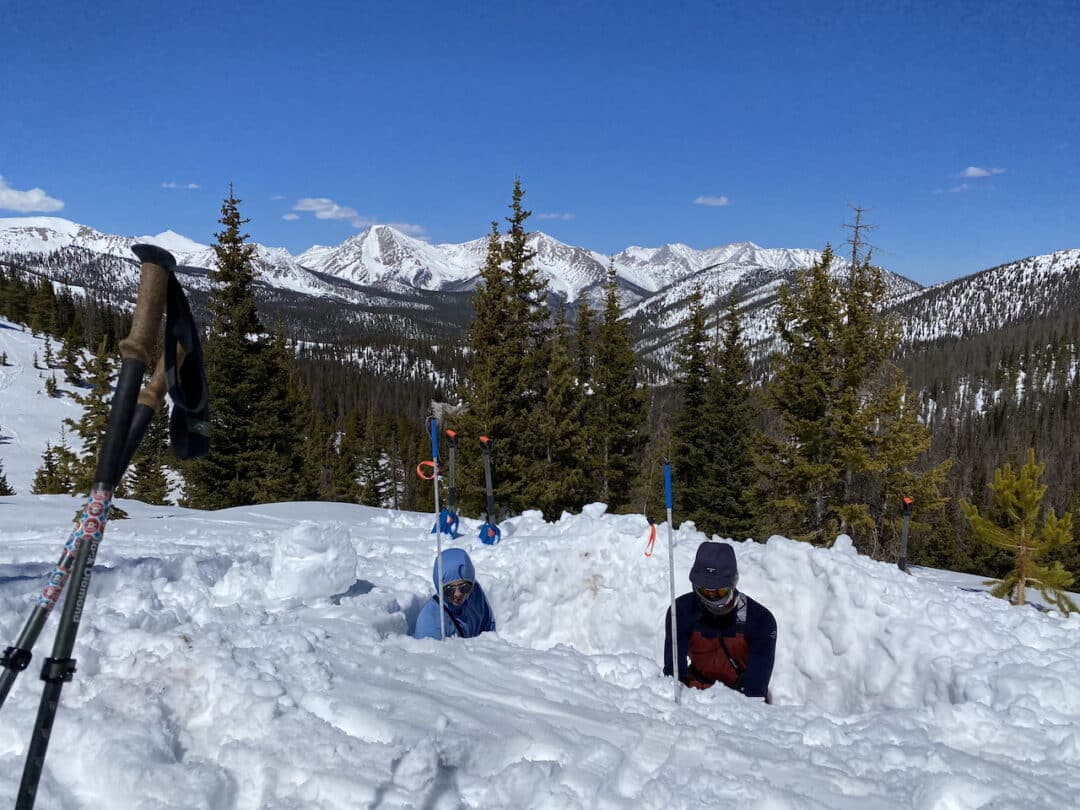
These courses offer a great introduction to backcountry travel and avalanche safety, and, to the chagrin of most instructors, more often than not, how to deploy skins and walk uphill. Below is an image of me digging my first snow pit, where I found 0 layers; it was April in Colorado.
In order to fill in some of the gaps after taking a Level 1 course,here are a few tips and tricks I have found to buttress my backcountry-knowledge foundation. For most of these I will try and refrain from any gear dependent tips.
While there is no definitive “right” and “wrong” way to tour, I do believe there is good-travel style and etiquette. As such these are the skills I think about most frequently.
Packing Tetris
Before we even get to the mountain, let’s talk about how I pack my bag. I almost exclusively use the Blue Ice Yagi 28. This is a small backpack, but I prefer it that way. With a smaller bag, my items, for the most part, stay in the same place. The smaller volume means, ideally, there is less internal gear migration once I have Tetrised my essentials in place.
When space is tight, I think about when I’ll need each item. Will I need it more than once? Only at the start? At the end? In a hurry? I open my bag from the top and pack bottom-up. (This pack is a top-loader with a back panel access.) Items I’ll rarely (if ever) touch, rescue sled, crampons, technical gear go on the bottom shelf. Water and food are arranged against the back panel so they’re accessible when I remove my pack and unzip the back panel. I top load my extra clothing layers . Everything has a place, and when I zip it up, I know exactly where that place is.
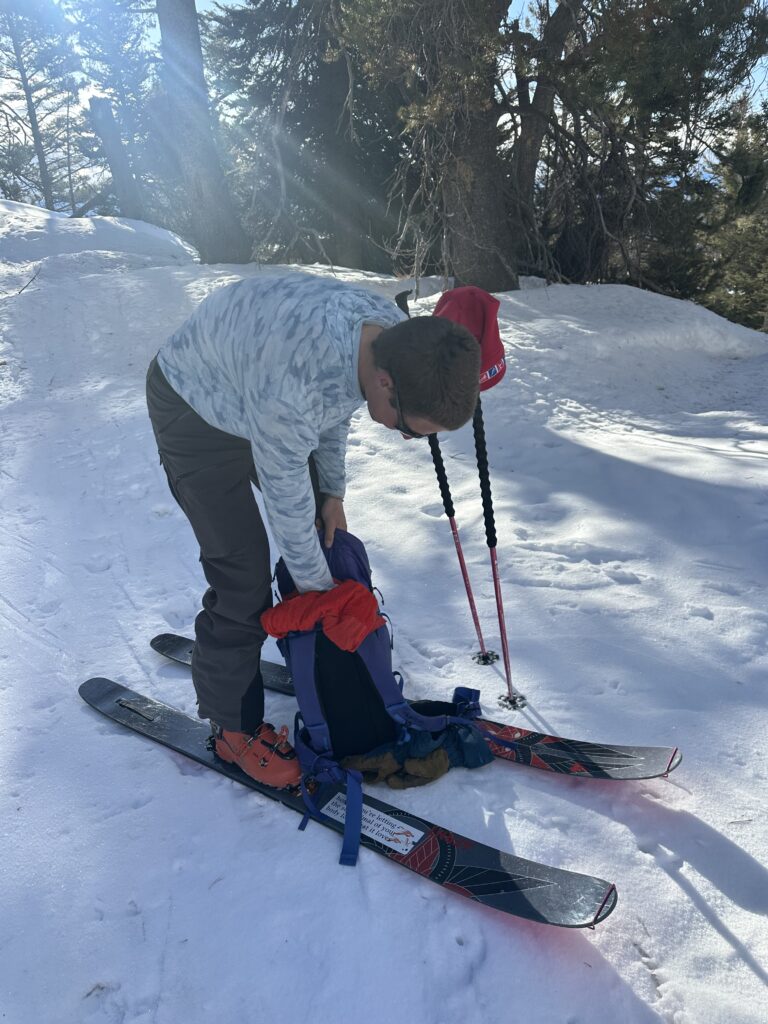
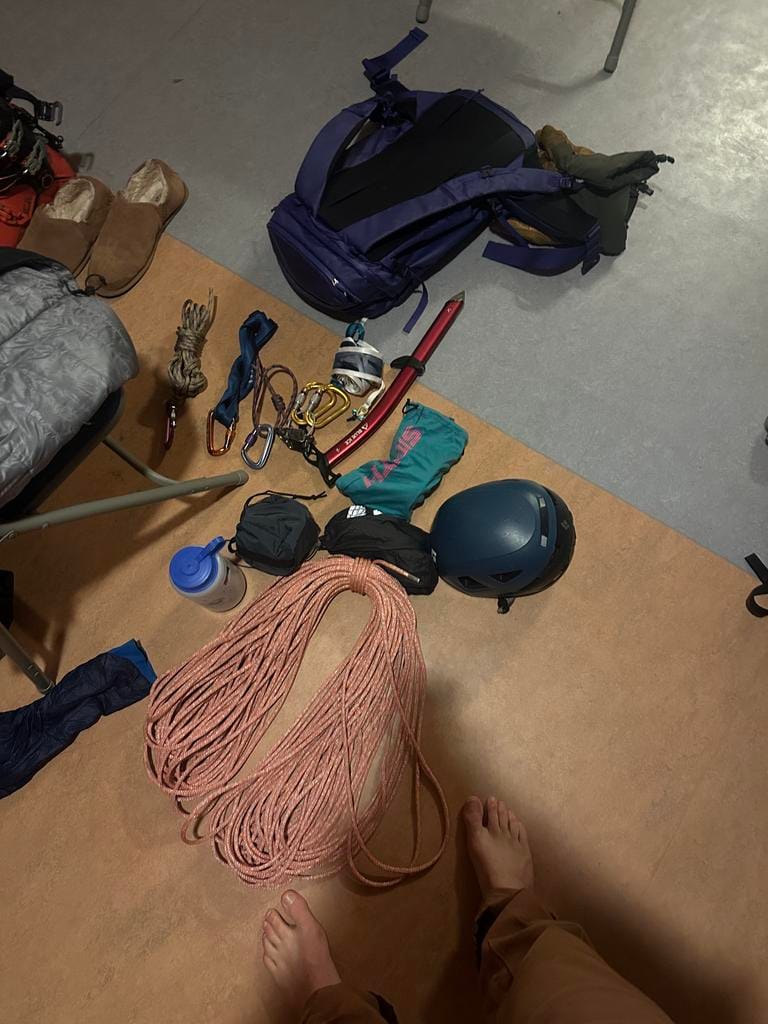
More important than my specific system is simply having a system—one that lets you reach for anything without thinking. Also, items such as a first-aid kit or a satellite communication device should be readily accessible.
Movement intentionality
There are a handful of “crux” moves on the uptrack that will expose you early and haunt you often. Two of the biggest: the kick turn and maintaining purchase on a steep-slippery skin track, neither is intuitive.
The kick turn is hard to explain in text; here is a straightforward how-to by Volkl. The mechanics are worth understanding before you watch it. The move is a 180-degree pivot on a slope, and where people go wrong is rushing it. You swing the uphill ski around, plant it, and immediately try to bring the downhill ski over before you’ve settled your weight; that’s how you end up doing an involuntary split and have your life flash before your eyes. Take the extra half second. Get stable on the first ski, then bring the second one around. And keep that uphill leg close.
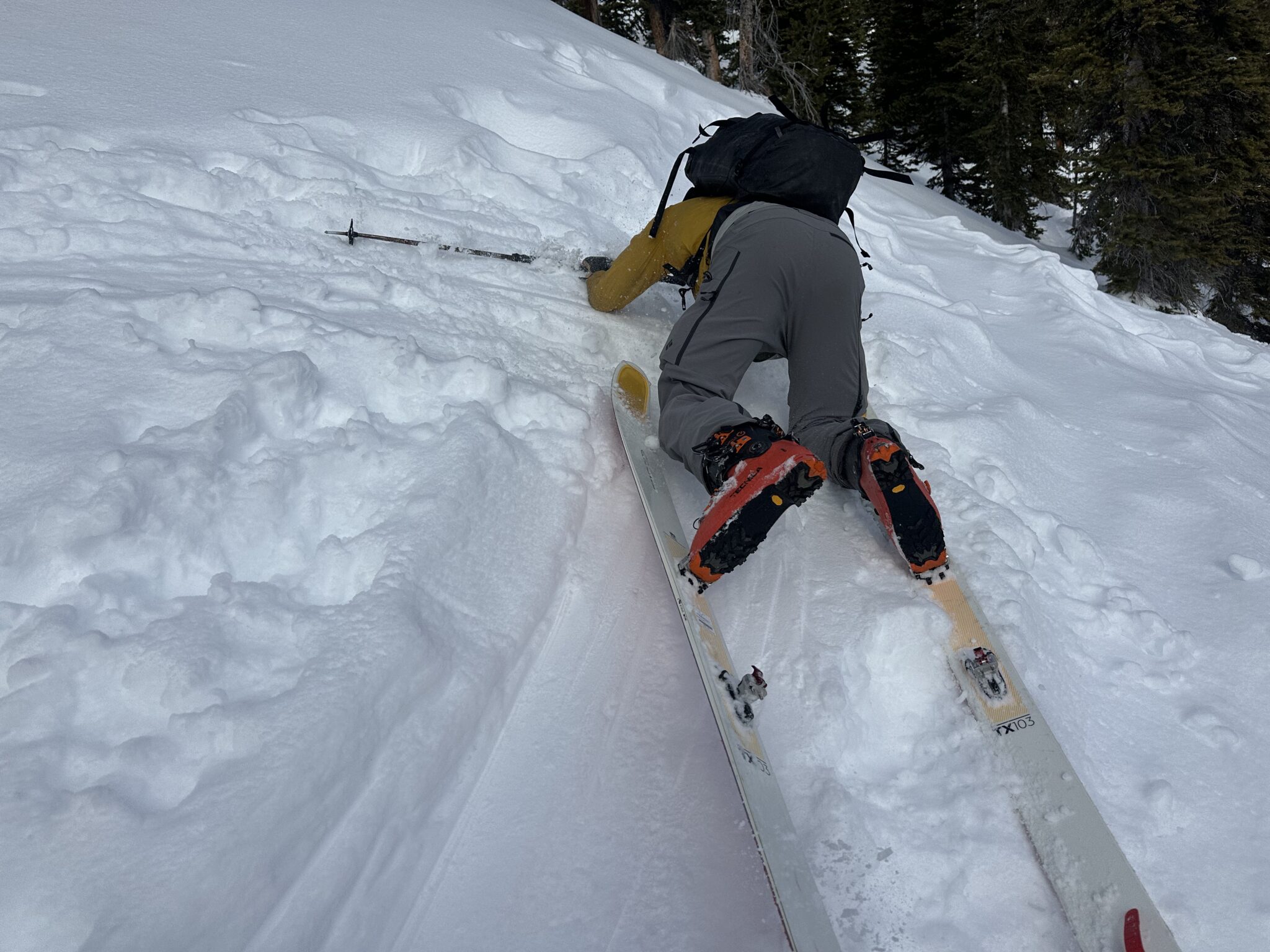
The crux of the kickturn is returning the uphill ski to parallel while keeping the tip up. What often happens, as my friend Porter demonstrates below, is that people will kick their leg back as far as possible, fully committing to their best involuntary warrior three pose waiting for gravity to pull the tip up. This wastes energy and your dignity. The video demonstrates the most common way, additionally bringing your knee to your chest also pulls the tip of the ski up with less movement.
For steep skin tracks, everything your body wants to do is wrong. The instinct is to lean into the hill, hunch forward, grip your poles like you’re trying to leave handprints in the cork. This kills your edge contact and makes your skins work against you. What actually works is driving your hips forward and keeping your weight directly over your feet. “Hump the air” is the cue I use. Think about pressing the full length of your ski into the snow. On pole placement, plant slightly downhill of your foot, not directly beside it, and push down through them rather than pulling yourself forward. When it clicks, steep skin tracks stop feeling like a fight and start feeling like just walking up a hill.
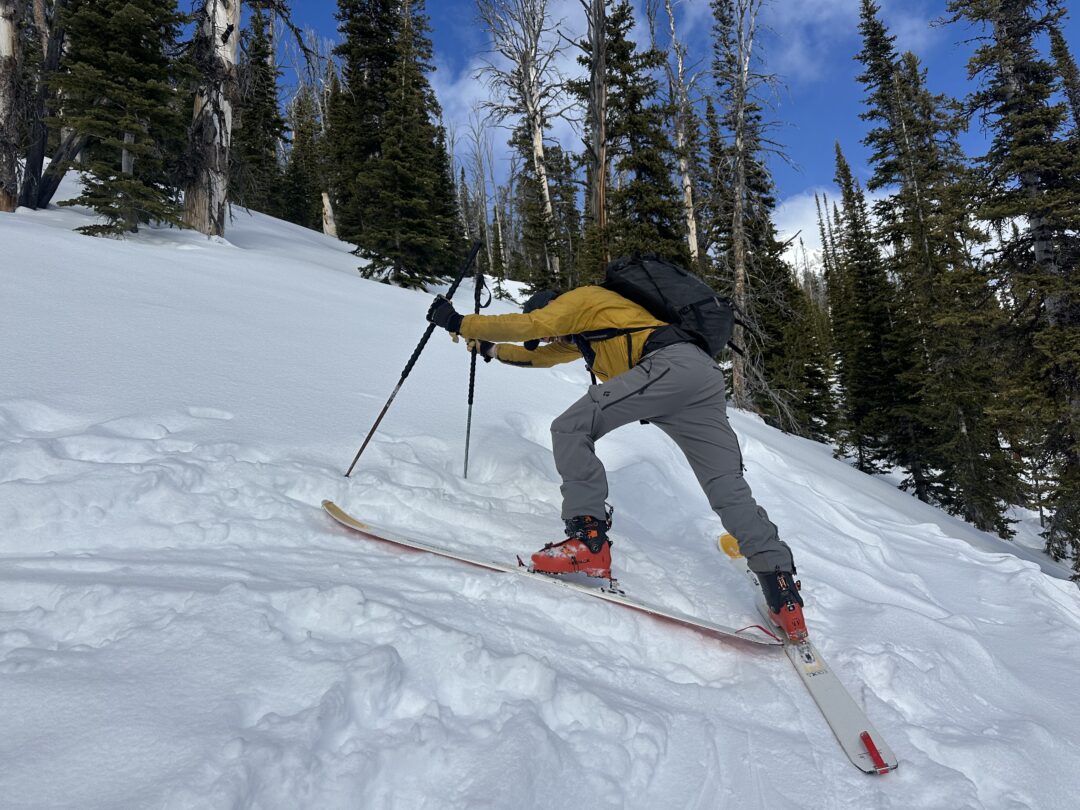
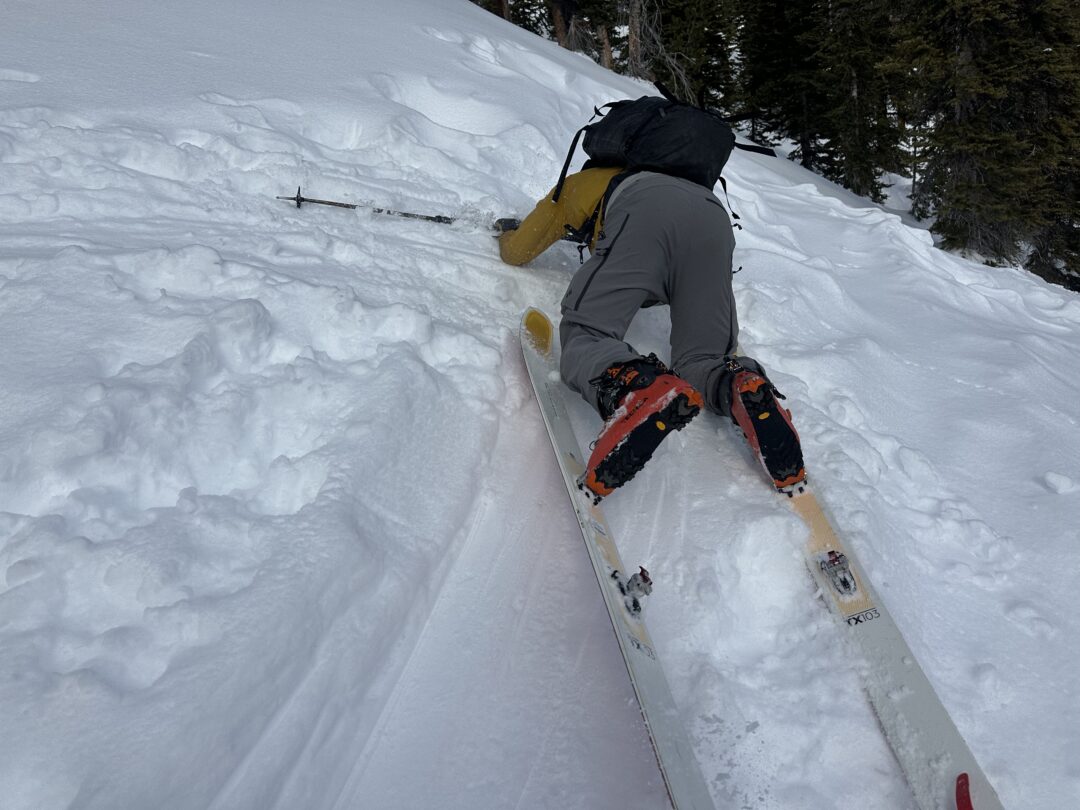
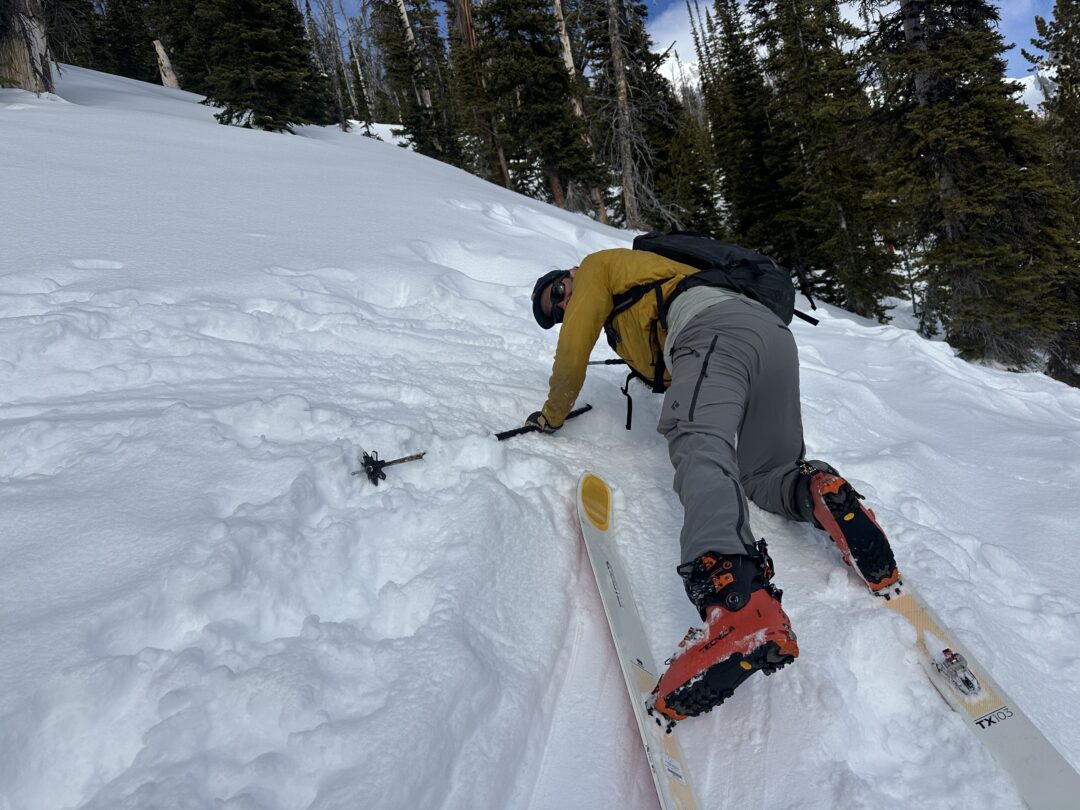
Intentionality ties all of this together, practically, not philosophically. A kick turn on autopilot is usually a sloppy kick turn, and a hundred sloppy kick turns make you inefficient at kick turns. Slow it down, think about what your hips are doing, and notice whether your edges are actually gripping. Every rep is practice.
Layering
Layering is a much lengthier conversation, but my tip is to mess around with it, find a system that minimizes transition time and maximizes comfort. Fashion may need to take a backseat. Below you can see my mom in her driving-around-town shades bracing against 50-mile-per-hour gusts,looking like she’s about to ask to speak to the mountain’s manager. In contrast, look how happy she looks in her slick sport shades I gave her.
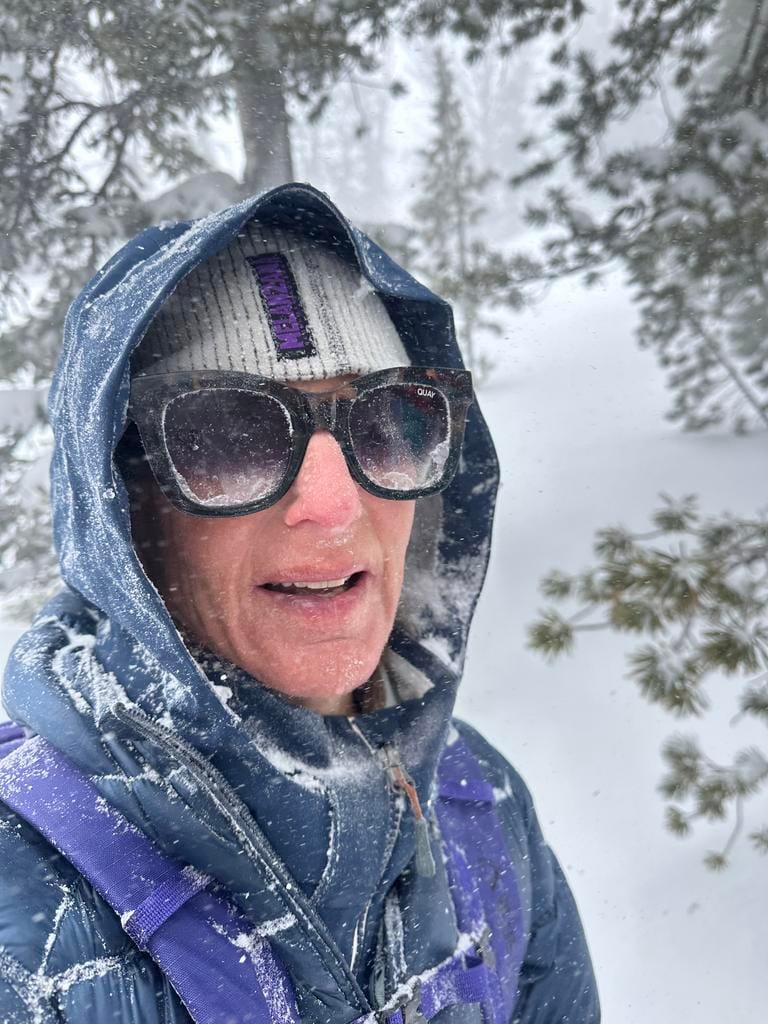
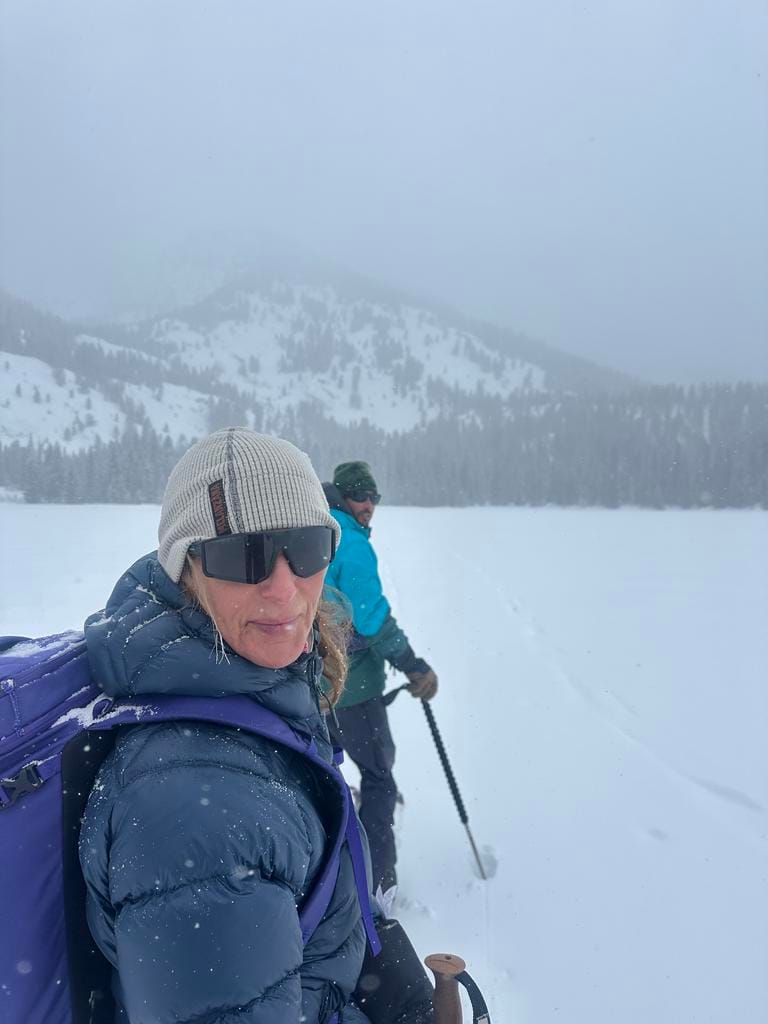
The thing nobody talks about enough is that heat regulation is deeply personal. How many times have I kept a layer on because the person next to me did, only to arrive at the top with my fleece soaked. Your thermostat is not their thermostat. This extends beyond just base layers and midlayers, messing around with different weights of hats, gloves, and socks is how you actually discover your system. A thin merino liner versus a beanie versus a baseball cap can be all the difference
When I began, I was told to never sweat while touring because it will freeze on my body, and cause hypothermia. If you never sweat while you are touring then you probably aren’t going fast enough. But there are exceptions, if you have soaked through your warmest puffy you might want to consider taking it off.
Transitions
There are mandatory steps to do—in no particular order—to pivot and ski or ride downhill. There’s flipping boots from walk to ski mode, ripping skins, storing skins, flipping bindings, donning a helmet and goggles, layering up, snacking and hydrating, etc.
My philosophy is to complete every step before I take a food and water break. I do this in order to allow my body to rev down a bit and idle toward homeostasis before gorging food as well as to maximize efficiency. All the other steps need to be done, food and water are the bonus, but are still essential. Additionally I like to do tasks that require nimble finger skills first while my hands are warmest. Adjusting layers, fiddling with boots, or any task that is difficult with my warm gloves on is done first.
On gloves specifically: I primarily tour with a single warm pair and ski with my hands bare for most of the uptrack. I know that’s not everyone—my hands run hot, and most people carry a lighter pair for the climb and a heavier pair for the descent, which is the more sensible system. I wear the Black Diamond Glissade Glove for warmer days and the Soloist Glove for especially cold days.
Quick tips
- In the event of a skin failure rub your skin on your butt like you are polishing a bowling ball. The larger surface area warms up the glue and melts the snow faster than the edge of your ski.
- Don’t be afraid to skin without gloves in cold temps. Your hands act like radiators, bare skin dumps heat fast, which lets you regulate body temperature without stopping to strip a layer. Just don’t let them go numb
- Practice with new gear at home first, nothing worse than a boot that doesn’t fit a ski at the top of a run.
- I carry a readily accessible ski scraper and skin wax at all times, if conditions get gloppy having a good solution can save the day.
- Looking at more experienced travelers’ systems, I learned all of this from observing those much better than me and picking and choosing what they did that I liked and didn’t like.
The through-line in all of it is just paying attention to how you pack, why you’re sweating, and, for example, whether your kick turns are actually getting better and becoming more automatic. Intentional is the word I keep returning to. It’s the difference between simply logging days and building skill sets that makes you more efficient and more proficient. Happy turns
Leave a Reply
You must be logged in to post a comment.