
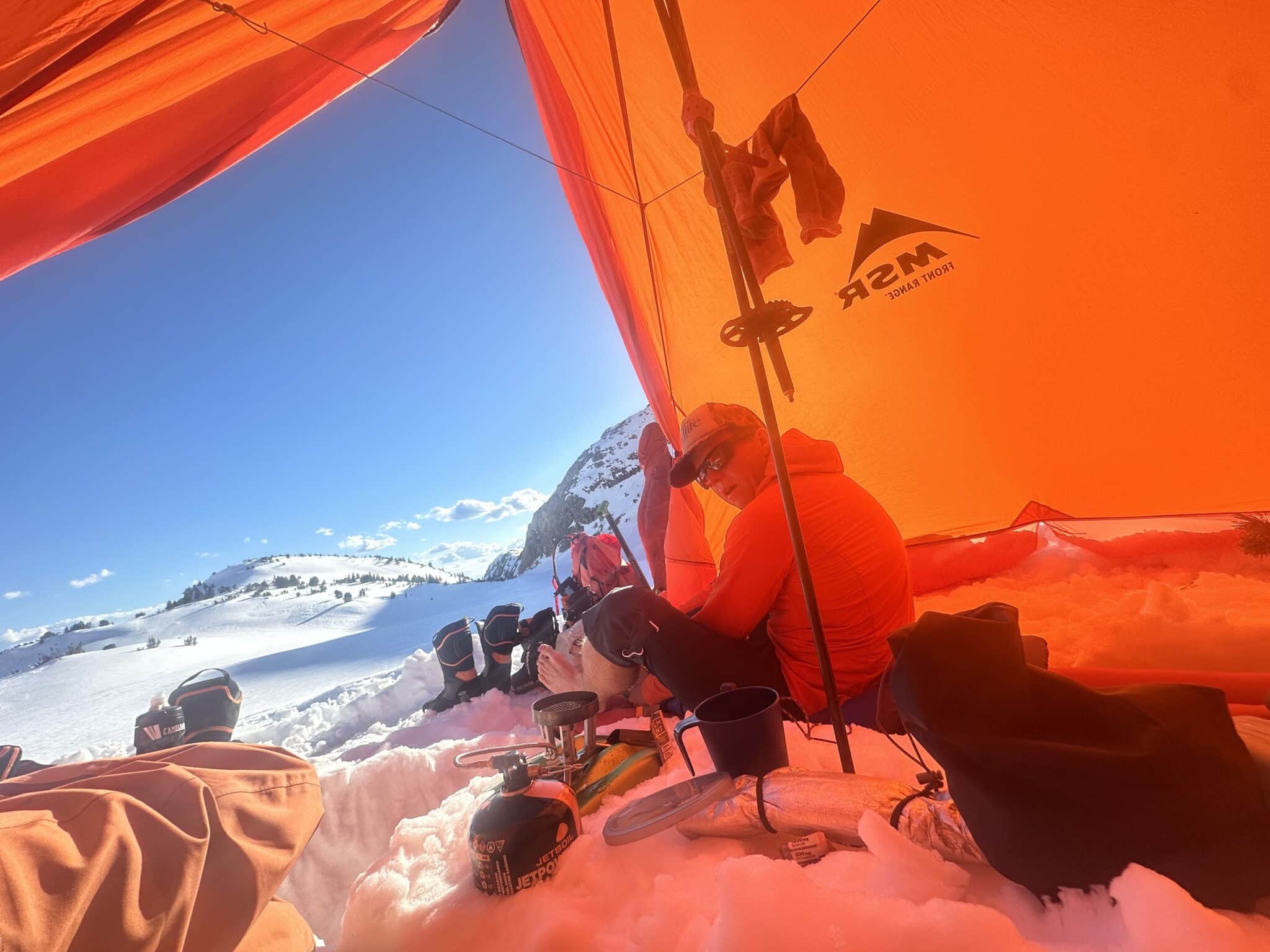
Editor’s Note: Water. What is it good for? Absolutely everything.
That pretty much sums up how and why we rely on stoves in the touring scene. We rely on stoves for drinking water (melting snow) and heating water, for rehydrating food, and sometimes, and also very important, for cooking food. So, it goes that nutrients matter, too. Gavin Hess (our Gear Editor) and I wanted to chat about stoves and best use cases for different models, and if we’ve learned anything after all these years of faffing with this or that type of fuel, or field-replacing a stove part in the field. Here’s our discussion with some light edits to remove most off-topic digressions.
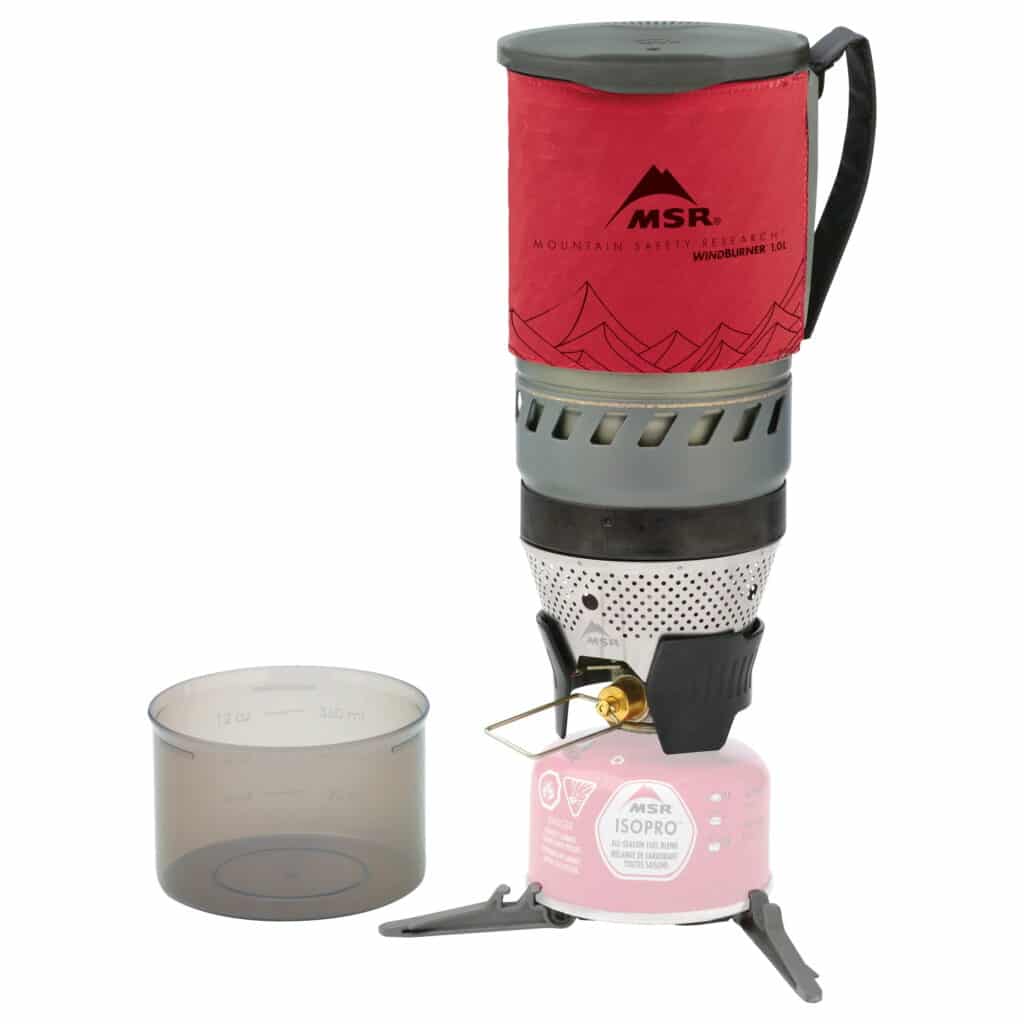
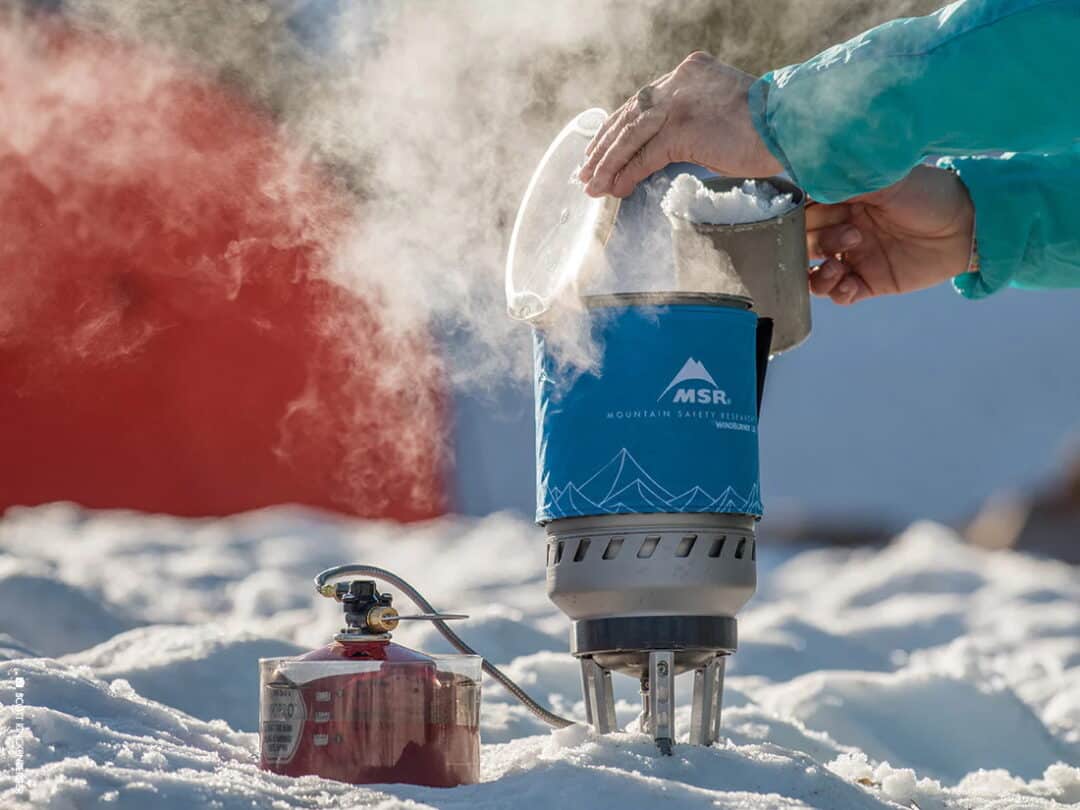
Jason: Stoves. A podcast I listened to, the Evoke Endurance Podcast with Sam Hennessey as a guest, got me thinking about stoves. I recall Sam discussing the use of multiple MSR WhisperLites under a single pot to melt snow more efficiently. It’s been a long time since I regularly used a WhisperLite, so it got me thinking: maybe I’m missing some use cases where a WhisperLite, or a more minimalist stove, would be beneficial. So, let’s jump right in and talk about the Big One (Denali) and which stove is most suitable.
Gavin Hess: Well, it depends a little on the group size. But for our purposes, let’s assume it’s a small group, because I think, probably, very few of our readers are going on a nine-person expedition. In some ways, the WhisperLite is like the Kleenex of white gas stoves, and we could sub in an MSR XGK or Dragonfly. WhisperLites are nice over the course of a long trip, though, because they’re significantly quieter, despite still being somewhat loud; they’re significantly quieter than many stoves, so you’re much less likely to talk too loudly and get into trouble with your neighbors.
That said, here’s where a WhisperLite has a use case. I like to bring a pretty big water pot on trips where it feels more expeditionary and less fast and light. I begin to think about the time spent melting water versus essential weight savings, and the cost-benefit skews more toward saving time than the weight and space of a large melting pot. If you have even just 3 to 4 people, and each requires two liters of water (at least) to function. Having multiple stoves under a single larger pot saves time. I see a lot of private groups with these tiny little 2.5-liter water pots, and for three people that want two liters each for the day, and then a little bit of water to make breakfast, suddenly you’re turning what could be a relatively quick process—if you go to bed the night before with a full pot of water—and then you maybe have to melt a little bit in the morning while you’re cooking breakfast and it turns into an hour long plus process melting water, filling bottles, melting water, filling bottles, and going to find snow to make more water.
Having a big water pot alleviates some of those issues. Find one of those enameled stock pots that are probably five to eight liters in capacity. They are pretty sweet. On a big nine-person Denali trip, I’ve carried a 10-quart stockpot.
And then, as Sam explained in that podcast, stacking stoves under the larger pot pays dividends. It can take 20 minutes to melt water instead of at least an hour with a single stove.
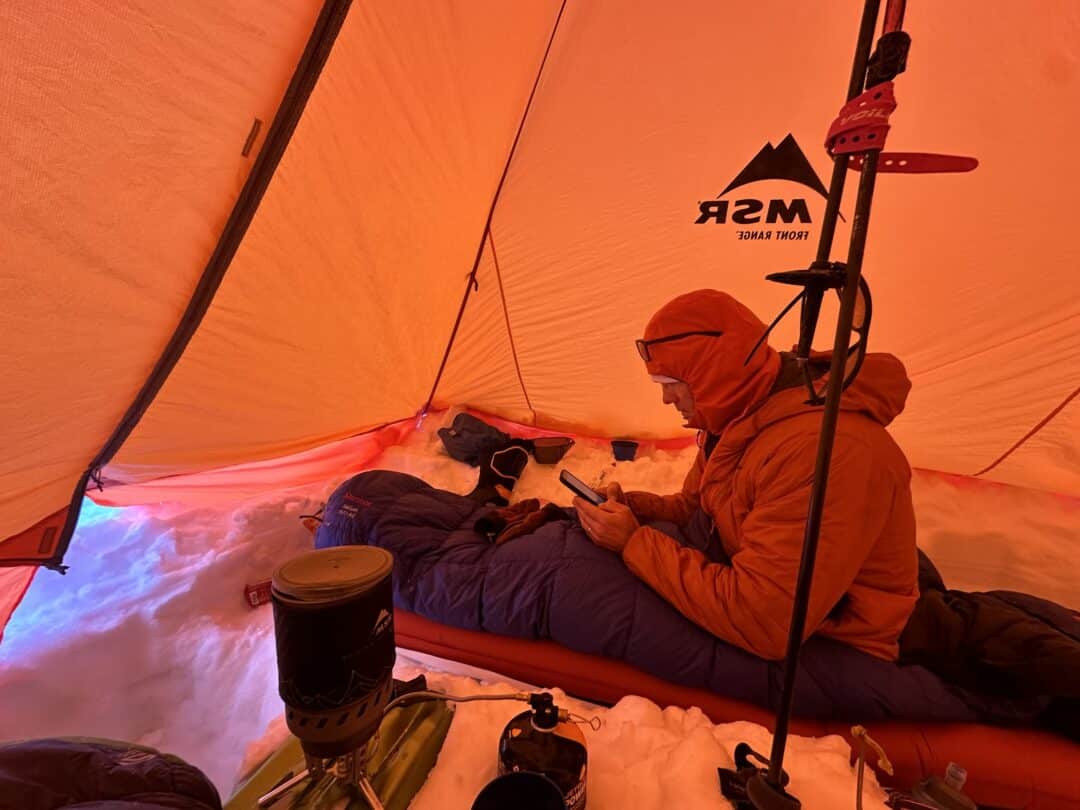
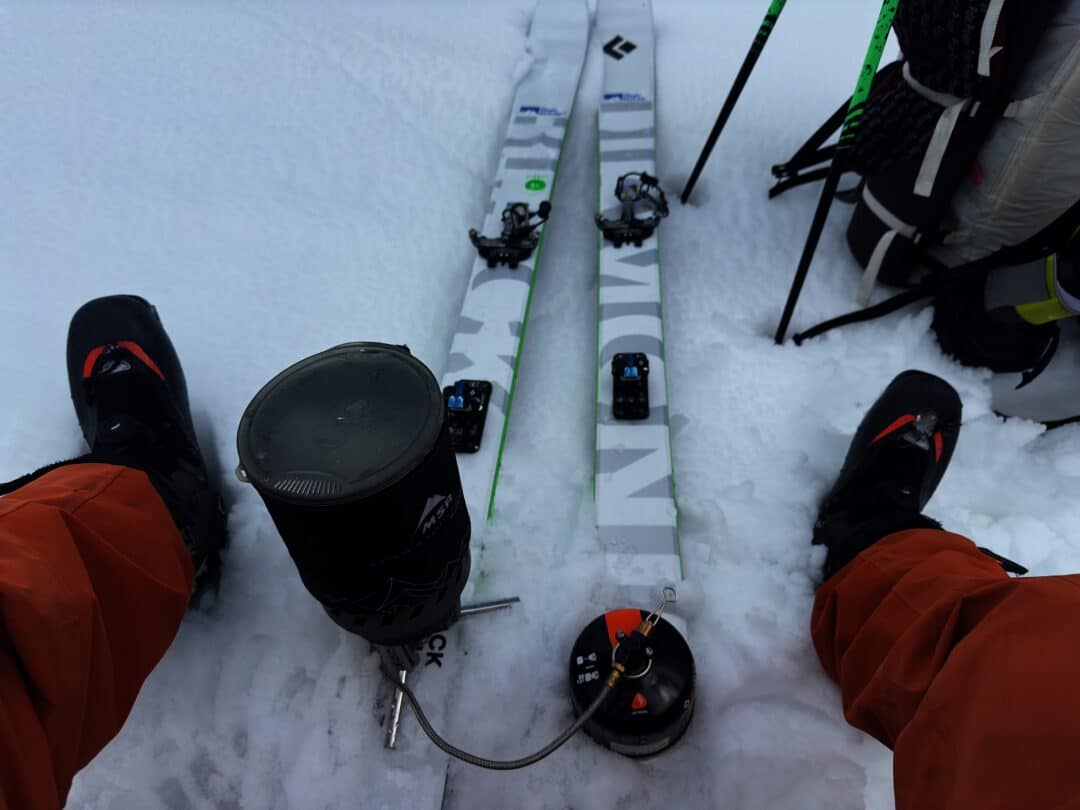
Jason: Over the past few years in the Wind Rivers and doing traverses, we’ve been bringing a MSR WindBurner Duo Stove with a 1.5-liter pot. This is the WindBurner that has a remote canister; it is not the stacked personal stove system. (See photos.) It worked great, but even with the 1.5-liter pot, it takes considerable time to melt snow for drinking. What does your stove system look like for smaller group efforts in the mountains, where snowmelt is required for drinking water?
Gavin: Let’s call it two or three people for more than a couple nights, and I start thinking about bringing a white-gas stove. I think that remote canister Windburner Duo you have, or a couple of canister stoves like a WindBurner or Reactor could make sense as well. Having two stoves makes the melting and cooking process faster. I think the biggest differentiator comes down to what you’re trying to eat—if you’re just boiling water to eat freeze-dried food, and it’s not horribly cold, then canisters are simple and easy. You don’t have to deal with maintaining the pressure with the isobutane canister when it’s warmer. When it’s cold, those isobutane canisters become significantly less efficient.
But all that being said, I think a lot of the time, call it a five-day trip with three people, where you’re actually trying to cook some real food. Then the remote canister stoves make a lot of sense. Like, there’s a huge difference between going on an expedition where you have a menu and you’re cooking food and going on, like, a quick-hit trip where you’re going to make do with some freeze-dry food and ramen and oatmeal for a couple of days. That’s where a stove like a Reactor can be beneficial. With a remote canister, inverting the fuel canister helps a lot with efficiency—rather than needing a warm bath or something with the integrated or stacked stoves.
Jason: Do you see an application for using a small stove like a PocketRocket for touring applications?
Gavin: No, not really. The problem with those is that setting them up on snow can be tricky. You’ll need a stable, flat platform. Even backpacking in the summer, I feel like I’m more prone to knocking my pot of water over.
Jason: What do you suggest for a day-long traverse where you are going light and don’t have access to a water resupply?
Gavin: I think the more minimalist and better solution for something like that, particularly when you don’t have time to futz, would be a Jetboil Micromo, or something like that. The Micromo has a 0.8-liter container and weighs 340 g or so. Or even a traditional WindBurner, something vertically stacked, works. I think that is just a fuss-free scene. While something like a BRS300T and Toaks 750ml Titanium pot is light at 140g for the set, you have to consider the fuss factor if you’re not in a warm, dry, non-snowy environment where you can find the right place to set up your stove and ensure that you don’t tip it over, and so on. I think it is just too fussy, at least in my opinion, for skiing applications, given the weight savings.
And speaking again about the remote canister stoves, a Fire Maple Petrel is 95g (so still under 200g with the Toaks pot) and will be more stable than a PocketRocket style stove. Also, if your canister is remote, you can flip it upside down, which can help maintain pressure in cold weather situations. I think, in general, the inverted canister, if you prewarm it and then invert it, helps get that fuel into a liquid state.
Jason: Does that have something to do with PV = NRT?
Gavin: Sure, that sounds like the right formula for this. Anyhow, I think those remote canisters are super interesting. I even think MSR is making a hybrid version of that, which you can attach a pump and run with white gas, or put an isobutane regulator-style control on and run isobutane. It could come in handy for an expedition where maybe you don’t want to buy a bunch of stoves for your expedition and you’re thinking you might need a second Whisperlite.
I’m picturing something like Denali, or a classic North American ski expedition to the big mountains, or simply a first expedition. For many people, you’re likely using the same kitchen setup, which is mostly white-gas based, throughout the majority of your trip. And then you may go to high camp (17 camp), and maybe you carry a little less, right? And maybe that’s where you could say, “Okay, we’re going to just use canisters and bring the isobutane parts of the system. Having those options is compelling.
Jason: Let’s talk about stoveboards—basically a simple and heat/fire-resistant board on which you can place a stove to keep it off the snow.
Gavin: Stove boards are super critical. And on a relatively heavy trip, like on Denali, where you spend a lot of time moving loads and gear around, a stove board could be as light as a Z-rest with some aluminum sheeting or flashing glued to it. I usually carry a small piece of ¼-inch plywood with aluminum flashing stapled or riveted to it.
As soon as weight becomes a proper issue, and you’re not actually cooking meals, as in your only need is keeping a remote canister off the snow, maybe a stove board doesn’t make sense. If you’re bringing white gas stoves, bringing some sort of stove board probably makes sense. You can use the board to situate your multiple stoves for melting snow. A stove board can look like a lot of different things, but having a flat surface to place your stove on for all but the most minimal setups is pretty nice.
Here’s one last worthwhile tip: learning how to simmer with a basic WhisperLite stove. First, prime the stove/fuel canister as normal: pump it up to pressurize the fuel tank. Light the stove. You do not begin to simmer by adjusting the fuel valve on the gas canister.
Once the stove is primed and hot, and the fuel nozzle is hot, you’re getting gas rather than liquid fuel.
At this point, turn off the stove for a minute. Again, it is important that you turn the stove off. I’ve seen people not turn it off, and it can be bad for your clothes and eyebrows, etc.
After you have turned it off and there is no flame, open the fuel bottle—just crack it and let the pressure release. Then, give it one pump, light the stove, and you can adjust the flame by pumping more. You have essentially killed the pressure in the fuel bottle, and that’s how you can simmer and not just burn your food when cooking on a WhisperLite.
The last item is critical for safety. Always think about ventilation when using a camp stove. And more venting is better than less. There have been some incidents and near misses, particularly at high camp, on Denali. But it’s not related to the altitude. It’s just related to people being exposed to too much carbon monoxide and poisoning themselves and getting quite sick. Whether you are cooking in a vestibule or have sealed off a cooking area to prevent snow from blowing around, be mindful of proper ventilation.
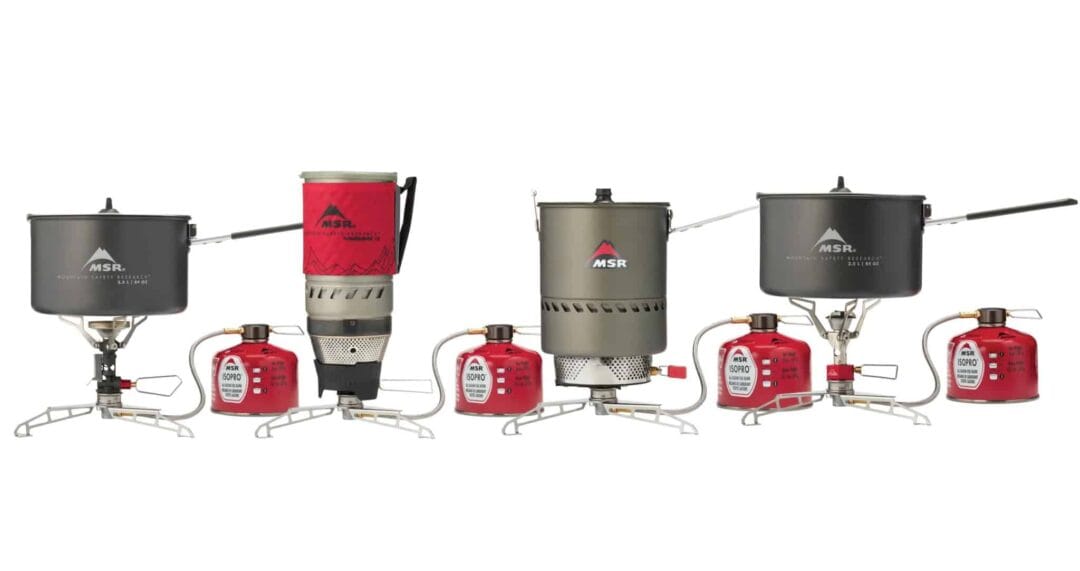
Last Editor’s note: If you have a MSR stackable stove system—fuel canister on bottom, then heat exchanger/burner, then pot sitting vertically, which can get unstable in some environments, MSR sells something called the LowDown Remote Stove Adapter. It essentially converts a stackable system (think WindBurner Solo System and Reactor stoves) into a remote canister system. Some self-supported tourers consider the remote canister to be more stable (less tippy in a mid type tent).
As always, please keep us in line. Feel free to add in the comments how you best solve the melting snow for drinking water conundrum.
Leave a Reply
You must be logged in to post a comment.