

When I showed up at the DPS mothership, the first thing they gave me was a can of something to drink. I didn’t recognize the brand. A few minutes later, my eyes were as big as pie plates, and I was nodding my head energetically, saying, Yeah! Yeah! Yeah! I didn’t blink for half an hour. When I got home, I typed everything down as fast as I could and took a hard nap.
But let me back up.
In the spring of ’25, we reviewed the DPS CFL 105 and 100. For that review, I wanted to talk to the designers about the skis. But they didn’t have time, and in retrospect, I’m glad we didn’t talk. I skied the skis and wrote what we thought without their input. They got back to me after that review was published, and that’s when I got dosed on the carbon Kool-Aid.
The history of the phrase “drinking the Kool-Aid” is, in every way, not cool. It comes from an event in 1978 where, in short, 907 people died from drinking cyanide-laced Flavor-aid. Some unknowingly, some forced, and some as an act of revolutionary suicide. In total, 918 people died, including a U.S. Congress member. Look up the Jonestown Massacre. It is fascinating. And the term, in this context, is rightly negative and has come to mean believing completely in something that is way, way out there.
However, drinking the Kool-Aid has softened over time, and so can also have a less sinister meaning: buying into an idea, concept, or belief structure. In other words. In one way or another, we’ve all drunk the Kool-Aid on something. Some of us more than others. This is important because I want you to know that while I drank the Kool-Aid, I did not drink the Kool-Aid.
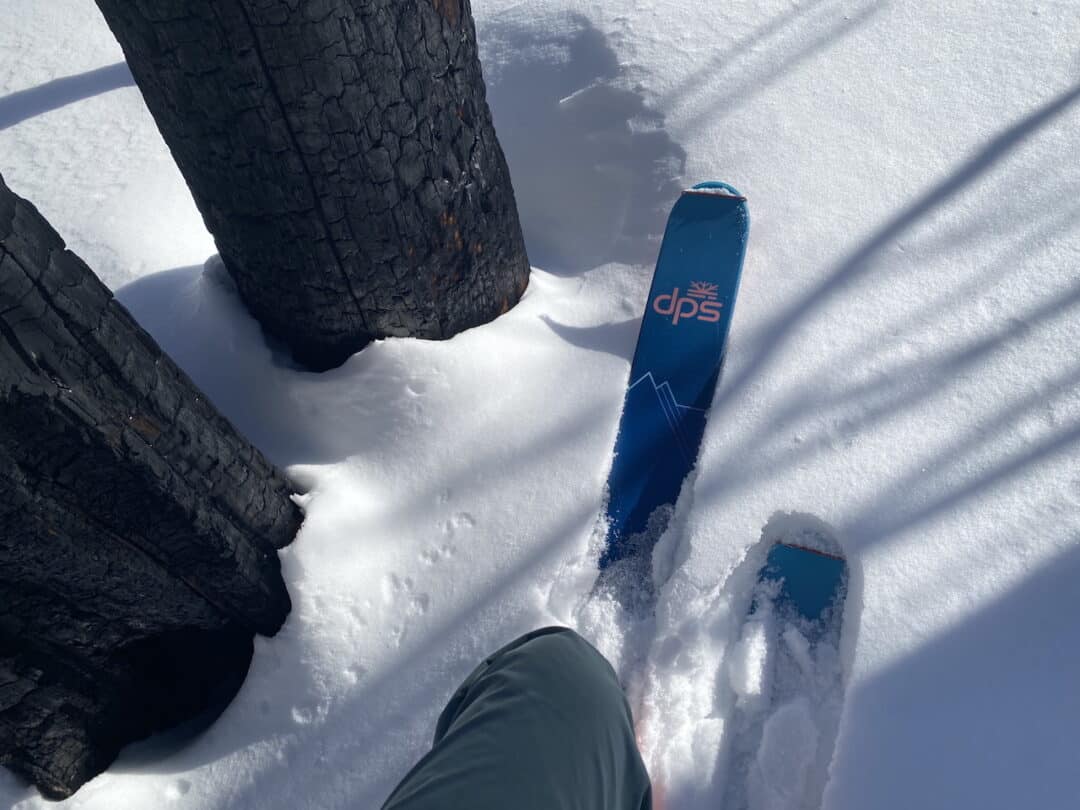
This is not a Jonestown kind of thing, but what kind of thing is it? What kind of things are the choices we (pretend to) make? When it comes to buying a pair of skis, what is the consumer interested in? Function, certainly, be it versatility or excellent performance in specific conditions or terrain. Quality, measured also by durability. Construction practices go beyond just the quality, such as where the materials come from, where they’re built, and their sustainability. Consumer support, relationships with the people or the brand. How the skis look, and how we think we look with them. And, oh yeah, price.
Ski performance is a complex recipe. Consider coffee. You have beans, soil, temperature, water, shade, sun, and organic processes. You have harvest method (civet cat’s anyone?)…. Having witnessed the process in SLC, I’m going to say that in the world of skis, DPS are the ones pooped out by wild civet cats.
In the spring ’25 review of DPS skis, we agreed that DPS skis are great. And we thought that the DPS brand, at least among a certain demographic, has some marketing issues. A part of this is the cost of the skis. And the price is one thing, and the meaning of that price is another thing. There is more than rational decision-making at play here.
This brings us to the time I went to the DPS factory and drank deeply.
Ski performance is a complex recipe. Consider coffee. You have beans, soil, temperature, water, shade, sun, and organic processes. You have harvest method (civet cat’s anyone?), roast method, roast depth/darkness, storage method, and that is all before you even consider all the ways to actually make a cup. Building skis is like this. Only way more variables. Having witnessed the process in SLC, I’m going to say that in the world of skis, DPS are the ones pooped out by wild civet cats. Which is a good thing. Top shelf. The build process is extremely impressive, and much of this process revolves around their dedication to carbon. We are also talking about American manufacturing, where much of the supply chain is within biking distance. On a fixie, in jean shorts. Domestically sourced wood, recycled carbon fiber. Life-time warranty. That certainly counts toward a sustainable model, and in my book, that counts for a lot. DPS will also argue that, because carbon fiber is a long-lasting material, carbon fiber skis are a more sustainable product. This is also an argument for spending twice as much on a pair of skis—they will not only last but should retain their performance for at least twice as long as a less expensive pair. Certainly, they’ll outlast us, but potentially they’ll outperform us and every other pair of skis we could buy in our lifetime, too.
This brings us to the performance attributes of carbon fiber itself.
DPS believes carbon fiber performs better than metal.
Better than metal?
That’s right. And as DPS will point out, in what sport other than skiing is metal the material used at the highest level?
DPS does not use carbon because it is light. They use it because they believe they can make a better ski with it, and also, it is light.
It turns out that carbon is what’s in the Kool-Aid.
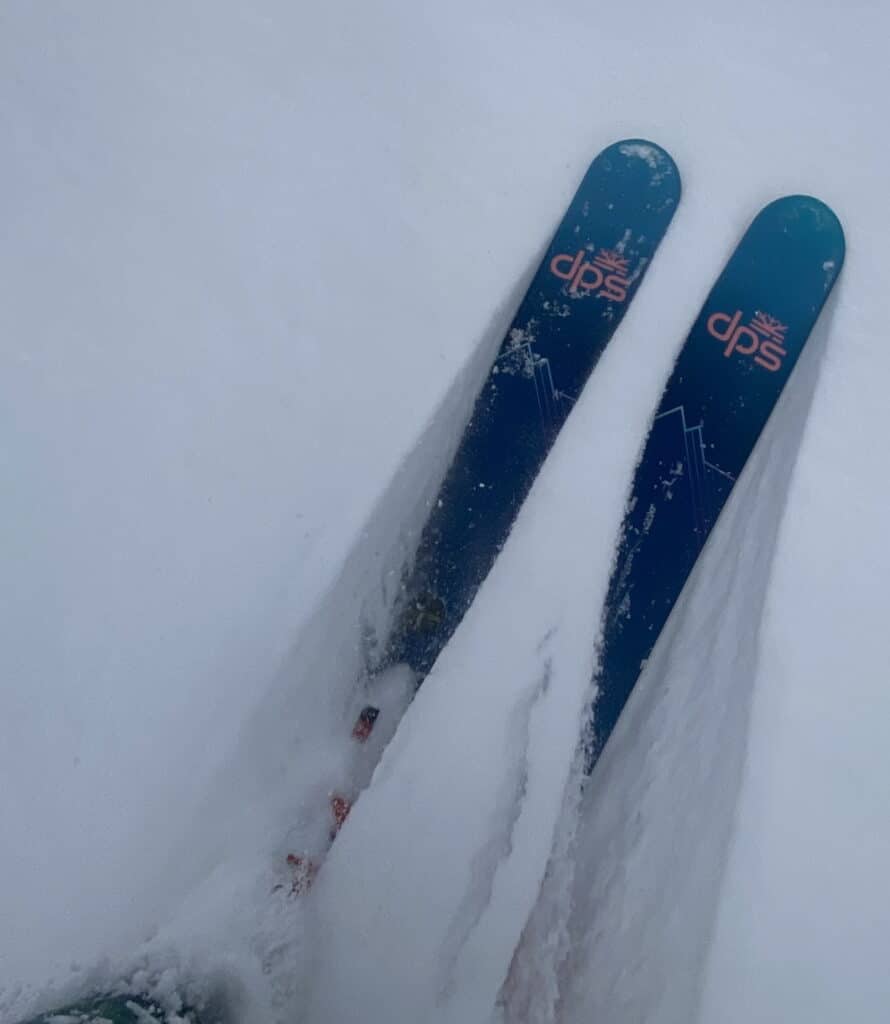
To prove this point, every ski, even their pure front-side carving ski, a ski designed collaboratively with Ted Ligety, is based around carbon fiber. It isn’t about the lightweight; it is about ski performance.
How do those claims hold up? As I said, we reviewed the 100 and 105 here last season.
I am on the 171cm 105 CFL. I love this ski. I can ski this ski in every condition I ski in with very few complaints. I used the word ski three times in that sentence, so you know where my head’s at.
The 105 only got a few days of powder under it, and so we’ve been waiting, and waiting, and waiting to get more time on it in powder. And those days finally came this January.
I am on the 171cm 105 CFL. I love this ski. I can ski this ski in every condition I ski in with very few complaints. I used the word ski three times in that sentence, so you know where my head’s at. I visited the factory. It’s impressive. I talked to the people. They were super cool. But what the consumer wants to know about is how the damn skis ski.
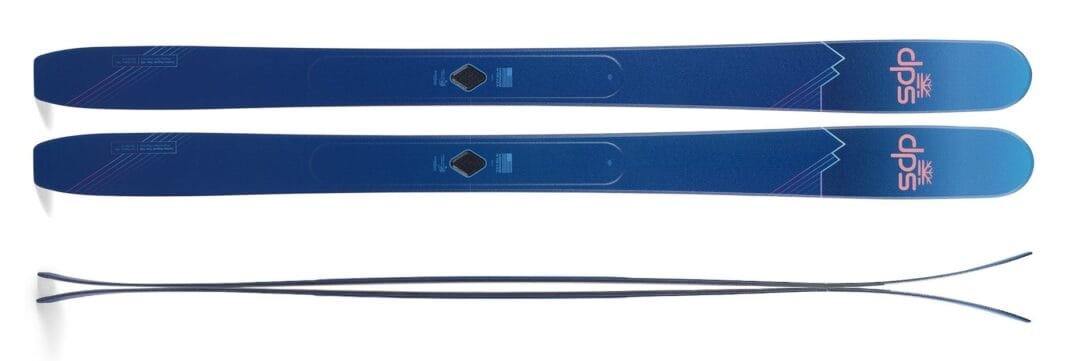
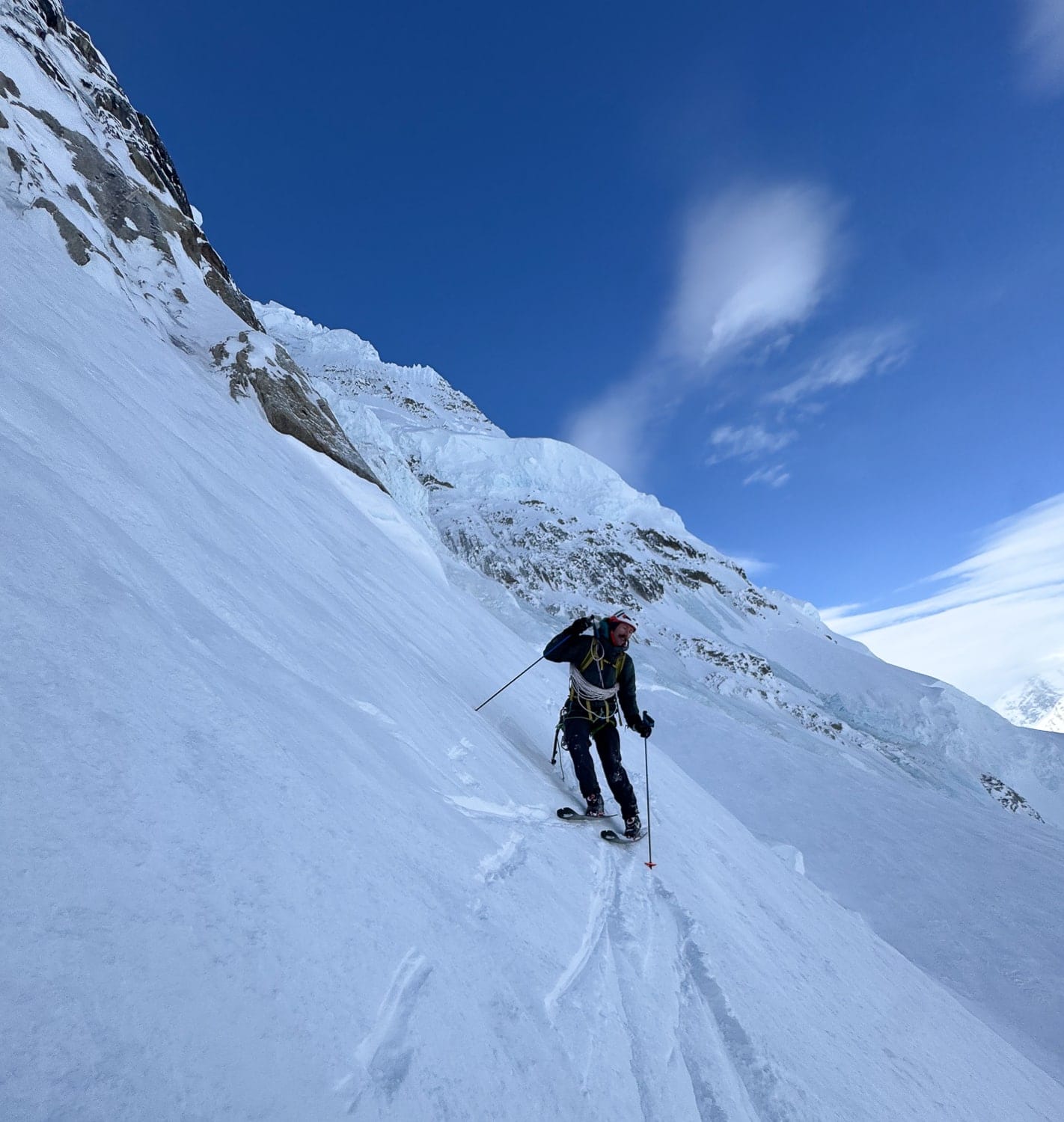
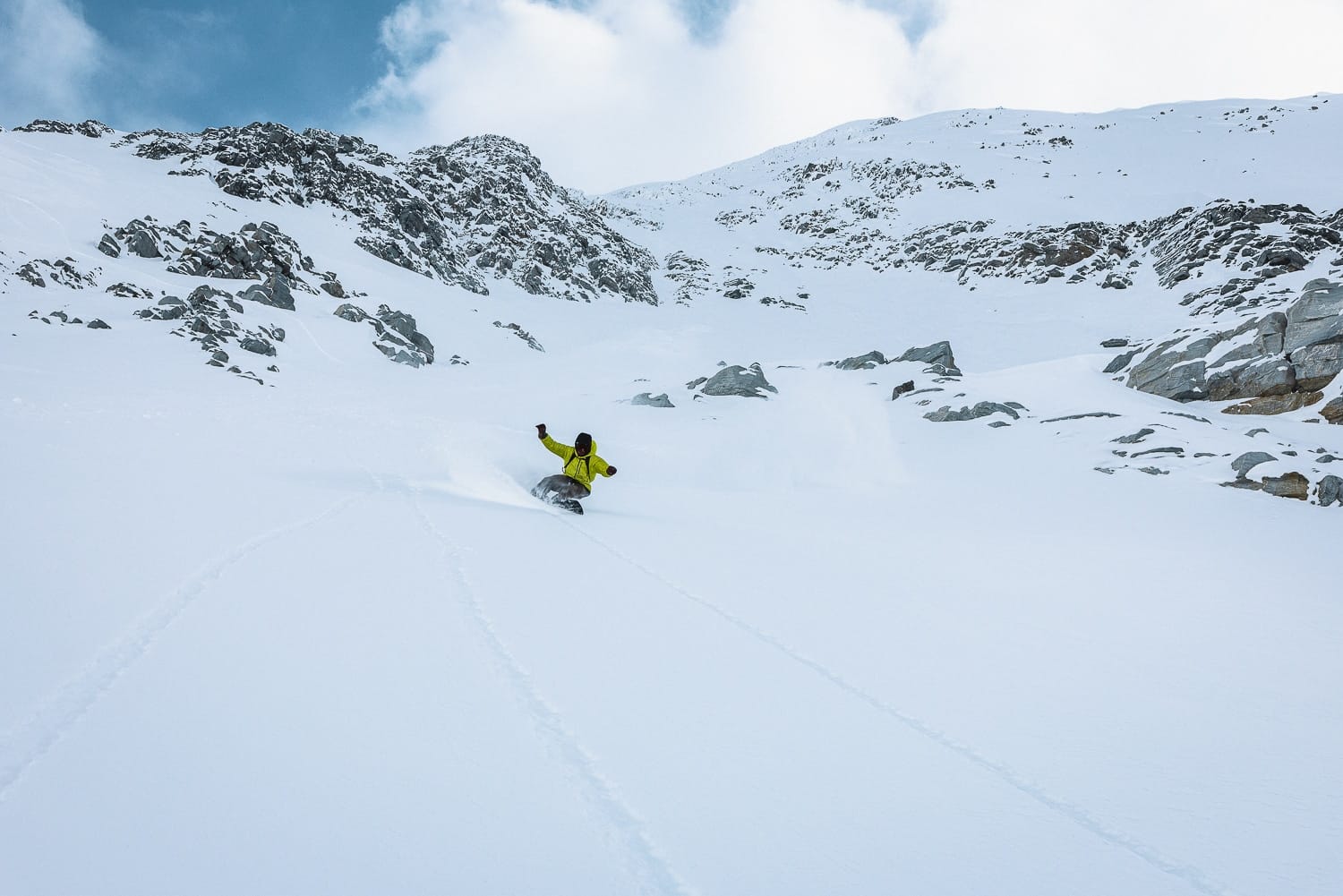
Last year, my only real criticism of the 105 was the low, stiff tip in rough conditions. It is more easily deflected. I have now skied some breakable crust (both up and down), and gotten out in more and deeper pow. And also shallower and, I think the word is, shittier, snow too. Approaches and returns this season have been…shallow. I think we can all attest to walking down pretty far, even after skiing down pretty far over dirt, log, and rock. The skis have stood up admirably to a beating. In bad conditions and excellent conditions, my affection for the 105 has only grown. There are certainly good reasons to ski a wider ski. But you don’t really have to. 105 is enough even in very deep light snow, even in heavy snow, on hard snow, and even on breakable crust. If you are a quiver of one person, the 105 can be your single arrow.
The Kool-Aid has worn off, and beyond saying the 105 is a great ski, I am confident in stating it and that all skis from the DPS factory will last and perform for many years.
Leave a Reply
You must be logged in to post a comment.