
We’ll happily step out of our lane for a moment. Sadly, last night in Central Oregon, mosquitoes buzzed at dusk. Although this means warm temps abound, it also means we are a bit ahead of schedule season-wise. But what is right on schedule is the Everest-climbing season, which runs through April and May. As a driver of small and larger-scale economies in Nepal, there is an upside to this two-month period of hustle and bustle on the world’s highest peak. The downsides of the hustle and bustle have also been self-evident over the years. These include income disparities between Nepali and Western guides, discarded waste (human and otherwise), and the now infamous conga lines of would-be summiters at certain route cruxes. Everest is not for everyone. It is, however, for some.
For those in the “Everest is for me” camp, a piece of legislation is working its way through Nepal’s Parliament. In February, Nepal’s National Assembly (the upper house of Parliament) unanimously passed the Integrated Tourism Bill. Amidst this somewhat comprehensive plan to both stabilize Everest as a commercial enterprise and generate more revenue for the nation’s tourism industry, there are some sensible policies.
According to the Kathmandu Times, since 2014, climbers have been required to carry 8kg (17.7 lbs) of garbage/waste off the mountain. Let’s assume this cargo is weighed at basecamp, and upon verification, the climber is given a refund of $4,000. Moving forward, the legislation proposes that the $4,000 fee be non-refundable and that the funds be deposited in a fund to help clean up the mountain’s flanks. We suppose that if you are dropping the enormous fee for a guided trip up Everest, then what’s another 4k to help make Everest beautiful again?
Further, the Tourism Bill will make climbing one of Nepal’s 7,000-meter peaks, of which there are nearly 90 in the country, a prerequisite for anyone permitted to climb Everest. This proposal, in theory, mandates that climbers come with some modicum of mountaineering chops before entering the throne room of the mountain gods.
If you are a THR reader and you cannot kick the Everest bug, well, you’ve got at least one more effort up a Nepali high peak (a peak between 7,000 and 7,999 meters is high to us), if you haven’t done so before.
The Pivot to Nanga Parbat
This also allows us to make a hard pivot, but in our eyes, a related pivot. Yes, we do run a commercial enterprise here at THR. And print has become a key part of our offerings. Most know this, but it is worth repeating, we do not publish our stories within The High Route jounal in print and online; they remain in print only. We understand that it is not everyone’s preference. So much effort goes into the writing, editing, and design process that we feel the value remains in the printed product.
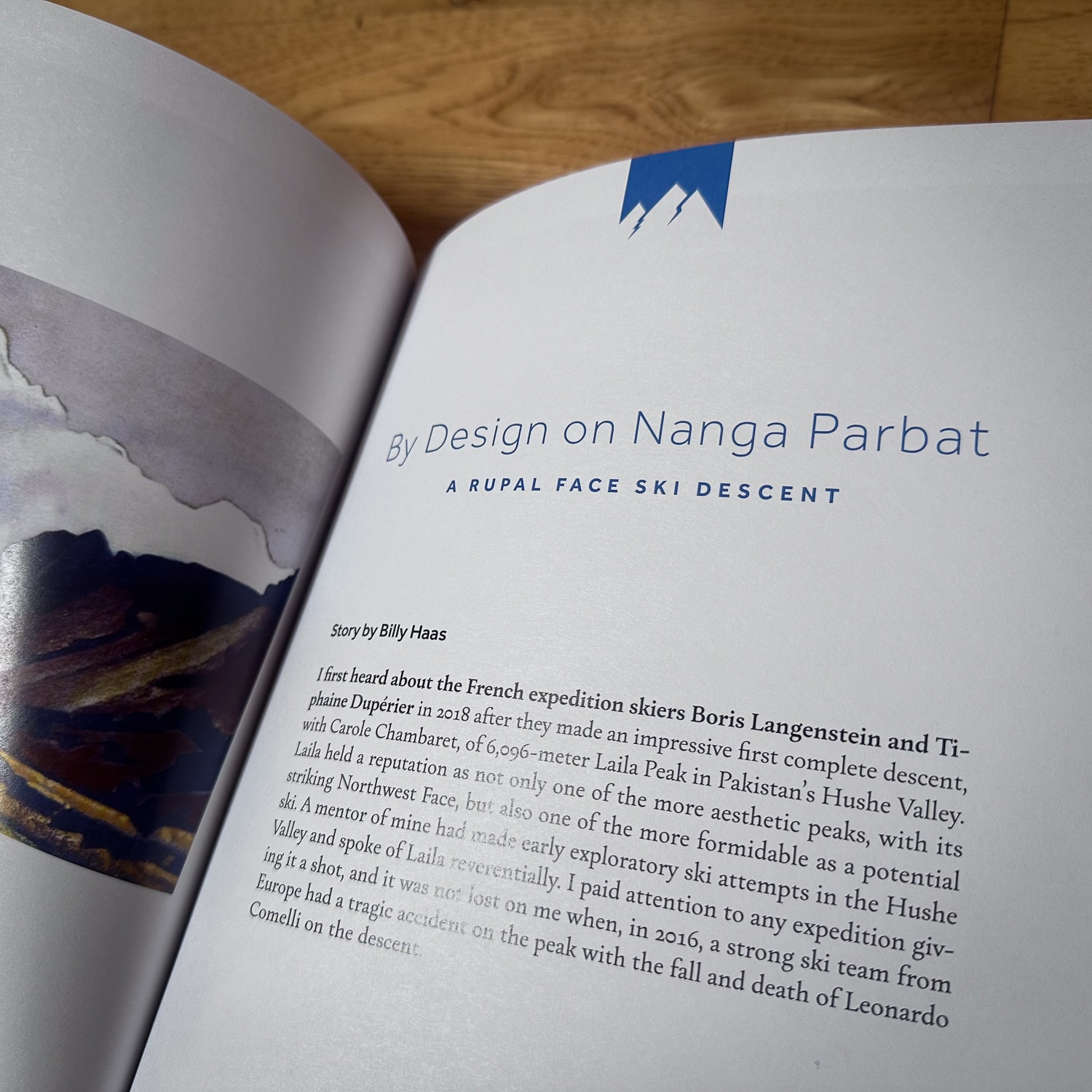
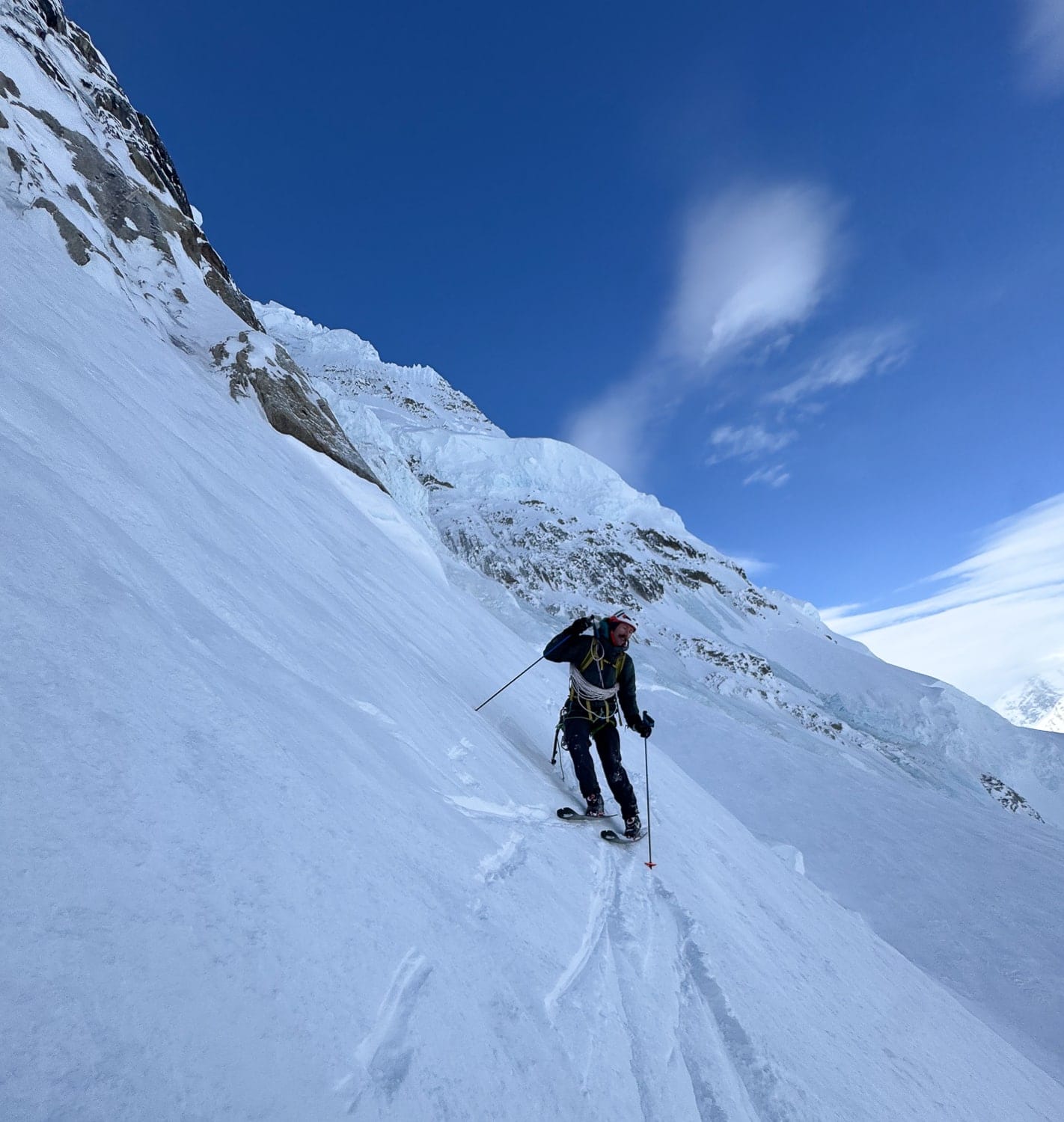
With our minds on 8,000-meter peaks, we might as well highlight a story from Issue 3, which runs to almost 130 pages, titled “By Design on Nanga Parbat: A Rupal Face Ski Descent,” by Billy Haas. The piece explores the style of ski mountaineers Tiphaine Dupérier and Boris Langenstein on some of the world’s highest peaks. While focusing heavily on Nanga Parbat and their descent last summer, the piece dives into the duo’s acclimatization efforts, which most often entail climbing and skiing a small yet sufficiently high peak while on expedition toward their primary goal. Boris and Tiphaine also embrace the alpinist’s ethos of less is often more. While their expeditions to the high mountains include basecamp support staff, they prefer not to rely on support from others to fix lines, kick steps, or otherwise assist their progress up and down a mountain. This is one style of doing things, and it certainly represents a paradigm shift from some of the context we presented above about Everest.
In Boris and Tiphaine’s efforts, we are reminded that good adventure can be had in most mountain ranges with a small, reliable, and not particularly well-funded enterprise. Boris and Tiphaine are both IFMGA mountain guides, have a small amount of industry support, but otherwise go about their mountain travels in a pretty low-key way. There’s nominal social media (Boris, are you out there?) and no YouTube channel, only a few articles about their efforts over the years, mostly in European-based periodicals. When I mention to folks steeped in North American ski mountaineering that Haas has a sweet piece on Boris and Tiphaine, I often get a blank stare. “Boris and Tiphaine?…who?”
One thing we are particularly keen on here at The High Route is inspiring readers to have an adventure. In the spirit of this mission, Haas teases us along to better understand how a small, mostly self-supported group, with audacious visions, makes a go of it. To be clear, Boris and Tiphaine are on the cutting edge of what audacious can be. Adventure is a spectrum, and everyone falls on it somewhere; some far from the edge, some closer to it. But the joy, intensity, and effort of moving up and down a mountain with your snow-sliding tools is deeply personal. There’s no doubt fine adventures can be had as much in the storied Presidentials as on a high peak overlooking the Karakoram and the high steppes beyond.
Now…if you are still keen on Everest, you may have a 7,000-meter peak to climb before that is a reality.
Leave a Reply
You must be logged in to post a comment.