
As much as I’d like to think this is all serious business here at THR, one look at the news cycle and it’s confirmed: aspirationally, touring and thinking and writing it about takes me very far away from that cycle. To a much better place. And in such a place, we’re going to ruminate today on skins. Ski/board skins are 100% critical for finding your way to and within that better place.
Skins are on my mind for several reasons. First, with skis coming in for review, securing skins that fit those skis is key. Second, skins aren’t cheap. And some consider skins to be disposable in the long term. It’s true: they do have a limited lifespan if used heavily, and if they are the 100% Mohair variety, they won’t last long when skinning on spring’s frozen corn. I’ve become more price-point conscious about the skins I purchase. Third, I spent some time recently with the crew at Bozeman-based Big Sky Mountain Products and came away inspired by their pluck and the fact that two enterprising young people, Jackson Keogh and Eric Haferman, have made a go of it manufacturing skins here in the U.S. (More on their story at a later date.) So, as essential items to our touring bliss, skins are on my mind.
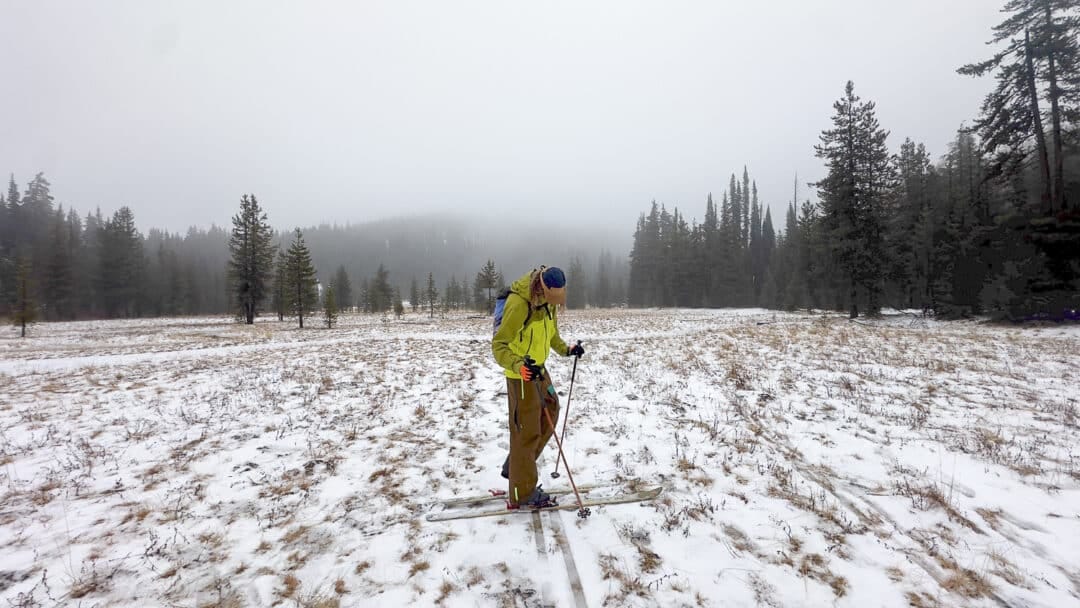
For context, I am only mildly embarrassed, decades after the fact, to admit I’ve used Voile Snake Skins in the Alaska Range. Snake Skins were easy on my wallet, but plastic/rubber skins secured with built-in Voile straps were nearly 100% ineffective 50% of the time. And while sidehilling, 100% ineffective about 90% of the time. Ever since, I’ve been on Ascension skins (which sold to Black Diamond), BD skins, Contour skins, G3 skins, Pomoca skins, and several iterations of rebranded skins from some of the above. I might be missing a brand, but hopefully, you get the point. I’ve also been on, pretty much, all the skin fabric mixes, from full nylon to nylon-mohair mixes, to full mohair, and those snake skins (0% real snake skin). My skin quiver is currently all over the map. I have some older pink Pomoca race skins for skimo skis, pinks for bigger skis in the Free Pro 2.0, which I believe has been renamed/reformulated into several new SKUs, Pomoca yellows on some bigger skis, and three different types of G3 skins running from full nylon to two different builds of mohair-nylon mix. I pretty much like them all, but prefer the foldability, lightness, and glide of the Free Pro 2.0, which I think is currently called the Free Pro.
As far as skins are concerned, generally, I’ve also become a realist. Pink may be pretty, and we hold it up in the skin world as a benchmark, but even the Pinks, like most if not all other skins, have their pitfalls. And this is where we’re getting into the “how’s it holding up” part of all this.
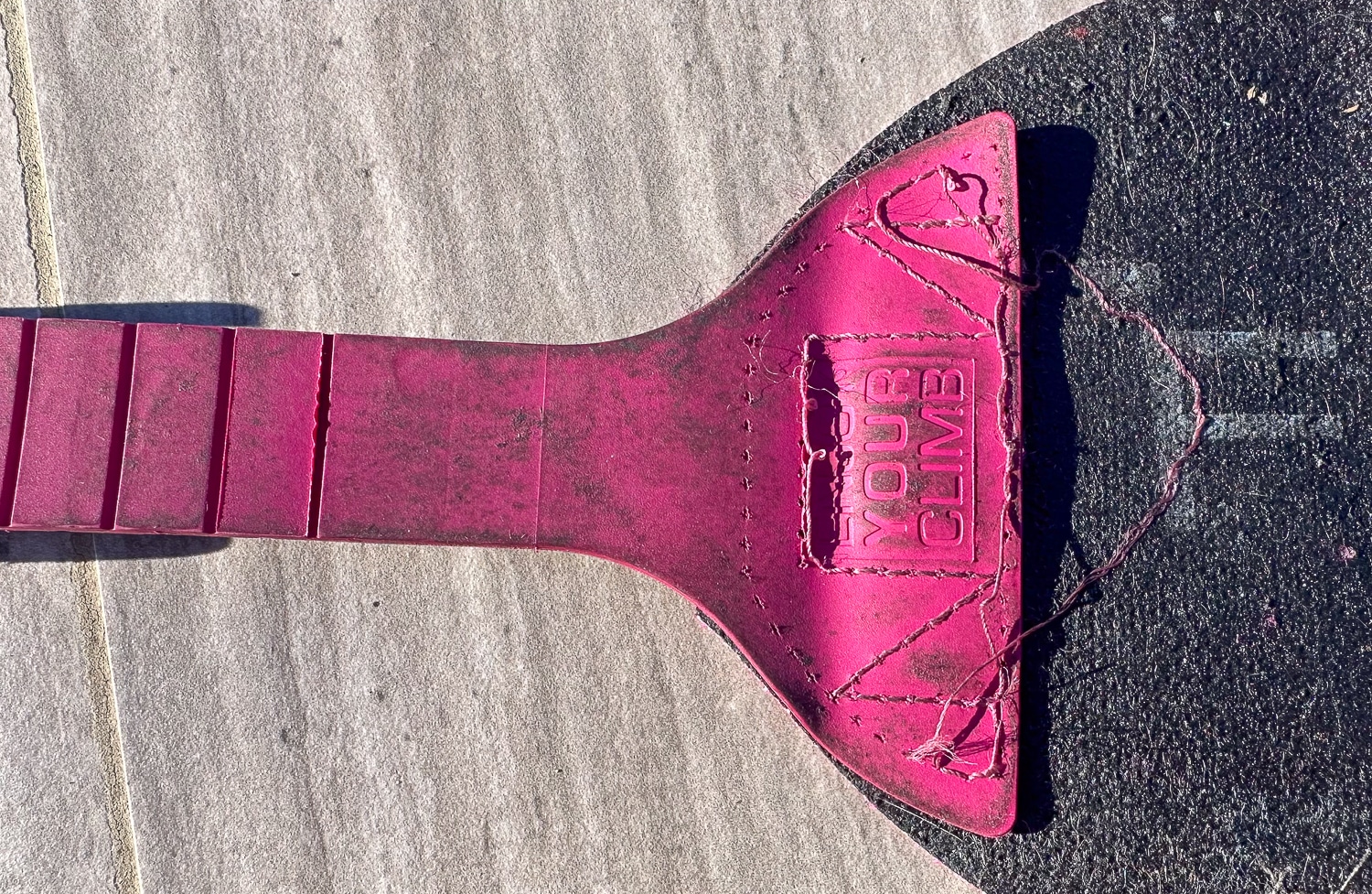
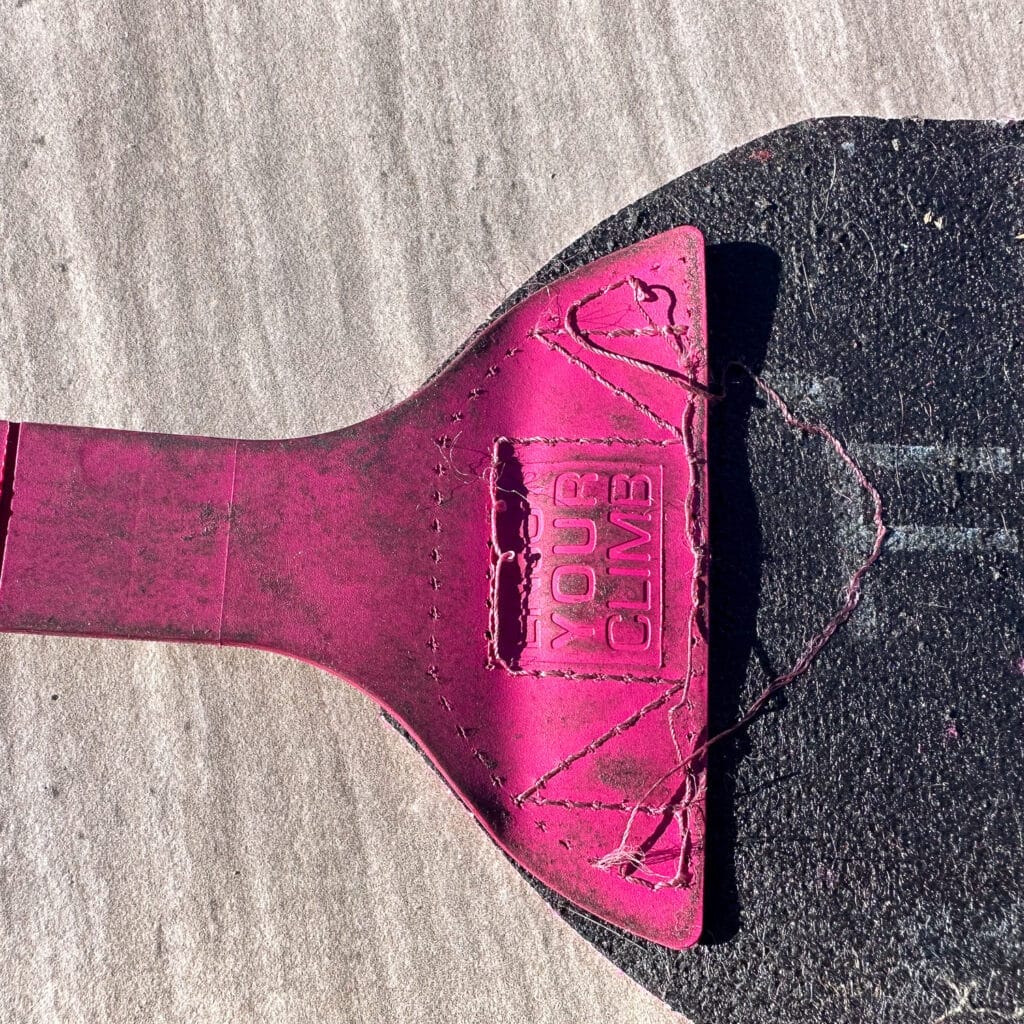
Pomoca Pinks: Know what you are getting into here. These are lovely skins, but if you’re like me and not so delicate, they can cut easily, so it helps to be handy with DIY sewing.
Pomoca glue: Great out of the box and not too sticky. But over time, I’ve found Pomoca glue to be hit-or-miss in the cold, particularly in powdery snow. I’ve got my tricks to try and keep them adhered in those conditions, but the bottom line is that I should just reglue when they become even mildly fiddly. I’ve also found that as the skin glue ages, it tends to begin to peel and adhere to my ski base. This is a reminder that skins are easier to remove from waxed ski bases, and that aged glue residue is less likely to remain on them.
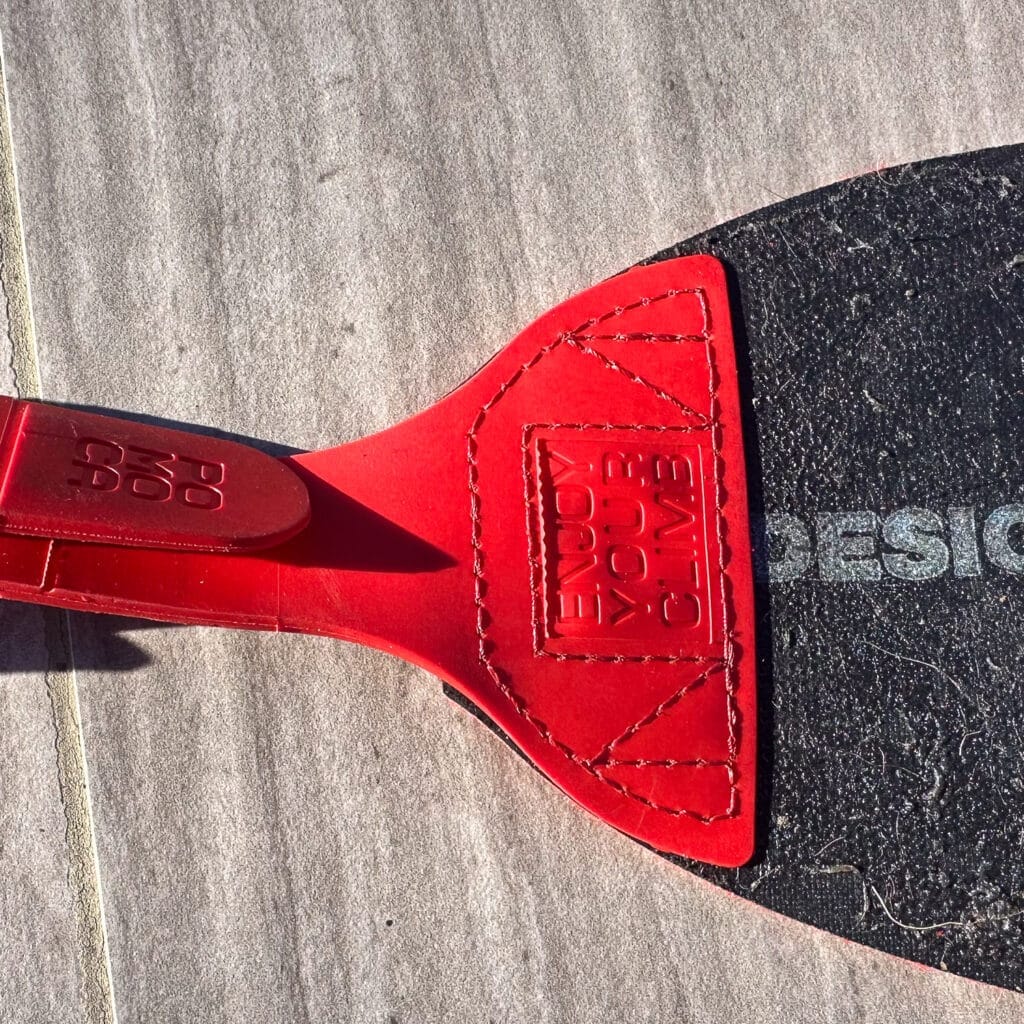
Pomoca sewn-on tails: I try not to over-tension the fit, as too much tension on the tail stresses the stitching, which secures the skin tail to the skin. It’s a mixed bag, but I’ve found that the stitching, even under modest tension, begins to fail after a season of heavy use or a few seasons of intermittent use. This is not a huge deal, and resecuring the stitching is an easy-ish DIY fix.
Pomoca plastic tail clip: I’ve snapped some in my time, and carry a spare, but for new Pomoca skins, this should be a non-issue as they’ve transitioned to all-metal tail clips.
Contour skin glue: Most folks I’ve spoken to over the years love their Contour Hybrid glue…until they don’t. And again, glue, across the board with any type of skin, has its upsides and downsides. Hybrid glue, in this instance, is a stickier layer interfacing the skin plush backing, with a second, less sticky layer laid over the first. This second, less tacky/sticky layer interfaces with the ski base and, comparatively, is very easy to pull off, making for near effortless transitions when it comes to skin removal. The same can be said of pulling Hybrid glue skins apart; it’s pretty easy. This skin glue, like the others, should be kept clean, and Contour includes a treated wipe cloth for cleaning the skin’s glue side.
I have used two pairs of Contour Hybrids, and for the most part, they were great. I did notice small voids forming in the Hybrid glue—sections where the glue seemed to wear off over time. These weren’t large gaps, but I could see, over several seasons, how this might become an issue for some. The key here is keeping the Hybrid glue clean, as it is a dust-duff-dirt attractant. THR readers, I’m not aware of a DIY way to reapply the Hybrid glue; let us know if we have missed something here.
Lastly, I have had the Hybrid glue get finicky in wet spring snow. In other words, when there is free water in the snow, a saturated, wet, or water-contaminated Hybrid glue surface might have compromised tackiness. If you ever feel the Hybrid glue no longer functions, like all things, high-function will pass; you can reglue those skins with regular BD or Pomoca glue. Note: a commenter indicated BD glue is the likely choice for regluing Contour Hybrid skins.
G3 glue: Yup, G3, the Canadian legacy brand rebirthed from receivership back in 2024. My comments here relate to G3 before they were sold or bailed out. As noted here and elsewhere, G3 glue mostly thrived in cold conditions. It follows that Canada is close/closer to the Arctic than many places, meaning it is generally colder. Out of the box, G3 glue could be hard to manage, as it was very sticky… all the better in cold snow and air temps. However, I had bad luck in spring when temperatures warmed up significantly—the glue became gummy, too sticky, and prone to sticking to my ski bases, which, admittedly, I should have done a better job of keeping clean and waxed. Again, if the glue began to fail on these skins, regluing with less-sticky Pomoca glue (my usual go-to) brought them back into play.
G3 tail clips: Hmmm. I have mixed feelings. The clip itself is a two-part metal-plastic clip affair. They are somewhat easy to adjust longer or shorter, or to add a bit of tension. But don’t over-tension the skins, as I have done. In cold temps, my overtensioned skins caused the plastic clip to break. I replaced the metal-plastic tail clip, but that proved to be a mini-mind-bender, too, rethreading the whole contraption. It’s clearly doable—just be prepared to focus and have a threaded example nearby for reference.
G3 durability: Well, folks, this may not be the most popular answer around, but I have found my G3 skins to be extremely durable. I’ve used all three iterations of the Minimist line (Glide, Speed, and Universal), all of which have been reglued and are otherwise holding up. I find the Minimalist Universal a good option for spring tours when you might find yourself on highly abrasive snow for much of the day.)
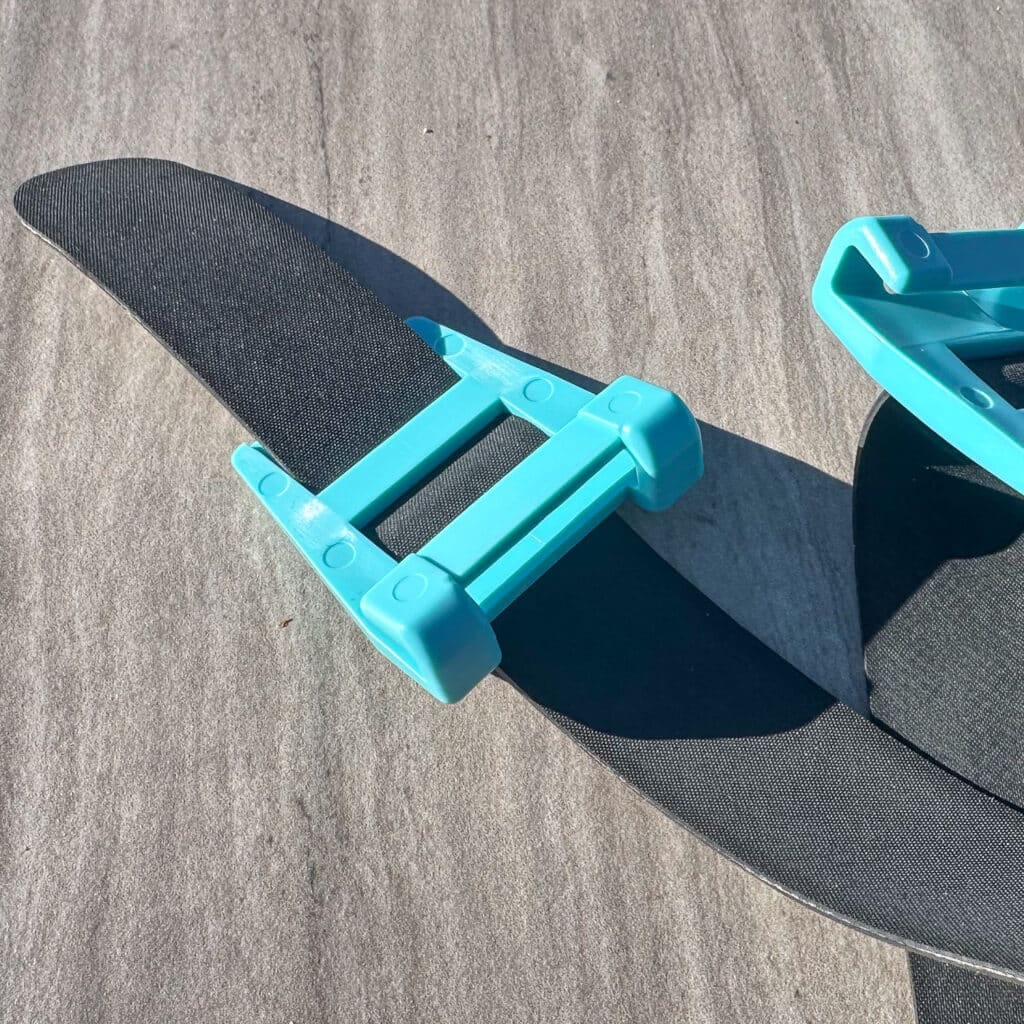
Big Sky Mountain Products: My experience with BSMP skins is second-hand, meaning I haven’t used mine yet. Although I trust Pete Vordenberg, a cool-cat who tours a ton and is pretty harsh on his gear (just sayin’ Pete). Vordenberg is very keen on his BSMP skins. He’s had no issues with the glue, the tip, or the tail clips. That’s good news. As noted, we’ll have more on the BSMP scene in a few weeks.
Conclusion or ending notes, or some means to close this out.
Skins are the most important yet least sexy part of the touring kit (beyond that pink color mentioned up top). Skins do not and will not last forever. (Although nylon skins, and thick ones at that, might.) Across the board, I’ve had bad days with most glues out there. But mostly, I’ve had good days until the glue or some other part of the ski attachment system fails. My skin-failure kit includes spare plastic tail clips (all but one pair of my Pomoca skins have the plastic tail clips), a few Voile straps to secure a skin with failed glue to my ski (which I did recently), and a few methods to de-ice/snow a skin’s glue side.
And glue is where I want to close this out. Most glues, besides some initial aggressive stickiness, work fine if skin hygiene is maintained. Some glues perform better in the cold, while others perform well in spring as temperatures rise. A time will certainly come when the glue fails, and continues to fail. Then it is time to reglue. After using modern skins for a long time now, most mixed plushes should hold up for a few seasons of hard use. I’m sure there are some out there, however, who exhaust skins in a single season, or even a few months.
What we are keen on here is finding value. And value is a combo of pricing, durability, and function. Skins are not cheap. Those pink skins in a width/length that means you might be skiing deep powder, can run close to $300/pair. If you go the Pomoca yellow route, you can get the price closer to $230.
BD’s Glidelights can be had for under $200, but they bump above that threshold for splitboarders looking for skins.
A new pair of Contour Hybrid Mixed skins will cost ~ $270.
BSMP mixed skins, depending on the kit (pre-assembled or universal length), will run between $170 and $230.
Skins are not cheap. Which means that to keep these essential items rolling, re-gluing is likely a must. And we’ve covered that plenty. I recently reglued some Pomoca skins with the just-linked process, and it took roughly 20 minutes per skin to clean and reglue. I used Pomoca glue.
Leave a Reply
You must be logged in to post a comment.