
This may be news to some—are you sitting down? It is spring. Yup, meteorological spring—a function of organizing the seasons into three-month pie-slices—begins on March 1 and runs through May 31. Meteorological spring, according to NOAA (yes, NOAA is still out there),is the buffer between the three coldest and three warmest months of the year. Yes, spring is sandwiched between winter and summer.
(On the other hand, we still have roughly three weeks until astronomical spring, which begins on the equinox on March 20th.)
Don’t be fooled, technically, from a meteorological perspective, we did have winter, despite what some of us in the Western half of the U.S. may believe. There will come a time for us to process what has been, which, for some of us, has been a season relegated to less powder skiing and more finding joy where we can and making do. Touring is, after all, a pastime where we can find solace in nature, breathe deeply, and forget about the seemingly all-consuming ongoing chaos. The problem, sadly, is that touring, at least this season, has become a reminder of a cosmic misalignment. (To say nothing about climate change. No. We’ll say nothing about that.)
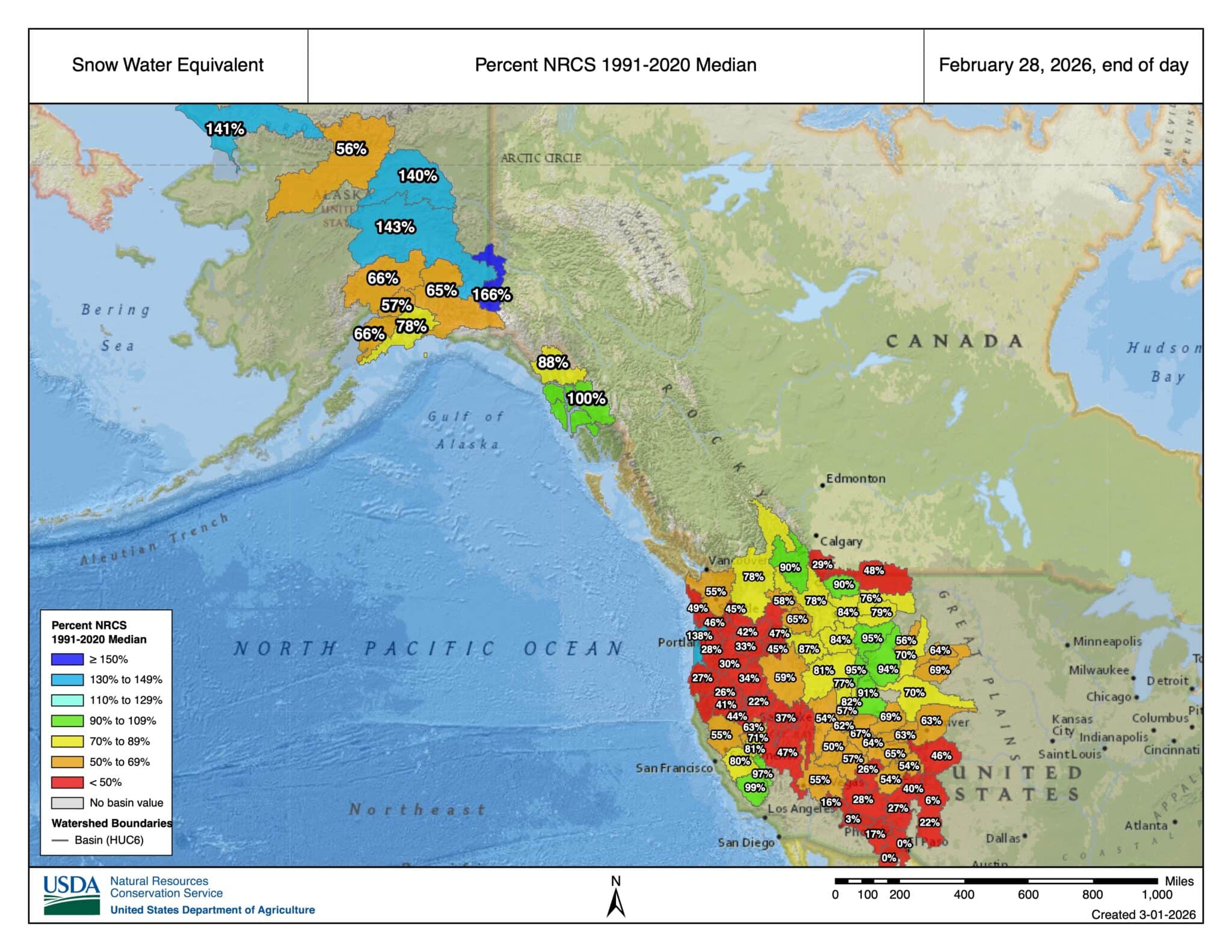
Here in the PNW, at least, during normal seasons, which means normal(ish) snowpack, we have the good fortune of touring, most often, into June. And into June, usually, doesn’t mean making a half-assed attempt to navigate omnipresent suncups. It means watching the sun, and headlamping in the wee hours to score just-softened planar slopes. On a walk this weekend, looking up at the Three Sisters outside Bend, this much was clear, unless some well-timed (and cold) atmospheric rivers hit the alpine in quick succession: touring season may set early. Which brings us to our SWE update for the start of meteorological spring.
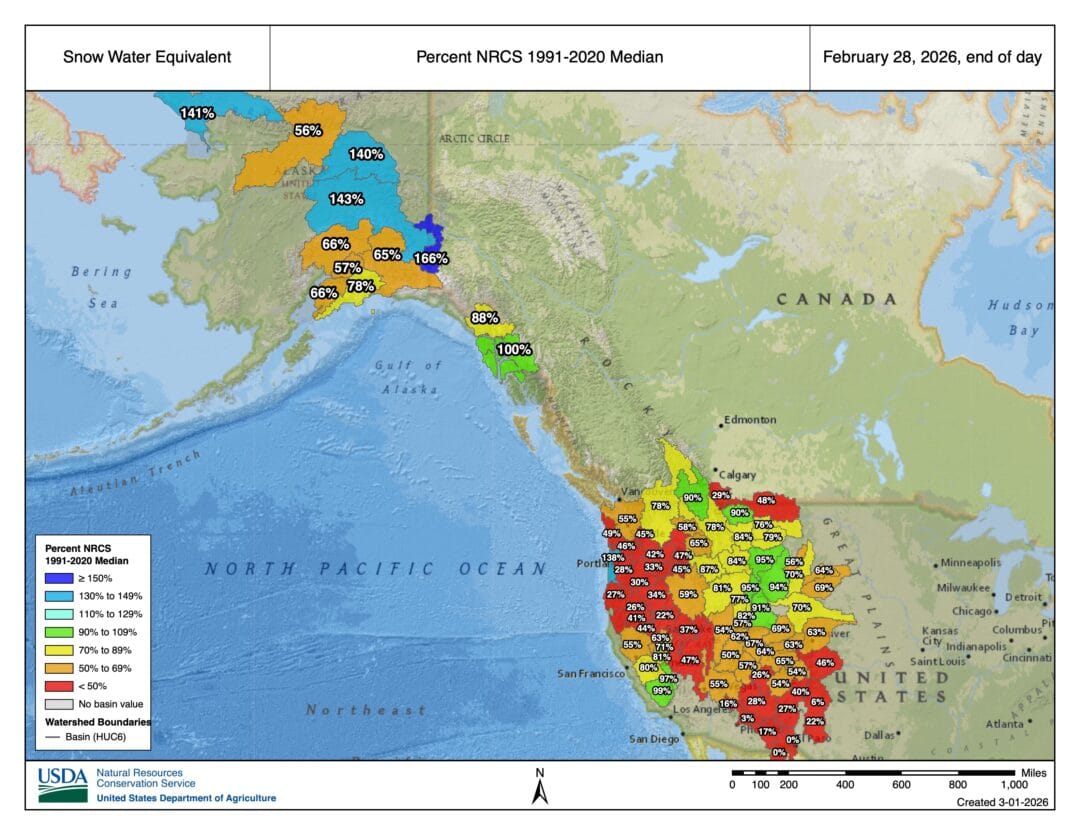
Overall, looking at the Western U.S., there’s a dearth of the colors we’d like to see regarding SWE…the greens and blues. Instead, we remain stuck, in many locales, in the opposite end of the color spectrum, the reds and oranges.
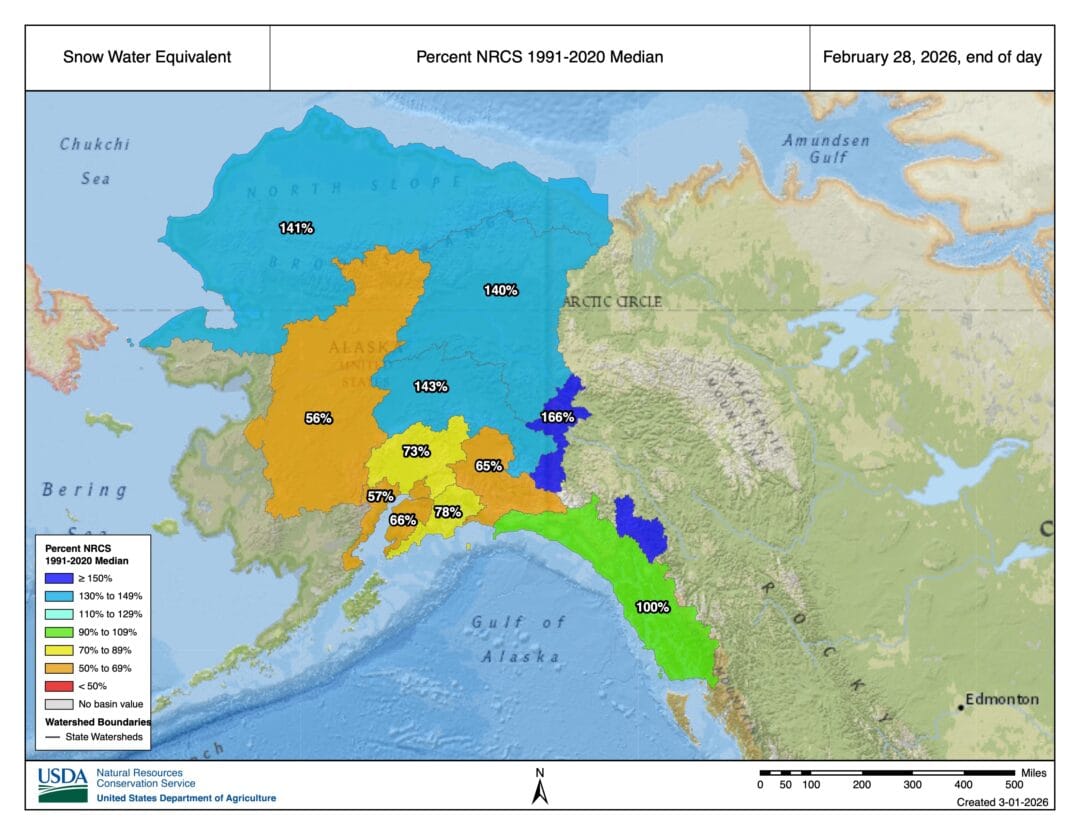
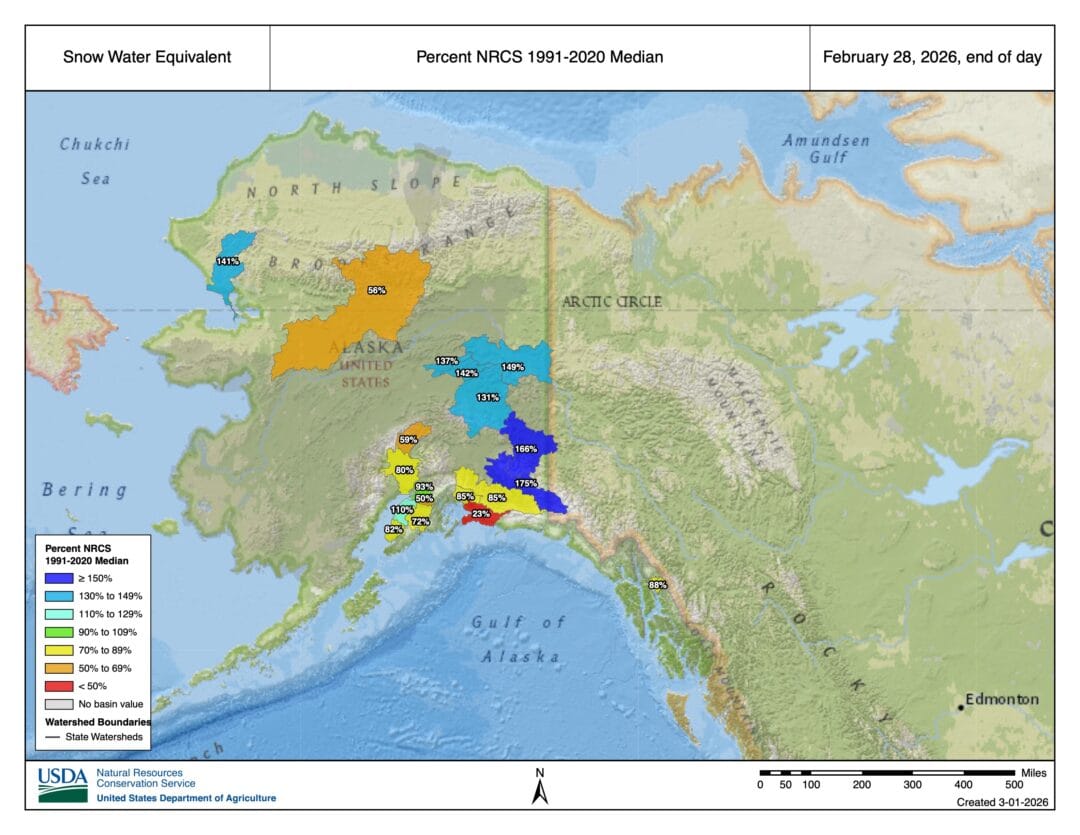
The outlier here may be Alaska. If you’ve got access to a bush plane and a pilot you trust, the Interior and segments of Southeast look mighty palatable. And for those of you headed to The Big One (Denali) this spring, let’s assume that will fill in just fine. There’s a lot of vertical relief there.
As far as Washington and Oregon are concerned, we’re fond of using the Skittles analogy here. It’s a mixed bag of colors. Oregon, we love you, but we are a bit heartbroken at the monochromatic nature of it all. RED. Washington fares a bit better, especially on its eastern and northern edges. But only barely.
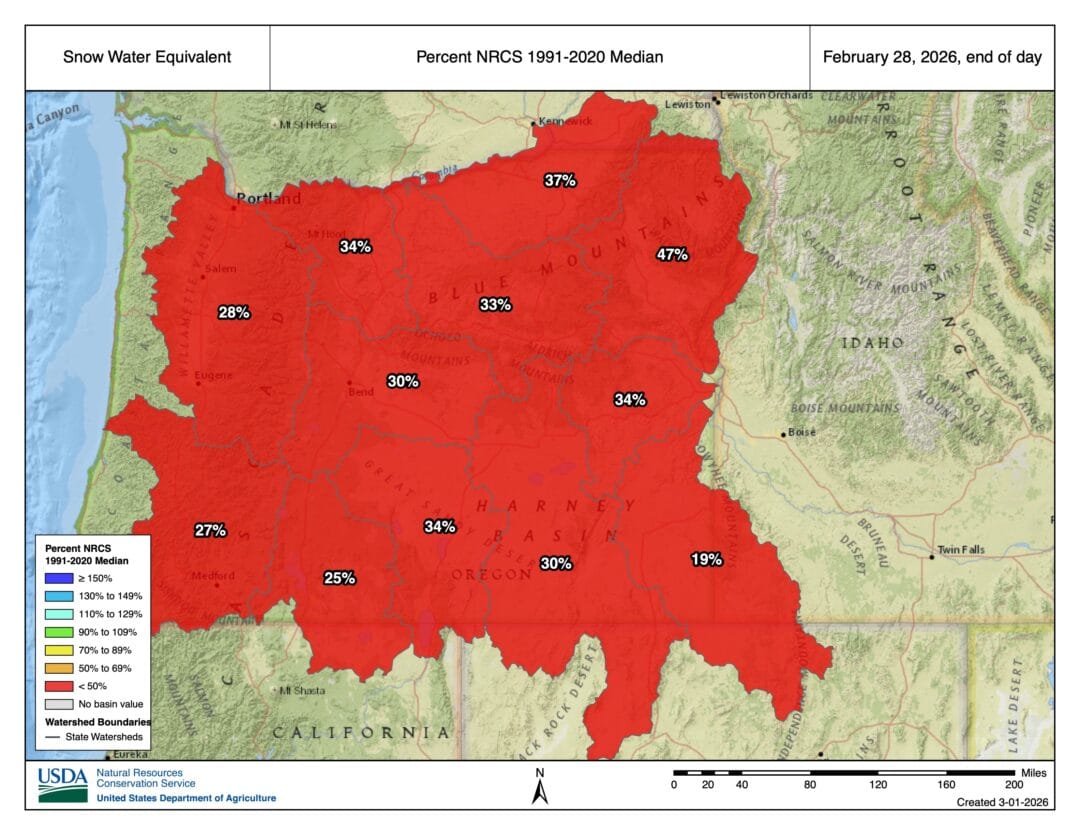
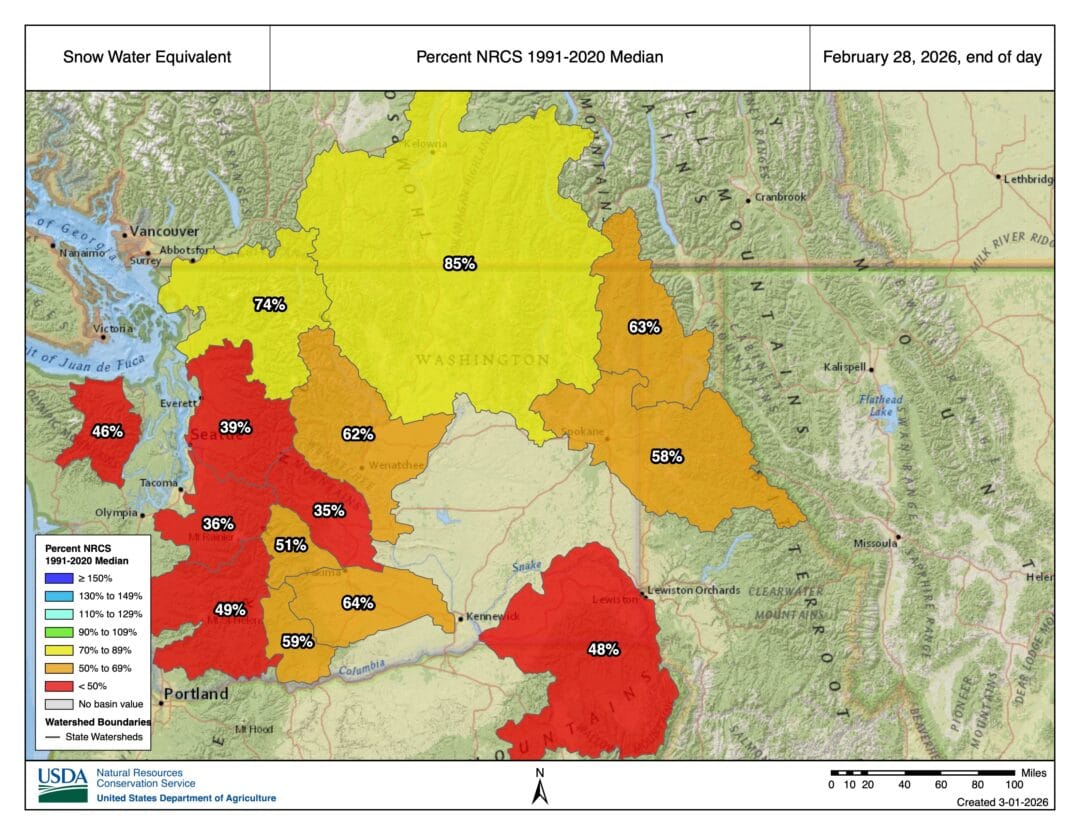
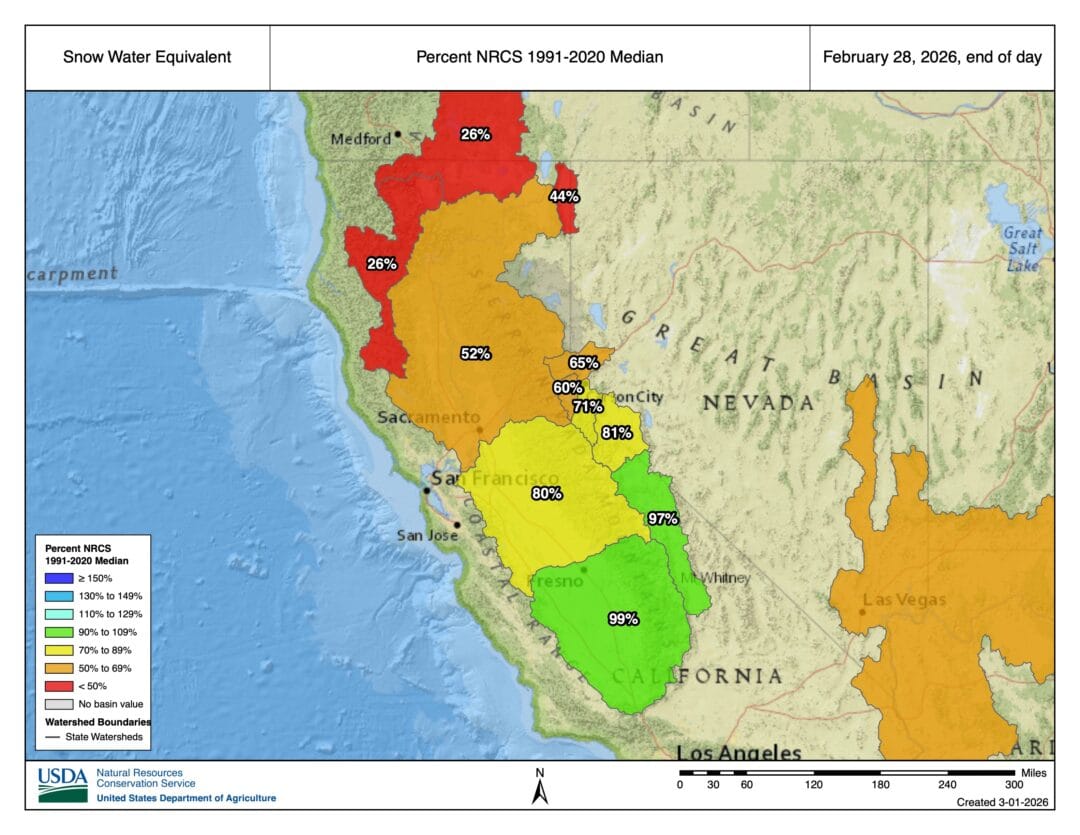
As far as the data in California are concerned, the further south you go, the better the SWE. Again, a few cold-temped atmospheric rivers could change all that lickety split. Until then, those looking to migrate to the Sierra for ample Eastside cramponing and chussing might want to start checking the calendar now.
Idaho, it’s looking like a Skittle bag with some promising higher-SWE pockets here and there.
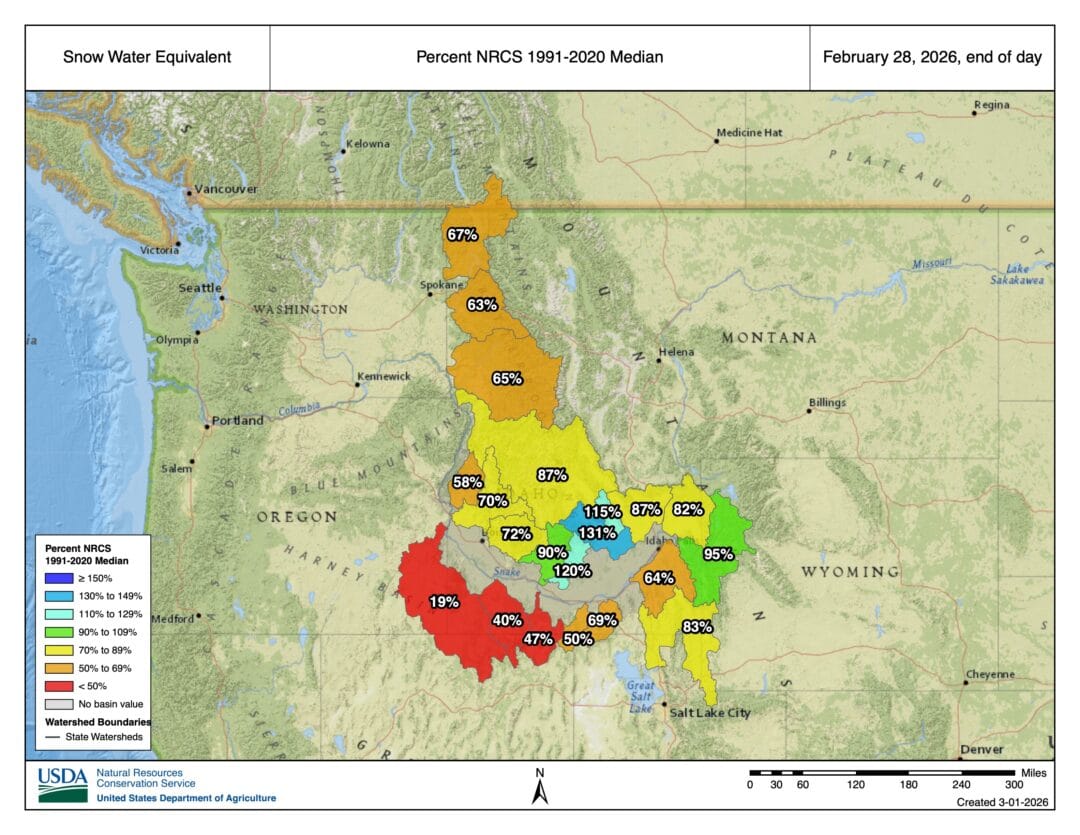
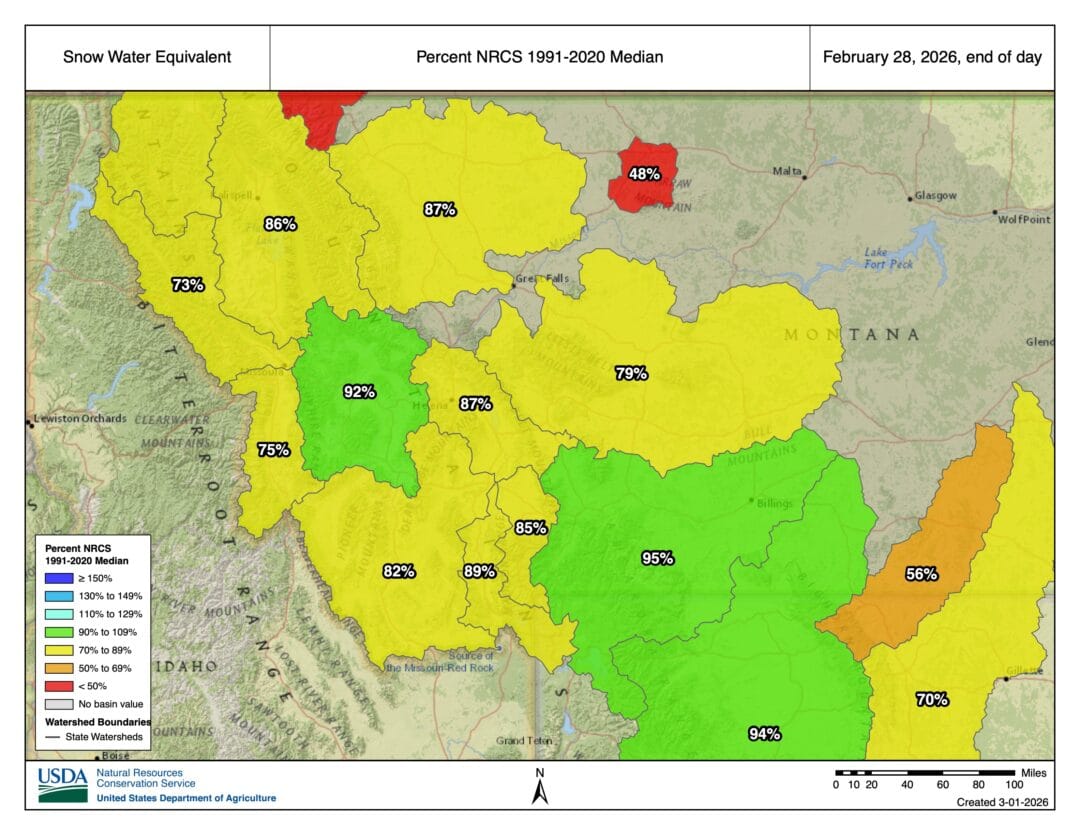
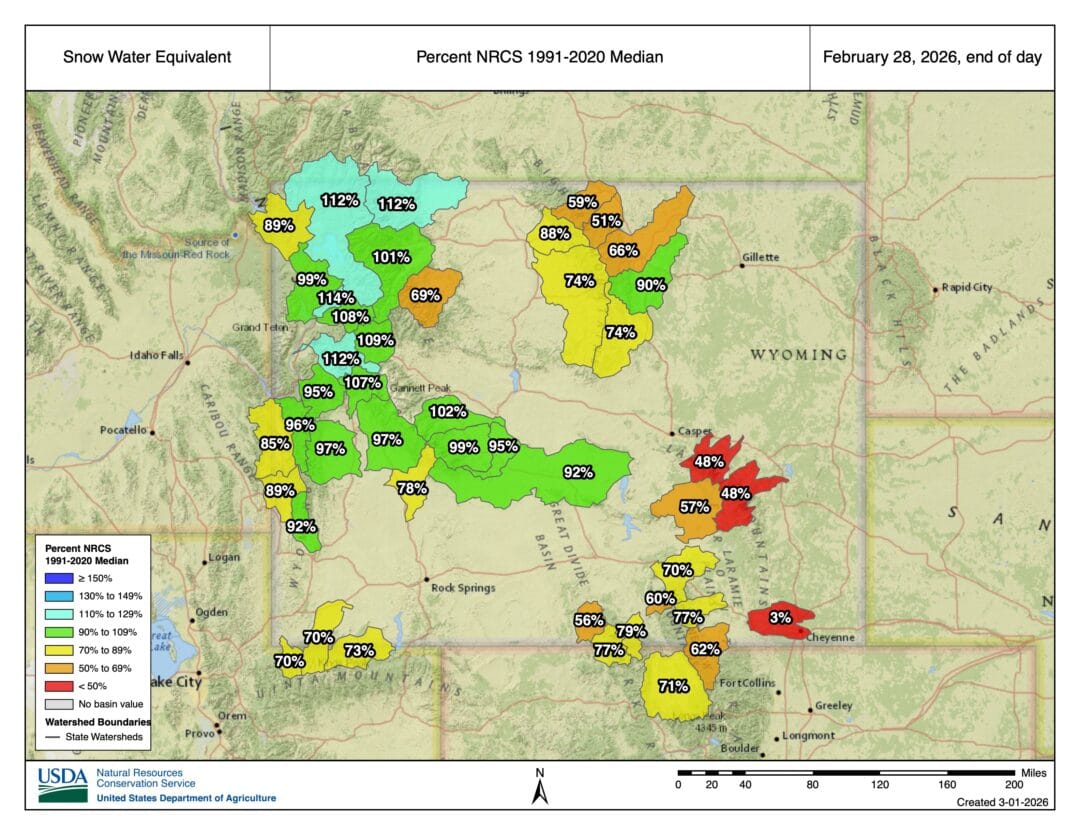
Montana, too, trends into the yellow-hued zone in a big way. And although we cannot confirm or deny this, SE portions of the state—and this trend bleeds into Wyoming—look mighty fine. Although Kermit the Frog sang about it not being easy being green, in this case, we think it is.
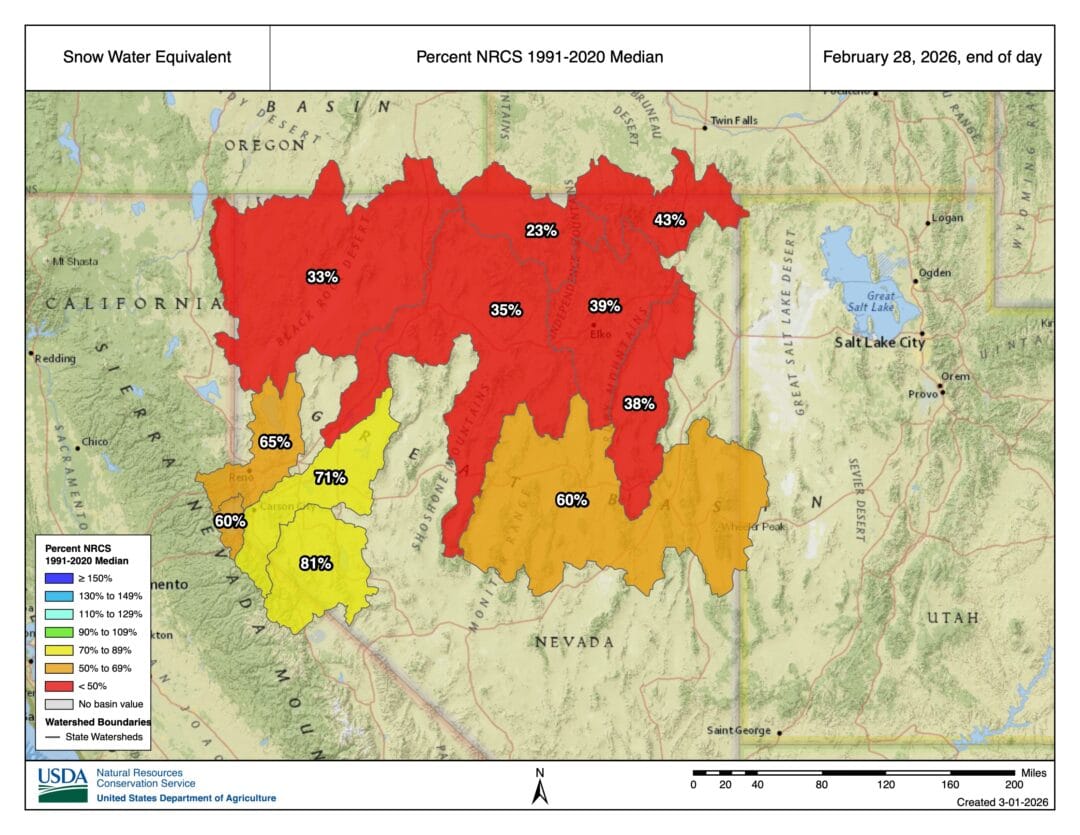
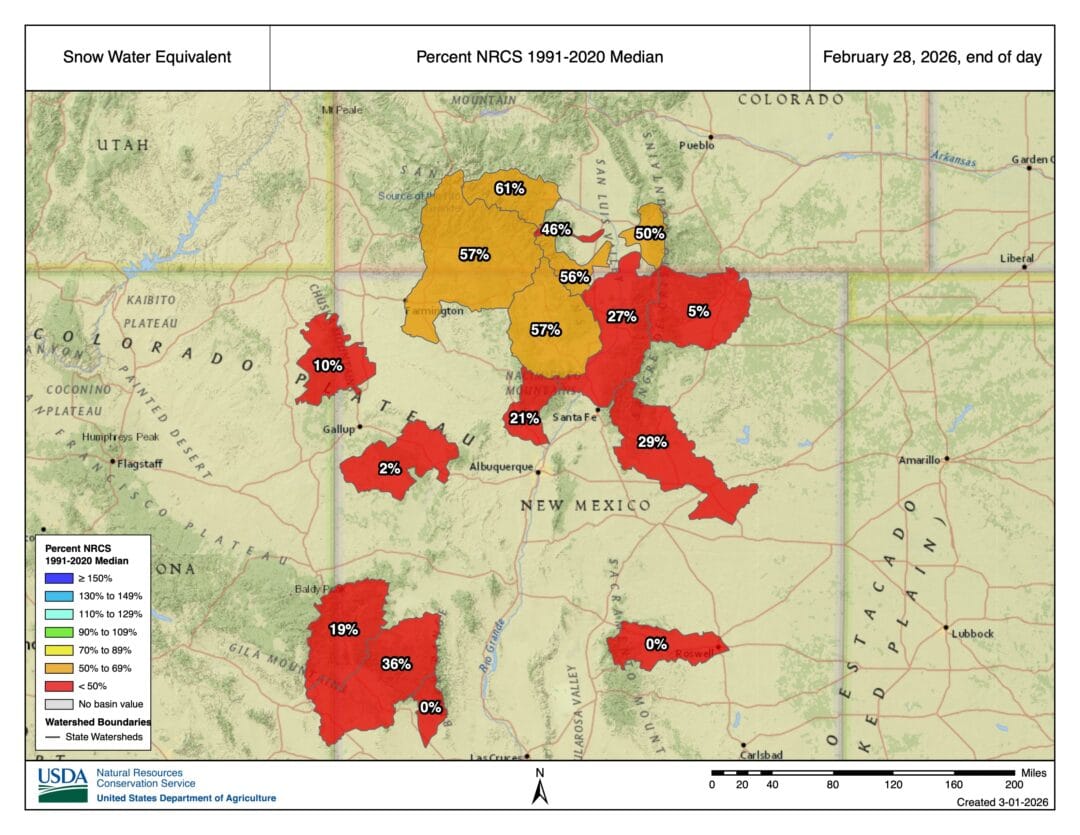
Nevada and New Mexico, like Oregon, look well behind the SWE curve.
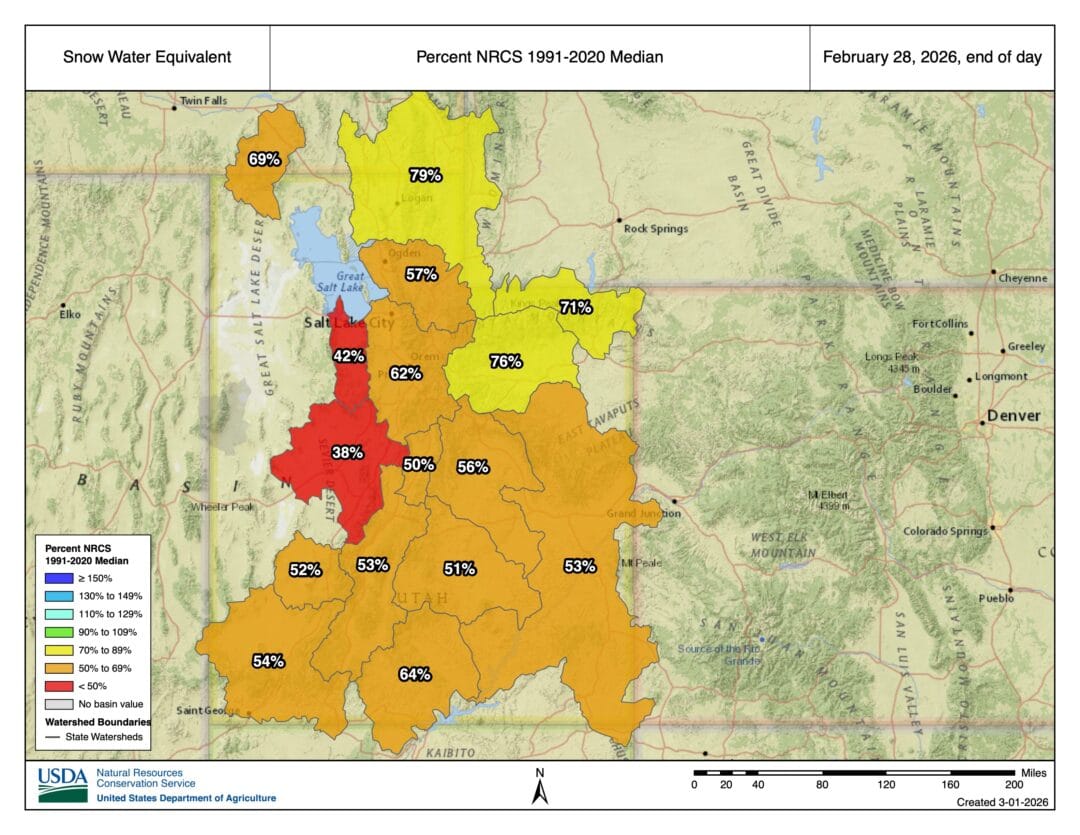
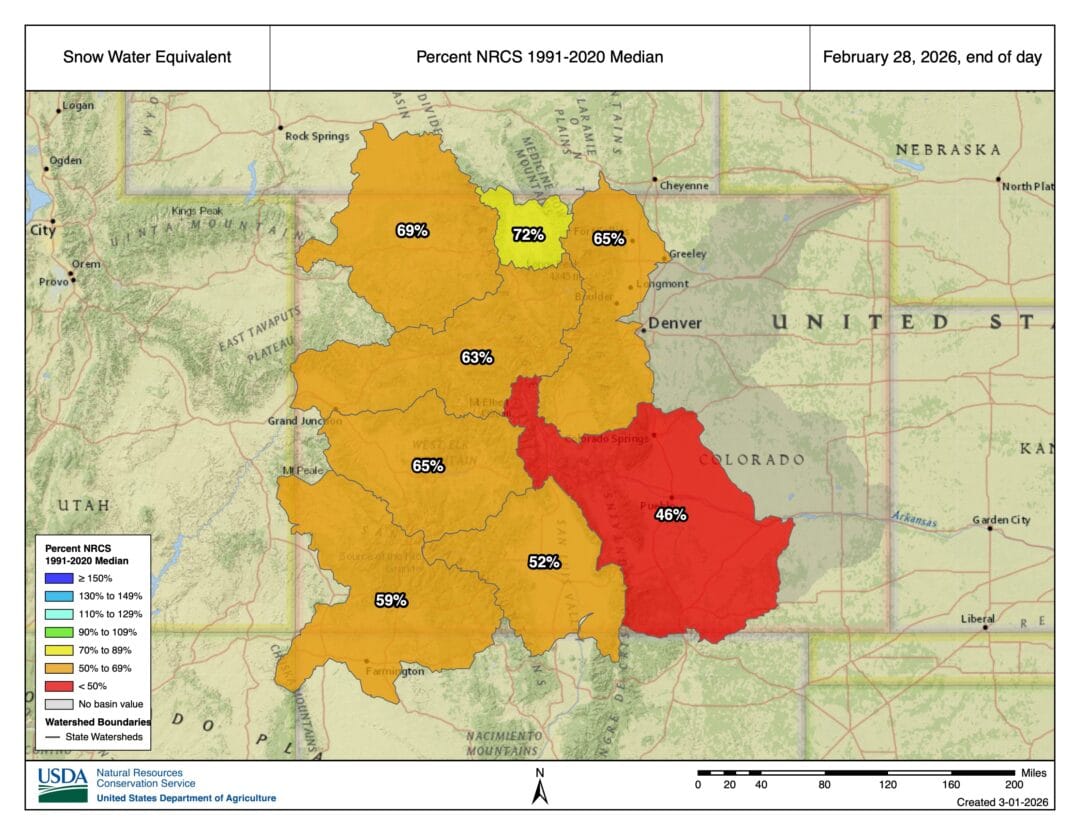
Utah, too, looks like it should be playing catch-up, and soon. As does its eastern neighbor, Colorado.
Wyoming: Bucking the Trend
I suppose, if you are mining a map for SWE and, in turn, good snow coverage, and in turn, good touring, you might zero in on Wyoming. It’s a big state. It’s a mountainous state, except where it’s not. And damn if the green hues aren’t singing there. Wind Rivers, anyone?
Leave a Reply
You must be logged in to post a comment.