
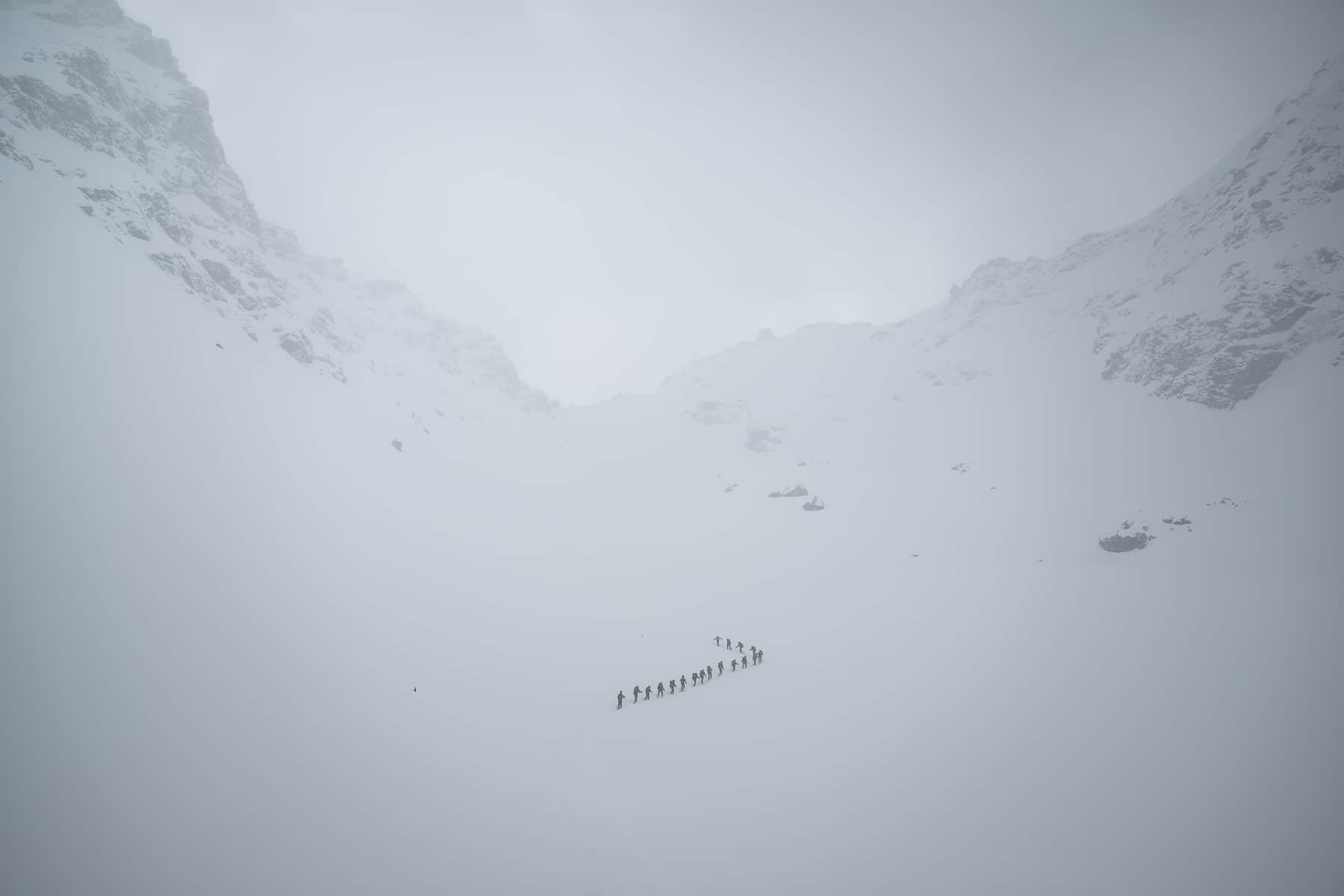
Goals are good—to paraphrase a somewhat unsavory film character’s speech about greed back in the late 80s. We set goals. Sometimes we meet them. At other times, well, they remain unmet. But if you find joy in the uphill effort, which, if you’re here, you probably do, goals can be motivating, life-affirming, and sometimes expensive. And sometimes all three at once.
Yesterday marked the opening of registration for the monument of single-day ski mountaineering races; the Patrouille Des Glaciers, or PdG for short. The race’s basic stats are both comprehensible to a well-trained and fit ski tourer (we don’t think there’s a split division, yet) and daunting, if you consider proper acclimatization, and the speed at which some teams flow through the arduous terrain.
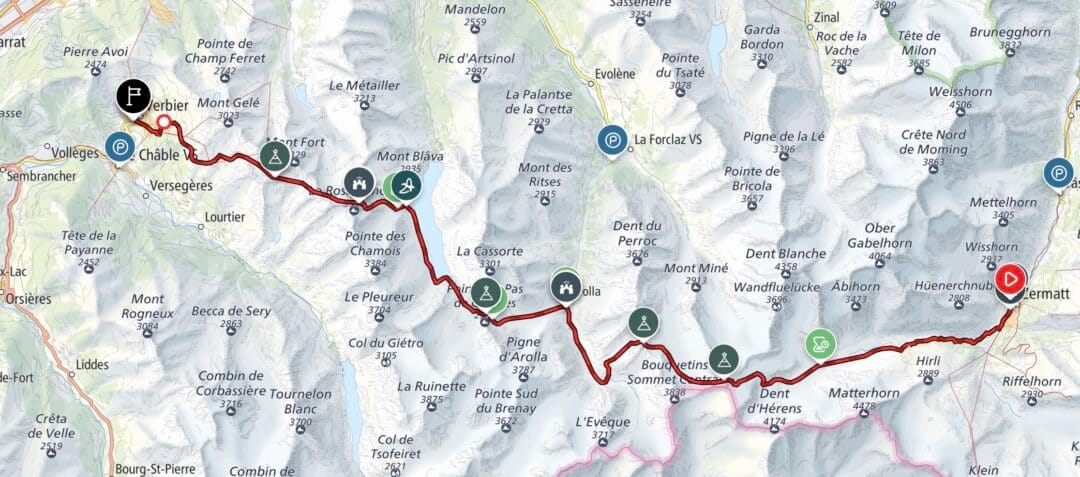
Total distance from the Swiss locales of Zermatt to Verbier, the start and end points, is 55.5km (~34.5 miles). The total ascent is 4,094 meters, which is equivalent to approximately 13,400 feet of climbing. Yup, that seems like a bunch of vert. Will your Lycra speed suit and wafer-light skimo gear give you wings? They just might if you stay focused, keep the goal in sight, and enjoy the process.
Registration for the 2026 PDG opened yesterday. If that doesn’t pique your interest, you can check friend-of-THR’s three-part series on the PdG (most of what you need to know) linked on our resources page. Registration will close, just like Swiss clockwork and train schedules, precisely at 14:59 on September 30, 2025.
The PDG is run every two years. When the Lycraed masses speed off from Zermatt in mid-April 2026, it will have been four years since all scheduled race classes raced the full PdG. For some wave classifications—there are several race waves—the 2024 race was canceled due to inclement weather. (Sorry, Alex.) So, for some, it may be time to buckle up, get the credit card ready, and organize your team of three (you must also register a fourth, alternate partner).
The full PdG race—there is a 27.5km race from the midpoint to Verbier—costs 1,680 CHF ($ 1,997 USD) to register.
The Speed At Which You Go
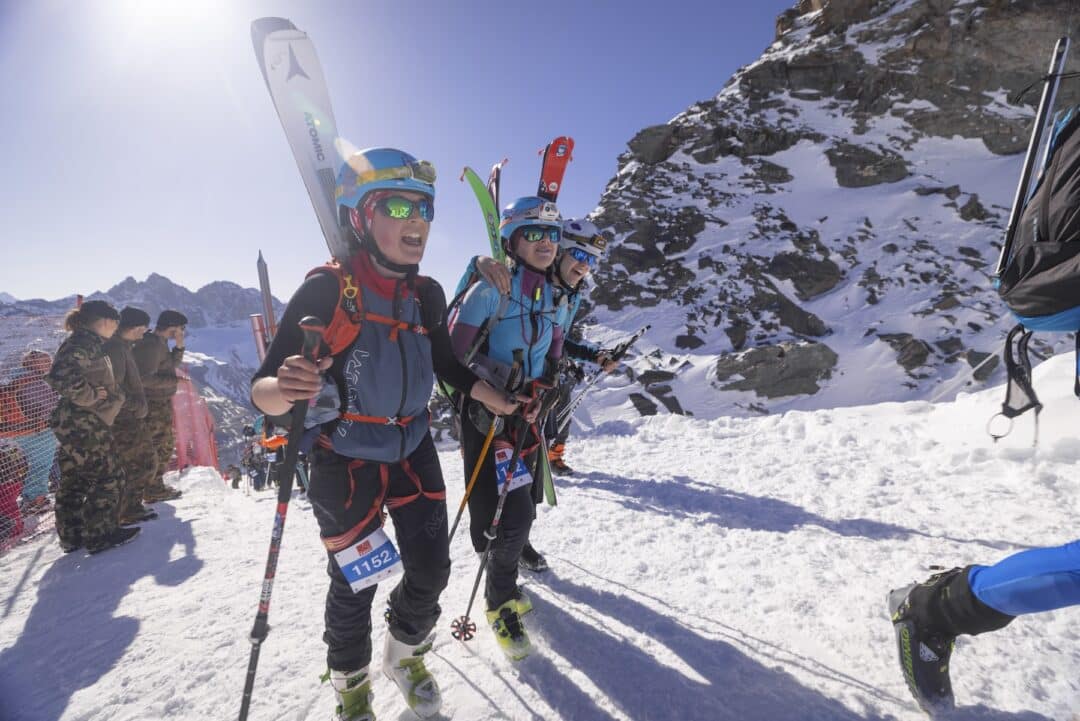
It may seem at times that we proselytize. Which may be true. But on this we won’t waver: Whether you are racing or racing the PdG, you’ll want to arrive in Zermatt at least somewhat, if not downright, fit. Suffering has its place on the Type-this-or-that Fun Scale. You do not, and your partners do not, want you to be real-deal suffering. Arrived trained-up. That sensible piece of advice is all the more plausible considering the course record, set in 2018 by Michele Boscacci, Robert Antonioli, and Matteo Eydallin (all speedsters) at 5 hours 35 minutes 27 seconds. The women’s record, also set in 2018 at 7 hours 15 minutes and 35 seconds, is held by Axelle Mollaret, Laetitia Roux, and Jennifer Fiechter.
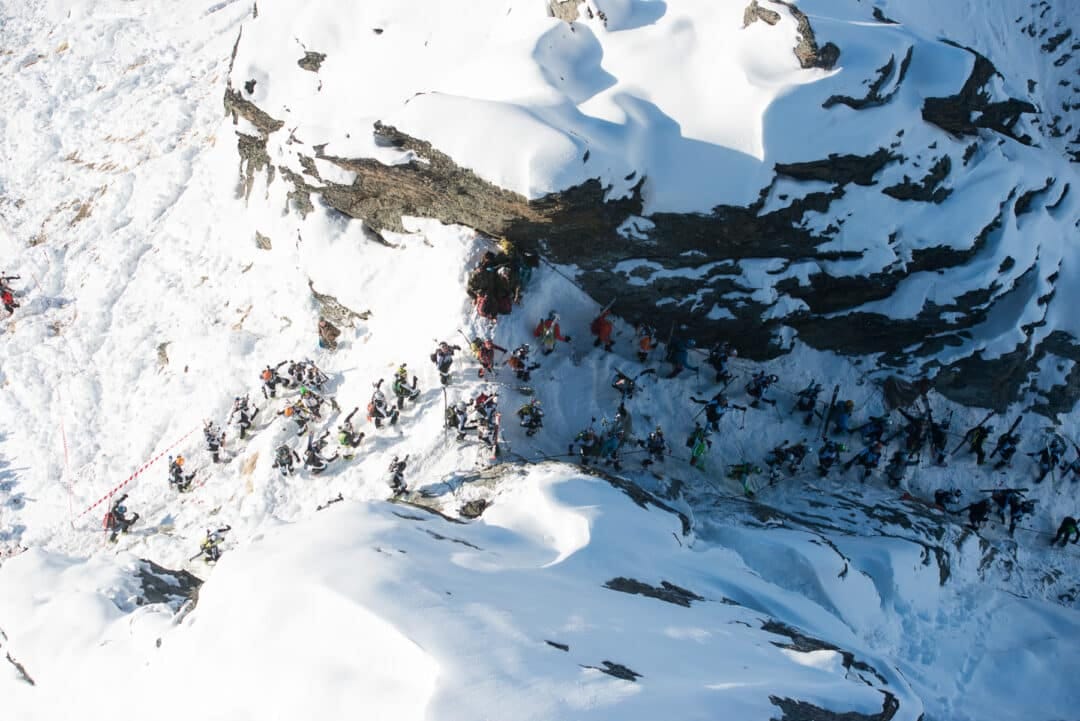
Although you’ll arrive fit, you don’t need to go that fast. Just fast enough. There are staggered start times and mandatory cutoff times at several checkpoints along the race route. Nonetheless, no matter your team’s start time—start times fall on either side of midnight—you must arrive in Verbier by 17:00 (that’s 5 pm). That’s a long, long day in the Lycra and on the skinny skis if you are bumping into that threshold. But you got this.
Leave a Reply
You must be logged in to post a comment.