
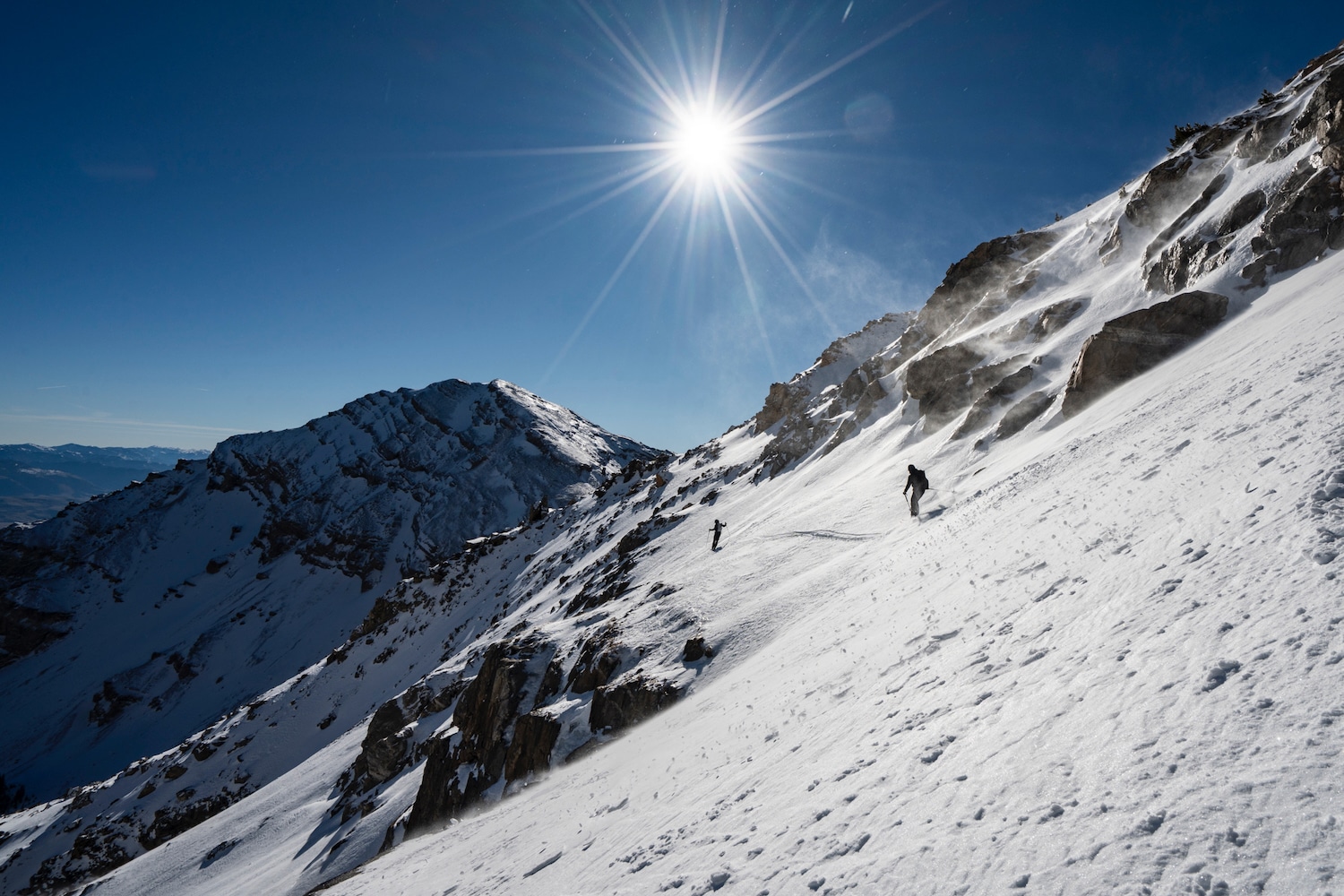
Intro
When I think of Head skis, I think of folks like Lindsey Vonn and Bode Miller, arcing down icy race courses on white skis and boots… Ski touring isn’t front of mind. In my time as a ski tourist, Head hasn’t really been in the ski touring game until the last three years or so, with the release of the Crux line. The previous generation of KORE skis were tourable weights, but beyond sponsored folks, I never saw them much out and about.
In 2023/2024, Head threw its hat into the lightweight touring ring, with a feathery splash. The Crux skis and boots, plus Almonte bindings, are proper lightweight touring options and are purpose-built, new designs, rather than borrowing from an alpine lineup or rebranding/copying a competitor’s binding. It’s good to see a big player investing in ski touring; Head appears to have taken a big leap with the Crux lineup, and I hope it pans out well and development continues.
Design Highlights
We tested the Crux 105 skis in the 179 length option. As a heritage Austrian ski maker, presumably aiming their touring lineup at the European market, it’s not terribly surprising to see a pretty traditional shape and mount point across their lineup; not unlike, say, the Blizzard (Or as the Austrians would say BLITZ-ahrd) Zero G 105, Kaestle TX107, Fischer Transalp 105, etc. The mount point on the Crux 105 is -11cm, which is pretty far back, about in the middle between the Zero G 105 or Black Crows Navis Freebird and the uber-directional Dynastar M-Tour 108. It’s similar to a Zero G 95 or the like. Shape-wise, it has far more similarities than differences compared to the same Zero G 105 and Navis combo; they have a heck of a lot in common. Like the Navis, they have a mostly flat tail with a bit of rocker/early rise, a bit of camber (more than the Zero G, similar to the Navis), and a moderately rockered, moderately ‘spooned’ tip (akin to the Navis). Compared to both the Zero G and Navis, the Crux has an especially long turn radius; for what it’s worth, I like that, but it’s not terribly noticeable compared to something like the Zero G, which has a long enough turn radius—they never feel hooky or overly turny.
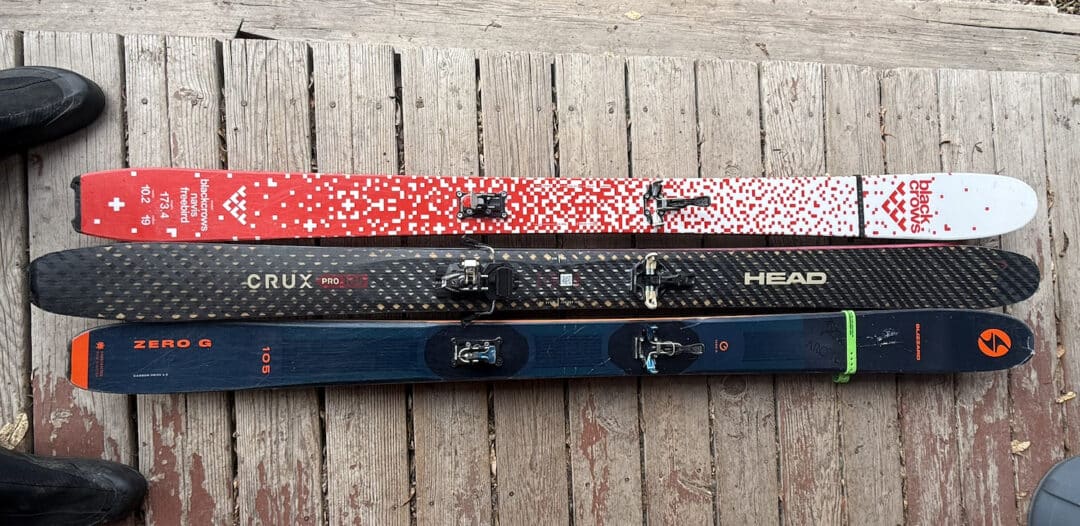
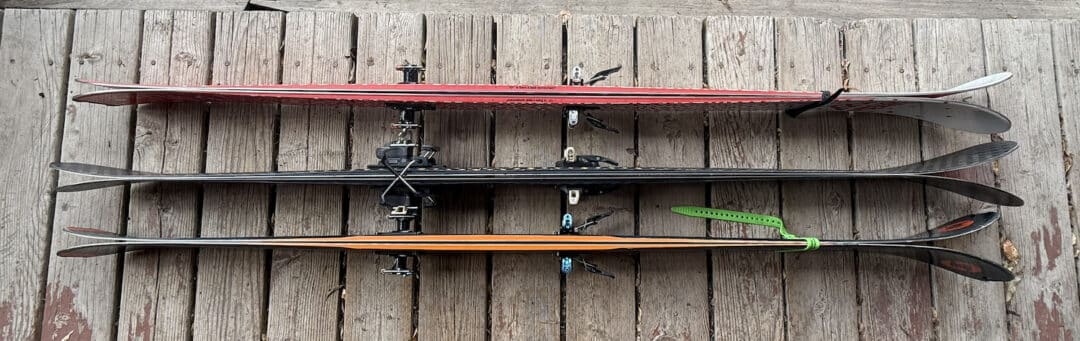
I often feel like skiers love to hate on ‘carbon skis’, without appreciating what that means. I’m not sure I know what that means either. Is a ski with a wood core and carbon stringers a carbon ski? That really spans a wide range of weights, models, and performance characteristics. Meanwhile, a small subset of skis really feature carbon fiber more prominently than others; I think of Moonlight Mountain Gear, Ski Trab, and the Head Crux series. These skis tend to feature very light core materials (often paulownia or karuba) that are beefed up and stiffened by a carbon layup. This is a great way to make a very light ski, but it generally sacrifices damping and suspension compared to more robust, heavier woods like beech or poplar. Meanwhile, companies like Volkl make their V-Werks skis with a significant carbon “jacket”, and they are praised for punching above their weight as far as damping.
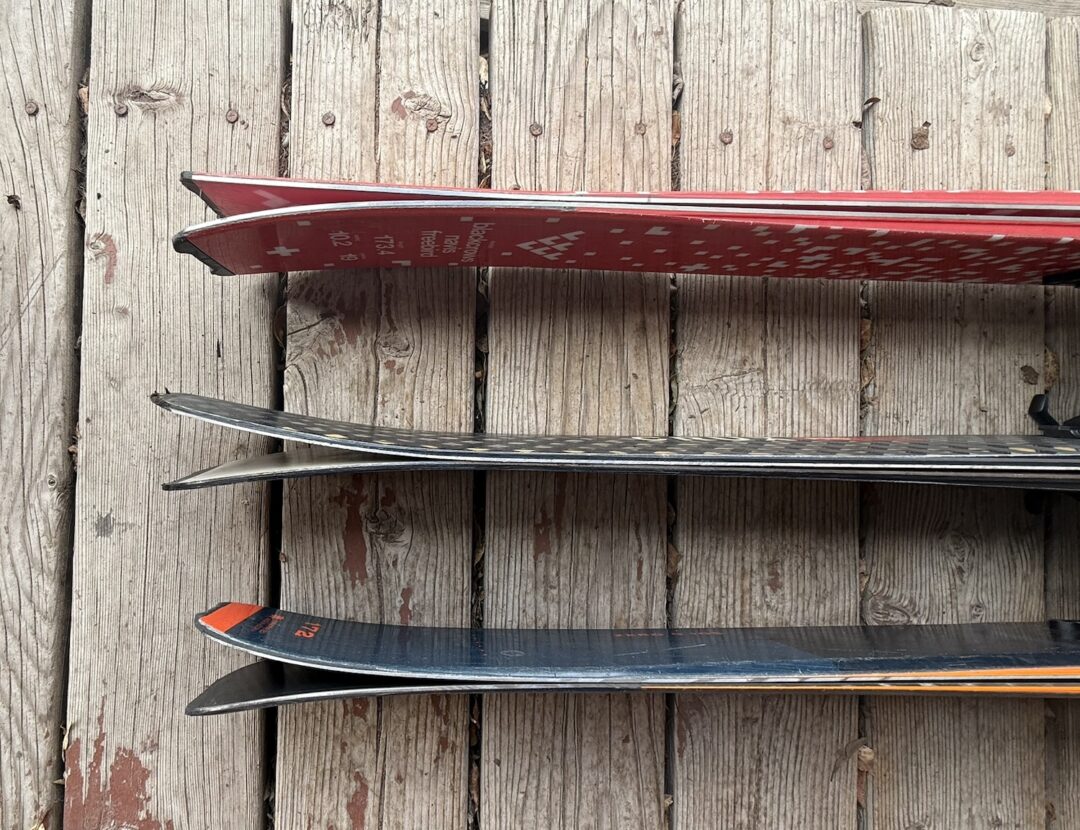
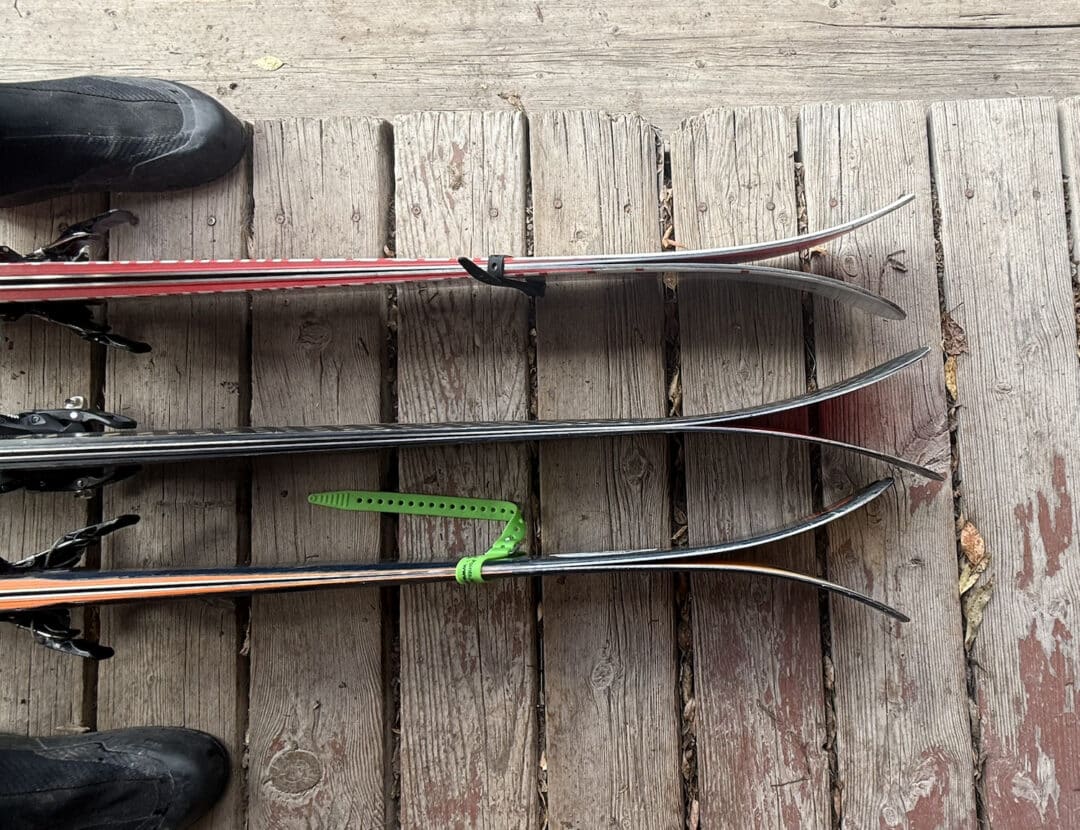
With construction and light weight as the Crux’s main differentiators, it may be surprising that it retains fairly hard, thick bases and edges. Maybe not to the extent of a company like Moment, which uses the same alpine/resort ski materials in its touring skis, but on par with my Blizzard skis, which seem to hold up very well to the abuse I throw at them. Kudos to Head for not using that opportunity to cut weight at the expense of real durability.
Beyond these construction details, the Crux has a few build quirks. A mounting plate underfoot is visible under the carbon. However, Head recommends a 3.5mm drill bit normally reserved for metal-free construction. The no topsheet/graphic design is somewhat notable both for weight savings and a high-tech look—otherwise, a cap construction, rounded tip, and pre-notched tail round out the package.
Testing Setup
I mounted the Crux 105 at -8.5 cm from center (+2 from rec), hoping for a friendlier, more balanced character than I expected the recommended mount point to produce. Given the light skis, I mostly paired the Crux with lightweight boots, everything from the La Sportiva Stratos Hybrid for a sub-2.5 kg boot/ski/binding combo to Zero G Peaks and Dynafit Blacklights. Unlike other very light, very directional skis like the Dynastar M-Tour 108, the Crux paired well with lighter boots and felt quite manageable in consistent conditions or at low speeds. To a point, boots weren’t holding back the Crux’s performance any more than the weight of the skis themselves.


I received the Almonte bindings with the Crux, and they seemed like a good fit, though a 110g race binding would really maximize the setup’s weight savings. The Almonte is a nice touring binding that reminds me a lot of the Marker Alpinist series. Though the Almonte is a bit lighter at 258g sans brakes vs 297g for the Alpinist, it is mostly plastic/fiber-reinforced plastic, which probably helped the very carbon-forward, somewhat vibration/chatter-prone Crux skis. They feature a U-Spring heel with adjustable lateral release, two heel risers+flat mode, and a removable brake (add a “brake platform” for sale at skimo.co). Along with a gapless heel with length compensation, it features a freeride spacer-esque stomp pad, with different thicknesses included in the binding box. It is a fixed piece rather than a sliding AFD, so it needs a bigger gap than, say, an ATK Raider. The pin delta is 11mm on the Almonte, which is a significant change relative to its closest competitor, the Marker Alpinist. Some will have strong enough opinions on that subject that it will be an easy deciding factor. Overall, the Almonte seems like a good binding in a market with some truly excellent options.
Field Testing
Powder/soft snow
Like the Zero G 105 that it resembles, the Crux has enough width and rocker to handle powder just fine. Like the Zero G 105, it is distinctly not a powder ski, and I wouldn’t choose it for low-angle powder skiing under most circumstances. That said, when I encountered soft snow in the alpine on the Crux, it never felt like a bottom feeder and didn’t get bogged down in deep/soft snow the way something like a Zero G 95 does. For European or East Coast powder seekers, the Crux could be a great option.
Crud/tracked/variable snow
Oof, the stiff build and 1300g weight don’t do the Crux any favors when things get variable and bumpy. The lack of damping and disposition toward deflecting and chattering were notable with the Crux. At low speed, they held up okay; their size and tapered tip helped them ride over some imperfections, and they felt very maneuverable and flickable. To that end, despite not inspiring confidence at speed in variable snow, they never felt like a handful; they just required slowing down a bit when things got weird.
In my pass/fail breakable crust assessment, the Crux got a marginal pass. No shocker they aren’t as good as reverse-camber skis or bigger, surfier models, but their big-ish tapered tip and stiffness made them more or less predictable and manageable in moderate breakable conditions.
Firm Snow/Steeps
Given the comparison with some of my favorite skis for firmer snow and steeper terrain, the Zero G 105 and Navis, I expected the Crux 105 to deliver on this front.
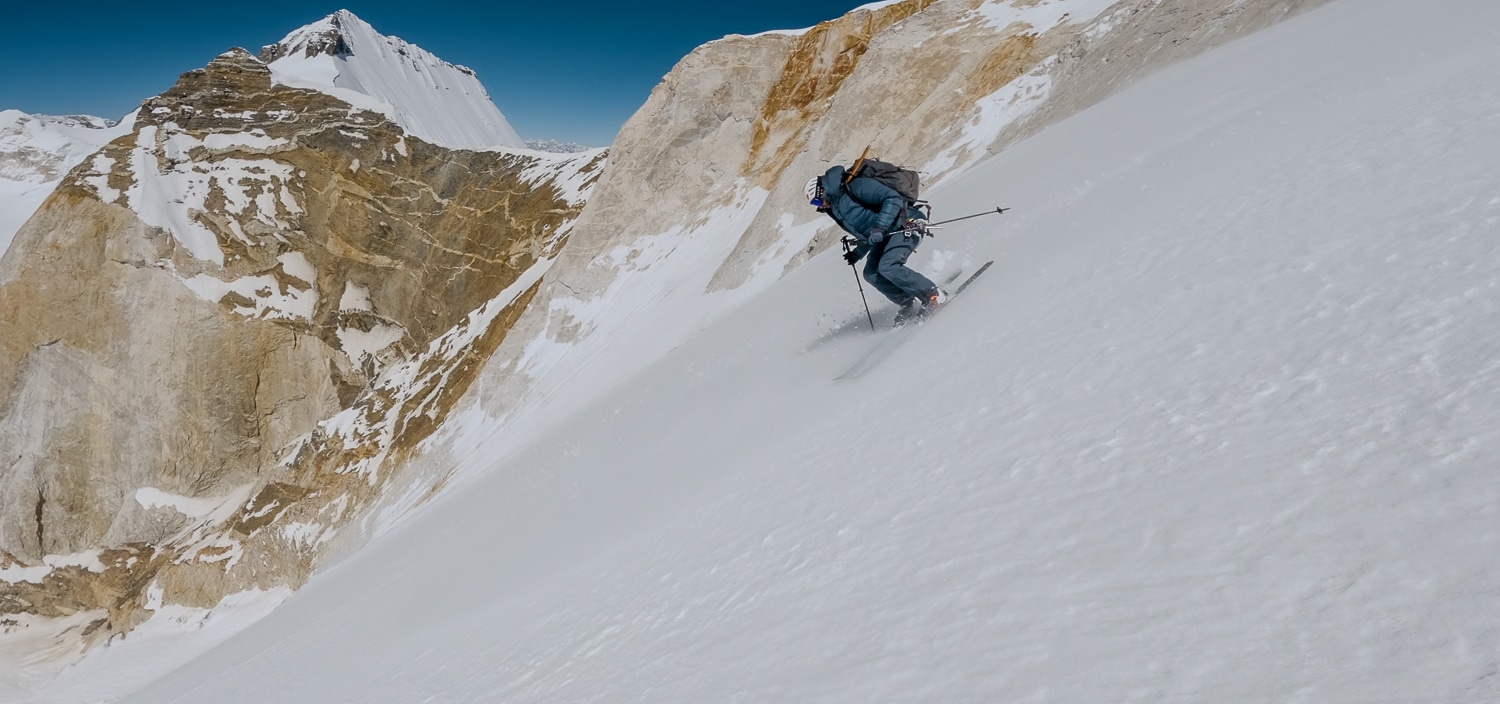
As expected, the Crux’s stiffness and long sidecut combine to deliver excellent edge hold and strong steep-turn performance. There is a significant tradeoff to explore between adding weight for confidence on edge in a steep turn and keeping it light so the ski flicks around more effortlessly, leading to a smoother, more controlled turn. While the Crux certainly leans toward the side of lightweight and flickable, the confidence in edge hold is pretty darn good, too. This makes for a pretty sweet ski for longer days in more challenging terrain, though the aforementioned variable-snow performance can be a beatdown with tired legs.
Resort Skiing/groomers
The Crux’s weight and sidecut take it out of the running for regular resort days. A light ski with a tighter sidecut can still be fun on groomers after skinning up (think Atomic Backland 86), and a heavier ski with a long sidecut can be great fun off piste and in chop (think Black Crows Solis). That said, the Crux has enough edge hold that it isn’t problematic inbounds; it just isn’t ideal, as its long sidecut requires quite a bit of skidding when carving a steeper groomer. There are likely better choices if this is a priority.
Conclusion
With the Crux, Head has created a ski that potentially serves a pretty specialized niche: lightweight skis for steeper runs, as well as the much broader category of weight-focused, do-it-all skis. For folks that might look at a Moonlight Gear Guide or Movement Alp Tracks, the Crux could fill a similar niche.
When I first got the Crux 105, suspiciously light was the description that came to mind. While the lightweight build certainly has trade-offs, I’m no longer so suspicious of these skis, and I trust they will serve their purpose as functional, more affordable (relative to other superlight options like Moonlight) lightweight touring skis.
Specs
Available lengths (cm): 170, 177[tested], 184
Weight: 1318g
Dimensions (mm): 133-105-122
Turn radius (m): 23.2m
Core: Karuba and Graphene
Build Comments: No topsheet graphic to save weight. Triaxial Carbon ‘jacket’, cap construction
Shape: Long sidecut, tapered tip, some camber and tip rocker, minimal tail rocker
Recommended Mount Point (cm from center): -10.5cm
Drill size: 3.5x9mm
Similar Models: Moonlight Gear Guide, Movement Alp Tracks 106, Blizzard Zero G 105
Price: $949
If you are keen on speaking with a real person about gear, check out the good folks at Cripple Creek Backcountry—they support our reader-first mission online and in print.
(The above is not an affiliate link.)

Leave a Reply
You must be logged in to post a comment.