Review: Le Bent Baselayers and Socks

Key keep-you-warm items for tourers.
Effective and stylish Baselayers: Le Bent.

With all the time I spend thinking about ski gear, there remain some bits that slip through the cracks. Baselayers broadly fall into that category. I’ve mostly just used what is available, cost-effective, or free. Most often, this has meant something along the lines of Patagonia Capilene Midweight bottoms, a basic lightweight T-shirt (most often 32 Below from Costco, sometimes Patagonia Capilene Daily merino), and a sun hoody (usually Arc’teryx Cormac). This has worked well for me most of the time; the only modification I’ve made is trimming most of my bottoms to ¾ length to prevent bunching above my boots. 

My usual daily setup works pretty well, with only a few downsides. First, the stuff I use is almost all synthetic (aside from a few Patagonia merino shirts), which comes with an associated stink factor. Day to day, not such a big deal. I can do laundry. Traveling or expeditioning, this becomes a bit more of a thing. Sure, we can and need to embrace the stink a bit during an expedition, but in the instance of traveling to ski in developed areas and staying in hotels, showing up in the morning stinky isn’t a great look (smell?). 

The other issue I sometimes face is simply needing something a bit warmer or less warm for those more fringe days of hot or cold. There is an argument to add an insulated knicker like Strafe or Stellar make on the cold days, and skip the long johns on the hot days, but I like to wear long johns, and I also like to keep it simple and not have a whole extra piece of clothing if I don’t need it. Hence, warmer and lighter long johns. This isn’t really an issue for the tops, where layering is a bit easier and the sun hoody/t-shirt combo is a year-round uniform. 

Le Bent's Featherweight Hooded Top.
Le Bent’s Featherweight Hooded Top.

All this to say, I have tried a few lighter and heavier base layers over the years, as well as some alternatives like a merino sun hoody. None of it had really stuck until trying some Le Bent base layers this winter. My search included a bunch of super light base layers that are very snug-fitting and therefore less airy and comfortable—my days in spandex are (at least mostly) behind me. Meanwhile, the Patagonia Merino Air bottoms were a go-to for warm bottoms, but they are both discontinued and problematically fragile. I’ve replaced them with some thick, fleece Arc’teryx bottoms, but they are too warm for all but the coldest and lowest output days (think Denali summit day). 

This is all a long-winded lead-up to say that I tried the Le Bent featherweight bottoms and hoodie, as well as the heavyweight bottoms, this past season. For now, I’ll focus on the featherweight layers, as they were both a favorite and more applicable to most ski touring. 

The NuYarn fabric is the news maker here. It is composed of 60% Merino, 25% Bamboo, and 15% Nylon. The best way I can describe it is that it feels the way I always hope a merino baselayer will feel: Soft and airy, rather than sturdy and scratchy. A great comparative piece to the Featherweight hoody is the Arc’teryx Iona hoody. Despite my general love for Arc’teryx’s fit, finish, and details, the Le Bent wins out in this case. The fabric is both softer and lighter in hand, as well as being less hydrophilic. I often find myself ending the day feeling a little damp and cold in the Iona, which seems to wick and absorb sweat for days. The Featherweight is more similar in performance here to the normal Cormac synthetic hoody, which does a great job of drying out throughout the day. The fit is more “sun hoody” than baselayer, in that it tends to be airier and looser, rather than snug or skin-tight. Some folks may like the hood shape as well, which features a more open neck design like older Patagonia models rather than the more modern “cowl neck” style that feels restrictive to some. 

The Featherweight bottoms use the same excellent fabric as the tops. After a season of fairly regular use, the featherweight nature and merino composition are showing some weakness in abrasion areas, such as between the thighs and where a beacon pocket/seam rubs above the knee. This seems to be par for the course for lightweight bottoms. I often get some holes after about a season, then I typically get another couple of seasons of service before they totally fall apart; I expect about the same here. The bottoms fit a little looser and don’t have much resting stretch relative to most other lightweight long johns. It’s a similar fit to my favorite Patagonia Capilene Midweight long johns, not too loose, not too tight. They also come standard in a boot-friendly ¾ length. I cut most of my long johns to this length anyway, but a finished seam and no extra work is nice. These are for sure a new favorite.

The Heavyweight bottoms are designed for very cold days—which might make them ideal for guides and avalanche educators.
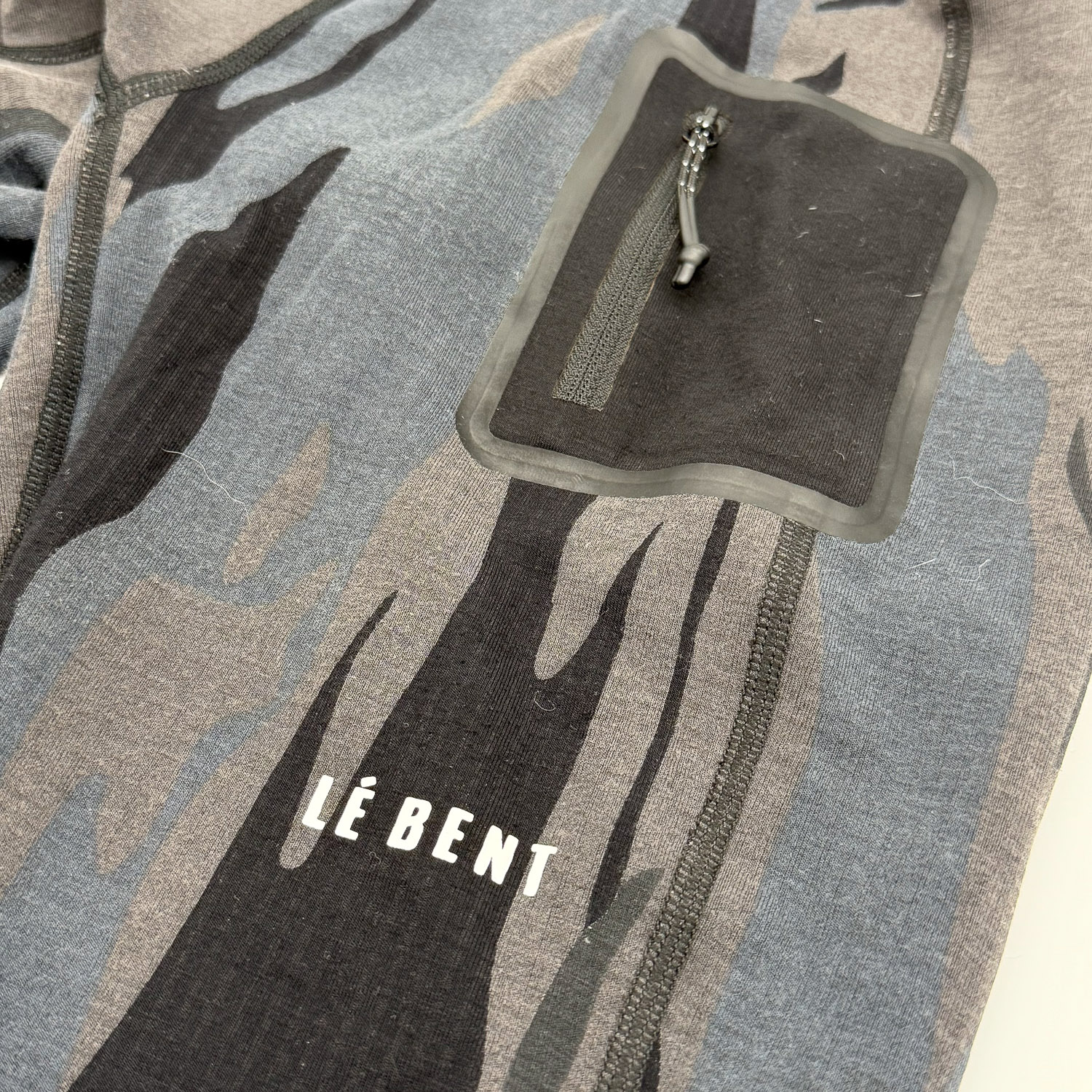
The cuff rolled up displays the next-to-skin gridded fabric.

Last but not least, I tried the Heavyweight bottoms from Le Bent. As I mentioned earlier, I have been searching for a replacement for the now-discontinued Patagonia Merino Air bottoms that I loved and destroyed. I still haven’t found something that blends the breathability and warmth that those provided—maybe I should make myself some ¾-length Polartec Alpha pants? I digress. The Heavyweight bottoms are the first gridded merino baselayers I have seen, which makes for a nice combo of low stink and added breathability to a very warm bit of kit. The Heavyweights have a more standard, snug fit, which probably makes sense as the bulk of the 280 g/m2 fabric would be significant if it were loose and bunching. One thing I’ll never understand is the addition of pockets to base layer bottoms. How am I supposed to access that? Maybe I’m missing something, as Le Bent certainly isn’t the only company doing this, but I don’t get it. Overall, these will fill a more niche role in my wardrobe, mostly coming out on cold and or wet days where there is a low chance of getting too warm. 

Price Featherweight 3/4 Bottom: $115

Price Featherweight (Hooded) Top: $160

Le Bent started as a sock company, and as such, they threw in a few pairs of socks with the baselayers. For whatever reason, I’ve been struggling with ski socks for the last few years. I committed hard and purchased six pairs of Darn Tough Ultralight ski socks a few years back. Although I’ve never liked them and never hated them enough to replace them so soon. The biggest complaint is that they fall down my calves and bunch up in my boots, but they also have a high nylon content that absorbs a lot of sweat and stays cold once wet. Anyways, I tried the Zero Cushion Bootfit socks as well as the Cody Townsend Pro socks from Le Bent. The Zero Cushions are a direct competitor to the Darn Toughs, and they were leagues better. They are softer, warmer when wet (and less wet feeling when sweaty), and most of all, stay put on my calves. They are my new favorite ski socks. The Cody Townsend socks were a medium cushion model, which is a little thick for a snug boot fit. The notable feature here that blew me away was the silicone grippers on the calf and heel/achilles. Combined with the medium cushion, I was able to regain a ton of performance in some beat-up liners and higher-volume boots in which I struggled with heel hold (insert the Atomic Backland XTDs). I want silicone grippers on all my socks. 

Price Zero Cushion Bootfit Sock: $33.95

 Price Cody Townsend Pro Series Zero Cushion Snow Sock: $43.95

Anyway, I’m going to go back to thinking about skis, boots, rope, and other things and stop thinking so hard about my baselayers. Thanks to Le Bent for providing a worthy alternative to my trusty but destroyed Capilene. 

Responses

  1. Slim

    Baselayer pockets are nice for 2 situations:
    1 for keeping things warm and secure. As long as you don’t need to acces it continuously. Things like spare batteries, certain foods or meds.
    2 Conversely, when it’s hot and you are only wearing your baselayer, then a pocket on the there serves the same function as any other garments pocket.
    Dig up a copy of Al and Mike’s backcountry ski book, and they actually suggest sewing pockets on to your baselayers!

    I love my PT Alpha direct pants. Very light and breathable. Soft and fuzzy for sleeping in. A nice extra leg layer for multi day trips, whether hut or tent based, that doesn’t weigh much.

  2. Robertson Pearce

    Best warm and breathable base layers I’ve used are the Beringia diomede wool. They’re basically a thicker version of the Brynje mesh ones many use (which I’ve found to work well for me as more lightweight bottoms). However here in the PNW it’s very rare to be cold enough that I need long johns for touring and am typically in long leg (down to the knee) boxers under softshell or softshell with membrane pants/bibs unless its low 20s and down. For the top I use a sun hoody basically all the time as I like a hood I can throw up to fend off wind/sun/snow, with various vests/shells/etc over top depending on temp. I’ve tried the Le Bent mentioned above and didn’t get along with it well, the arms were quite short and the cuff openings very voluminous which let wind through and didn’t stay up well if pushed up my arms. My favorite sun hoodies are made from Polartec Powerwool in the 100 wt fabric. A few “cottage” clothing companies, mostly focused around hiking, make these here. Two good ones are Mola Hoods and Farpointe Outdoor Gear.

    1. Gavin Hess

      Those Beringia layers look sweet! Hopefully they restock the bottoms before winter. I’ve also been oogling their Octa anorak – looks like a sweet active insulation piece.

      Slim – Ive been thinking of sewing up some alpha pants one of these days. Your endorsement is further encouragement.

Leave a Reply

We are a reader supported independent project. You are beginning your free-article count on The High Route. Thanks for stopping by. Already subscribed? Sign in.