
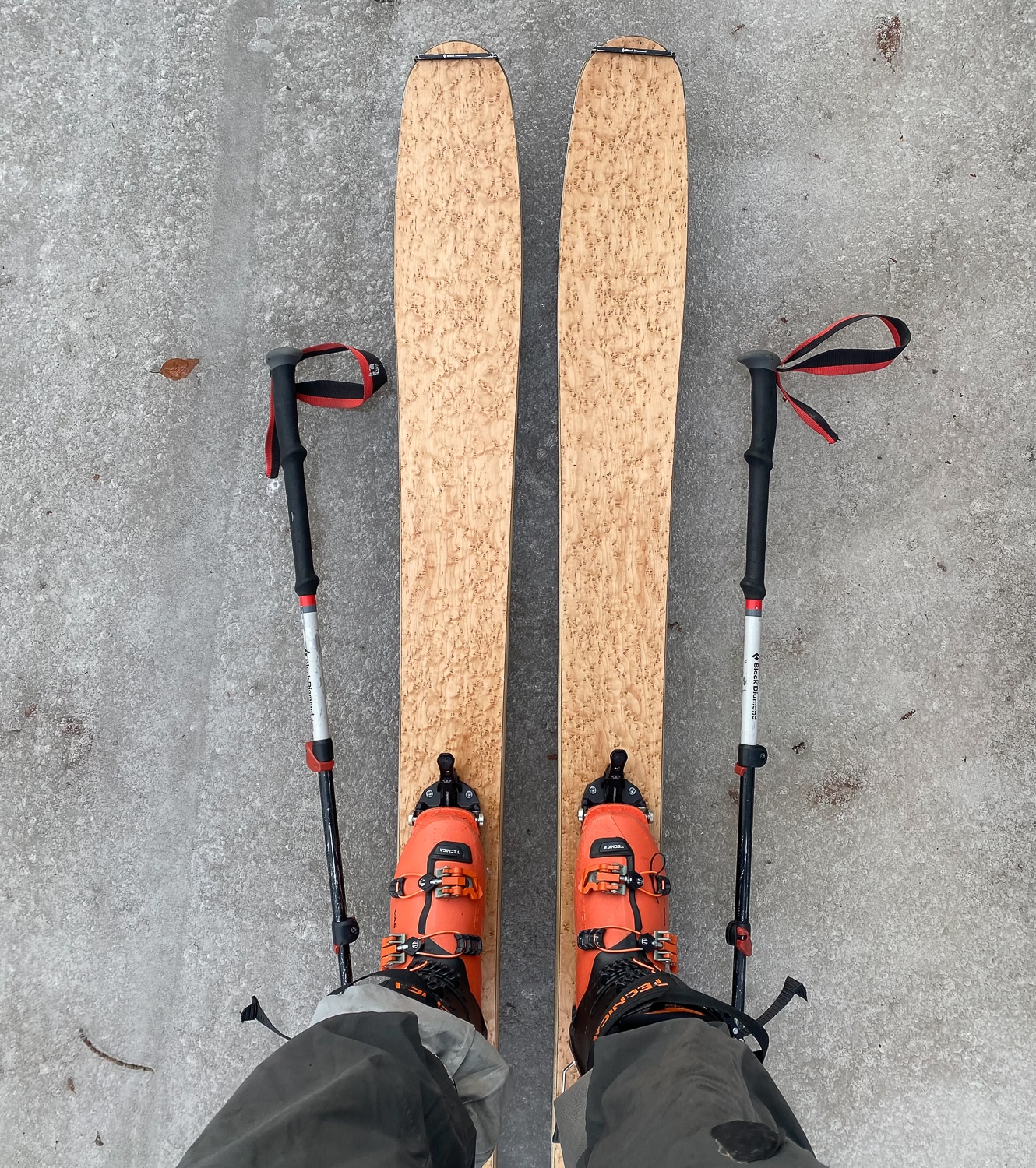
The Quick review (read the first look).
The Igneous Raglefant is an extraordinarily beautiful and immaculately crafted powder ski that has enough backbone and support and a ton of soulful surfy goodness in the deep and soft. For more, read on.
Made for your Best Days
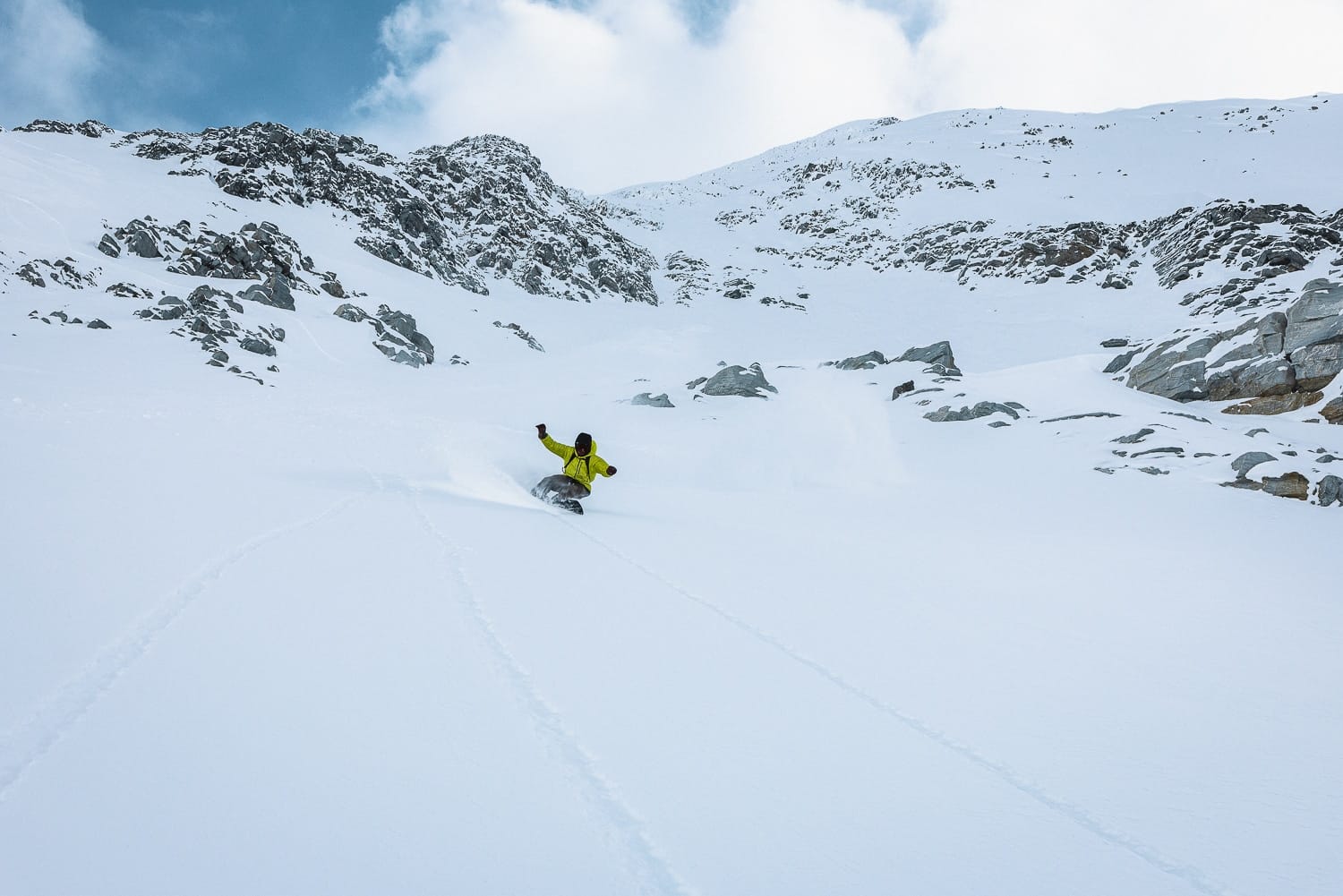
It has been an uneventful, pleasant skin up. Beautiful coming up out of the steep and shaded slope onto the sunny ridge; behind is some sweating, some slogging, and schwacking. And now we are on top. Transition made. Buckles are tight. I rock slightly to check boots are in ski-mode, look down the line, visualize the first turn, the next, onward. I take a breath. Tip forward. There is a short moment before gravity takes me, and then I am away. The front of the skis plane up. I gain more speed, skimming over the snow, a silky, slick speed. Each flake is a solid, but in mass it acts as a liquid. Speed gives lift upon this fluid surface, enables a freedom of movement, of direction, and a kind of hungry gratitude. I know I am in it. This! This is what I dream about, think about, hope for, and work for, and I am in it right now. I am not thinking; this is simply felt. In recognition is appreciation. I dive into each turn, a happy hunger, the skis quick and lively send snow over-head, into face, I point through a gap, then, at speed, swoop weightless up onto a steep side-wall, kick the skis sideways, a crystalline explosion fills the air, fills my vision, my chest, I arc away, effortless, back down into the trough, looking ahead for the most inspiring features, spaces, the next canvas of white to point toward. This. This. This!
We talk about shape, rocker, flex, and camber. We talk about this stuff, and maybe it matters, sure. But in looking, measuring, and comparing to other skis, it is easy to get lost. What is easy to understand, though, is in that moment of tipping forward, the Raglefants lifted, accelerated, came alive. In that moment, I understood what they were really all about, what they were for, and what I was supposed to do. I was supposed to ride them, to look ahead, and to let go.
At the bottom, I radioed back up. It is so fun. I am down. Let ‘er rip!
When I say, awesome, this is what I am talking about. Awe.
The Igneous Raglefant can tackle crust; they are fun on slush, on anything soft. They can manage firm. Skidded turns are no problem. But deep powder is what they are made for—and they are awesome at this.
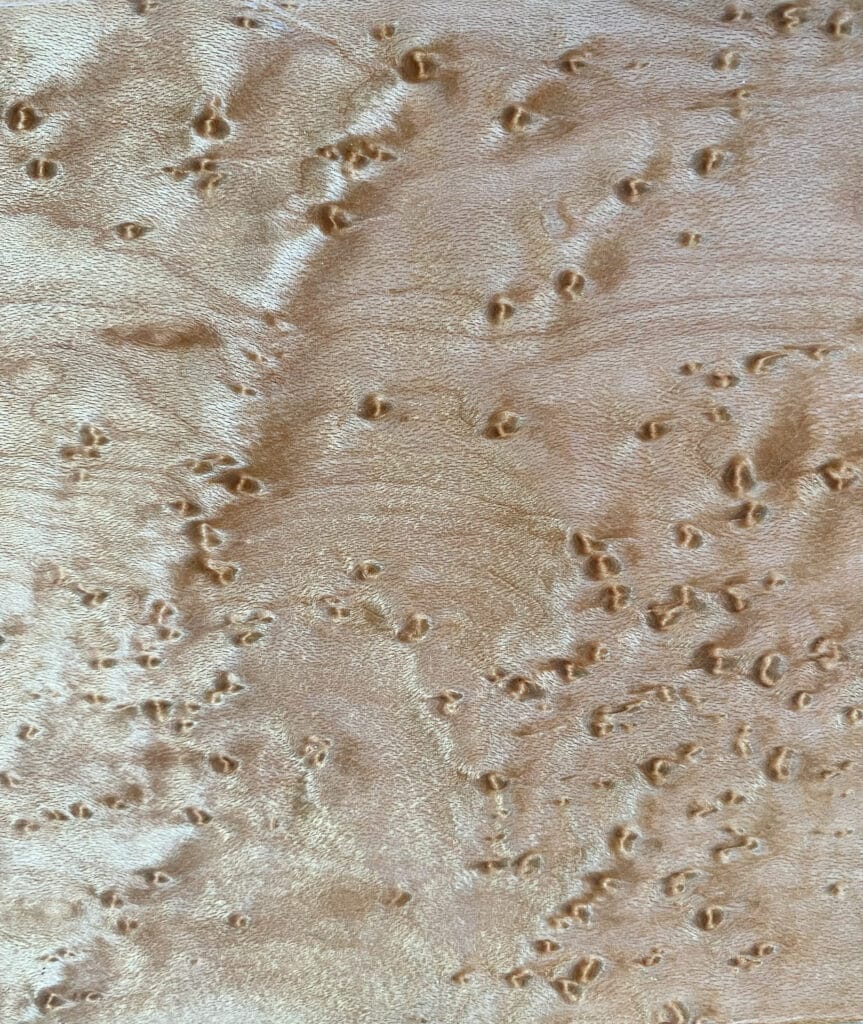
Each rider has a feeling they are after in a ski. I have sung the praises of many a ski. Especially in powder, which is a forgiving and wonderful medium upon which to ride. The Raglefant is a uniquely awesome powder ski that encourages a soulful and free expression of movement, and when I ask myself what skiing is about, this feeling is the closest I can get to a satisfying answer.
Igneous Skis are custom, hand-built skis based out of Jackson Hole, WY. They’ve been building since the early ‘90’s. Michael Parris has been building skis for 27 years. You may not have heard of Igneous because they don’t advertise. You may never have seen any, because they don’t make many pairs. And even if you had seen them, the skis are not labeled or branded.
I could type down their history, but this excellent film short tells the story.
Details
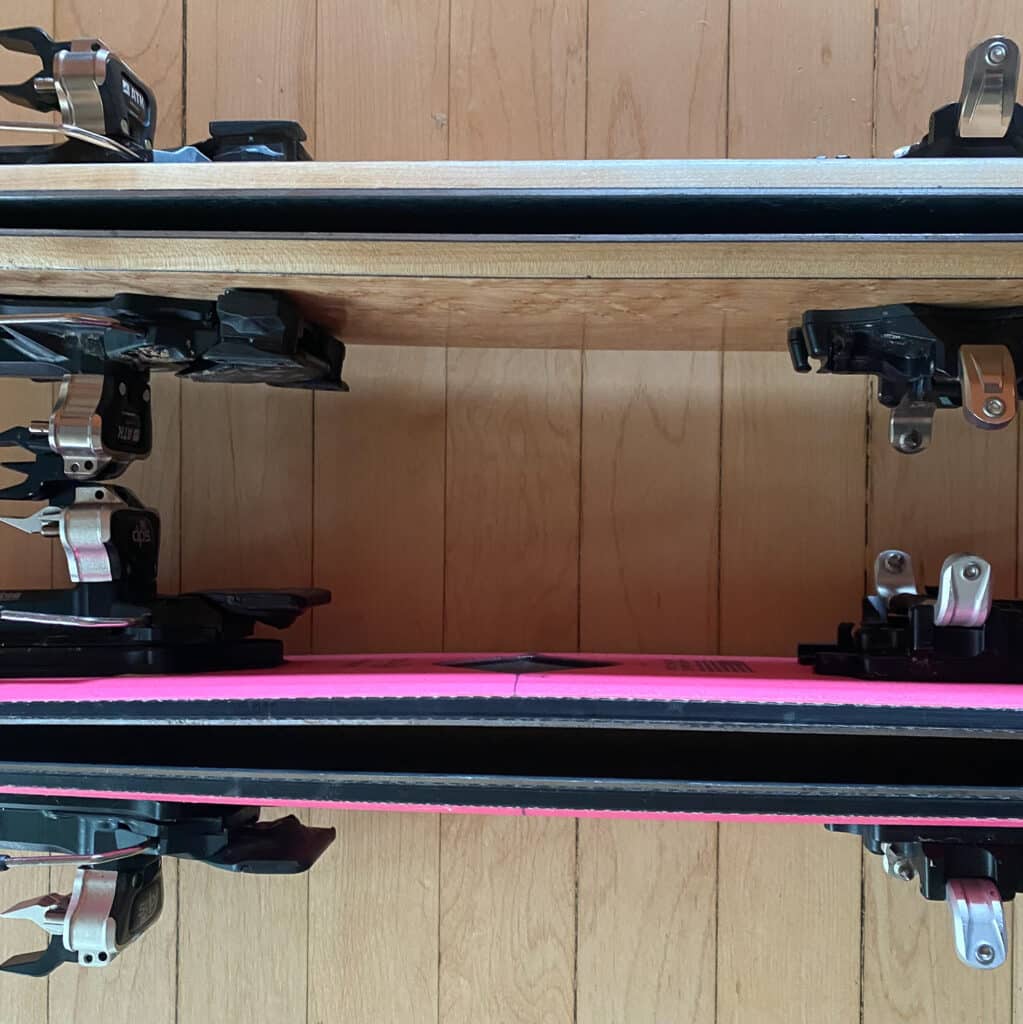
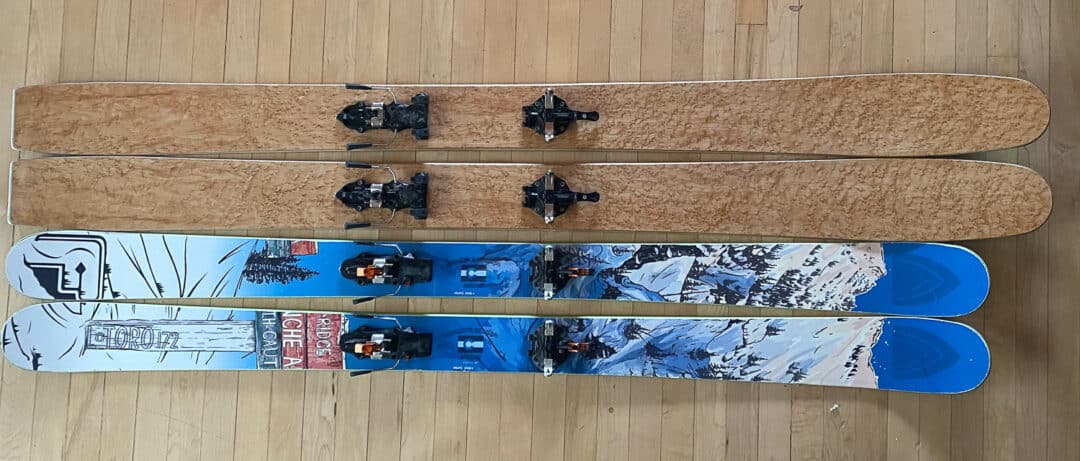
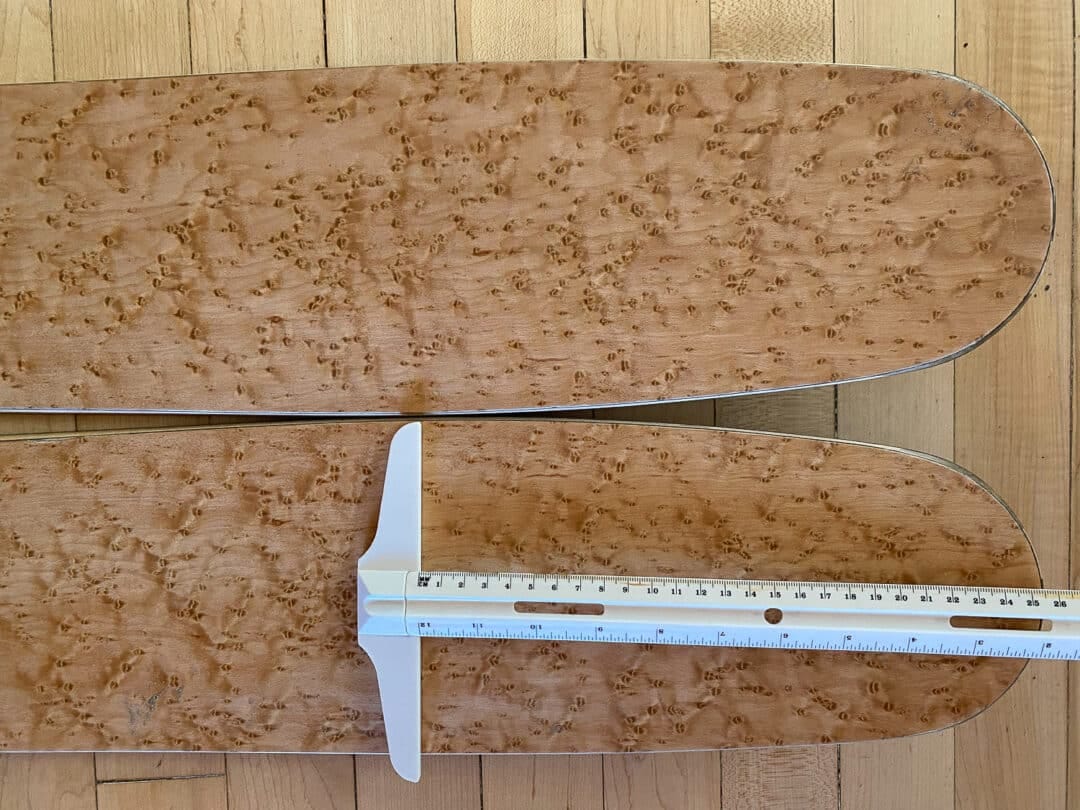
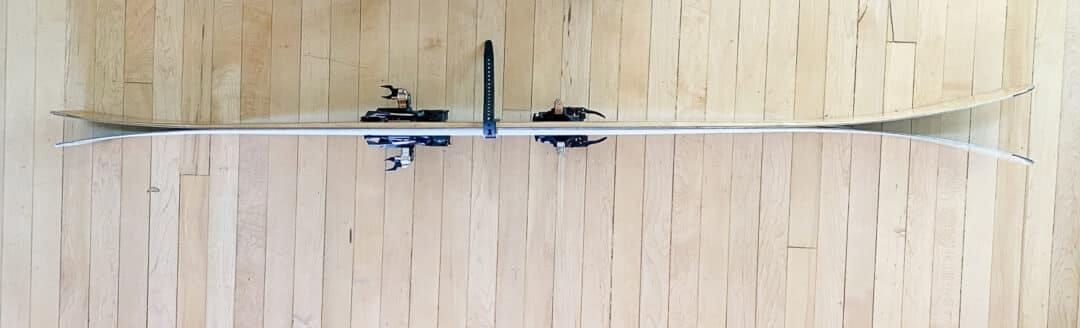
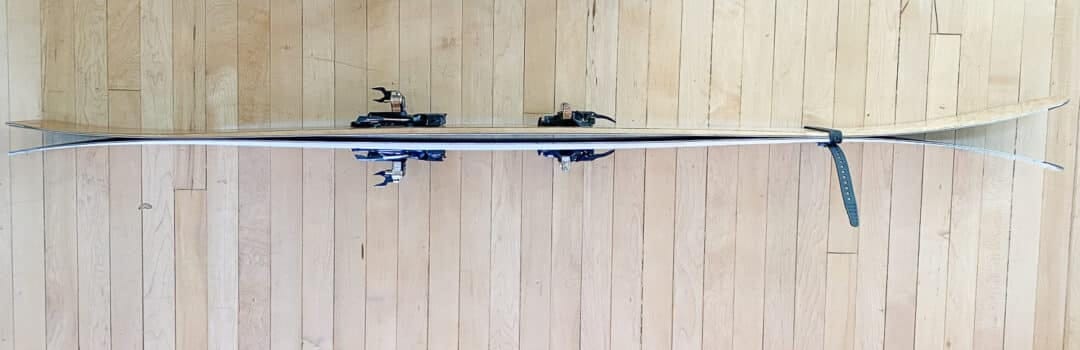
The pair I am skiing, on loan from Michael at Igneous, is a replica of the single pair of Raglefants Michael has been riding for five years. Which is the fourth iteration of the Raglefant. These skis are 182cm long. 150mm at its widest point, which is set back from the tapered tip. 120mm at the waist and 130mm at the widest part of the tail. Give or take a mm, Michael tells me.
He has skied this ski almost exclusively over the past five years because he mostly skis pow. By this ski, he means this one pair that he is just now replacing with the pair he built and loaned me.
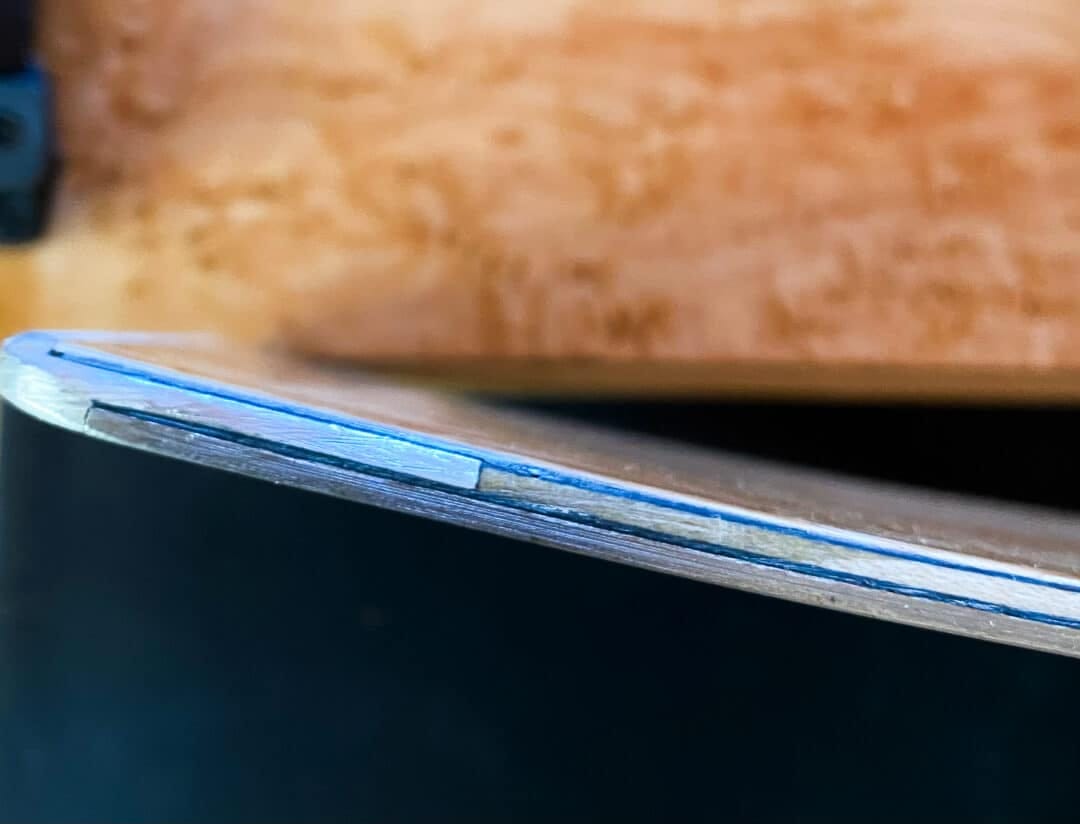
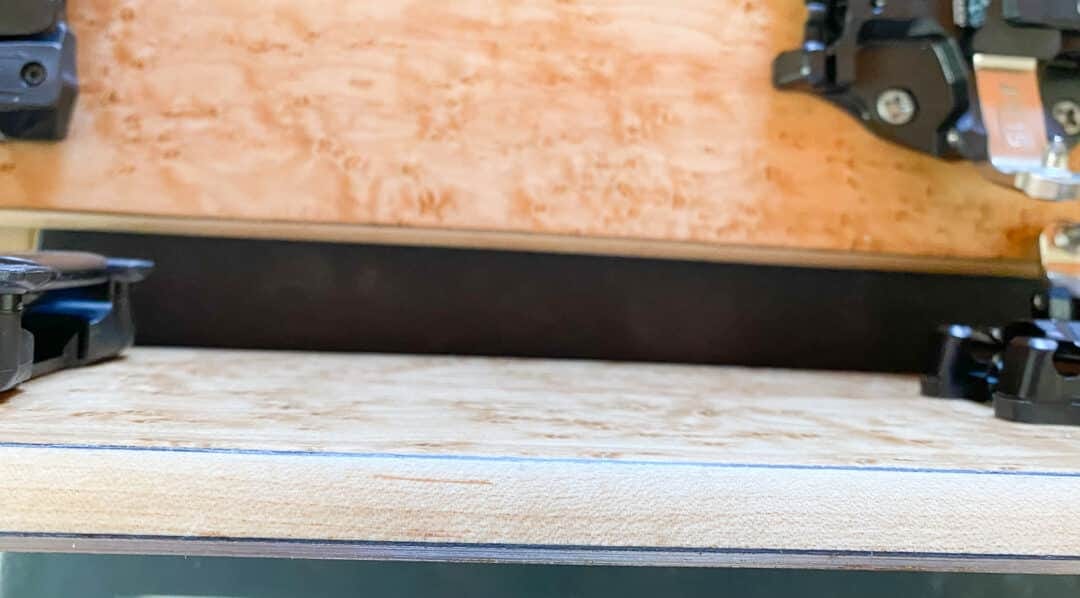
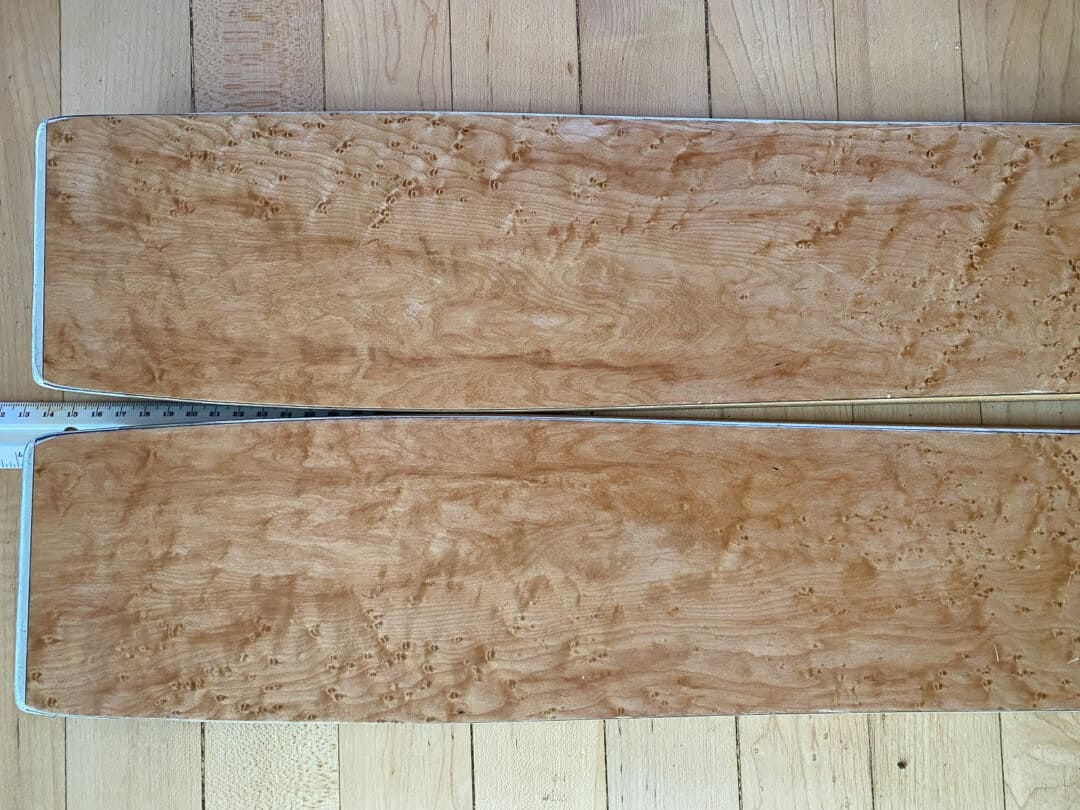
These skis are maple and poplar. Poplar is a light wood that is commonly used in skis. It makes up the bulk of the Raglefant. The maple stringers run the length under the binding, giving strength, stiffness, and screw retention. There are also maple sidewalls and, of course, the beautiful birds-eye maple top sheets. The skis are reinforced with 8oz triaxial woven carbon fiber. The weave helps dissipate vibration. An Ohio company makes the base above which Kevlar is tucked under the edge. Additionally, there are strips of rubber tape to isolate vibration and help with dampening.
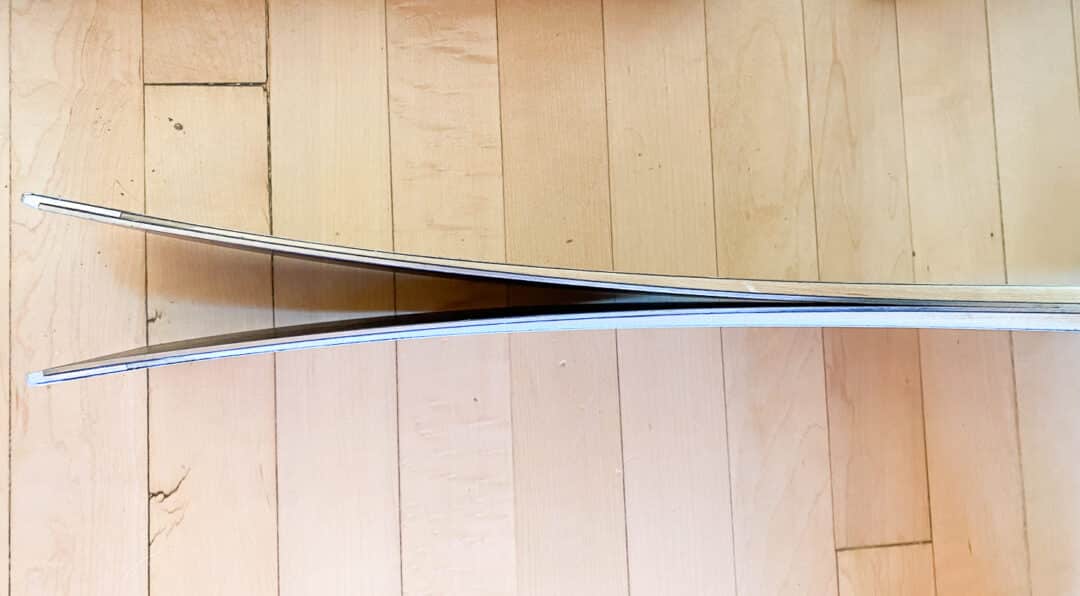
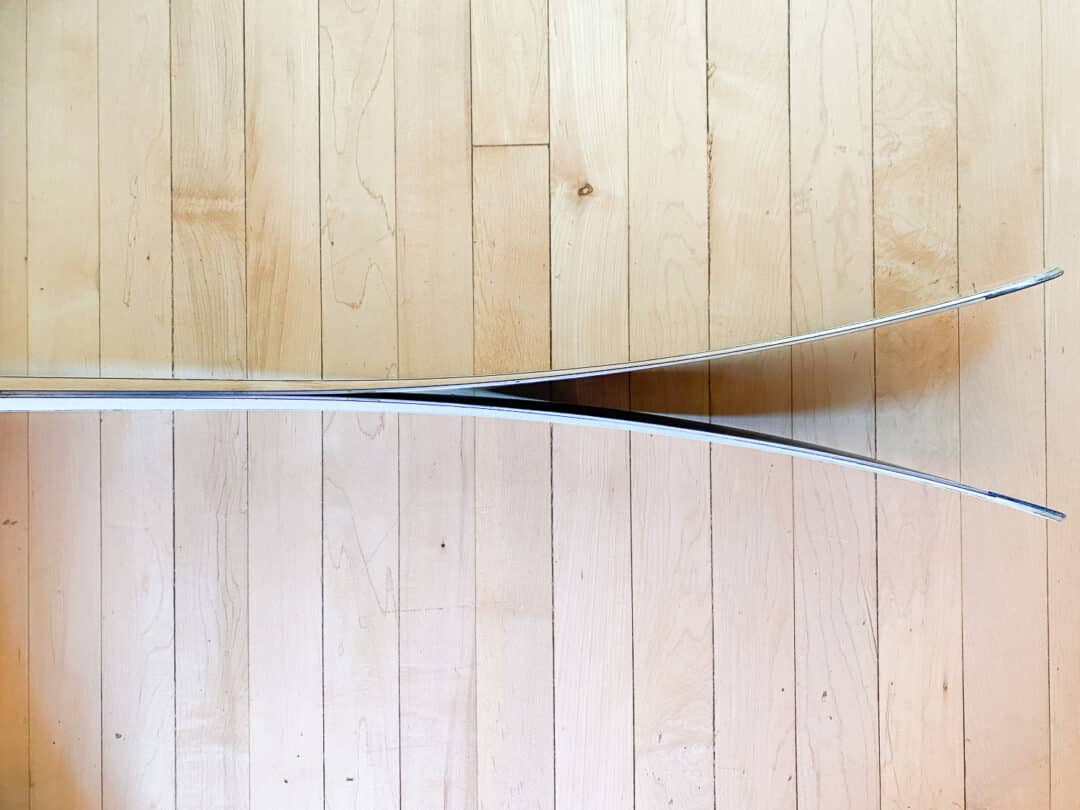
Every pair of Igneous skis is custom-built. This pair of Raglefants, Michael says, is not stiff, as they are made to be a pow ski. In my estimation, they are not a super soft ski either. I judge the tips to be medium-soft. Very soft compared to the DPS 105 or 4FRNT Raven, yet stiff compared to the Armada Whitewalker 121 or Fat-ypus D’Vice. They are more on par with the DPS 100. The Raglefant’s flex is progressive from tip to center, stiffening noticeably where the rocker lets off. From there on back, I call them medium-stiff to stiff all the way through the tail. Or maybe a better way to think of it is this: supple up front and supportive underfoot with a supportive tail that has a touch of rise and only softens up at the very end. The tails are relatively narrow, presumably staying lower in the snow thus allowing you to pressure the tips and still keep the tips planing. What all these numbers and pictures and stuff translate to is a ski with enough backbone and camber to be supportive and hold direction when desired, but which succeeds at its primary goal of being loose and effortlessly soulful in powder.
Comparisons at the Risk of Talking Too Much
The purpose-built Raglefant doesn’t aim to be everything every day, but its design and shape aren’t coming from crazy town. It is a mistake to look at each quality of the ski’s build separately. To make a great powder-oriented ski, all other attributes don’t need to be sacrificed, so much as the balance of all the ski’s attributes shifted.
Check out the photos and captions for those details.
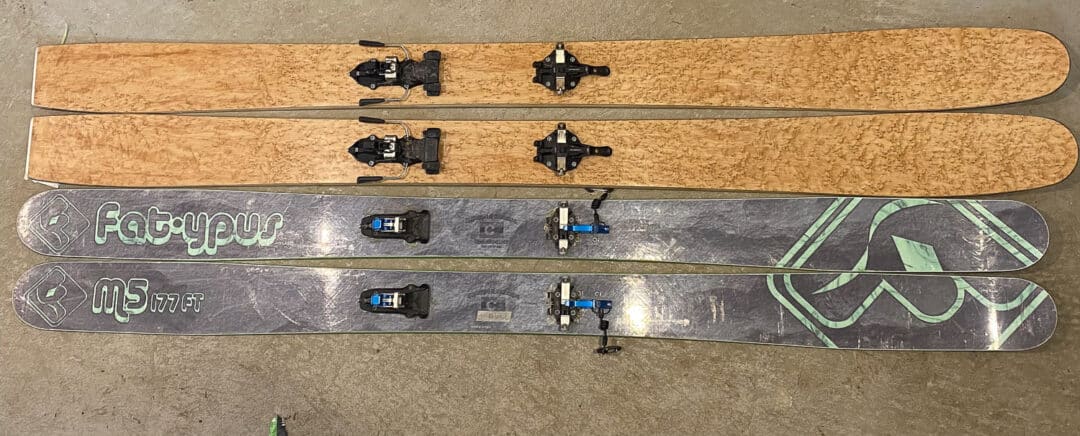
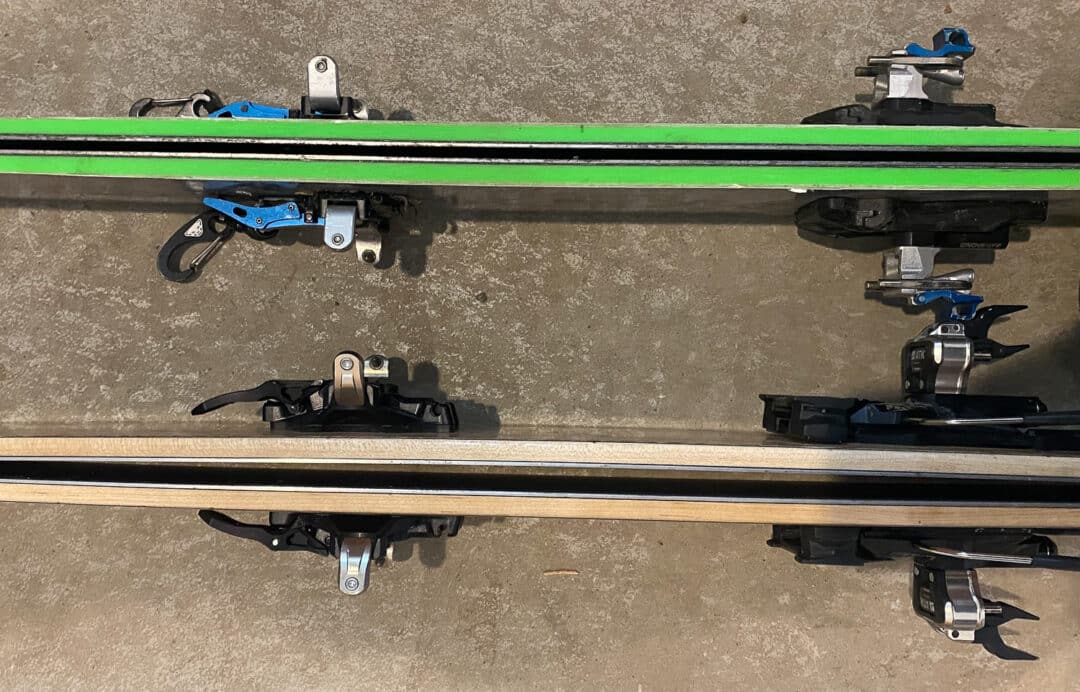
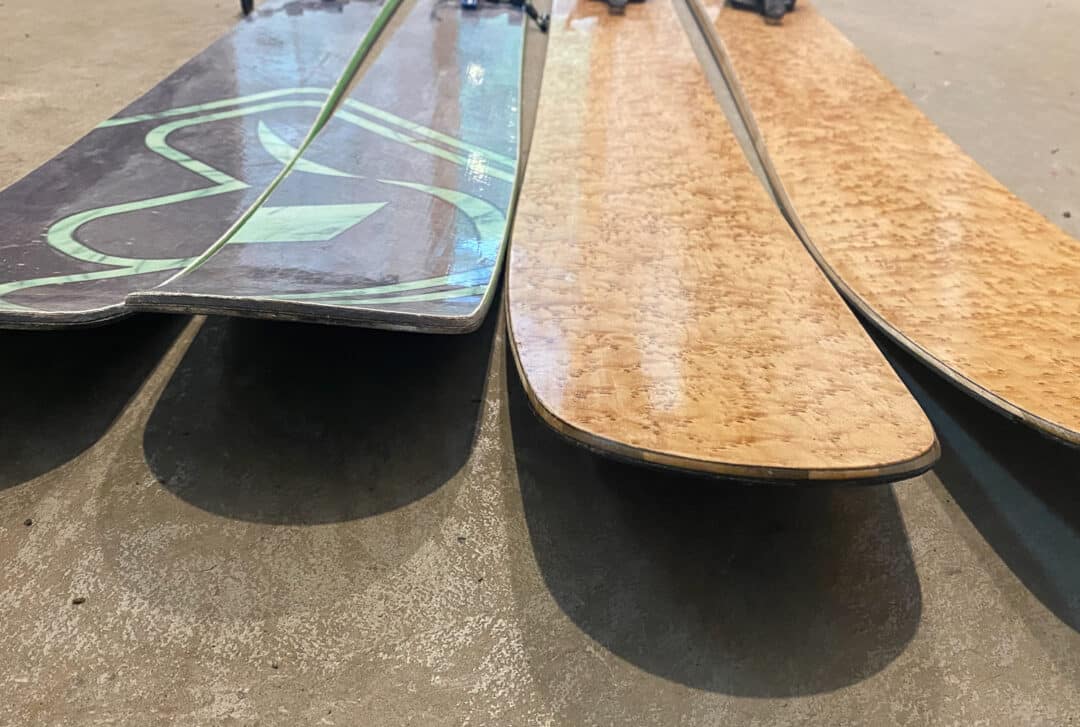
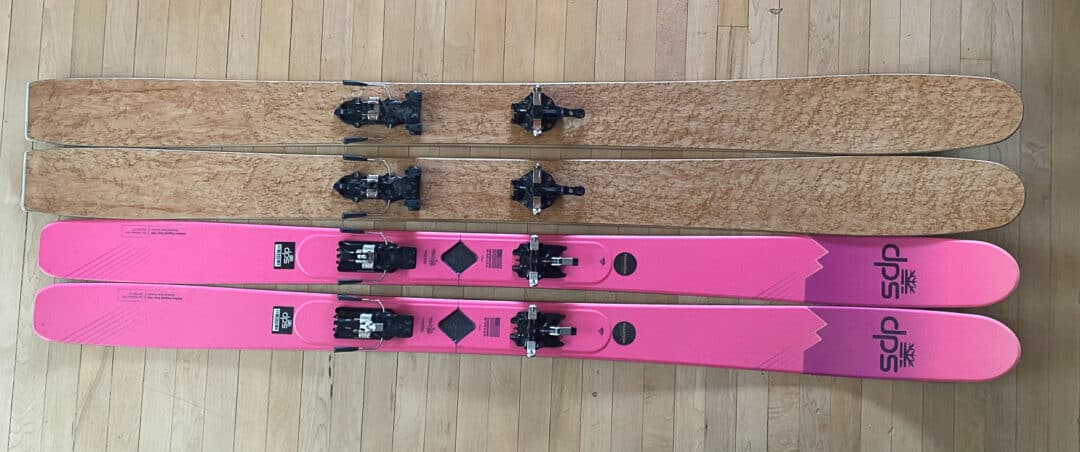
One ingredient does not a ski make. The camber, rocker, taper, flex, width, etc., combine to give it its ride qualities. Even with all the same ingredients, there is more than one recipe for delicious skiing. There is a danger of looking at one thing, camber for example, and then starting to form opinions about how the ski will ride.
There are many potential configurations of a powder ski. And while I understand there are different kinds of powder, there is a lot of variation in ski design under the category of Powder Ski. Igneous, for example, makes two powder skis—the reverse camber and ultra wide Gulo for AK style heli skiing, and the Raglefant. There are powder skis like the 4FRNT Renegade and maybe a more extreme example, the Moment Chipotle Banana, that are reverse camber and pretty darn stiff, and there are skis with soft tips and tails like the Armada Whitewalker 121, and yet many sing the praises of these very different skis for all manner of powder skiing.
Which brings us to snow.
I got the Raglefants out in great snow. What luck! What joy! Soon after the storm that gave us all a reprieve from just making the most of it to skiing awesome pow, the temps went back up, and I became uncharacteristically despondent. I took the Raglefants out even though we were in the midst of rapid warming and variable re-freeze levels, aka crust season. I stayed home one day in a depressive sloth and was forced to confront my own feelings. A big mistake.
We are talking about powder snow and the skis made to ride it.
In this article, Spencer Dillon questions whether powder skiing is a worthy pursuit.
Spencer doesn’t talk much about his ski choices when aiming at terrain rather than snow. Perhaps Spencer has transcended the material. I believe I am quoting him correctly when he said, about Macedonia, “the skiing sucked, I am going back”.
I, too, have been to Macedonia. That is where Alexander the Great—aka Alex of Macedon—came from. You develop a certain, also quoting Spencer here, attitude of gratitude when most everything in life is hard, as it is in Macedonia, that makes perfect snow, or the exact mm of tip rocker a bit less relevant to having a good time or a detail necessary for taking over much of the known world. In other words, shut up and ski it. What Spencer is talking about is the lasting richness of experience in chasing terrain vs snow conditions. He makes a strong point. There is something lasting about being in the alpine among rock, cliffs, and soaring eagles (or crows), and also managing to descend unwelcoming snow with power and grace. And then he takes it pretty far, calling powder chasing an ultimately forgettable pleasure.
Well, hold on now. There are some deep weeds here regarding chasing any pleasure or trying to make memories out of any endeavor at all, including outstanding terrain, powder snow, power, sex, drugs, accomplishment, or good looks. But staying literally and figuratively well out of the weeds, I am confident in saying that powder skiing is the kind of fun that feeds the soul, and doing it on beautiful skis made to slash and swoop can approach Whirling Dervish Sufi level fervor. And that, my friend, is what I’m talking about.
Many Recipes For Tasty Skiing
The way the skis feel is the most accurate and most important thing I can convey. From here on, that feeling can get lost in attempts to compare, measure, and overthink it all. Furthermore, I fear that the overabundance of choices and the almost infinite number of qualities that can be manipulated to create more and more choices—in this case of skis—not only doesn’t make us happier, but could actually make us unhappy. Did I choose right? Should I have gotten the other pair? This one has a bit more rocker, that one is a bit stiffer…Read on only at the potential peril of losing sight of what is important here:
Raglefant = Powder Induced Sufi Level Fervor.
It is easiest to compare the Raglefants to the skis I have been skiing this season—mostly the DPS 105 with some days out on the Black Crows Solis, Fat-ypus L’Toro, and Fat-ypus M5 Flat Tail, all of which are much narrower and aimed at versatility. But I can also bring to bear my experience with other wide skis I have used over the years, which include:
Black Diamond Megawatt (185ish). An amazing ski, fat, cambered, and rockered. These skis are many years in my past. But they are a ski I remember primarily as stable and supportive, and even for their girth, not super loose. This was the first super fat ski I’d ever been on. Not that long before this, I was mainly tele skiing on a pair of TUA Sumos, which are fat only in name… I don’t remember, but I believe they are under 90mm wide, so the switch to the 120-something Megawatt was a new sport.
Moment Bibby Tour (191). Super stable, surprisingly nimble once up to speed. I deemed them too long for me and gave them to Barry, who, in a testament to their prowess, chose, out of all the options, to take them to Japan. This ski is very similar to the present-day Moment Wildcat. It is a rocker-camber-rocker ski that does live up to its billing as playful, but it is also pretty stout throughout.
Armada ARV 116 JJ UL (185). Playful powder ski. Closer to the playful nature of the Raglefant than the Bibby or Megawatt. But a bit untamed off the pow. I have not skied, but I have also hand-flexed the Whitewalker 121, and it has surprisingly soft tips and tails.
DPS CFL 100 (179). The shape of the DPS CFL 100 should be noted here. It is the most similar ski to the Raglefant in shape and build, only much narrower. It is a very good ski (review here). And makes me think the DPS 112, the wider version of this ski, would be a good comparison. Alas, I have never skied it.
Line Vision 108 (183). Softer throughout (read the review). And beyond what the numbers would indicate, there is a significant difference between 108 and 120.
Fat-ypus D’vice (175). The D’vice is reviewed here. The D’vice puts a lot of width up front and in the rear, which then narrows to 110 underfoot. This makes for a pretty extreme sidecut, which translates into a very quick-turning, maneuverable ski that I have loved piloting through narrow terrain in deep snow. I have probably enjoyed the narrower M5 (106 under foot) with a flat tail more, as it still enjoys the quickness of a tight radius but is less washy and really fun to carve on harder snow. The M5, DPS CFL 100, and Raglefant all have similarities.
Praxis Protest (187). This is an amazing ski. Sort of a mind-blowing, stodgy-opinion-destroying ski. Also, a beautiful work of art. A review of it can be found here. This is a close comrade to the Raglefant when it comes to playful on-top-of-the-snow performance, but it is a wild ski that slams the door on traditional ski shape and doesn’t look back.
Each of these skis, all of them, has at times, if not most of the time, been extremely fun to ski. The versatile DPS 105 is fantastic in powder, too. Fat-ypus has been a go-to for me for years, and my few complaints about them are far outweighed by the fun they are to ski. But there is something about the Raglefant that is fun beyond typical ski performance, moving on snow in synch or maybe even ahead of imagination, telepathically, hypnotically.
There is more to it than the pair of skis, of course. There is the line itself, the visibility, and also you, your level, mind, your attention, and how the line, conditions, and your state all line up. There are these things, plus partners, boots, and bindings. And there is the snow.
Is versatility the enemy of awesome?
I started one Raglefant tour on sheer ice. In these conditions, I started having thoughts like, what if they were more like 110 under foot, or there was a bit less tip rocker. What I should have been thinking is that I am an idiot. I was standing on ice, and the tour consisted of skidding turns down unsoftened crust. So, duh. But though these skis are not built for that, they performed well for the conditions, which says a lot. But it doesn’t mean that was their day. In any penetrable snow, I didn’t think they needed to be anything other than what they are. And when I was on genuine soft snow, warm, cold, deep, or not so deep, I never had any thoughts at all, which is kind of what I’m going for.
My first days on the Raglefants were in breakable crust, and I am not sure any ski would have been as good or better. I was confident enough to commit to linking turns and powering into the crust, and was rewarded by the Raglefants’ rocker and width, which allowed me turns through crust that I had to turn back and admire.
There did come a day when the crust was crème brûlée breakable. Super hard, almost, but not quite hard enough. It would have made Spencer happy. This then spilled onto terrain crisscrossed by old tracks frozen in place. The rocker, supportive width, wide, soft-ish tips, and whatever truth there is to the dampening materials of these pretty light skis did make riding over old tracks and unpredictable undulations somewhere between manageable and enjoyable, even at a pretty good pace. It would have been a bit more of a rodeo on, for example, the DPS 105’s.
It was only when I skied some pure hard pack that I started thinking about better hard-snow attributes in a ski. On one hand, that is a me problem, with confidence and commitment, someone could have gotten the Raglefants up on edge and carved the SOBs. On the other hand, there are obviously better skis for carving hard snow (I have been enjoying the Black Crows Solis). But the point is that I was not terrified on hardpack, and I can deal with some skidding and snaking, even if I am not tempted to turn around and admire the tracks.
In the same way, a narrower ski is also easier to hike up the hill. But the Raglefant’s weight-to-width, length, and dampness is an impressive 1685g. Pretty good for longer days and steeper skinning. An easy price for the ride down. I did enjoy the incredible flat traction of 120mm of skin on snow. Edging on side hills wasn’t as easy as a narrow ski, but way easier than any reverse camber skis or the D’vices with that abrupt side-cut. In soft snow, this isn’t a problem, and even on hard-ish snow, it only took a bit more focus, and it was fine – certainly good enough to get me to the goods with energy to spare.
Versatility is not necessarily the enemy of awesome overall. But trying to be everything for everyone, every day, is going to find limits, maybe not in excellence, but in the unique ability to really excel at one thing. The Raglefants excel at powder skiing, and they don’t make you suffer up or down when it isn’t.
What are we doing out here?
There are a lot of ski choices out there. Even within a narrow category like “powder touring ski.” And they are described by hundreds of adverbs, adjectives, and descriptors of every sort. Some of them are great for this, great for that, struggle here or struggle there, and most of them are pretty darn good most of the time. You sift through the info, test them if you can, and eventually you must make a choice, and even then you can always change your mind, sell them, and get something else. Maybe the ultimate and most fun version of this would be to build your own skis—to be able to design and construct something, manipulating the variables to tweak this way and that so as to ride just so. That is certainly an advantage of a custom ski. But for me, I wouldn’t change anything in this ski. It is pretty hard to improve on that whirling-dervish freedom of motion, where I can just look ahead and let the skis go where my imagination points them.
It is very warm at this writing, but I can still picture a few days, a few specific turns when the air was crisp and the snow deep and soft, and I had the opportunity to ride the Raglefants. I can still feel it. Man! I can’t wait to do it again!
Leave a Reply
You must be logged in to post a comment.