
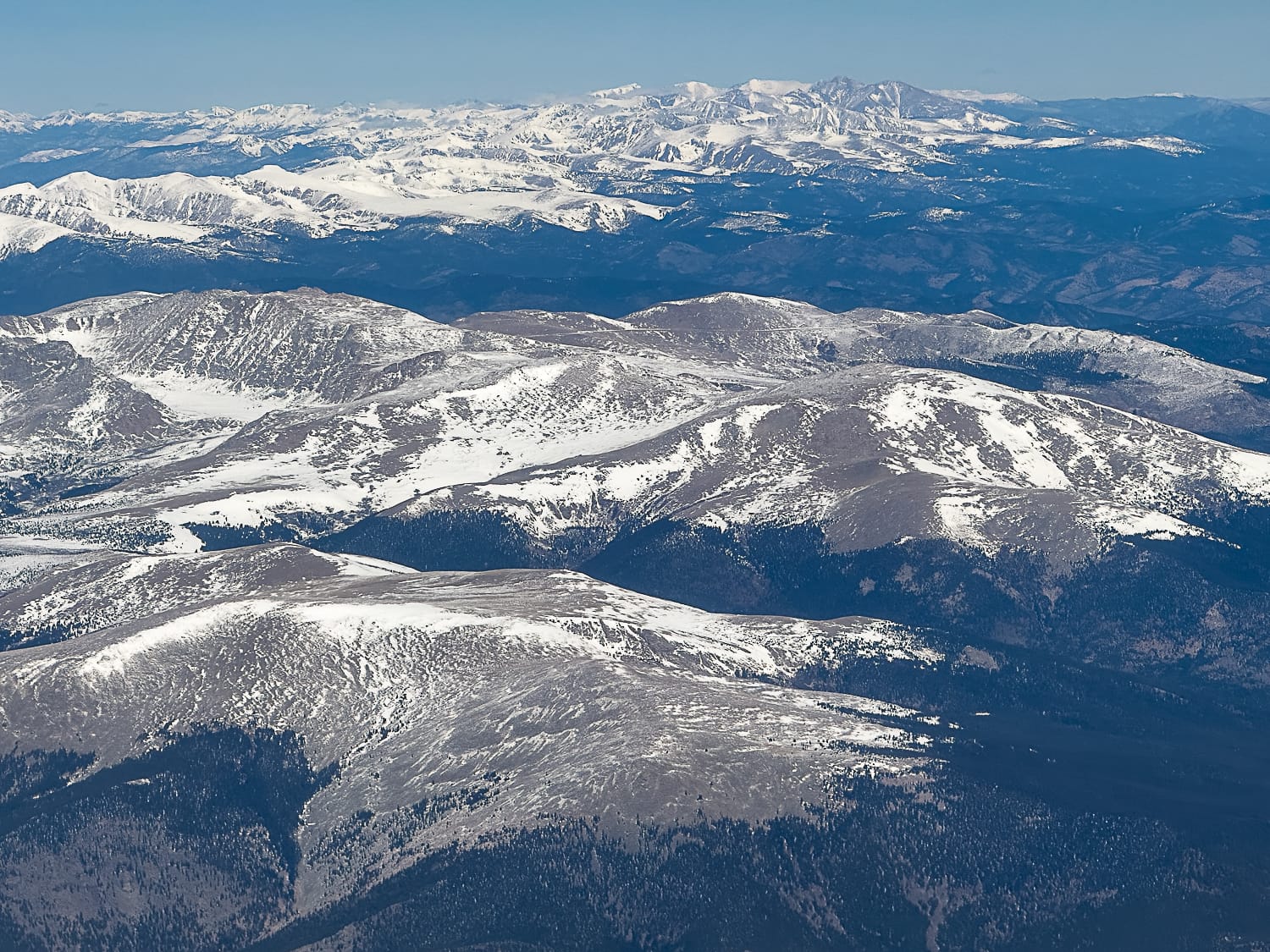
High Pressure has been the consistent weather theme out West this season. By high pressure, we mean long, sustained periods of clear skies, often with cold temperatures in the evening through early morning, and generally a lack of snowfall. Historic or near-historic lows have been cataloged throughout the region. Previously, we ran a three-part series with IFMGA guide Billy Haas, thematically organized around the mindset shift to prepare for big mountain skiing. With the dearth of snow in his home range, the Wasatch, Haas thought it appropriate to address the mindset shift for high pressure.
Many of us come to touring for the wild, untracked powder snow. If that type of snow is your carrot, you’ll likely be chasing it this season by hopping on planes. While near instant snow gratification can be fulfilling, it comes at a cost to the piggy bank and, yup, your carbon footprint. Which means many of us manage our touring habits under high pressure by staying put in our respective local ranges. Of course, you could forgo touring altogether or play pickleball. Our conversation with Haas centers on finding skiable/ridable terrain during sustained high pressure. This all equates to less poutiness and more snow seeking during this snow drought.
The upside to this may be that those who grew up snow sliding in icy and firm conditions might find what you’re experiencing with all this high pressure somewhat familiar.
***
THR: Sure, we all miss powder skiing, but I don’t find the high-pressure-touring to be downright miserable. In fact, I’ve found the lack of crowds and conditions, sometimes, to be enjoyable. What are your thoughts, and how are you managing?
Billy Haas: I am a guide, so in winter it’s the nature of my job to go skiing five to six days a week, even through sustained high-pressure periods. I can say that there has not been a single day I’ve gone skiing when I haven’t made some good turns and had some fun. Even this season, there really has not been a day when I’ve thought it wasn’t worth it.
Sure, it’s a mixed bag; for example, I recently had a day where I skied one run that was quite bad, but I’d skied three pretty good runs earlier that day.
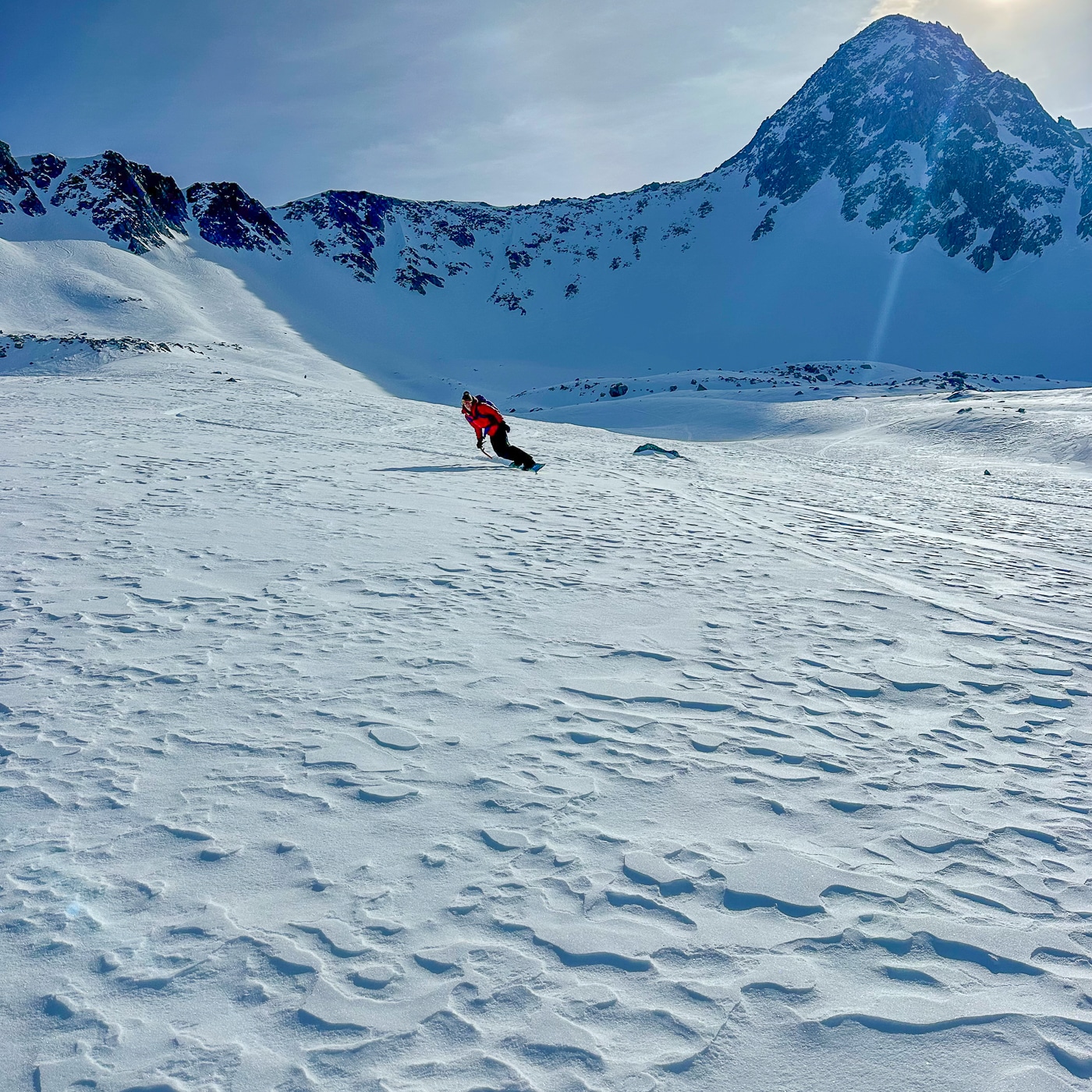
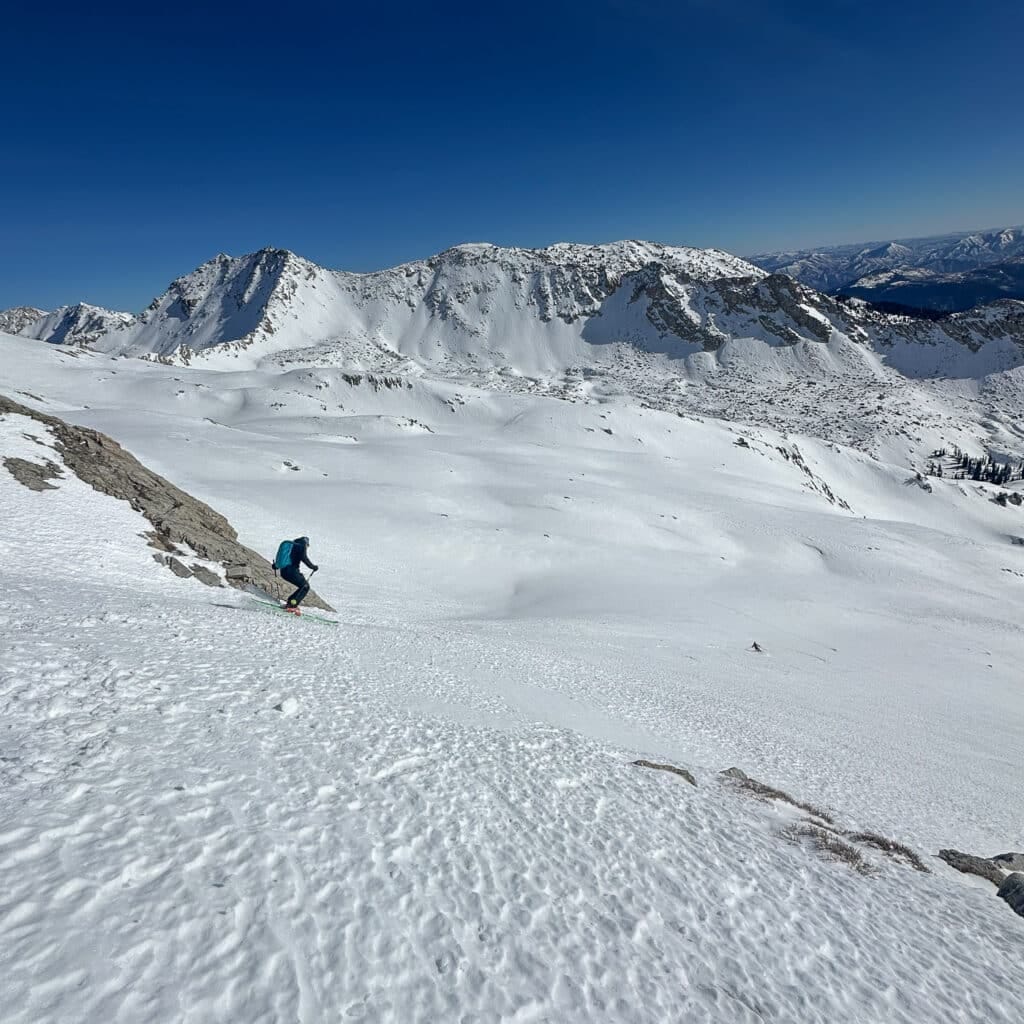
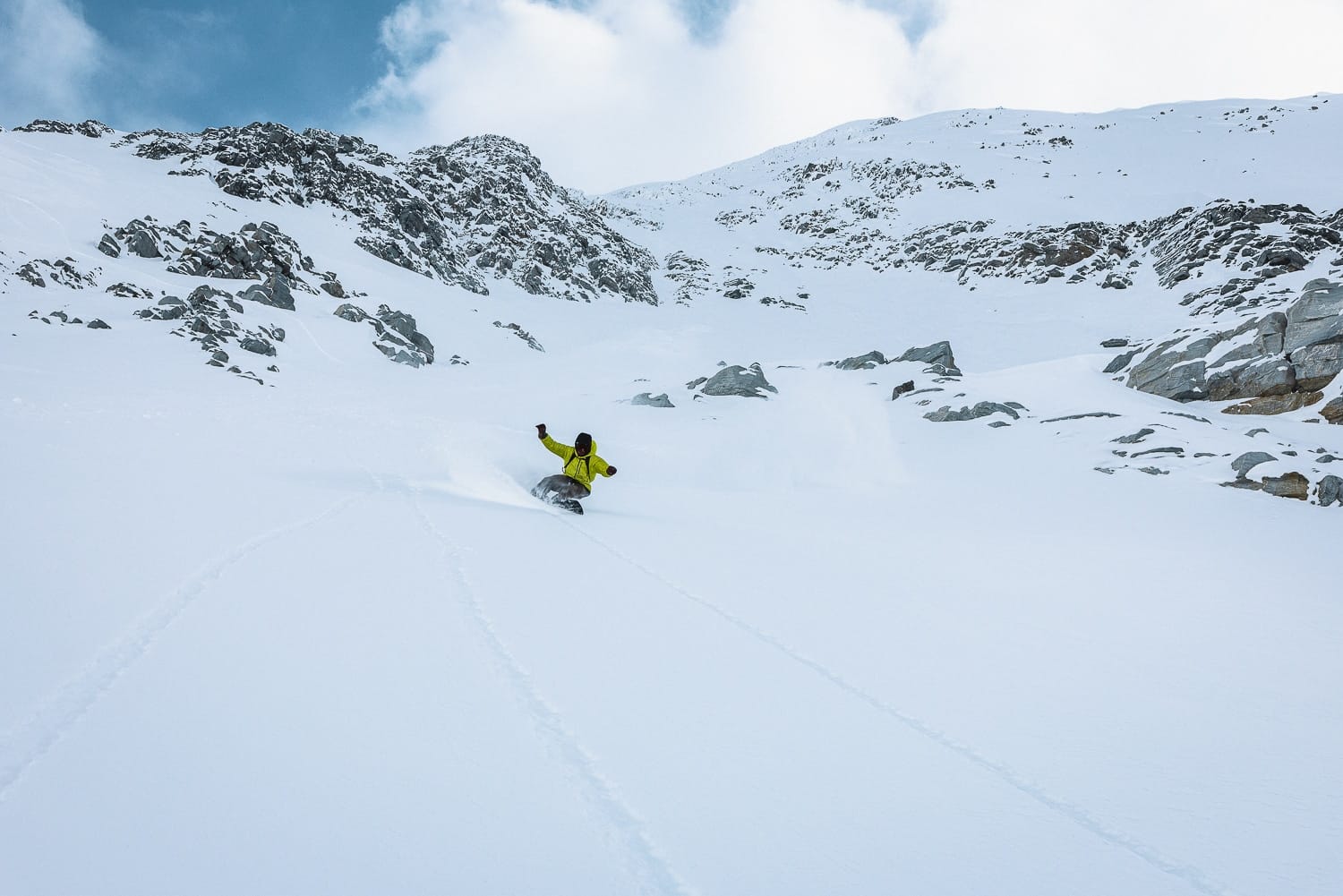
To provide some context, here in the Wasatch, we’ve been skiing some pretty decent recrystallized powder snow, which essentially means powder-like near-surface facets. And honestly, if the run is relatively sheltered and it’s not heavily tracked, it’s still pretty fun. And where some aspects or runs have received some wind, you can find a supportable windboard that is relatively chalky, fun, and grippy for steep skiing.
Another pattern to eye is “orange peel”; we live and die by the orange peel in these circumstances. Orange peel forms when there’s near-surface faceting, and then there’s some wind stripping. If you look at classic wind effect on snow, the wind’s going to move across the snow, and it’s going to take snow from certain spots , aka the fetch zones, and it’s going to deposit snow in other spots, the deposition zones. And if the wind hasn’t been too savage, the fetch zones don’t form slabs. The top of the snow is lightly exfoliated, leaving some soft, settled powder with a slight texture. This is not perfectly smooth powder; it’s a rippled, mottled-surface type of powder.
THR: Let’s start with that framework, that in periods of high pressure, we often get clear and cold weather, and some discernible patterns that we can begin to recognize regarding better quality snow.
Hass: That’s right, from a seeking-out-good-snow standpoint, pattern recognition is key: Find the snow textures that are skiing well and find the snow textures that are skiing poorly. Also, understand that the snow is still changing during these high-pressure periods. It may not be changing due to more precipitation, but it’s changing due to wind. It’s changing from melt-freeze. It’s changing from a diurnal recrystallization process resulting in that near-surface faceting. So, it’s still a dynamic snow pack. It’s still changing. And some things could be getting worse, while others can actually be getting better.
THR: Ok, so let’s look at this from the perspective of a newer tourer. Someone who had spent a season learning how to transition, understanding the avalanche basics, and now they’re going to explore. I assume you would recommend a tour plan that acquaints them with the full compass rose of slope aspects?
Haas: Technically, I’d call that a multi-aspect, multi-elevation tour. And that’s a tour plan where you explore a variety of terrain types, not just north or south, east or west, upper elevation, lower elevation, but also open and exposed alpine terrain, sheltered-tree terrain. I would encourage exploring different styles of terrain, not just different aspects and elevations.
For example, one could tour from drainage to drainage and, while doing that, start to determine which features and aspects ski well and which ski poorly. Start building that pattern recognition, just as we would when discerning an avalanche problem.
The simple, more reductionist pattern is that, during the type of high pressure we have been experiencing, if you can find unskied (or less skied) snow on sheltered, shady terrain, it’s probably going to ski well. In the same vein, if you can find that orange peel in the more exposed alpine terrain, you’ll also be making good turns.
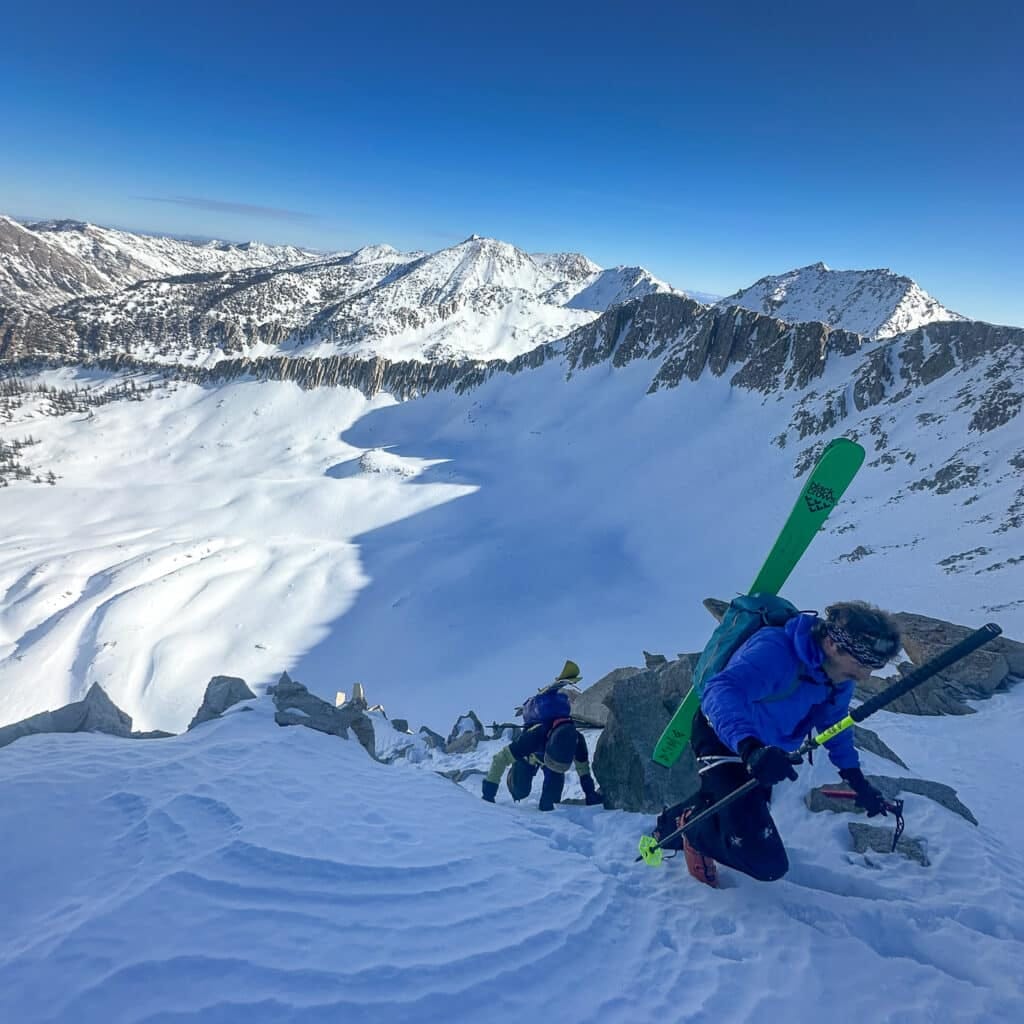
THR: I think oftentimes, and I’ve succumb to this living in the PNW where we don’t often get surface faceting, I let my guard down during periods of sustained high pressure and default to a mindset where I might be seeking corn on southern aspects, and the avalanche problems become more predictable, like in spring, when I’m more concerned with warming. I was reminded recently in the Tetons that I’ve still got to remain aware. I was in new terrain, and doing a traverse which worked across most, if not all, the aspects. There were some sustained sections of sidehilling across wind-affected snow, and I became concerned about wind slab potential. I bring this up because sometimes we associate high pressure with green brick avalanche forecasts. From your perspective, what are the avalanche problems that you may or may not foresee during prolonged high pressure in a place like the Wasatch, where there may be wind, and it’s certainly cold at night?
Haas: There are two things that come to mind. One is just lingering wind slabs, like you were saying. There’s always a small potential for wind slab avalanche activity—that’s just high mountain travel in general. And you can’t just fully tune out because of certain hazard ratings; you always have to be mindful of that during high-mountain travel.
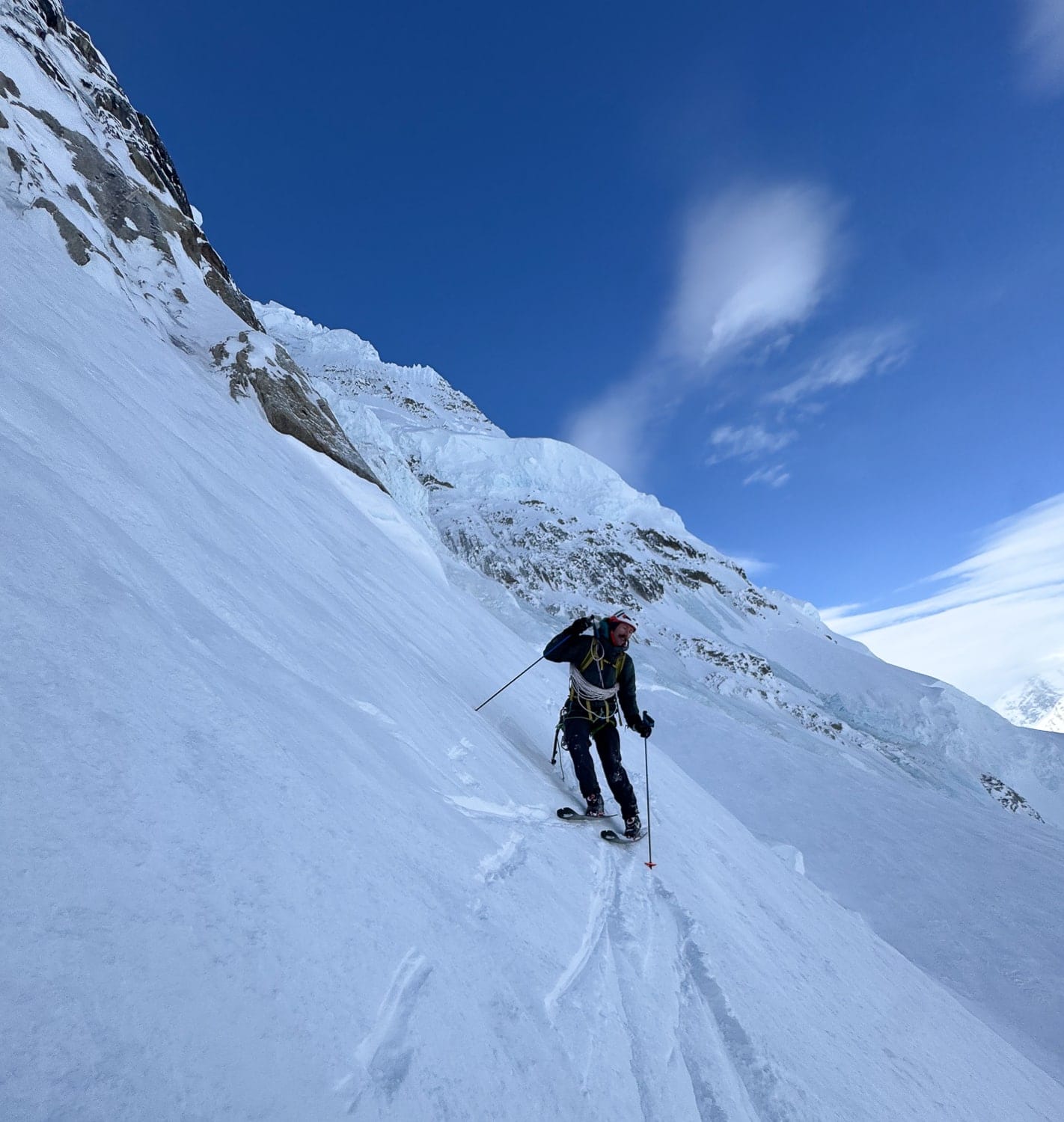
But the other problem that’s a bit of a sleeper is what some people call facet sloughing, or a loose, dry avalanche problem, where you have a snow surface that’s going through the faceting process, the near-surface diurnal recrystallization. That process, generally, weakens the upper layer to the point of being exceptionally weak. In steep terrain, these facet sloughs can become pretty substantial, to the point where we discuss them in our guides’ meeting as a significant hazard. Sometimes we need to coach clients through steep terrain due to facet sloughing. Although facet skiing can be really fun, it can also be challenging at times because it’s so bottomless.
THR: To dissect this a bit more, when I think of sloughs, I think of two aspects: velocity and mass. Too much of one, or both of them in sufficient amounts, and it may knock you off your feet.
Haas: We look at sloughing in terms of volume and speed. You can have high-speed, low-volume sloughing, or low-speed, high-volume sloughing, or any combination of the two. So when you talk about some of this facet sloughing, it can reach the point where faceted sloughs are usually going at somewhat high speeds. And in many regions of the Western U.S., we’re probably seeing relatively high-volume sloughing as well at this point. Obviously, there can be other hazards, but this is one that is not always on people’s radars.
THR: I have my own strategies to have fun during high pressure, and honestly, I don’t really feel like I’m missing out on good touring. If I want to seek out, too, there are plenty of challenging things for me to do. So let’s pivot a bit: how would you address the more advanced-skier mindset shift during high pressure? For example, for many steep skiers in the Tetons, this type of sustained high pressure is a green light. So, big picture, and the tourer seeking a challenge, how does that frame things?
Haas: Sustained high pressure means more potential time in the alpine, or bigger terrain. I’ll often find that the seasons when I spend the most time in big alpine terrain are maybe below average in terms of snowpack. It’s not the biggest years that you’re in the biggest terrain with the highest frequency. The mindset shift for this type of weather pattern we’re in, is to seek out opportunities.
Currently, we have the opportunity to be in certain terrain that we may not be able to be in all the time with a more active weather winter. Basically, the mindset shift here is: there’s still a lot of mountain opportunities with good weather. I’ve been hearing people complain about the low elevation snow, and the dirt walking to access some terrain. I get it, I prefer skinning from the car. But I don’t hear these complaints in the Spring time, when starting in sneakers can be the norm.
Imagine if we had the same conditions, but with poor weather every day. Luckily, it doesn’t really happen that way. Now, at least here in the Wasatch, we have enough snow, high pressure, and good stability. That opens up a lot of terrain for us.
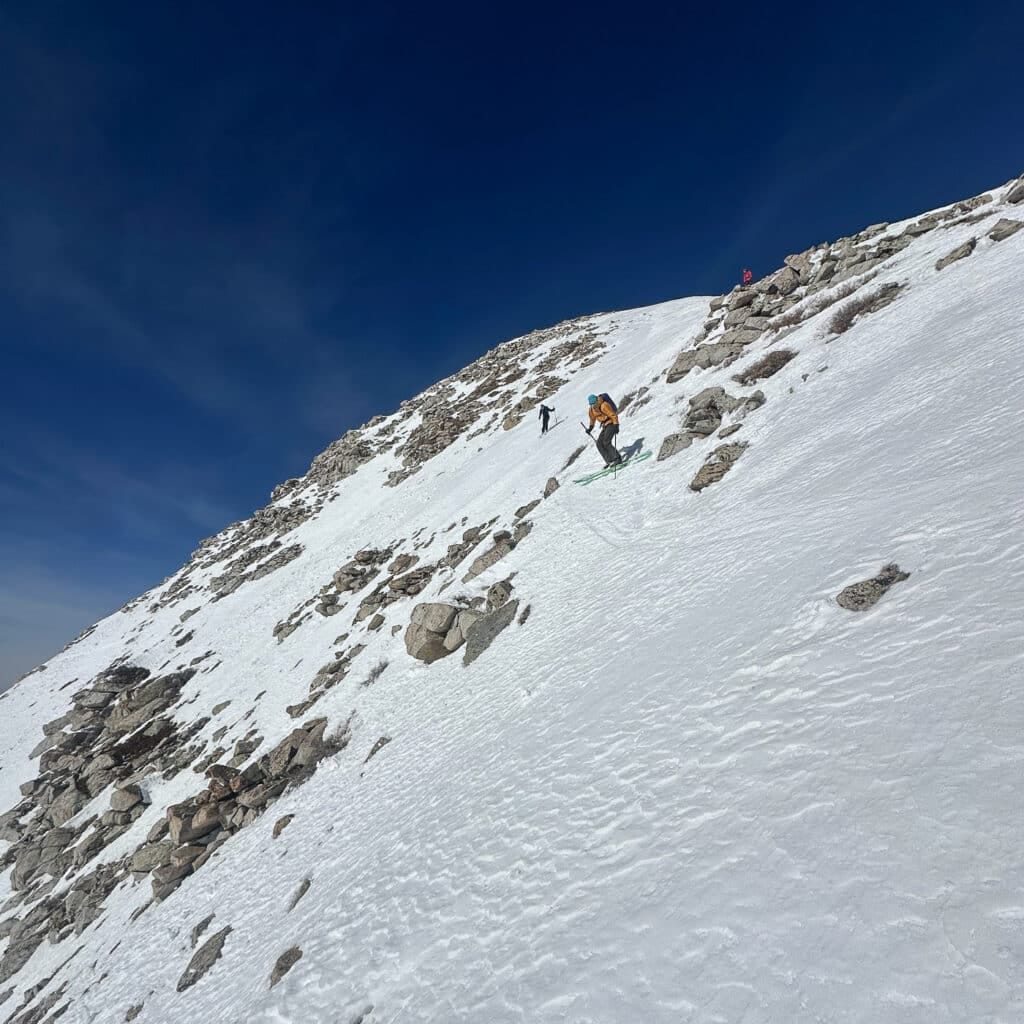
THR: You’re talking about opportunity. I’m assuming you’re talking about steeper lines that one might think of more as a spring-type objective, or just the ability to move through a lot of terrain.
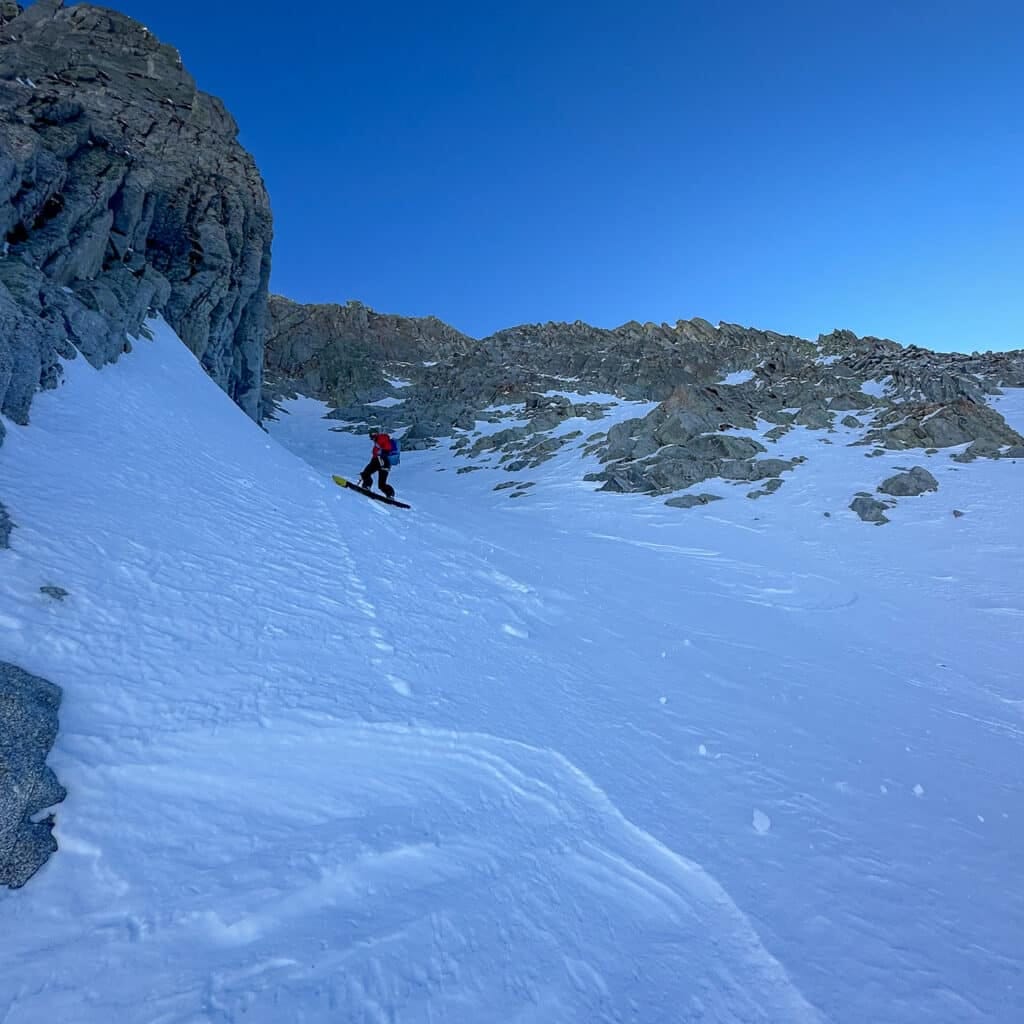
Haas: It doesn’t just have to be steep skiing. It could be a big traverse. It could be new areas you haven’t been to yet because you haven’t felt comfortable enough to familiarize yourself with the terrain until we have good high pressure. So it’s not just steep skiing. There’s opportunity, I think, for every style of skiing or riding right now.
As a guide, I have to consider what a client is seeking, especially a more experienced client. Part of my job is explaining that there is worthwhile skiing out there, which there is. My issue is how to convey that kind of high-quality day if all someone wants is to ski classic powder? I might not be able to make that happen in sustained high pressure, but I know we can have a fun day skiing. I think my approach to my personal skiing is pretty similar as well. I love skiing big, steep, aesthetic terrain in the best snow possible. But I will almost always be happy doing skiing that involves a few of those qualifiers.
A lot of people will say they want to backcountry ski for the good snow, but from my experience I don’t think that’s why most people are truly traveling into the backcountry. I think they want an experience they can’t get skiing at a resort, an adventure however big or small. And during these periods, there’s no shortage of adventure. Finding it might take some creativity, but those things can still be accomplished. And again, a lot of the mindset shift is not being so pouty. The mindset shift is, “I think this is a cool challenge. How can we accomplish some of the things that might be out there?”
Think of these periods as options for some fun homework—there’s good snow out there, you just have to solve for where to find it. And…where to find it while doing something cool, fun, interesting, or new.
THR: From a gear perspective, how might the high-pressure mindset shift also shift what tools you might bring along for a mid-winter tour?
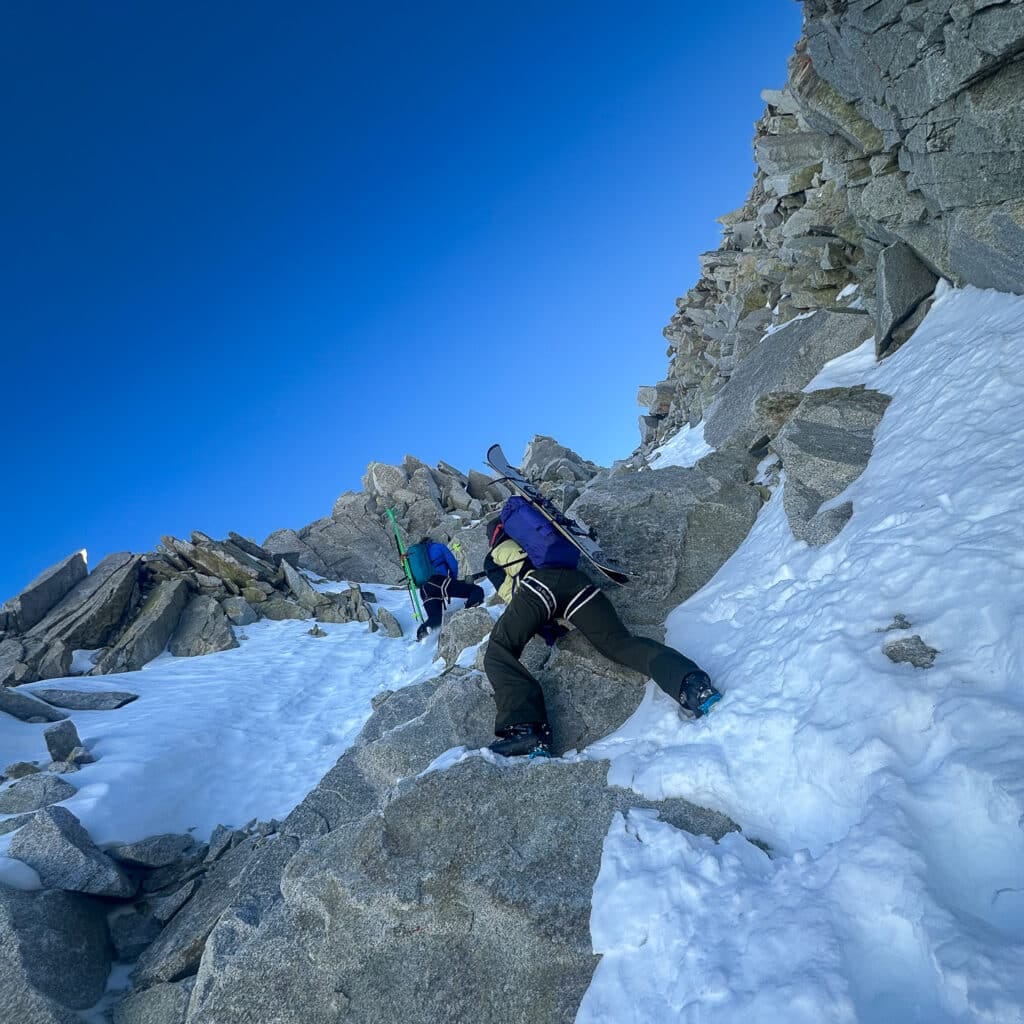
Haas: Generally, I’ve been skiing my Navis, which is 102 mm underfoot. I’m trying to bring the most universal ski I have. I’m still hoping I’m going to be skiing soft snow, so I have a ski that I feel will be fun in soft snow, but it will also give me edge grip in the firm. I’m still using my bigger boot, the Zero G Tour Pro. As a habit, I throw in a pair of all-aluminum crampons in my pack.
THR: Well, besides some intermittent moisture here and there, this locked-in high pressure seems…locked in. Any closing thoughts?
Haas: For me, the big mind shift is finding opportunity. Whether it’s an opportunity to take a course that you haven’t taken yet, or maybe it’s the opportunity to work on a specific skill, or maybe it’s the year to actually get good at skiing or riding, or work on fitness. There’s always an opportunity to improve. There may not be new powder, but there’s a lot of opportunity in the mountains right now to work on ski mountaineering skills; just be targeted and intentional when you go out there.
I think this is something that’s becoming a bit of a lost art, but it can be a really fun experience during times like this—you’re going to ski some crappy snow. If you go into it with that expectation, that you’re going to potentially ski cruddy snow, then when you find some good snow, you’ll be psyched, and you’re still having that same, powerful, and enjoyable experience. It’s just that the flavor is a little different.
I think keeping that this opportunity mindset is a much more sustainable way to perceive all this high pressure. Certainly, in future winters this will happen again; it’s simply a matter of understanding how to take advantage of it. I doubt much of this will be enlightening, but perhaps it can serve as a bit of a pep talk. As the saying goes “you can’t change the weather, but you can change our attitude.”
Leave a Reply
You must be logged in to post a comment.