
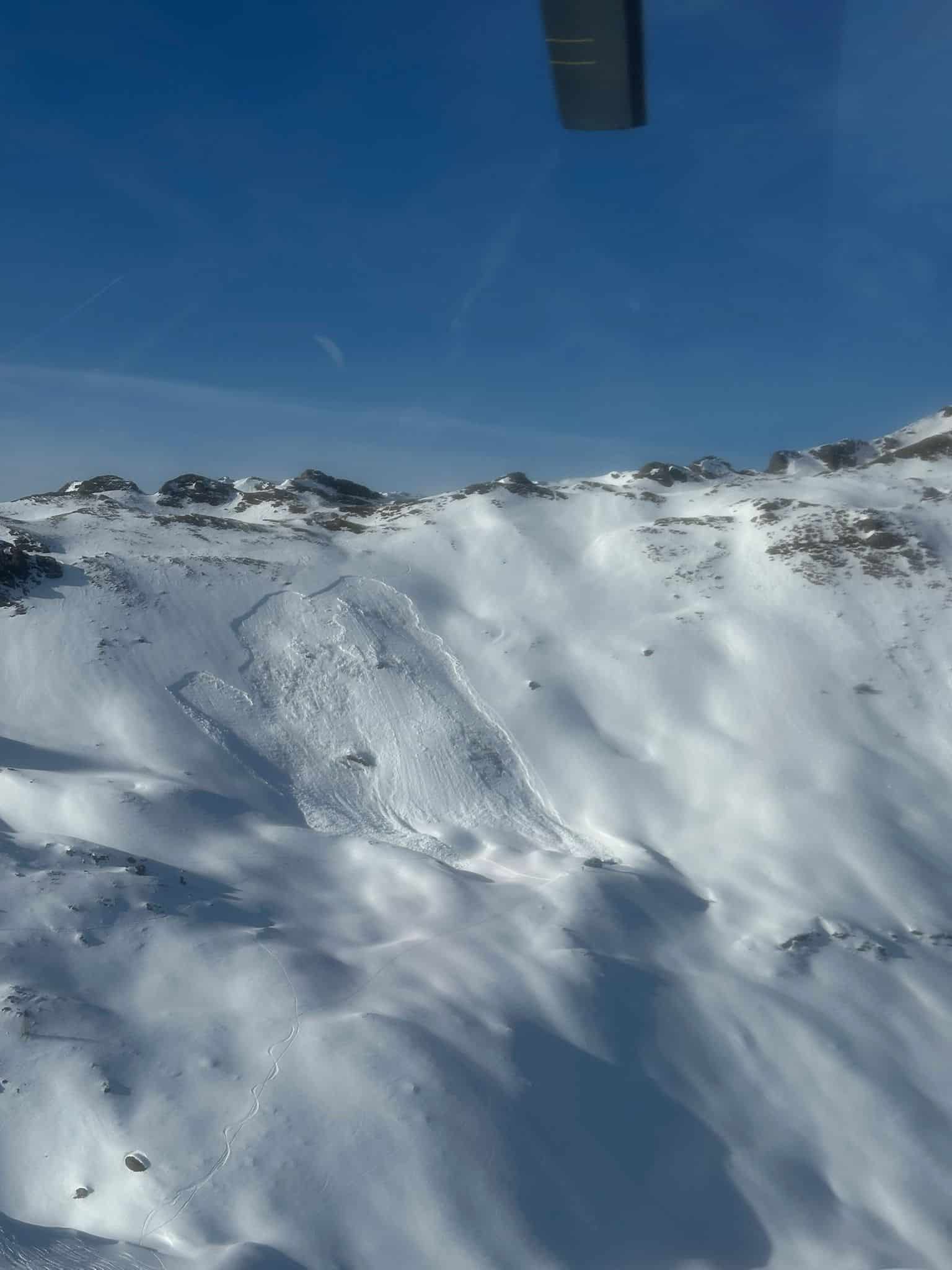
On Saturday, January 17th, eight backcountry tourers were killed in three separate avalanches in the Austrian Alps. The week before, 11 deaths were attributed to avalanches across the broader Alps. These totals are discomforting. According to reports regarding the Austrian incidents, the fatalities were preceded by heavy snow in the region.
Austria’s Pongau-based mountain rescue group reported that a single skier was buried midday in the Bad Hofgastein zone and was unable to be revived. The report stated that the victim’s wife, who was on scene, alerted authorities about the incident.
Several hours later, another alert came in from the nearby Finsterkopf zone. The scene on the ground was grim; four tourers were killed, one incurred serious injuries, another had mild injuries, while a seventh skier was injured.
The third incident occurred in the Pusterwald, a zone roughly 70 miles away from the other two accidents. In this case, seven tourers from the Czech Republic were on scene. Three members of the group were buried and killed, while the four remaining members were treated for minor injuries once rescue services arrived.
As we’ve come to expect in North America, avalanche forecast centers often issue precautionary statements before a major snowfall event. The head of Pongau’s mountain rescue group claimed, “Despite clear and multiple warnings, numerous avalanches have again occurred today – unfortunately with a fatal outcome. Our sympathy goes out to the relatives. This tragedy painfully shows how serious the current avalanche situation is.”
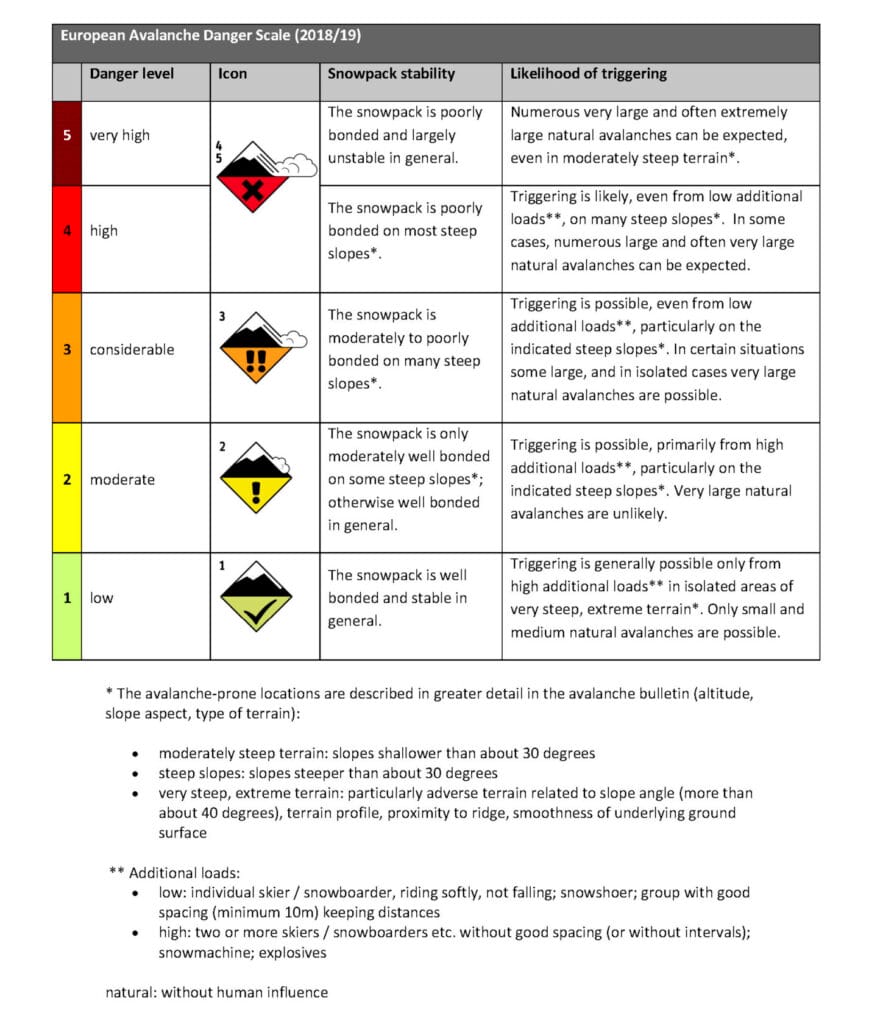
Austria, like the other countries in the European Avalanche warning Services, uses the European Avalanche Danger Scale, which, like the North American Danger Scale, uses five levels. 1 (low), 2 (moderate), 3 (considerable), 4 (high), and 5 (very high).
For reference, here’s the North American Danger Scale.
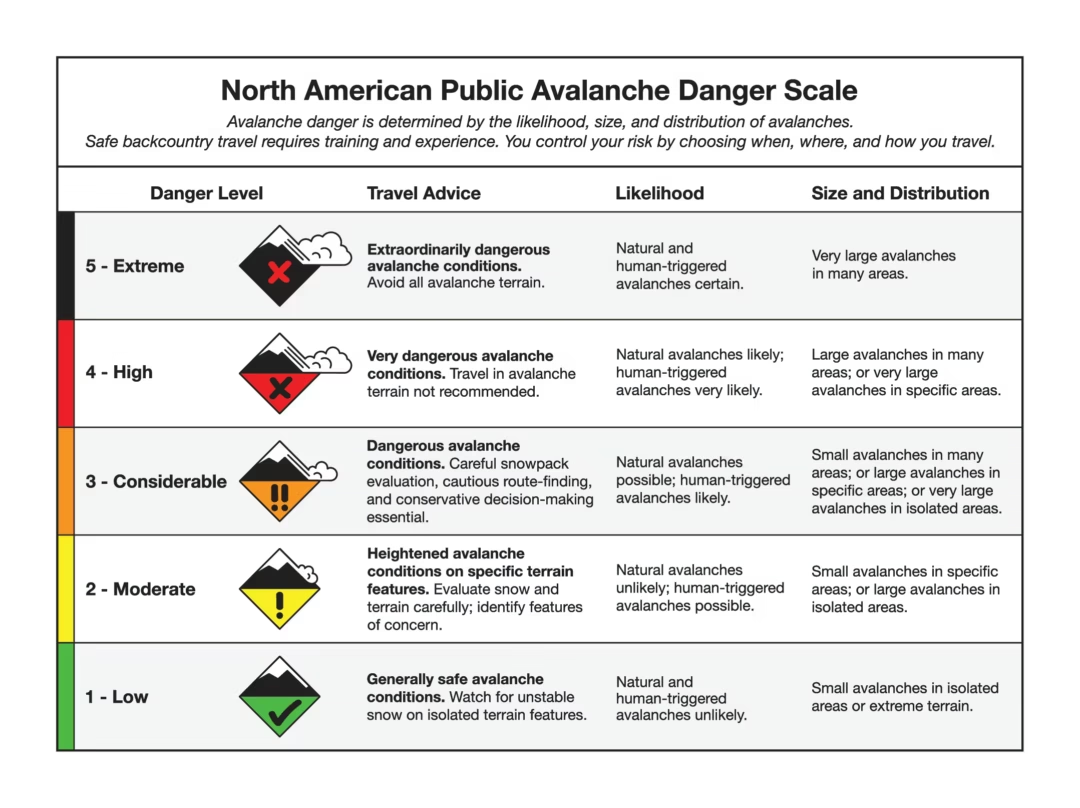
In a paper titled, A user perspective on the avalanche danger scale – insights from North America, the authors state, “While there are slight variations in the signal words and level definitions between the danger scales used in Europe and North America, the main difference is that the primary purpose of the North American Public Avalanche Danger Scale is public risk communication, whereas the European system is used in a wider range of applications that also includes providing warnings for residential areas and transportation networks (Stoffel and Meister, 2004; Stoffel and Schweizer, 2008).”
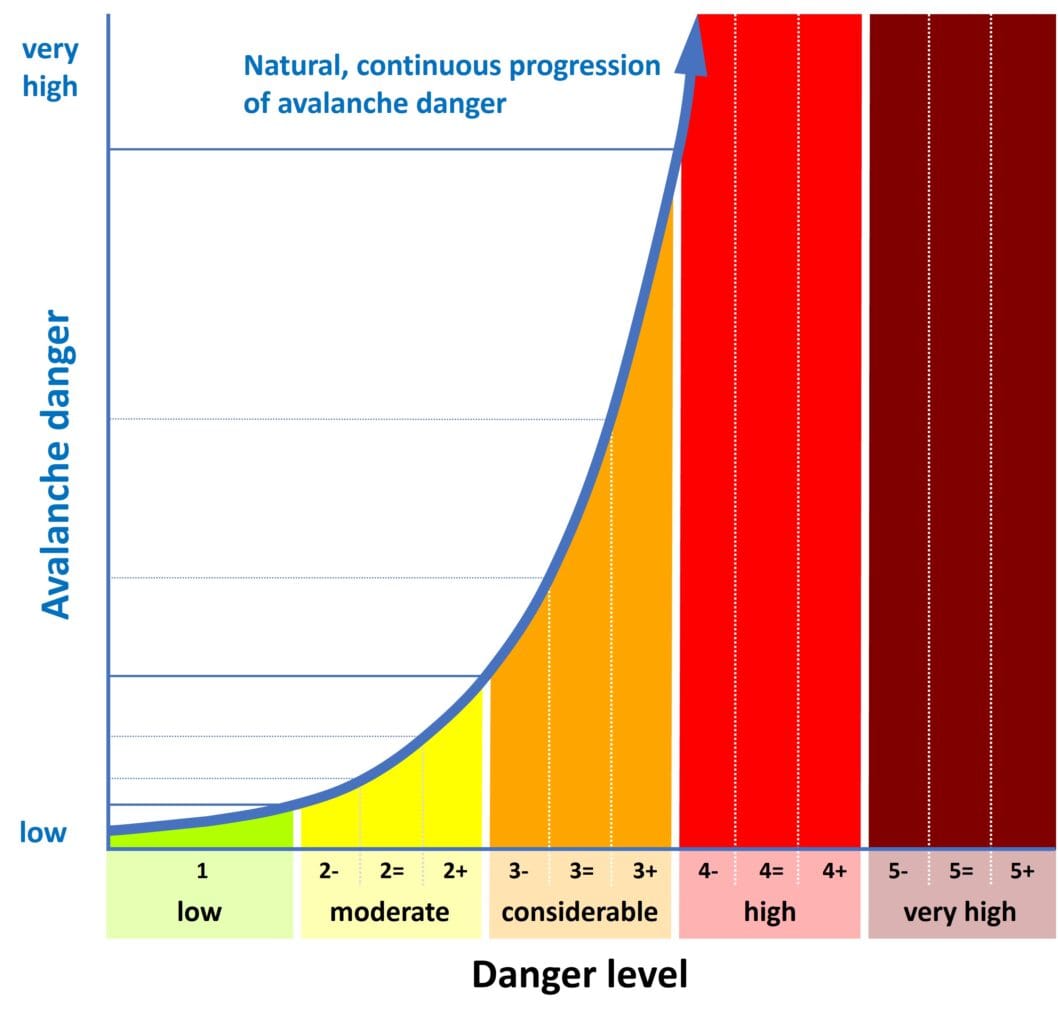
Parsing the two different scales, from my perspective, the language is nuanced. What remains consistent between the scales is their nonlinear nature. In other words, the danger scales are exponential as seen in this diagram from the Swiss avalanche forecasting site.
Back to Austria
There is much we do not know about the incidents mentioned above. We lack information about each participant’s experience, how they felt that day, what the inter-group discussions were, and what type of safety gear they carried. We do know, however, that some key information was communicated by Austrian forecasters during the week leading up to the eight deaths.
Starting a week before the January 17th events, the Salzburg region was mostly at low danger, with some zones listed at moderate danger. As wind and snow moved in, the forecast changed the following day, with the southern edge of the forecast zone bumped to considerable. By Wednesday, the 14th, zones in the considerable range increased. For the most part, with some reduction in the scope of the zone under the considerable rating, the pattern persisted through the 17th, and increased once again on the 18th. The images displayed with the danger scale overlayed indicate, at a minimum, that access to, reading, and understanding a forecast were imperative.
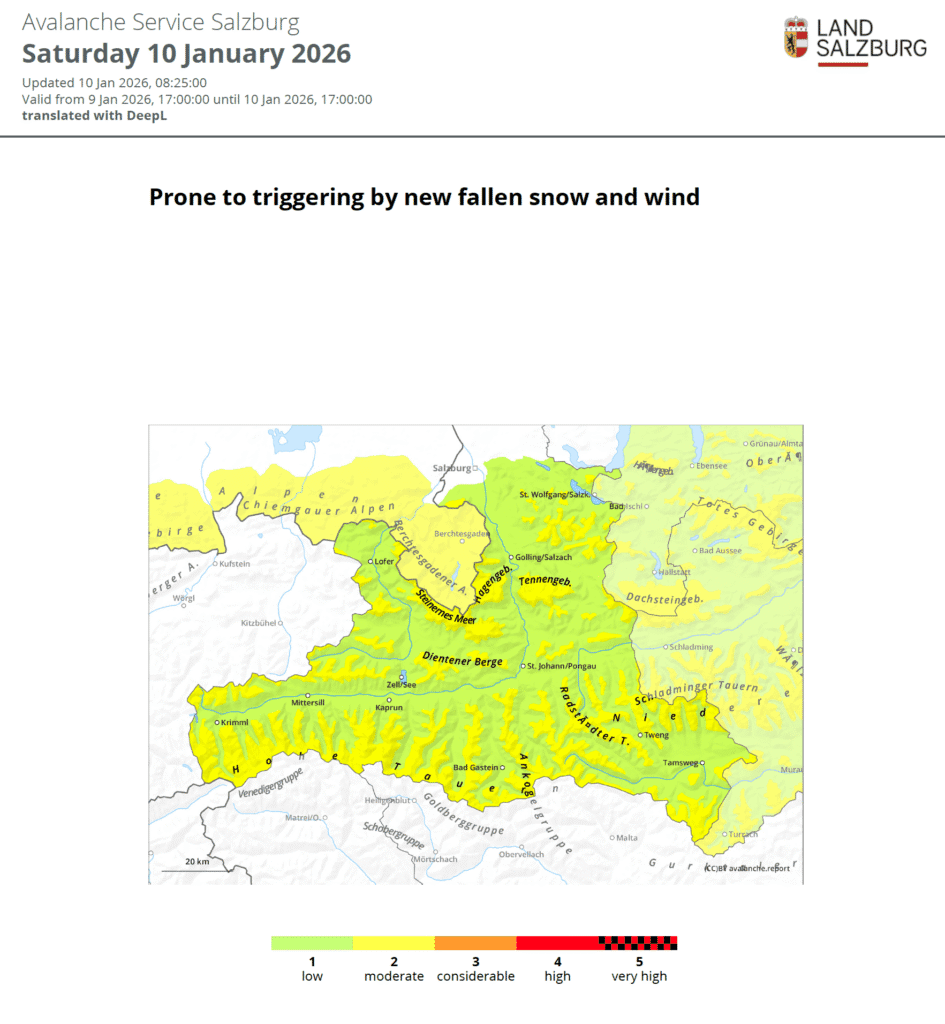
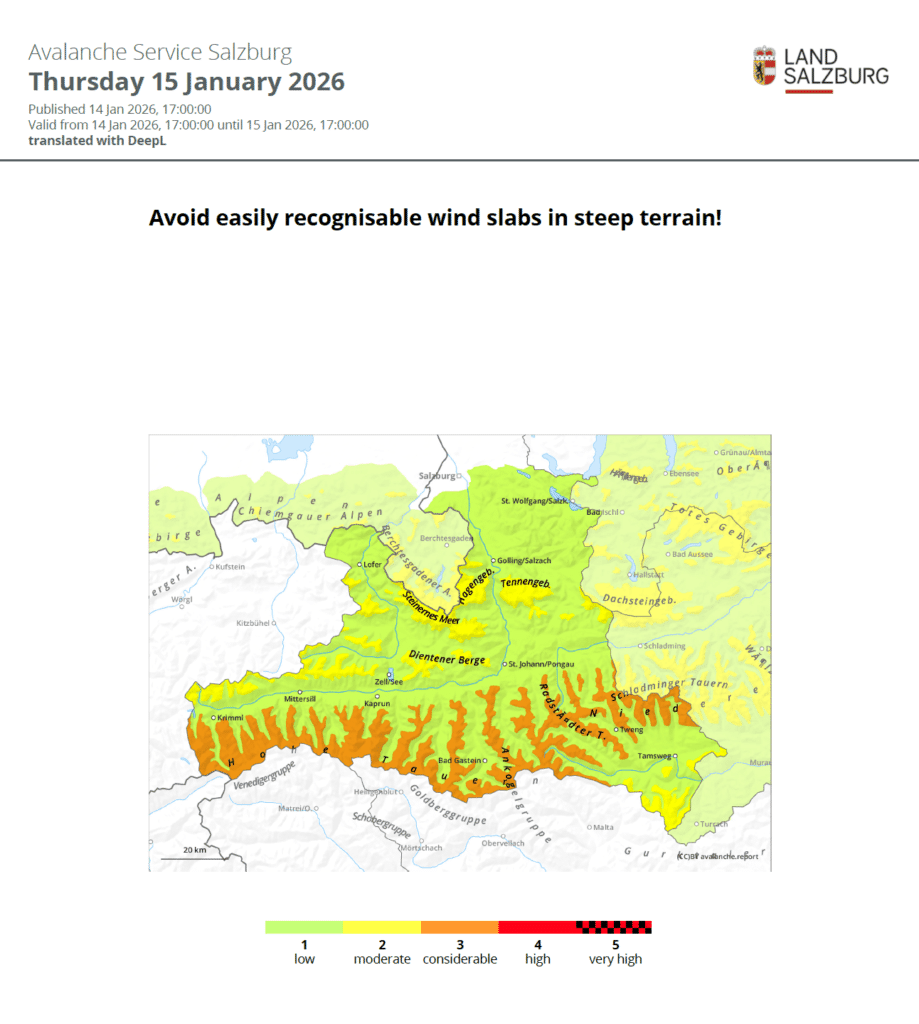
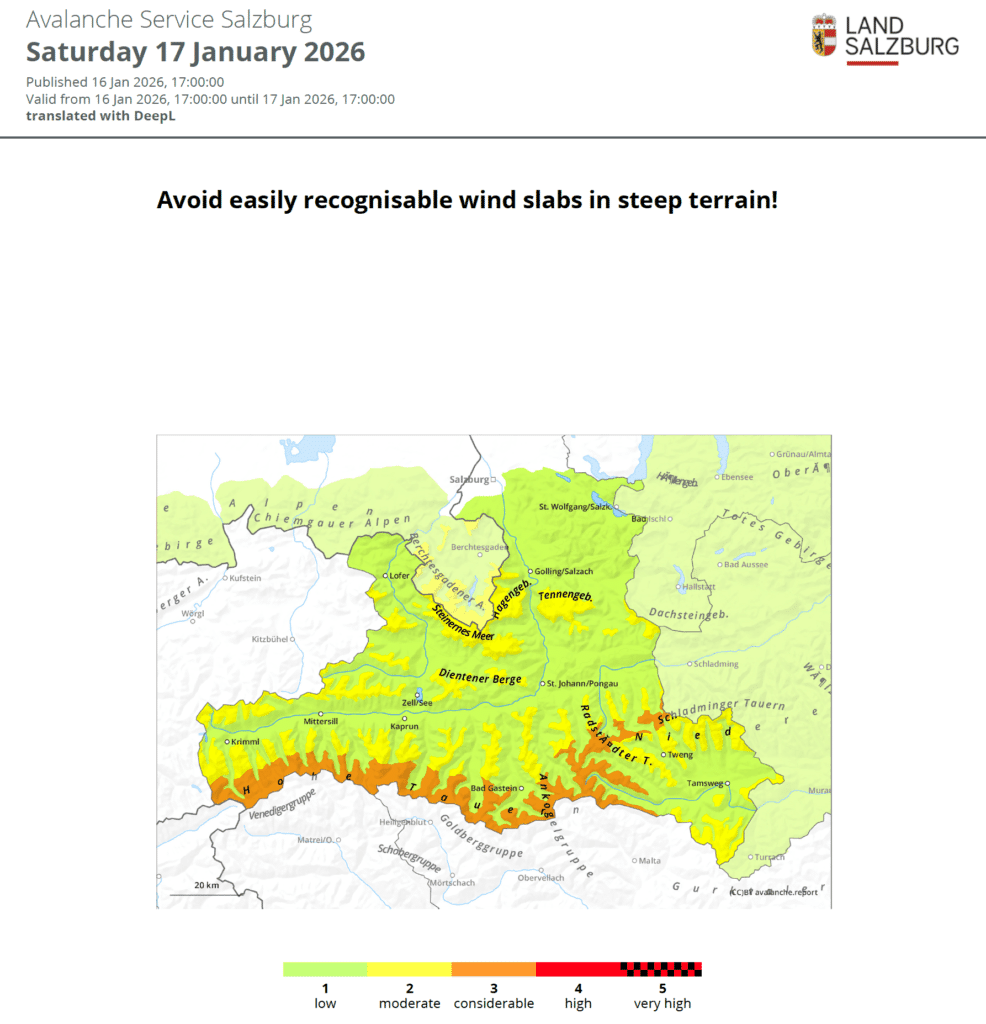
The warnings on the 17th were loud and clear, with the forecast leading with “Avoid easily recognisable wind slabs in steep terrain!” However, as the snowpack forecast reads, other complexities were in play: “In the wind slabs, fresh drift snow lies on a leeward layer of old snow that is often still soft in the higher altitudes and is prone to triggering. Further weak layers of faceted crystals and deep rime lie in the persistent weak layer below and can be activated occasionally by surface avalanches. The total snow depth is still well below average in many places.”
All this is to say thanks to any avalanche educator or forecaster or rescuer out there, and thanks for your good and critical work.
Please be safe.
Leave a Reply
You must be logged in to post a comment.