
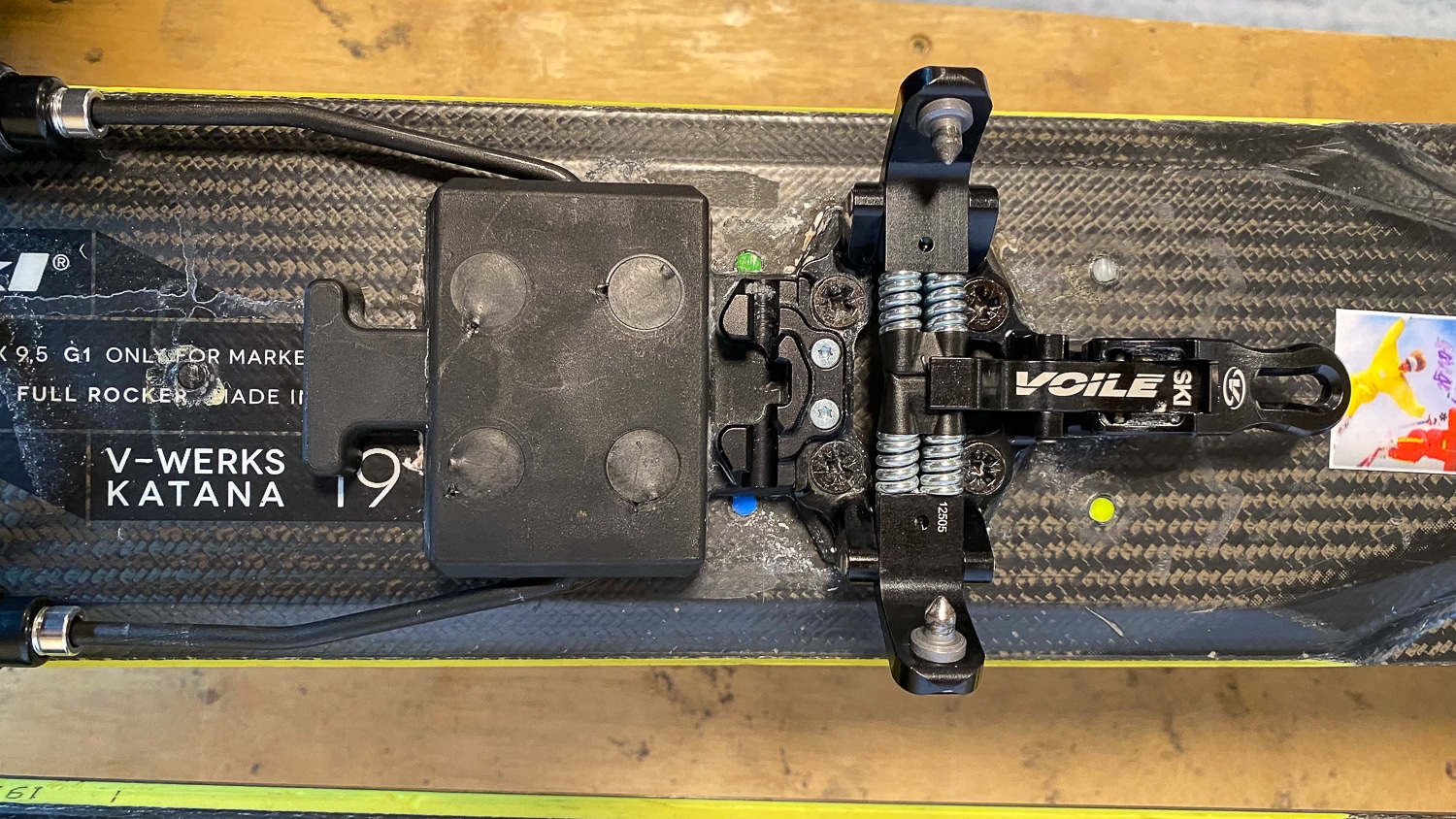
The Voile TTS Transit bindings arrive quietly, which already separates them from a gear world that often mistakes noise for progress. There is no manifesto attached and no promise of reinvention. What Voile presents instead is a binding system that suggests telemark skiing, that stubborn and often inefficient tradition, can move through the mountains with less weight and fewer mechanical compromises.
Telemark equipment has long been inhibited by excess, excess weight, excess hardware, and excess effort on the climb. The TTS Transit appears designed as a corrective. Fully assembled, the binding weighs 525 grams per side, placing it on the lighter end of the telemark spectrum and strikingly close to a fully featured alpine touring binding. The more consequential detail, however, is its modular design. The removable heel assemblies account for more than half of the system’s weight per pair, mass that serves no function during the ascent. With the heel assemblies removed, the touring weight approaches that of a light alpine touring binding at roughly 250 grams per side, a notable shift for telemark gear.
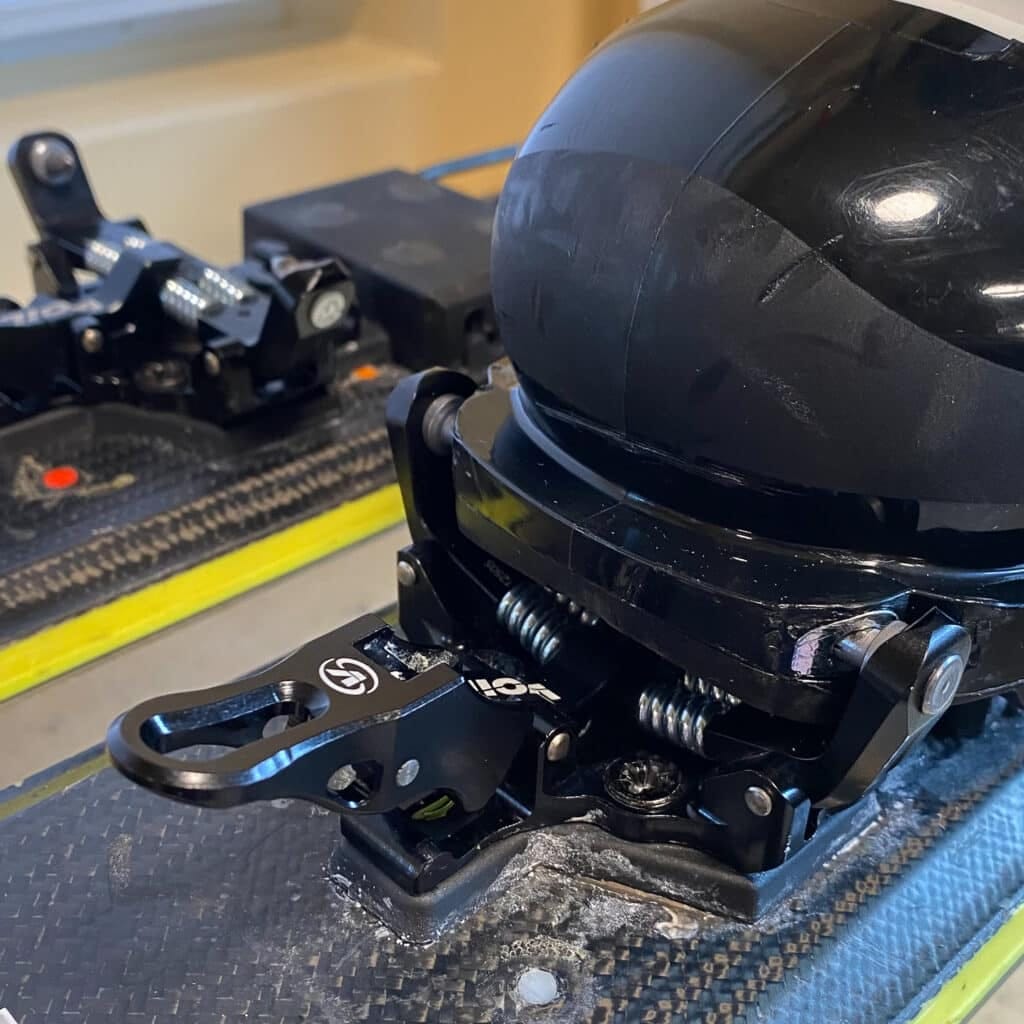
The uphill design centers on a Plum-manufactured tech toe, a familiar component to anyone who has spent time on modern touring equipment. Its purpose is straightforward: to provide an efficient, low-resistance pivot while skinning and to eliminate much of the mechanical drag that has traditionally defined telemark touring. Even in concept, this represents a significant departure from classic cable bindings.
Downhill performance, at least on paper, is addressed with similar restraint. The TTS uses a spring cartridge system paired with three adjustable activity settings, allowing the binding’s feel to be tuned from more neutral to more active. Rather than locking the skier into a single response, the system is designed to accommodate a range of skiing styles, from traditional telemark technique to a more modern, aggressive approach.
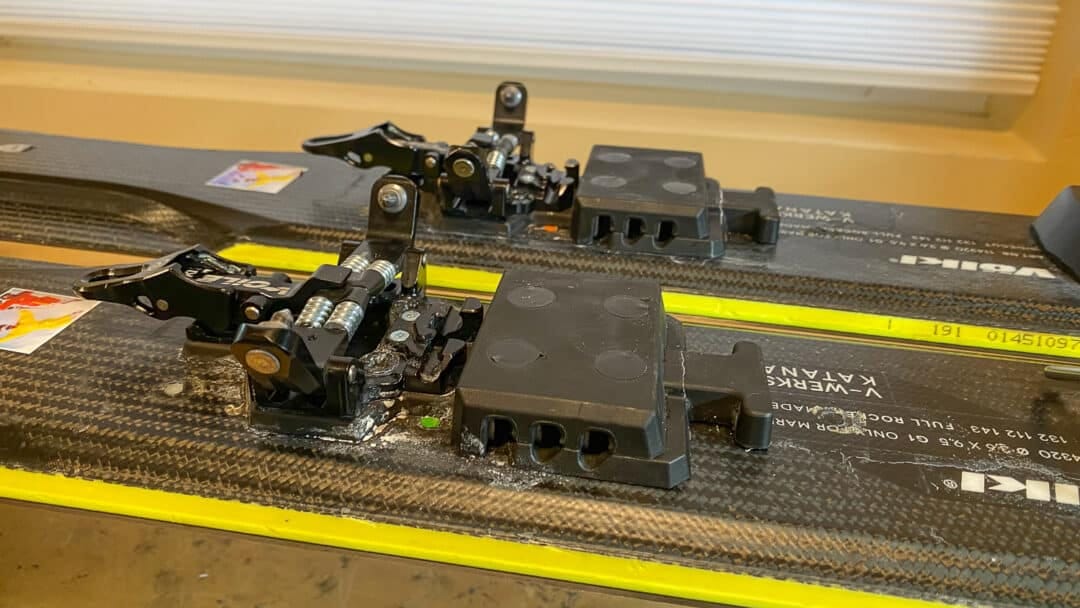
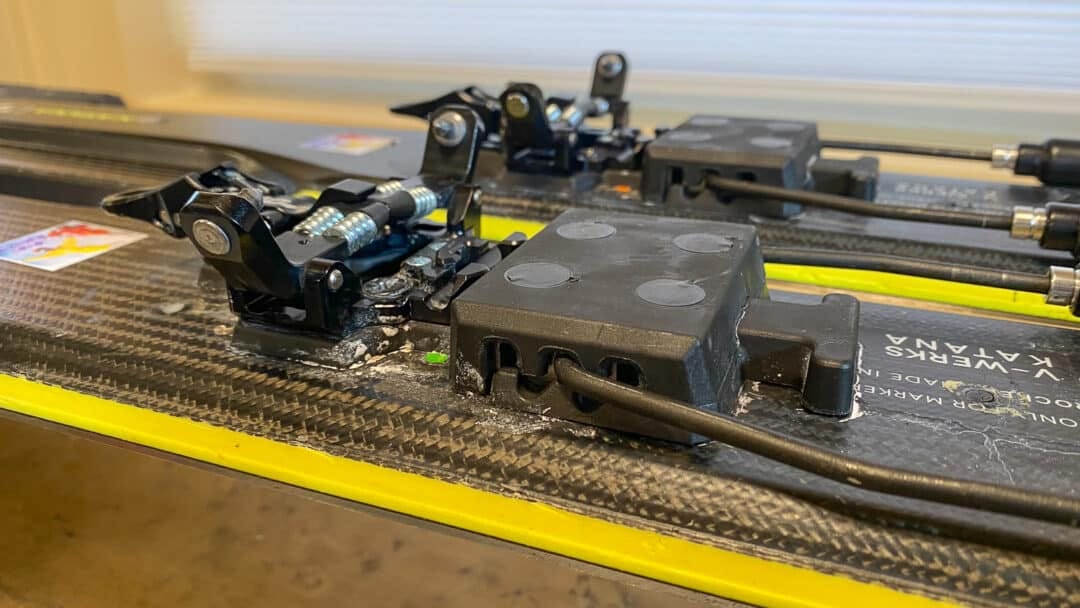
Supporting features reinforce the binding’s backcountry focus. Dual heel risers are included for steep climbs, and the relatively low stack height keeps the skier close to the ski. The overall construction avoids unnecessary complexity, aligning with Voile’s long-standing emphasis on durability and field serviceability.
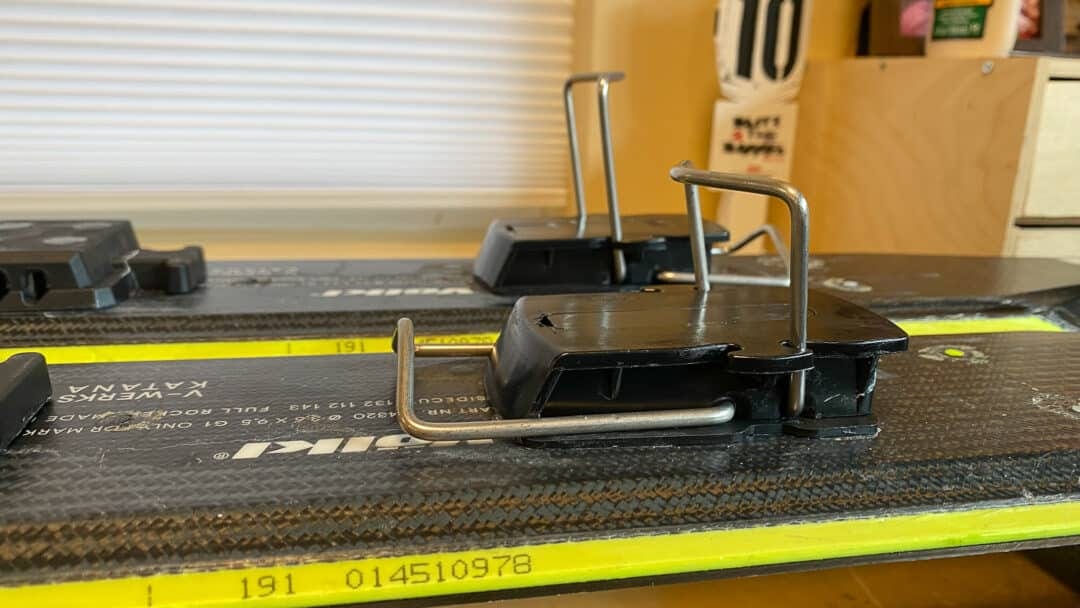
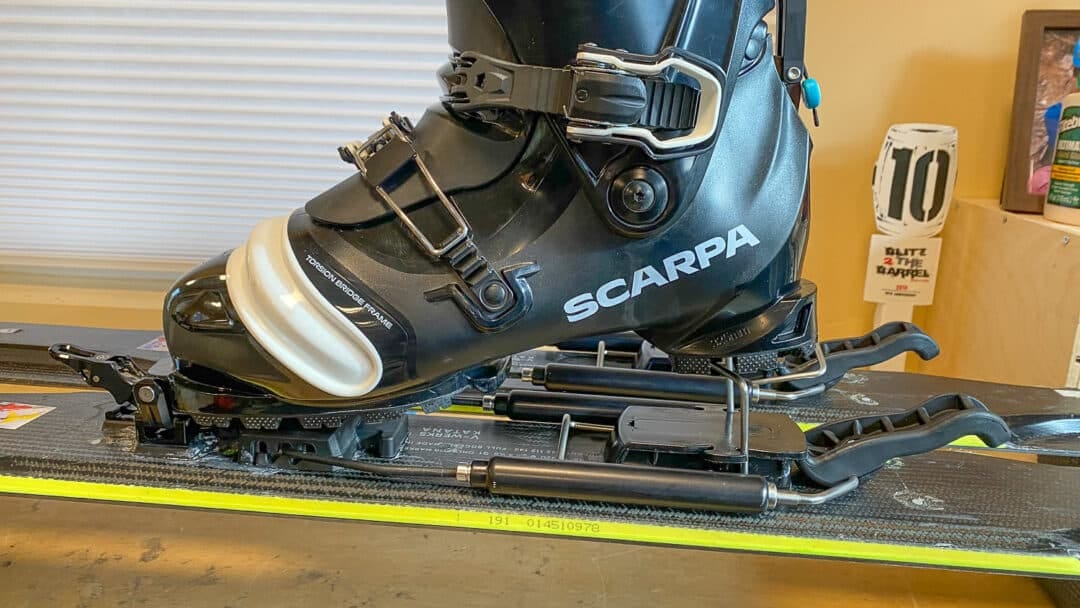
The Voile TTS does not present itself as a radical redefinition of telemark skiing. Instead, it aims to refine it, reducing weight where possible and simplifying the interface between skier and ski. The essential demands of telemark remain unchanged. The climb is still earned, and the turn still requires commitment. What the TTS suggests is a way to carry less into the mountains while preserving discipline’s character.
I mounted the TTS on a scavenged pair of Volkl V-Werks Katanas I found at the used shop down the street for $200. I pulled the boat-anchor Marker Duke frame bindings off them and ended up with what felt like an ideal test platform for the TX Comp boots I have been skiing alongside the Voile TTS system.
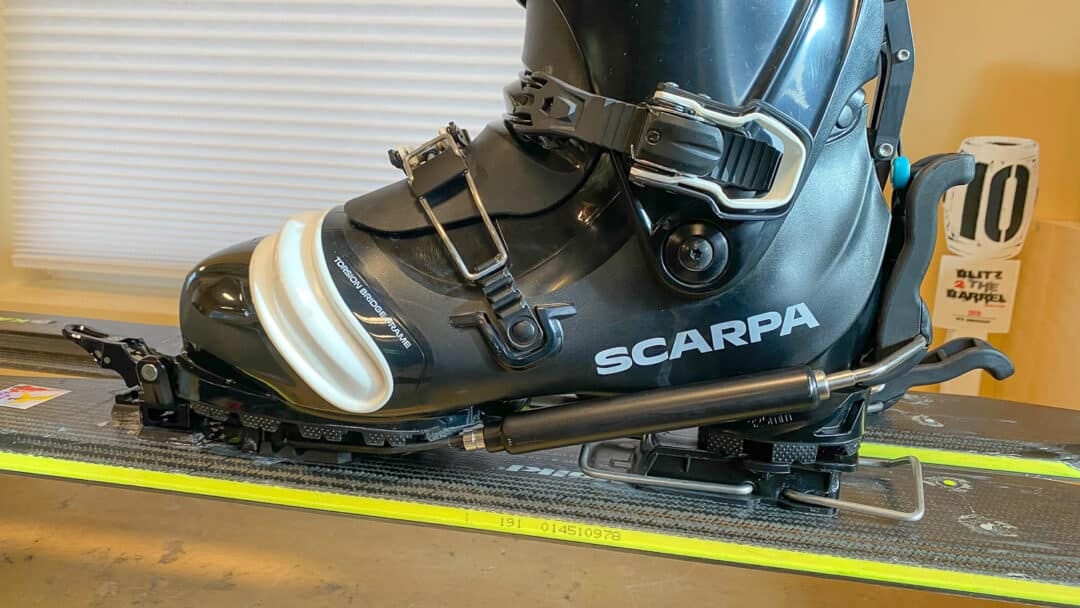
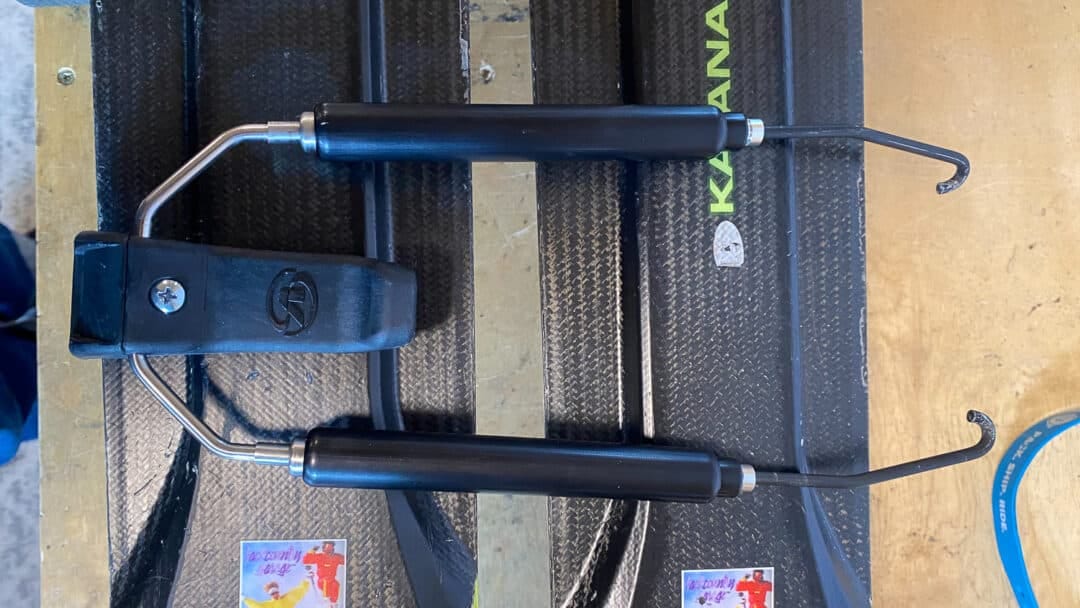
Many laps of the local ski hill have followed, with my self-imposed rule of only skiing telemark when skinning at the resort still intact. After a short adjustment period to an entirely new tele setup, things began to click. The TTS system is unquestionably lighter and noticeably easier on the uphill, even compared to the 22 Designs Outlaw bindings I had been using. Even without removing the heel cable system for the climb, it locks cleanly behind the heel pad block and stays put while skinning.
Downhill skiing performance has been on par with other systems, both NTN and 75 mm, though it feels distinctly different from each. Initially, the binding felt underpowered, with difficulty compressing the boot bellows and an unnerving, tippy-toe sensation on the descent. Moving the cable to its most active setting solved that issue, but introduced another: too much resistance, pushing me upright into a parallel stance. The middle position has proven to be the sweet spot, and with each lap, the technique demanded by the boot and binding combination feels more intuitive. Each cable position is clearly distinct and should suit a wide range of preferences when it comes to binding feel.
There are a few minor quibbles. The heel riser wires do not always align perfectly with the tread lugs on my boots, occasionally causing a clunky drop when the wire slides off a lug and settles a few millimeters lower. It seems to occur more on one side than the other, and some fine adjustment of the heel plate position should resolve it. The other consideration is mounting. The TTS requires drilling ten holes per ski, only two more than a typical AT binding, though eight of those holes are clustered in the toe piece area. That is a lot of holes, so double or triple-checking the mount position before drilling is strongly advised.
Voile TTS Transit — Specs at a Glance
Binding Type: Telemark Tech System (TTS)
Intended Use: Backcountry telemark touring
Weight: 525 g per binding (fully assembled) ~250 g per side in touring mode (heel assemblies removed)
Toe Piece: Plum-manufactured tech toe
Heel System: Removable spring cartridge heel assemblies
Activity Settings: Three adjustable cable positions, from neutral to active
Climbing Aids: Dual heel risers
Boot Compatibility: Telemark boots with tech toe inserts
Price: $490



Leave a Reply
You must be logged in to post a comment.