
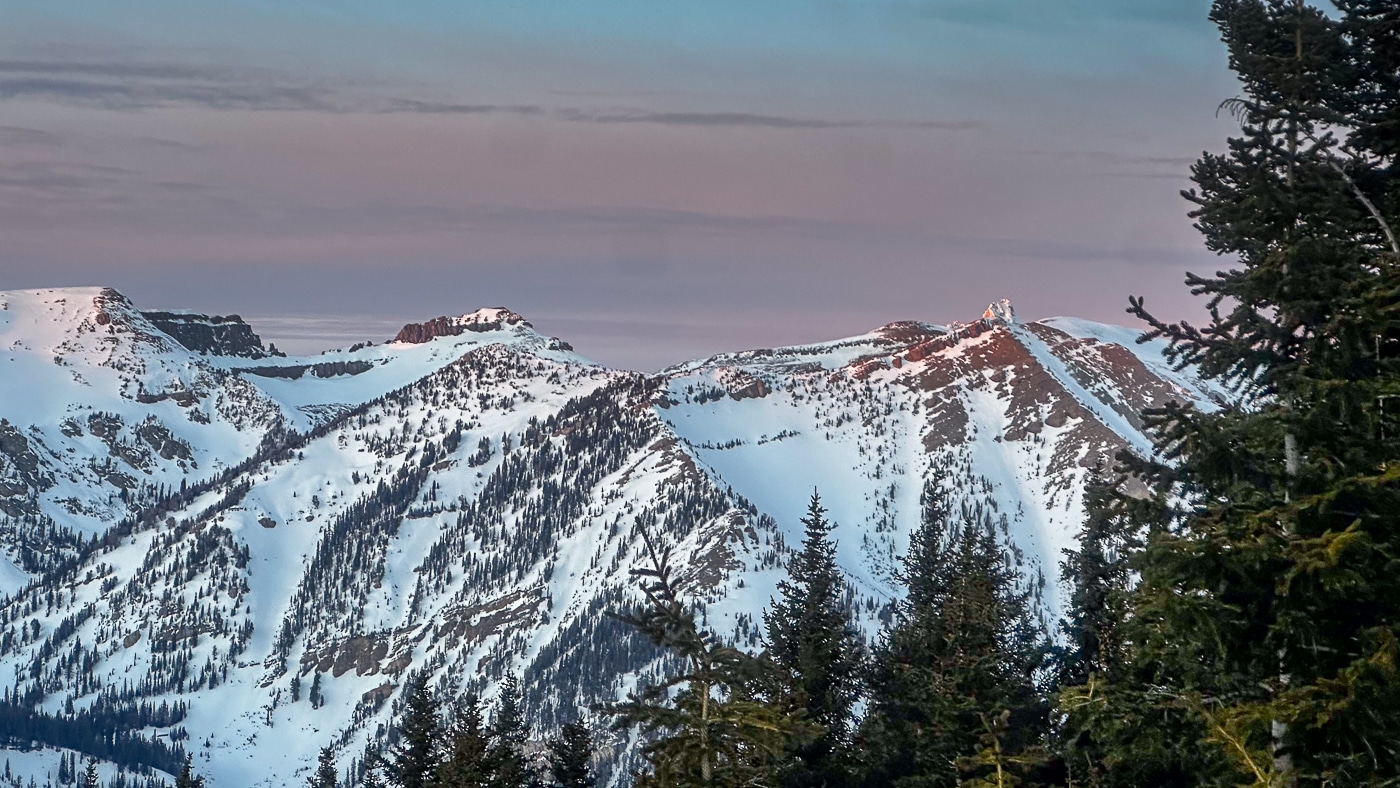
We are not here to preach to any choir. We are, however, here to embrace a growth mindset. Some readers may be guides and avalanche educators, or highly evolved in snow science; others may be total newcomers; some may be somewhere in between; and some, like me, live in a region where persistent weak layers or their development are rare. So I find myself revisiting snow science concepts that may help me assess potential future conditions. Sustained high pressure has been the theme out West, with some semblance of a refresh here and there. Stable weather does not mean the snowpack remains static. On the contrary, it can and does change incrementally, especially in regions where cold, clear nights persist.
What’s key here is understanding that the good snow or snowpack conditions we may find as high pressure evolves can become less predictable, and downright touchy, once new snow falls. Which, fingers crossed, it will. To simplify matters, the grainy or feathery near-surface conditions we often seek out during high pressure on north and north-adjacent slopes can become weak layers as the snowpack matures with overlying snowfall.
In the quest for fine reading and educational resources to help me/us get a better grasp of the dynamics at play, we’re perusing the Internet to highlight some resources.
Let’s begin with the Avalanche Encyclopedia from Avalanche.org to explore some terminology.
Facets: Sugary or angular snow grains that form weak bonds with surrounding layers. Facets form when strong temperature gradients occur in the snowpack.
Near Surface Facets: Folks chasing good skiing/riding during this high-pressure cycle have likely had a good return on investment, given the ratio of effort to smiles. But they are worth keeping an eye on. The Avalanche.org Encyclopedia states, “Near-surface facets form from strong temperature gradients at the snow surface. Faceting at the snow surface is common during prolonged dry spells when the snow surface experiences large temperature swings between sunny days and cold, clear nights.” Once buried, these facets can persist for long periods and can present a weak layer.
Surface Hoar: Those feathery crystals on the snow surface that can make for dreamy skiing form when there are clear, cold skies, little wind, and a somewhat high relative humidity. Again, like the facets we mentioned above, surface hoar can become a weak layer once snow is layered on top.
Although this is not exhaustive, it is worth noting that crystals may form on southerly slopes during these periods of high pressure, called radiation-recrystallized facets. This video from the Utah Avalanche Center is super useful:
Ok, now it’s time to reference a great blog post from the Utah Avalanche Center’s Director, Paige Pagnucco. She titled the post, “Weak Snow: Today’s Surface, Tomorrow’s Avalanche Problem.” In other words, she gets granular about how current conditions can become problematic. Even if you don’t live in a zone experiencing this sustained high pressure, it is worth a read. Near the conclusion, Panucco writes:
Case Study: January—February 2022, it didn’t snow for weeks in Utah. When snow returned towards the middle to end of February, the snow surface was faceted, and avalanche danger increased dramatically. Between February 22, 2022, and March 27, 2022, 105 PWL avalanches were reported to the UAC across the state, of which 70 were human-triggered.
Early in the post, she states, “Avalanches associated with a buried persistent weak layer (PWL) account for 70% of Utah’s avalanche fatalities.”
Below, we’ve embedded a recent video from the Colorado Avalanche Information Center that, although it may not reflect conditions in your home region, is a good example of a buried weak layer with an overlying slab.
This second video is another exmaple from the CAIC, but is from March of last year.
All this isn’t to scare anyone away. But evidence-based touring and avalanche awareness are a good starting point. And thanks to the good people putting the useful information we referenced out there.
Leave a Reply
You must be logged in to post a comment.