
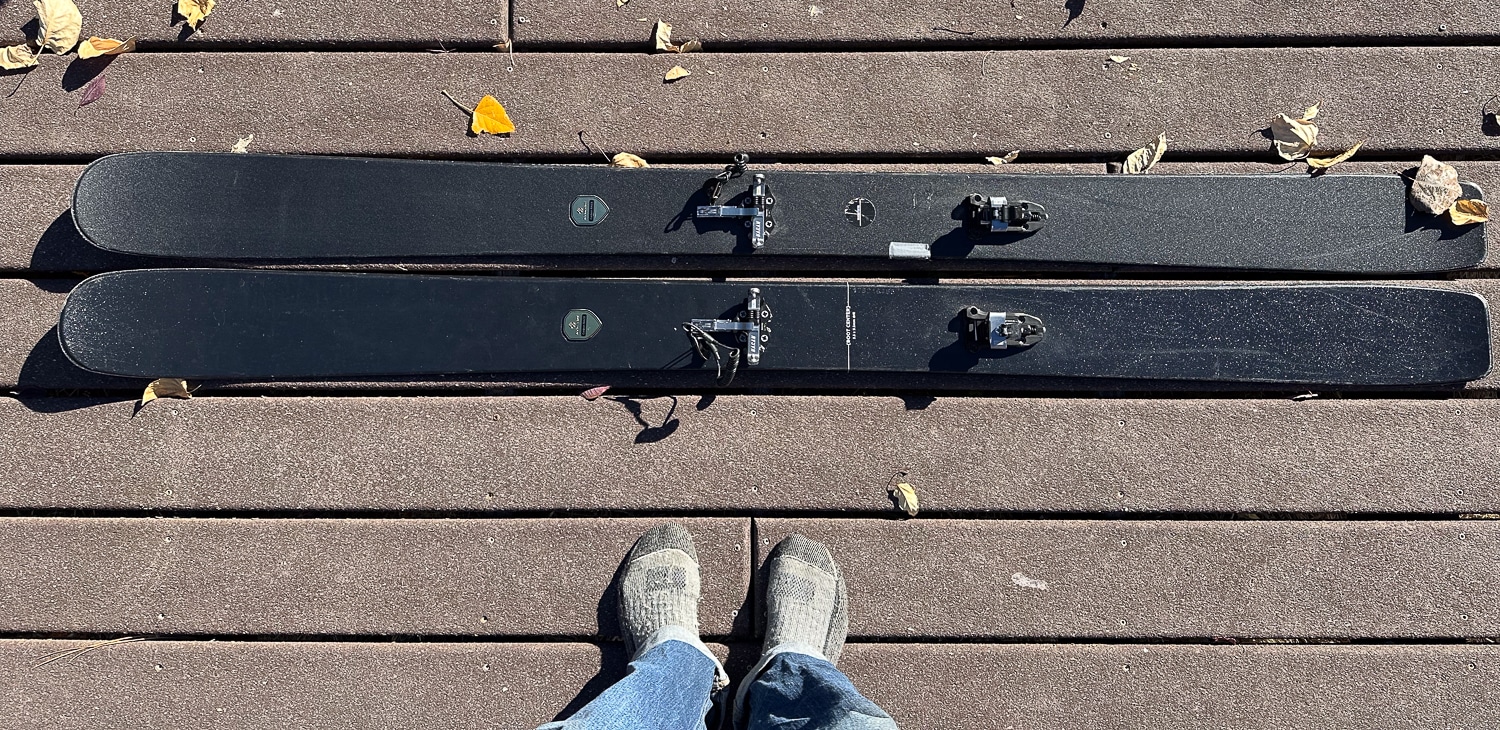
I’ve been meaning to review Moonlight’s Cruiser Carbon Superlight skis for a few seasons now. Over that time, while the snow has been somewhat lacking for a ski like the Cruiser Carbon, I’ve become decidedly more hardwired about what I’m looking for in a wide ski here in the PNW.
For starters, I live in Bend. East of the Cascade divide, it’s sort of a roulette wheel, depending on where a particular storm’s snow type lands. Sometimes it’s right side up and light and dreamy. Most times, it’s a semi-dreamy mix: colder snow in some areas with a dash of the heavy stuff on top as the day evolves. Other times, think nightmarish. I’ll assert that over nearly two decades here, I’ve mostly not skied snow adjacent to Cascade cement on the hardness scale, but cement happens. But despite what Visit Bend might want you to believe with their past Ineffable marketing campaign painting the city and the mountains in a fictitious glow, the snow here is rarely blower. Or whatever other term related to ineffable you can conjure. Sometimes, the news here at THR isn’t so fake.
Are there stellar days? Sure. So back to the Moonlights. Which are made for those stellar days.
The Carbon Superlight Cruisers are 177cm long, with dimensions of 139-114-129, a radius of 26m (so a pretty darn straight cut), and a weight of roughly 1,160g/ski. With a Hagan Pure 10 (really an ATK Crest 10), the ski weighs about 1410g. Call it very light for a wide plank meant for deep days.
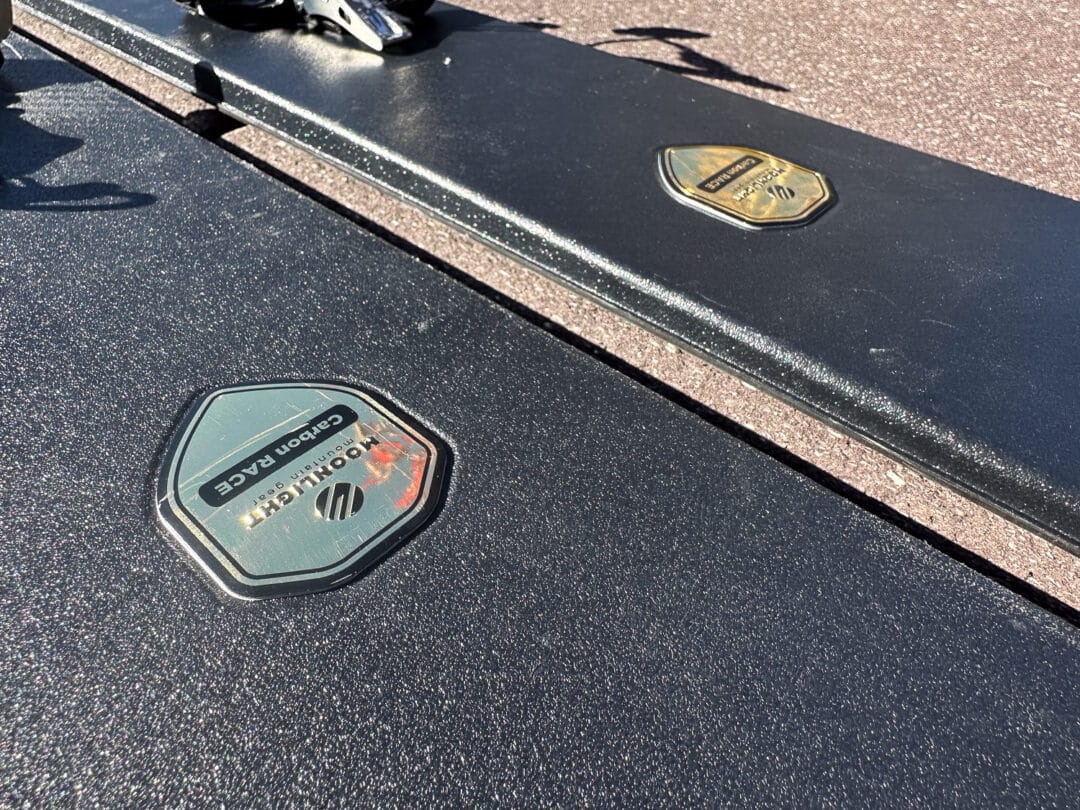
The core is what Moonlight calls FJÆRECORE+: “a hybrid foam and wood structure reinforced with four layers of carbon stringers.” It’s enclosed in a full-cap construction for a clean look, but if you’re embracing the “tools not jewels” ethos, beware of side hits in hostile low-tide conditions. I’ve used the Carbon Cruiser Superlights off and on for two seasons, with no discernible durability issues. That said, I treat them far better than my usual go-to planks.
The Justification
Life is a series of cycles—or so I like to think. And as someone who wants a variety of skis on hand for specific conditions, an uber-light pow ski seems reasonable to a point. The rub is that I don’t live in the Wasatch. Or some other blessed locale where orographic lift and prevailing karma sprinkle fairy dust in the alpine. If I did, this review would probably be somewhat simple. The calculus would be this: If A (you skin and ride with faster folks) and you don’t want B (to be routinely dropped), and the snow is C (the aforementioned fairy dust), then you should D (get yourself a pair of Cruiser Carbon Superlights when they are back in stock and Moonlight ships to the U.S.
I do suppose, too, if the conditions for B and C are met, yet A is modified to mean you are a fast and light #speedup machine who prefers Lycra and 65mm styx, then D would apply, too. For me, over the past few seasons, the Moonlights appeared when the snow was cold and light, or, despite the expected janky snow, I was touring with a younger, faster crew. I figured the relatively low weight on my feet (I paired with a La Sportiva Kilo or Scarpa F1RS) would keep me in the game, and less on the rivet, for full-day tours. And this mostly played out as expected.
But in less-than-ideal snow, even with the F1RSs, tip deflection was real, as was my tendency to keep speeds low: I was afraid of opening it up and risking an unwinnable confrontation between the Moonlights and denser, unpredictable snow.
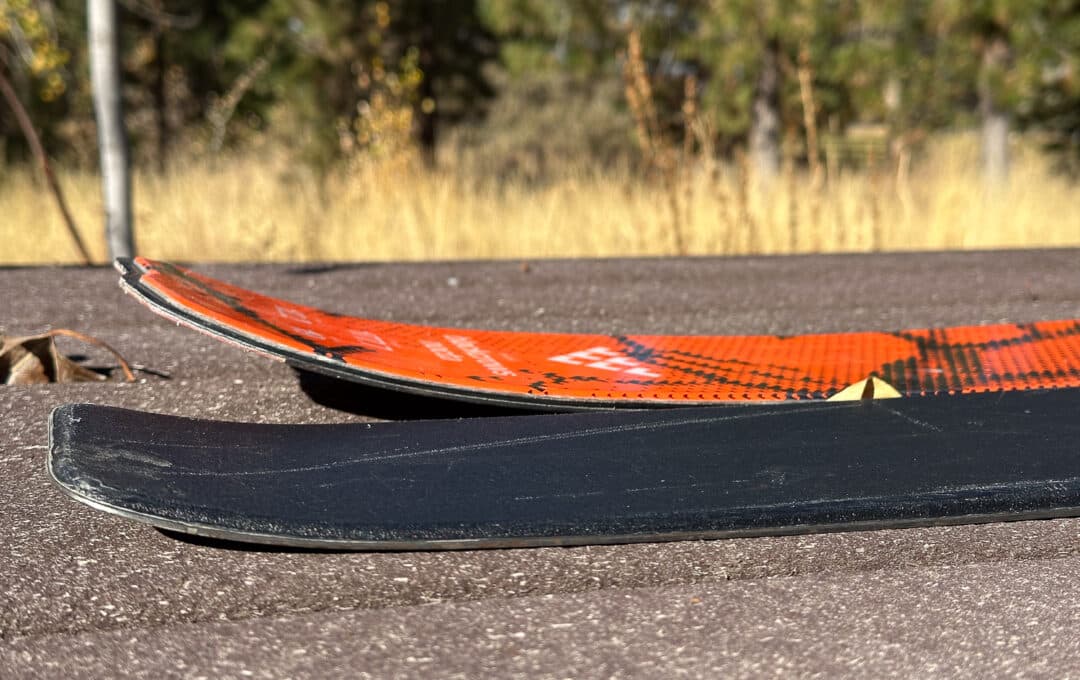
The tip rocker, while low, runs a claimed 58mm. And in low-angle cold snow, although I mounted at the recommended -10cm, the front end felt surprisingly loose. In less-than-30-degree terrain and a softer-ish boot, I came to enjoy weighting the ski with less-than-normal front pressure—as is my norm as a directional skier. But again, in anything less than ideal snow, I couldn’t seem to trust myself. In other words, this vibe relegated the Moonlights to select days only. And, like the werewolf’s hair, according to Warren Zevon, the snow had to be perfect. That means this is a very select quiver ski, and one that may not suit mountain climates without the greatest snow on earth, maybe Japan, or some far-off high steppe where the gods spew snow just so.
The flex is well-rounded for a mostly carbon ski, but it’s stiffer in the front and has less rocker than we might want for a typical Wasatch-pow ski, for example. You’ll probably not be keeping your weight too centered on these skis. If you prefer that stance and want a light ski, consider the 186 (120mm underfoot) version and mount forward. That said, the skis lack metal reinforcement in the binding-mount zone. That’s likely not an issue for a ski designed for powder and big and wide sweeping turns. I would not hesitate to put a ski-mo race binding on these planks if powder skiing is on the menu.
The sidecut lends itself to untight terrain—the kind of terrain where you like to go near full throttle. With a ski like this, the intersection of the Venn diagram is remarkably small. The ski likes big turns, but it needs perfect snow to execute.
The Moonlight Cruiser Carbon Superlights are skis for an ideal sense of what snow is, which isn’t what I most often experience on my home hills. Despite how much I love these skis on the ascent, the cost-benefit on the descent leaves me with a fun deficit. I will concede the lightness argument: if you routinely count your vert, routinely move into the realm of 6k-plus days, and have an insatiable need to optimize the uphills on deep-snow perfect-snow days, these are your skis.
I’ve been through the Wasatch once or twice a year recently. If I lived there, I could see myself proselytizing about the Moonlights, and maybe even bumping up to the 186cm length, which boasts dimensions of 145-120-135 and weighs a claimed 1300g. Oh my! Pair that with a skimo binding and a house atop BCC and below 7% interest rates on a mortgage, and we’re talking.
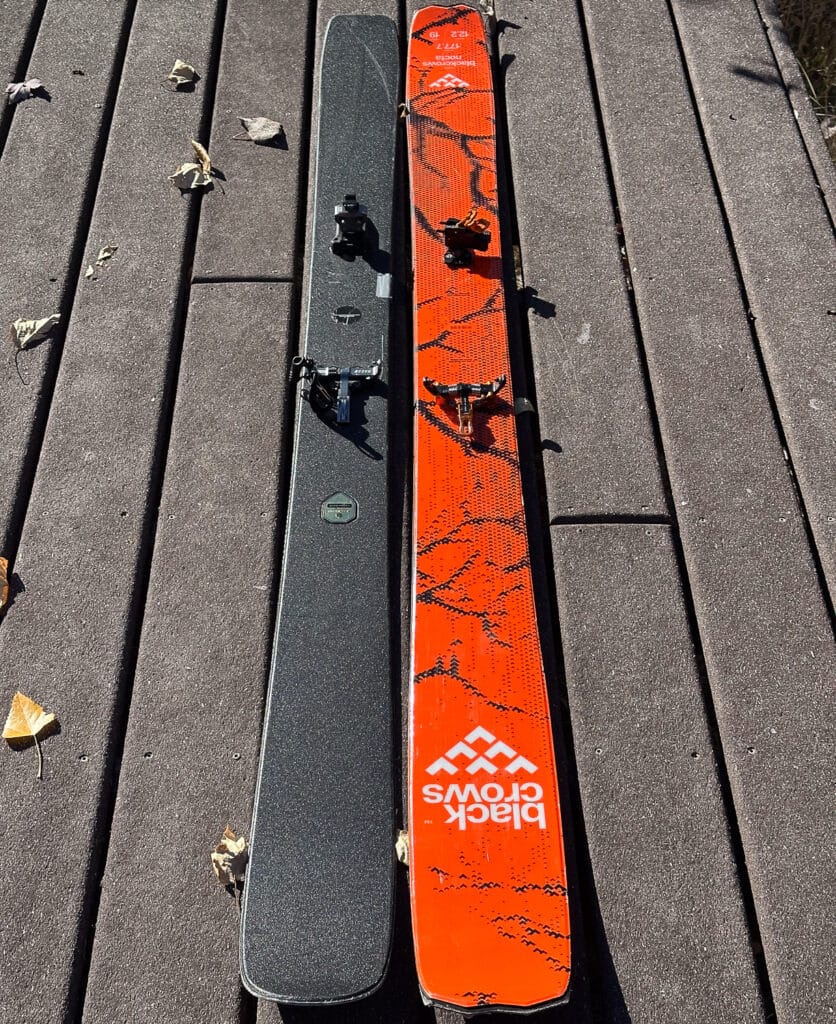
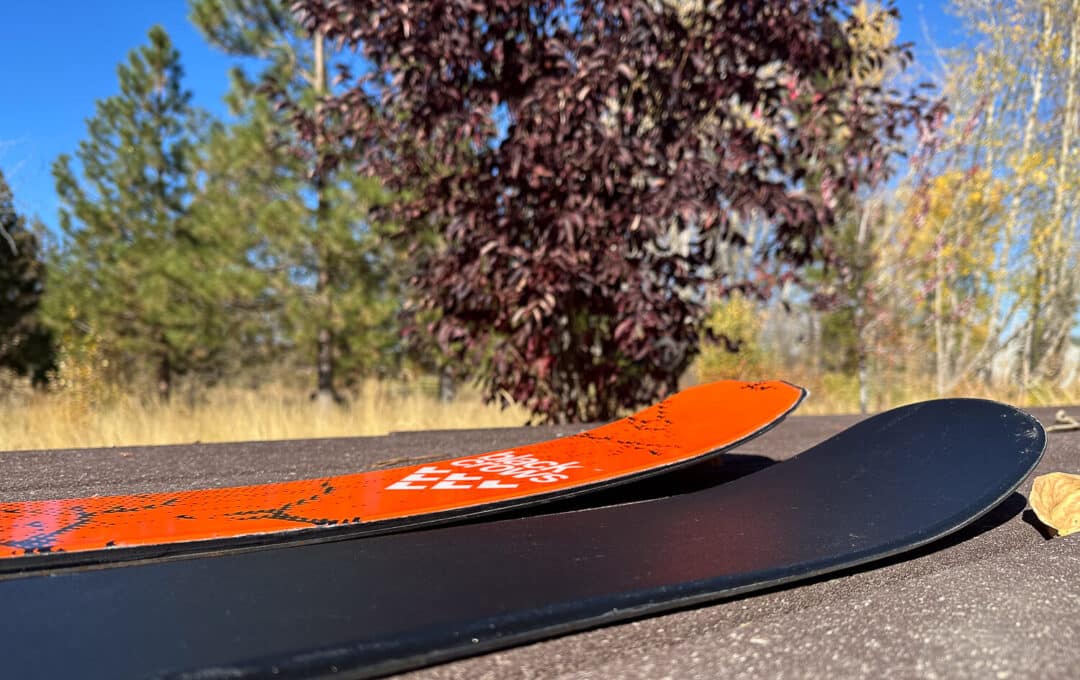
Before I close this section out, I do have a powder ski on the complete opposite side of the spectrum. As in heavily rockered, low-camber, soft front-and-tail suspension, and on the very heavy side for me: the Black Crows Nocta weighing a bit over 2kg/ski with bindings. It’s a very fun ski in most deep snow conditions, but I break this ski out only if I know I can lag on the ascents. All this is to say that being a weight weenie can be restrictive at times, and erring too far toward lightweight can render a piece of gear too limiting.
Here’s an abridged look at the Moonlight’s performance in different conditions.
Semi-Perfect-Powder.
Good to better than good. Might want more weight in the ski’s front end. Anything resembling crud—take notice.
Dust on Crust.
High fun factor.
Perfect Snow on a day when you are heading into the deep with faster-than-you partners.
Hard to beat.
Firm Snow.
Ahhh. Look elsewhere.
Variable and Chop.
Keep the speeds very low; otherwise, buckle up.
Uphilling
Skinning on the Carbon Cruiser Superlights is mostly excellent. While they’re not as adept at setting a track in deep snow as a more heavily tip-rockered ski, these skis earn a high grade. The low weight and ~4mm of camber underfoot keep them secure on steep skinnners—including funky side-hilling. That said, the 114mm underfoot and 139mm-wide shovel make them somewhat less ideal for steeper, more exposed side-hilling. (I never used ski crampons with these planks, as I used them mid-winter on unfirm days, and my widest set is 110mm.)
Where do I land?
For comparison, let’s look at one metric: weight, for dedicated powder skis. This will illuminate how light, and therefore, specialized, the Carbon Cruiser Superlights are.
- Again, the Moonlight planks weigh a claimed 1,160g/ski. Dimensions are 139-114-129. Even if you get a pair that deviates a bit in weight, they’ll come in at or under 1200g. So yeah, crazy &^%! light.
- Wasatch-based Voile makes the Hyper Drifter, which weighs approx. 1550g in 178cm. The dimensions are 155-121-138.
- Movement makes the Alp Tracks 106—another light and very much carbony affair. The AT 106s in a 178 weigh ~1300g with dimensions of 132-106-120.
I’m not exactly late to the party regarding skis and optimizing ski weight to local conditions. I suppose it’s like a diehard surfer in a zone where the waves are routinely knee-high and soft: you’ll buy smaller, more energetic boards from a local shaper. The opposite is true when waves roll in and peak head-high or higher and curl and fold over with substantial power; you’ll need an altogether different board.
The Moonlight Cruiser Carbon Superlights are skis for an ideal sense of what snow is, which isn’t what I most often experience on my home hills. Despite how much I love these skis on the ascent, the cost-benefit on the descent leaves me with a fun deficit. I will concede the lightness argument: if you routinely count your vert, routinely move into the realm of 6k-plus days, and have an insatiable need to optimize the uphills on deep-snow perfect-snow days, these are your skis.
Moonlight makes a near-identical pair of skis (Cruiser Carbon All-Terrain) with a slightly different build and the same dimensions; they weigh roughly 300+ grams more/ski. These heavier planks probably perform better in less-than-ideal deep snow and suit those keen on charging.
The Cruiser Carbon Superlights cost $1340.00.
The Moonlight site states this about shipping: “To the USA and countries where DDP is unavailable, we ship DAP (Delivered At Place). This means that the customer will need to pay for and handle import taxes and tariffs themselves additionally to the order cost. The courier will invoice tariffs individually. USA orders are not eligible for returns or refunds.“
Leave a Reply
You must be logged in to post a comment.