Tele-Kana: Standing Forward, Moving Sideways

During this meager winter, @wicknasty finds some bliss.
There are skis, and then there are decisions that masquerade as skis.

The Line Sakana, a 166-centimeter, swallow-tailed provocation with the proportions of a cartoon fish and the demeanor of a lounge act, is not so much a decision as it is a philosophical experiment made from fiberglass and wood. With 150-105-138mm dimensions, a 15-meter turn radius, and a flex pattern best described as “agreeable until it gives up,” it exists in defiance of both physics and dignity.

It is a ridiculous pair of skis.

This becomes more apparent when mounted with telemark bindings, the mechanical equivalent of opting out of modernity, and piloted by me, a 6’5”, 185-pound lump who should, by any reasonable metric, be on something longer, stiffer, with an effective edge that extends beyond the length of my shins. Instead, this: A child’s ski. An art piece. A snowboard?

Line’s Sakana.
Line’s Sakana.

The decision to telemark, like most durable forms of self-sabotage, begins innocently enough. A small promise, perhaps. To make every uphill lap at the ski resort this season on free heels. Not because it is efficient (it is not) or because it signals competence (it does not), but because it introduces a necessary instability into an otherwise overly predetermined system.

Telemark forces attention. To balance. To timing. To the quiet, nagging question of why one is making skiing harder than it needs to be, while everyone else is locked into certainty.

It is, in this sense, less a discipline than a cliched act of rebellion.

By mid-season, after a brief and moral detour into the siren song of alpine touring bindings while skiing in Japan, the commitment to free the heel had metastasized. We settled into monogamy. Knees were dropped across the damp, compromised snowpack of the West Coast’s soggy winter. Not heroically or even particularly well. But consistently.

Telemark has always occupied a peculiar corner of the skiing psyche, part devotion, part elaborate justification, which some folks wax about way too much. Devotion to the turn itself, the stoic, lunging gesture of it. The theater and sensation, which, let’s be honest, always exceed the appearance. And a justification simply because tele is, in almost every measurable way, the wrong tool for the job.

Which is precisely how one ends up in the fluorescent purgatory of a ski shop’s clearance section, hovering with mild financial negligence over a pair of Line Sakanas; new-old stock from 2021, for $201.86.

Naturally, they are purchased immediately.

The Sakana arrives reeking of the aesthetic residue of Eric Pollard’s imagination, a lineage of skiing that privileges style over outcome. In the launch film Eric produced for the Sakana, we see butters and slashes and motions that appear less like turns and more like excessive exclamation points and too many emojis carved into snow.

I share exactly one credential with Pollard. We played soccer together in the second grade. Our trajectories have diverged since then.

Still, the premise holds. Skiing, at its core, should be fun.

One degree of separation between a Sakana devotee and the brainchild, Eric Pollard.

So, now we arrive at the summit of our ski tour. We click in, push off, ignore the internal monologue, which has begun to sound suspiciously like the external one. The silent chorus of passing snowboarders and chair lift riders, gawking with the judgment of a humanity that is largely confused.

And then, against expectation, the thing works.

Not in the language of traditional ski reviews, there is no meaningful discussion of “charging” or “stability at speed,” because speed, here, is beside the point. Speed is what happens to other people on other skis.

Instead, the Sakana excels in a different register. It makes skiing wildly, irresponsibly, almost offensively fun.

The short length and tight radius collapse the mountain’s scale into something intimate. Turns become conversational. You can pivot, smear, carve improbable little arcs that you feel in your toes. The swallowtail, functional or not, throws a theatrical plume of snow behind you, the kind of mobile special effect that is impossible not to find joy in.

What we have, above all, is a playful experience.  A quality that has become disturbingly scarce in a culture increasingly optimized for documentation. 

The Sakana resists that narrative. This is a ski that, when laid on edge, burrows in with vigor and turns. But it also can lean into its huge, absurdly wide shovels and weird split tail, and drift smoothly off into the sunset. Versatile, weird, and malleable are our skiing sensation descriptors here.

It does not particularly care if you look good. In fact, its cartoonish form almost requires that you don’t.

The bliss-finder and his Sakanas.

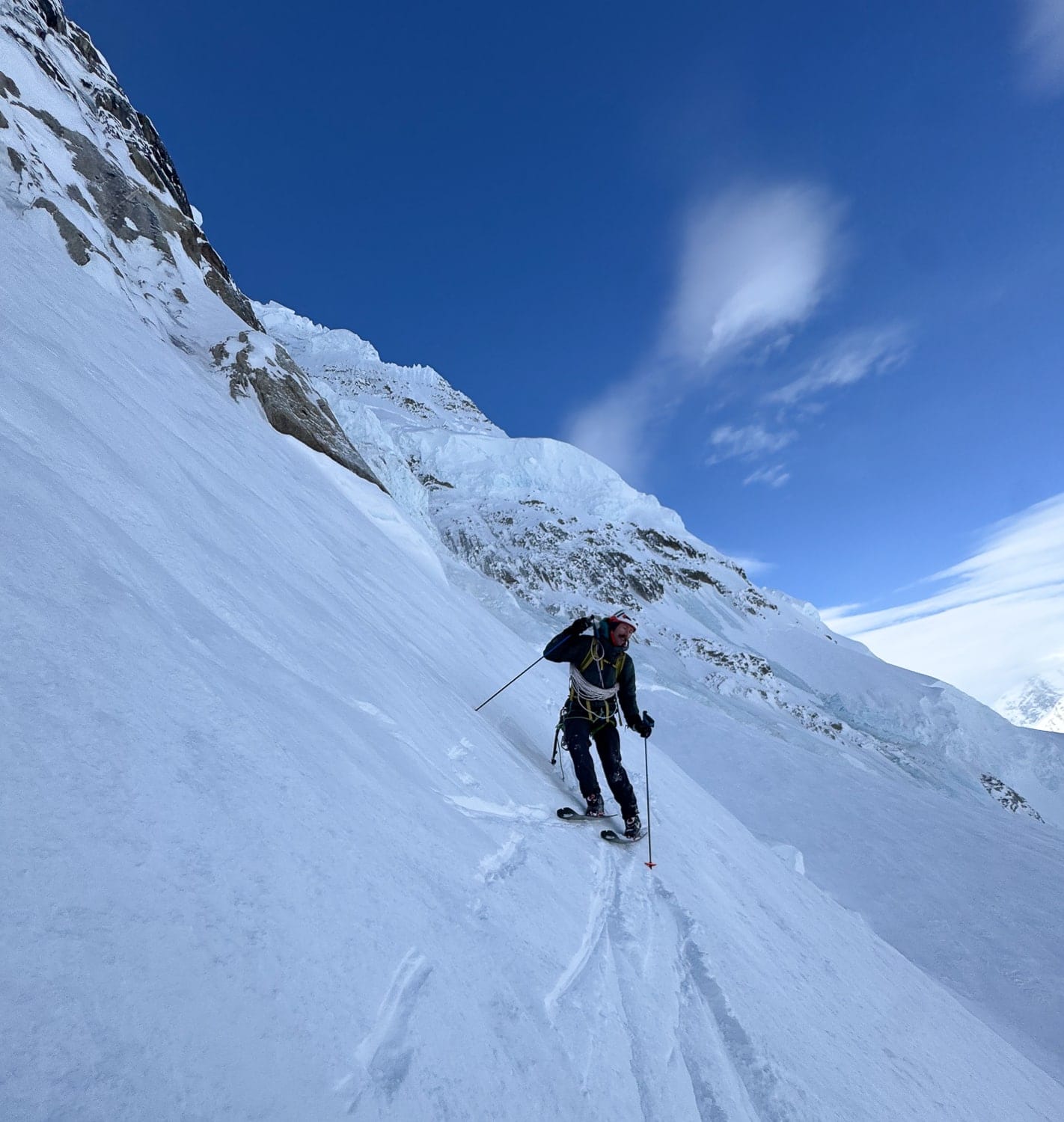
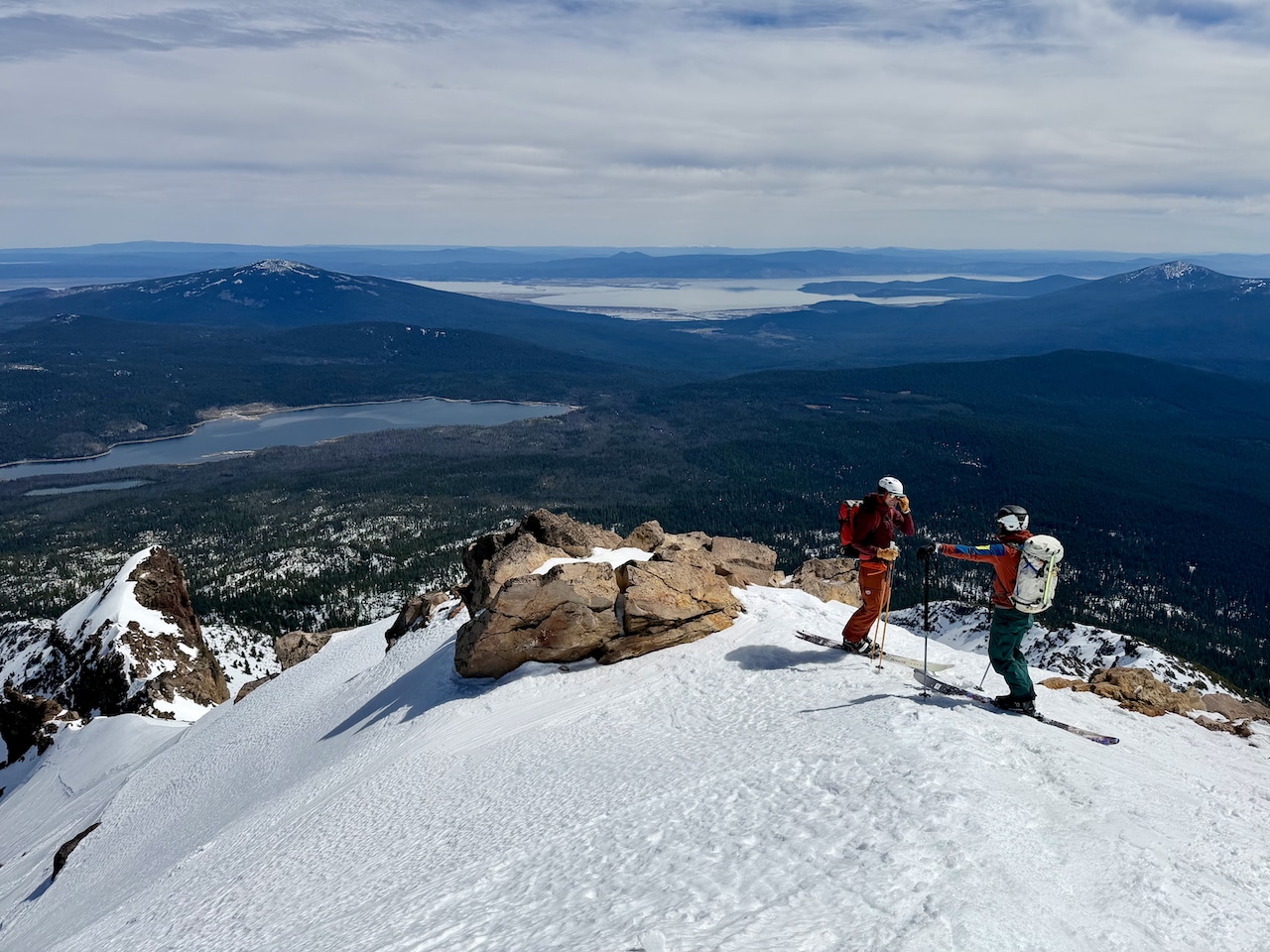
Somewhere on the slopes of Mount McLoughlin, on Easter Sunday, you begin to understand why that matters. Above a landscape that winter has only half-heartedly attended to, linking together a sequence of turns that would not withstand obtuse scrutiny but feel, in the body, undeniably correct, clarity arrives.

Telemark skiing, it is often said, is dying. Slipping, quietly and with minimal resistance, toward the margins of a sport that craves certainty. Fixed heels. Hard edges. Outcomes that can be measured, shared, and improved.

And yet, on 166 centimeters of fish-shaped contrarianism, dropping knees like a malfunctioning metronome, it does not feel like an ending.

It feels like a refusal to give in.

Which, in its own small way, feels like freedom.

There are 5 to 8 inches of marginal spring “snow” in the forecast.

I will be out there in it, making poor telemark turns with great enthusiasm.

You are, of course, invited.

Responses

  1. Peter Vordenberg

    Bravo!

    1. Barry Wicks

      Thanks Pete!

Leave a Reply

We are a reader supported independent project. You are beginning your free-article count on The High Route. Thanks for stopping by. Subscribe here. Already subscribed? Sign in.