
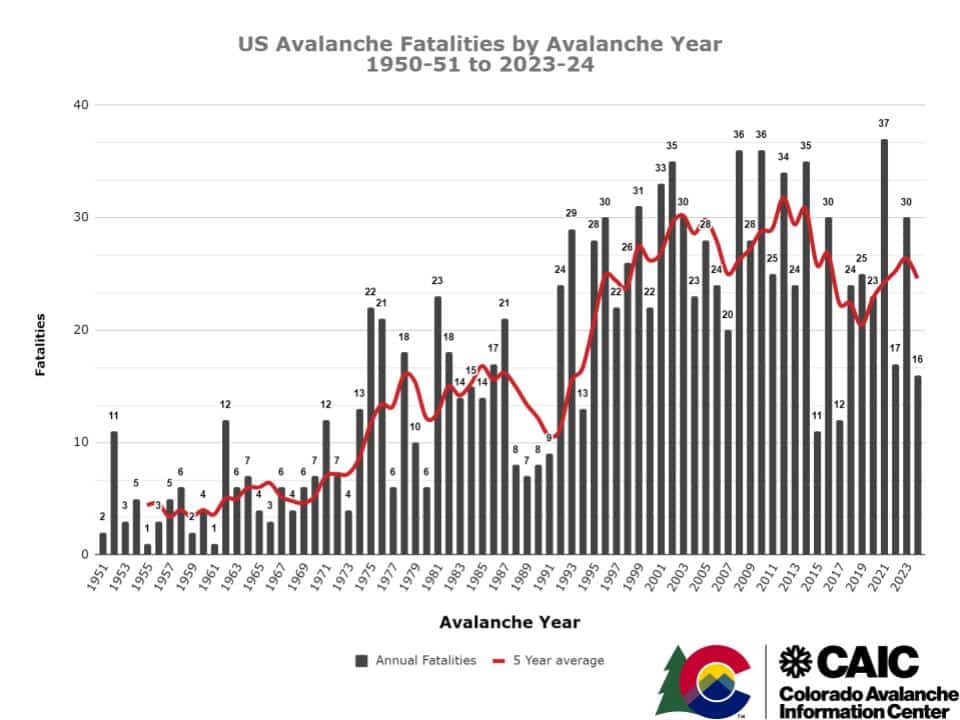
For a moment, we’ll suspend emotions to drill down on U.S. avalanche fatalities last season. The average season in the U.S. sees ~22 avalanche fatalities. Over the last decade, the Colorado Avalanche Information Center claims that on average 27 lives are lost annually in avalanches. Last season, which began in regional-specific fits and starts, saw 22 lives lost. Compared to a spike in U.S. fatalities between 2008-2013, which saw four years of 34 or more fatalities, generally, total annual fatalities have decreased since. Whether that decrease is due to increased awareness, better decision-making, or simply luck is not the task here. It is simply to run through the data.
Read up on DEMS here: Thinking about DEMS.
The data presented include total fatalities from 2020 through the most recent season.
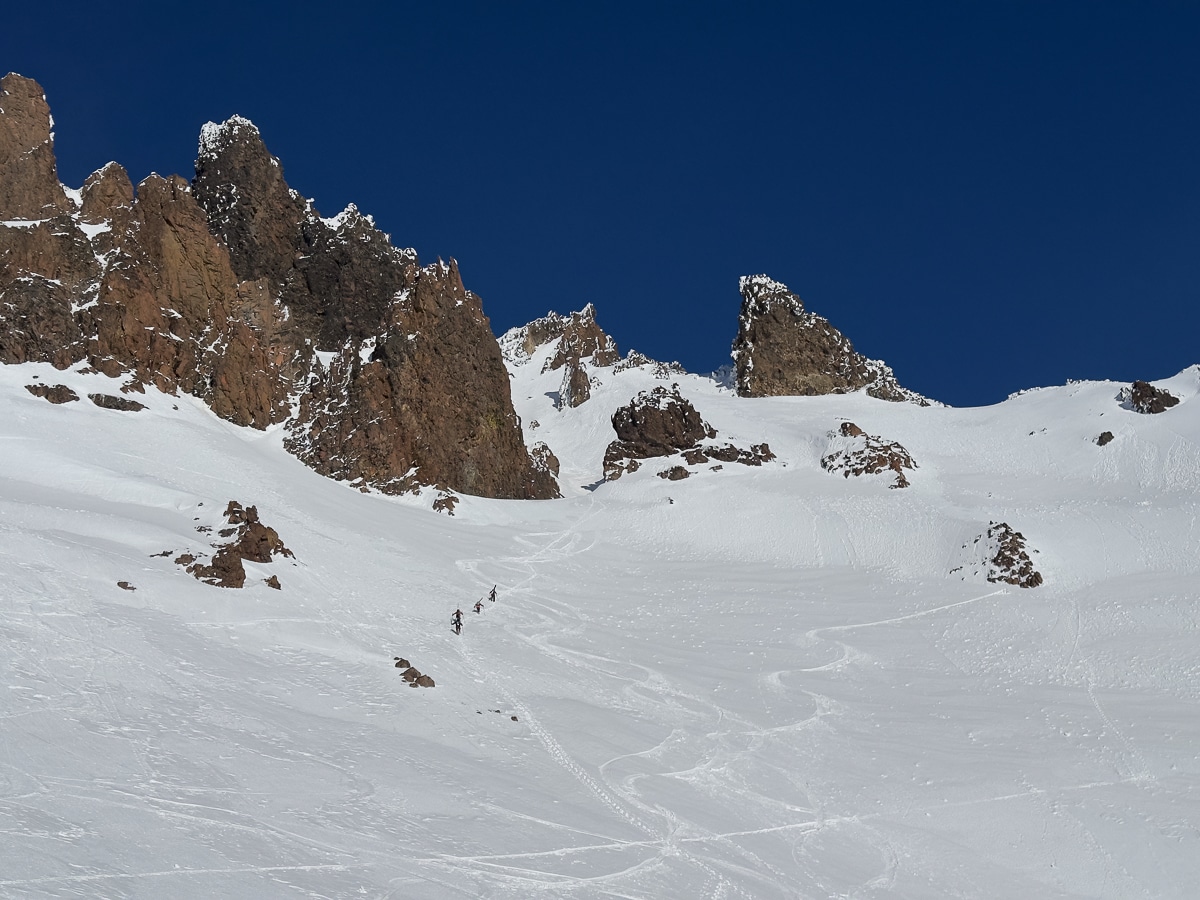
However, over the course of the season, as we examine some of the avalanche incident reports associated with the fatalities noted above, we will point out any relevant learning opportunities for THR readers. One notable incident that became a learning opportunity for some of us involved a January 4 avalanche on Wyoming’s Togwotee Pass. This time of year, long before snow falls, is an excellent time to slow down and reread educational materials. The piece we have linked is likely an exploration of what many of us should remind ourselves that while our digital mapping apps are incredibly helpful, when we use them in the field for real-world travel, there are many terrain nuances to consider. These apps use DEMS, or digital elevation models. onX describes DEMS as “digital representations of the height of the earth’s surface at any given location.”
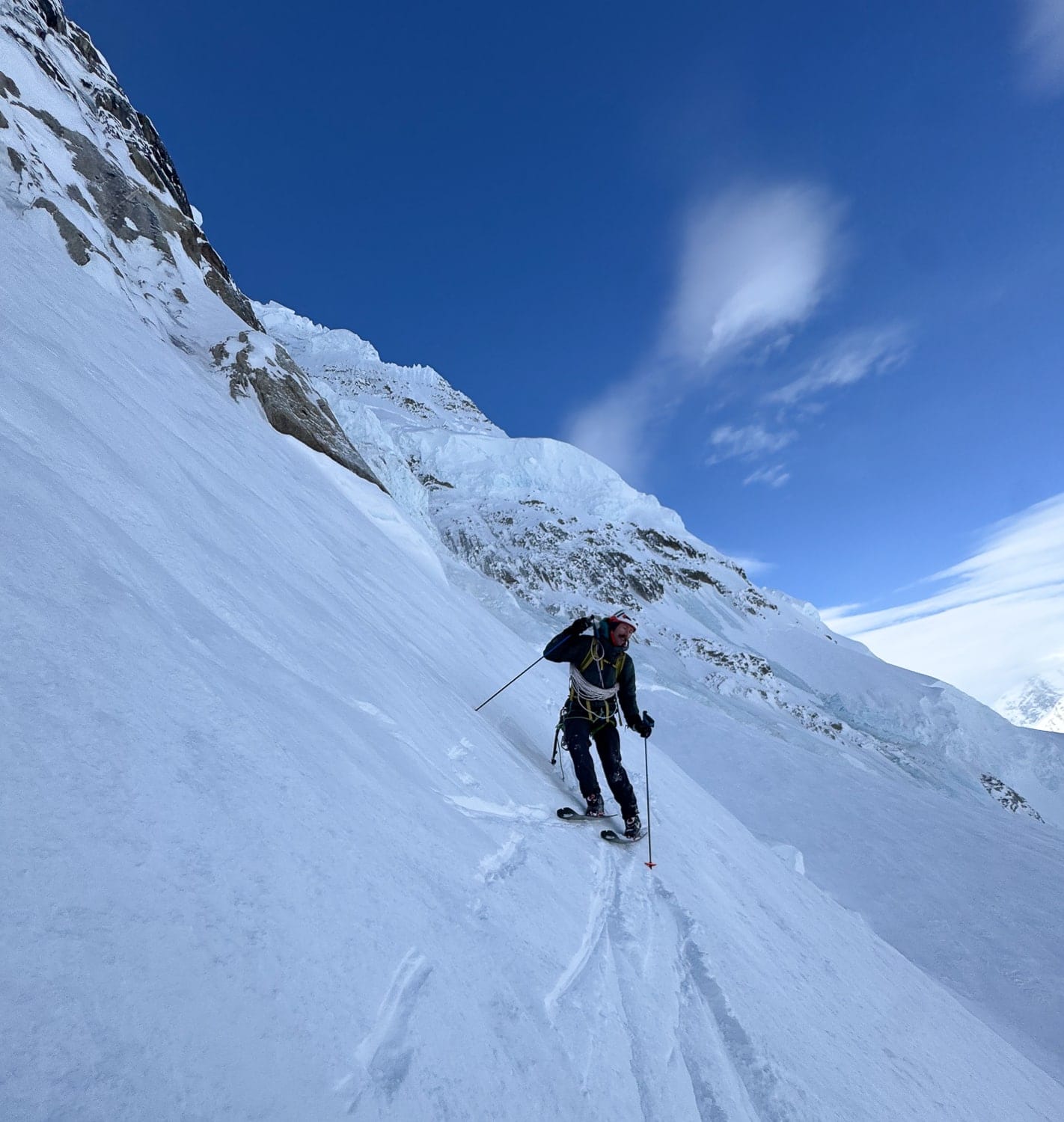
The one zone-specific incident we’ll briefly mention here is a fatality that occurred on Denali this past spring. You can find the accident report here. A snowboarder and skier were caught while descending Rescue Gully—the skier was fully buried. Rescuers responded, located the buried victim within 9 minutes, and began CPR. According to the report, “CPR was initiated but discontinued after forty minutes due to traumatic injuries and no pulse.”
Denali, as we’ve written before, is increasingly becoming a skier’s mountain. We’ll periodically present Denali/big mountain-specific stories so all of us can be better prepared for the eventualities in the more remote places some of us visit from year to year. Consider this a callout. If you would like a particular topic discussed as it relates to Denali, or big mountain skiing/riding, generally, please send an email or leave a comment below.
Leave a Reply
You must be logged in to post a comment.