We have reported in the past on community-based efforts to establish backcountry zones with designated radio channels to facilitate group-to-group communication. The longest-standing program, as far as we know, is the Telluride Backcountry Radio Program. What began as a modest effort has expanded into nearly 10 channel-specific zones and broad community buy-in.
Read up on the Telluride program: 10 years on.
Lake Tahoe is the latest community to initiate a similar program, with South and North zones/channels, respectively. The premise behind these radio programs is simple: establish agreed-upon zones and channels so that one group within a specific zone can listen in on other groups and, if necessary, communicate with them. It can be a good method for gaining a better understanding of human traffic within a zone and which lines, ridges, approaches, etc., may be populated by ski/ride tourists.
This radio initiative has been a grassroots community effort. Jamie Morgan is a longtime local tourer who believed there was a need. Chris Haagen, the director of the Tahoe Backcountry Ski Patrol, which, as its name suggests, is a non-profit providing patrols and education in the Tahoe/Truckee backcountry, said his organization saw the benefits and got on board. Through a collaborative process that included community meetings with stakeholders, a plan was developed. Unlike the community radio zones, for example, in Telluride and the Wasatch, which consist of a handful of discrete zones served by a unique FRS channel and code, the Tahoe/Truckee region is broken into 23 zones. Although this region is a web of private land touching public land, the zones, as mapped, lie on public land accessible via a trailhead. Further complicating the scene, there are major roads and an Interstate to consider. A working group devised parameters to outline the respective zones and set to work. As with other similar programs, natural features like ridges and drainages became defining characteristics.
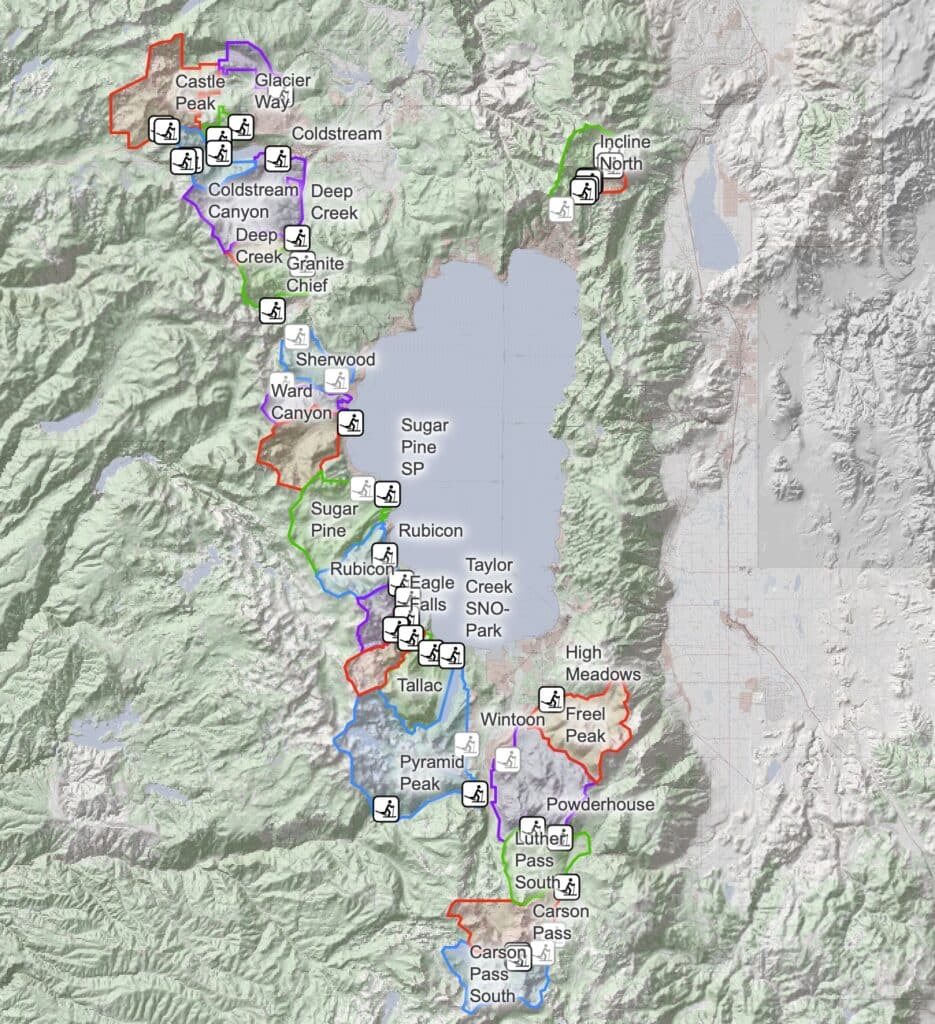
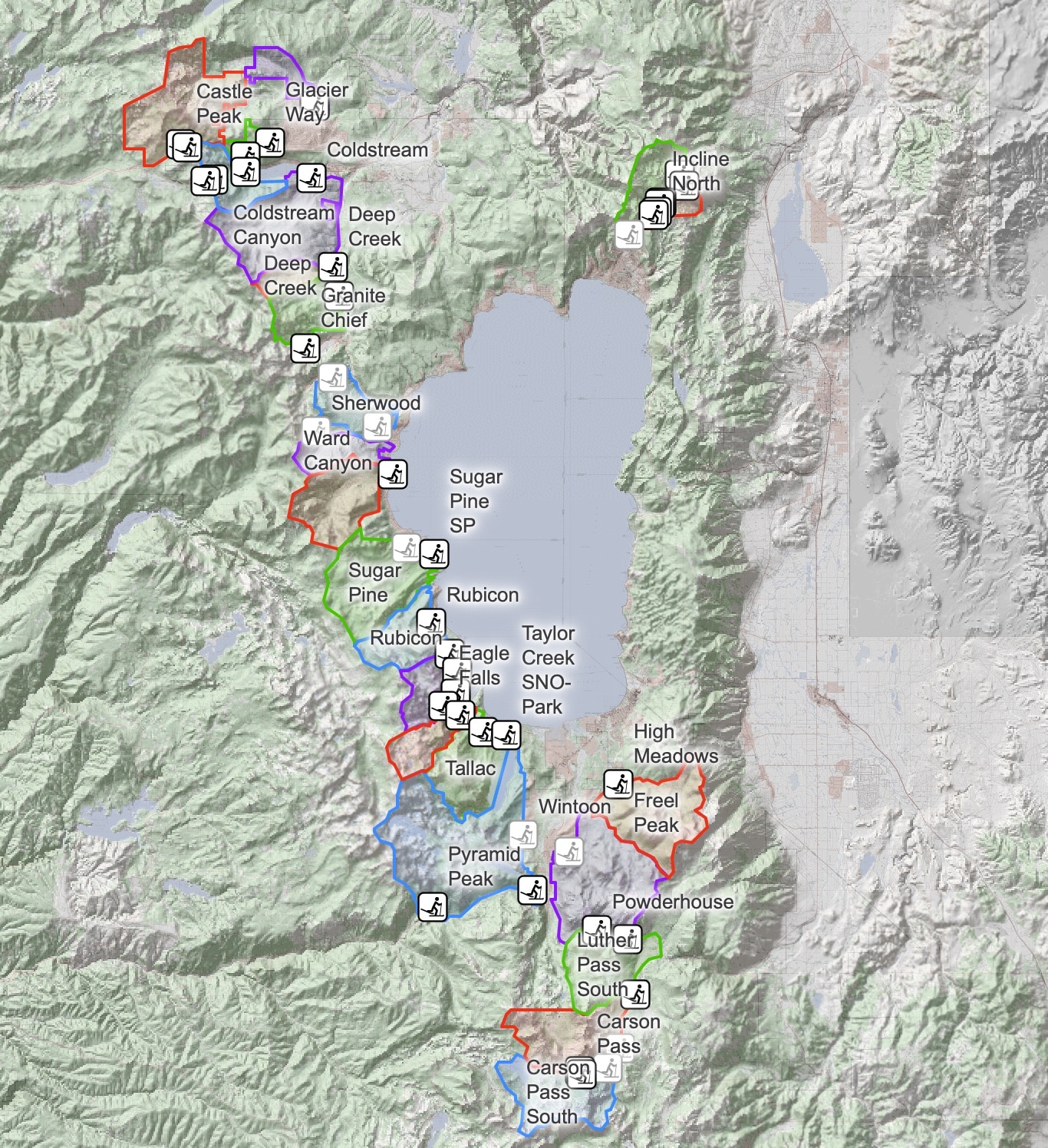
Allocating zone-specific channels became a bit of a puzzle, with a solution that involved non-adjacent zones sharing the same FRS channel and code. Zones sharing a common channel and code are miles apart and are protected from radio interference by distance and natural features. In other words, adjacent zones do not share the same channel and code. If you look at the zone map, only four channel/code combos are in play, which should keep the channel changing and setting to a minimum, depending on the day’s respective zone. (The four colors outlining the zones correspond to a specific channel/code combo. All four channel/code combos are high-powered channels.) Currently, volunteers are posting signage at the main access points for each zone, notifying radio users of the common channel/code.
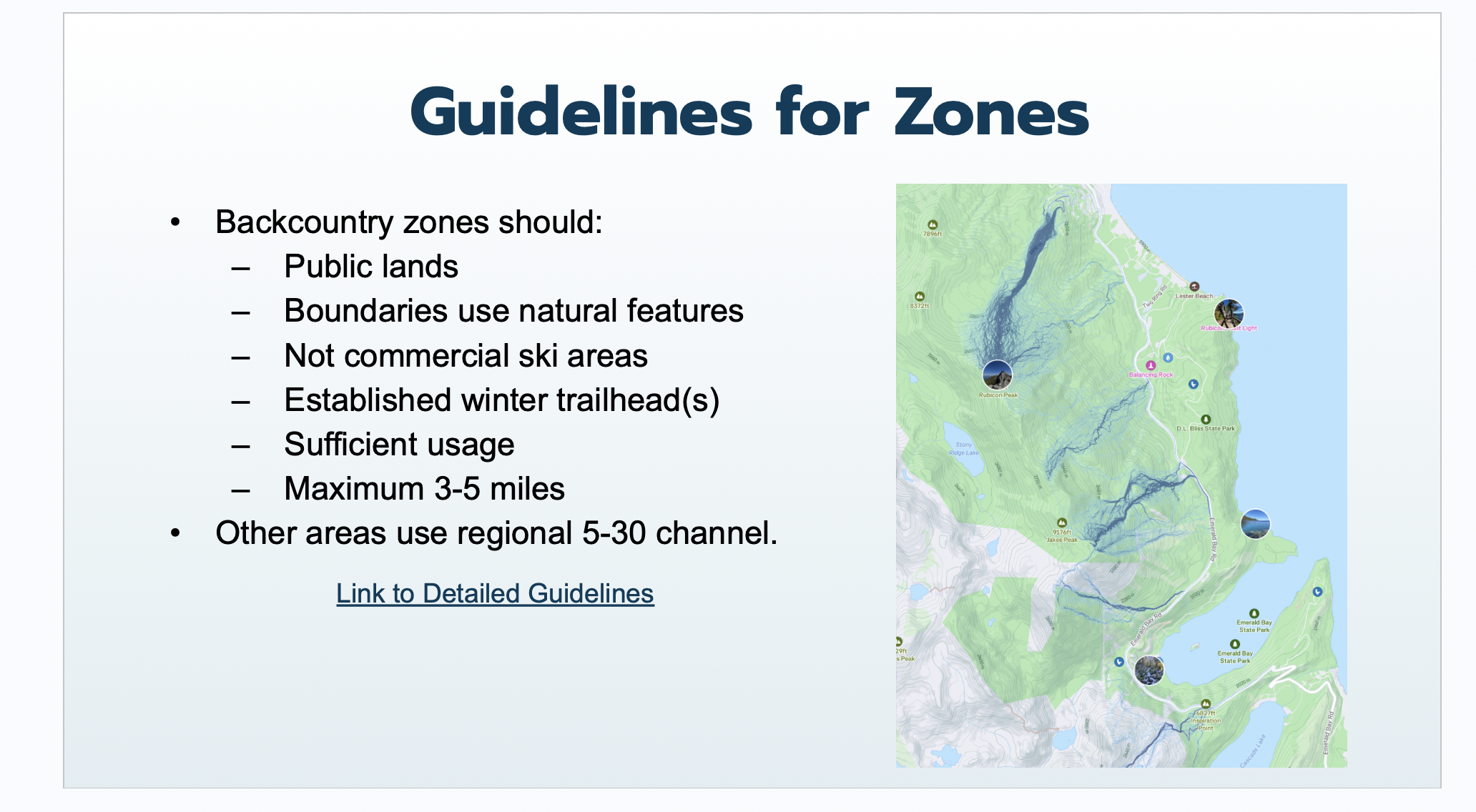
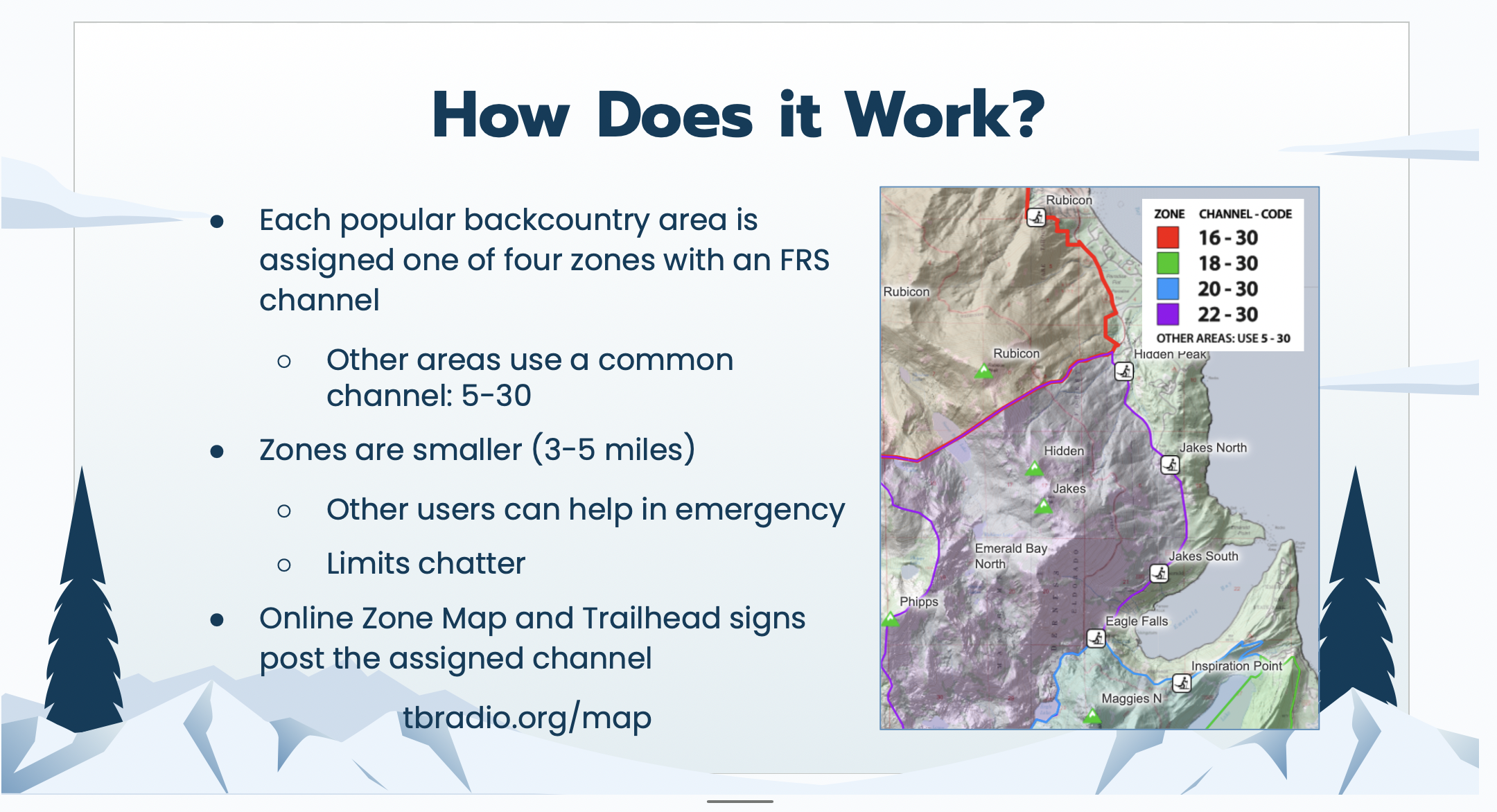
Morgan also explained that snowmobilers have adopted using the 5-30 channel/code as a default for inter-group radio communications. For simplicity and consistency, the Tahoe Backcountry Radio Program has adopted 5-30 in areas outside its designated backcountry zones.
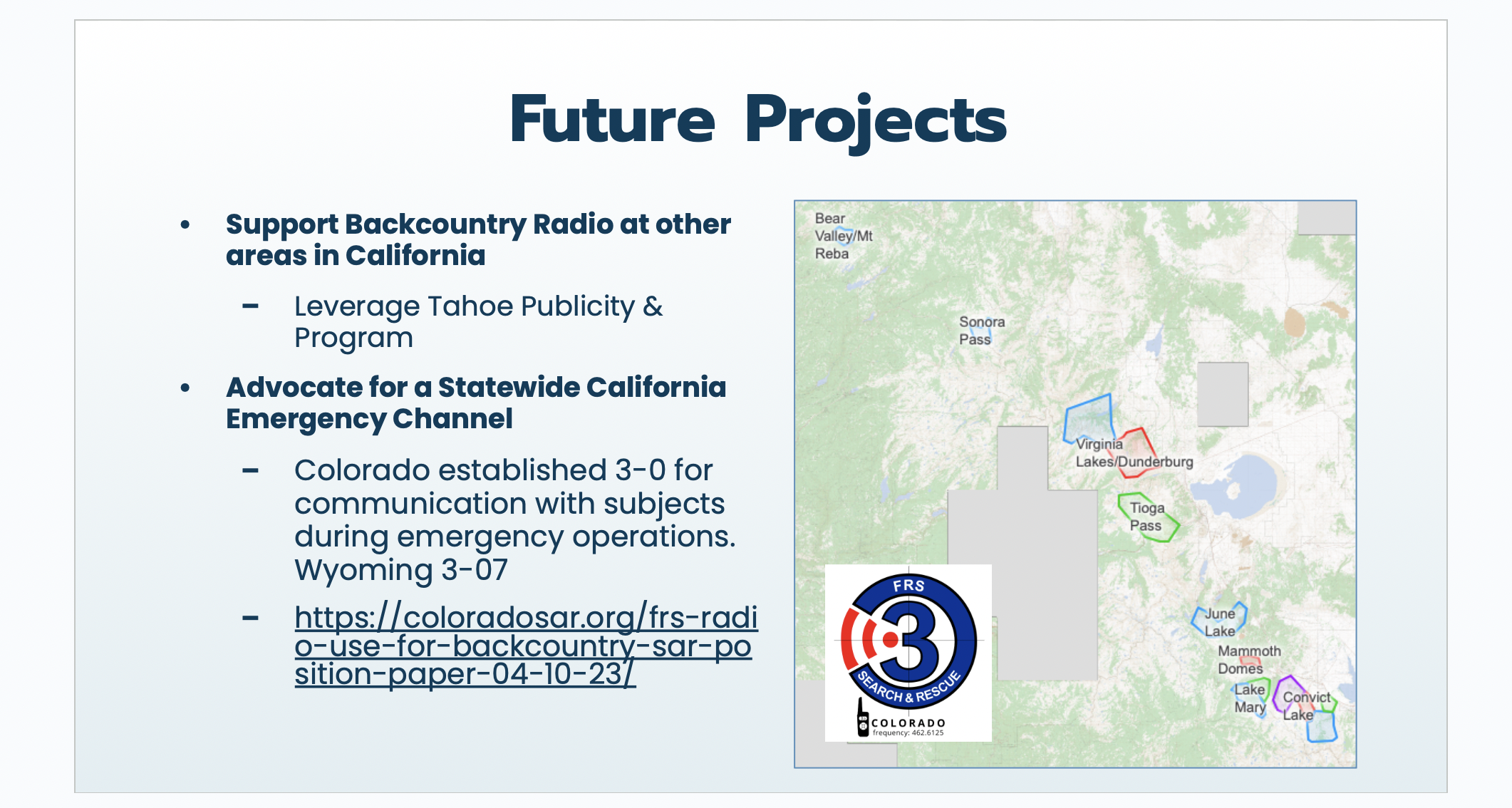
During an interview last fall, Haagen noted that the community channel effort is a move toward building a network for those who choose to opt in, not a mandate that backcountry users must use or purchase a radio. However, the group plans to build on its momentum and help other communities in the Sierra with their own community radio programs.
Leave a Reply
You must be logged in to post a comment.