
It isn’t often you get to write about a significant life-changing occurrence. And as soon as I finish writing that, I realize how it sounds. That now I am about to tell you about the snake oil that grew my hair back, my relationship with Our Lord and Savior, and the little investment opportunity I’m going to let you in on. But no!
When I was 16, I badly tore the cartilage in my knee. I’ve had two surgeries, and if there is a next one, it will be a new knee. This knee has hurt me to some degree ever since—at worst, it hurts all the time, and for the past twenty years, it has always hurt to walk. Today, I am walking and hiking pain-free. The knee will never be perfect, but the improvement has been a very pleasant surprise.
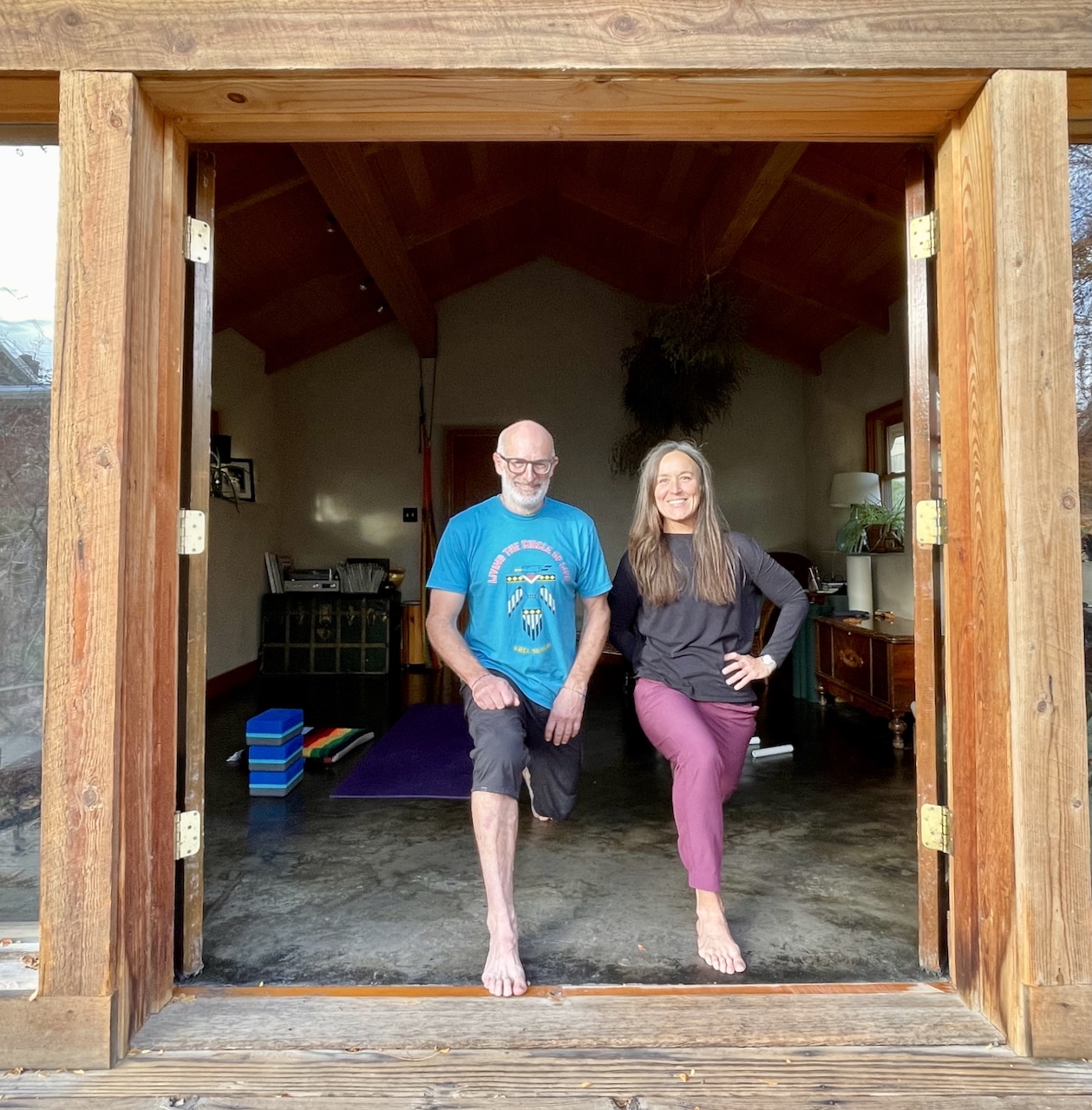
This fall, I started (here it comes…) an 8-week yoga series, meeting once a week with my friend Lesli. The sessions were really challenging. I am by any measure bad at yoga, any measure but one. I get into it. I am challenged, and I try my best in each pose, movement, and session. And I stuck with it. Consistency has been key. And damn!
There is no sales pitch coming, no app to download, and no QR code to click. I just never thought I’d walk without pain, and I think that offers some hope to others who are dealing with similar things, or who just want to maximize their mountain craft.
I got to know Lesli Shooter when we both worked for the U.S. Ski Team. She was the head physiologist for the Alpine team, and I was a coach for the XC team. This was around 2006, so when you think U.S. Alpine Team, picture a lot of Olympic medals. Lesli will not talk about herself here or basically at all, but her role in this was significant. She worked with Olympic and World Championship medalists and was then hired away from the Ski Team to work for Red Bull, where she worked with a diverse set of athletes, even from NASCAR and Motocross.
Since that time, she has set out on her own, earned her 200-hour yoga teacher certification, become a board-certified positive psychology health and wellness coach, and has over 25 years’ experience working with elite and less-than-elite athletes, including everything from physiologic testing to training to yoga and wellness programs.
I thought, especially given her background with Olympic alpine skiers, that an interview with her might be of interest to the THR community, but what resulted was more like a paper in its own right. Just like the yoga, we got into it!
***
Pete V: How does yoga help treat knee and other seemingly chronic pains so effectively?
Lesli Shooter: Chronic pain is rarely a localized failure of a single joint, but rather a systemic communication breakdown between the brain and the body. Addressing these issues effectively requires looking beyond the “broken part” to refine the intricate dialogue that dictates how we move and hold tension on the mountain. By integrating biomechanical precision with nervous system regulation, yoga resolves the root causes of dysfunction that traditional stretching often misses.
- Neuromuscular Re-mapping: Optimally aligned, mindful movement signals safety to the nervous system, dissolving the protective guarding patterns that often outlast an original injury and limit range of motion.
- Biotensegrity: Rather than treating the knee in isolation, optimize your entire kinetic chain. For example, freeing the hips and mobilizing the ankles to offload the mechanical stress that can cause joint wear.
- Systemic Healing: By activating the vagus nerve through specific breathwork, we lower systemic inflammation and cortisol, shifting the body out of a stressed state and into one of active cellular repair.
Perspective: Performance is fluid communication throughout the body. When we align the body’s architecture and quiet the nervous system, chronic pain often vanishes because the body moves more optimally aligned and feels safe enough to move with power again.
Pete V: How does yoga help people ski better?
Shooter: Skiing is essentially a dance between external forces and internal structural integrity. While traditional strength and power training lays the foundation, yoga refines individual alignment, body awareness, and decision-making, helping ensure that the power generated is transferred efficiently to the edge of the ski.
- Dynamic Proprioception: Yoga cultivates heightened body awareness and body map; this allows for micro-adjustments in weight distribution and edge pressure that may be invisible to the eye but essential for navigating variable snow and difficult terrain.
- Functional Core Integration: Beyond simple bracing, yoga develops a supple, reactive core that maintains pelvic neutrality. This helps protect the lumbar spine during high-impact compressions.
- Contralateral Power Transfer: Success in a diagonal stride depends on the body’s ability to transfer force diagonally from the opposite arm to the opposite leg. Yoga refines the oblique and deep core stabilizers that act as the bridge for this power.
Perspective: Excellence on the mountain can be found in the space between tension and relaxation. Yoga teaches the body to remain calm and organized under high physical load, helping transform effort into flow.
Pete V: How does yoga help people avoid injury?
Shooter: Yoga helps people avoid injury by improving how the body absorbs, distributes, and adapts to load through precise movement patterns, greater tissue tolerance, and stronger support systems around the joints. It also enhances body awareness and supports nervous system regulation, so movement stays coordinated rather than reactive at higher speeds, forces, and fatigue.
- Movement Quality: Yoga promotes stable alignment, develops range of motion, and the neuromuscular control to own that range. This helps prevent hypermobility without control or stiffness without strength, both of which can increase injury risk.
- Tissue Quality and Resilience: The combination of active flexibility work, controlled breathing, and parasympathetic nervous system activation promotes better tissue healing, reduces chronic inflammation, and prevents the accumulation of fatigue that precedes most injuries.
- Enhanced Proprioception and Body Awareness: Regular, consistent practice trains your ability to sense joint position and movement quality in real-time, allowing you to self-correct before compensations lead to overuse injuries or acute trauma.
Perspective: A well-structured yoga program serves as both a preventive platform and a performance enhancer, helping lower injury risk while maintaining or improving ski-specific performance.
Pete V: How does yoga help people recover faster?
Shooter: Yoga can meaningfully accelerate tissue repair, nervous system regulation, and metabolic waste removal. Through targeted breathwork, intentional movement, and parasympathetic activation, yoga creates the physiological conditions that allow the body to rebuild stronger and faster between training sessions or competitions. By shifting the body out of a high-sympathetic, stress-driven state and into a parasympathetic “rest and repair” mode, yoga supports circulation, balanced muscle tension, and the flushing of metabolic waste, which help conditions for healing, adaptation, and sustained/improved performance.
- Active Mobility and Balanced Tension: Active yoga-based mobility and myofascial release-style work reduce adhesions and stiffness while restoring balanced tension. This can gently prevent restrictive scar tissue, release excessive tightness, wake up underused muscles, and improve posture and joint mechanics so the body is not fighting itself during recovery.
- Nervous System Regulation: Intentional breathing helps activate the vagus nerve, lowering cortisol and improving heart rate variability, signaling the brain to prioritize cellular repair and hormonal balance over stress management.
- Metabolic Waste Removal: Enhanced circulation and lymphatic drainage through controlled movement and specific poses promote blood flow to fatigued tissues and help clear metabolic waste products that accumulate during intense activity.
Perspective: When recovery includes yoga, the body actively reorganizes, repairs, and recalibrates, so athletes return to the sport clearer, stronger, and more resilient.
Pete V: How much time does it take to benefit, both in session time and over a period of time?
Shooter: The timeline for progress is deeply individualized based on each person’s unique history and goals; the benefits of yoga begin the moment you step onto the mat and deepen as your physiology adapts. From a performance science perspective, we are looking to achieve a “compounding interest” effect, where consistent input leads to a fundamental shift in how your nervous system and tissues respond to the demands of skiing. To create lasting change, I recommend a structured “onboarding” phase to allow your physiology to integrate the effort.
- The Foundation Phase (6–8 Weeks): Committing to at least one session per week for two months is a good timeframe for neuromuscular adaptation. This duration allows the brain to map new movement patterns and ensures that the initial gains in mobility and stability start becoming the body’s new baseline.
- The Physiological Deep Dive (40+ Minutes): At the beginning, longer sessions are essential to overcome the initial physical resistance and allow the nervous system to fully settle into a parasympathetic state. This duration provides the time needed for systemic downregulation and meaningful tissue remodeling.
- The Maintenance & Integration Shift: Once a pattern of consistency is established, your practice becomes highly adaptable. Progress can be maintained with a weekly foundational session or transition to more frequent, shorter “tune-ups” that fit the specific demands of the training cycle or the ski season.
Perspective: Consistency is the bridge between a temporary stretch and true transformation. Allow the body time to adapt, establish a solid weekly foundation, and then let the yoga practice evolve (e.g., longer sessions or shorter, more frequent ones) as a flexible tool that intelligently supports changing training loads, recovery needs, and life demands.
Pete V: What is your recommendation for people looking to get these benefits? Should they pick a class and go, or find a one-on-one teacher in person or online, or what is the best way most people can get into it?
Shooter: Choosing the right entry point into yoga is an individualized process that should be tailored to everyone’s unique athletic history, current injury status, and movement knowledge. To ensure the practice enhances rather than hinders performance, it is important to work with an instructor who respects the unique biomechanical demands and structural limitations of a mountain athlete. This intentional start allows you to build a foundation of safety and awareness that will serve as the backbone of your practice for years to come.
- One-on-one (in person or online): Ideal for athletes with current or past injuries, complex histories, or performance goals that require precise, sport-specific progressions and careful monitoring of movement patterns. A yoga coach with a strong understanding of anatomy, sport demands, and injury patterns can adapt the yoga to support performance rather than reinforce compensation.
- General studio or online classes: Best used once a practice is established with body awareness and a basic understanding of safe alignment, so you can self-adjust, skip poses that are not appropriate, and protect past injuries.
- Value Autonomy Over Aesthetics: Avoid environments where forcing a pose is encouraged; instead, look for instructors who promote internal body awareness and empower you to make the necessary adjustments for your unique proportions and limitations.
Perspective: The best way to start a yoga practice is the one that prioritizes your longevity. With an expert guide, you can establish an informed, healthy practice and transform yoga from a generic exercise into a precision tool that evolves with your needs and the context of your season.
Pete V: What did you take away from your time with the US Team that you use now?
Shooter: My time with the U.S. Ski & Snowboard Team was foundational and profoundly shaped the way I support every client in my practice today. It was there that I saw firsthand how elite performance is built on the relentless pursuit of nuance rather than the application of generic protocols. I learned that even among athletes of the same sport, gender, and age, the physiological and psychological needs are remarkably distinct. This “athlete-first” environment taught me that true success comes from translating complex data into personalized experiments that resonate with the individual’s unique experience. My mission is to bring that same level of high-performance precision and hyper-individualized care to every person I coach.
- Radical Individualization: Working at the highest level has shown that two athletes in the same discipline often require different strategies to succeed, making a “one-size-fits-all” approach a barrier to their true potential.
- The Nuance of Recovery: I discovered that recovery is the most variable factor in performance; by refining highly specific, individualized regeneration protocols, we saw massive, indirect gains in the athletes’ output on the snow.
- Effective Science Translation: I learned about the unique contexts and demands of each sport and athlete, and I transformed rigorous scientific data into actionable insights and experiments that could be applied immediately in the field.
Perspective: High-performance science is most powerful when it is humanized; by prioritizing the individual over the protocol, we create a bespoke environment where an athlete evolves with more intelligence, intention, and purpose.
Peter V: If you could go back to the U.S. Team, what would you bring to the work you did with them?
Shooter: Returning to the U.S. Team with the wisdom I’ve gained since would allow me to bridge the gap between high-performance data and the profound, regenerative power of yoga. While my previous work focused heavily on the recovery, I now recognize that a yoga-informed approach is the “missing link” for optimizing an athlete’s longevity and neurological resilience. By collaborating across departments, I would build a nuanced wellness program that meets each athlete exactly where they are, helping facilitate a smoother journey to where they want to go.
- Athlete Education and Autonomy: Enhance body knowledge and self-regulation through breath, movement awareness, and nervous system control, giving athletes portable tools they can use anywhere.
- Integrated Individualized Recovery Protocols: Personalized movement and breathwork strategies that address unique, individual, and specific biomechanical needs, injury history, and recovery demands within their training cycle
- Interdisciplinary Collaboration: Complement and enhance the work of strength training, physical therapy, and mental performance, creating a unified approach where recovery strategies amplify rather than compete with other interventions.
Perspective: At the elite level, the smallest margins can make the biggest difference; by weaving the intentionality of yoga into the rigors of sports science, we create a more resilient, high-powered athlete who moves with effortless precision.


Leave a Reply
You must be logged in to post a comment.