
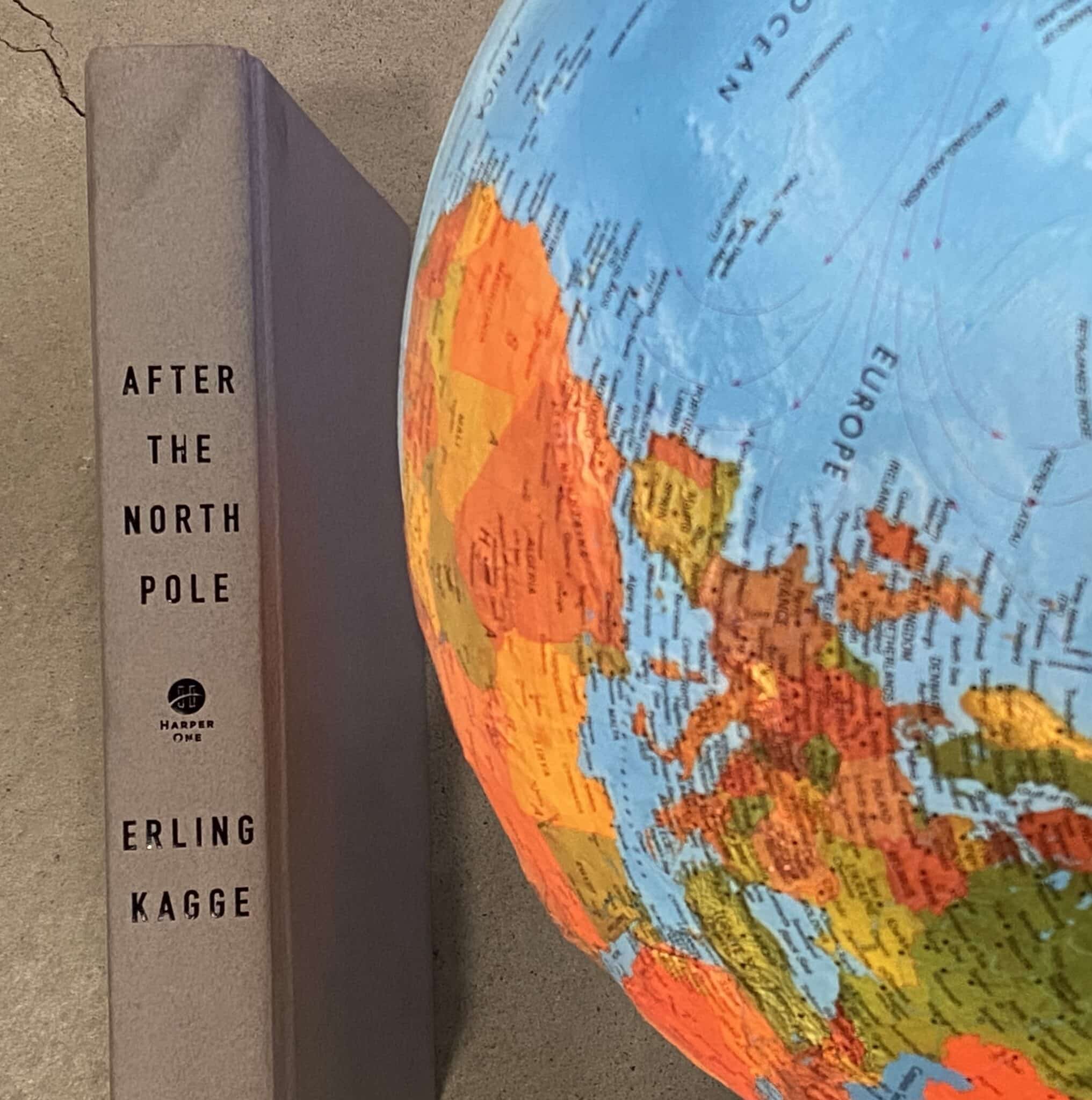
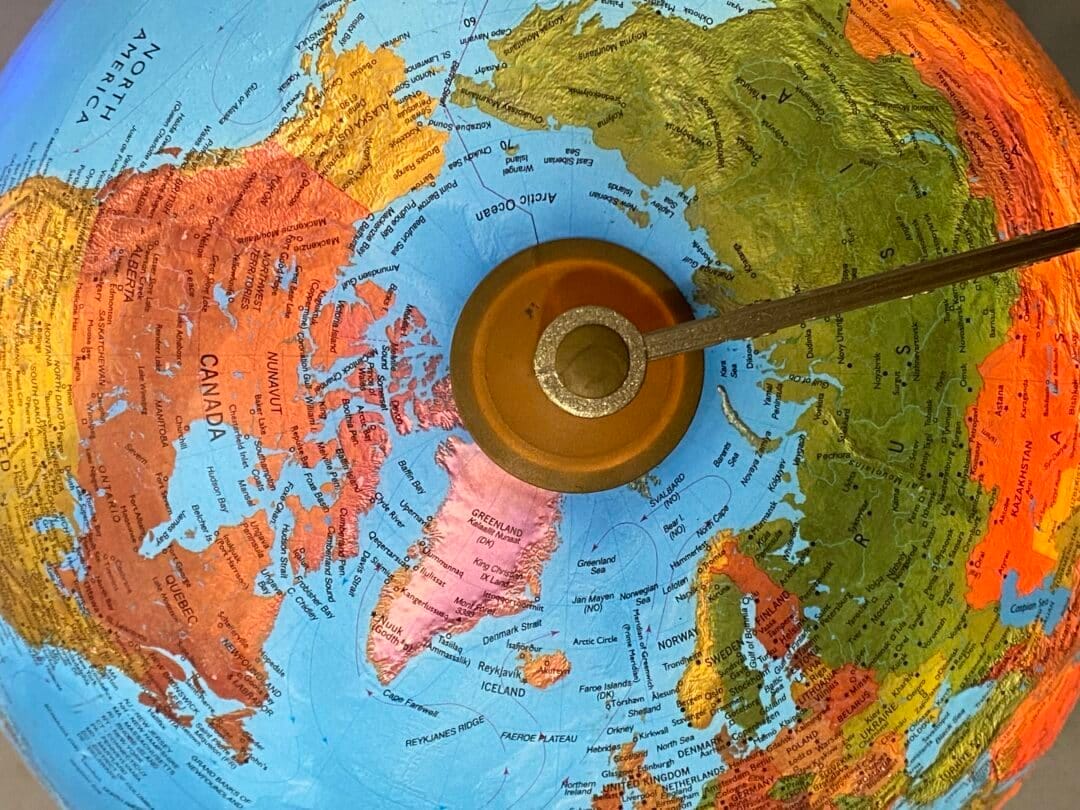
Erling Kagge and his buddy Børge Ousland went for a pretty epic ski traverse. They skied from Ellesmere Island to the North Pole in 1990. They dragged everything they’d need, no caches, no support, or dogs. The ski took 58 days. The temperature was -62 Fahrenheit when they started.
Erling Kagge wrote a book about this voyage called After the North Pole, but most of the book is not about their trip. Instead, it is about the history of our human relationship to the North Pole. The written history begins around 1500 BC with the Hindu scripture called the “Vedas”. Prior to the Vedas being written down, which began around 1500 BC, they had been passed down orally for who knows how long. Within the Vedas is mentioned the idea of the North Pole, as speculated by people based on their observations of the night sky. To me, that is some pretty amazing speculating. There was more and substantially less spectacular speculation after that, but no shortage of curiosity and courage.
Kagge takes us through this history, from Aristotle’s day through Zoroastrian Sufi mystics, Magellan, Ptolemy, and Mercator. And then into all the expeditions to find the pole that began over 500 years ago and stretches through to the present. Throughout this history lesson, Kagge blends his own story with the story of this ski-to-the-pole. Kagge’s telling exudes a very Norwegian form of macho stoicism. He wants us to know what he did, and that it was damn hard, but also that it really wasn’t no big deal. Even though it really kind of was. This makes the writing a little dry at times, which is actually quite fitting.
Recently, I saw Guillermo del Toro’s modern cinematic take on Mary Shelly’s book Frankenstein. It begins on the polar ice. This movie is incredibly vivid and appropriately grotesque. Themes such as ambition, abandonment, nature and nurture, and man vs. nature offer an interesting perspective from which to view polar exploration, and by extension, all exploration, or even just adventure in general.
Shelly’s Frankenstein came out nine years before William Parry sailed toward the North Pole. In Frankenstein and Kagge’s book, the subject of motivation seeps eerily to the surface. There is a lot of suffering. Very little success. A lot of death. And a lot of bravery. And in After the North Pole, as we enter the age of American, English, and Norwegian polar exploration, I began to tire of all their insufferable suffering. I was reminded of another book, The Tower, reviewed here. In it, Kelly Cordes examines Cesare Maestri’s claimed first ascent of Cerro Torre. Similarly, as the race to the pole heats up, all of a sudden, people are lying, putting each other down, and doing all kinds of crazy stuff that probably didn’t need doing for reasons that do not seem entirely healthy. And it gets a little tiresome. Sometimes our heroes are a bit too much to take. Did you know, for example, that Fritjof Nansen, the Norwegian leader of the first ski crossing of Greenland in 1888, and Nobel Laureate, took nude selfies? Well. He did. I put the book down for a month or so at this point. It started to feel like I was being dragged along toward the pole again and again, and the company, for how amazing they were, was a bit much to hang out with.
Relative to Mary Shelly, Kagge explores motivation with a pretty light touch. Some of these stories, of guys living out the winter in total dark,, lying in a frozen cave, with hungry polar bears snuffling around outside and nothing to eat but old walrus skin, and I mean, for months, are real testaments to what is humanly possible. Yet, “the why” was hardly a theme. The title is “After the North Pole,” but maybe before the North Pole is most interesting.
I will leave the book for you to read, but I should point out that there is a section called “Fathers and Sons.” I guess no surprise there, when your toes are frozen off, and you are shooting a pistol at a polar bear, father issues pop up.
What lights a fire in us, and what, from that vague but urgent drive, becomes our life’s design, is a big piece of the story of human history—also, our personal histories. And also, as we gain more and more power over our environment, our motives come to shape the evolving history of the very earth itself.
Maybe it is fine to leave it alone. We are out in the world doing things. And mostly the things we are doing are perfectly fine, if not totally sane. But everything we do has consequences, and now that our actions have the power to impact the seasons, the water, the very air we breathe, motivation is a topic as worthy of exploration as the poles, Mars, or anywhere else we feel compelled to go. In fact, motivation is where our explorations should always begin.
Leave a Reply
You must be logged in to post a comment.