
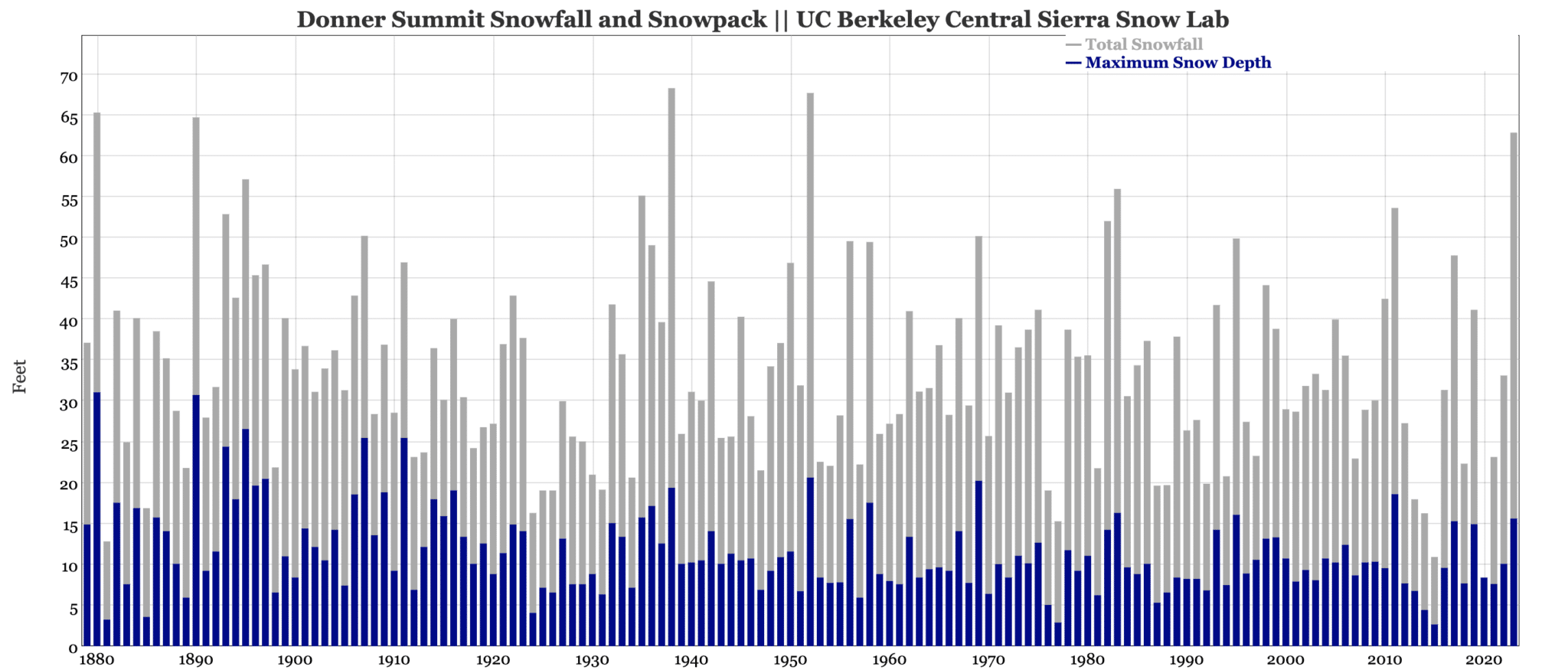
The Central Sierra Snow Lab (CSSL) posted a pretty, though alarming, graph on their social feeds yesterday, March 18th. See for yourself.
The dearth of snow in the West has found much of the winter in the region a make-do affair. For those of us who begrudge the start of trailrunning or mountain biking season, reliable spring skiing is a salve with their (sometimes) lack of crowds and snow stability. But begrudging is just a feeling, a sentiment, and hopefully not too all-consuming, while the forces of nature dictate our fate. On Monday, or was it Tuesday, too, the temps were unseasonably high. From Tucson and a record-setting earliest 100-degree day on record, to 63 degrees in Jackson Hole, and so on. It’s warm out there.
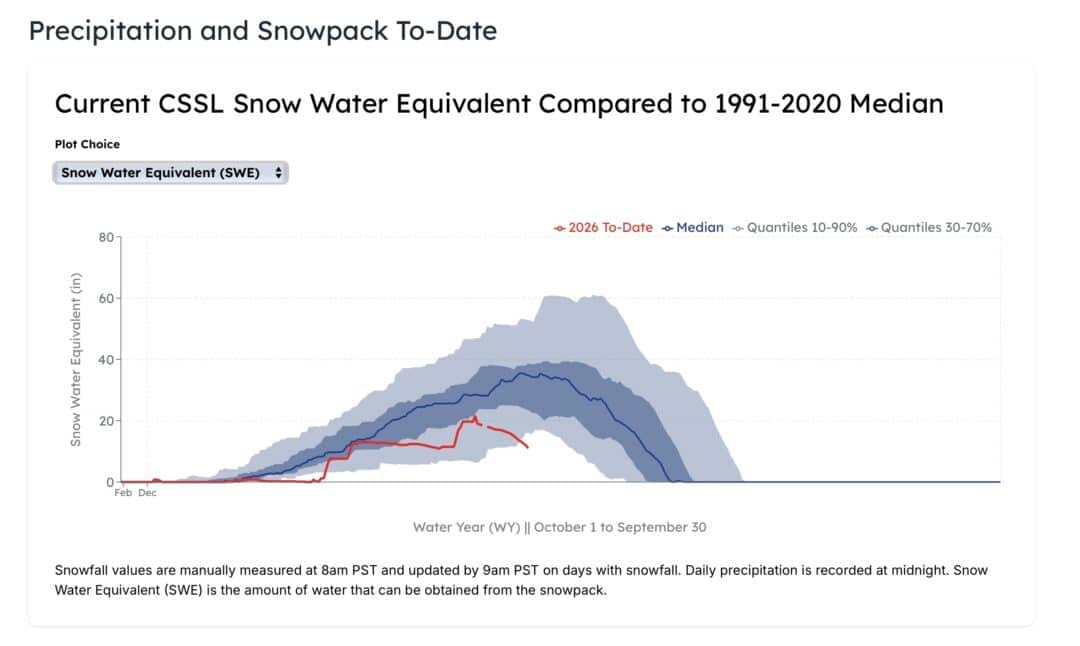
The CSSL’s post is alarming, for reasons we won’t dive into here. But it is indicative of a spring touring season in the West that will be fleeting unless, well, something unforeseen like mega-snow dumps happens. To put it bluntly, and this goes without saying, but warm temps bring meltoffs. The CSSL’s data is a solid reference point as it sits in the Central Sierra at a modest elevation (around 7,200′), generally, for the Sierra, in a zone that is known for pretty epic snowfall near Donner Summit. Below is a CSSL graph depicting total snowfall and max snowpack levels from 1879 through 2025. Below that is similar data, but running from 2000-2025. What makes this season so interesting, unusual, or even a bummer is that, while the max snow depth may not seem so alarming, the snowpack has been depleted at a high rate due to periodic warming events. (As noted in the IG post above from the CSSL.)
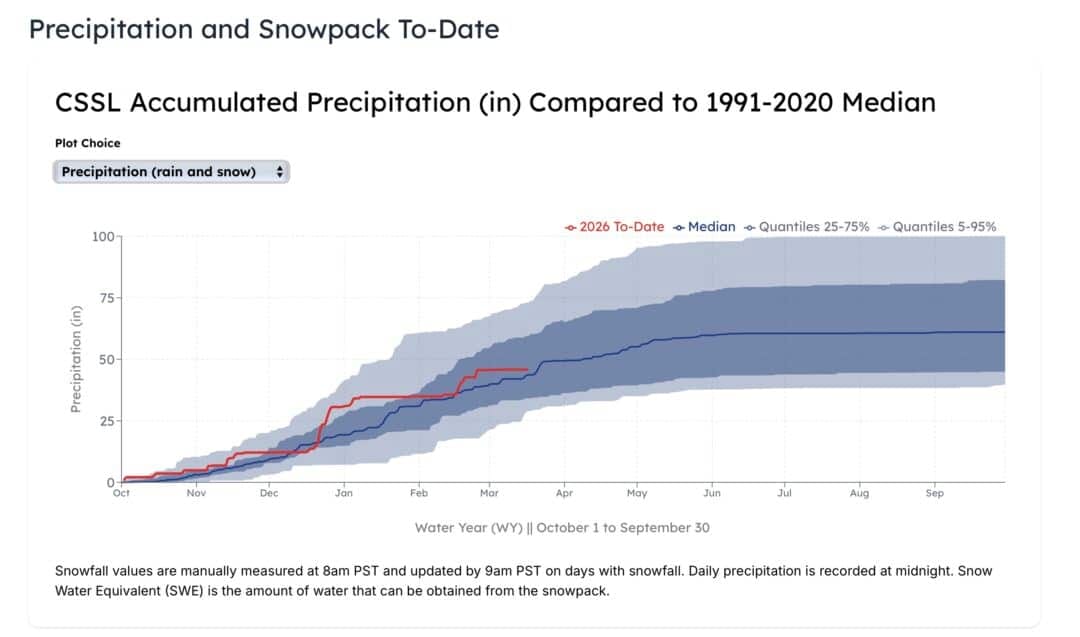
Overall, precipitation as measured by rain and snow is nearly aligned with the 1991-2020 median. But from a SWE perspective, which often is a good indicator of snow remaining on the ground, things look a bit differently.
The next screenshot (below) shows total snowfall data for the season. Not that this provides critical info, it at least gives the 30,000-foot view of what the season looked like in the low, mid, and High Sierra. Which is to say, given the information above about warmups and meltoffs and the business of local bike shops servicing bikes, places like the Eastern Sierra, a typical gathering ground for those seeking remote, steep skiing in the spring, may have to get after it lickety-split.
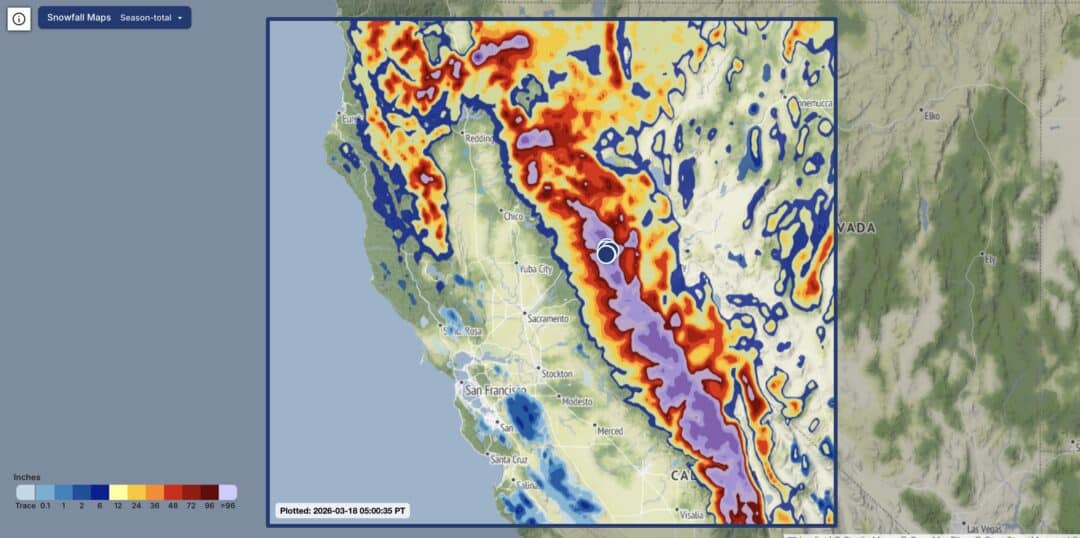
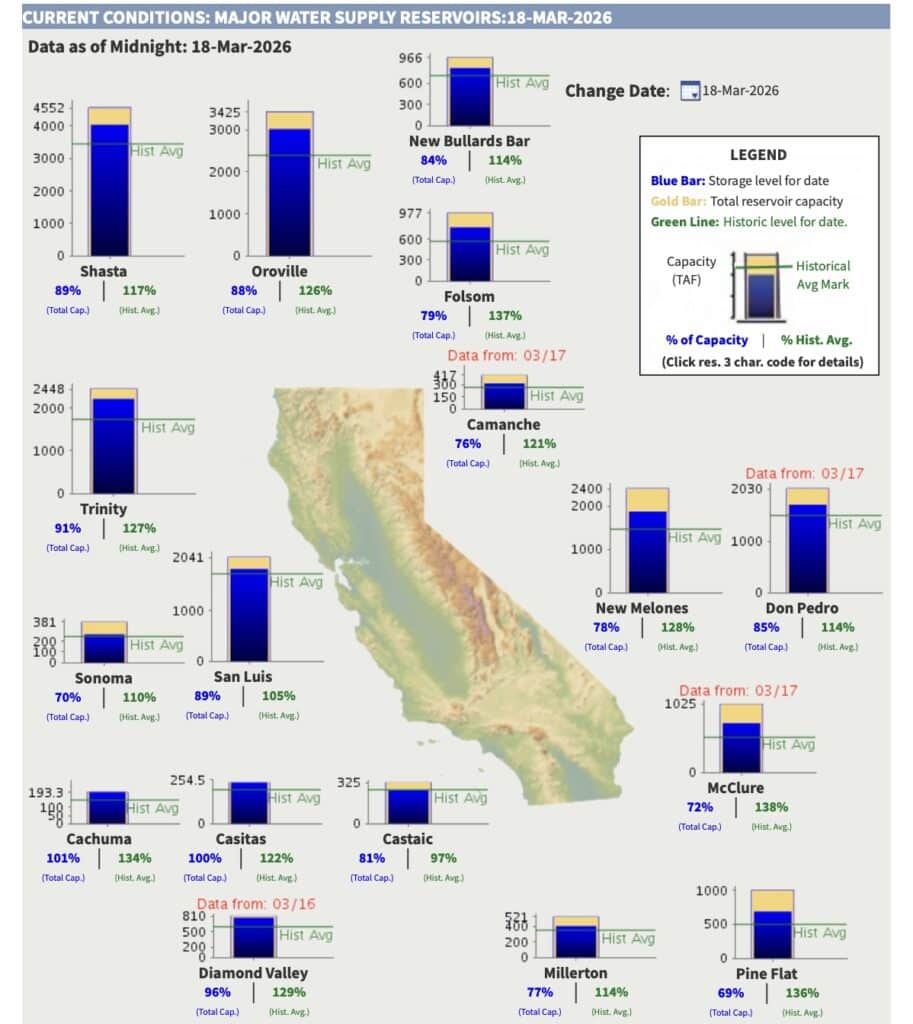
All told, for those interested in more than turns (turns are important, but, you know…), there was a lot of precipitation this winter in the Sierra. Although much of it fell as rain, as is true of Oregon and Washington, which sit further north, reservoir levels in California do not look as shabby as the snowpack. There, folks, is the glass-half-full outlook.
Leave a Reply
You must be logged in to post a comment.