
Overview/Brand Overview
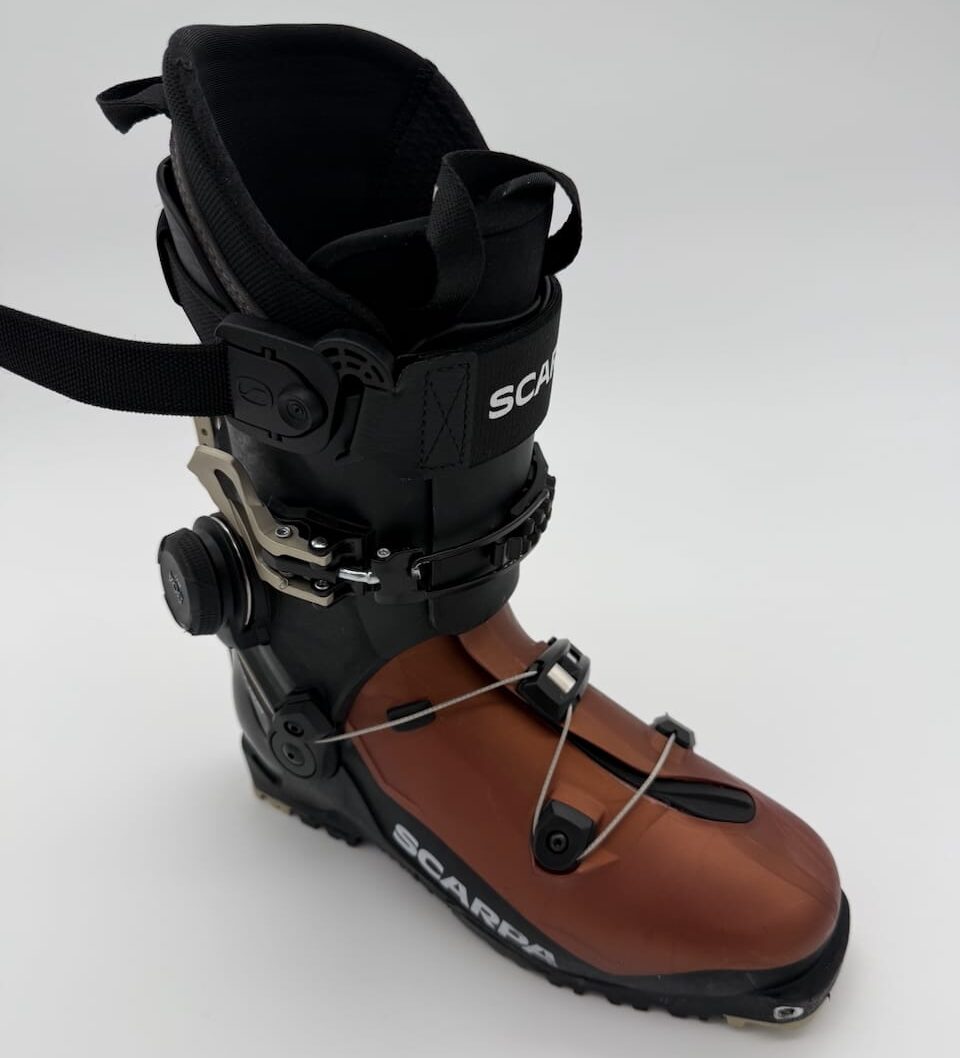
From the moment we caught a glimpse of the new F1 RS from Scarpa, the THR hive was buzzing, looking for info on weight and fit and debating who might get to test them first. Fortunately, we were able to get on a call with Scarpa North America CEO Kim Miller in early February to have our questions and wishes answered.
As a broadly non-alpine boot-owning bunch, none of us at THR had any experience with the new BOA H+1 system, which had yet to make its way onto a boot under 1800g or so. We’ve had mixed, but generally positive experiences with normal BOA on lightweight touring boots, mountain boots, and other footwear. The idea of a burley system up to the task of replacing alpine-style buckles is certainly intriguing; enough so that I have contemplated the possibility of adding a H+1 system to a buckle-clad boot.
Beyond the BOA, we collectively (myself being the exception) enjoy the Technica Zero G Tour Pro as a near ubiquitous daily driver among the THR crew. It doesn’t really fit me, and I prefer a little better/lower-friction ROM, but the skiability, weight, walkability, and balance the Zero G strikes make it a winner for many. If the Zero G is the King of the midweight, midwinter daily drivers, the F1 XT/LT is the popular choice for a lightweight option over the last 5-6 years. With the regular F1 being a bit outdated and high volume and the Mastraele being a good but often overlooked middle-of-the-road option, Scarpa has lacked a good competitor for the Zero G. Next season, I reckon the Zero G’s status will be upended or at least significantly challenged by the new F1 RS.
Design Highlights
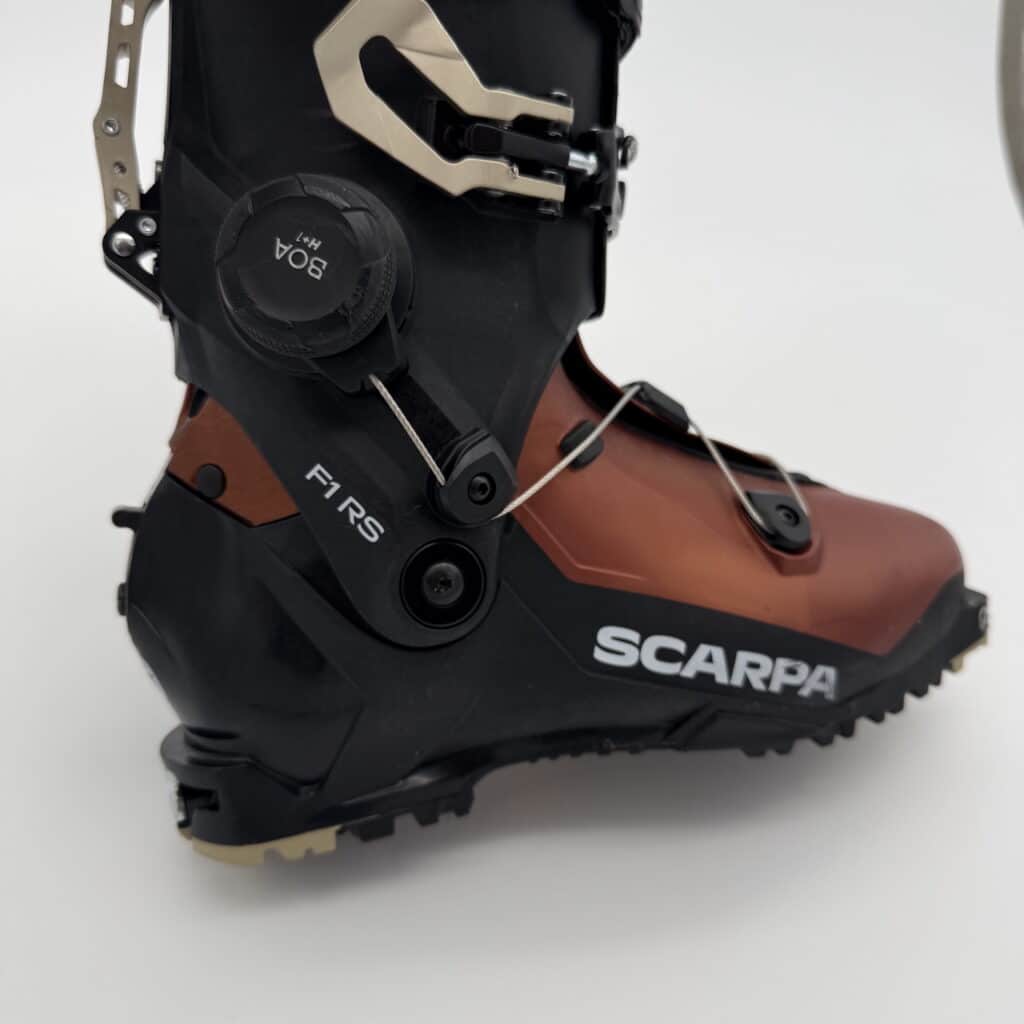
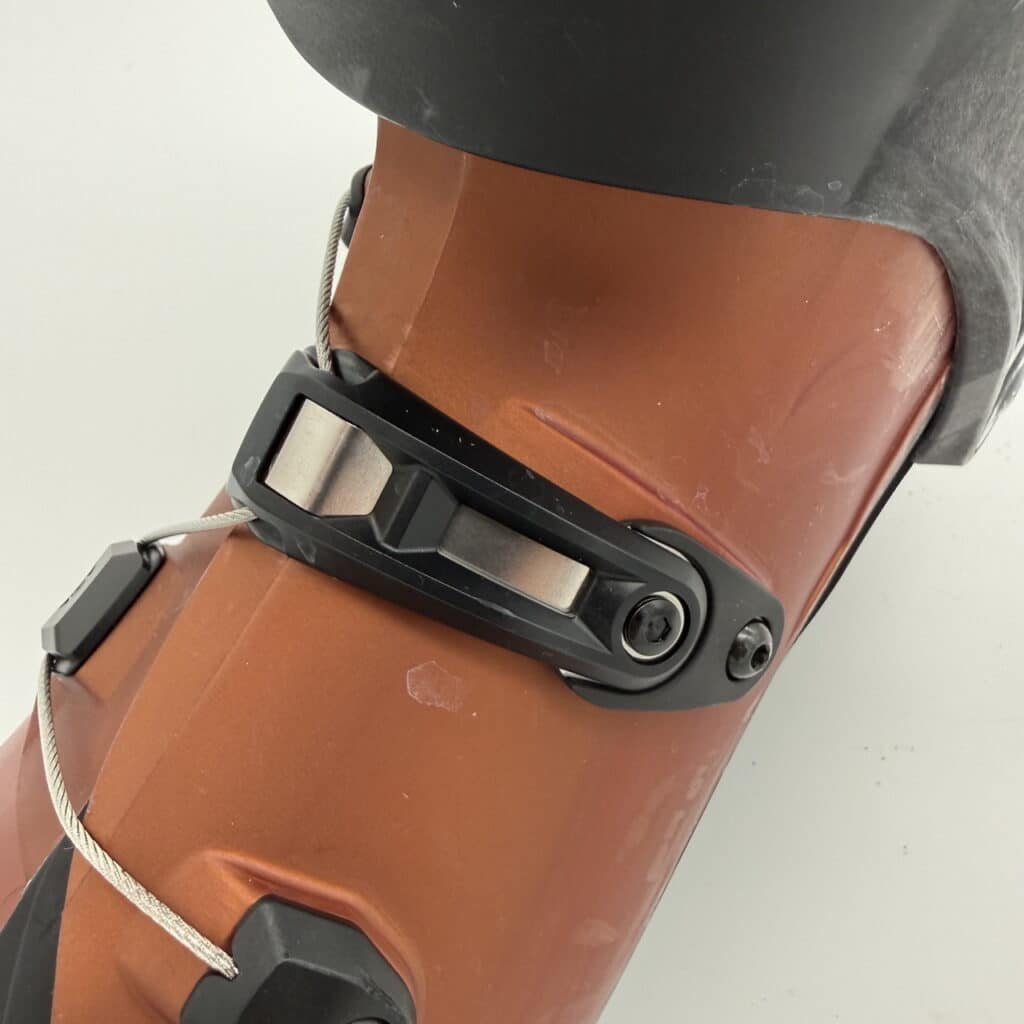
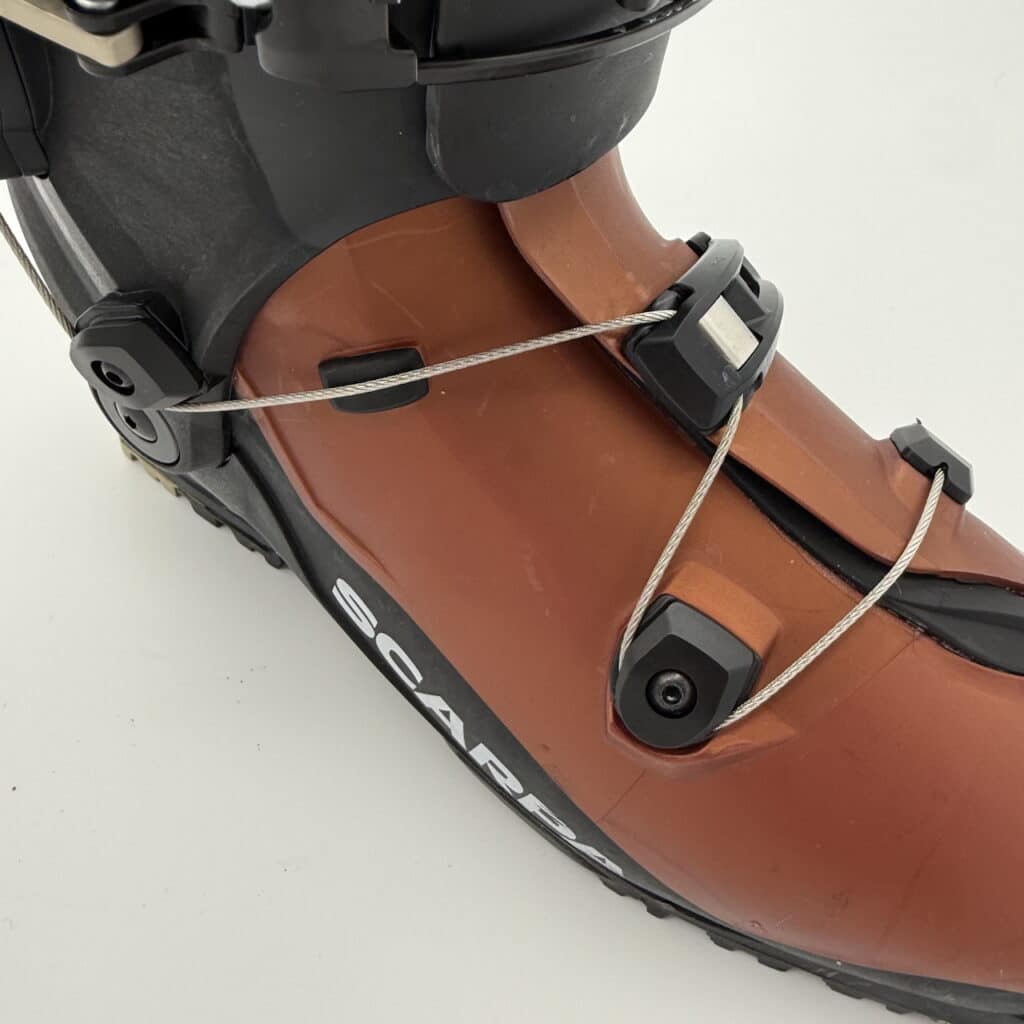
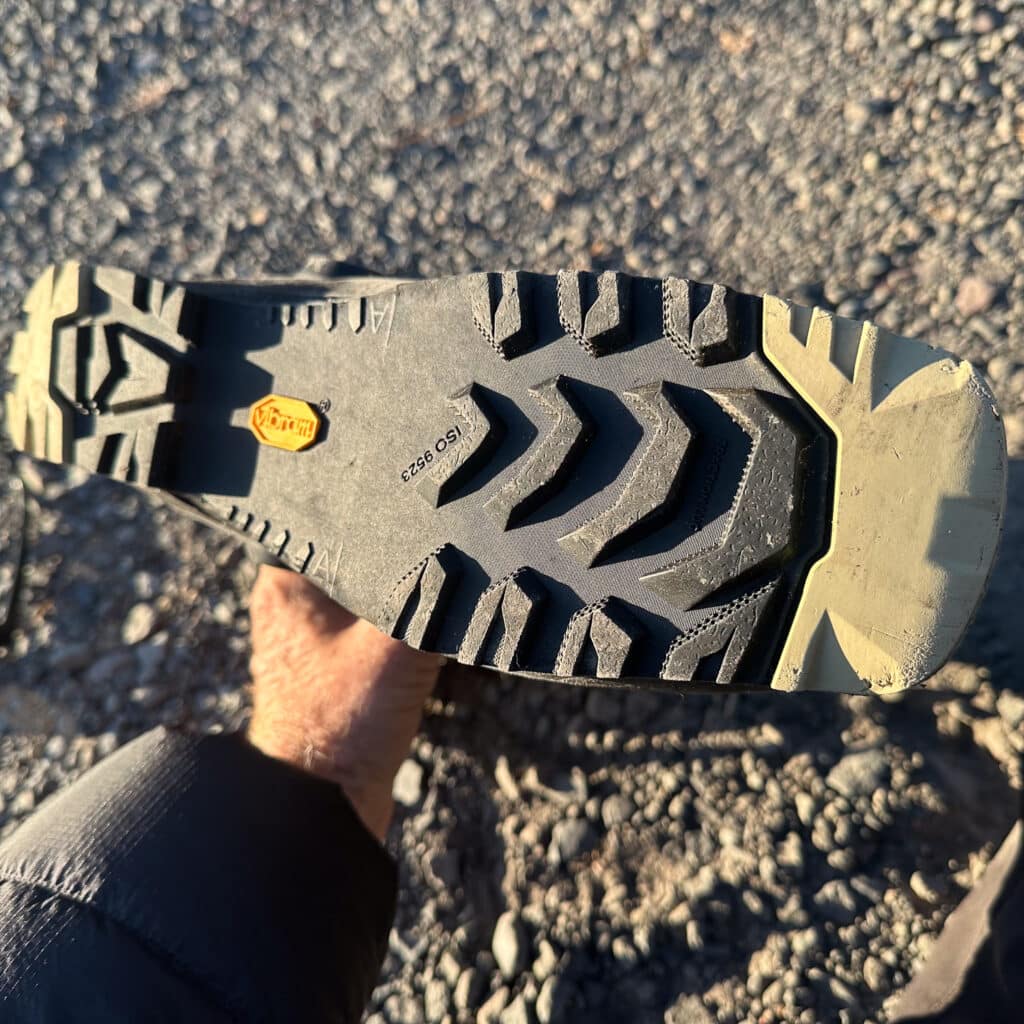
The BOA H+1 is the most obvious story here; the knob is quite prominent, and the hefty cable and lacing on the forefoot certainly stand out. We’ll get back to that in a moment. There are a few other notable features to discuss first. From the bottom up, we have an ISO 9523 sole–MNC compatible without the more awkward rocker of Gripwalk. Interestingly, the lower scaffo is Pebax, which is a bit more pliable than the very rigid grilamid or carbon-infused grilamid used in many lightweight touring boots. The Pebax is notably soft and flexible along the instep, which I imagine helps with the “wrapping” effect of the BOA lower, while adding some progressive feel to the flex pattern. The feel is similar to Tecnica’s “quick instep,” but the soft plastic extends all the way to the toebox seam, rather than ending in the middle of the instep like Tecnica’s. The lower scaffo is lower cut than that of the Zero G, particularly in the sides and back. Up front, it is more similar, but still almost 2cm lower. With the liners removed, it is easy to see how the lower scaffo influences the range of motion in walk mode—the shorter back height in particular makes for a significant increase in forward range with quite low friction compared to the relatively hard forward stop of the Zero G. Also of note, the lower cuff doesn’t feature the Lambda-Frame layout of the Alien RS/F1 XT/LT, which will allow for easier punching/manipulation than these models, as they sometimes had a thick plastic rib hindering punches.
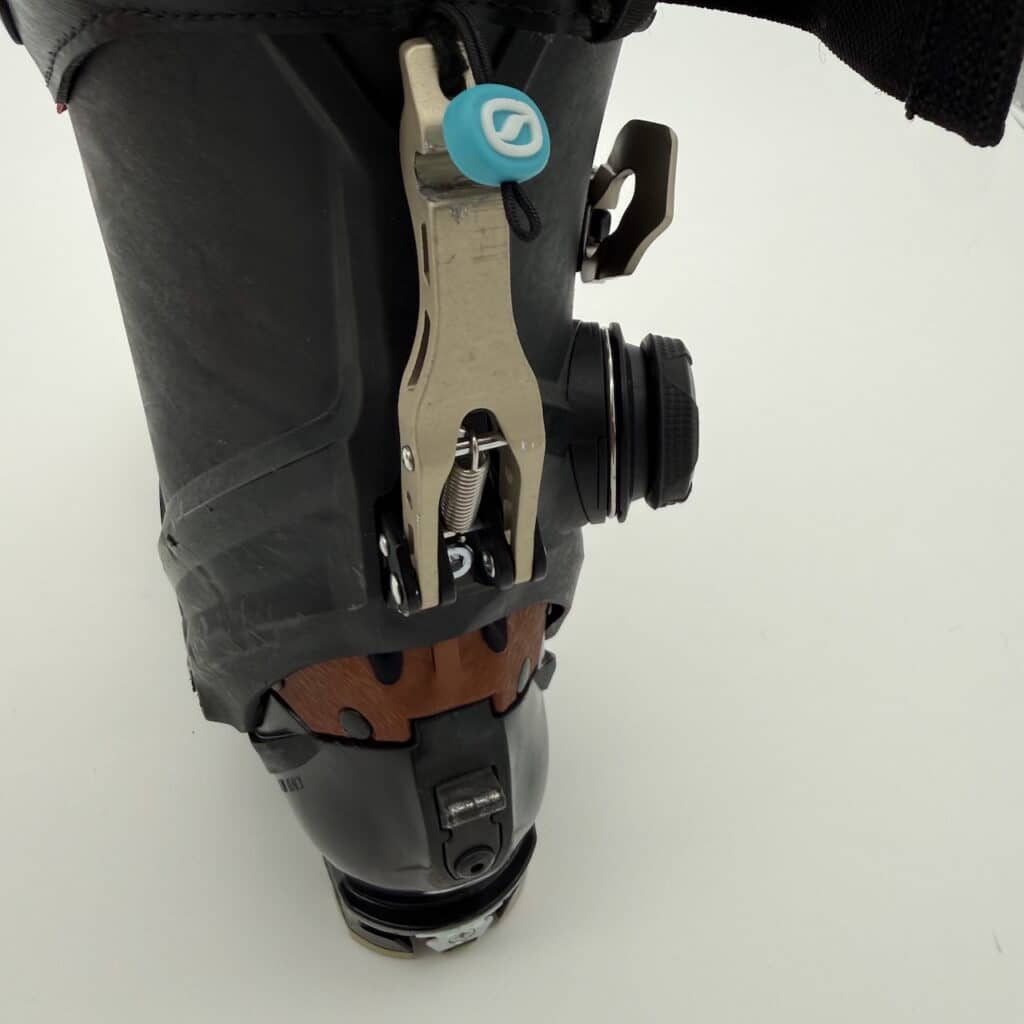
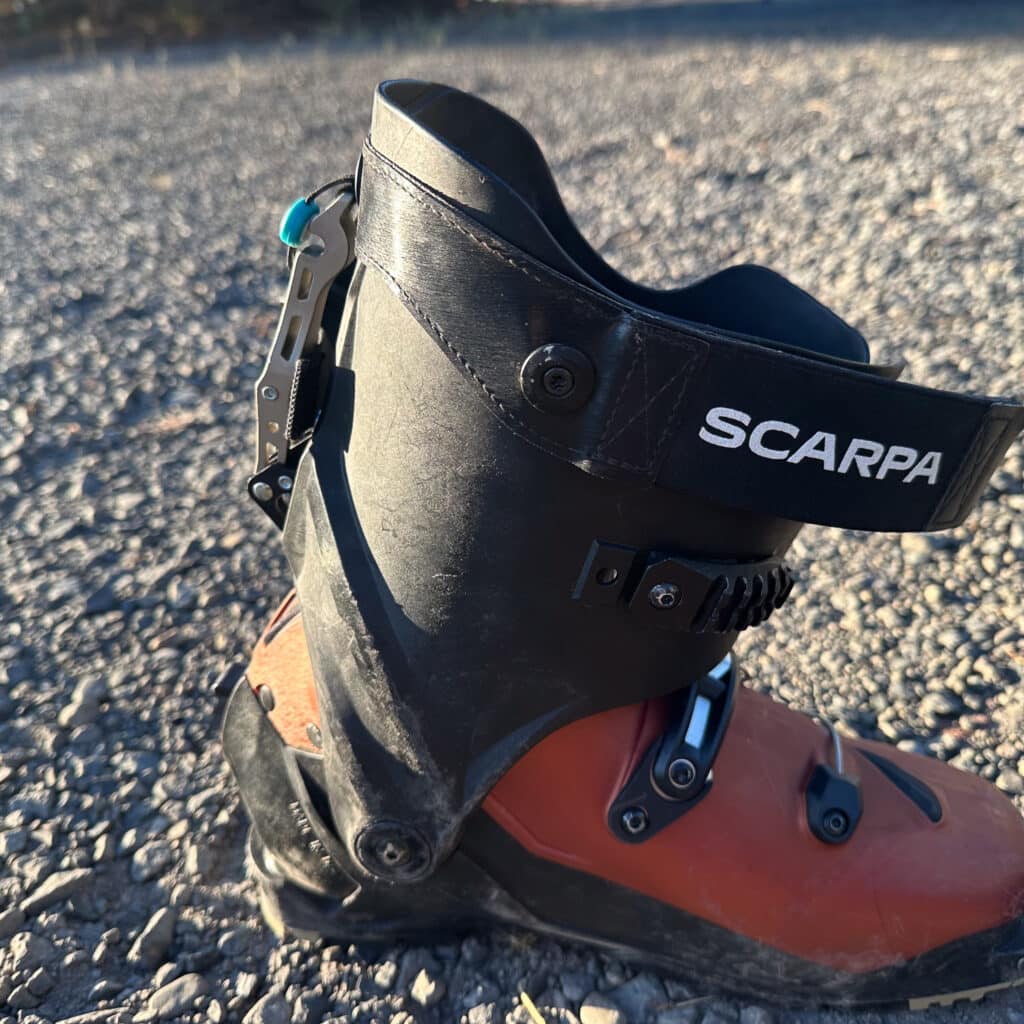
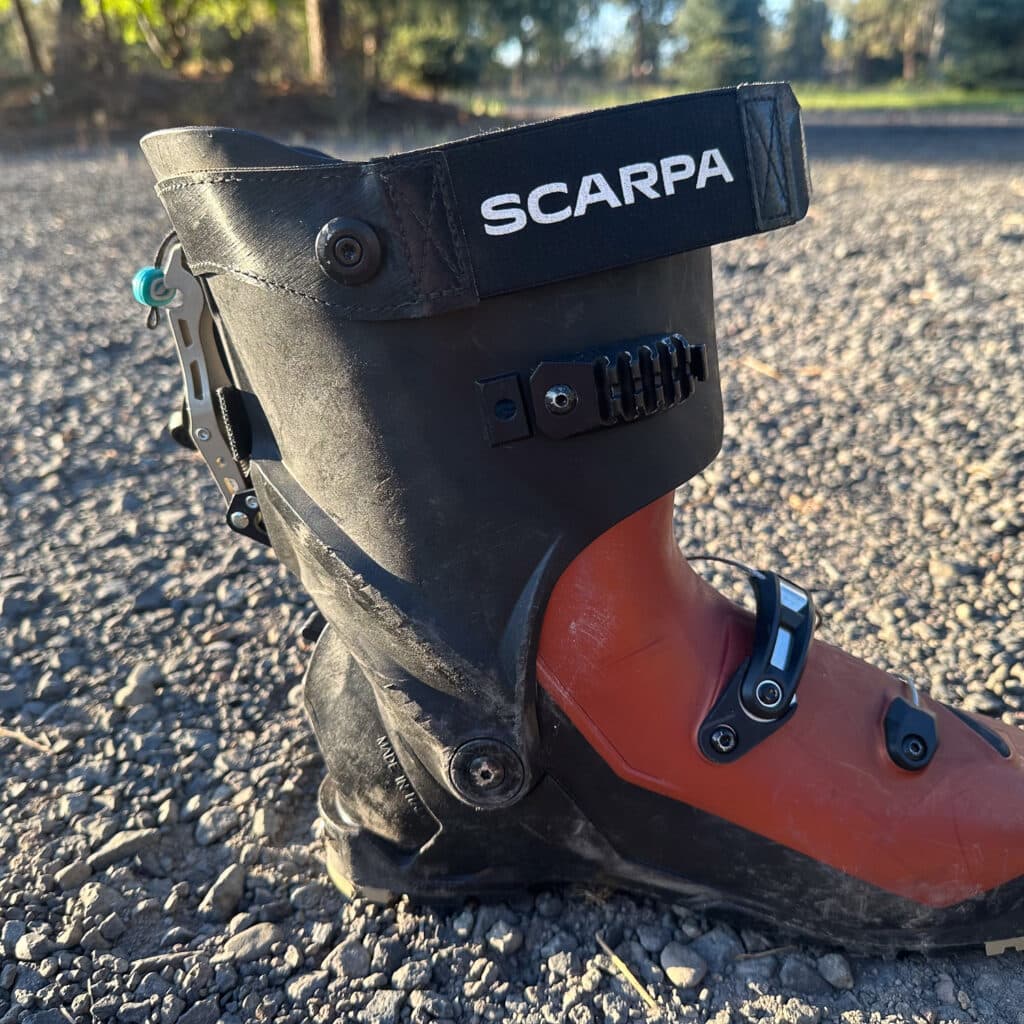
The upper cuff is a pretty standard affair. I appreciate the single buckle with a stiff wire latch for ease of transitions and long-term durability. The cuff height is similar to the Zero G (Check out Jason’s cuff height post for more in-depth coverage here), but the Zero G has a little extra rear cuff height that will be welcomed by many. The cuff is fiberglass-infused Grilamid and has some beefy reinforcement between the walk-ski lever attachment point and the pivot. Thus far (ballpark 40 days on the boots), the only play in the system is from a slightly loose fit of the bayonet latching to the lower scaffo—thus far it isn’t noticeable at all while skiing. The power strap up top is a winner; along with the BOA, this is also the lightest boot I am aware of that comes standard with an elastic power strap. It makes a real difference in dampness and overall performance, and the Scarpa version here is lightweight and low profile.
There is a tiny gaiter on the rear third or so of the lower scaffo entrance, it hasn’t gotten in the way of liner entry/exit and is overall pretty unobtrusive. All the hardware is bolted on with a mix of T20, 3mm, and 4mm hex bolts, which is a win for ease of replaceability, including the pivots, which use a Torx T20. A minor gripe is the need for 3 different bits to work on the boots. It would be excellent if it were all T20.
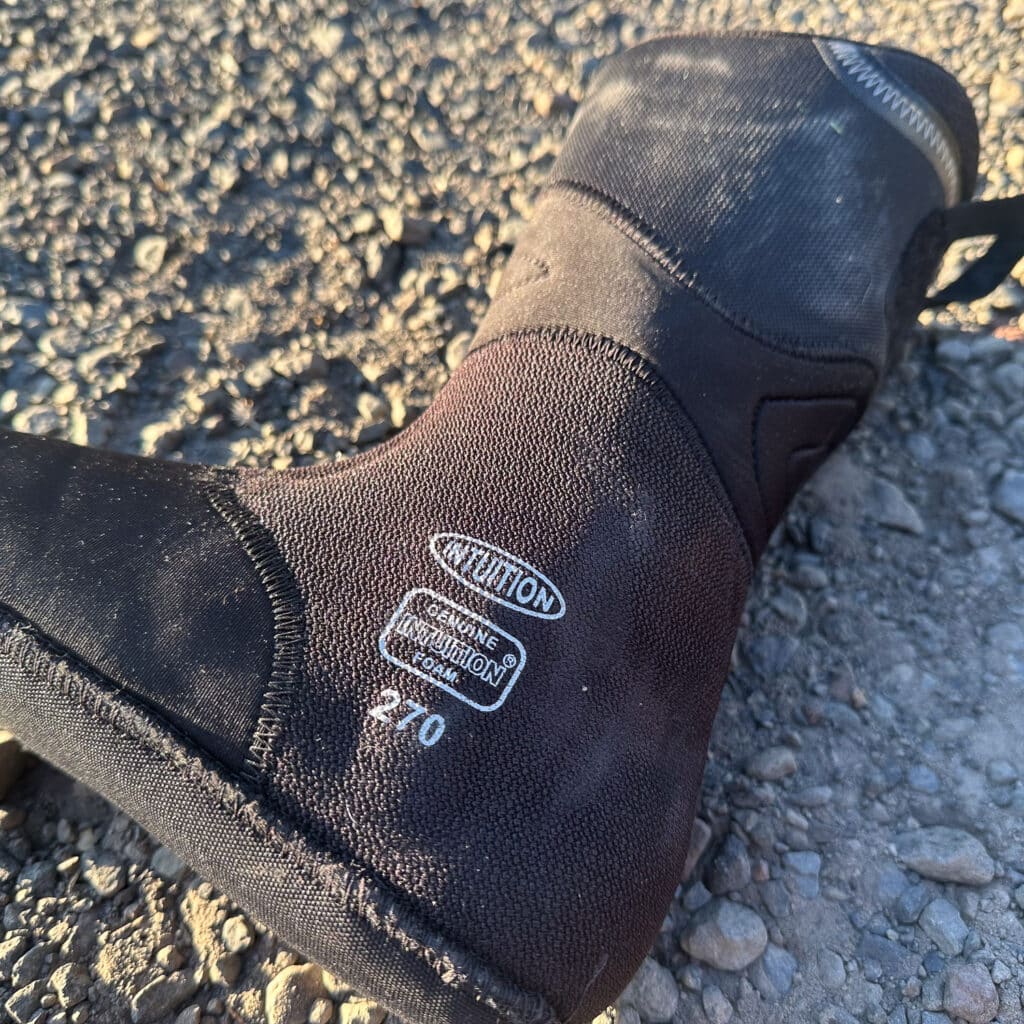
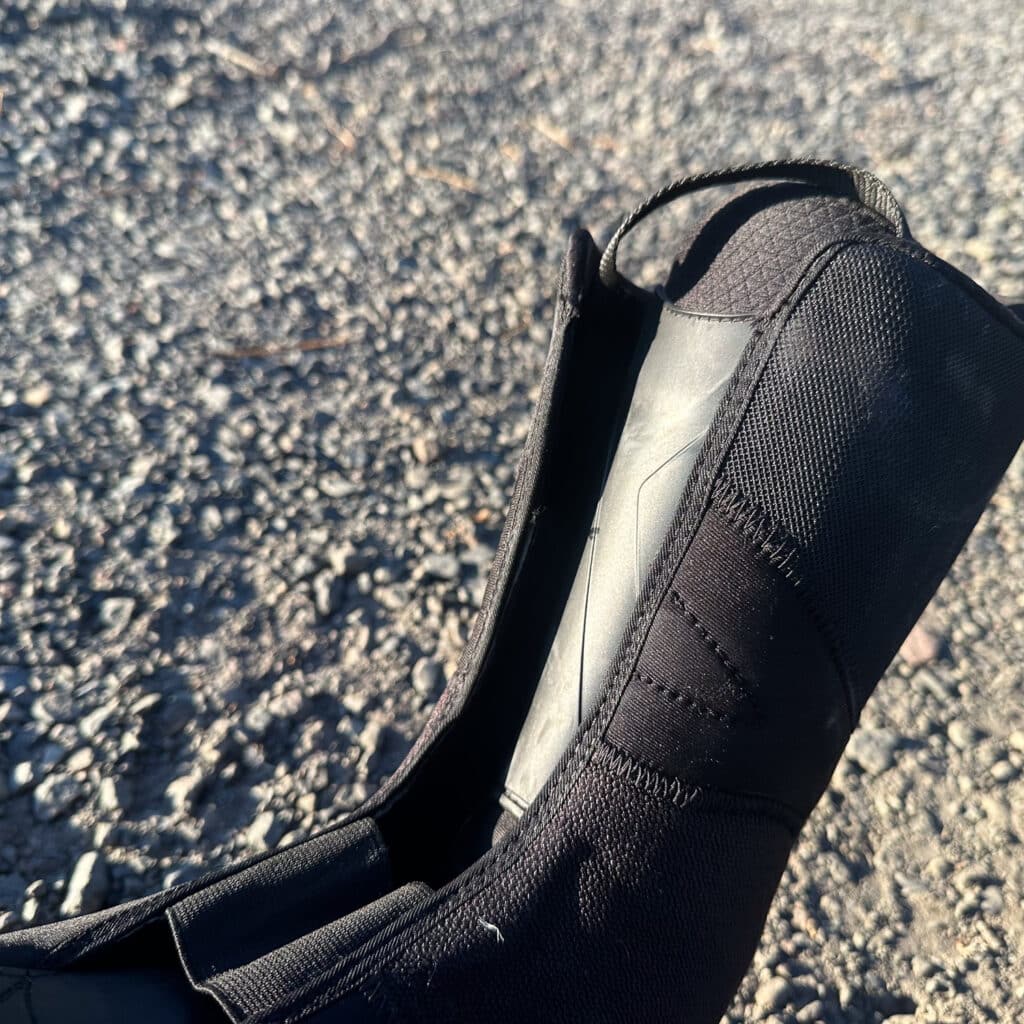
The stock liner, as on all Scarpa boots, is excellent and made by Intuition. Like the Quattro Pro liner and Zipfit Espresso, it features a plastic exoskeleton on the tongue that adds some stiffness and rigidity for skiing. The Espresso was an excellent pairing for the F1 RS, in volume and performance, though it felt like less of an upgrade overall than a Sportiva or Technica, given the high quality of the stock liner.
Forward lean is a hot topic these days: here’s my take….In the “old days,” we all used Dynafit bindings with large toe-heel deltas, and upright boots saved our quads from getting totally torched. These days, more and more ski tourists are using more flat or totally flat deltas, as well as higher performing boots. Alpine bindings are flatter, and obviously, alpine boots are high-performance and generally have more forward lean. Hopefully, all of the boot manufacturers get on board with more adjustable forward lean–not everyone needs huge forward lean, but options are good. The F1 RS is adjustable from 13-15-17 degrees of lean, which ought to cover most preferences, no mods necessary.
Okay, okay, let’s talk BOA. Honestly, the BOA is a relatively small detail of the overall boot—I’m not sure I’d like it more or less if it had a Z buckle or something along those lines in place of the BOA. In the big picture, as someone new to the BOA H+1 dial, it is very powerful. It takes some spinning, but it’s low-effort overall to crank the lower boot very tight, and it never feels like you are going to explode the whole thing if you crank too much. Combined with the soft instep, the F1 RS worked well for my low-ish instep, but I imagine it will be one of the more accommodating/adaptable boots out there in terms of instep height. The foot-wrapping and even tensioning of the BOA live up to the hype, providing more even tension and reducing pressure points that buckles can create. I’m not sure how big a deal that is to me—I think Z-Buckles do a decent job at this already, but the BOA is another step better in this regard.
We had some questions after the first look about the placement of the BOA knob on the cuff—a setup I haven’t seen on other boots, where it is generally on the outside of the lower scaffo. The best reason I can come up with for the higher placement is keeping it out of the way of rocks and other obstacles when scrambling or bootpacking, as well as providing a nice workflow when having it in close proximity to the upper cuff buckle for transitions. It presents an interesting dynamic of the cable tensioning or loosening as the boot flexes fore and aft, though the final pulley’s proximity to the cuff pivot mitigates this to pretty small tension changes. In walk mode, the tension changes are somewhat notable, particularly as it snugs the lower tension up a bit with a long stride in the flats. In ski mode, I can’t say I noticed any impact on lower boot tension/tightness along the boot’s flex; I think the distances involved are simply too small for it to matter.
Fit and Bootfitting
I’ve often struggled with the big-picture fit in Scarpa boots (and other footwear). I just seem to fall in between sizes in their ski boots and have the wrong foot shape for their climbing shoes. I’ve worn everything from a size 29.5/30 Alien RS (too big), to a 28.5/29 Quattro Pro (better length but more volume than I want). I took a leap of faith with the 27.5/28 F1 RS, and it has mostly worked great, though I could use a small length punch at the big toe to make it great for everyday wear.
I’m pretty universally a 28/28.5 in most boots, including the Zero G/Zero G Peak, Dynafit Ridge/Blacklight, and Sportiva Kilo. I’ve got a narrow heel that I often struggle to lock down, a low-ish instep, though not quite low enough for the Ridge, and a narrow foot until the 6th toe, which is quite pronounced. I’ve got an Egyptian toe shape, which comes into play with the aforementioned need for a punch in the F1 RS. The size 28 Sportiva Kilo/Stratos Hybrid is probably my best-fitting boot at the moment, though I also get along with the 28 Zero G Peak with a 3mm shim under the footbed.
The F1 RS is nearly an excellent fit for my feet–the heel pocket feels snug, the width and instep work well for me (I get some 5th metatarsal pain in the Quattro when it’s buckled tight). The only issue I’ve got is that the toe box of the F1 RS has a distinct Greek shape (middle toes longer than the big toe). Given the downsizing and the otherwise excellent fit, I’m going to explore getting a punch for a little extra room in the big toe. Length punches seem tricky with lightweight touring boots, both because of limited space and because you have to make sure not to mess up the tech fitting alignment. Combine this with the Pebax material, and I’m not 100% sure how it will go, but the rest of the boot fits so well that I’ve got to try.
Field Testing
I received a pre-production demo of the F1 RS mid-February, and given the usual chaos of mid-winter, I jumped right into using them with an F1XT liner that was already molded and seemed to be a good fit and quite similar to the stock liner.
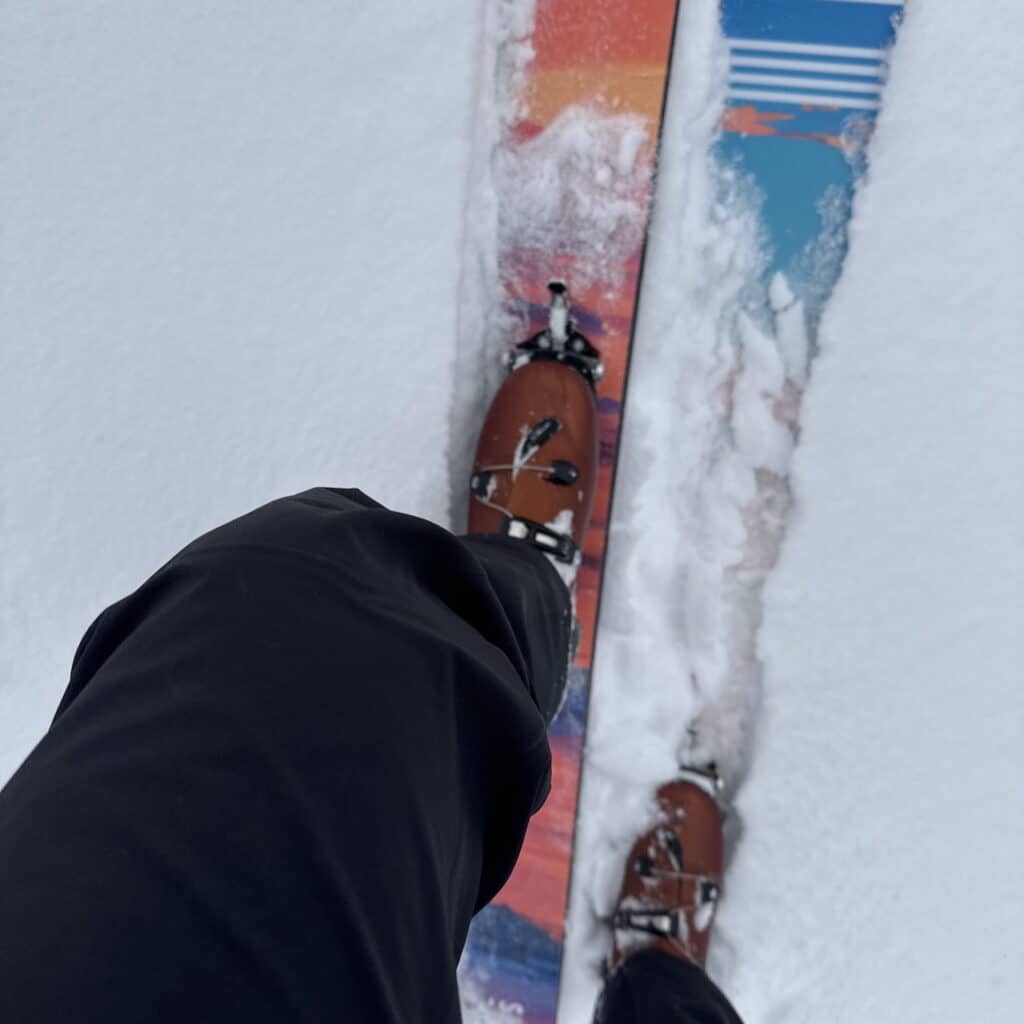
I was immediately impressed with the walking ability. I’ve been enjoying the Blacklight 2.0 as a go-to for most of the winter, which already walks really well (low friction) for its 1250g weight class. The F1 RS is almost identical to the Blacklight in both range and resistance. Doing some liner-less hand testing, the F1 RS knocks the socks off the Zero G Tour Pro as far as total range (particularly forward), as well as friction over that range. It is even a smidge better than the Zero G Peak in the friction/resistance department. While I no longer have them on hand, the Atomic Backland XTD comes to mind for similar walk mode performance. As usual, I’m not here to tell you to get rid of your 1kg/race boots, but with the impressive walking performance of some of these beefier boots, the bar for outings that require the little boots gets higher and higher.
A friend who also happened upon a set of the F1 RS this winter said something along the lines of this: “It walks twice as good (he may have even said 3x) and skis 90% as good as the Zero G. That works for me.”
Compared to the Zero G, the F1 RS feels a smidge less precise while skiing. I think this comes down to how much they flex before feeling engaged and stiff. Generally, I enjoy this “fudge room” in variable snow and on lighter touring skis, as it helps me stay engaged with the front of the boot rather than sometimes feeling bucked around by a boot that’s stiff right at the top of its flex range. The Dynafit Ridge comes to mind as a boot that does this particularly well—I think the cabrio/tongue style construction plays a role here. With the F1 RS, the flex character is much more similar to the Zero G at the extent of its forward flex; it gets stiff and has a similar character/blend of cuff flex and scaffo bellowing. I think that Zero G skiers will have minimal adjustment swapping to the F1 RS, where swapping to something like the Ridge or Kilo XTR would take a little getting used to as far as flex characteristics. Perhaps the alpine equivalent of swapping from an overlap to a cabrio boot is an apt comparison (that I have no experience with).
Similar to the Zero G and others in this realm, I wouldn’t have any concerns about ski dimensions or conditions-based qualifiers for when to ski bigger skis with the F1 RS. Sure, there are better tools for variable-snow freeride, but for normal ski-touring duties, the F1 RS is more than capable.
BOA durability seems to be a constant question, and time will tell how it holds up to significant wear and tear. In the short term, the BOA seems like a durability upgrade over the ultralight wire buckles on boots like the Quattro or Zero G, which seem to have a 1-2 season lifespan under heavy use. I witnessed one BOA dial pop-off during a rocky scrambling context. It was easy enough to pop back on and continue with the day. The only “complex” part of the whole BOA system (aside from the dial itself) is the instep strap/guide, which has a little pivot and extra length. This strap is a blend of plastic and metal and seems plenty reliable, but I could see it being a potential failure point. Another small issue with the BOA is the little rubber pad the cable is meant to rest on before it hits the cuff pulley—the little bumper takes some effort to line up so the cable actually falls onto the pad rather than rubbing the shell next to it. Not the end of the world, but an odd choice rather than an enclosed guide.
The upper cuff buckle with its stiff wire is, theoretically, a durability and ease-of-use upgrade. In practice, I’ve had a few instances now of the ends of the wire popping out of the buckle housing, requiring some attention and a quick fix in the field. Aside from this small issue, I haven’t seen any other durability problems crop up. The outsole is holding up well and is plenty sticky for some rock climbing, and the Pebax scaffo is also doing well despite some Canadian Rockies choss scrambling that can be hard on soft plastic. The pivots are rock-solid and haven’t developed any play yet—again, they are serviceable with a T20, which makes them much more friendly to work on than most other cuff pivots (props to Scarpa and Sportiva for their serviceable pivots).
I didn’t have any issues with crampons or binding fit using a variety of bindings and Blue Ice/Dynafit crampons. Also, I walked across a few creeks, and the nice rubber seal on the overlap held up well to water ingress. Phew. A final note, I was/am skeptical of the plastic cam buckle/hook on the power strap. Technica, Scarpa (Quattro), and Sportiva all have very high-quality, aluminum cam buckle hooks that are excellent. I didn’t have any issues with slipping or breakage on the plastic hook, but it feels a bit cheap relative to the competition and the rest of the thoughtful boot hardware.
Conclusion
I continue to predict the demise of the Zero G’s dominance of the touring boot market, and I’m here doing it again. Based on conversations and comments I’ve gotten on the new boots, it seems like the F1 RS will finally make some inroads on the popularity of the Zero G. With comparable ski performance and significantly better walking at a similar overall weight, it will be great to have another option available to compete with the Tecnica. Perhaps most importantly (and where the Ridge struggled to gain traction), I think the fit of the F1 RS will work well for many folks, and they may appreciate the more snug heel pocket and the accommodating instep relative to the Zero G.
Time will tell whether my prediction holds true, but I reckon we will see a lot of folks (myself included) enjoying their shimmery bronze or rainbow-green (women’s) ski boots in the coming season.
Specs
Total Weight: 1430g [27.5/28]
Shell Weight: 1101g
Liner Weight: 328g
Sole Norm/Compatibility: ISO9523 (MNC, Low Tech)
Materials: Pebax Rnew lower, Grilamid Fiberglass LFT Lower
Fitting Notes: 101mm stated last, Half size break is a Scarpa nuance compared to others


Leave a Reply
You must be logged in to post a comment.