
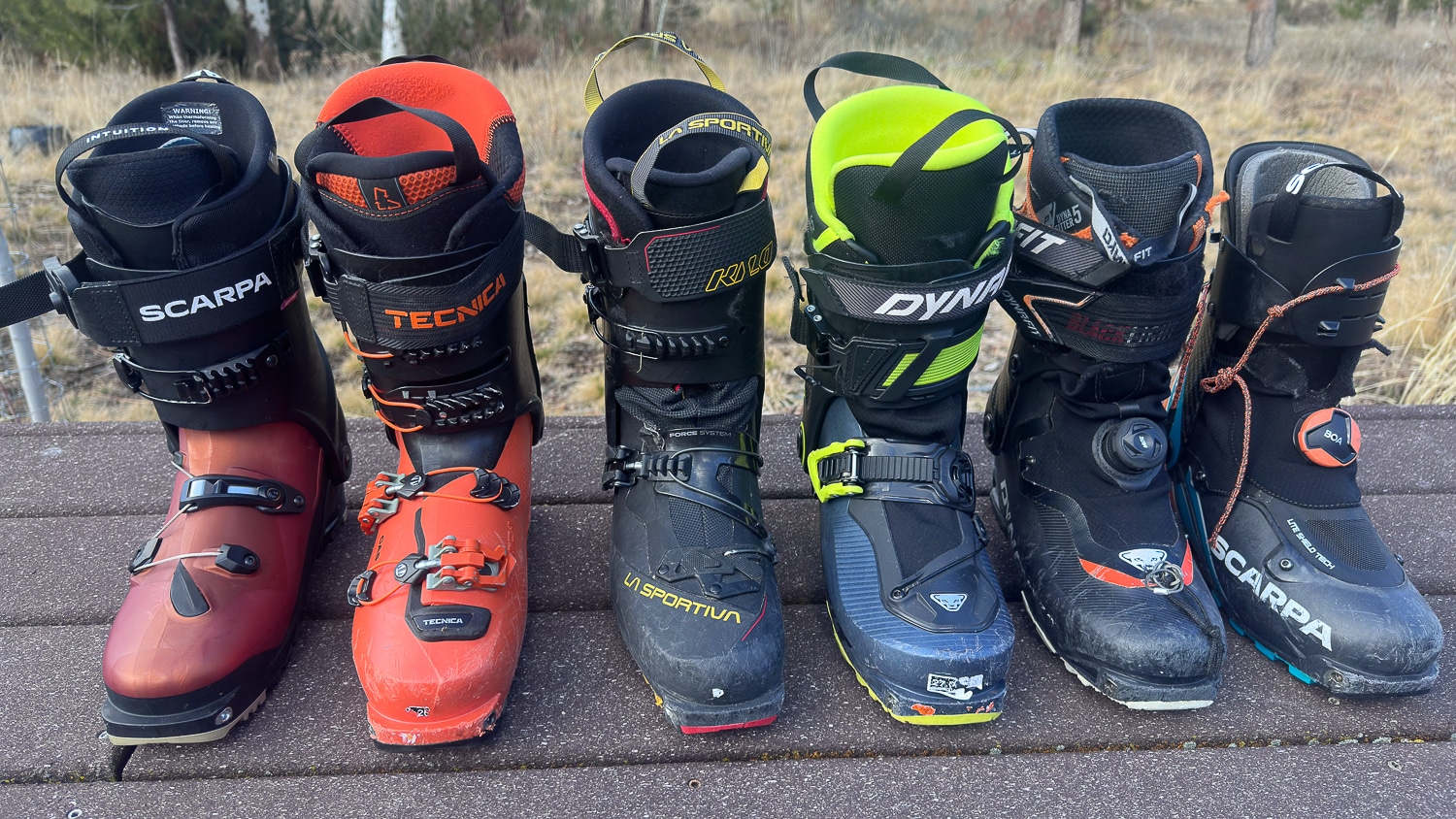
Several readers have inquired about the new Scarpa F1 RS cuff height relative to other boots, both in and out of its design class. For simplicity, let’s keep the physics basic: the boot cuff interfaces with a tourer’s lower leg/shin as they lever forward, and initiate and execute a turn. There are nuances; some of us drive a ski with serious forward pressure on the ski’s front end. While others are more balanced, call it centered, and apply their forward-lean pressure, that lever, more delicately, but with some fine and artistic flair.
Generally, boots emphasizing the downhill and more freeridey aspirations have higher cuff heights to help transmit more force from the leg into the boot and then, into the ski/ski edge. They are also stiffer because some of you are hucking and bucking.
Where does the Scarpa F1 RS reside in terms of boot class? At 1300g+ in a 27 shell, it punches too far above the 1kg class to be considered a minimalist boot to pair only with a minimalist ski. On the flip side, it is certainly sufficient to drive a bigger ski, and satisfy an aggressive skier, but does it land in the same zone as beef boots like the Scarape Quattro Pro, Dynafit Tigard 130, Lang XT3 Tour 2.0 MV130, and so on? Probably not. The F1 RS, however, seems to be a similar boot in terms of flex and walking functionality compared to the four-buckle benchmark for ski tourists over the past five years or so, the Tecnica Zero G Tour Pro.
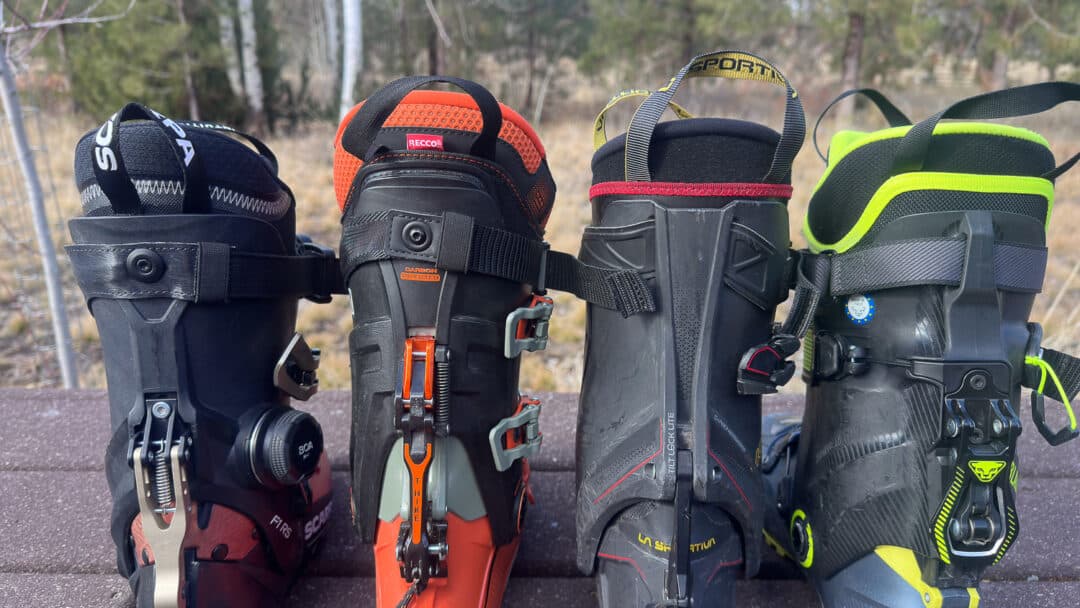
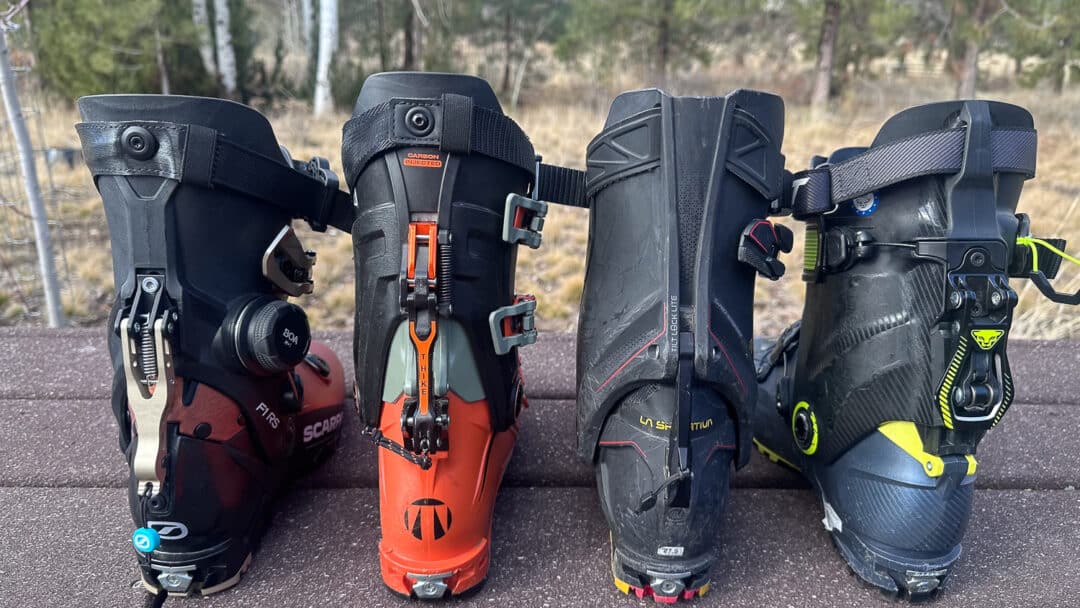
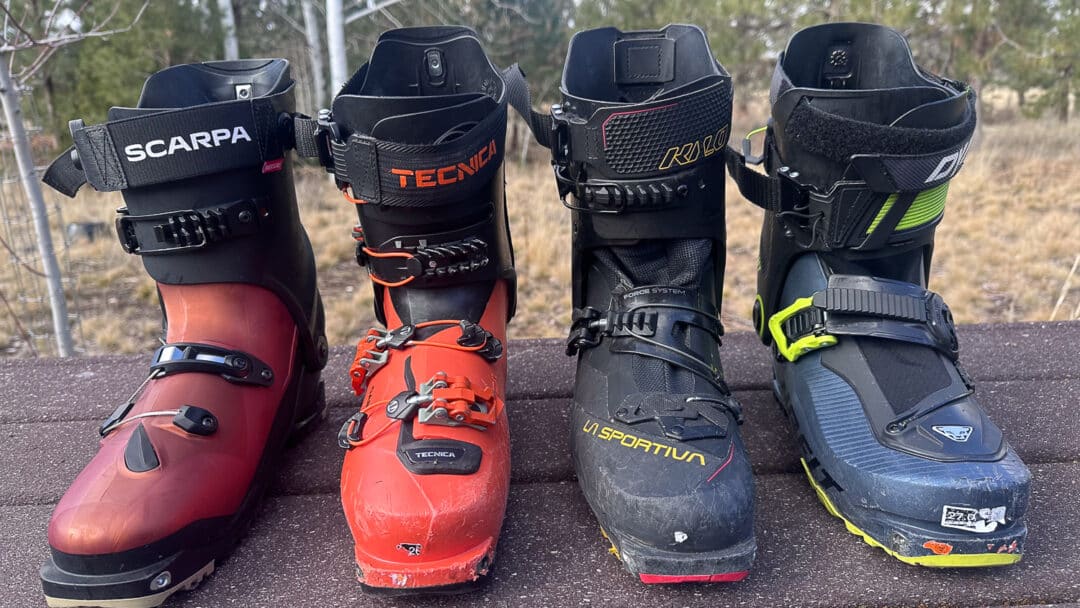
All measurements below were made with a straight-edge ruler placed on a flat surface. (Expect some slight variability with this THR measuring tech.) I measured the highest point on the front and rear of the liner’s cuff with the liner inserted into the shell. In the second table, we removed the cuff and measured only the shell’s cuff height. I did not make accommodations/adjustments for the boot’s forward lean, which might slightly affect cuff height.
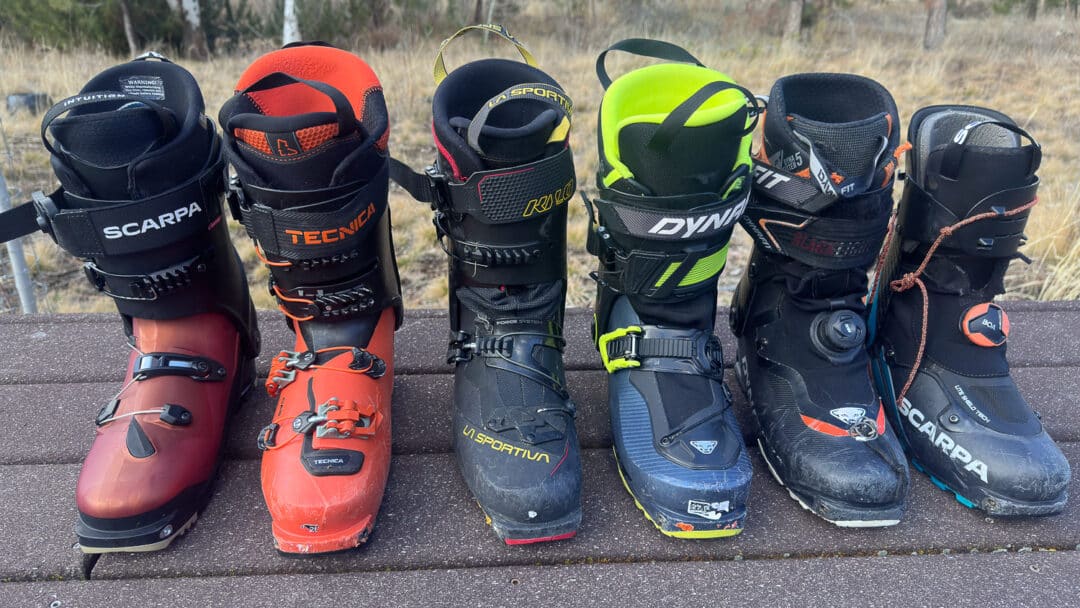
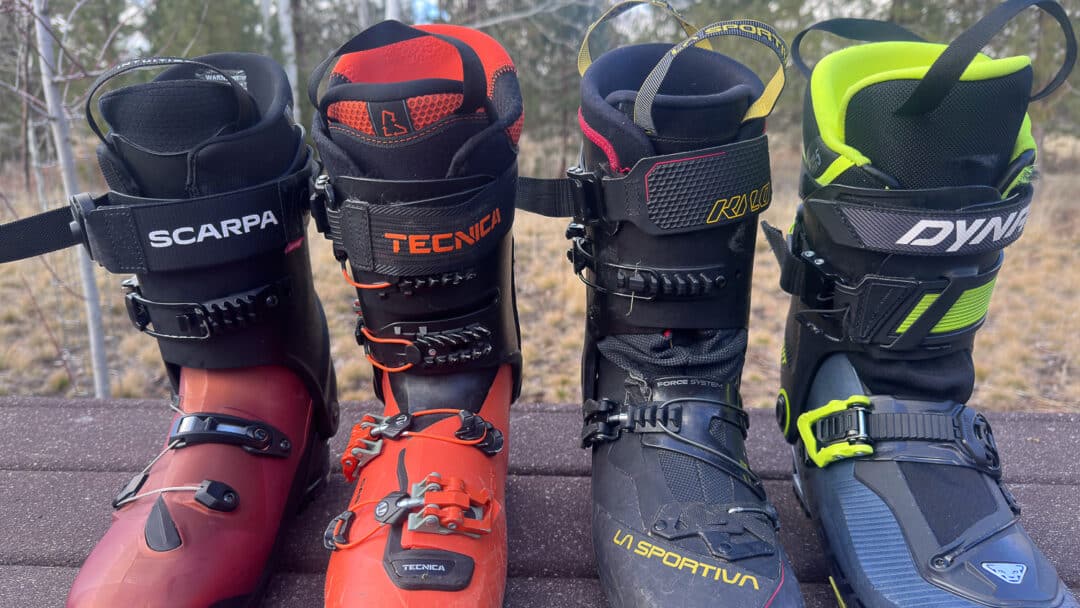
In all the photos, from left to right, the models are: Scarpa’s F1 RS (27 shell), Tecnica’s Zero G Tour Pro (26.5 shell), La Sportiva’s Kilo (27.5 shell), Dynafit’s Blacklight 2.0 (27.5 shell) and Blacklight (27.5 shell), and Scarpa’s Alien 1.0 (27 shell).
With that as the run-up, where does the F1 RS land in a small sample size of cuff heights? Note, and this is a big note…cuff height, as many of you know, is just one variable contributing to a touring boot’s flex characteristics.
Liner cuff in boot shell: Boot Model/Liner Size | Cuff height (front) in cm. | Cuff height (back) in cm. |
| Scarpa F1 RS (27) | 31.75 | 34.20 |
| Tecnica Zero G Tour Pro (26.5) | 32.40 | 35.56 |
| La Sportiva Kilo (27.5) | 32.38 | 34.90 |
| Dynafit Blacklight 2.0 (27) | 32.46 | 34.29 |
| Dynafit Blacklight (27) | 31.75 | 33.65 |
| Scarpa Alien 1.0 (27) | 29.22 | 30.48 |
| Shell only: Boot Model/Shell Size | Cuff height (front) in cm. | Cuff height (back) in cm. |
| Scarpa F1 RS (27) | 25.40 | 29.46 |
| Tecnica Zero G Tour Pro (26.5) | 26.67 | 31.75 |
| La Sportiva Kilo (27.5) | 26.92 | 31.24 |
| Dynafit Blacklight 2.0 (27.5) | 26.67 | 30.48 |
| Dynafit Blacklight (27.5) | 26.41 | 30.23 |
| Scarpa Alien 1.0 (27) | 26.92 | 29.60 |
Leave a Reply
You must be logged in to post a comment.