
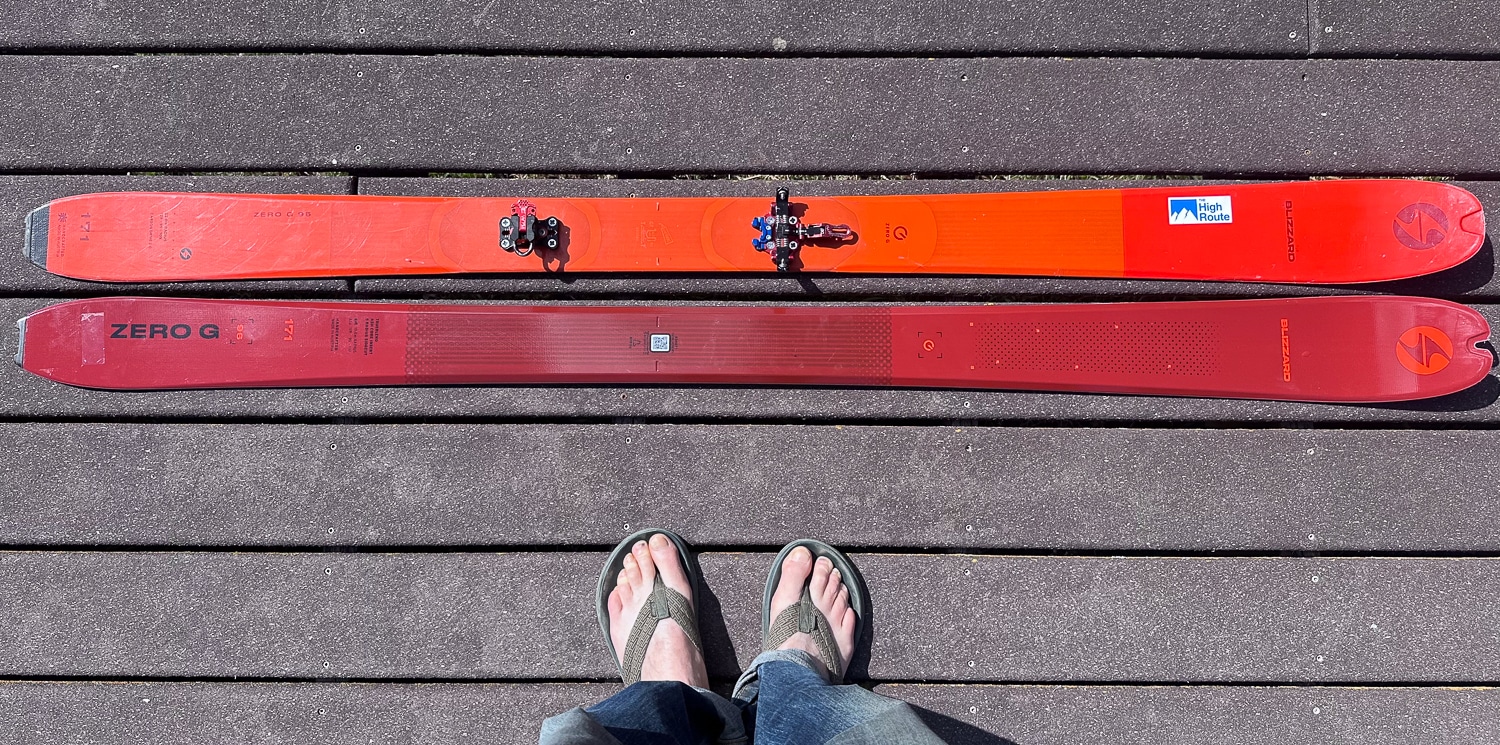
Look here: the Blizzard Zero G 96 touring ski has arrived on a balmy 70-degree day. The sensations of warm temps do not mirror where we intend to take this ski, which is more firm, cold, steepish, and more fall-line. Introduced last season, the ZG 96 replaces the (mostly) beloved ZG 95 in the company’s lineup. Over the years, the ZG 95 became a go-to for those seeking a touring ski with modest camber and an undoubtedly stiff build. Yup, a more traditional type ski. Although marketing copy might hint at some tip rocker, these sticks were and are excellent objective skis when superb edge grip was/is required.
For those of an older generation, the 95mm underfoot also makes them more of an all-arounder, even for powder days. But experience holds, and for certain, this is maintained in the shorter lengths, the ZG 95 is a ski mountaineer’s ski. Meaning they are light, still offer some float when needed, and do many jobs well when considering mountain travel. However, the most common descriptor I’ve come across from those who are maybe a bit less keen on the ZG 95 is “unforgiving.” A stiff tail, which the ZG 95 has in spades, can be like that when you get your weight too far back on your planks. So, perhaps, the ZG 95 requires some focus, attentiveness, and precision when a turn may count. But you’ll be rewarded if you don’t get too lazy on these stiff skis when the snow-hardness scale edges from firm to firmer. Over nearely four seasons, I’ve used the ZG 95s as a preferred volcano ski here in the PNW. (This is also a ski that is svelte enough to take on a multi-day high mountain traverse where an emphasis on edge grip over powder slaying is desired.)
Ski companies iterate. And it seems Blizzard has moved the needle a bit with the ZG 96 to do what it’s tasked with: sell skis. The ZG 96, for all intents and purposes, having not had it on snow yet, looks and feels pretty darn similar to the 1mm less…(or is it 2mm), ZG 95. But let’s look at some specs.
Zero G 95 / Zero G 96 Stats for 171cm Length
Weight (g): ZG 95 ~1195/ski
Weight (g): ZG 96 1240 ski 1 and 1262 ski 2. I am mounting an ATK Haute Route binding (older version) which adds roughly 200g to the overall package.
Dimensions (mm) ZG 95: 126 / 94 / 109
Dimensions (mm) ZG 96: 126 / 96 / 110
Turn Radius ZG 95: 22m
Turn Radius ZG 96: 19m
Construction ZG 95: Woodcore (Paulownia and Poplar) with a carbon layer that some claim affords the ski its noted torsional rigidity.
Construction ZG 96: Trueblend RPET Tour (Paulownia and Poplar combo) with an Ash Core Insert and carbon stringers.
Sidewall for ZG 95: Partial ABS.
Sidewall for ZG 96: Partial ABS that seems to run longer and thicker in zones than on the ZG 95.
Rocker Shape according to Blizzard for both ZG 95 and 96: Early rise tip and tail with camber under foot.
We’ve been wanting to review the ZG 96 for a while. And, like others, we’ve seen some reviews and comments on the forums suggesting the ZG 96 is, overall, a softer-flexing plank than the discontinued 95. I’m going to channel my inner Zach Caldwell here, a total data nerd when it comes to Nordic skis. Caldwell refers to things like a ski’s thickness profile, “materials from the inside out”, and how the camber is “adjusted” over the ski’s length. There’s less carbon in the ZG 96’s build—stringers only—which should impact how the ski feels on snow. More wood, particularly the ash insert in the binding-mount zone, should make this a relatively damp ski compared to the 95. The ZG 96’s sidewalls show more material (call it sidewall) running toward the ski tails than the ZG 95, while both models offer a semi-cap construction.
Let’s mention the stiffness with the caveat that this is a first look. Coming into this review, I expected to handle a notably softer ski in the ZG 96 relative to the ZG 95. Again, that’s due to hearsay. But as far as stiffness is concerned, I’m talking about a simple hand flex of the tips and tails on both the ZG 95 and ZG 96; the ZG 96 presents as stiff. I have the latest gen ZG 95, but they have been in steady rotation (in particular during sustained winter high pressure and spring objective skiing) since winter/spring of 22′-23′. Say what you want about hand flex, but when comparing most, if not all, skis I’ve been on, the Zero 95 hand flexes stiffer than the others, and that stiffness transfers onto the snow. (That said, the Black Crows Mentis, at 80mm underfoot, also hand flexes as stiff and is comparable, stiffness-wise, on and off snow to the ZG 95.)
We’ll have to wait until the on-snow portion of this review, which is the critical part, for any conclusions regarding the ZG 96’s firm-snow prowess.
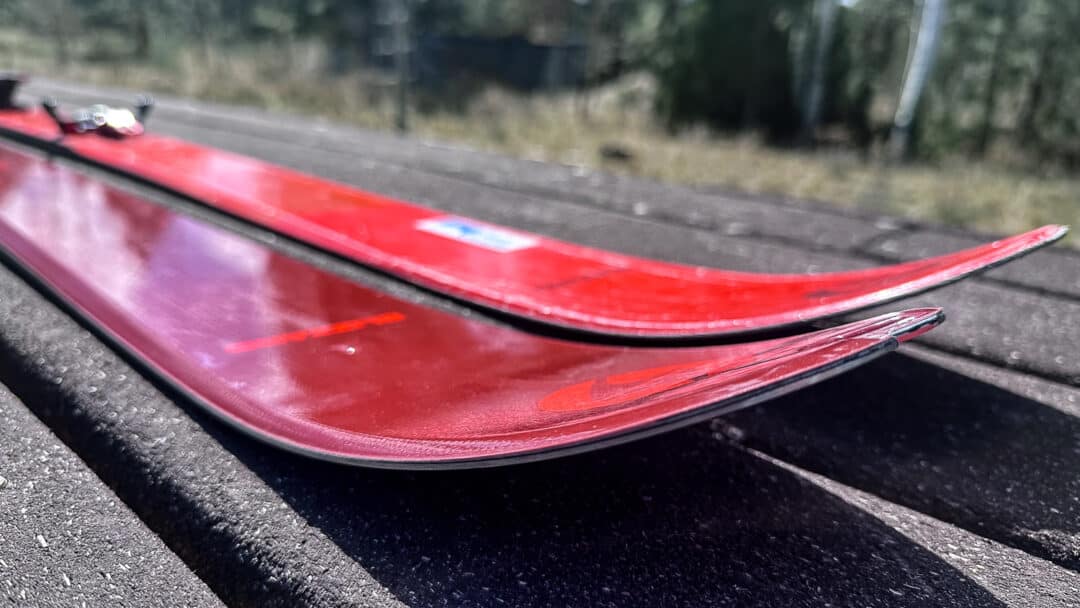
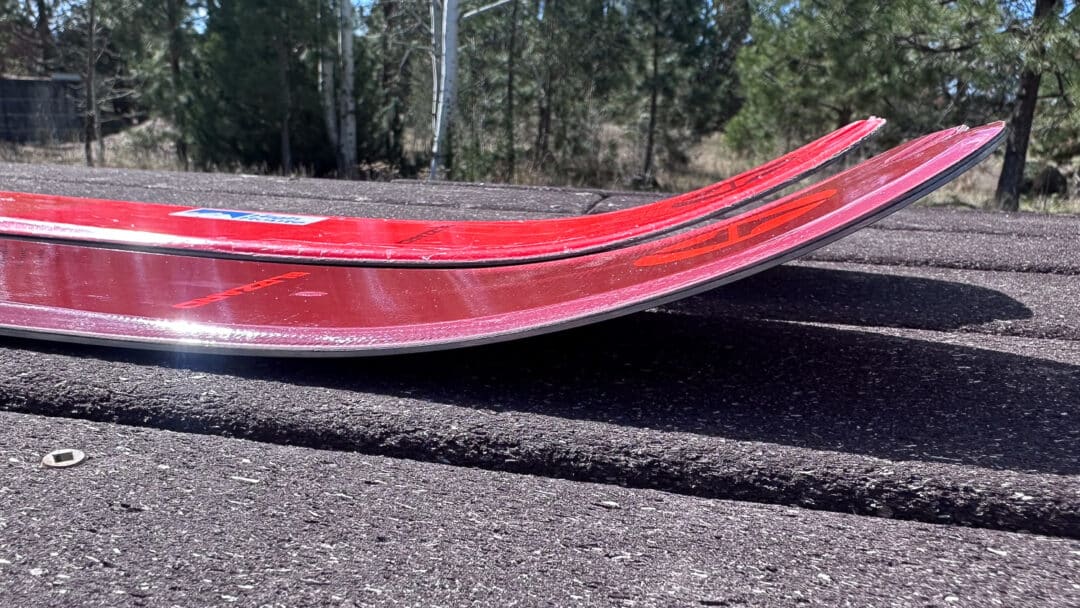
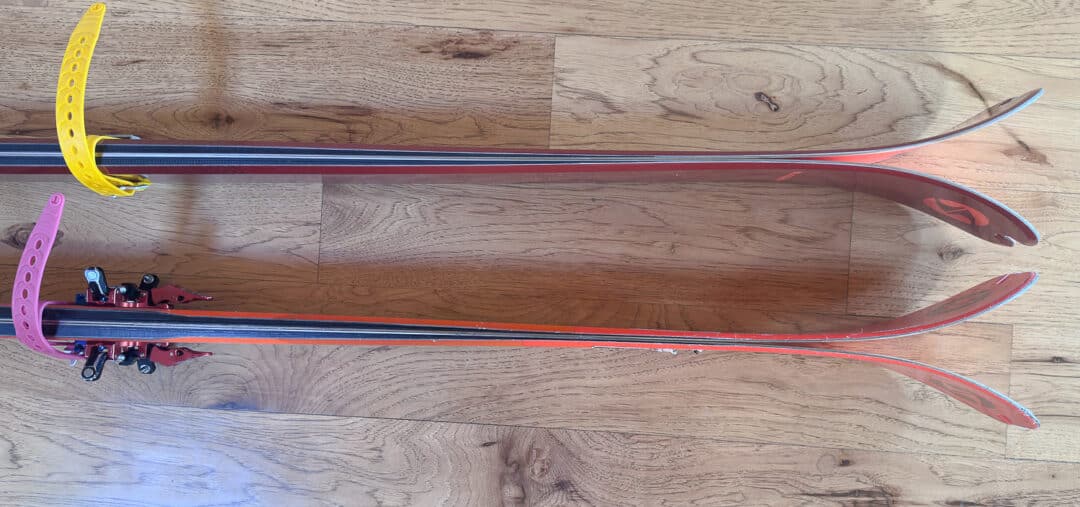
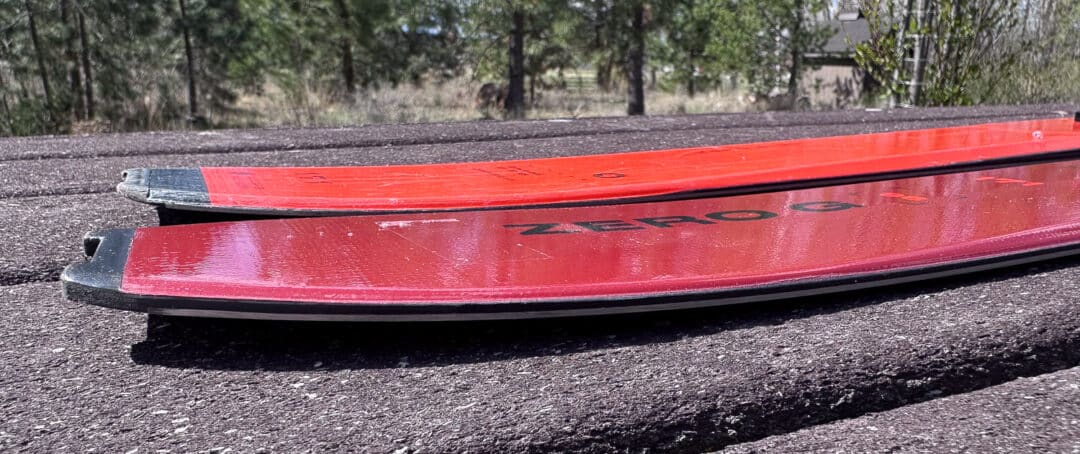
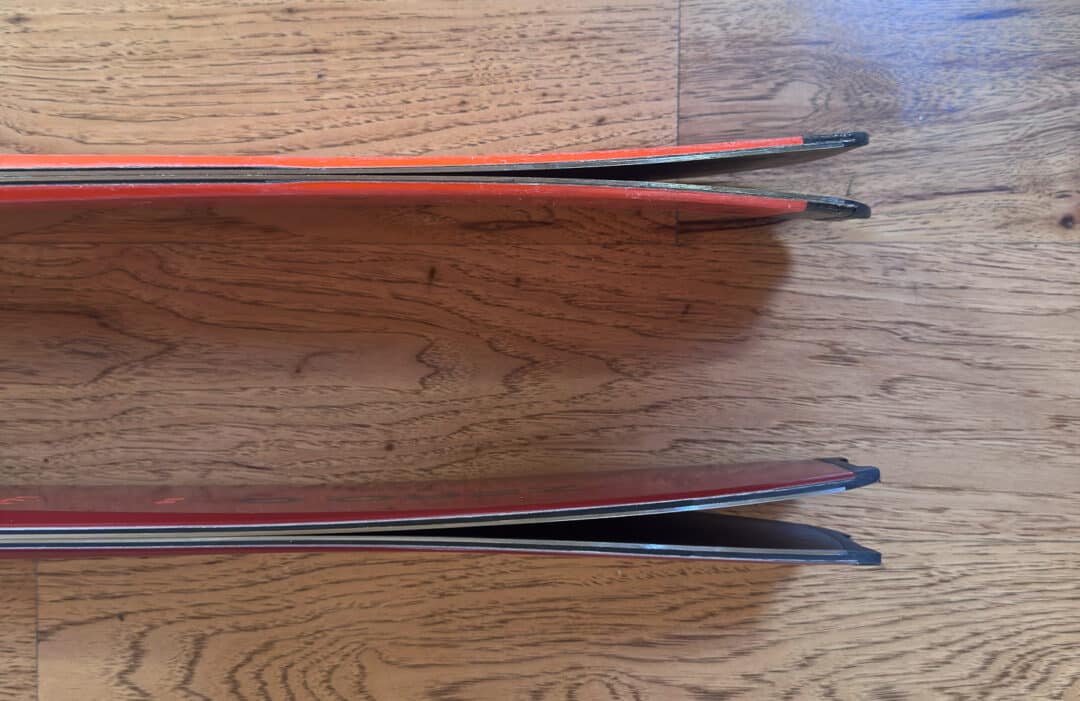
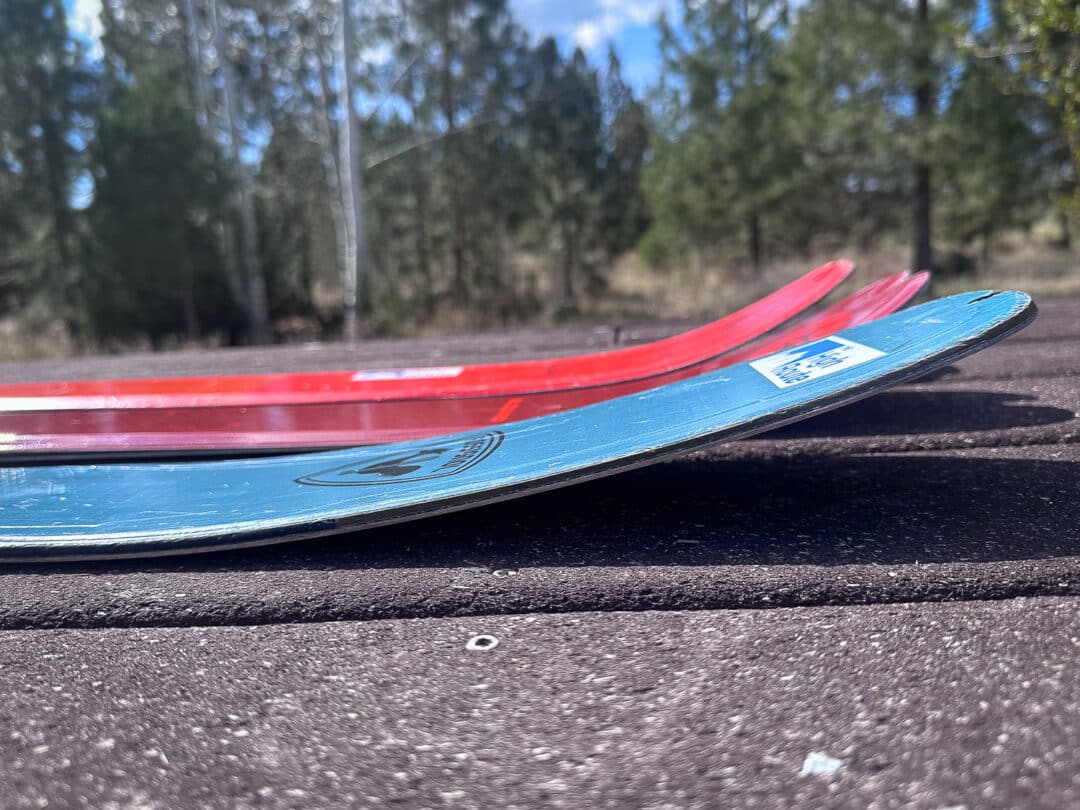
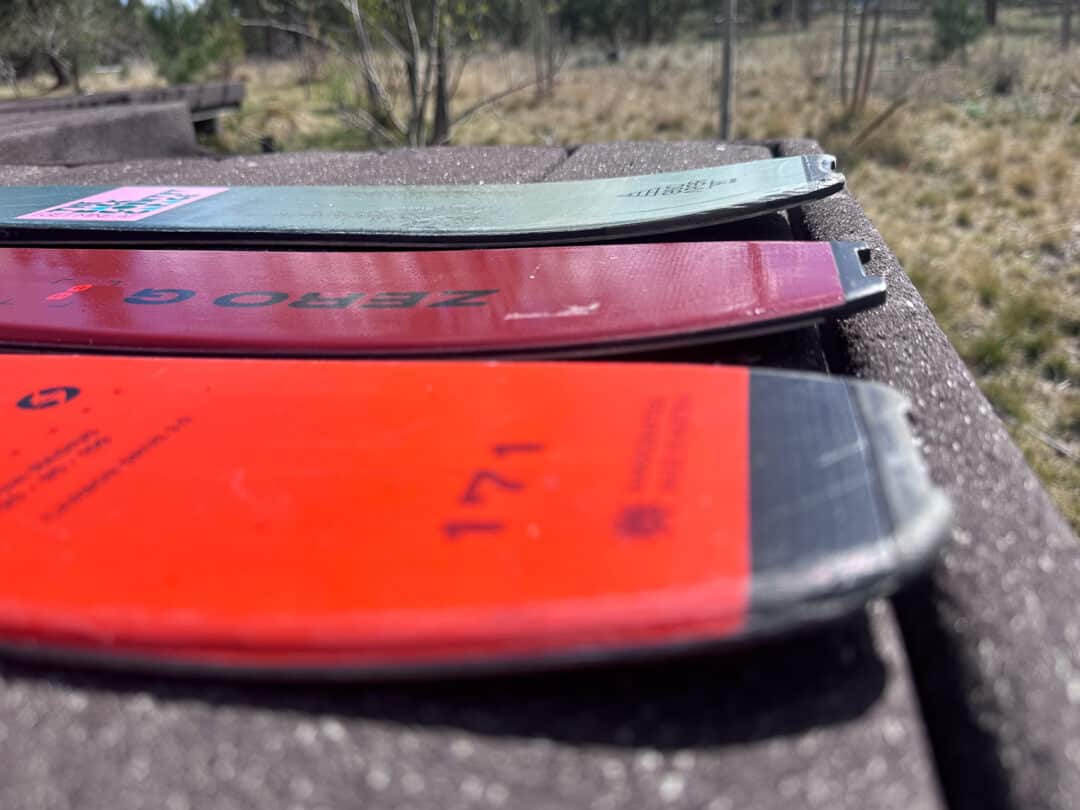
What the side-by-side photos reveal, at least to my eye, are the ZG 96’s slightly more pronounced camber both in height and length, and a nominally more rockered tail. The tips are somewhat similar regarding shovel width and height, with the ZG 95, at least on my pair, having slightly more rocker length.
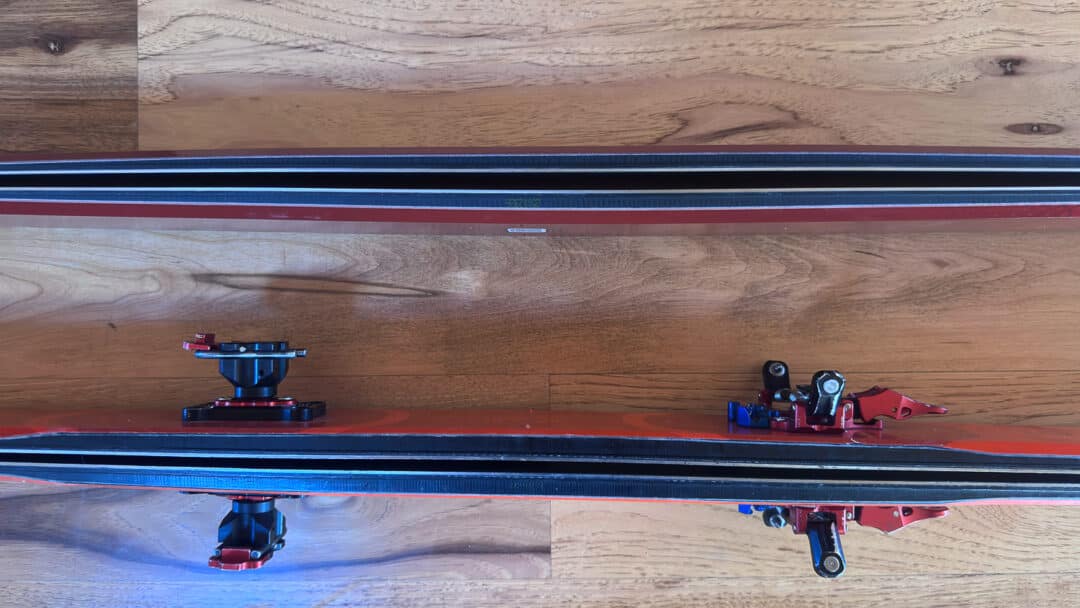
My last note on the 96 and 95 relates to the mount point, which is -11.95cm on the ZG 95 and appears identical on the 96. For just a bit more balance between the tails and tips in the steeps, I mounted the ZG 95s at +1.5cm recommended. (I now mount +1.5 to 2cm on my shorter objective skis.) I’ll also be mounting the ZG 96s at +1.5cm, for, as my friend Pete V likes to add, “the integrity of the test….”
For comparison, I also included a Rossignol Escaper Nano 97 in a few photos. At 97mm underfoot (169cm, dimensions 126-97-116mm), they are, dimension-wise, in the same class as the Zero G 95 and 96, but offer a different shape for a ski of similar length to the ZGs I’m on; the Rossis are 169cm. However, the Escaper Nano 97 features a more pronounced tip and more aggressive tip rocker, making it a ski for more variable conditions—and deeper powder. The Escaper Nano 97 can handle firm, steep snow, but the nod goes to the ZG 95 in those conditions: I’m expecting the nod to go to the ZG 96 as well. But the exercise here hopefully illustrates that, like surfboards, with different shapes and materials, we get different tools.
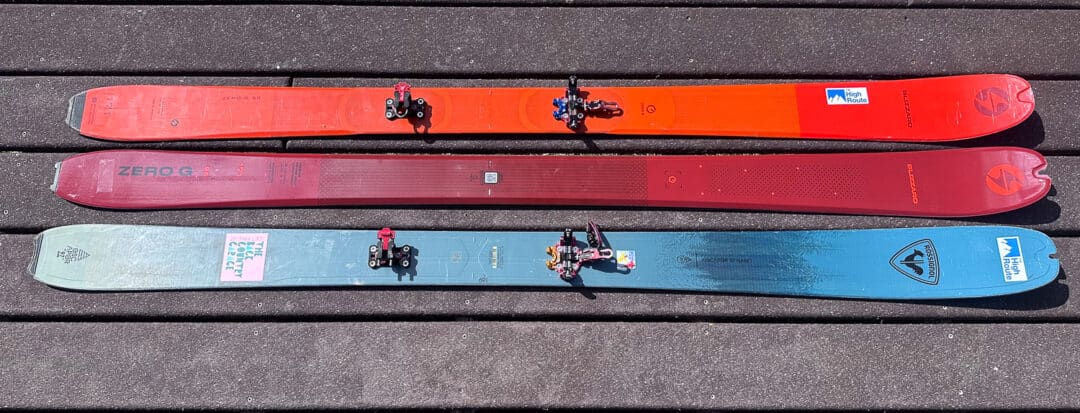
(Since this season has been sub-par regarding powder snow, I’ve spent much of the season on the Escaper Nano 97—look for an updated review on that ski sometime later this spring.)
Leave a Reply
You must be logged in to post a comment.