
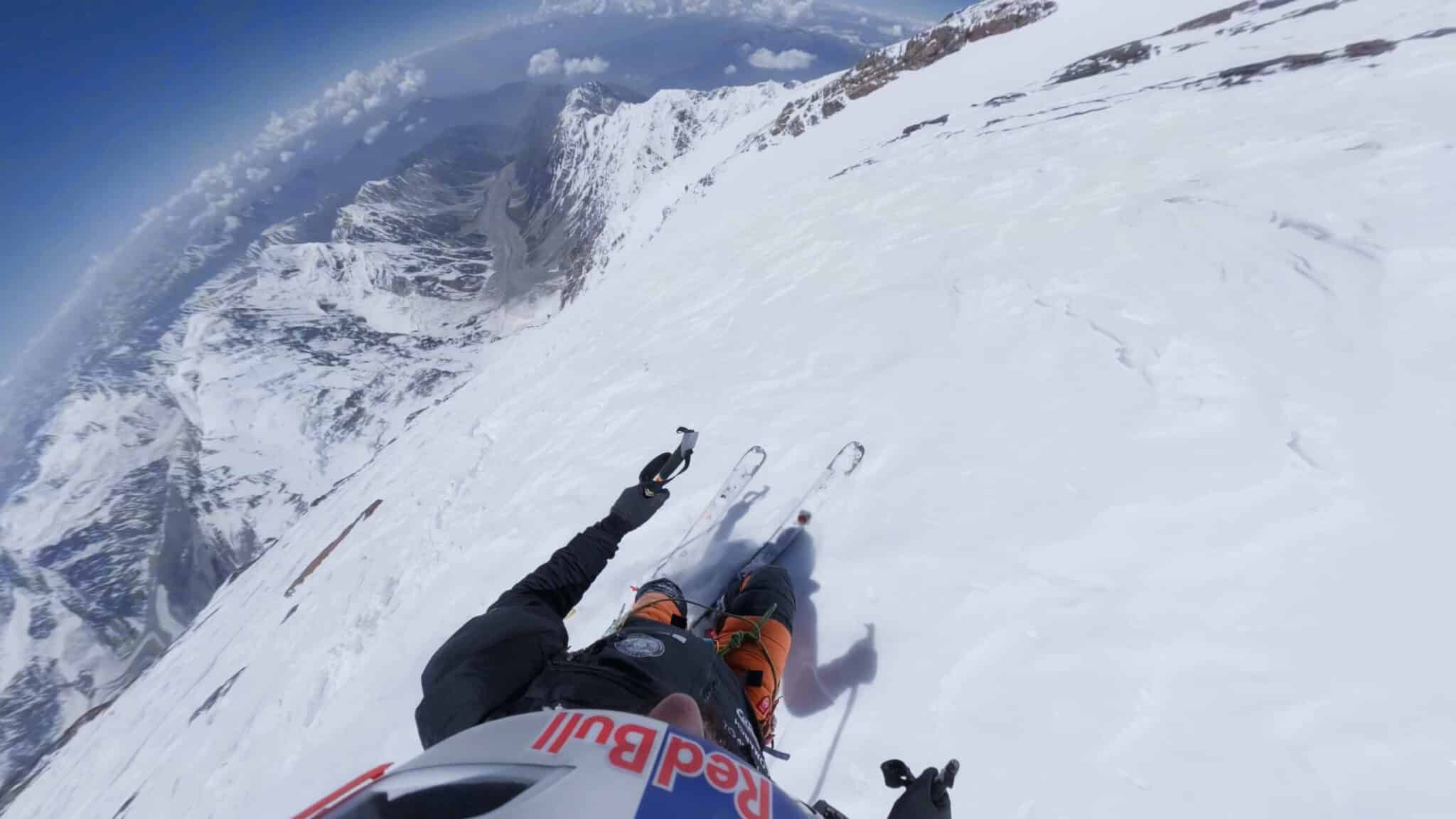
Here are the basic facts according to a July 2 Red Bull Media press release, as Bargiel is claimed to be the first to continuously ski from Nanga Parbat’s summit.
Athlete: Andrzej Bargiel (Poland), age 38
Achievement: First continuous ski descent of Nanga Parbat, climbed and skied without supplemental oxygen
Location: Diamir Face, Western Himalayas, Pakistan
Summit elevation: 8,126 m
Base Camp elevation: 4,200 m
Summit push start: June 28, 2026, at 6:00 a.m., from Base Camp (4,200m)
End of the ski descent: June 30, 2026, at 3:00 p.m., below Camp I (4,400m)
Total time (Base Camp – Summit – Base Camp): 2 days and 9 hours
Time spent on the summit: 45 minutes
Time spent in the death zone (above 7,900–8,000m): 2 hours
Route timeline: Departure from Base Camp → overnight at Camp II →overnight at Camp III → summit push → ski descent
Bargiel burst onto the scene in 2020 after becoming the first to ski the 8,611-meter K2 (without supplementary oxygen). Since then, he’s skied Everest in the same style. His Nanga Parbat ski closes out the Pakistan chapter of his high-altitude skiing, as he has now climbed and skied all five of the country’s 8,000-meter peaks. These include K2, Broad Peak, Gasherbrum I, Gasherbrum II, and Nanga Parbat.
Below is a video of Bargiel’s K2 descent.
The Nanga Backstory
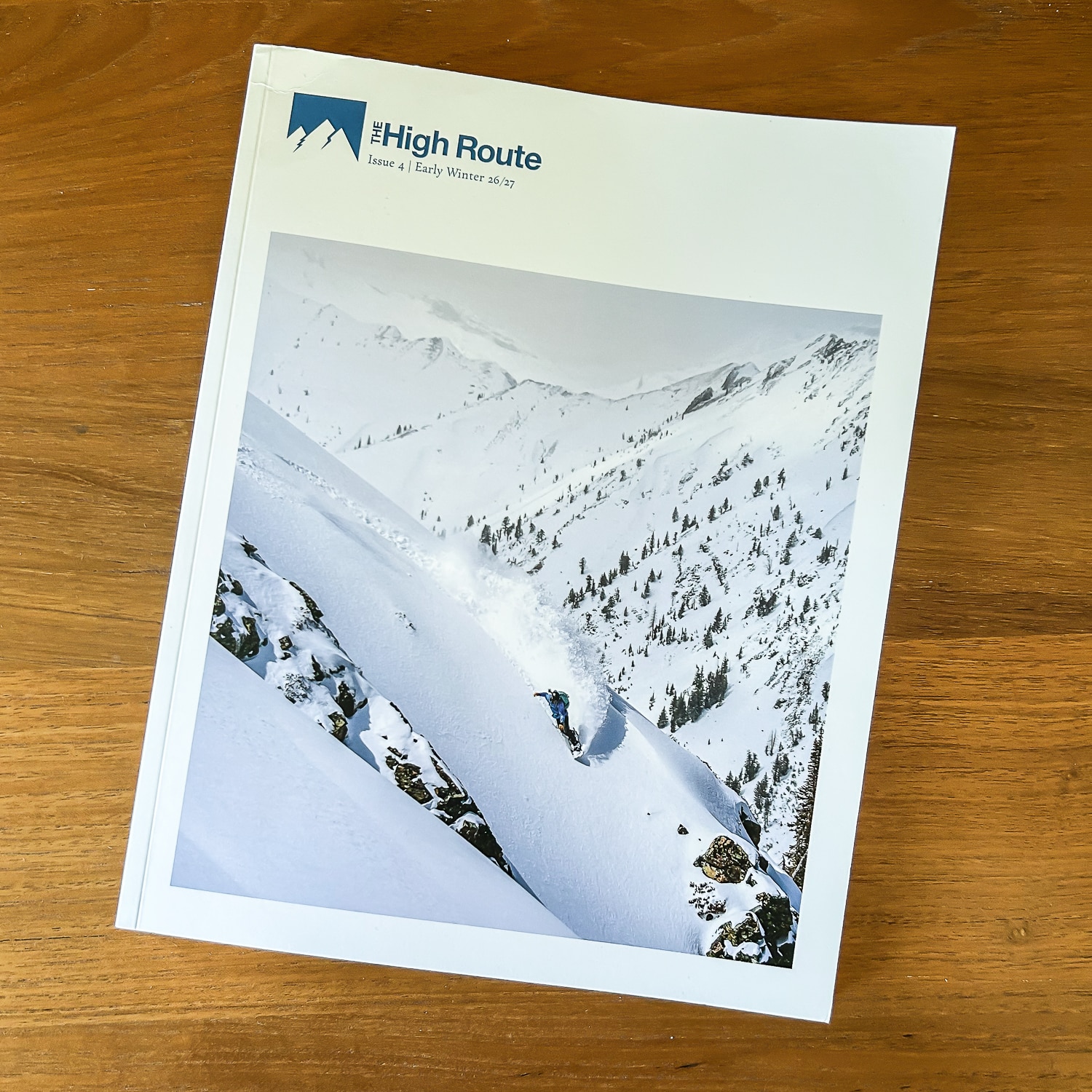
As one of the mighty 14 8,000-meter peaks, Nanga Parbat is legendary. Most often, we hear about the peak in the context of sharp-end alpinism, which, through our lens, often means minimalist. Although the full-length, over 3,000-word story is only in print, Billy Haas wrote an excellent story in Issue 3 of The High Route journal titled “By Design on Nanga Parbat—A Rupal Face Ski Descent.” In it, Haas recounts Boris Langenstein’s and Tiphaine Dupérier’s relationship with the mountain culminating in a ski descent last summer. In total, Boris and Tiphaine (as they are known in the broader, yet niche, ski-alpinism community) took three expeditions to the mountain. Ultimately, on the third attempt, they skied the upper Schell Route and then skirted over onto the storied Rupal Face.
We should note that the gist of Haas’ piece is to celebrate two individuals who move into this rarefied realm as a hyper-small unit with no Sherpa support above basecamp and no supplementary oxygen (they climbed Nanga in 2025 with a third partner, David Goettler, who then paraglided to basecamp from below the summit.
With respect to our ethos that what we print in the THR journal remains in print, here’s Haas’ summary of the mountain’s ski history:
“The peak’s ski history began, as with many others, when the indomitable Hans Kammerlander made the first ski descent with Diego Wellig via the Kinshofer Route in 1970. According to the 1991 American Alpine Journal, after summiting, the duo skied from “100 vertical feet below the summit [and] began a ski descent which they continued to Basecamp except where it was necessary to rappel or rock climb.” A still-significant ski descent for its near completeness, length, and alpine style.
“The late German guide Louis Stitzinger made an impressively fast attempt in 2008. After previously summiting without skis earlier in his trip, Stitzinger climbed solo toward the top and skied from below the summit pyramid at 7,850 meters down an aesthetic and skiable Kinshofer Route variation first climbed by Norbert Joos and Erhard Loretan—a variation which Boris and Tiphaine would later take on their 2019 descent of the Diamir.”
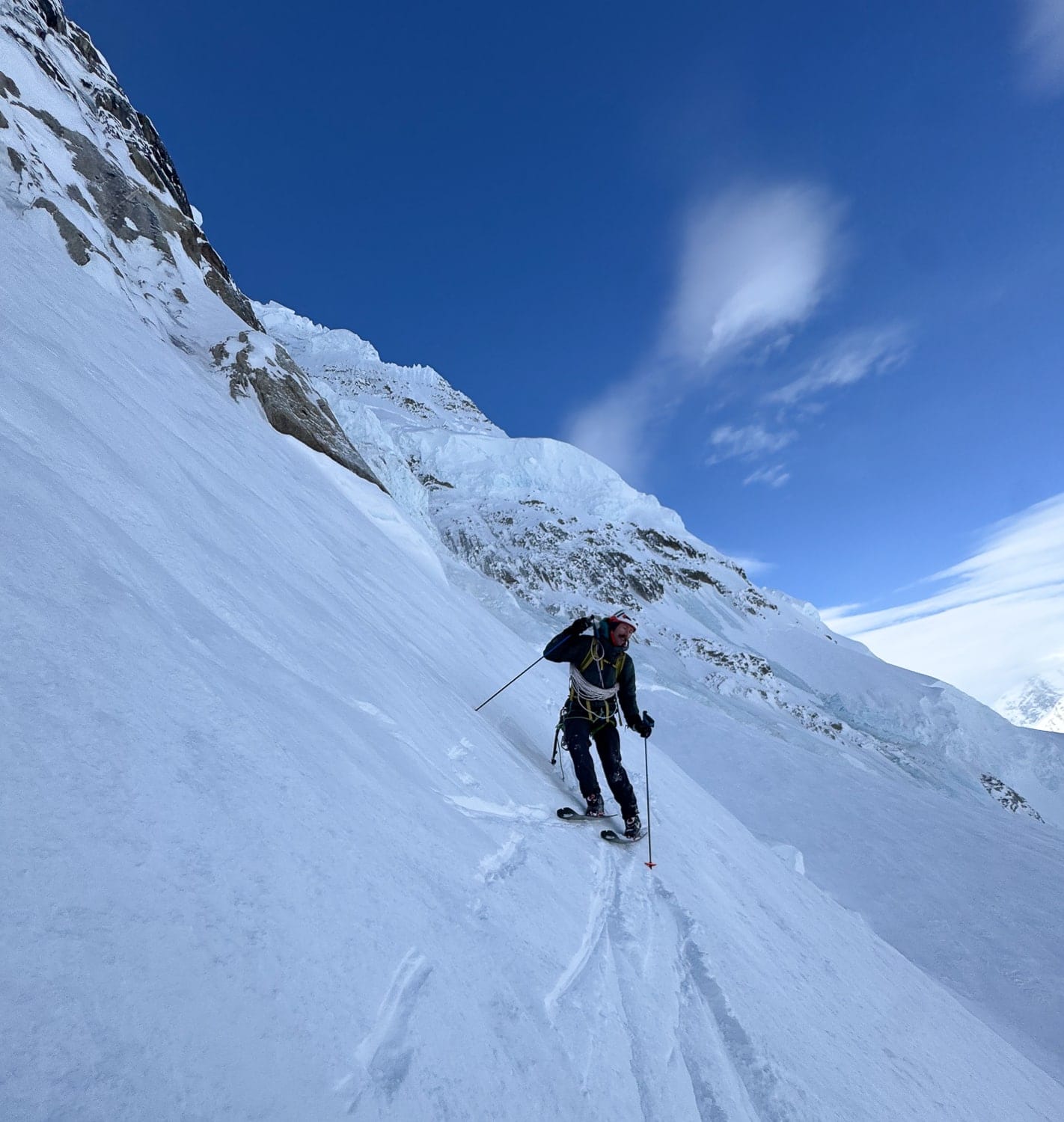
Boris and Tiphaine, during that low-snow season, pulled skis as they descended below Camp 1, which sits at roughly 6,000 meters. Then, as you can discern from the RED Bull press release stats above, Bargiel was able to make a continuous descent off the summit to within close proximity to base camp. That’s proud.
Read the American Alpine Journal’s account of Boris’ and Tiphaine’s 2019 Nanga Parbat climb/descent.
Here’s Haas again on Boris and Tiphaine:
“Whether their descent is complete can be debated. And to call it nonstop neglects the four days it took them to ski from the top to basecamp. What is not up for discussion is that they summited and skied off the top of Nanga Parbat and returned to a basecamp in the Rupal Valley under their own power and skill. When I spoke with Boris and Tiphaine, Boris explained, “The quality of the ski, the quality of the descent is not the main goal of this kind of ski descent; you just want to keep your skis on from the top to the bottom, making the best turns you can.” All ski descents have value, and again, this value is personal. Some receive more attention, and others live humbly in the minds of the participants. But challenge is not as subjective, and any ski descent from the summit of Nanga Parbat, beginning and ending in the Rupal Valley, represents one of the greatest challenges of high altitude skiing to date. No fixed lines or pre-broken trail, only a small team, strong legs, strong lungs, sharp edges, and a deep desire to get it done.”
Leave a Reply
You must be logged in to post a comment.