
We are on the cusp of astronomical spring in about a week. And with spring, some of us turn to a wish list that is more objective-based and/or traverse based. This is premised on the general pattern that, as we move into spring, snow instability becomes more predictable. But spring doesn’t always promise sunshine and flowers. The high alpine, which becomes more promising in the spring, remains temperamental.
The Background
So let’s chat about pants for a moment. If you are guaranteed splitter wx, then softshell pants, and even lightweight/thin softshells, may be preferred. Many say they breathe better, articulate with the lower body’s movements better, and generally, just feeeeeel bettaaahhh. So be it.
But let’s say you are on a multi-day mission, on a fixed schedule, and the weather forecast looks passable but mixed. And you go for it. And a storm pummels you. Or say you venture off on an 8-10 day traverse on the tail end of a storm with a few days of high pressure following from behind. The first four days look good; beyond that, you trust your gut and wander onward.
My traversing pals and I have different strategies. Both work. They use softshells regardless of the forecast and pack lightweight Gore-Tex hardshells in case of snow or rain. I’ve used this strategy too. But over time, I’ve found reliable, comfortable hardshells that are great daily drivers, allow proper heat dumping through side vents, and offer real-deal protection from the elements. These are an older iteration of The North Face Futurelight Climbing Pant with a full zip (it runs from the waistband to the bottom cuff, and this cuff fits over ski boots), and a well-beaten-up Patagonia Stormstride Pant. I still have both pants in the rotation. Note: We often traversed in early to mid-May in the wondrous state of Wyoming. So we were well into spring.
Due to some potential snow instabilities, my late-March traverse plans might change. However, I’ve made some gear choices, and for now, the plan remains intact. The basics of the traverse are this: multi-day and up north, across the border. I’m looking for some hardshell protection.
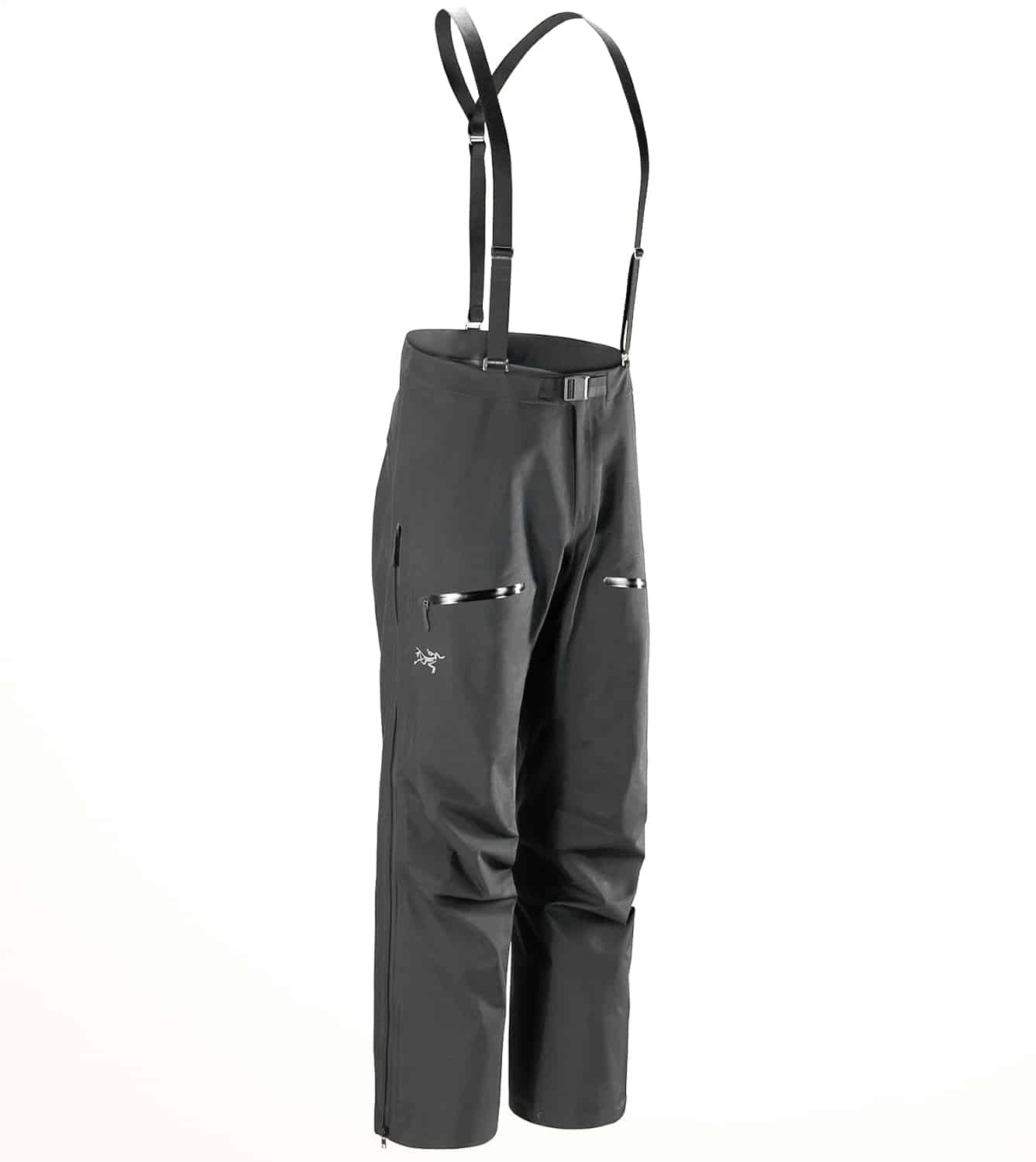
Arc’teryx Beta SV Pants
Here’s how Arc’teryx markets the Bets SV: “High-altitude hiking, ski touring, or ice climbing—no matter how ambitious the objective, the Beta SV Pant is up for the job. Lightweight GORE-TEX PRO ePE shields against wind, rain, and snow, while the breathable backer fabric prevents overheating on the ascent. Three-quarter side zips dump excess body heat and make for easy on-off over your boots.”
I don’t write advertising copy, but “no matter how ambitious the objective,” seems kind of missing the mark here. I think these pants fit perfectly into many mountain objectives, some of which might be ambitious. But these are pretty lightweight hardshells. They weigh a confirmed 370g in a men’s regular inseam with the included suspenders. And, for me, they seem near perfect for the intended job—keeping me protected from wind and moisture, if, in fact, it gets moist.
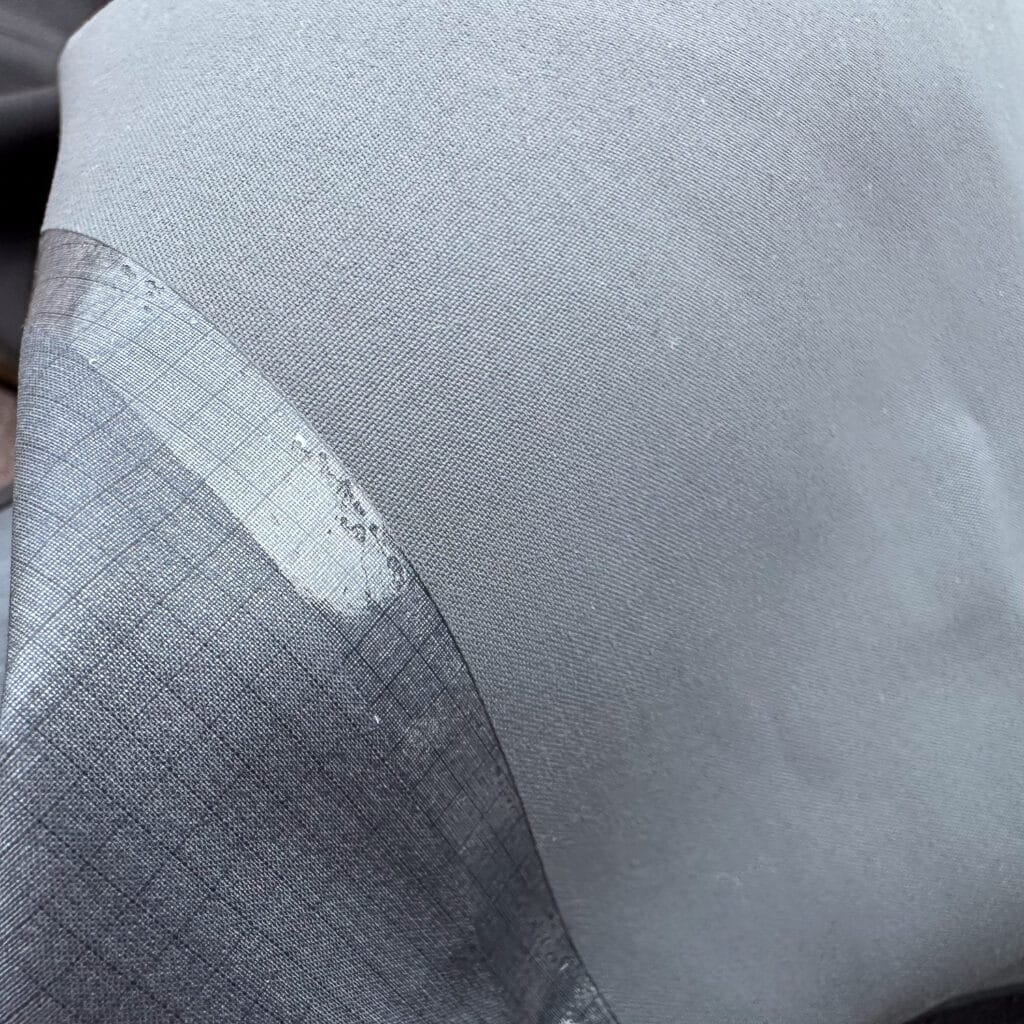
Here are the Beta SV fabric specs according to Arc’teryx: 100d 3L GORE-TEX® PRO ePE, recycled plain weave, 135 gsm, FC0 DWR—100% Nylon with ePE and PU Membrane 100% Nylon Backing. Plus, a Lightweight MICRO-GRID® backer boosts breathability and protects against internal abrasion.
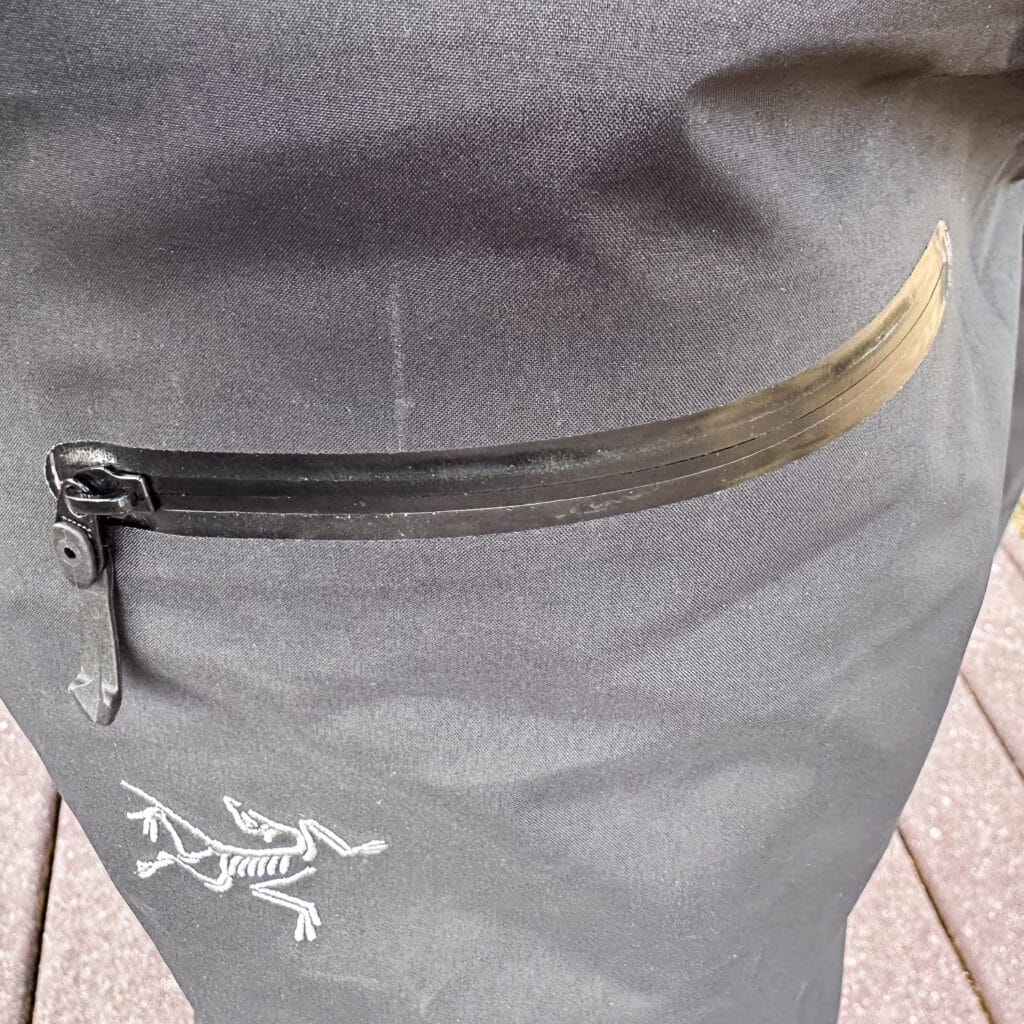
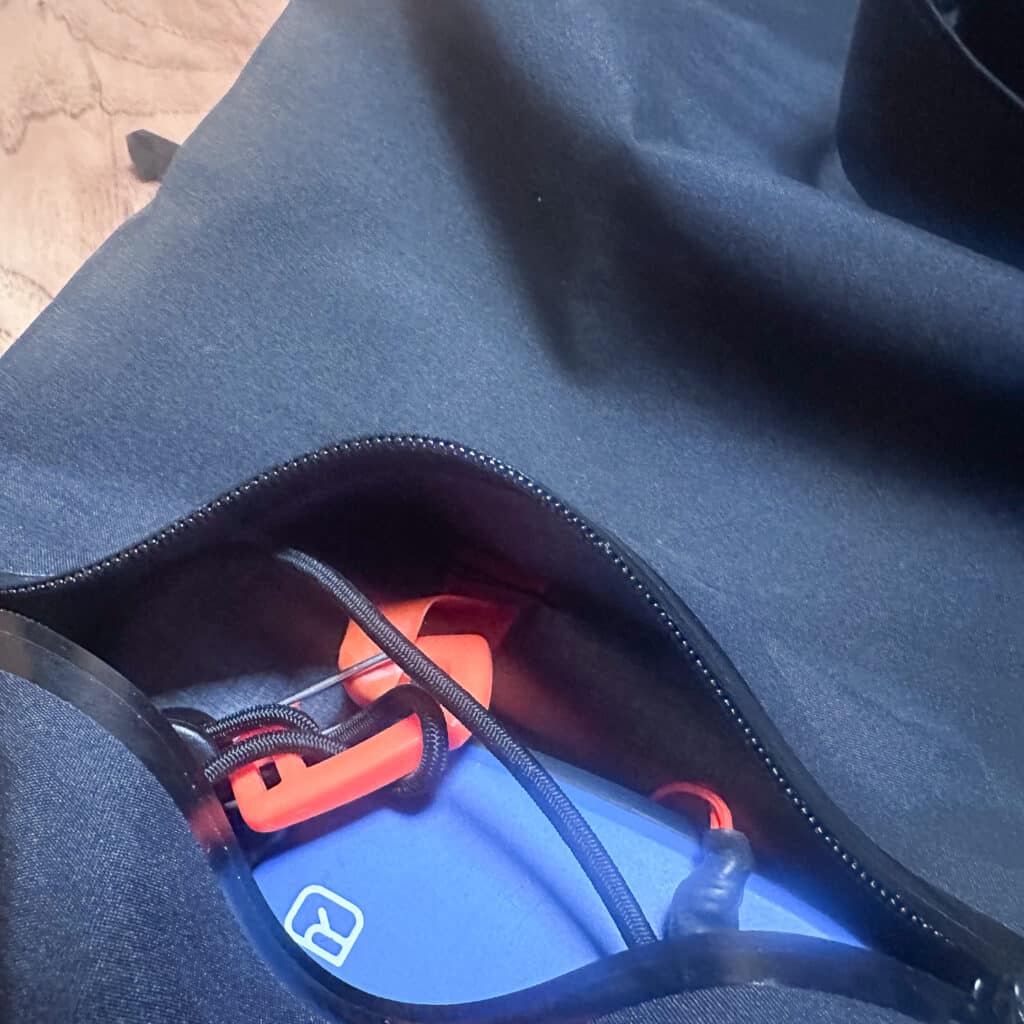
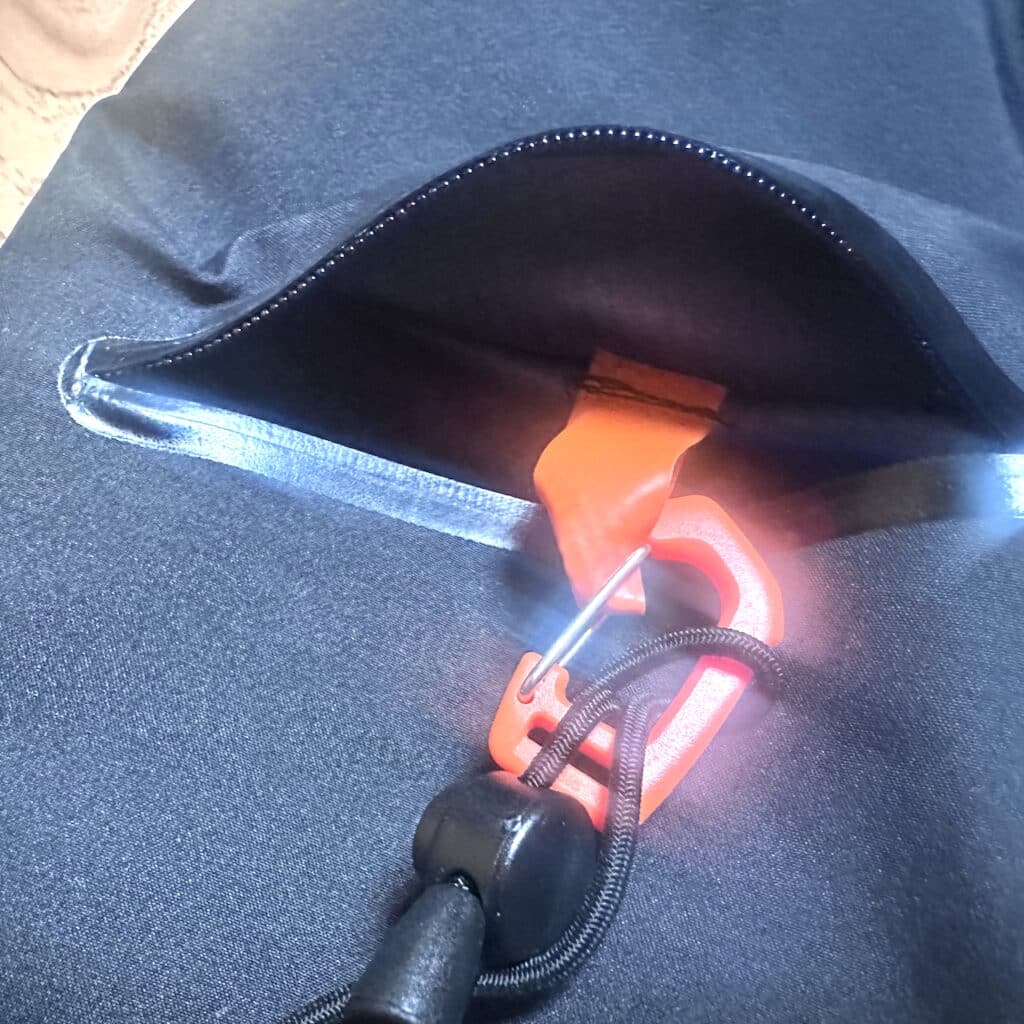
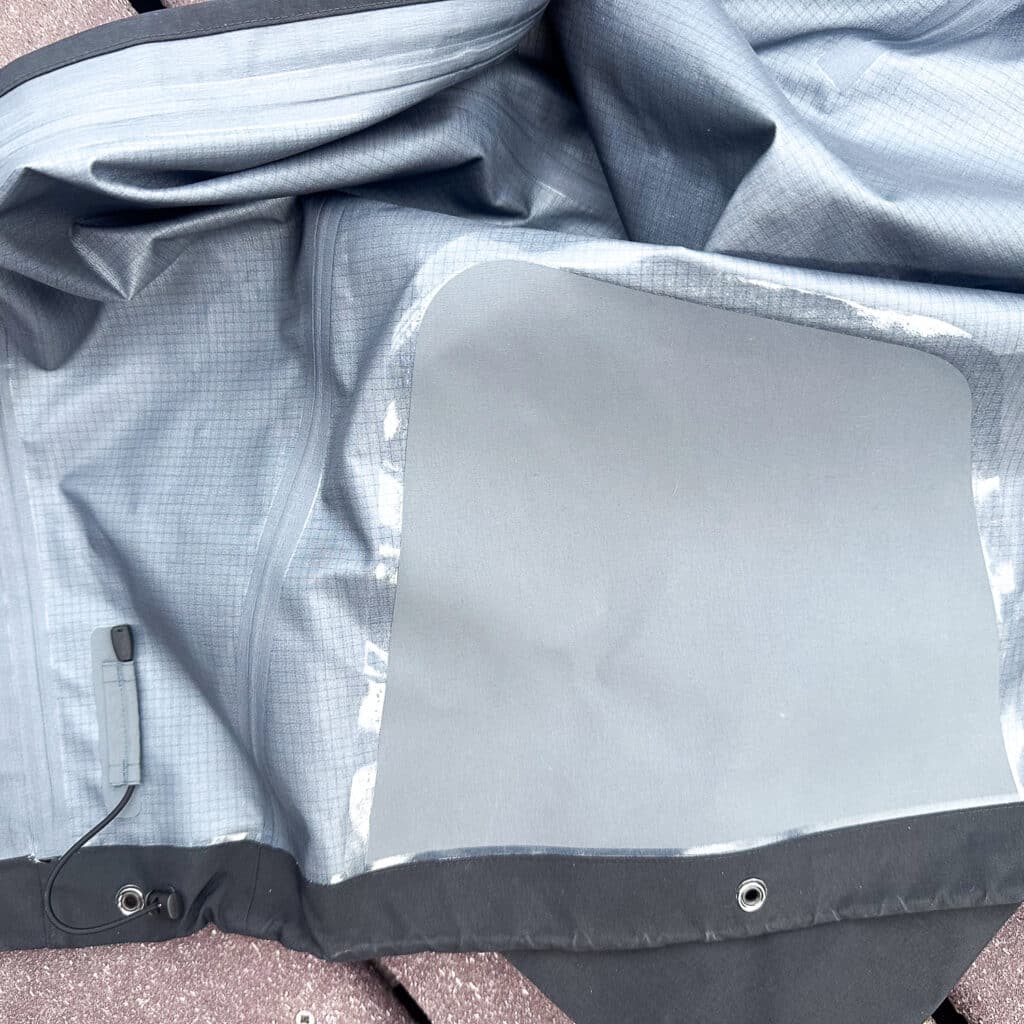
There are two zip thigh pockets, no internal snow gaiter on the cuff (I like this for reducing bulk and weight), a button closer, fly, a minimal waist belt, ¾ length side zips, suspenders (which definately I like), and what Arc’teryx calls “Abrasion-resistant kick patches [that] prevent wear and tear from skis, boots, and crampons,” on the inner cuff, a elastic cinch on the cuff to close against your preferred footwear, and…that’s about it. (The cuffs fit over an assortment of touring boots.)
Oh, the zippers, as is fitting for a brand born on the wettest of coasts, the zippers are sweetly weatherproof. Really, for a hardshell, and a Gore-Tex Pro hardshell at that, these are pretty pared down, which is what drew me to them.
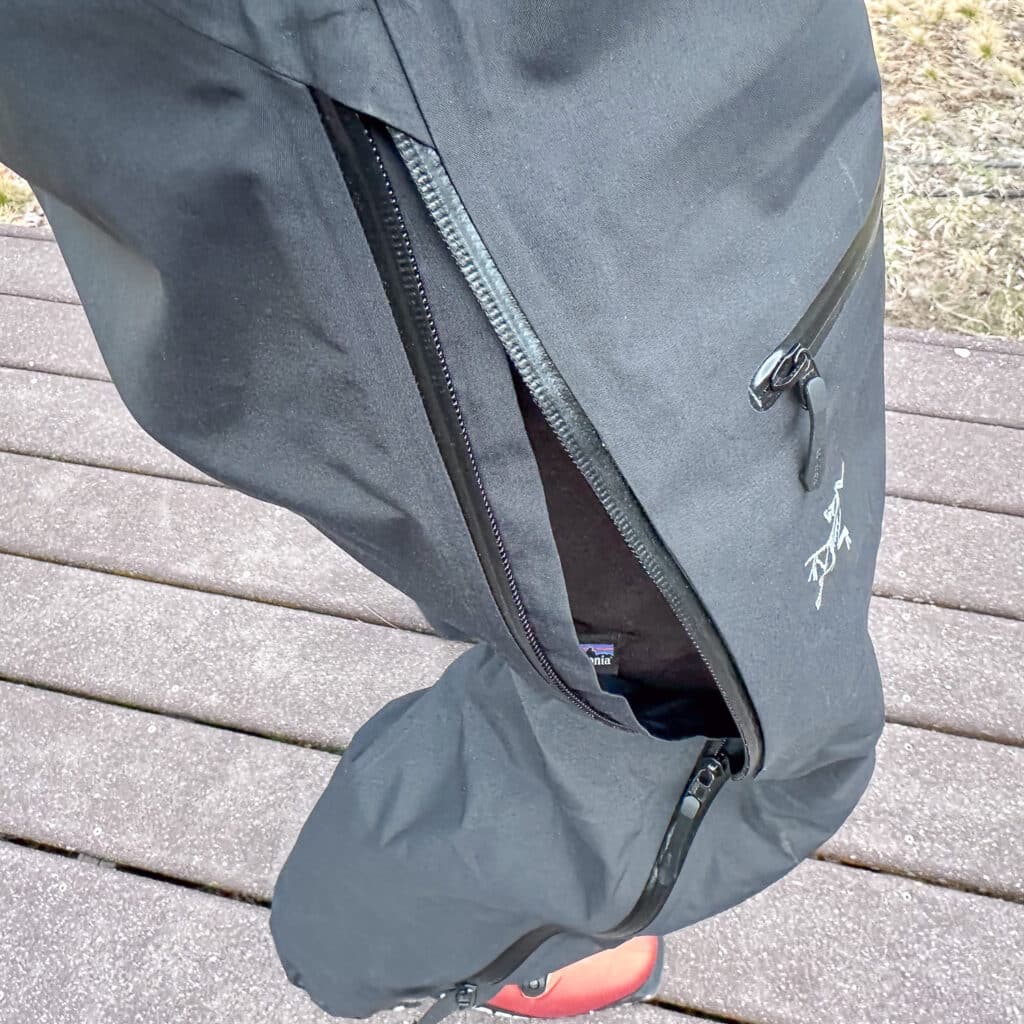
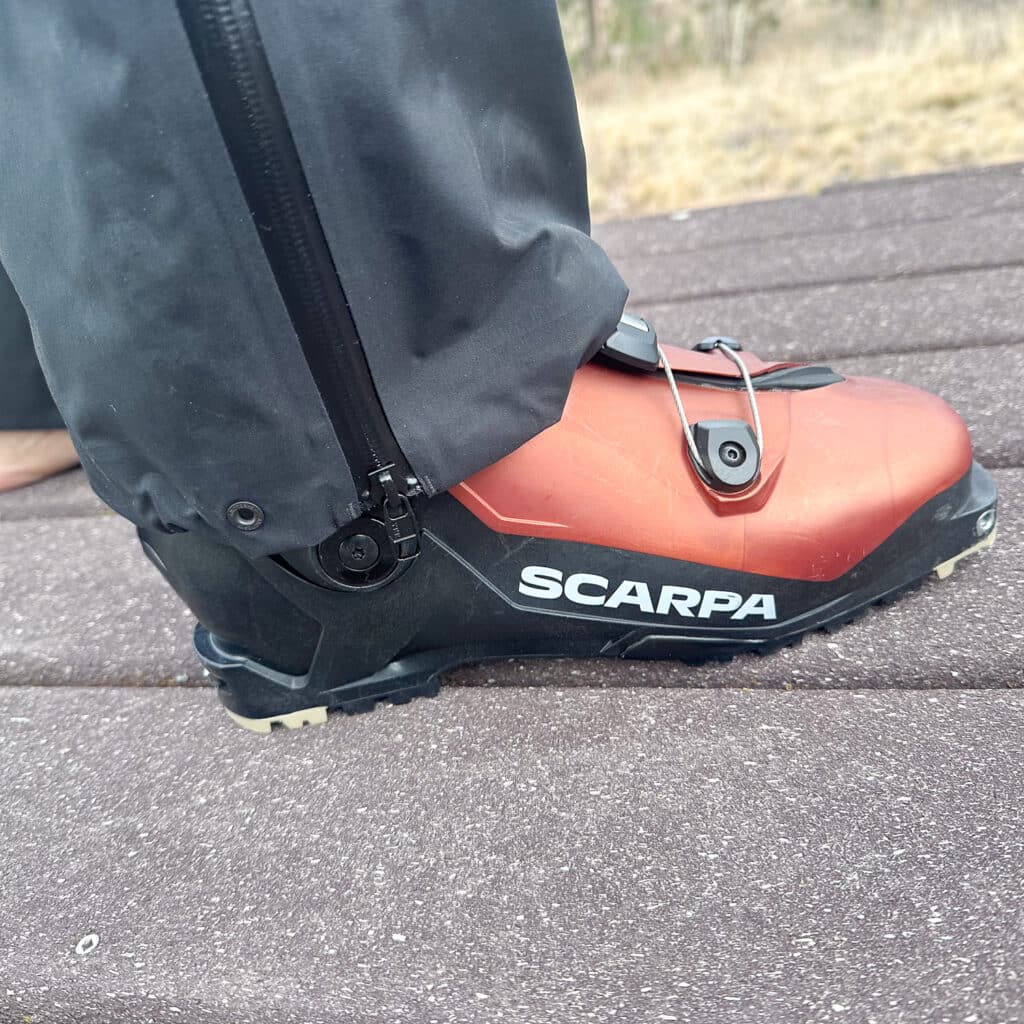
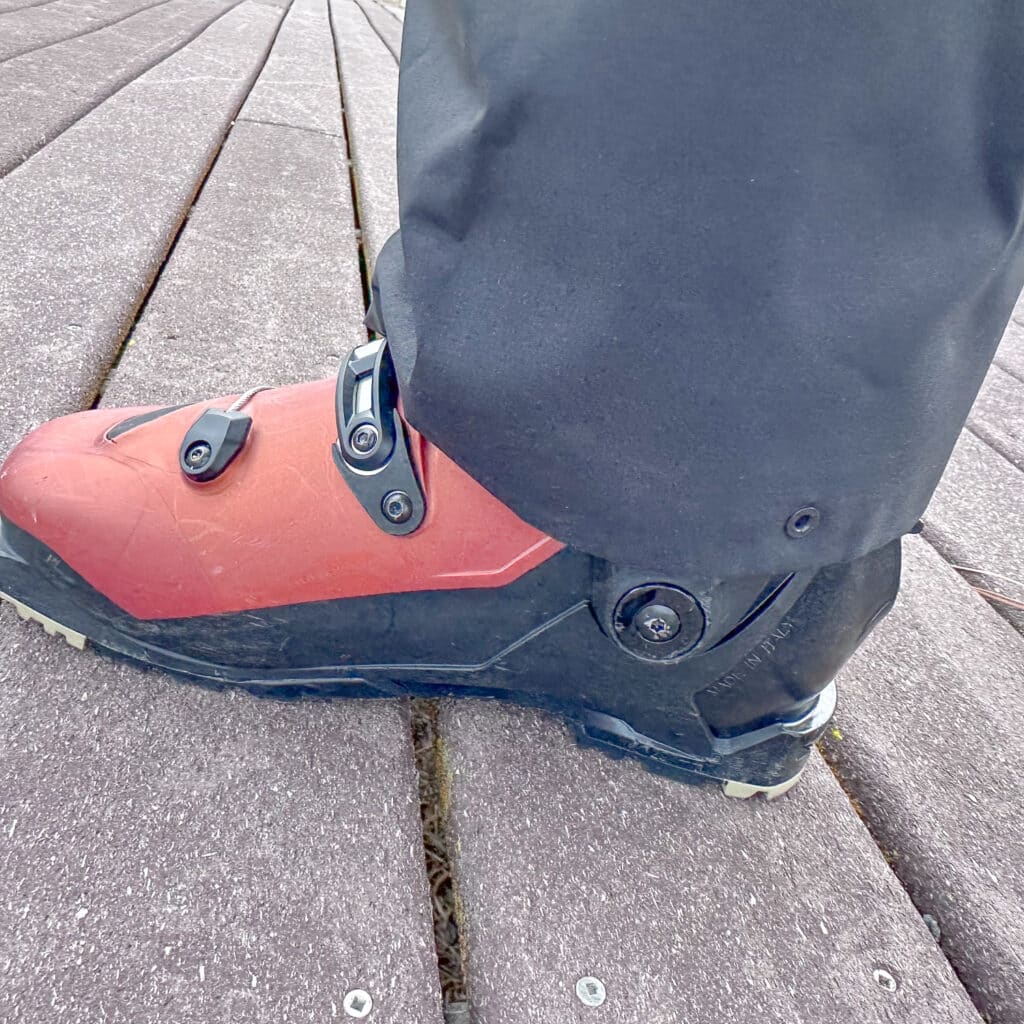
I’ve worn them on two days, so this is truly a first look. The near-full-length side zips dump plenty of heat if that is what’s needed. I’m in a men’s medium with a regular inseam; the specs say it is a 34″ waist and a 32″ inseam. I’d say the inseam is spot on, while the waist feels more like a 32.5” unless you let the waist ride a bit low. I’m usually a 33″ waist. If you are close to these measurements, maybe opt for the large in a short inseam. Arc’teryx does a good job here; they offer inseams in short, regular, and tall lengths. However, the men’s large claims it is a 37″ waist.
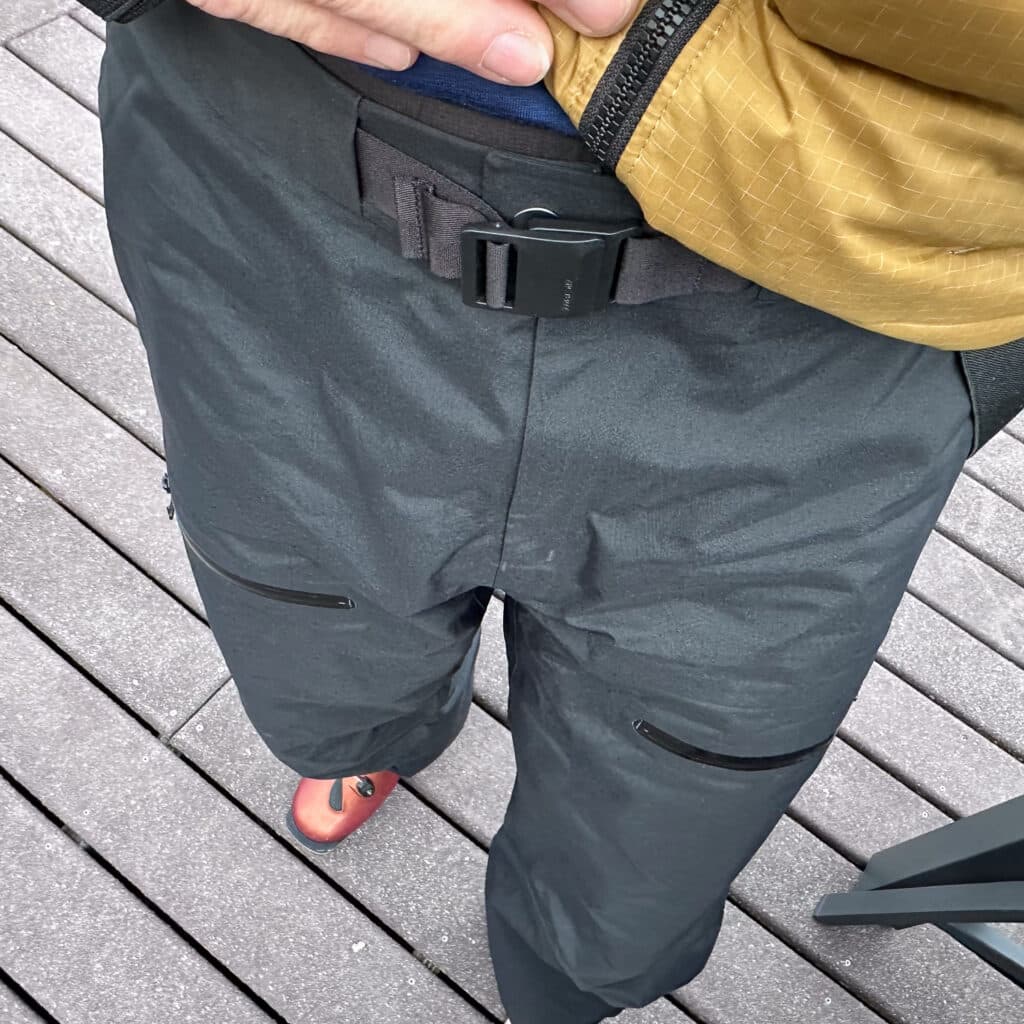
Skiers and riders, note this: The zippered thigh pockets do not have a secondary reinforced tab to secure a transceiver to. I’ll be sewing a loop in before my trip. And although I am not missing heavy-duty scuff/crampon guards on this hardshell (the minimalism is part of the appeal), the abrasion-resistant kick patches are a tough-feeling material laminated on the interior and make the inner cuff (where you are likely to snag a crampon front point) stiffer and seemingly more durable. I’ll keep an eye on this.
Pared-down and well-constructed hardshell pants that fit over touring boots are somewhat hard to find. The designers at Arc’teryx thankfully kept it simple with what looks to be a solid generalist hardshell pant for mountaineering, alpinism, and ski touring/ski mountaineering. And for those seeking freeride sensibilities, the fit is on the roomier side throughout the legs and bum. I’m looking forward to using these somewhat bare-bones hardshell pants in the wild.
Leave a Reply
You must be logged in to post a comment.