
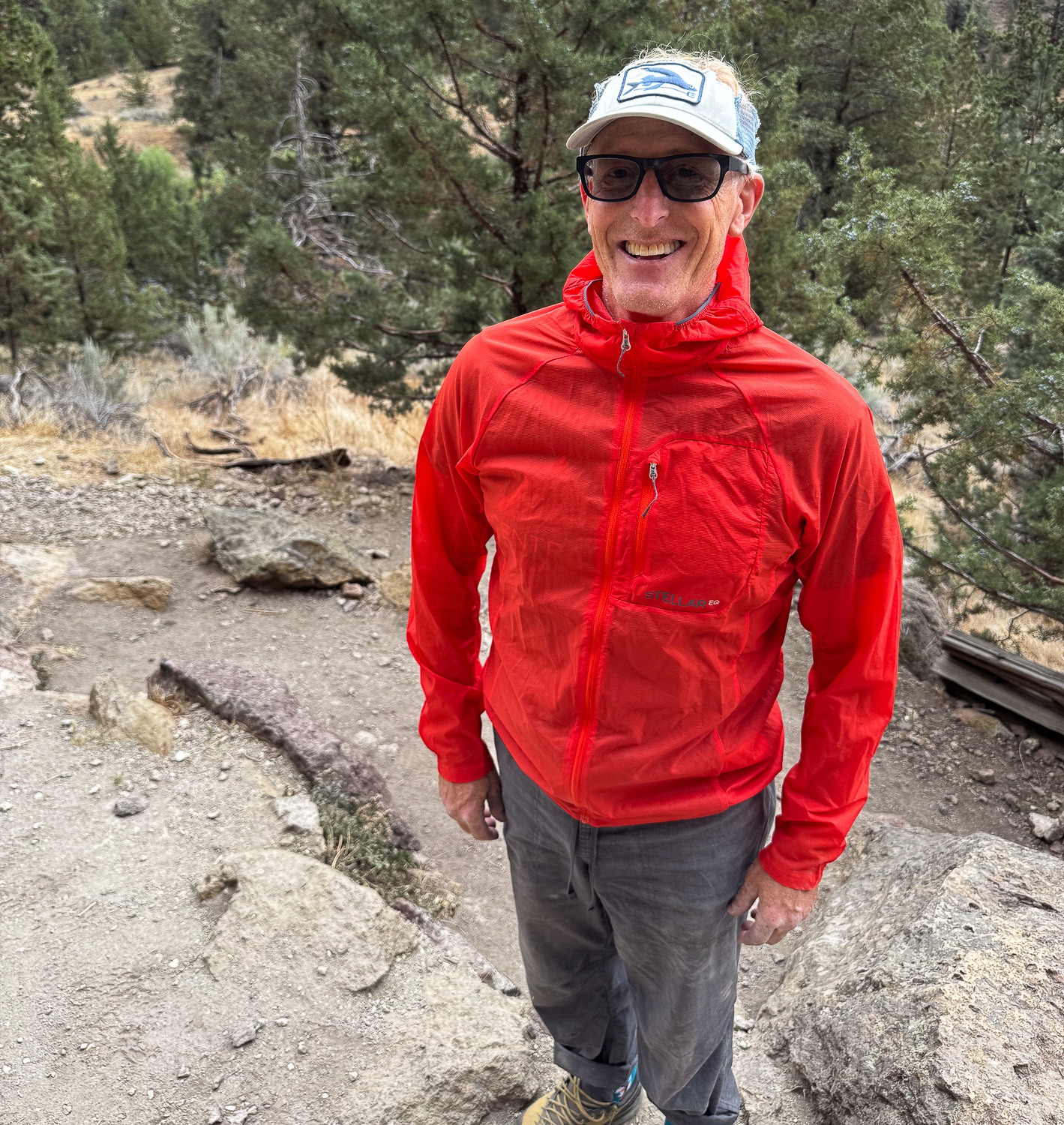
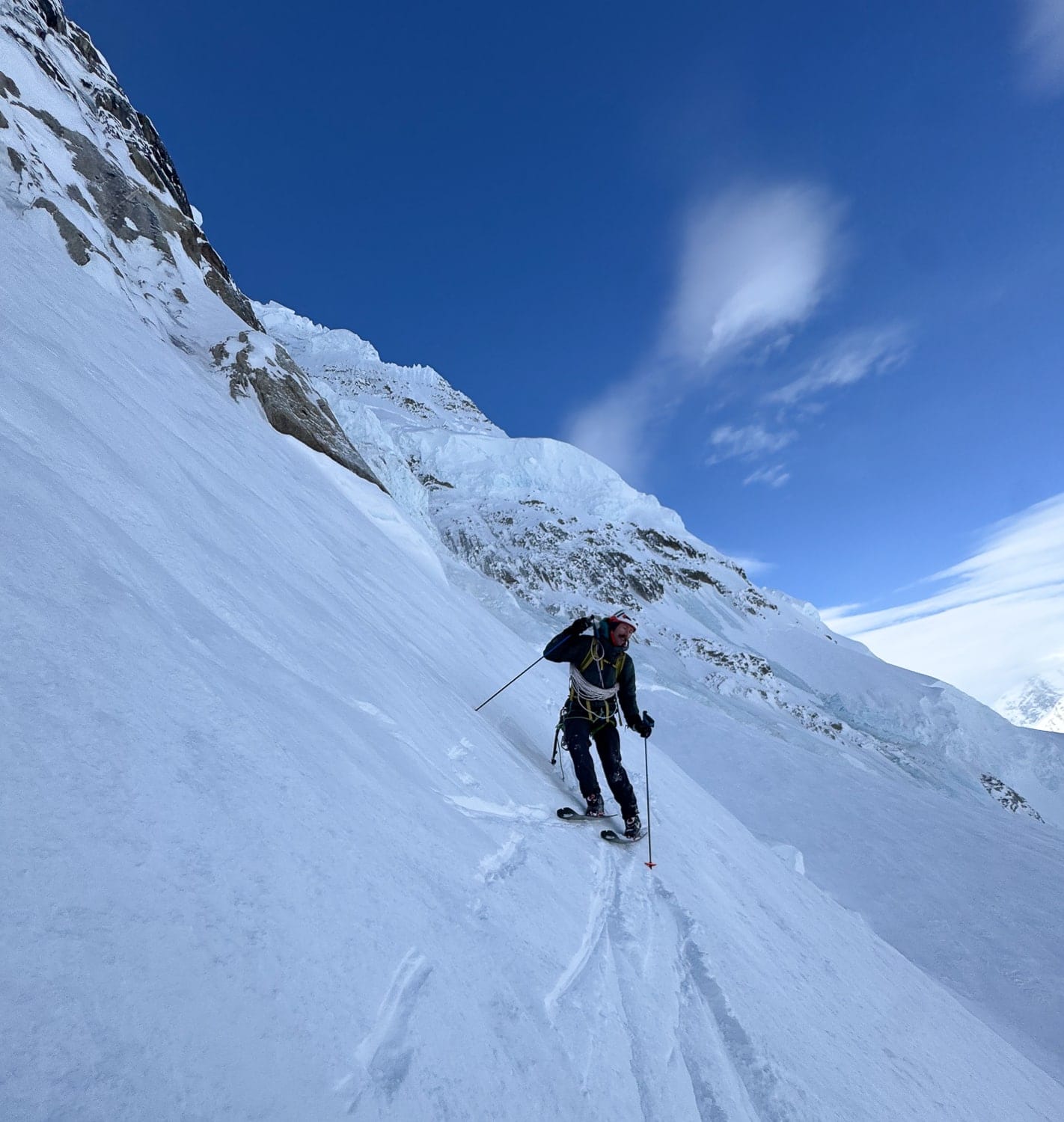
Back in the early aughts, Patagonia popularized the ultralight wind shell. The Houdini. That jacket, which is still produced, and the many ultralight wind shells from solid brands that followed are useful tools for cutting wind on low-to-no-precip days. Come spring, ultralight windbreakers are a staple for weight-conscious ski/ride tourists when conditions warrant a hardshell overkill.
Touring often is an uptempo affair. And unless the temps and wind are cool, even an ultralight shell can become clammy. Air permeability helps mitigate that dynamic. It is, however, a well-choreographed dance; you want enough wind protection to make an ultralight jacket useful in the alpine, and enough air permeability (call it breathability) to be functional during high-output scenarios.
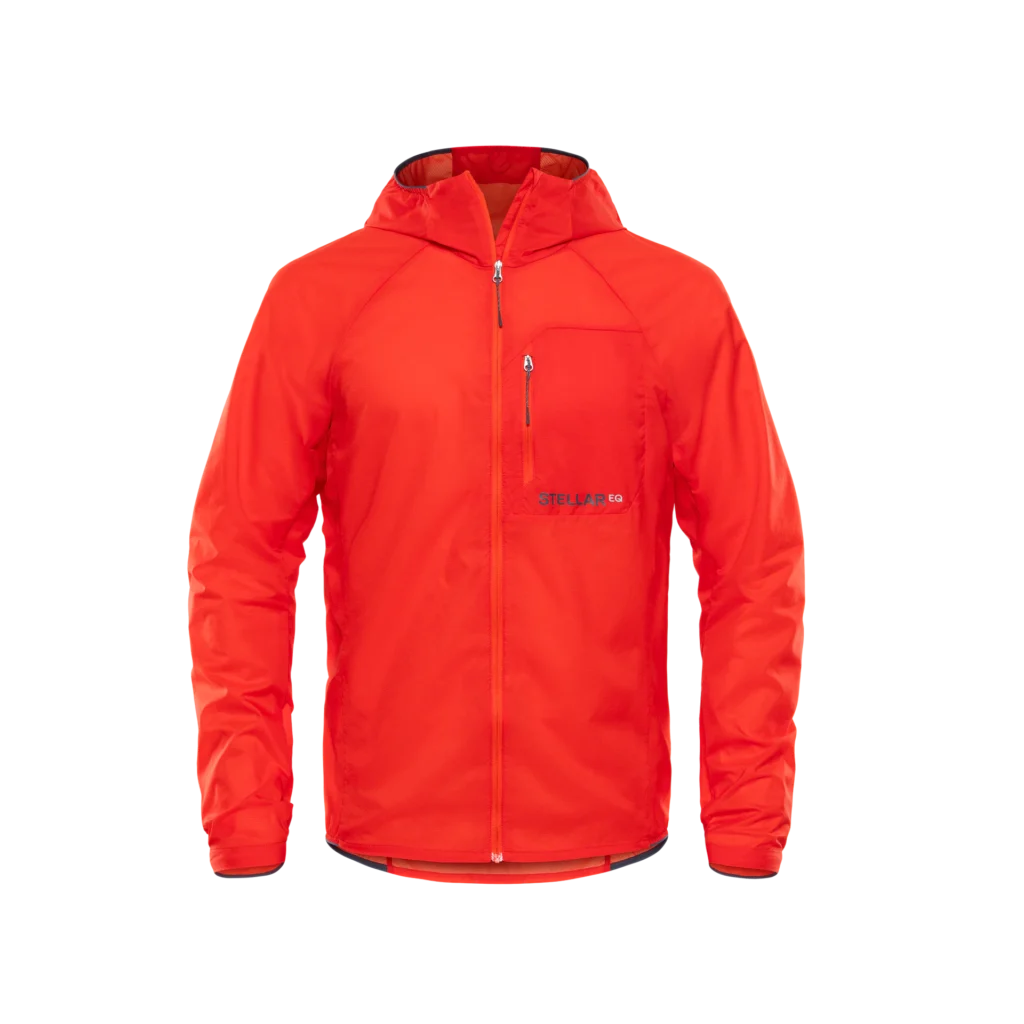
Sweden-based Stellar Equipment recently released the Aerolight Wind Jacket. While the jacket resembles a standard ultralight wind shell, it is not. The fabric features an air-permeable design to maintain sufficient airflow when skinning, trail running, and hiking. Steller’s marketing copy states it clearly, “The goal isn’t to block wind. It’s to manage it.”
On the surface, this is true. The goal of these higher-CFM (cubic feet/minute) fabrics is also to manage heat buildup during exertion. While a Houdini does a fine job of managing wind in cooler/colder temps, there’s a place for these permeable jackets. (We are huge fans of higher CFM fabrics used on Arc’teryx’s Proton SL Hoody, Patagonia’s Nano Air Ultralight series, and their Airshed Pro.) While it’s now discontinued, Patagonia produced the Houdini Air for several years. Think Houdini built with a fabric that compromises a bit on wind-blocking to score points on breathability/airflow. (According to a friend who is intimate with the Houdini Air, it comes in at 20-30 CFM.)
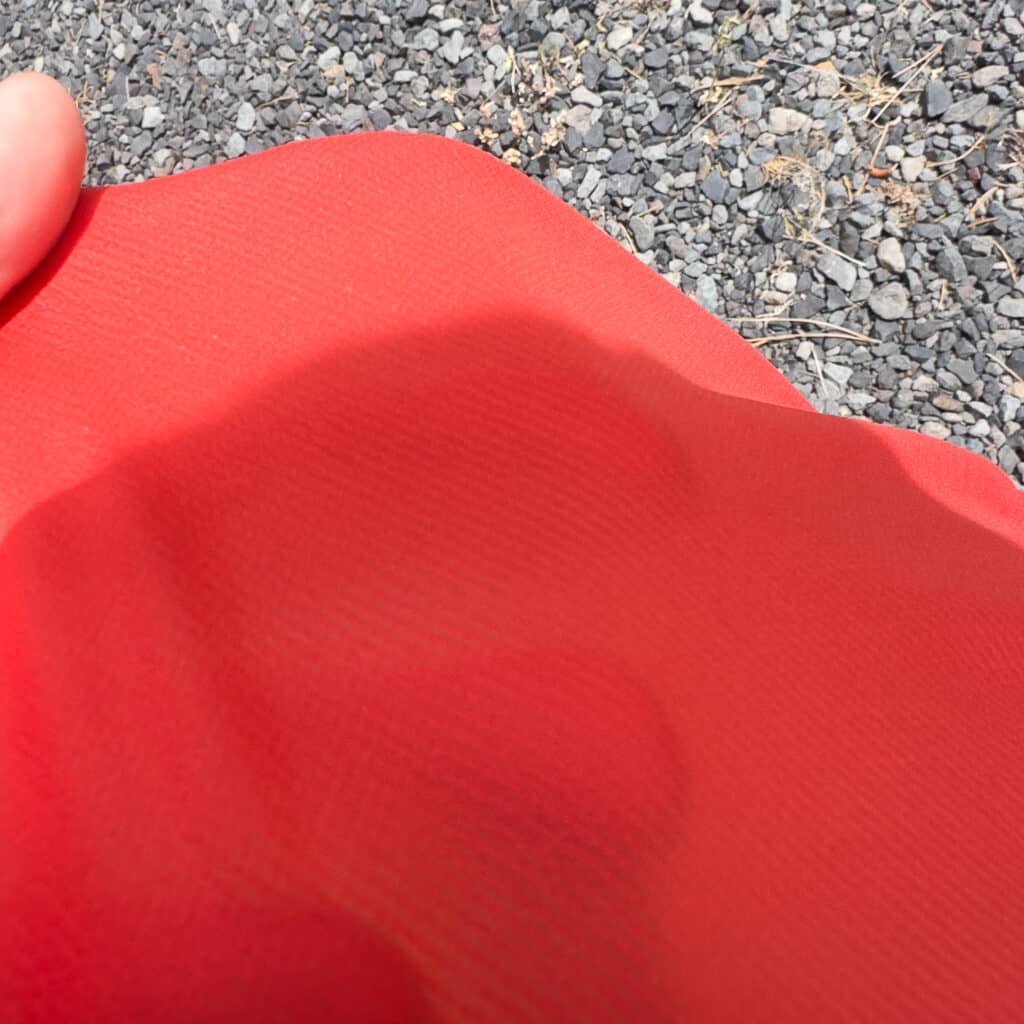
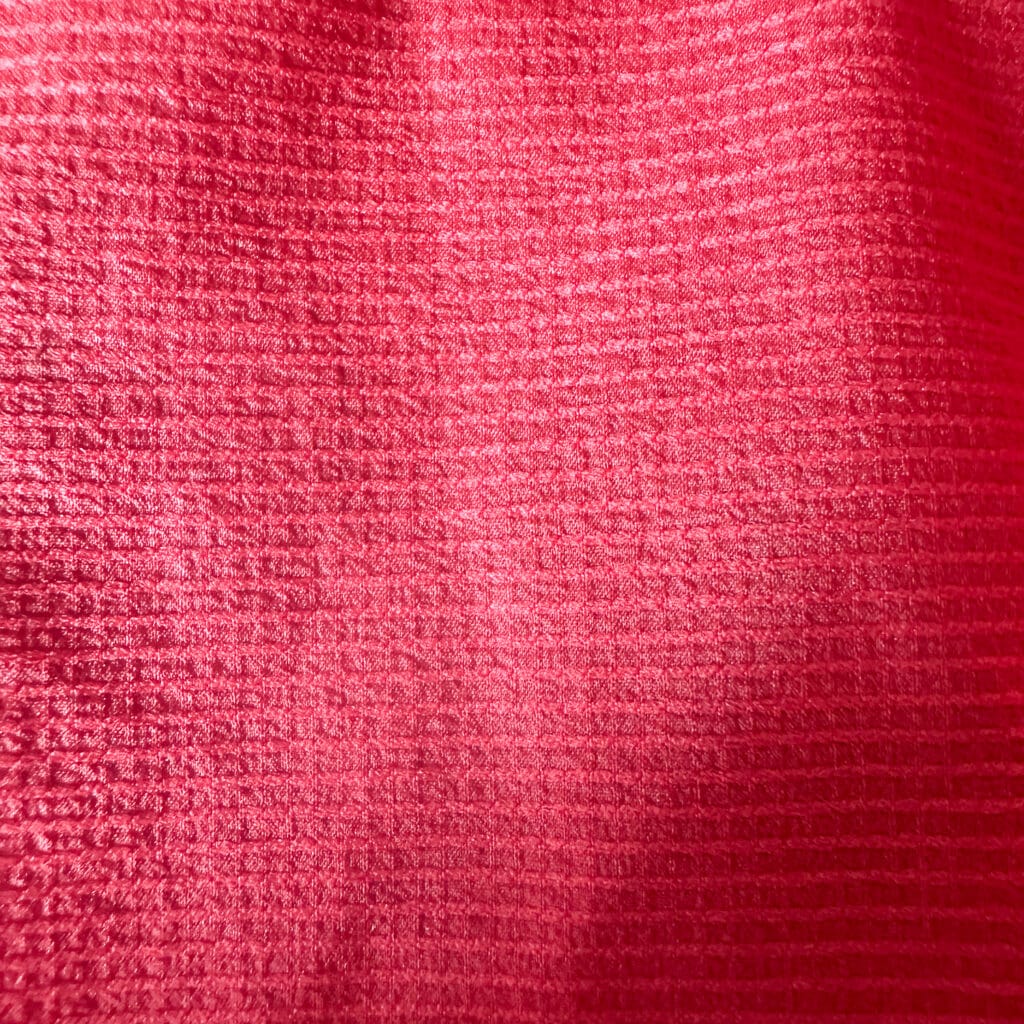
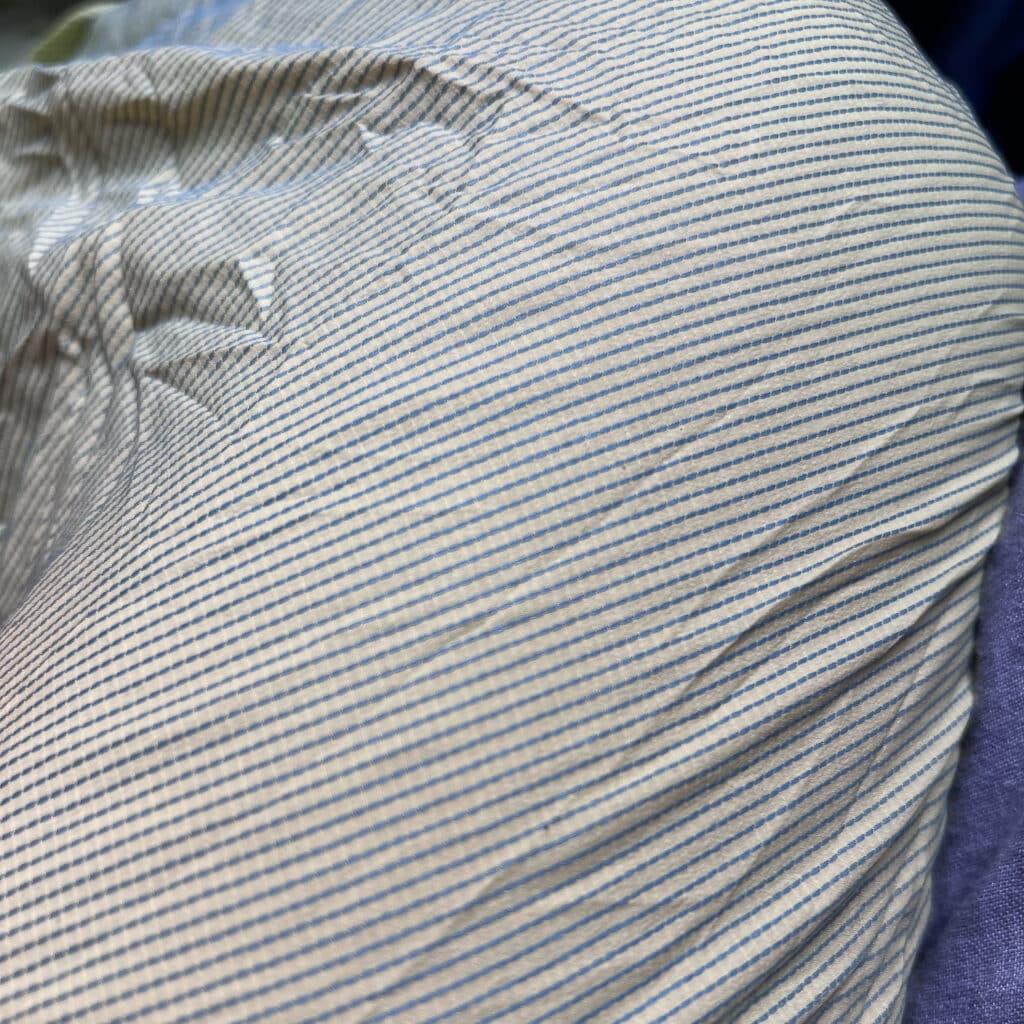
Stellar claims the Aerolight Wind Jacket offers roughly 40 CFM of air permeability. (Although for most of us, it’s tough to discern a 10 CFM difference in permeability.) For those hell-bent on moving with intent in the hills, this should be an excellent piece in the summer alpine, and well on through the winter during those milder-temperature days. Ideally—and we think this will play out—Stellar states, “Most wind jackets work well for about ten minutes. Then you start overheating, the inside gets sticky, and suddenly the thing meant to protect you becomes the problem. The Aerolight Wind Jacket was built to solve exactly that.”
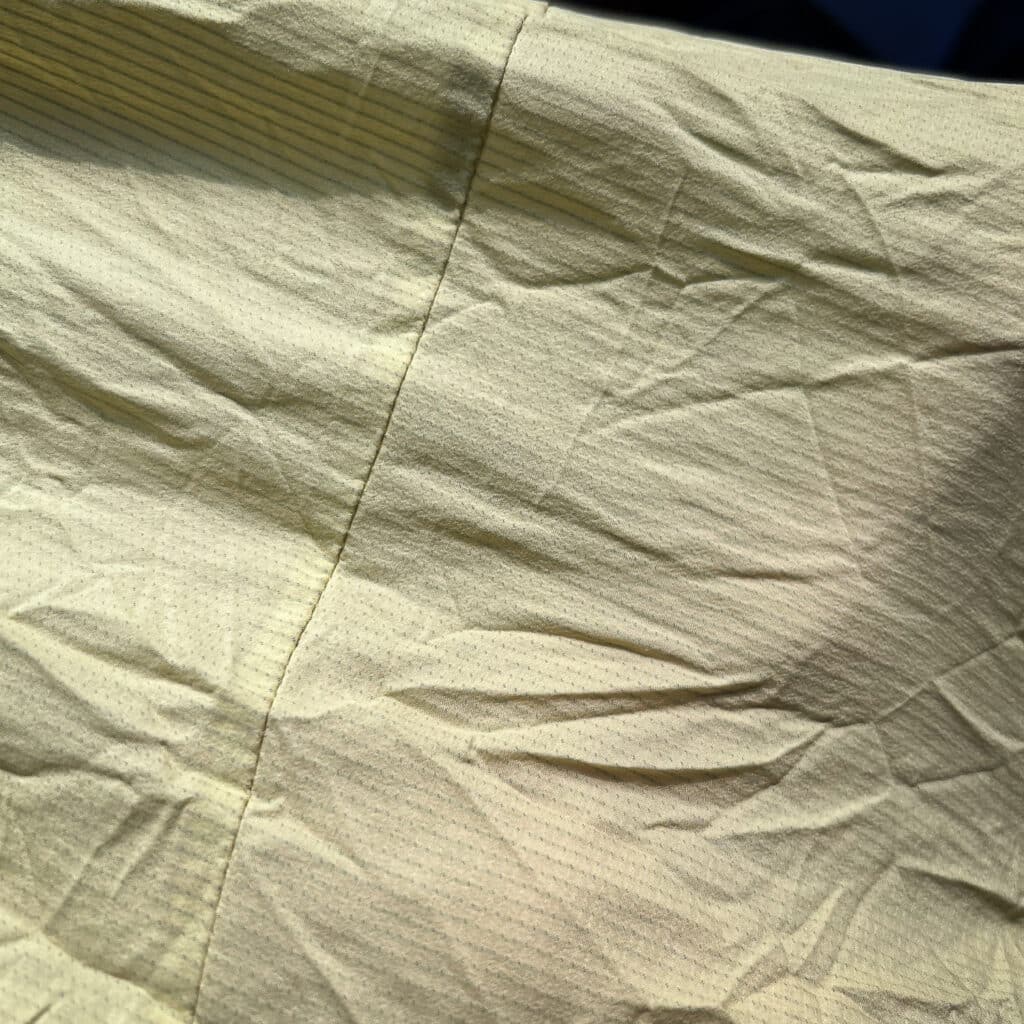
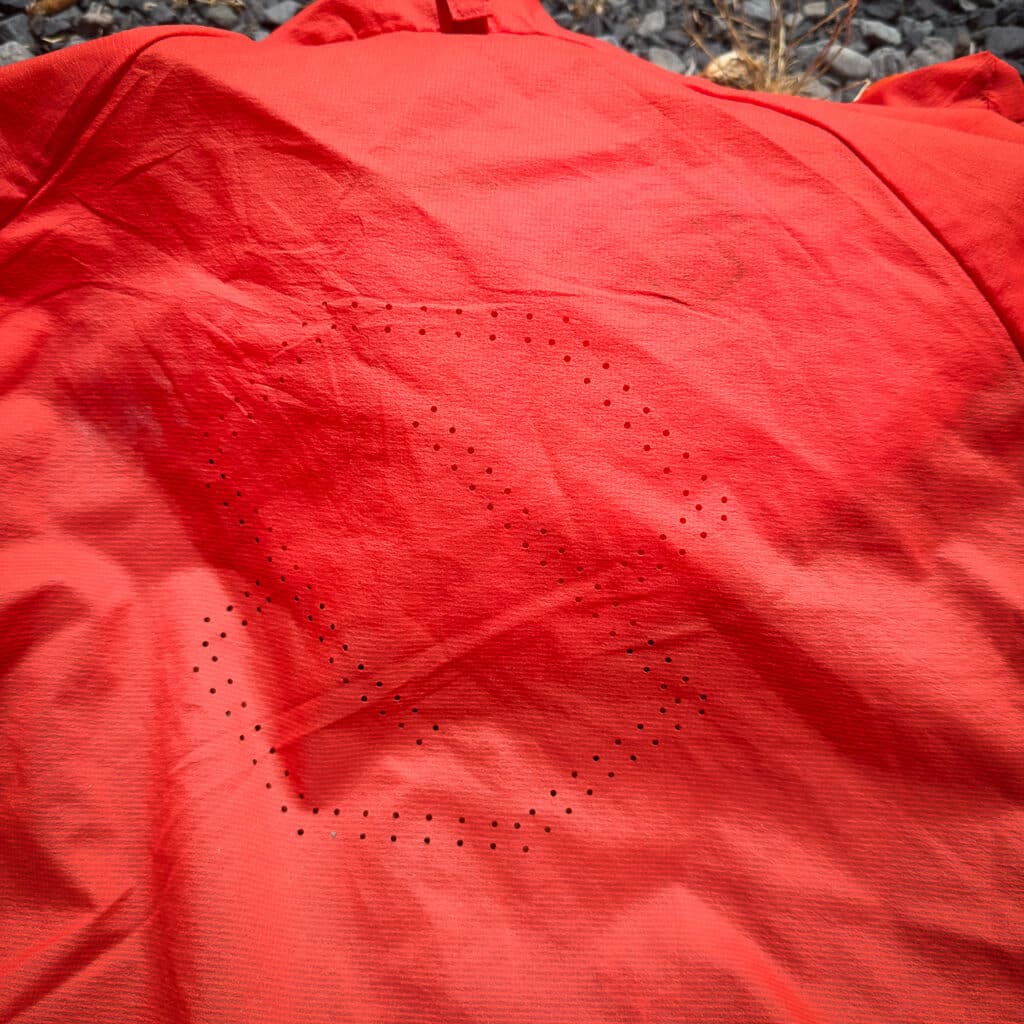
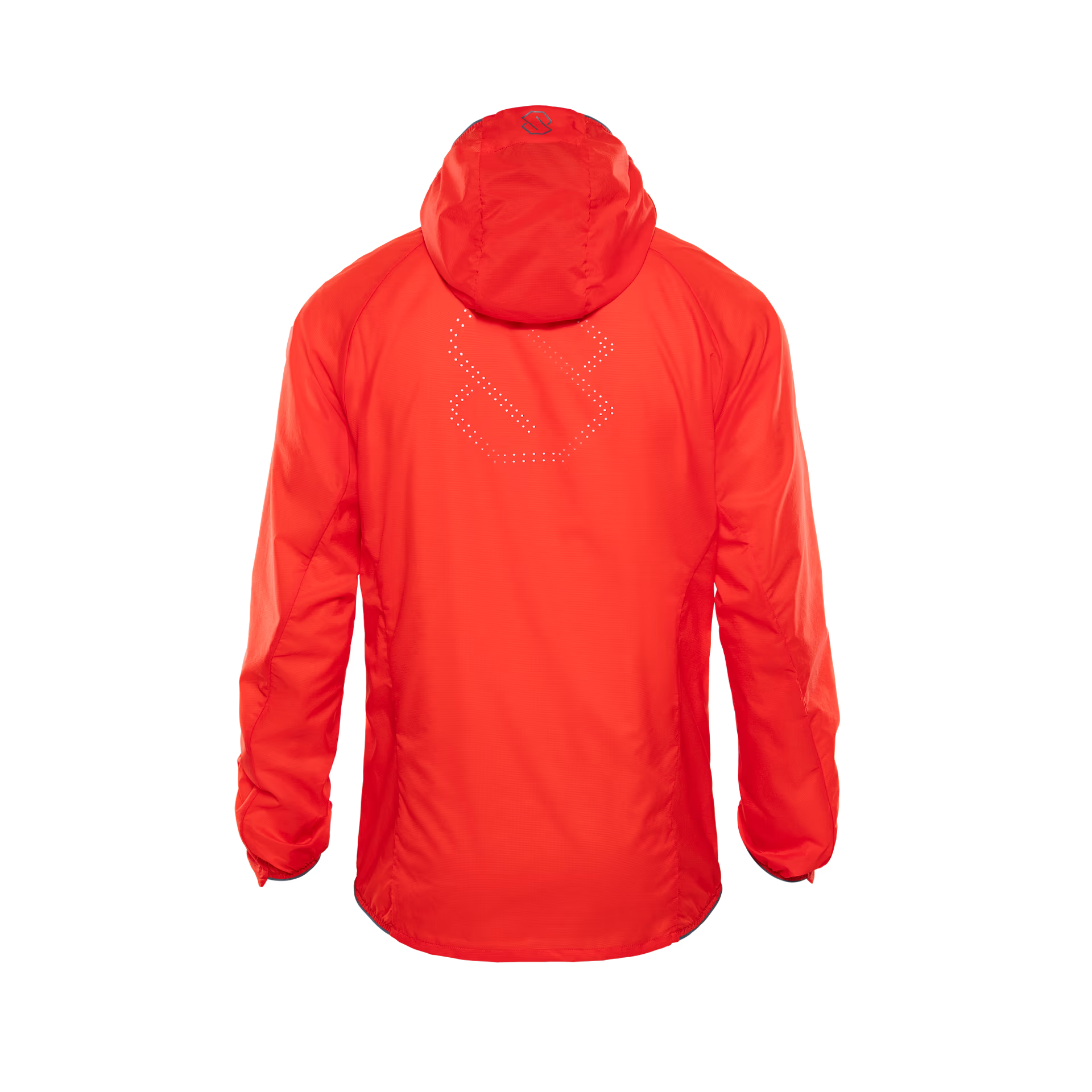
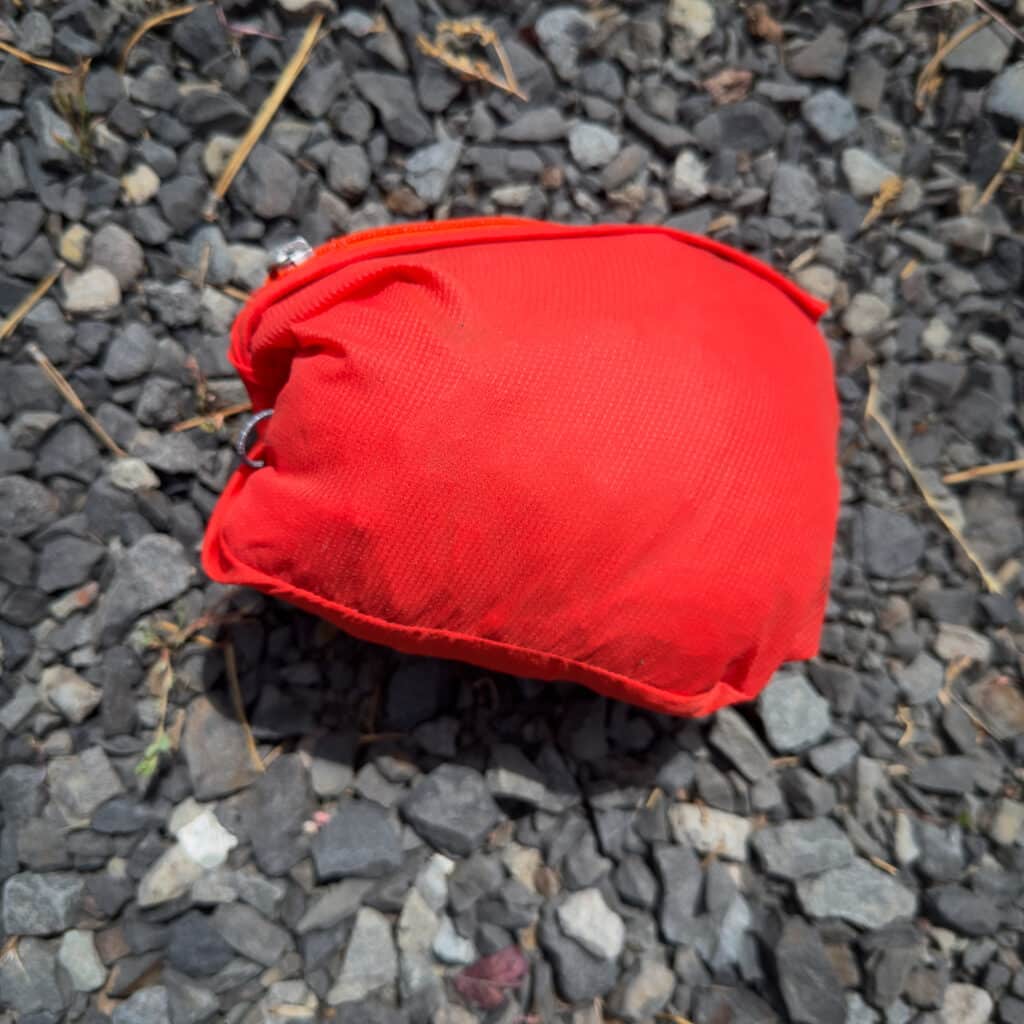
As a first look, we’ll leave some mystery for the full review, this piece is pretty paired down. There’s a single zip chest pocket that doubles as a stuff sack, a cinch adjustable hood (which fits over my climbing helmet, but is a wee bit snug. I’d opt for under the helmet) that can be stowed, and a “partly” elasticized hem, there’s no cinch adjustment. The upper shoulder/back zone has small perforations (see photo), that we assume assist with breathability and heat dumping when not wearing a pack. We’ll see how it vents with a trail running vest.
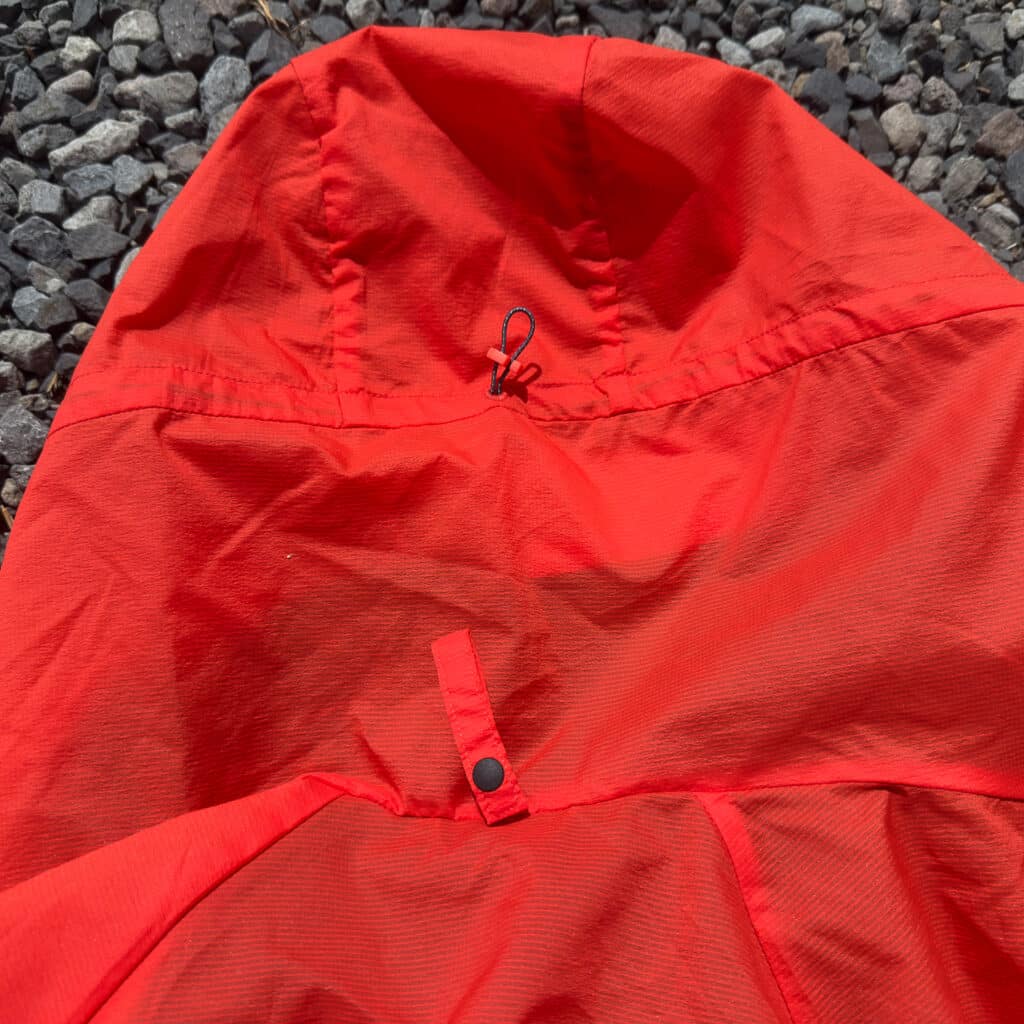
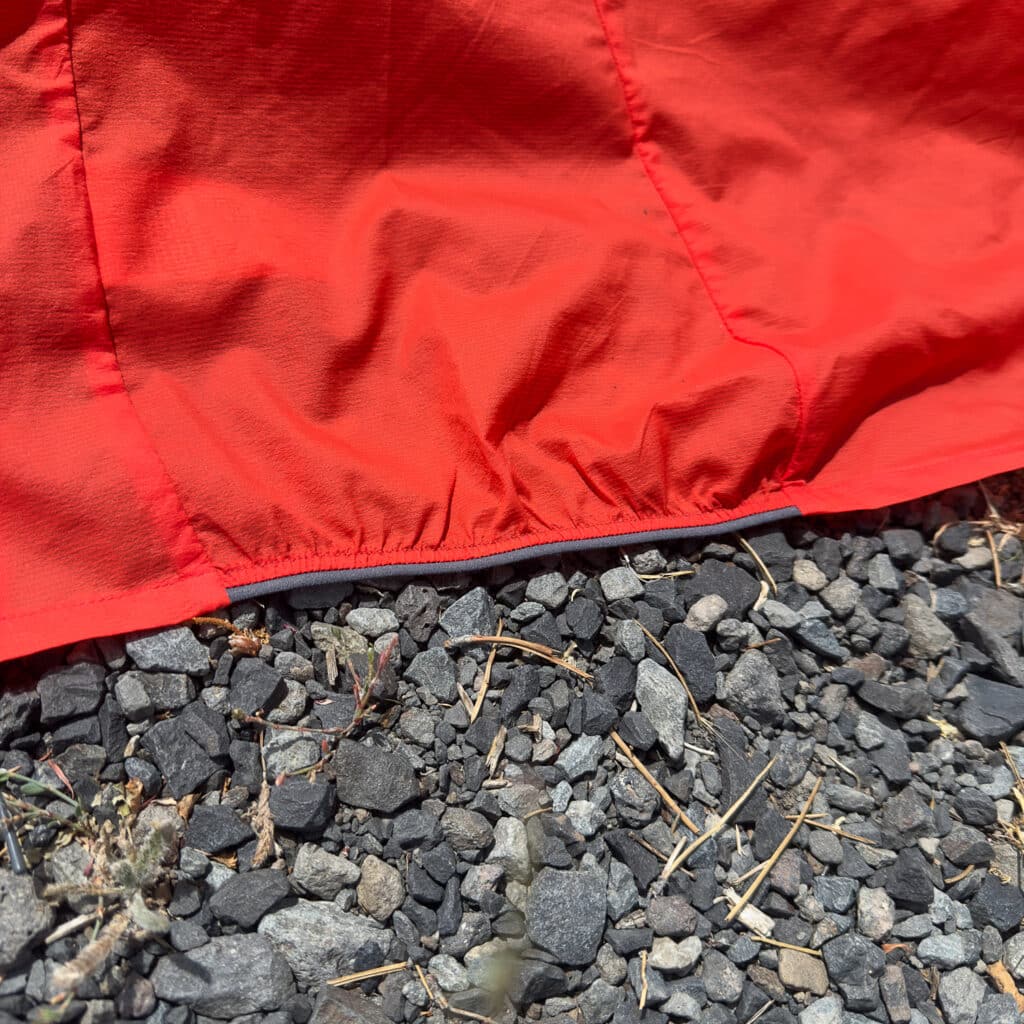
The Aerolight is a regular-fit jacket. The drape and silhouette are not overfitted, yet the fabric has a slight stretch. I usually wear medium jackets. For reference, I wear a first-gen medium Black Diamond Distance wind shell, whereas I prefer the newer Houdini in a large. The medium Aerolight sits somewhere in between—it’s an excellent fit and true to size. I can layer a sun hoody or T-shirt underneath, which is similar to my layering system on warmer winter days, too. My mobility is not compromised when reaching above my head.
While the face fabric is DWR-treated, the piece is not waterproof. Again, that is not shade; this is not intended to be a foul-weather jacket. And it should be noted that it’s a more nuanced piece and isn’t designed to simply shut down wind/airflow. If you end up scoring this jacket for summer and fall use, know that it is light. Its weight is confirmed at 118g, and it is 15 D fabric. (This is a double-weave fabric weighing 40g/m2.) The fabric’s weave, too, plays a part in the comfort/airflow. The interior has very fine raised threads that create a 3D-textured interface that sits off your skin/baselayer, facilitating better airflow. (This is also similar to the Houdini Air’s design, which used a textured interior.)
Those of us here at THR are always keen to tweak our clothing systems. The bottom line is we are looking for outerwear and baselayer combos that minimize the starting and stopping, the taking on and taking off, the big swings between hot and sweaty and cold and clammy.
Finding solutions that work is a fun part of the layering game. The Aerolight Wind Jacket seems like a score, as it aims to eliminate the problem of too much wind protection and too little airflow/breathability.
We are glad companies out there continue to iterate and produce wind jackets (and active insulated pieces, too) with air permeability as the cornerstone.
Basic Stats
Price: $219.00 (Stellar’s model is a bit different than most brands. It primarily relies on direct-to-consumer sales through its website.)
Main fabric: 100% Nylon, double weave construction, 40g/m2 with a 15 D x 15 D
Breathability: Air permeability 40 CFM (15-25CC)
Leave a Reply
You must be logged in to post a comment.