
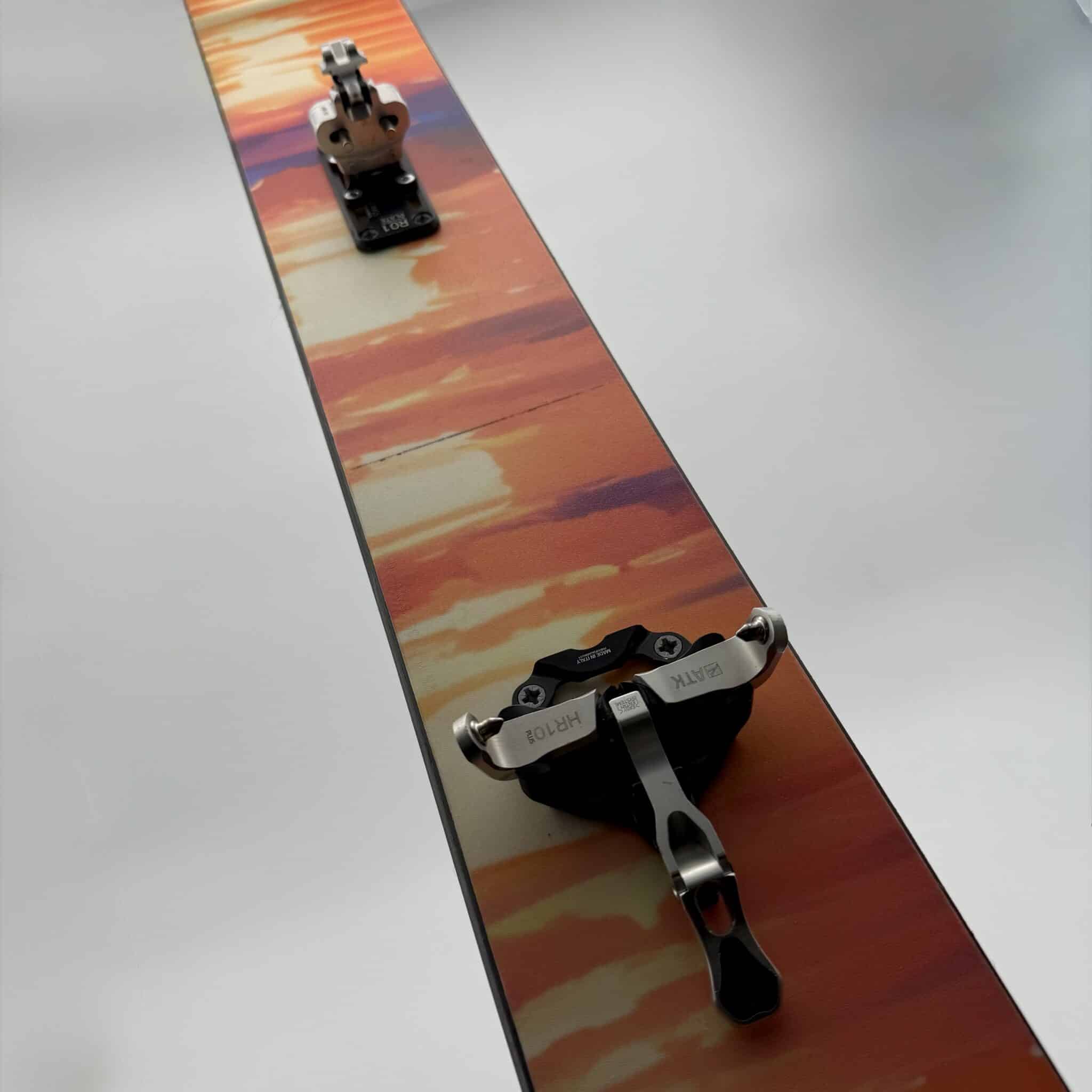
The new ATK Haute Route is probably the best binding for most people on the market today. I know we have ATK in the website footer now, but we’re still the same grounded folks looking for premium hard goods that function well and are durable. (Read the first look here.)
There are a lot of good bindings out there. People really love the ATK Raiders, Salomon MTNs, Marker Alpinists, and others, such as the re-released Ski Trab Titan Vario Light. No doubt, all these are excellent bindings, and 15 years ago would have been rather revolutionary for their weight and capabilities. As I’m sure regular readers will know by now, race bindings are my jam. I appreciate the simplicity, durability, and lack of features. Nothing drives me crazier than having to stop behind a ski partner who changes their heel risers for every little bench or steep step throughout the day. Though I do understand that my minimalist mindset isn’t for everyone. When I reviewed the Slatnar touring bindings, I mentioned that a binding had better add some real value to be worth lugging around more than 150g or so per ski. The math is a little more favorable when the added weight is only 50g or so per ski rather than 150g or more (for the Slatnar).
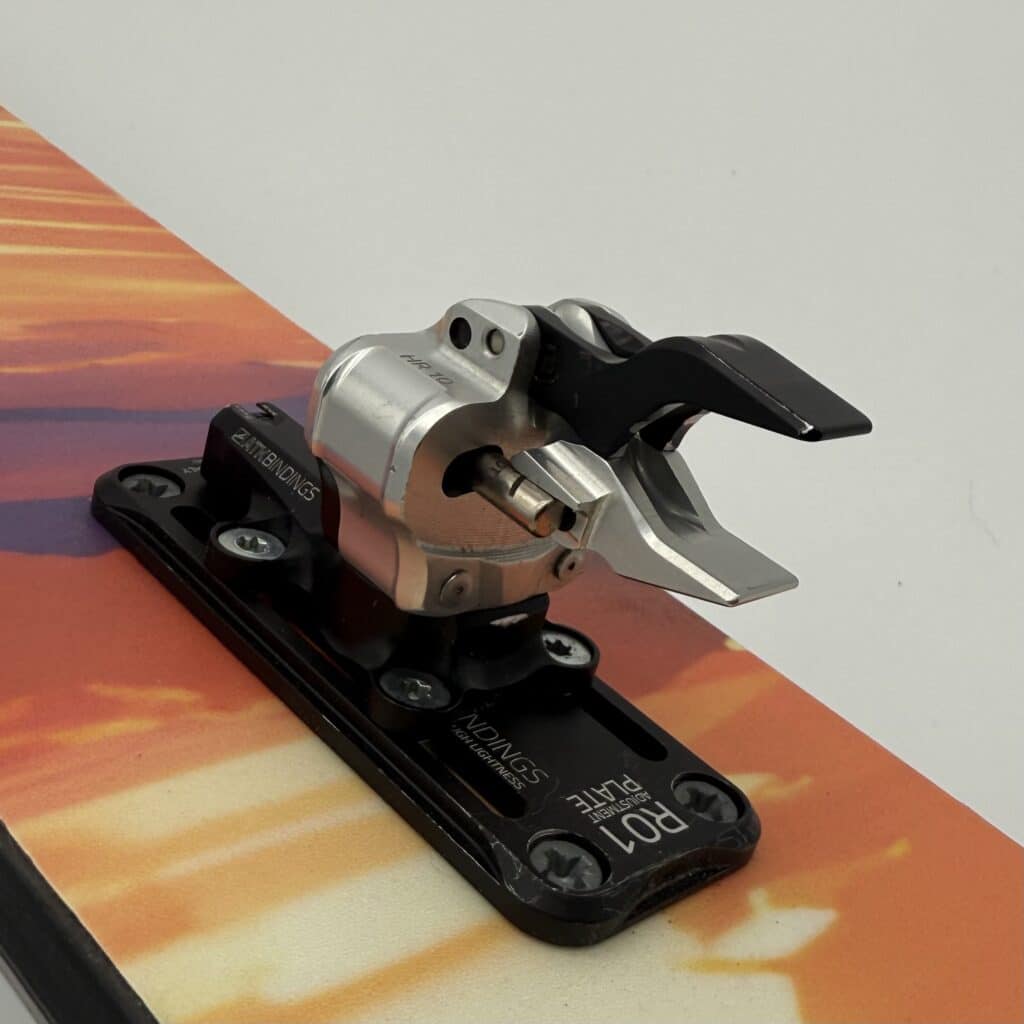
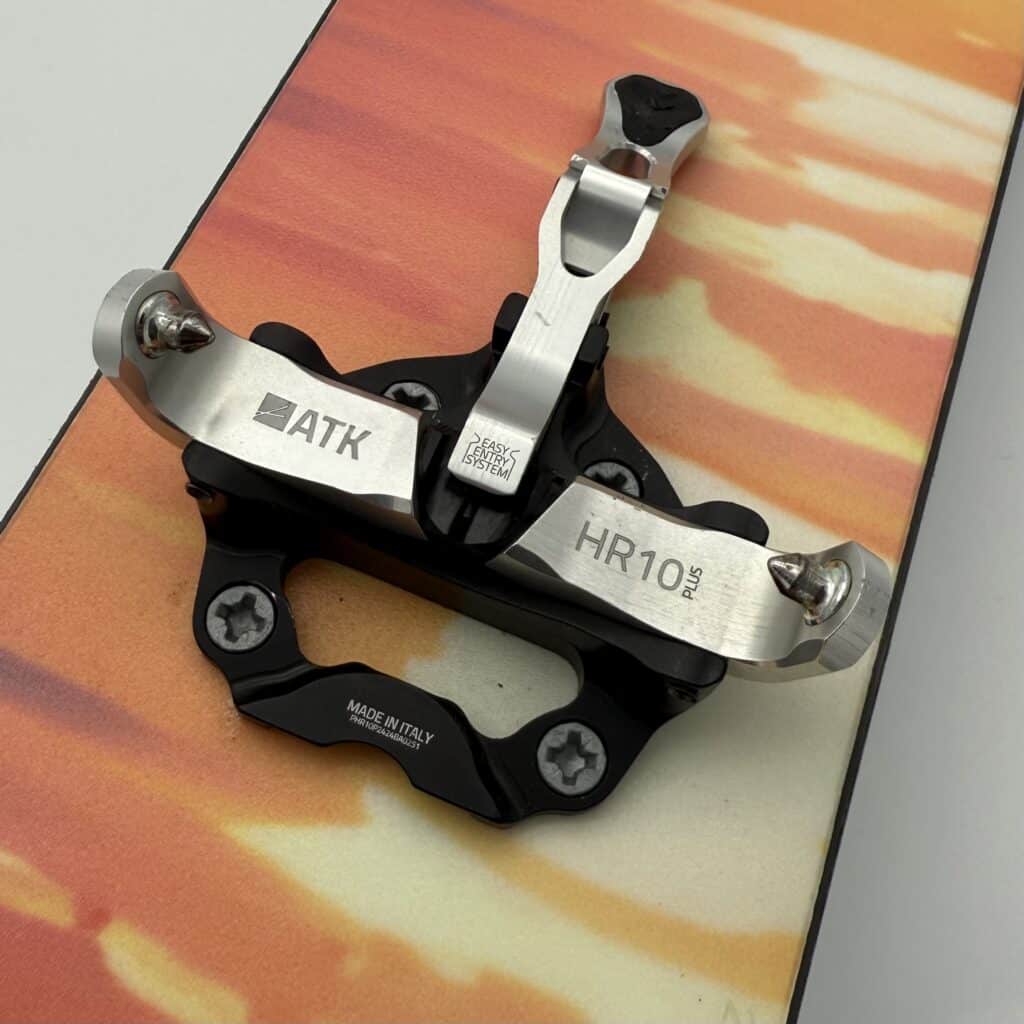
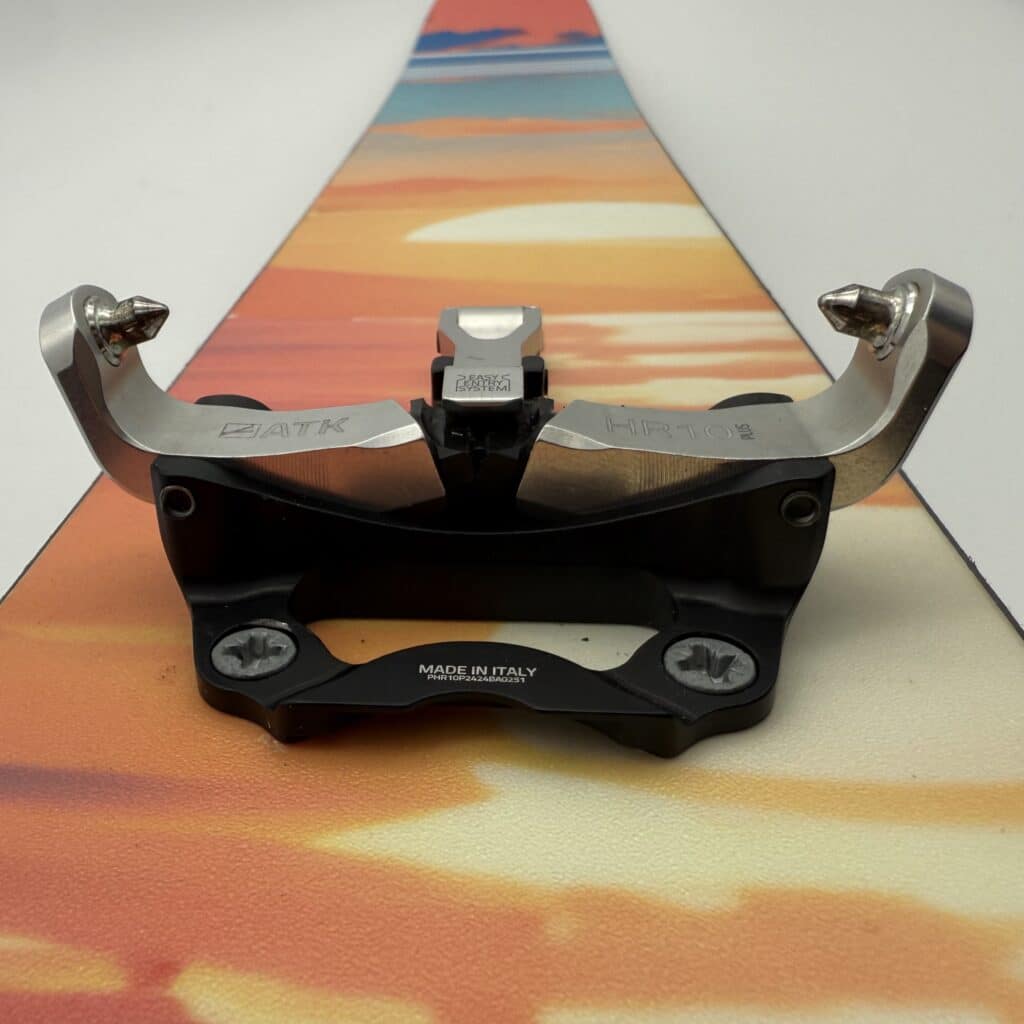
Here is what the 50g gets you: first, independent, adjustable lateral and vertical release values. I don’t necessarily need this, but the ease of step-in associated with the ATK cam release heels is worthwhile, and especially appreciated in deep, soft snow. Second, you get two heel risers–not often necessary, but helpful for beefy boots, deep snow trail breaking, or steep/firm skin tracks. Third, a slick new toe piece that falls somewhere between the racey Revolution toe piece and the more burly Raider style toe piece. This new SL toe features the same springless design as the aforementioned bindings, but with slimmed-down wings and an in-between footprint (and hole pattern), compared to the others. The springless toe alleviates the issue of snow packing under the wings and causing a prerelease, as well as providing a simpler and more robust feeling design. The toe lever has also been updated, featuring a longer lever and a larger target for pole-press exits. Like other ATK toe levers, it is beautifully machined and locks into tour or ski mode with a smooth and positive snap.
Overall, the user interface and feel of the Haute Route are pleasant and premium. Between the toe lever, the smooth magnetic heel risers, and the easy step-in, the experience is significantly upgraded relative to U-spring bindings and plastic toe levers often found on sub-200 g bindings.
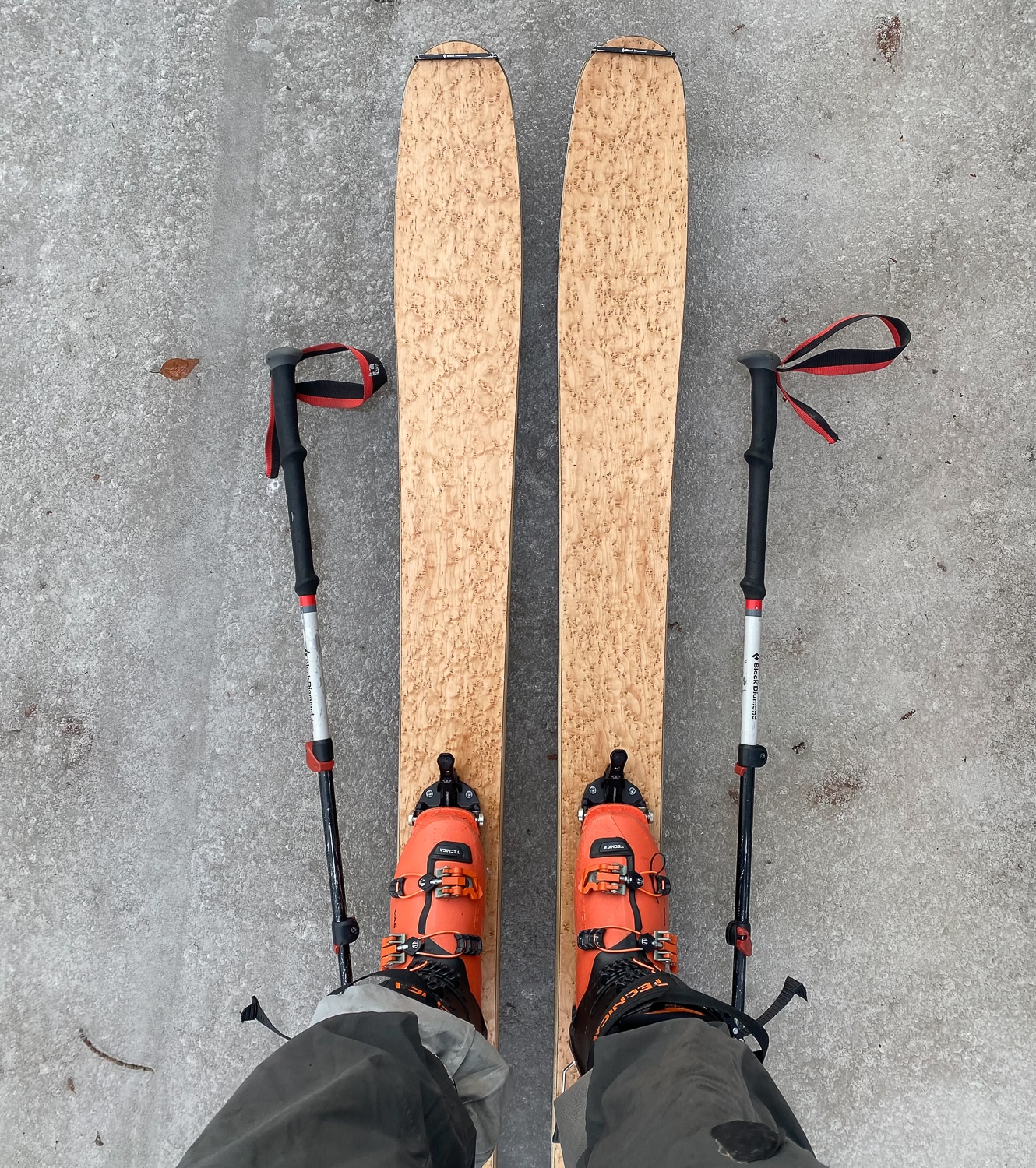
ATK recommends a max ski width of 97mm, a max ski weight of 1500g, and a max skier weight of 85kg. Naturally, I opted for 120mm, 1750g boards for test skis—what better way to put the bindings to the test. These recommendations are just that, and there are several other factors at play when deciding whether breaking the rules is a good idea. In particular, a long and wide ski transmits a lot of torque to the binding with its big levers. Torque is force * distance, so perhaps a good way of looking at it is when the distance is large, the forces should be reduced. Powder snow does a great job at damping and softening blows. All this is a long way of saying that powder skis seem particularly well-suited to these smaller, lighter bindings.
Some heavy or aggressive skiers may have qualms with the max release value of 10. While this concern is legit, at 82 kg and doing some fast-ish skiing on my 186cm Heritage Lab BC120s, I can only recall one prerelease. That happened while making a jump turn in dense powder, my heel released vertically and stomped back in as soon as I re-weighted the ski. I’ve experienced this with a variety of bindings, particularly on big skis in denser snow. It’s definitely not ideal. All this being said, the retention has been quite good, and most importantly, consistent.
Thankfully, with the many great bindings on offer today, durability testing is often tricky when trying to publish reviews in a timely manner. It seems like if things don’t wear, wiggle, or break relatively early on, it’s a slow burn with these modern, metal bindings. A few durability notes: the cam-release heel pins are showing very little wear or early signs of notching, relative to most U-spring bindings I’ve used, despite a similar amount of use. The heel rotation is still buttery smooth as well; this issue takes more time to present usually, but I don’t foresee the Haute Route Plus having any of the difficult spinning issues of the Trofeo (which get gummed up and hard to rotate over time, but here’s an easy how-to regarding ATK heel regreasing). The toe lever feels tight and robust. I don’t think we will see breakage or looseness in these. The heel risers pivot around a pressed-in pin that appears difficult to remove. Fortunately, the magnets and mechanical lock of the first riser into the pins appear to alleviate any floppy riser issues that can be frustrating with some other brands’ bindings.
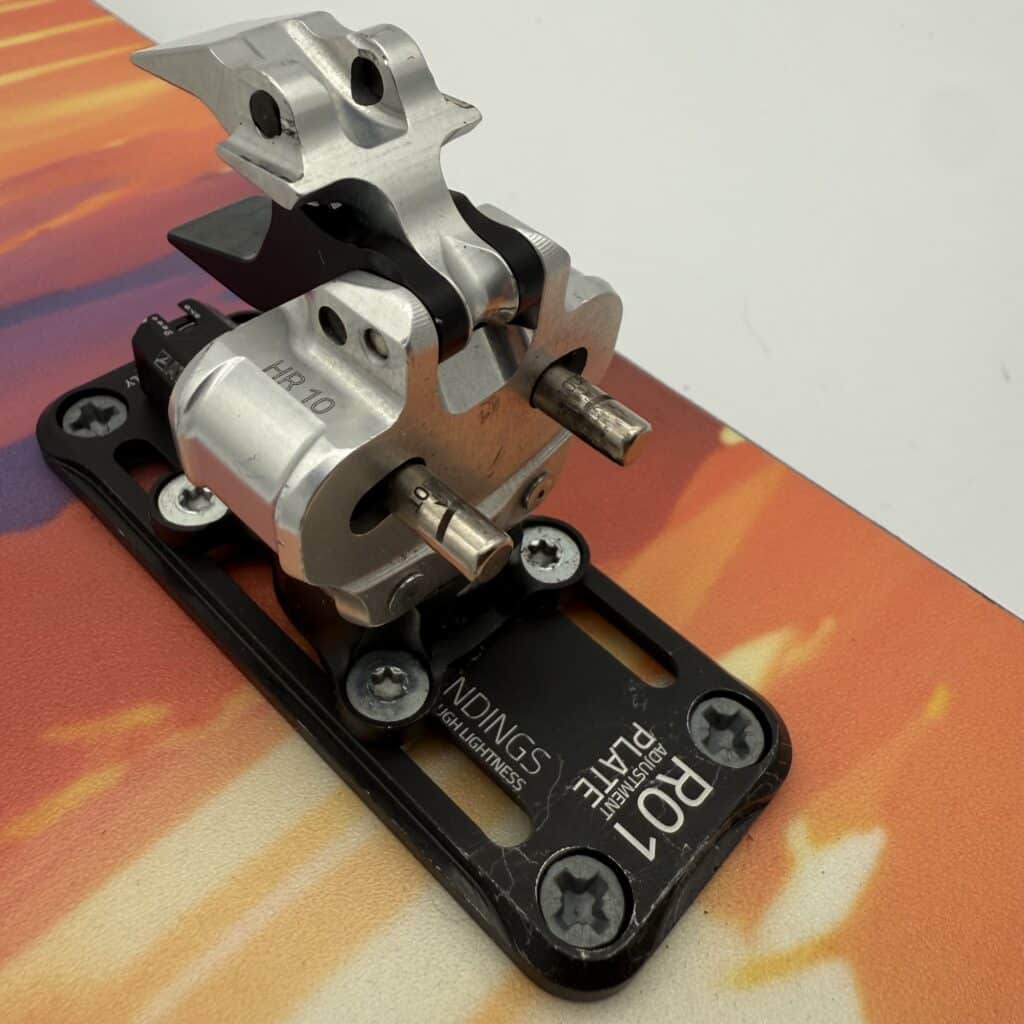
Last but not least, I want to reiterate the awesomeness of the laser-etched pins for setting heel gap. Being able to verify on the fly that the binding is adjusted properly and adjust without a spacer is a great touch. Speaking of adjustment, the Haute Route Plus uses a tension bolt adjustment plate, just like most race bindings. It’s worth noting that you don’t get a length compensation spring here. That’s a key differentiator between the Haute Route and something like the Crest 10 (with the brake removed).
Many of the excellent features that have made the ATK Raider bindings the current standard-bearer in midweight/mass-market touring bindings have made their way into the Haute Route in a lighter and more minimalist package that appeals to weight-conscious tourists, such as myself. The craftsmanship and user experience offered by the Haute Route are unmatched in its weight class. Even though I’ll probably keep buying ultralight race bindings, they are a better match for my Toyota Yaris, where the Haute Route may be better compared to the Ferraris that are built across the street at ATK’s Italian HQ.
The Basics
Materials: Alu 7075, POM, Stainless steel
Release range (according to ATK): 4-10
Walking modes: Flat, +35mm, +38mm, +56mm, +59mm
Boot size adjustment: 30mm with R01 plate
Price: ~$649.00



Leave a Reply
You must be logged in to post a comment.