
Blizzard’s Zero G line of skis often elicits strong opinions. Some favorable, some not. Between the fine lines of marketing copy (which we’ll get to) and opinion (we’ll get to that, too), lies some truth. Over the years, Blizzard’s Zero G 95 held rank as a stiff, light, and, generally, fine-tuned for holding an edge…
Review: Blizzard Zero G 96
Does the ZG 96 live up to the legacy of the ZG 95? Yup.
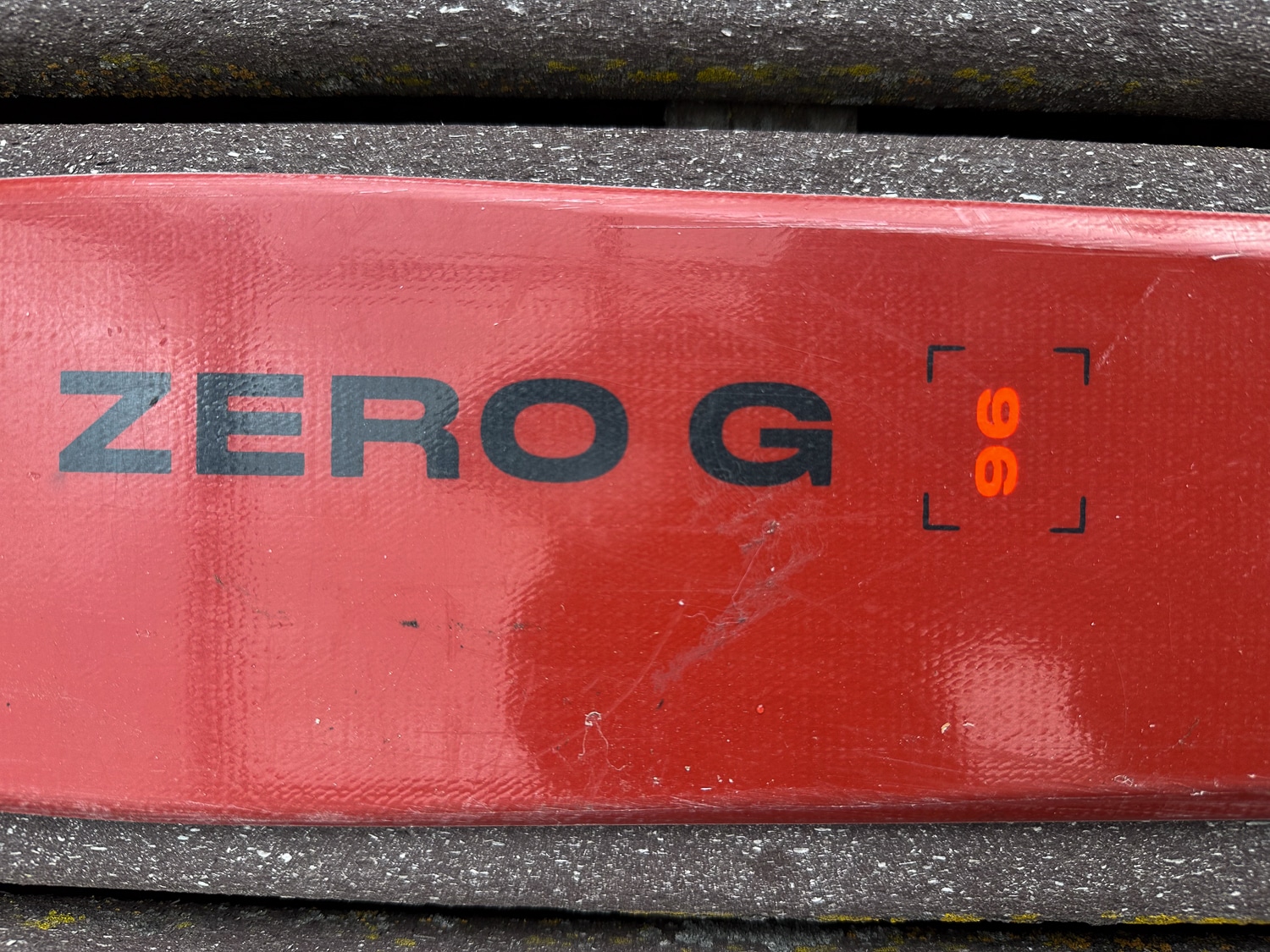
No matter the tasty talk you may hear out and about, the ZG 96 is very much a Zero G.
Responses
-
When Zero G 96 vs Black Crows Solis vs black Crows camox / navis vs Dynastar M Tour 100 vs whatever that abomination Spencer was talking about vs ???
-
Curious to hear people’s thoughts-generally-around the conversation regarding mass/weight and shape in a steep skiing tool. What’s the consensus?
I’m sure it’s a little bit of “pick your poison”, but it feels like more mass=more damp, which I envision to be a really good thing. The scariest conditions I can think of are steep+bumpy+coral reef. An extreme example, but why not put pins on a directional inbounds ski with metal laminate?
On the other hand, folks say that lighter skis are better for hop turns, less swing weight, etc. and of course you must drag up whatever hefty planks you’d like to assuage your fears of exposed skiing.
Some folks reach for skis with less shovel and less sidecut-the idea being that a “less turny ski” will feel less hooky in the steeper terrain. But if you look closely, most of the steep skiing done in Cham and AK right now is done on skis like the Navis, ZeroG105, and the MTour 100. All moderate skis with big, wide tongue-depressor shovels and lots of taper. Much like Gary alluded to years ago. In a different era.
It seems a bit strange that the skis many brands push as their “steep ski” are fairly different from each other (Solis vs ZeroG 96 vs the MTour 88 as an example).
To me, it begs the question: “do we really even know what a steep ski is? It might be easier to identify what isn’t a steep ski than what is. Even skis I wouldn’t take in gnar terrain I’ve seen in spicy lines, so who knows.
The more I know, the less I know.
-
Hey Alex,
Been thinking about this for a bit. Two things stand out that you mention: “Do we know what a steep ski is?”…. and “the more I know, the less I know.”
For fear of being chastised for taking this all too seriously, I’m going to take this all too seriously. As defined, let’s say steep terrain is less forgiving… sometimes it may be no fall. Sometimes it may be totally unforgiving, as in the requisite steepness to make you pucker (that slope and angle depend on the user) and a firmness on the firmness scale that may also make you pucker. Other times, an otherwise steep (and puckery) gradient is dulled by soft-landing hop turns.
So what is a steep ski? I’ve used a ton of skis in the past decade, with the caveat that I’m definitely someone, now, who waits for conditions to “align” when I’m venturing into puckery terrain. (I willingly avoid slide-for-life firmness/terrain.) So, a steep ski. For me, it’s a pretty traditional ski; some camber, it’s short (no longer than 170cm-ish), stiff-ish on snow, no matter what the hand-flex profile is, and minimal tip/tail rocker—it’s about edge grip, I suppose. And, lastly, a ski that is somewhat light—more in the 1100 to 1350g range. Which means, although I have heard many folks rave about the BC Solis in the steeps (search for Gavin’s review), it is simply too heavy for me at ~1750g/ski to make it viable. I bet it skis super well, though.
So, in short, although this may already be too long, no matter what a brand pushes as a steep ski, it’s got to work for you. I’d assert, first and foremost, a steep ski is a ski you love (meaning it gels for you) in steep terrain… most of the time. Always one to build out a quiver, you might have a Rossi Escaper 97 Nano for post-storm-snow steeps, and a more typical narrow ski for firm days, like a Dynastar Vertical 88 or BC Mentis, Blizzard ZG 88, etc. But key here, as you know, is finding a ski you are comfortable with. That’s your steep ski.
For example, Spencer Dillon is, perhaps, the smoothest skier I have seen in steep terrain. Someone who makes me think I am doing something fundamentally wrong, which I probably am. He’s been on something like mid-180cm length skis, and finds them dreamy…do I have that right, Spencer? So, sure, maybe let a company’s marketing guide you a bit, but it’s got to work for you.
I snagged a pair of older Dynastar Vertical 88s this spring from my older child. They are about 170cm in length, pretty light, with a front end that flexes way soft, at least with a hand flex. My child is tall, with a ~size 30 boot. I’m 6 inches smaller at 5’10”, and I am lighter by, say, 30 pounds, and in a much smaller boot. He found the ski too soft. I have found the Vertical 88s (it’s got a similar construction to the Rossis mentioned above) to be excellent in the steeps, despite its hand-flex properties. (Read as great swing weight, dampness on icy/firm snow, and prime edge grip.)
The last thing I’d say—and, yes, I could go on and on—is that after experimenting with so many boots in the past decade, the ski/boot pairing matters a ton in steep terrain, even more so when it is firm. This has been super noticeable this winter and spring, skiing the Scarpa F1 RS with its dreamy progressive flex. The boot has made every ski I’ve had in the steeps better, with the exception of a too-long DPS 112 underfoot plank, which would probably have been sweet in the ~170 length. It was a softish and deepish snow day.
As for the coral reef you speak of… maybe a dense and heavy in-bounds type ski can do the trick. I’m still opting for my lighter skis, and unlike my younger counterparts, I’ve set the governor on my throttle to keep speeds very, very low. So there is that. In the end, I, too, know more and less… like some quantum-physics paradox.
-
I have pondered the same things and I really like what Jason had to say, especially about boot selection.
My first dedicated steep ski was the Trab Free Rando 79 which 20 years ago was light but now the ZG96 weighs less than that did! In general I think skimo racing (going light as possible) has influenced spring ski selection too much. I wasn’t in love with the green ZG95, I like more forgiving skis, and the F1 LT wasn’t a great pairing for me. This year I mounted pins on my inbounds Blaze 94’s (1640g) and they behaved similarly to my usual spring ski the Superwolf 91’s (1400g) in not-so-perfect conditions. The lighter setup felt more fun throughout the tour and I didn’t notice enough of a difference in downhill performance to make me want to switch. I’m sure I’d notice a bigger difference with a 2kg ski but I don’t think it’s worth the trade off, at least for how I ski (picking lines vs. straight line). Boot selection had a more noticeable impact on suspension and control and in that case a bit heavier is better because it usually means a better stance and more progressive flex.
-
Latest Features
-
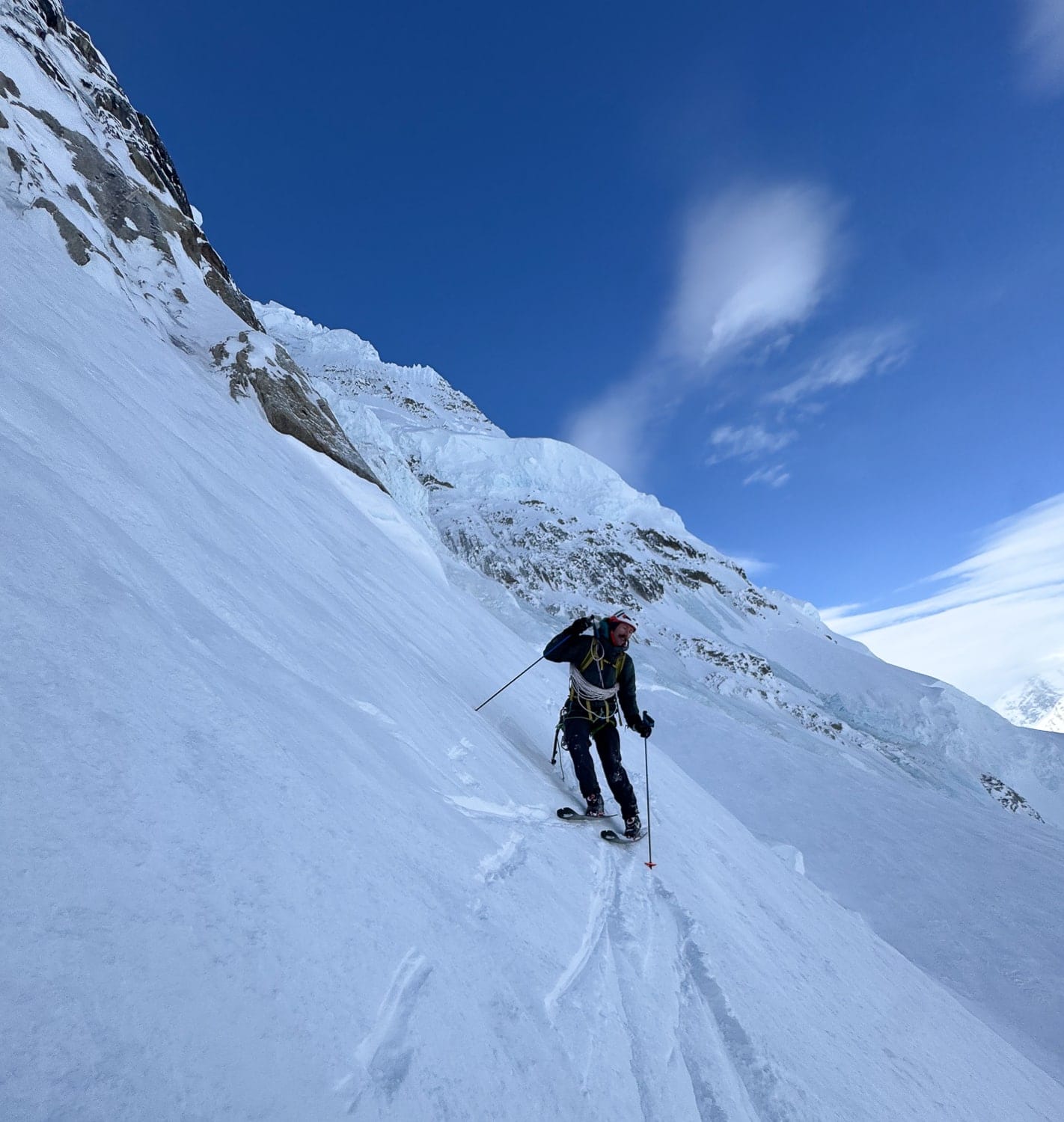
Ryan Griffiths, somewhere cold. Photo: Aidan Whitelaw
The High Route Podcast
The Progression Episode with Ryan Griffiths
-
Teton shadows extending toward the Gros Ventre.
Public Lands and the Touring Scene
A look at proposed rule changes in the public lands space that could affect the touring scene.
-
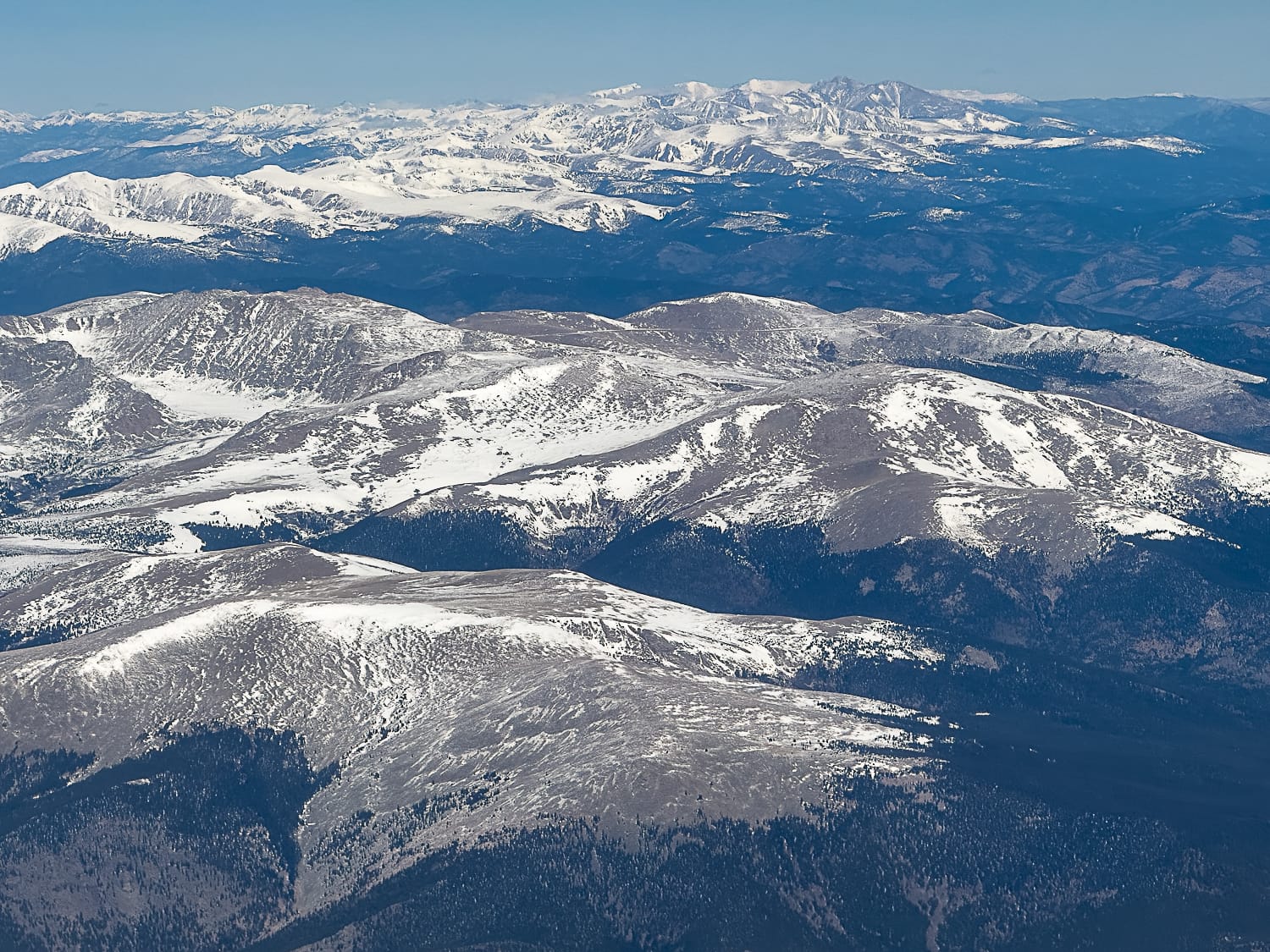
Aerial view of the snow drought in Colorado's Rocky Mountains on March 4, 2026. Photo: Mitch Tobin
The High Route Podcast: The Snow and Water Episode
With Journalist Mitch Tobin.
Leave a Reply
You must be logged in to post a comment.