
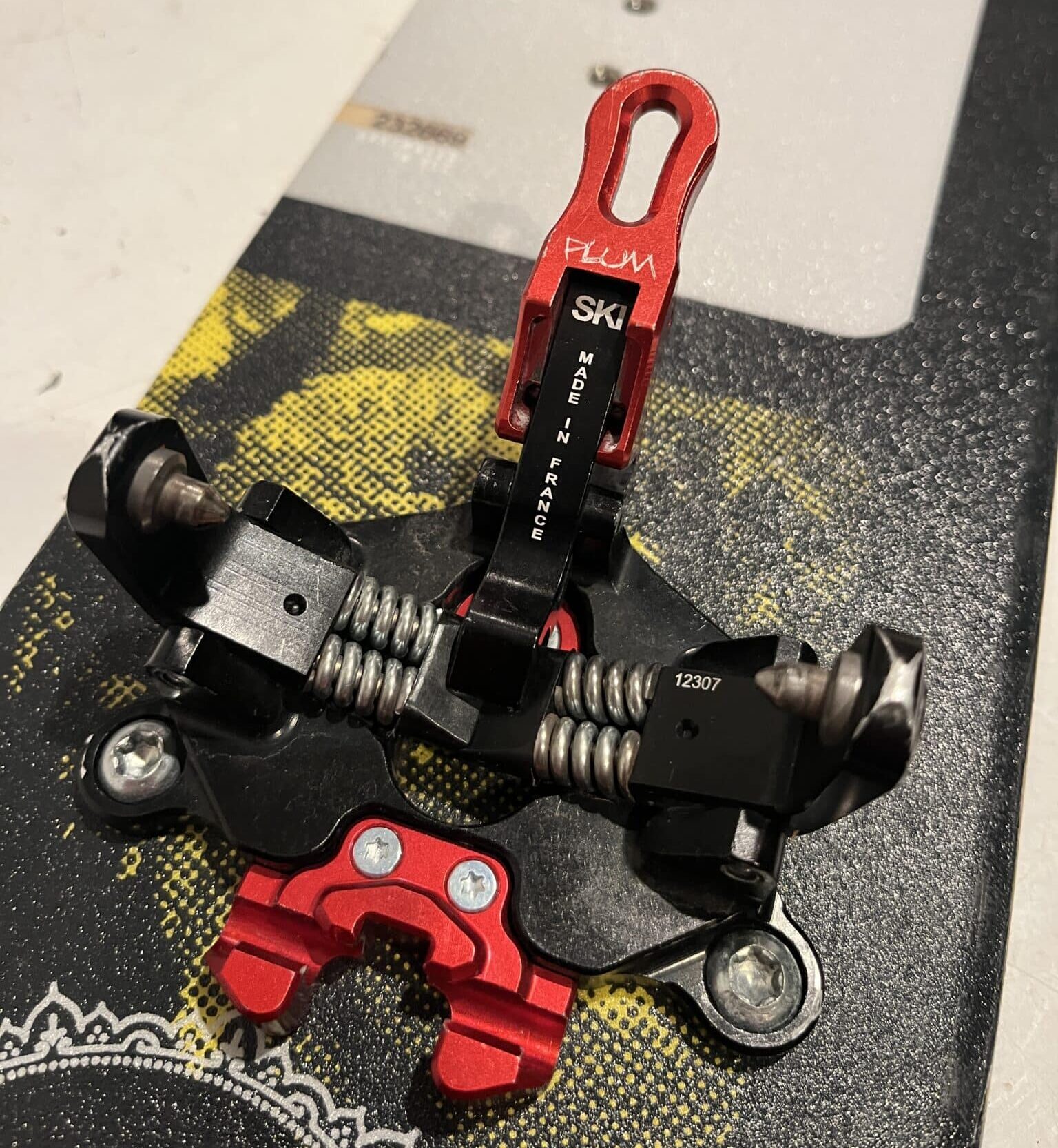
Modern hardbooting is essentially still in its infancy as a sport from a gear standpoint. The first generation of splitboard-specific toe pieces was a step in the right direction, but they fell short in terms of materials. The original Spark R&D and Phantom toe pieces used quite a bit of plastic in their construction, making them prone to breaking or losing a pin at inopportune times. Most people I know continued to ride Dynafit toe pieces with a conversion plate because of their absolutely bombproof design. I, too, was in this group.
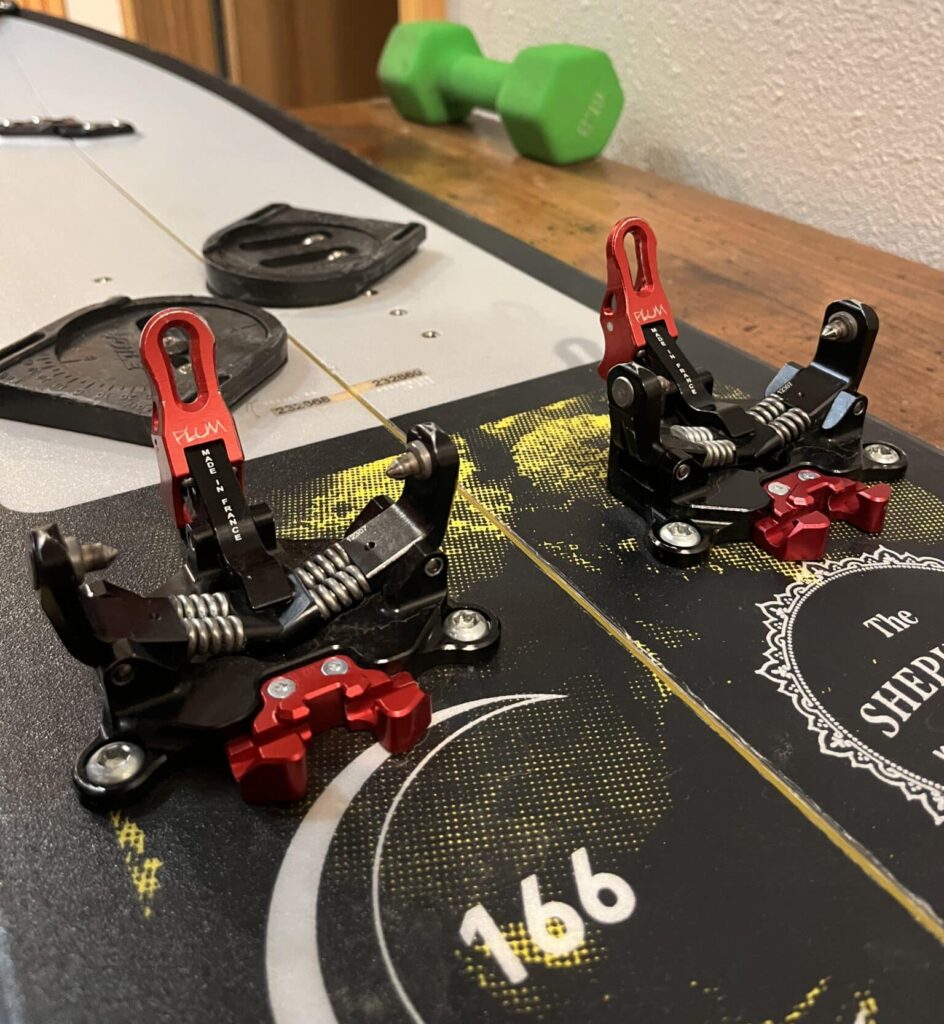
Fast-forward to last fall: I picked up a pair of Plum Pekye. The reason I sprung for these was the 77g weight reduction per foot from my Dynafit binding with the conversion plate. And also because this was the first splitboard-specific toe piece made by a ski binding company, which is what we were all waiting for, really. I excitedly awaited for the bindings to show up, and wondered what the hell a Pekye is. After a brief Google search, “Pekye” means “okay” in Turkish.
Okay.
The Plum Pekye looks to be a splitboard-adapted version of the Plum R-170/S-170, which Gavin did a deep dive on in a previous article. The Pekye weighs 134g/binding with an all-aluminum construction, which is a great step forward. There appears to be a single black plastic part on the binding, located between the springs. After a year of heavy abuse, I haven’t had an issue with that piece. My buddy Higley broke that plastic piece, but he breaks everything.
The all-aluminum construction has held up well, and the design is simple and sleek, just like their ski bindings. The attachment feels very secure. I only had one unexpected release, and that was on my first tour with the bindings. This mishap occurred because I didn’t pull the ski/walk lever far enough up to engage and fully lock the toe piece. Otherwise, the touring felt smooth on the uphill, and the toe pieces lock very firmly, giving confidence on the downhill for split skiing. The toe pieces have a removable ski crampon slot (it screws on and off), and the Plum ski crampons are great. I love the drop-in style versus the slide style on the Dynafit bindings. Plus, the ski crampon slot is replaceable if you break one. Plum says the ski-crampon slots are the same as their ski bindings, making it easy to replace them.
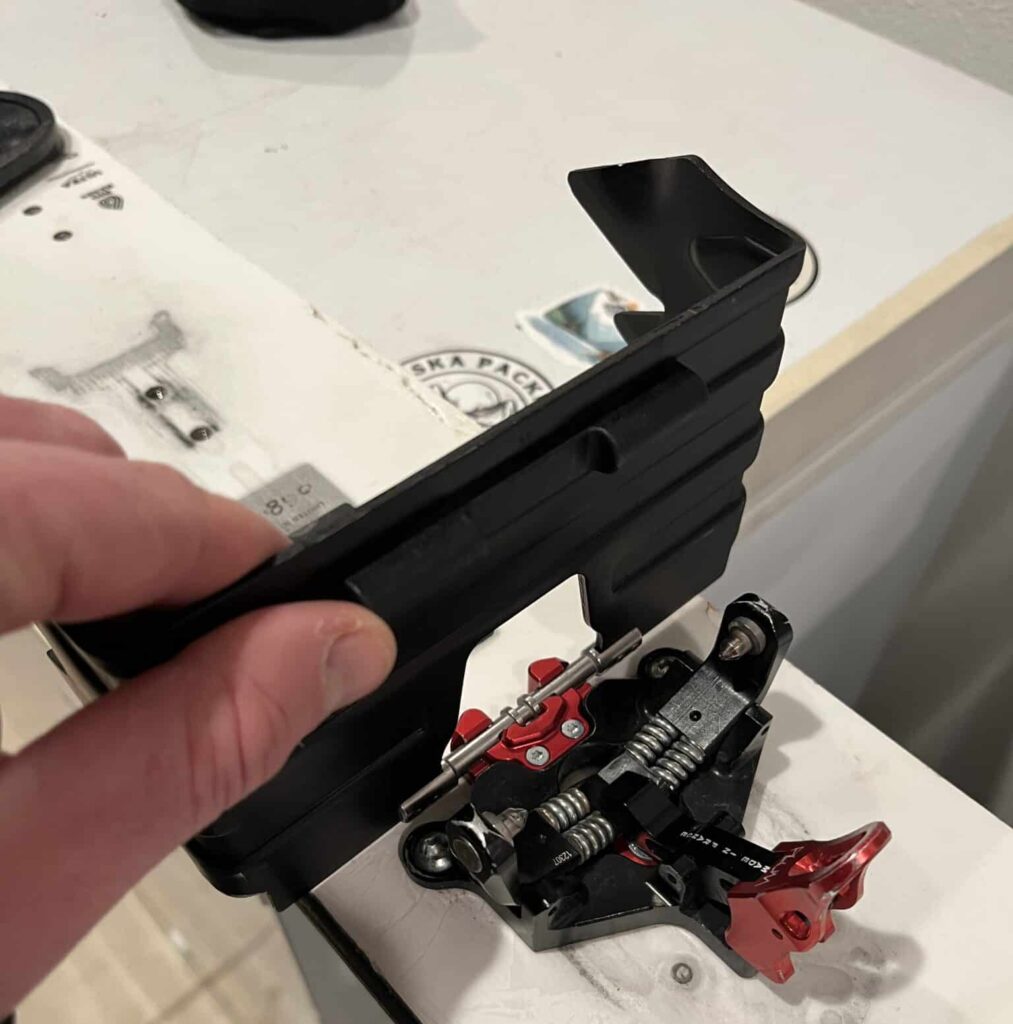
Splitboard-specific toe pieces often feature an interesting attachment for the lead bolt in the three-bolt splitboard pattern, which is typically right under the spring/pin mechanism. Plum’s solution was to incorporate a small red washer with a groove for the toe piece to slide onto. I have had issues with this bolt coming loose, even though I secured it with Lock-Tite. This has been my biggest issue with these splitboard-specific toe pieces thus far. The vector forces skinning/split skiing with my body weight seem to loosen those lead/point bolts, no matter what I do. This even occurred with the conversion plate and the old Dynafit toe piece. A word of advice: don’t lose that red washer. It’s extremely hard to replace, and Plum historically doesn’t have these spare parts available in the U.S. Higley lost his, and it took months to get a replacement.
See below:The binding slides back onto the red washer and bolts into place.
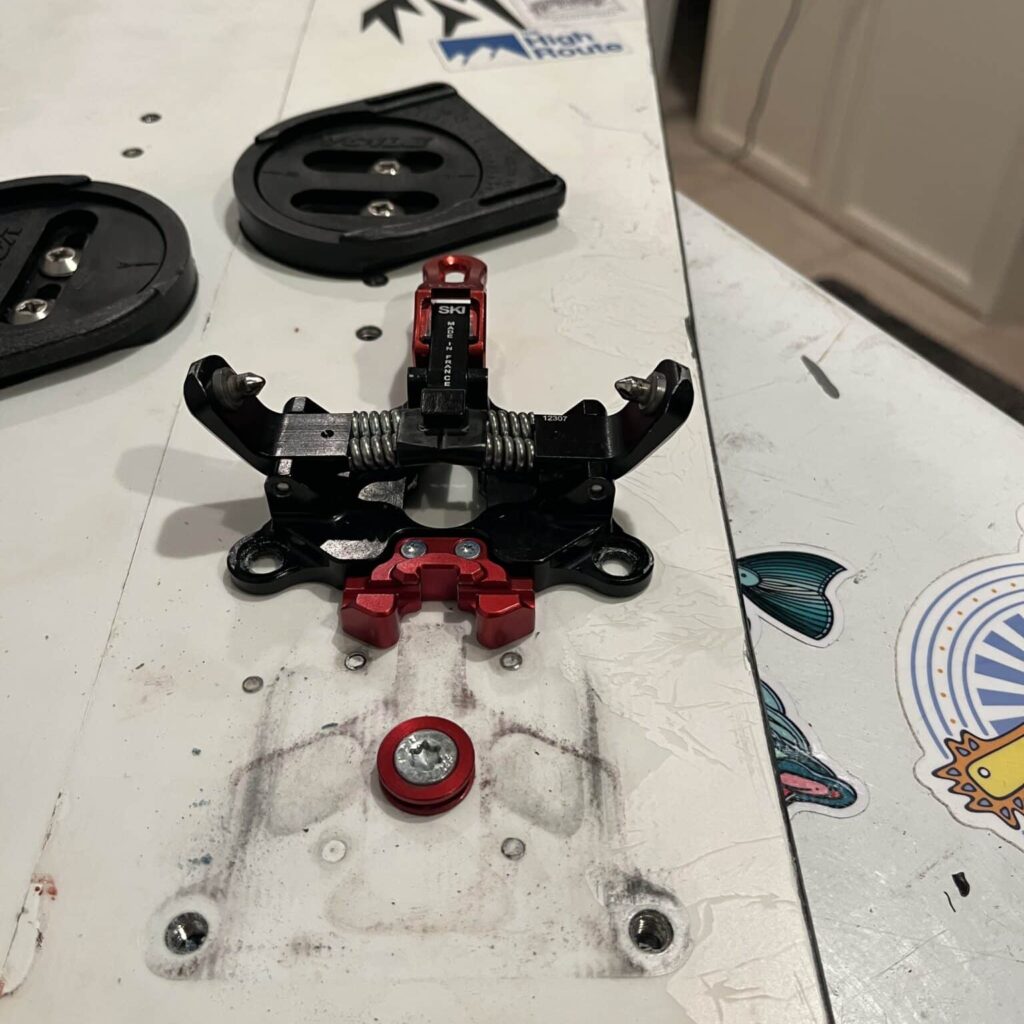
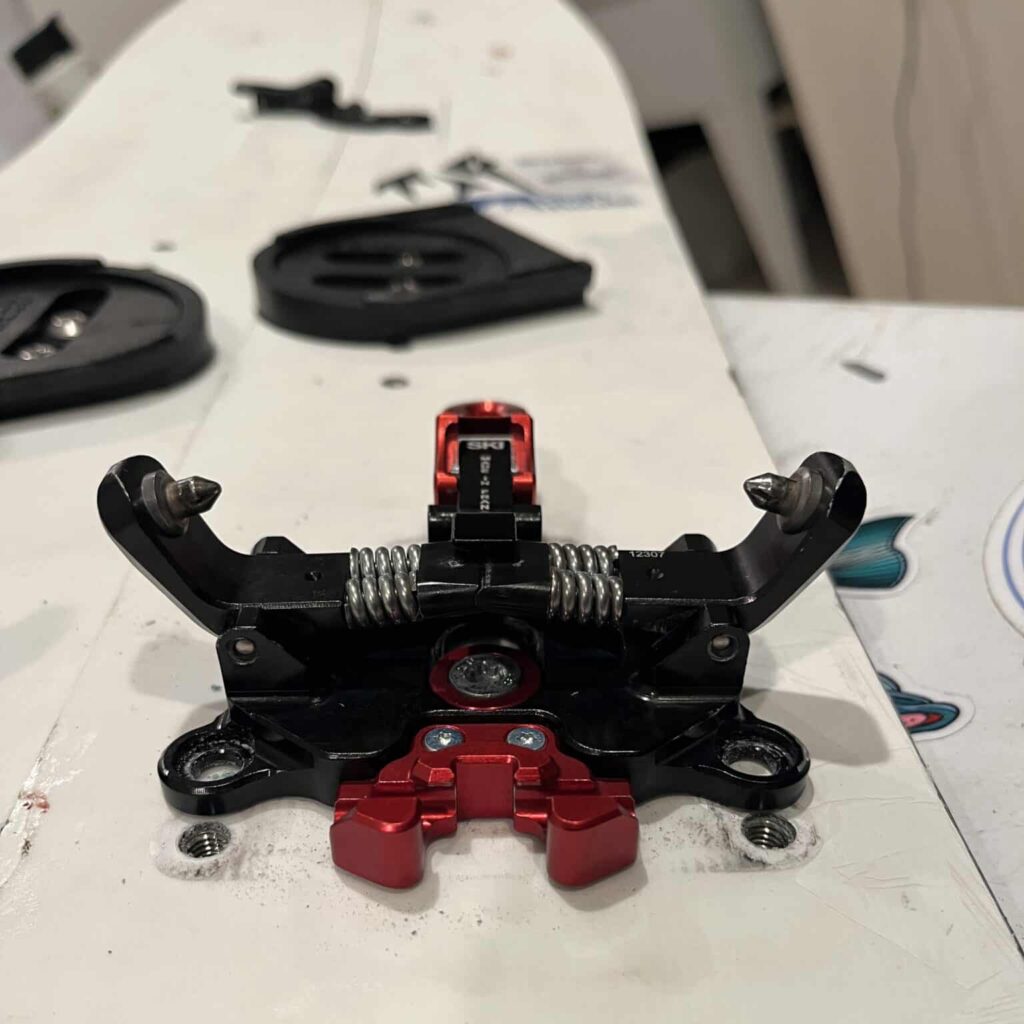
After a whole season of abuse, the release lever was getting hard to move. I needed to use a boot or repeatedly smash the lever with my pole to release it. You can easily avoid this problem by lubing the connection point of the lever and the spring arms, as well as the silver pin that runs through the lever. As you open and close the binding, look at the top of the lever to see this silver pin running on tracks. Those tracks can get really gunked up from use, making opening and closing the binding feel very difficult. I used Remington oil for a firearm, but any silicon lubricant should work just fine. The bolts that come standard with the Pekye are different than any bolt patterns most tools have, so be aware that if the toe piece loosens, you need the specific tool that comes with the bindings.
There is room for improvement, but the Plum Pekye set a new standard for the hardboot toe piece. It’s wonderful to see the technology being pushed into such a niche market, with more options than ever before.
Price: $299.95
Weight: Confirmed 134g/toe piece with ski-crampon slot.
Platform: Three standard Voile screws/hole mount.



Leave a Reply
You must be logged in to post a comment.