
The title, “Particularly Cold Sleeper,” references a graf on Feathered Friend’s (FF) site where the brand helps guide customers to choose a sleeping bag. Under the temperature heading, of which FF claims their bags are conservatively rated, they state, “As a rule, it’s a good idea to select a sleeping bag that is rated to a temperature slightly below what you expect to encounter. Hearty climbers and thru-hikers may be willing to utilize other insulating layers to extend the comfort range of their bags (or just be a bit more uncomfortable in order to save weight), while particularly cold sleepers may want to select a bag up to 20 degrees colder than the temperatures they anticipate experiencing.”
Although this will not be a further review of the FF Raven 10 UL, you can find that here, consider it a jump-off point for a failed attempt to use a 10-degree bag in sub-10-degree temps, and, along the way, hopefully mitigate the fact that I am, without a doubt, a particularly cold sleeper.
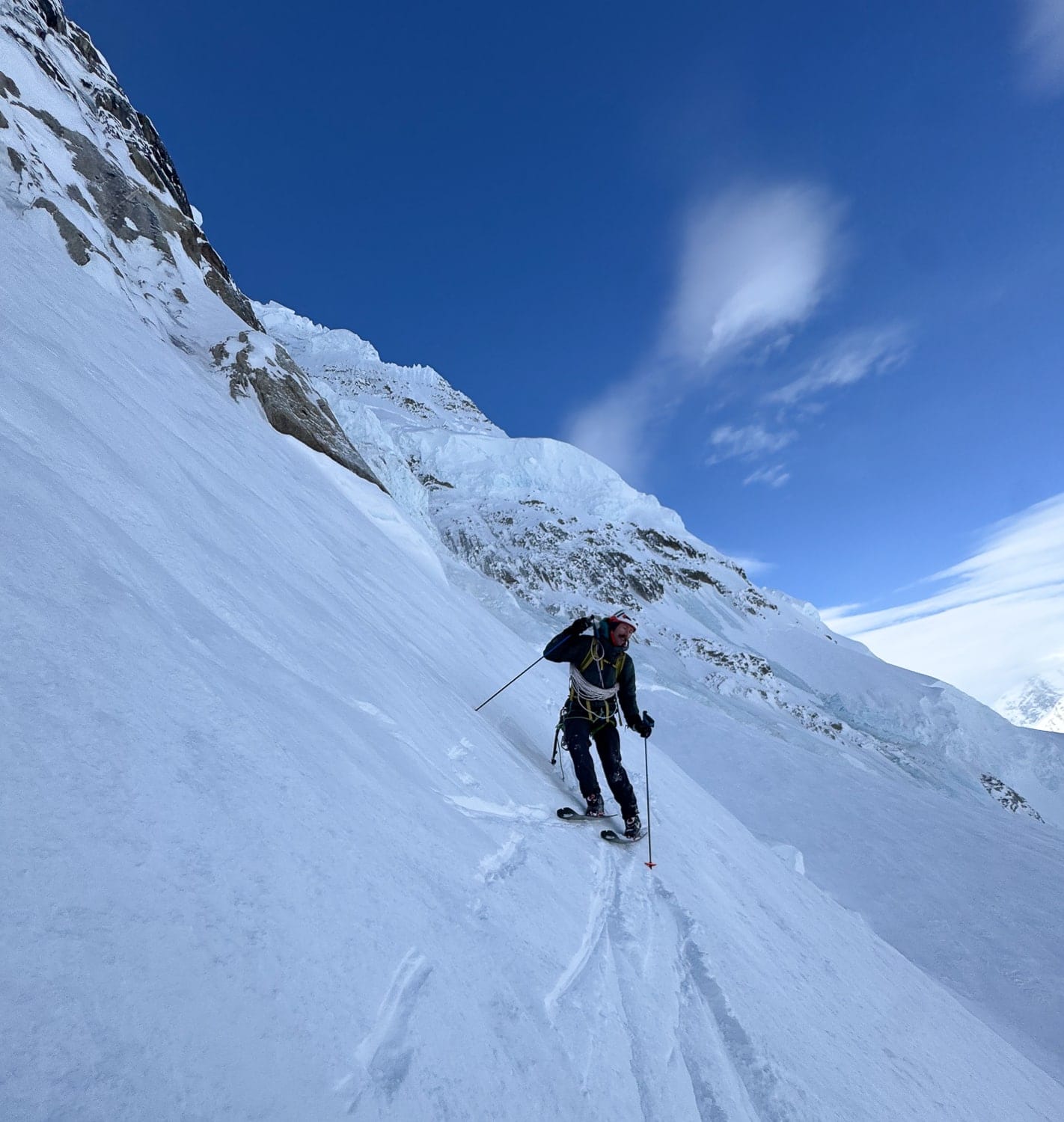
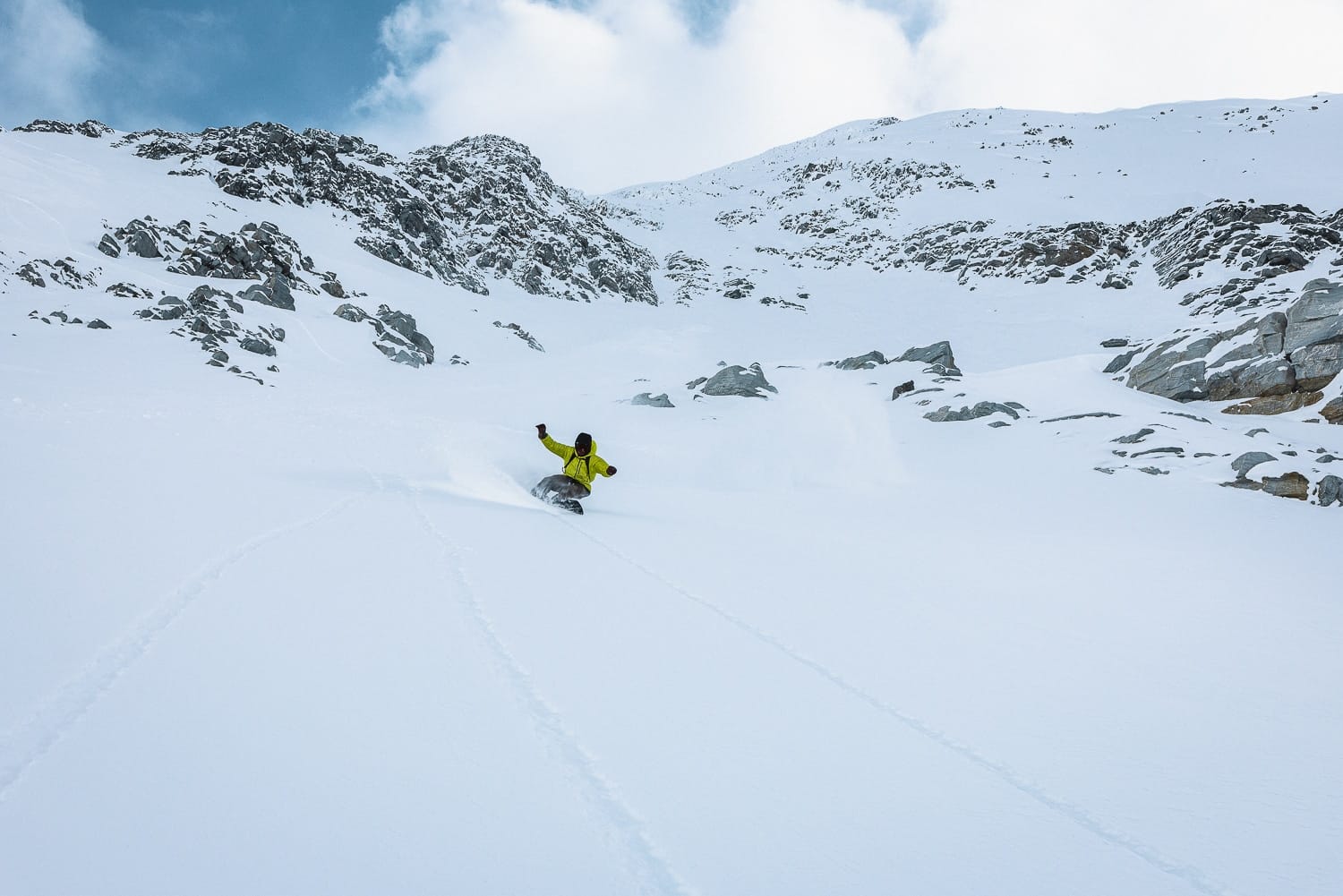
Recently, I plopped onto the toe of the Vowell Glacier to begin a traverse. This was toward the end of March, a time when it was decidedly winter in this Canadian zone. Usually, I’m attempting longer traverses in May, and in the Lower 48. We had some time/scheduling constraints to work around, so we made a go of it.
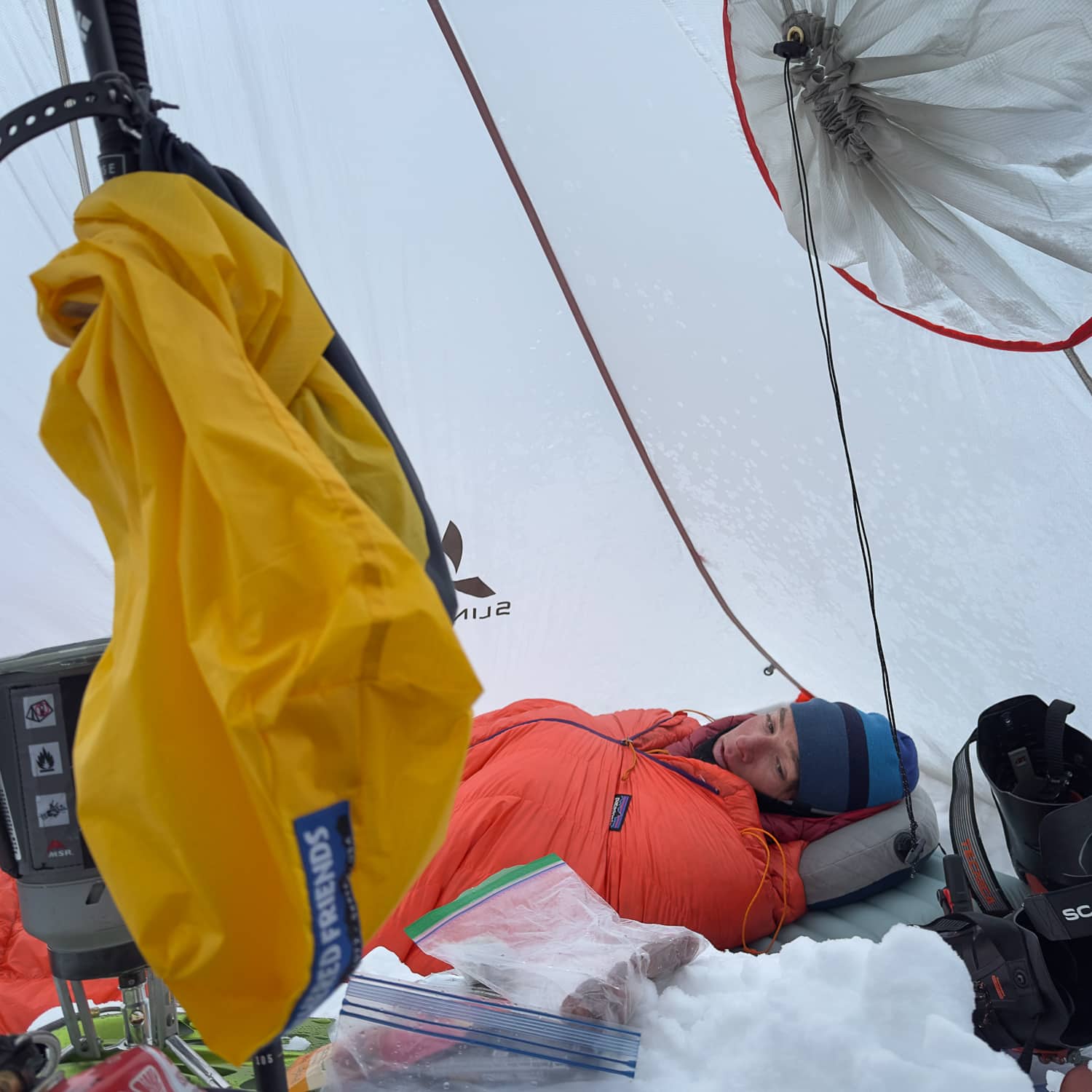
My sleep system included the following:
Bag: FF Raven 10 UL. The bag has a temp rating of 10 degrees for regular/warm sleepers.
Sleeping Pad: Thermarest NeoAir XT Therm pad (mummy shaped), with a R-value of 6.9. (Weight is 524g).
Tyvek Sheet: A body length/width Tyvex sheet to serve as a moisture barrier between the snow/sleeping pad interface.
Shelter: SlingFin Cinder Cone 4P Pyramid Tent. (A floorless mid shelter.)
Sleeping Layers: Fresh pair of thin wool ski socks used only for sleeping (plus synthetic booties if my feet felt cold); Craft medium baselayer top; Patagonia medium lower baselayer; Arc’teryx Nuclei Pant (a synthetic puffy pant); a Patagonia Das Light; a Patagonia Grade VII down jacket; a fresh toque; and a buff.
I get it. No matter how warm a sleeper you may be, or cold, for that matter, my clothing sleep system does seem like overkill. Even absurd. But, hear me out. The Raven 10 is a three-season bag according to FF, and although this may have been seasonally spring, the absolute conditions were wintery. And I, fingers crossed, hoped for 10-degree nights or warmer. Heeding the FF advice for particularly cold sleepers, the Raven 10 was not rated for 20 degrees colder than I anticipated experiencing. (That was a big miss on my part.) But I knew this going in, and I planned accordingly by hauling along the Grade VII. This high-quality down jacket is well-regarded by Denali and high-peak aspirants. The Grade VII and puffy pants, in my mind, could help provide a bit more range for my sleeping bag if temps really dipped. And they dipped. They dipped well below my comfort threshold.
If I am being honest with myself, I was under-caloried before bed on two specific nights. Certainly, during one of those very cold and under-caloried nights, I was not properly hydrated. That’s poor sleep hygiene anyway you look at it.
I don’t have telemetry for the evening’s temps, but we posited that air temperatures were at or below zero-degrees Fahrenheit during the coldest parts of a few mornings.
This may not prove anything, but it was a telltale sign of the downright cold: I developed some weird cold injuries under four nail beds (same two fingers on the left and right hand, respectively) on the coldest night. As a side sleeper, I think my hands were tucked under my head, and my fingers stuck out from the hood and were exposed directly to the cold air. It took me a few days to self-diagnose (although I did text Patrick Fink, my go-to wilderness M.D., once I was in cell service), as I thought I had somehow banged my fingernails during an errant fall. The cold injury manifested with bruised-looking (red/purple) nail beds and the type of pain associated with slamming a fingernail in a door.
The Raven 10 is a wider sleeping bag than the regularly dimensioned Lark 10. From my assessment, wearing the Grade VII inside the Raven 10 did not compress the bag’s down, making it less efficient. On the nights I wore the Grade VII in the bag, which were all but one night, and the temps settled in the 15-degree range, I slept sufficiently warm. Key to a multi-day traverse is the ability to recover. In hindsight, I did not set myself up for success. As a particularly cold sleeper, I am going to rethink some things.
First Takeaway: The Grade VII (medium) weighing 676g (about 1.5 pounds) was well worth the extra weight/bulk. I was very comfortable around camp, melting water/cooking, and lounging while wearing it. For winter trips, or trips where wintery temps are to be anticipated, I’ll be packing it. And depending on the sleeping bag, I might be sleeping in it.
Second Takeaway: As a very cold sleeper, in winter, I need a sleeping bag rated to at least 0-degrees, and even, maybe, -10-degrees. The Raven 10 is a solid three-season bag for me, but more on the warm end of the three-season spectrum.
Third Takeaway: As a side sleeper, I intend to go with a wide-dimensioned sleeping bag again. I don’t want to give up the extra comfort.
Fourth Takeaway: Although I found the mid to be excellent structurally and feature wise—you’ll have to wait for the review—I likely need a tent (for the extra potential warmth) if I anticipate winter conditions/temps.
Fifth Takeaway: Moving forward, I plan to pack a few extra small portions (400-500kcal each) of the KC Special (potato, salami, and butter) meal for those evenings when I feel run down, expect a cold night, and need a potential calorie boost before bed.
Sixth Takeaway: As a cold and tossy-turny sleeper (man, I sound like a trainwreck), I want to try a rectangle-shaped sleeping pad, as I’d like some more real estate to toss and turn on.
I could probably go on. But as I’m getting long in the tooth, I’d like to think I would have had my winter sleep system optimized by now. I could have taken my TNF zero-degree bag, but the 1/2-length center zip isn’t for me. And so maybe my seventh takeaway is to start thinking more DIY and to experiment with making a lighter-weight -10 to 0-degree bag. The temps seem to be warming up, generally, now that we are well into spring. So maybe I have some time.
Leave a Reply
You must be logged in to post a comment.