
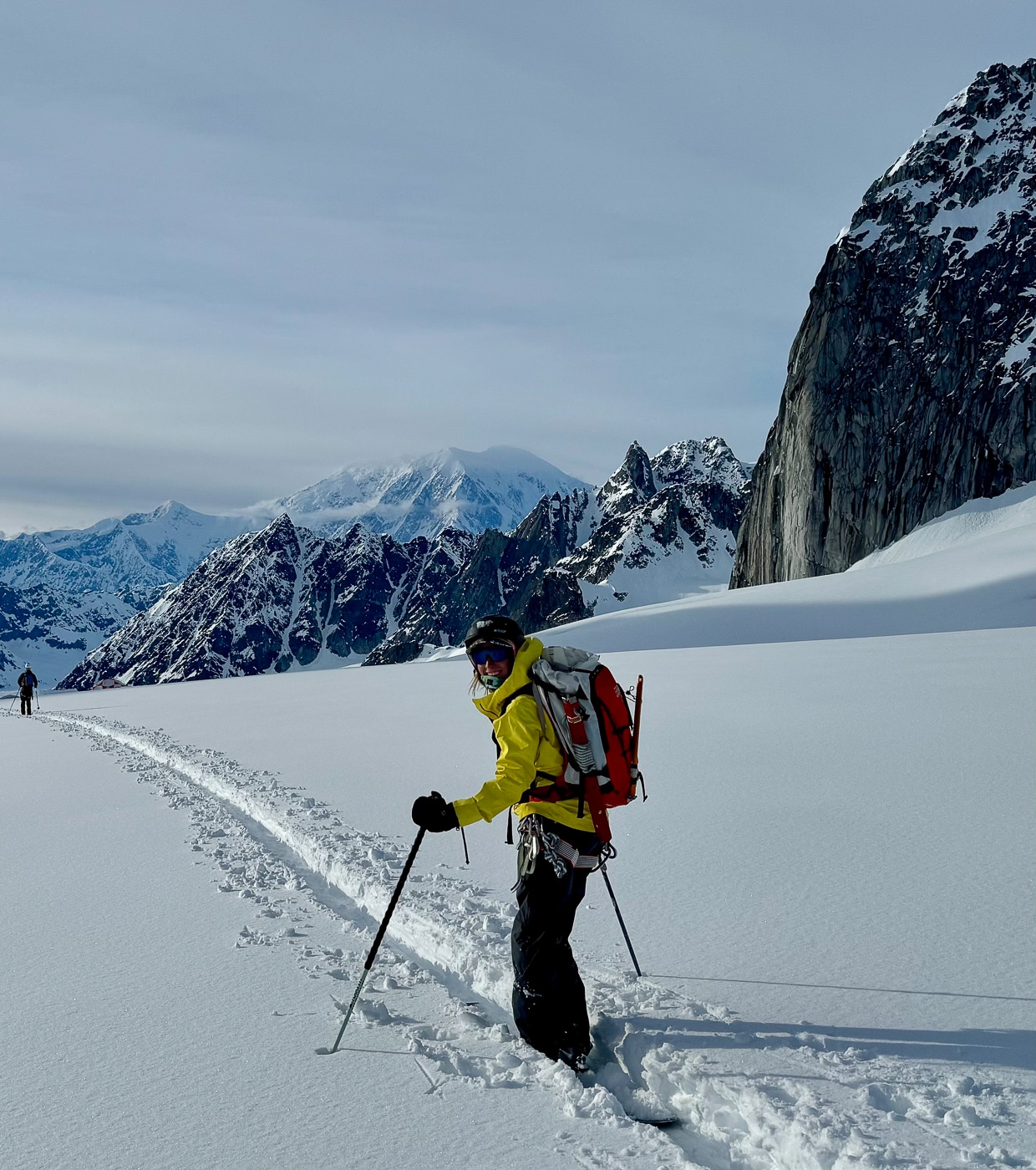
Several weeks ago, amid an array of setbacks on public lands, we reached out to the Winter Wildlands Alliance (WWA) to discuss the current political landscape surrounding our winter backcountry endeavors. We spoke with their Policy Director, Anneka Williams. Our conversation has been lightly edited and condensed.
***
THR: Anneka, can you give us a general sense of what the WWA does?
Anneka Williams: The Winter Wildlands Alliance is a national nonprofit, and our mission is to inspire and empower people to protect wild snowscapes. And I really love the words “inspire” and “empower” in our mission statement; they drive much of our work. So we were founded more than 25 years ago by a small group of skiers who believed that winter landscapes and the experiences that they offer that I think so many of us crave, whether that’s snowshoeing or a big back country ski tour, or sledding with your kids, or walking along the river in the snow, whatever that is, that those winter landscapes that we crave deserve protection. And so from the beginning, the Winter Wildlands Alliance has focused on the intersection of winter recreation and conservation, which is a balance.
We want to protect access for people being able to get out into backcountry winter landscapes. We also want to conserve those landscapes we rely on, protect them from development, and protect the wildlife that rely on them in winter as part of their natural cycles.
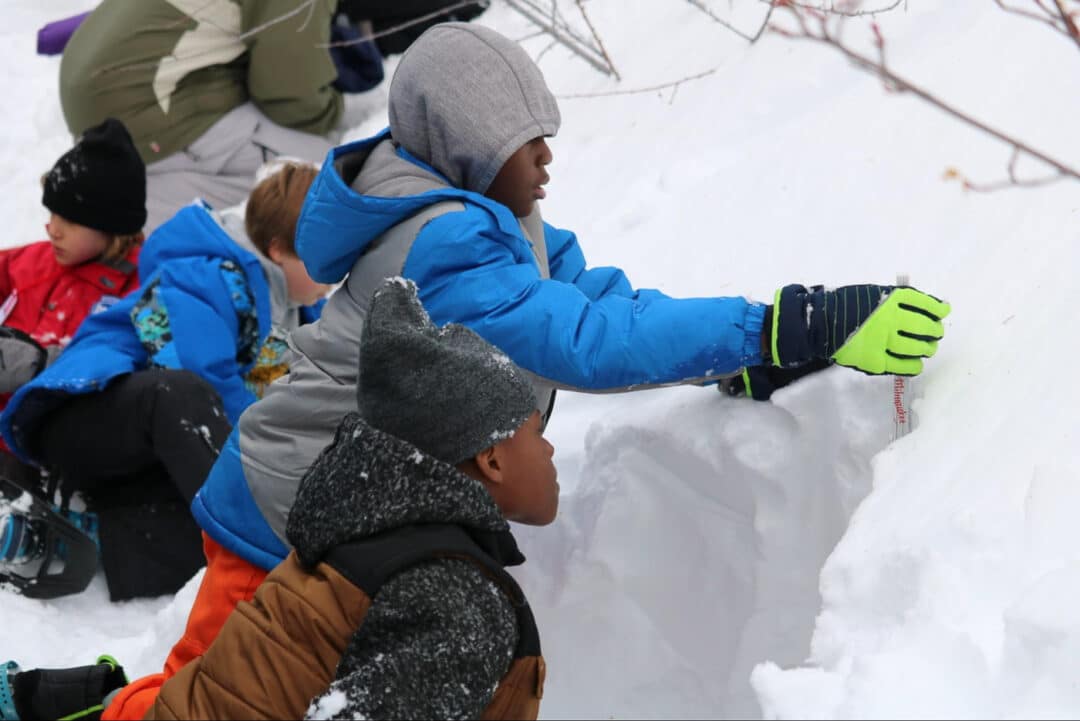
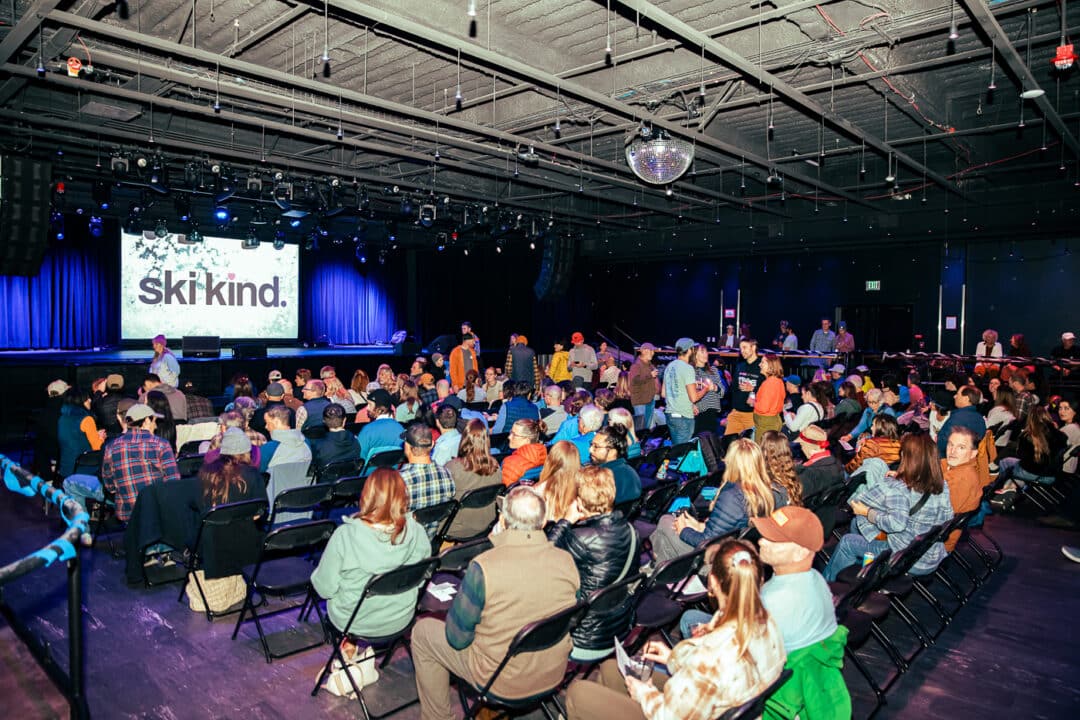
We also help organize and support the Backcountry Film Fest, a nationwide tour of films with the goal of telling stories about the people spending time in the backcountry—this is how we inspire people. I think this year, we had something like 100 screenings. We also have a snow-school program, which is an environmental education program that introduces students to snow science, climate challenges, and winter ecology. And as of 2025, we had 70 snow school sites across the country. Last winter, we helped get more than 35,000 kids outside in the snow to try and develop that connection and develop the next generation of people who love playing in the snow in some form and are willing to stand up and protect those places.
THR: How does that work? Do you work directly with school districts, or do you work more independently?
Williams: It’s a mix of both. We have a national snow-school director coordinating with our snow-school sites across the country, which may be public schools with access to winter and snow-play areas. There’s one in Glacier National Park, which is a partnership with the Park Service for local kids. So it really, really depends.
But to round it out, one of our last core programs is our policy work, and I’m the policy director for the organization. That’s where I live on the team. But we really try to work across different scales, from hyper-local issues to national issues, and on topics that are relevant to backcountry winter recreationists, specifically. So often, this intersects with public land issues. And then at the hyper-local level, we’re talking to grassroots groups about parking, shuttling, and backcountry trailheads, for example.
THR: In this low-snow year, with access more limited, we have a parking issue (especially on weekends). I know this is also an issue in places like the Wasatch and Snoqualmie Pass. Hypothetically, if a local organizer or an individual reached out to the WWA, what might that look like in terms of policy support or other resources?
Williams: I want to back up a little bit and say that we also have a grassroots network model. So we work with local groups across the country who are part of our grassroots network. And, for example, the Wasatch Backcountry Alliance is one of our grassroots partners. There are a bunch of other backcountry alliances that are small, locally focused organizations. A lot of my energy goes into supporting those folks who have invested in being a part of our grassroots network. And so, for your example, in Oregon, if you reached out to me as an individual, I would probably hop on a phone call with you and say, “tell me more about the issue, and then think through, are there any grassroots groups in your area or near you that could tap in to help do some of the on-the-ground work, and then provide resources. If it were something we had the bandwidth to get involved with, we could offer communications support, or we could pull from members that we have in Oregon, reach out to these folks, and try to mobilize some advocacy around the parking issue.
The assistance we provide really depends on the issue, who is already involved on the ground, and the ask. Sometimes groups just need help with visibility; other times, it’s a more targeted ask, like making an advocacy video or helping craft a comment letter.
THR: Can you give us a bit of backstory on how the WWA formed? From my understanding, there might be some lessons there for these times we are currently living through.
Williams: I joined the WWA in August 2025, so I’m relatively new. But the way that the founding story has been told to me is that there was a lot of conflict between motorized and non-motorized winter recreationists in Idaho, specifically. And it was getting really heated. This is like the late 90s, and I understand, an outsider, maybe the county, communicated, “You guys need to figure this out, and you have a year to make a map of where non-motorized folks can go, where motorized folks can go. And if you don’t come together in that time and make a map, we’re going to make it for you, and probably you’re not going to like it.”
That forced the issue on motorized folks, and the cross-country skiers, backcountry skiers talking to motorized folks, and drawing a map and figuring it out. From that process, the Winter Wildlands Alliance was founded to advocate for human-powered winter recreationists. That’s still what we do; we represent the human-powered winter, backcountry recreation community. But balance is really core to our mission, and I think that’s something that is really challenging in this environment right now, where things are polarized, and it’s feeling really hard to have conversations with people that are going to look at our website or really any system right now, there’s a pro group and a con group. It’s hard to get those groups to talk.
Our goal is not to make the backcountry non-motorized. Our goal is to create balance so everyone can have the experience they want, and we can protect it for generations to come. Back to the question about our origin story—it really was a specific community with a very local issue that needed something done. And that involved conversation and collaboration.
THR: These are polarized ties, as you mentioned. So, how does an enterprise like the WWA, which presents a certain way, say, on the website, create dialog? What are the strategies you folks embrace to foster a conversation?
Williams: I mean, that is the question. I don’t know if I have the right answer for that. But I can certainly share some of what we’re trying, and I’d just like to reiterate that I think about this every day. When I zoom out from our work and just look at all the news coming from different corners of our country right now, it feels like a piece is missing: How do we have productive dialogue with people we maybe don’t agree with at face value? It’s an important question for all of us to explore, personally, professionally, at all levels. So I appreciate you asking that in terms of what we’re doing. We have regional policy staff in Colorado and California, and they do a lot of work to try to connect with local snowmobile groups, motorized groups, and people who might be unlikely allies of Winter Wildlands Alliance. We really try to be on the ground, discussing with folks to learn what they are thinking and what their interests are. And we try to clearly communicate our interests, but also make sure that it’s communicated in a way where it’s like, “Okay, this is what we think. What do you think? How can we find the middle ground?”
There’s a lot of on-the-ground relationship building that is slow, hard to measure, and really important to our work. So that’s one strategy on the policy side of things. Right now, we’re thinking a lot about the travel management rule, which is the framework at the federal level that is essentially like zoning for the backcountry. It’s a rule that creates a framework by which the Forest Service can designate areas as motorized and areas as non-motorized. We’ve been participating in a coalition defending the travel management rule because we expect the current administration to take action to revise or repeal it later this spring.
A huge part of that effort has been reaching out to groups like the Motorcycle Industry Council, snowmobile associations, and people that we aren’t necessarily working with all the time to ask what they think about this. This is a rule we see as benefiting everyone and creating certainty for every user about where they can go and where they can’t. So when someone rolls up to a National Forest with their snowmobile, they understand the travel management rule, as there are clear maps on what routes they can or cannot go. It’s about trying to make sure that when we’re thinking about running a policy campaign, we’re not just thinking about it from our perspective. We’re thinking about it from everyone’s perspective, making the case for why it’s important to everyone, and being open to what needs to change.
THR: Ok, I’m really not asking this as a rhetorical question. Here, we’ve had snowmobiles running deep into the wilderness for the past few winters. So I’m curious, from your perspective, why would a motorized user want to limit the terrain that they can ride in? As a human-powered tourer, I’m thinking that I’d want to maximize the terrain for tourers with no motorized use, and certainly with the caveat that federally protected wilderness is a no-go zone for snowmachines.
Williams: I think the natural instinct, whether you’re a skier or you’re a snowmobiler, is to want as much access as possible. And I think the hard reality for both groups, human-powered and motorized, is recognizing that the way we recreate impacts the land and affects other users. If we’re on a snowmobile trail touring, that creates a negative experience for snowmobilers if they’re constantly slowing down, having to stop, and having to move around us. As tourers, we love having fresh tracks and don’t want a snowmobiler just ripping an approach when I’m spending three hours walking up there. We’re having a fundamentally different experience. So all that to say, I think it’s hard, and I think it requires humility from both sides, and the ability to recognize we’re not going to have everything. And so what feels really important is how we can have a productive conversation about what each group needs. And I think that’s really challenging to have those conversations and to be willing to make some concessions. I’ll leave it at that.
THR: Let’s dive into some local issues that you would like to highlight?
Williams: We have this grassroots network model that serves as a backbone for a network of regional and local groups. We just launched a new series called The Winter Advocacy Roundtable for grassroots groups in our network to share pain points and recent wins. For example, how can a group in the Central Wasatch learn about creating an effective shuttle system up the Cottonwood Canyons from the Teton Backcountry Alliance, which has had good success with that this winter?
Just last November, we worked with the Wasatch Backcountry Alliance (WBA) to help the town of Brighton, which is a tiny town at the top of Big Cottonwood Canyon here in the Central Wasatch, to pass a new town ordinance that protects access and essentially clarifies that ski boundaries should stay within their current footprint. Solitude and Brighton resorts are up there, and there was some talk of expanding onto the opposite side of the road, as their pre-existing footprint—this ordinance created a new barrier to ski resort expansion in an area important to backcountry skiers. The zone is a beautiful aspen grove and wasn’t specifically focused on limiting that development alone. It was more to say we would like to preserve the balance between developed and undeveloped land at the top of Big Cottonwood Canyon. And so we were able to work with WBA as a grassroots group to help us understand what the local community was saying and thinking, and to be able to rally the troops on the ground, show up, write comments, and go to the meetings. That was a cool win for us, and one of the ways we can support a group.
We also worked this fall with Friends of Mission Ridge, a grassroots group based in Wenatchee, Washington, that was writing a comment letter in response to the proposed Mission Ridge Ski Area expansion. The Friends group helped me understand their thoughts on the ski area expansion, and then we were able to workshop a really strong comment letter on the draft environmental impact statement and co-sign it with them. This is a more technical way of supporting a grassroots group by helping their letter have some national representation behind it.
THR: In closing, this is not new; there is so much noise out there right now. It all seems like a dissonance. How can you folks, or advocacy groups, be a tuning fork, where there’s maybe a bit more harmony?
Williams: This is one of those questions that I’m thinking about every day: How do we cut through the noise and figure out what is worth our time when we have more than enough work to go around for all the different groups working on public lands, access, and recreation? I think one thing I’m struck by is that many of the attacks currently framed as separate are, in fact, related. It’s related to the breakdown and erosion of our public land system. There have been massive cuts to funding and staffing at the Forest Service. For example, as we’ve seen, there have been attempts to sell off public lands on a large scale, and there are smaller-scale attempts to get rid of our public lands, or at least weaken the frameworks that protect them. And while those are things that you might be asked to comment on separately because they’re separate bills at different times of year, the broad theme is that our public lands are under attack, and therefore our access is under attack.
As I’m having conversations with folks, one of the things I just try to highlight is, yes, there are smaller fights in all of this, but trying to keep that broader picture of this is all connected, and we are all working to protect public lands right now, and all of the things that those encompass. Winter Wildlands is thinking about it in the context of backcountry winter recreation, but that’s a narrow framework that aligns with our mission statement. Other groups are thinking about it from a summer access perspective or a wilderness perspective, or whatever that is. So before I dive into answering your question about how to take action, I would just encourage people, in terms of the idea of tuning the noise, to really think about—how are all of these things interrelated? What’s the broader theme? So that’s maybe one way to help cut through the noise a bit on how to take action.
I would say, like, public comments do matter right now because they are going into the record and can be used in litigation to oppose things. I would also say supporting nonprofits feels more important than ever right now, and I, you know, say that completely biased as someone at Winter Wildlands Alliance, but as we’re seeing these staffing and agency cuts, or staffing and funding cuts at land management agencies really manifest on the ground, someone is needing to step up to fill the gaps that we’re losing from that manpower and loss of resources. Now, oftentimes, that could be a volunteer-led nonprofit taking care of a toilet at a trailhead that is important to our community. For example, I was talking to some folks in New Hampshire last week who are part of our grassroots network, the Granite Backcountry Alliance, and they have a cost-share agreement with the Forest Service to do glading in the White Mountain National Forest. So, as you’re probably familiar with, the East Coast has really dense forest, and in order to make it skiable for backcountry folks, often you need to physically clear out underbrush. And the Granite Backcountry Alliance and some other grassroots groups we have in Vermont are doing an excellent job of that, and they have really cool frameworks with the Forest Service to do that. And that was more important than ever this fall, because the Forest Service didn’t have the capacity to help clear. And so in that case, we see people stepping up to fill the gaps when land management agencies have been cut off at the knees. That, to me, feels like a really tangible way to take action, and I would encourage people to do that in a way that feels really locally relevant.

Leave a Reply
You must be logged in to post a comment.