
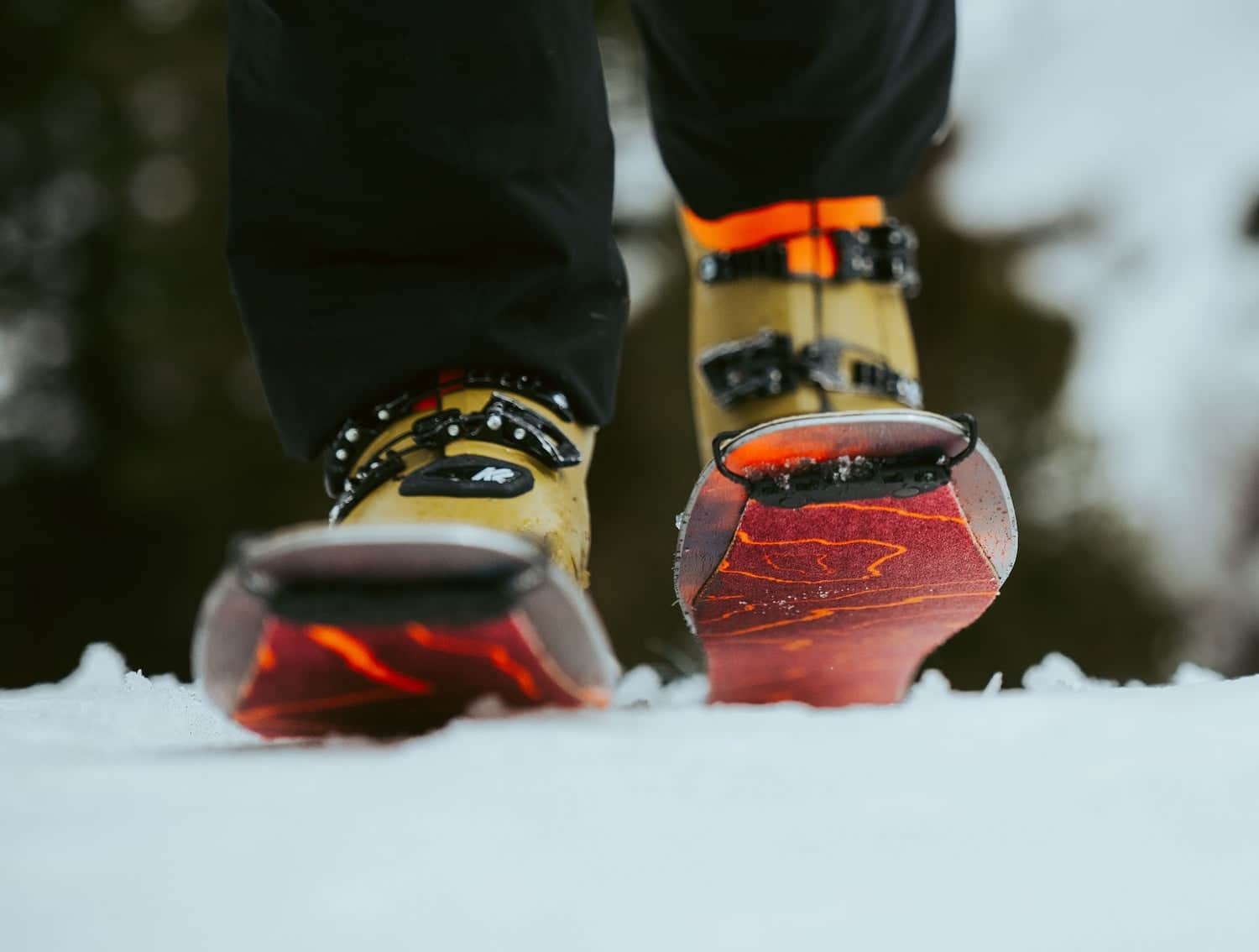
Skins are not always the sexiest subject, even among the gear-obsessed. Although, did you see how many skins the skimo racers had in their kangaroo pouches for the mixed relay at the Olympics? Holy cow. Most folks are set-it-and-forget-it, purchasing pre-attached kits from the dominant brands here in North America: Black Diamond and Pomoca. And skins, their maintenance, and their performance are neglected until the glue is covered in dog hair, the backing has a huge tear, or, in my friend’s case, the plush has railroad tar on it. I’d encourage you to think a little more proactively and critically about your skins. There’s a ton of performance to be gained at modest cost, both financially and otherwise. Personal bugaboos here are taper, glue, wax, and mohair.
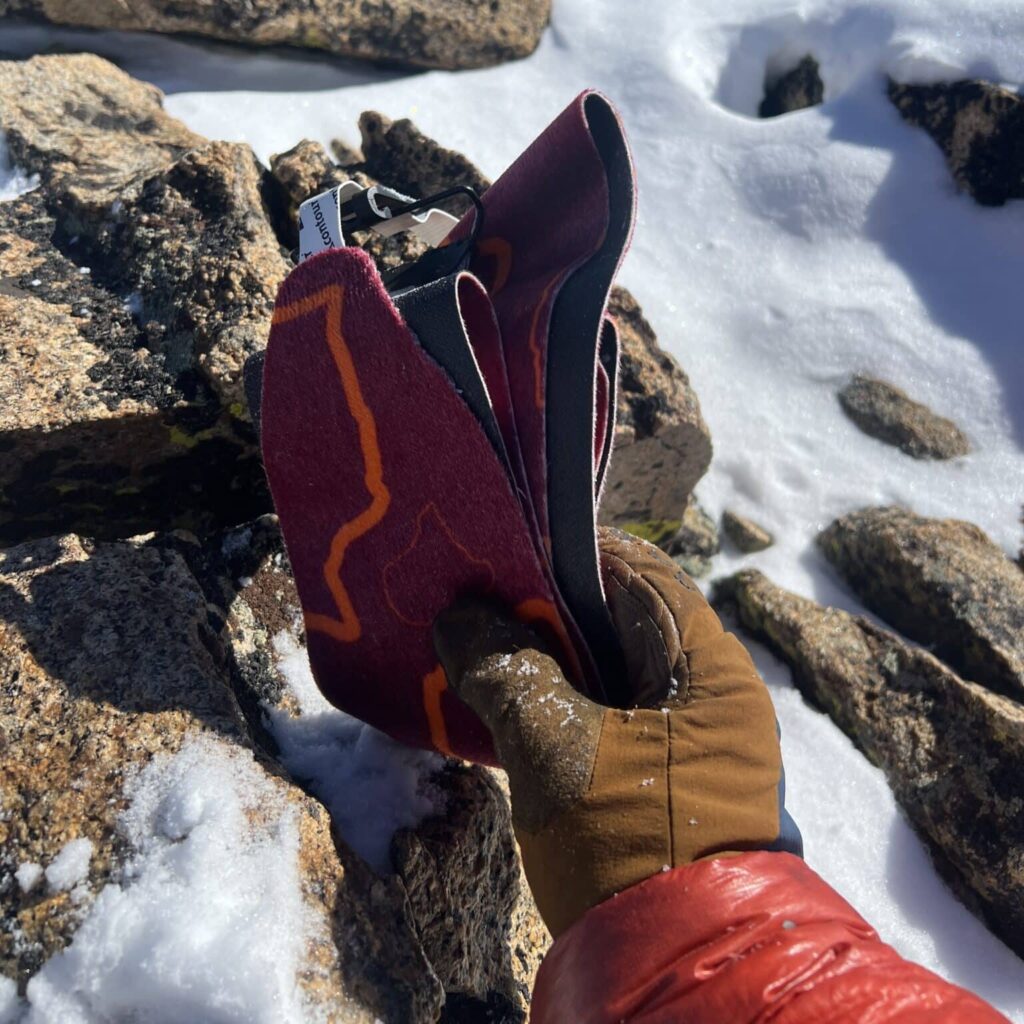
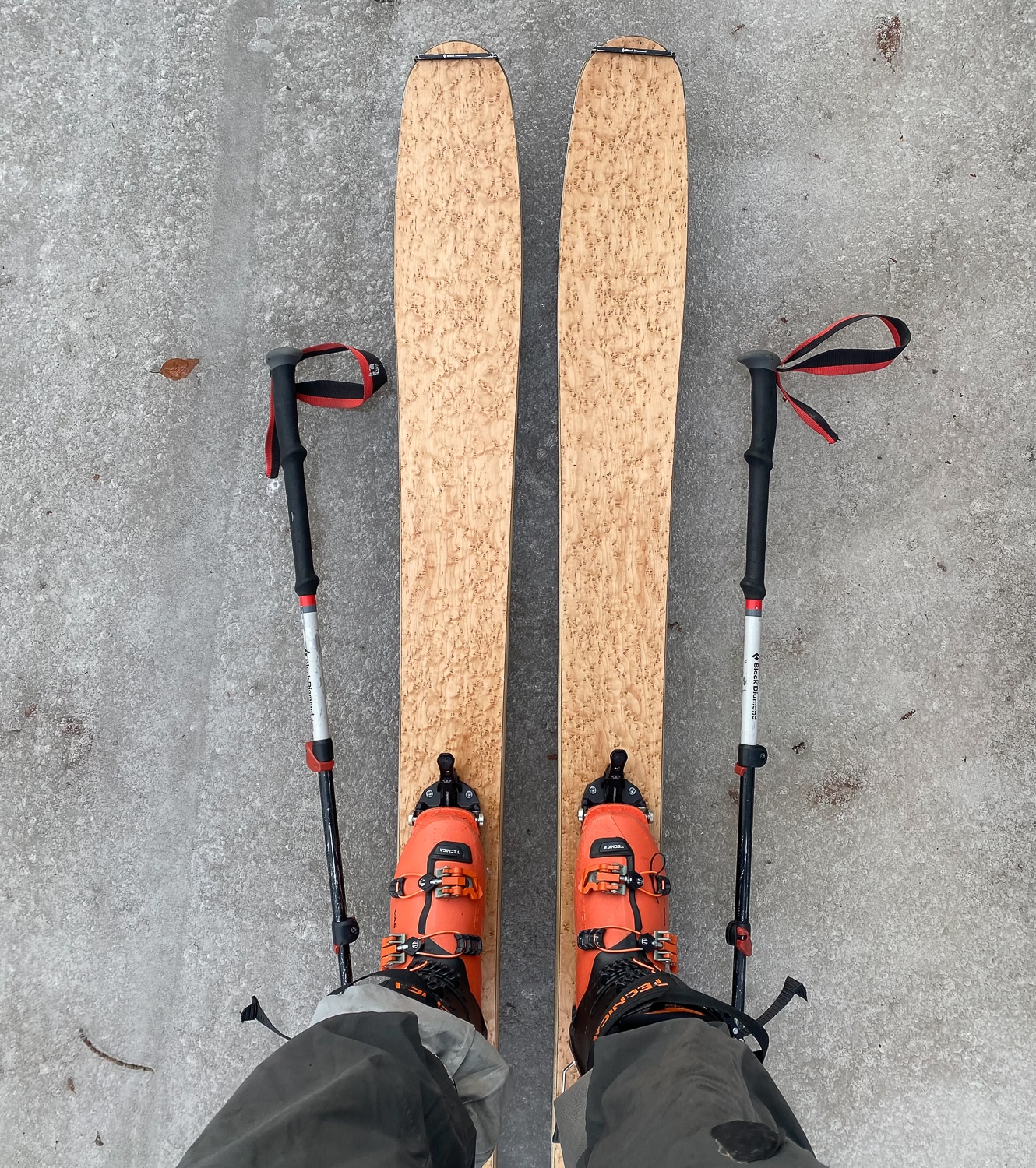
To that end, I have been skinning around (in the rain) on Contour’s new Guide Pure 2.0 skin. It’s pure mohair and quite light. The main change from the 1.0 is that the skin is about 10% lighter, alongside some tweaks to the plush. Comparing them to the BD mohair skins I previously had on these skis (and the Contours are totally choked up on the tail clip while the BD skins are maxed out, leaving approximately 10cm more skin on the Contours), the Contours are 230g to Black Diamond’s 260g. Plus(h), these skins are very pretty. They otherwise share many traits with the time-tested Guide Pure 1.0, which folks may be familiar with under the Contour name or Ski Trab (all Trab skins are Contour). This chart describes whether they are the Guide Mix or the Guide Pure, but the shorthand is that the very colorful ones are mohair. I’ve long loved Contour skins above all others and am excited to see if the weight reduction harms their incredible durability.
Plush
The primary trait, at least in most folks’ eyes, for a skin is the plush material. The hairs. Nylon (grippy and very, very slow, but durable), mohair (from goats, so sorry, but very fast), or some mix of the two. I have been relieved to see all-nylon skins start to go by the wayside in recent years. They are, shall we say, unnecessary. I think beginning backcountry skiers are seduced by nylon’s promise of an iron-tight grip on the snow. They are certainly grippier than a mohair or mohair/nylon mix (momix) skin, but for most people, in most places, it’s less effort to set a new, lower-angle skin track than drag those things around.
Mo-mix skins seem to dominate the market unless you rock a skinsuit. These tend to be 60/40-70/30 mohair and promise the best of both worlds. And they do perform quite well, so people seem to end their skin-evolution journeys here. But there’s another, even more glide-y world beyond. Full mohair skins. Not reserved for skimo and groomers anymore. Durable mohair skins like this one are well worth your attention. If you rock mo-mix skins but don’t really ever slip on the skintrack, I’d encourage you to consider full mohair. So, the skin I’m focusing on is mohair. It’s pure. There are gradations within the world of mohair skins (ask any skimo racer), so a “race” skin will generally be glidier still than these backcountry skins, but these skins sit pretty far to the glidey end of the spectrum. I will say the other day, touring with a friend (he was on Pomoca Free Pros, the pink ones), he was sliding around a lot on the skin track, and I was not. (Skin or technique or a combo of the two?)
I would also note that Contour ships these skins with a block of skin wax along with instructions on how to use it. Waxing your skins, whether rubbed on or with an iron, is an amazing way to get mega performance benefits. It often prevents glopping in the spring when cold snow and hot snow mix, but it also increases the glide of the skins all winter. I’ll humbly plug hot-waxing your skins regularly, even if you don’t race. The treatment only really lasts for one tour, but it’s a fast process with fast results, and the wax stays in the skins longer than just rubbing it on once you’ve already started glopping.
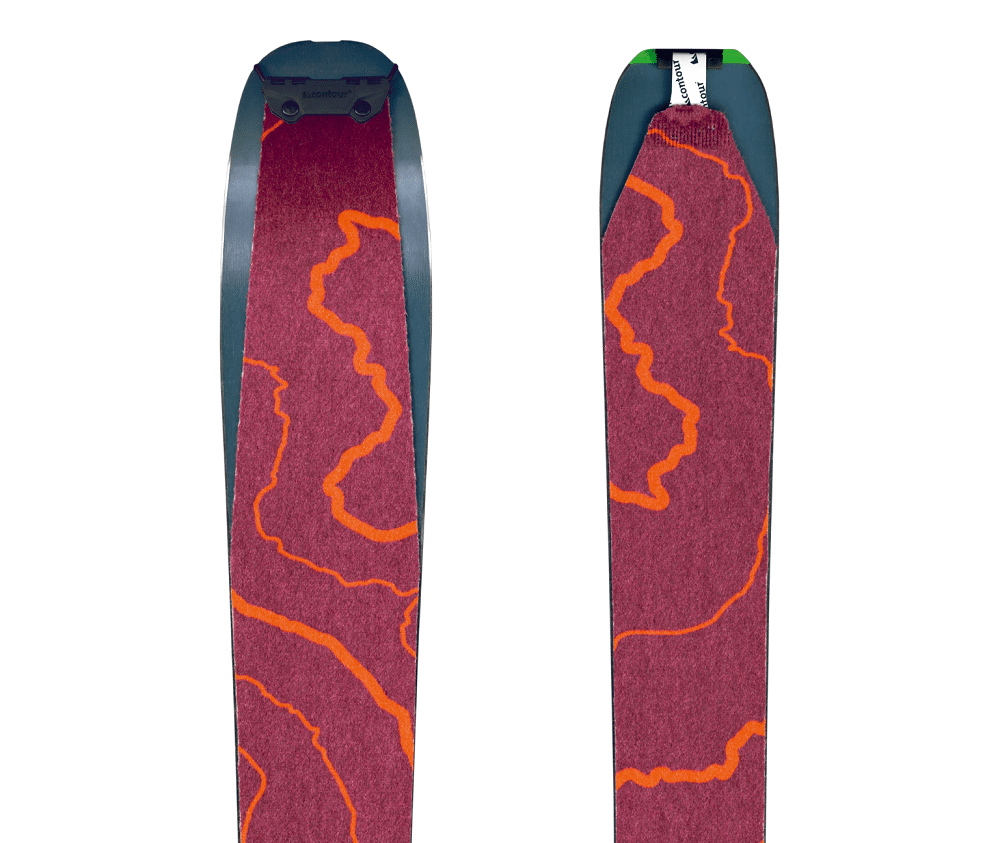
A lesser-considered element of skins is the taper at the shovel. Many skins come squared out at the tip for wall-to-wall coverage of the ski base. Skin material around and in front of the shovel tends to be pretty useless from a grip perspective. And the taper’s shape affects how snow creeps in, eventually spoiling your adhesive’s day. You can imagine what I think the right taper on a skin should be: long and elegant. No sharp corners, no bulging straight out from the tip clip.
I’ve always found cutting the taper on my own skins hopeless. Gouges, tears (the wet kind from my eyes), and flappers always mar the finished product. Although a “universal” skin (one that comes from the factory without the tip clip attached, so you can cut it to length for your ski) offers the most flexibility when purchasing, a pre-assembled skin promises less heartache. Among the brands, the taper of the skin at the tip of these pre-assembled skins varies considerably.
In this case, I was stupendously impressed by the shape of the skins I pulled out of the box. The taper extends for over a foot from the tip, creating the gentlest-possible angle for the awful, Cro-Magnon trimming atrocity you will commit to your new skins. This helps quite a bit with the snow creep and eliminates quite a bit of unnecessary material (which then also improves the glide!!!).
Hardware
The hardware is also thoughtful. The tip clip is the best part of the traditional Black Diamond hardware (the low profile and ultra-durable but often subtly not centered wire loop), with the best parts of the Pomoca hardware (a squared, durable frame keeps the tip clip centered and the skin tension the same on the ski every time). The Contour tip clip does not have the pop-out feature that the Pomoca is famous for, so if the tip clip ever breaks, I will be doing some surgery. The tail clip is Pomoca-esque (but different): a flat panel ultrasonically welded under the plush in the back, with no extra drag, attached to a plastic cam buckle. The Pomoca attachment is sewn, and I have seen most rip off over time. My Trab-branded Guide Pure 1.0’s have a special Trab tailclip, so I don’t yet have experience with the durability of the ultrasonic welding. Wener Koch (head honcho at Contour) thinks they are the only manufacturer attaching tail clips this way and says the method prevents snow from slowly abrading the stitching holding on the tailclip (the problem with the Pomoca’s).
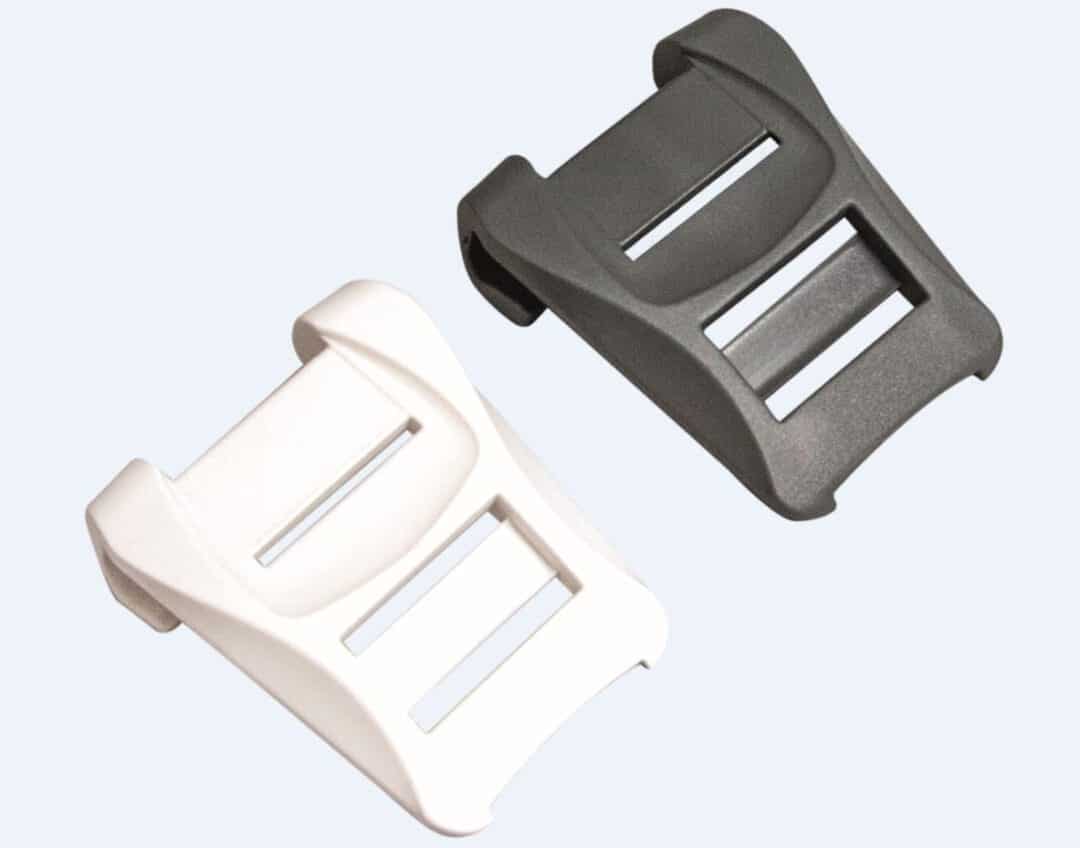
One of the reasons I am using these skins is the tail clip design. I have been using a pair of Black Diamond Glidelite pures (also mohair) on some very flat-tailed skis and found the tail hardware to drag pretty heavily in the snow. Why get slippery mohair skins just to get more drag? Early outings with these new Contour skins have resulted in no hardware drag.
Glue
When I received these skins, I was somewhat confused. The box said they were hybrid skins, as in hybrid glue. But the color of the plush indicated they were traditional, hot-melt glue. Maybe I’m an idiot (I haven’t used hybrid glue skins for years), but over the first few tours, I wasn’t sure if they were hybrid or hotmelt glue. The skins rip off the skis like I remember the hybrid skins doing (very easily), but without the immediate and total adhesion failures that I also remember. After receiving clarification that the skins had shipped in the wrong box and were, in fact, traditional hotmelt glue skins, I was somewhat astonished. Compared to the BD skins I have been using for most of this season on these skis, the Contours barely felt attached to the ski (but no failures yet, even doing several tours with 5-6 laps in new snow). I keep thinking of the glue as “hybrid-hybrid,” though I’m sure that’s not right. I’ve always been impressed by the Contour glue (durable but not too sticky). Though Contour isn’t boasting of glue changes for 2.0, I can’t help but think change is afoot.
Big questions for me:
- Will the new backing hold up as well as the old 1.0s did?
- Will the skin get alopecia like my BD mohair skins?
- Is the easy-ripping nature of the glue likely to go sideways once the skins start to get a little tired?
- Can anyone keep up with the new, faster version of me?
Leave a Reply
You must be logged in to post a comment.