
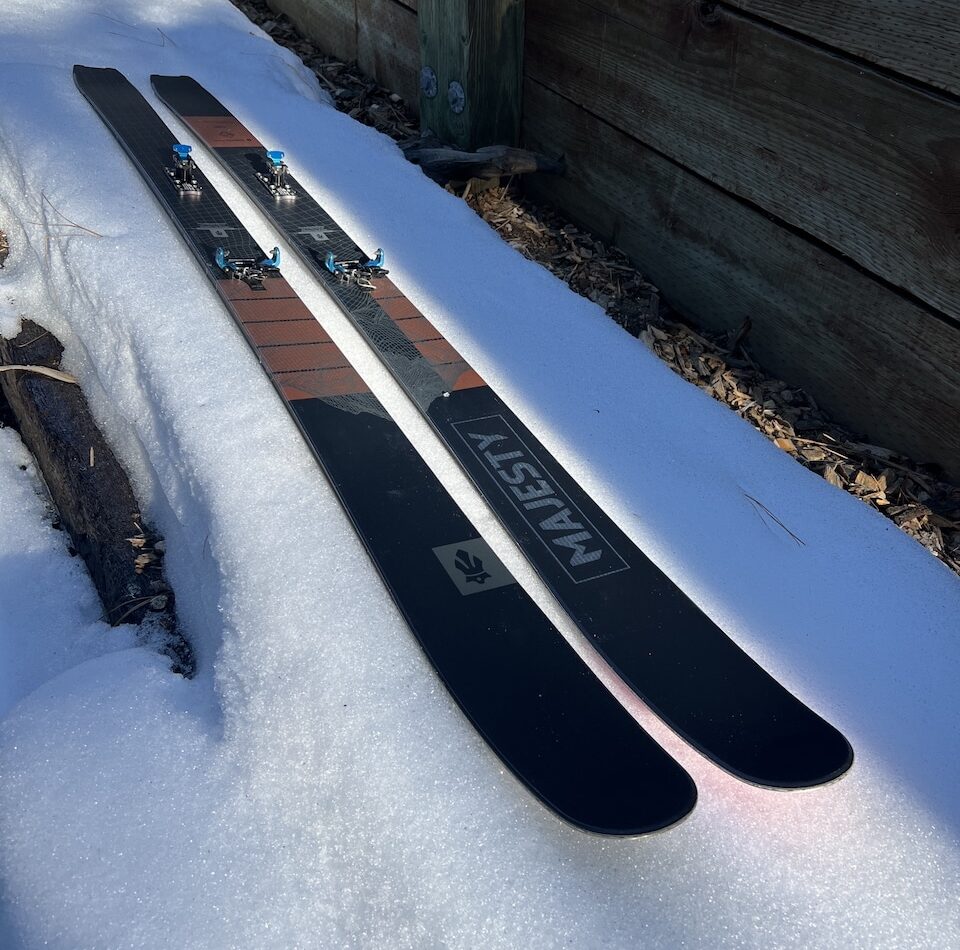
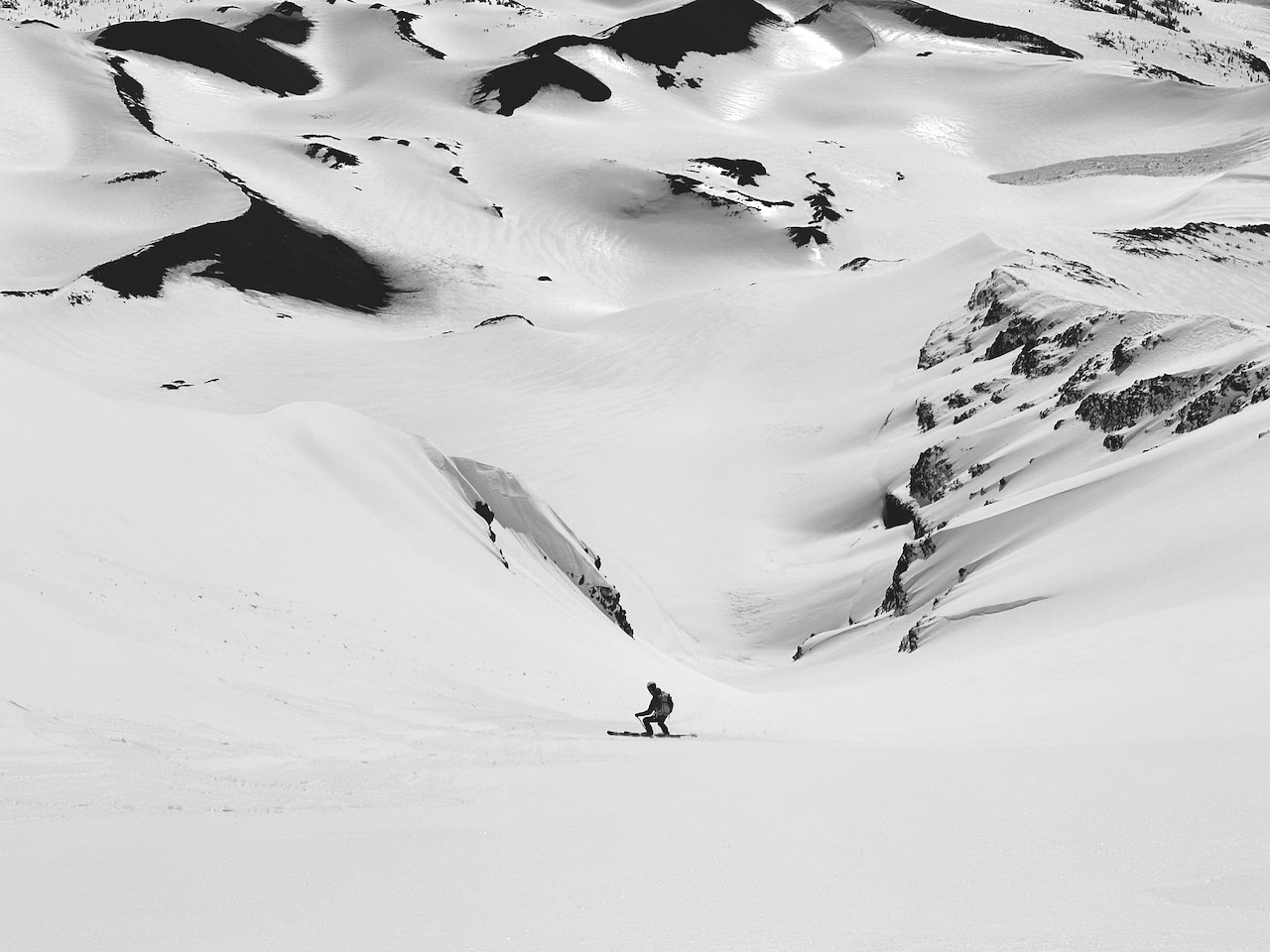
Steep skiing, depending on your stylistic persuasions, comes in two French flavors: Tof Henry and Vivian Bruchez. Henry sadly died while practicing his inimitable and beautiful form of steep skiing: huge, fast fall-line turns over enormous exposure. Bruchez’s style—flowing, rhythmic, double pole-plant hop turns – is no less beautiful thanks to its amazing consistency and control, but, unlike Henry’s, is a conceivable aspiration for recreationalists like us. In my aspirations to ski like Bruchez, I am reviewing a pair of Majesty Superpatrol Carbons.
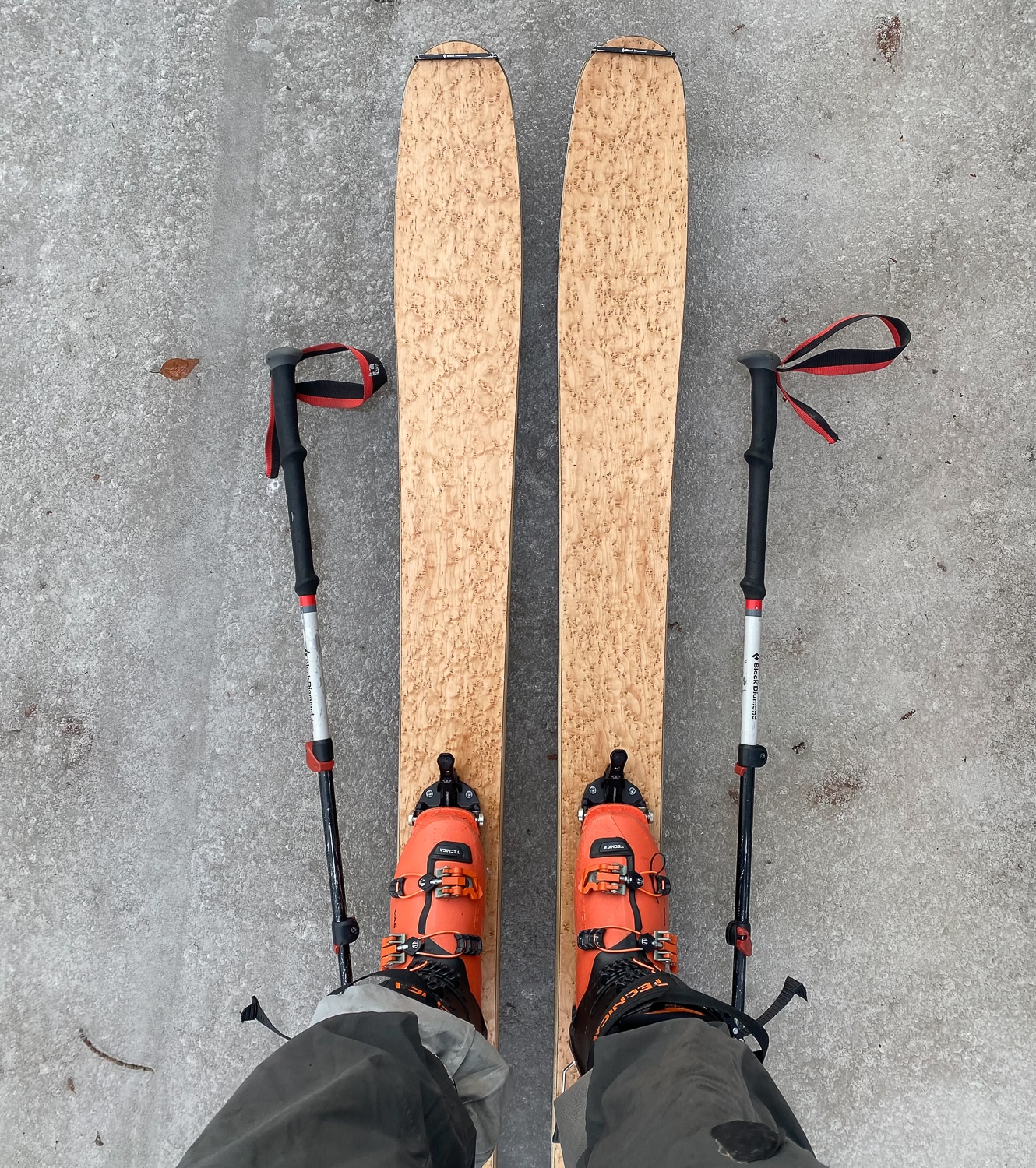
Majesty bills the Superpatrols as a “ultralight carbon technical ski for rescuers and mountain guides.” Bruchez is a guide. Must be on the right track. The ski is rather unique in my experience. This ski and the Supernova I’m also reviewing share an aggressively rearward mount point, leaving more of the ski at an equivalent length in front of you. They argue this makes the ski more maneuverable and, assuming you can stay on the front of the skis, you get more ski/gram since you shouldn’t be pressin’ those tails anyway. I think it will make the ski more powerful. We’ll see. The Superpatrols and the Supernovas also have quite flat tails and a heap of camber. Those features make me think this will be a grippy, demanding ski. The shovel is to me surprisingly rearward, and the rocker generous for my conceptions of what a “steep ski” is supposed to be. I am curious how all of those factors will combine when it’s time to ski with precision.
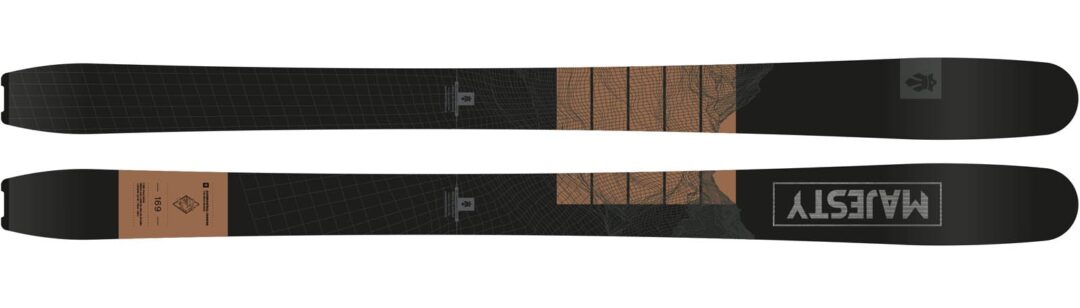
And what even is a technical ski? Or technical skiing? Sometimes I think the term is misused as a synonym for “hard” skiing. I think technical skiing is the sort where it matters to a margin of singular feet where your skis travel, not just a steep pitch you could traverse for a mile. Like in climbing, it is a measure of the precision required. Or maybe it’s a measure of the precision of the movement required to turn? The two usually go hand in hand.
The Background
Historically, I have been a Ski Trab devotee, having taken a pair of 178cm Misticos (90mm underfoot, 1150g, 23m radius), up and down almost every steep pitch I’ve ever skied. I also skied a consequential line for me on a borrowed pair of Movement Alptracks 89s in a 177cm (1135g, 18m radius). Which is to say, maybe I am gear adaptable. While I have grown quite comfortable on these sorts of skis in “technical terrain,” my partners will attest to how many times I’ve gone over the handlebars in the runout. These sorts of skis, with their minimal rocker and more minimal weight, and aggressive shovels, have serious speed limits. And perhaps I should be skiing slightly longer skis, as I’m 5’11” and ¾ and about 200 pounds. But that’s the longest size Mistico Trab makes. Both the Trabs and the Movements lack stability, in my opinion, particularly with any kind of speed, and tend to get quite batted around when the going gets rough, or snow starts moving around you. And honestly, it’s hard to ski rhythmically like Bruchez, let alone in the fall line like Henry, on skis this light. Anything more than a one-at-a-time hop turn in steep terrain tends to go badly. Ask me how I know. But they are beautiful machines and have gotten me further and farther out there than anything I’ve skied.
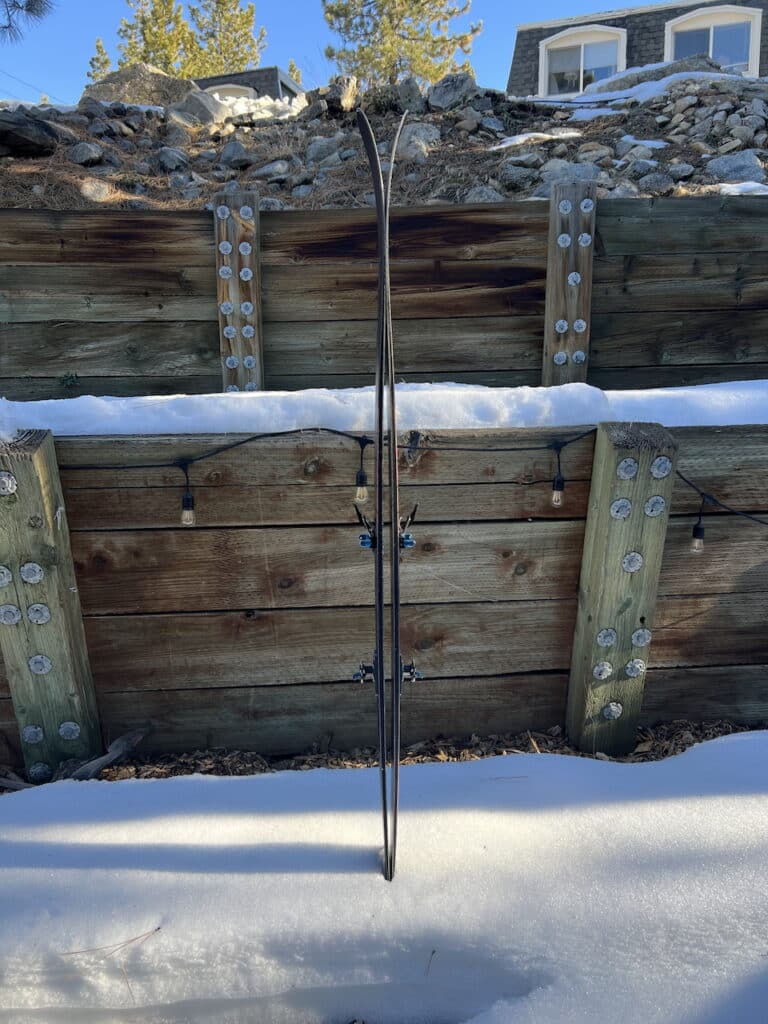
I like my cambered skis and flat tails even outside of the steeps, and do tend to ski my Misticos all over. My friends mostly call me a dork for this and, when they borrow my skis, describe them as hooky and demanding. Demanding I could agree with. Skiing a cambered ski without flexing it feels like being on a fast, unpleasant train. A train without a steering wheel. Cambered skis demand input and cannot be skied passively. Hooky, I think, is more a symptom of user error, as that sensation usually arises out of balance issues.
But camber plays a meaningful role in ski performance. The whole point of camber is that, once you apply the force necessary to flex the ski, the force stored in the ski will help “grip” the snow. A ski without any camber is more to the slip side of things than the grip side of things. Plus, cambered skis are fun if you like turning. Each turn has energy, and as the force stored in the ski is released at the end of the turn, you are propelled into the next. They are reactive.
So these Superpatrols—where do they fit into the scheme of things? Majesty admits these skis have a speed limit. Being somewhat (~200g) heavier than my Trabs, with more rocker and a gentler shovel, I expect a somewhat plusher ride overall. It remains to be seen whether I will rue my decision to ski the 185cm length. Given the rearward mount point, the majority of that additional 7cm extends in front of the binding. This makes for a lot of ski in front for a “technical” ski. Being somewhat larger and heavier than my Trabs, I likely won’t be able to pull off enjoyably skiing while driven by my old Fischer Travers (a soft boot), but they seem perfectly matched for my Atomic Backland XTDs. I suppose that was another reason I stuck with the 1100g skis. 1000g boots.
I am excited to have my idea of technical skiing evolved by these skis. Will more “front end” allow for more powerful, flowing skiing? Or will the additional length make the hop turns feel unwieldy in tight confines? Will the consequences of a heel-pressed turn without much tail put a damper on steep skiing? Perhaps the biggest question I have is whether these are even more of a specialist tool than my Trabs, or more general-purpose than I suspect. I can see arguments for both. It’s unlikely these skis will displace my Trabs for ski traverses, but I can see a world where I reach for them on all but the longest days.
Specs (provided by Majesty, weight and rocker verified for 185cm)
Available lengths (cm): 161, 169, 177, 185
Weight (grams): 1310 (161cm), 1350 (169cm), 1450 (177cm), and 1560 (185cm)
Verified weight at 185cm: 1527g and 1465g individually
Dimensions (mm): 126-94-108 (161), 129-95-111 (169), 130-95-112 (177) and 132-96-114 (185)
Turn radius (m): 16 (161), 17.5 (169), 19 (177), 20.5 (185)
Shape: Flat tail, lots of camber, and modest tip rocker
Construction: Semi-cap sidewalls, bi-axial carbon fiber layup, with tip-to-tail paulownia with poplar inserts.
Price: $1095.00
Leave a Reply
You must be logged in to post a comment.