
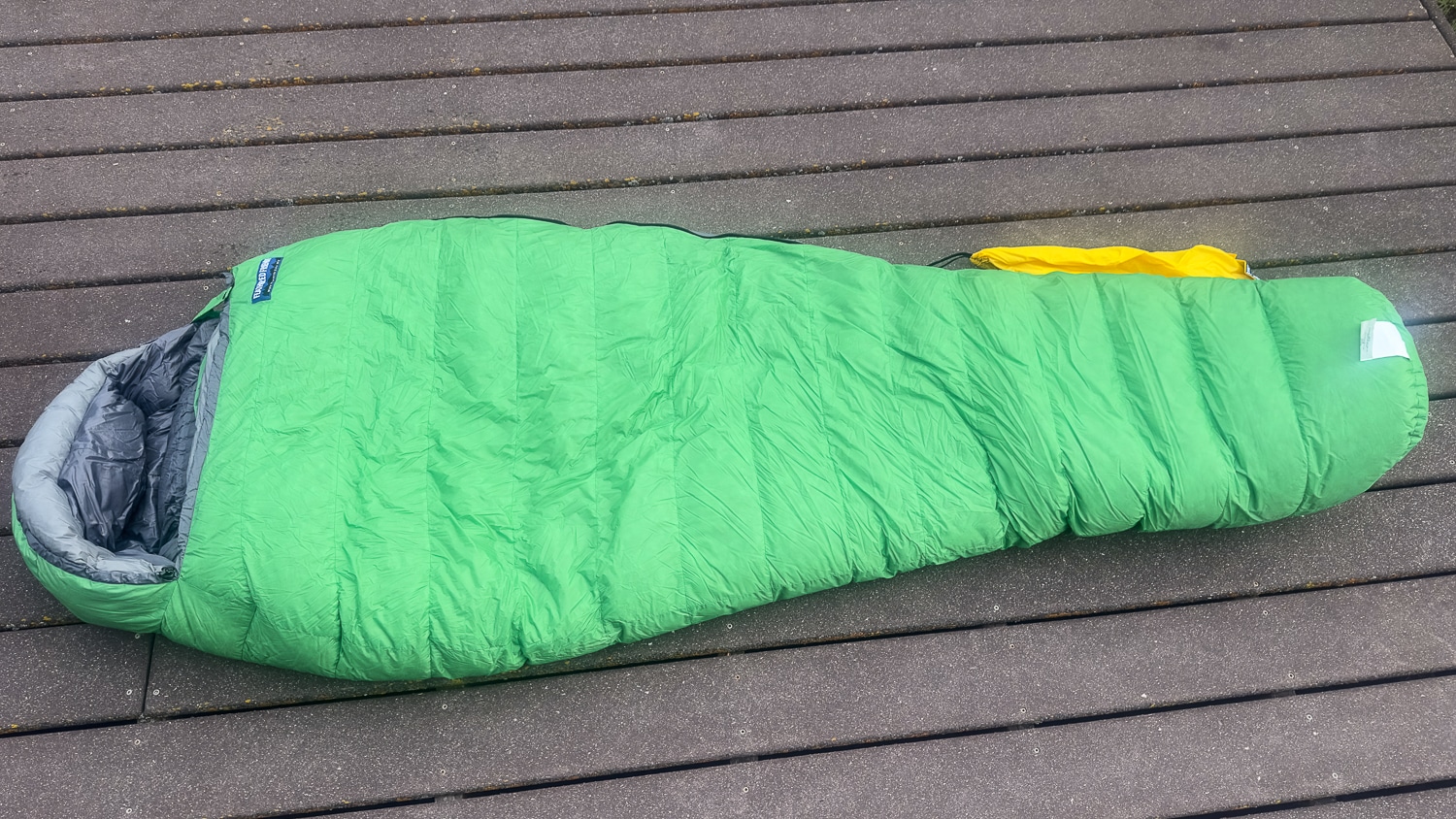
By the end of June, it will have been two years since I wrote a Feathered Friends Raven 10 UL first look. Plenty of time, maybe even an excessive amount, to formalize a sleeping bag review. But the value here, I hope, is in the long-form review process.
In the meantime, FF has updated the Raven 10 UL by swapping out the shell and liner fabrics. The old version, which I own, has a Pertex Endurance UL 10D shell and a Flyte 12D ripstop nylon liner. The new version has the same specs but a different shell fabric: Pertex Quantum Pro (7D), which FF claims is quieter, and a more durable liner in the footbox: Pertex Diamond Fuse (15D), which, as advertised, should be more durable. So, some minor upgrades to the fabric; otherwise, it’s the same fill down (950+), with FF advertising the same fill weight: 664g/632g for the long/regular lengths, respectively. (The regular length now costs $729 while the long is $749.)
I’m 5′ 10″, with a modest girth, and opted for the Raven, which is an identical bag as the FF Lark, just with roughly 2″ more across the set of dimensions except the elbow, where it is 4″ wider. (Reg length Raven dimensions: 64″ shoulder / 58″ hip / 40″ footbox.) As a side sleeper-and-tosser-turner, I wanted the extra room, even at the cost of potential voids/cold spots from the added internal volume. My intended use for the bag is mostly overnight tours; still, I opted for the regular (recommended for a 6-foot sleeper). I can confirm that with boot liners at my feet, I am comfortable regarding the internal volume. And there’s still room to stash a water bottle, fuel, and wear extra layers without feeling claustrophobic.
You can read my first look for my rationale for the 10-degree bag. In short, here is what I stated: “This is an experiment I hope has a positive outcome despite my lighter wallet.”
Durability
As an UL bag, the fabric deniers used on the shell and liner are lower than the 20D used on the Raven 10 YF. I tend to be mindful of any sharp objects around the bag. Which, I suppose, is par for the course, but know that I beat the bag up, yet kept an eye on it. I have no issues regarding compromised shell or liner fabric, or down leakage, either through the shell or seams. The #5 YKK zipper, which is a two-way separating zipper with locking sliders, has remained flawless. The zipper uses a plastic Y-shaped housing to help guide the zipper pull and, ideally, prevent any fabric snags when zipping the bag up or down.
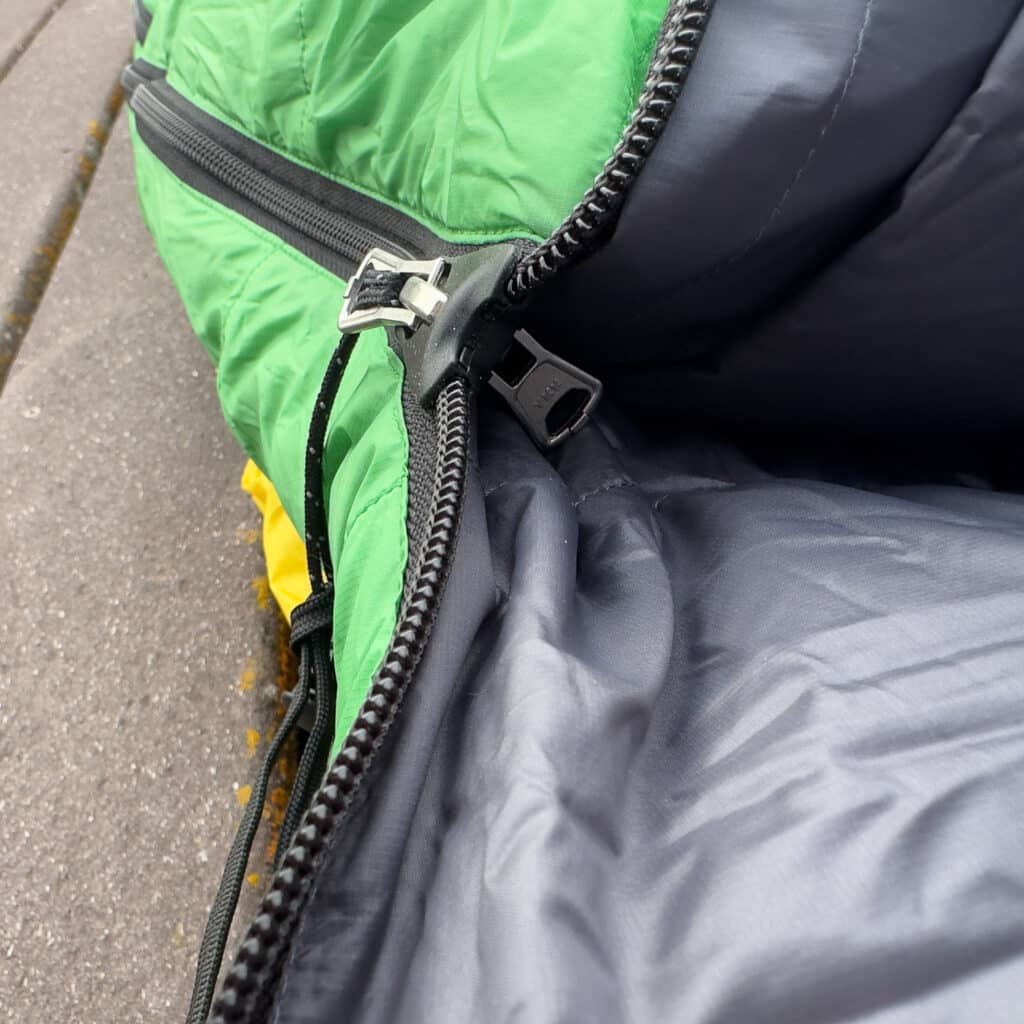
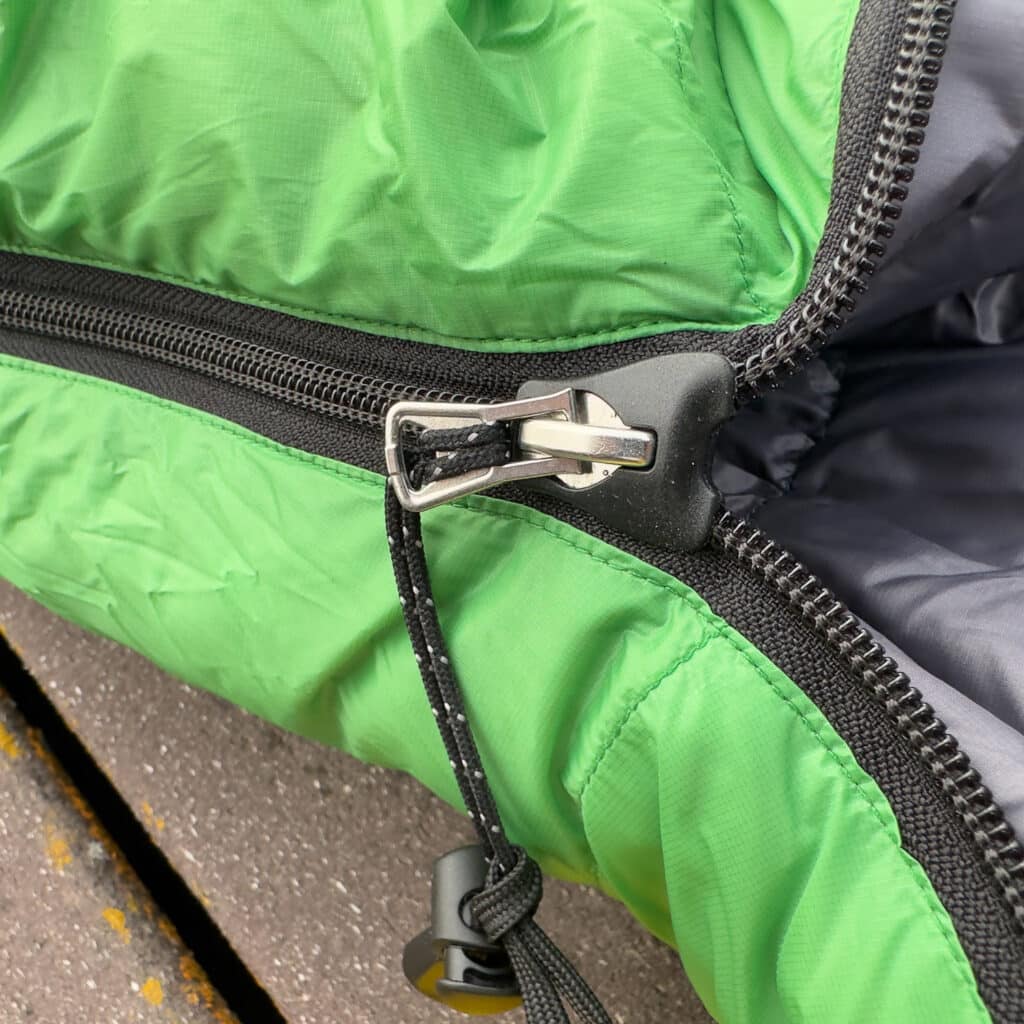
I assume that most of us, over time, have snagged fabric, sometimes catastrophically, in a zipper pull. Although I haven’t always been delicate, I treat the zipper on this bag with care. This is more a function of prevention, and not wanting to deal with any potential rips/snags. Although FF seems to have had a snagless design in mind, and it has functioned that way for me, I always default to the idea that zippers can be zippers, and can fail altogether, or snag fabric.
Form and Function
The form is pretty basic. The Raven is a wider-fit mummy bag: wider at the top, and tapered running head to toe. The wider fit, for me, is sweet, as I tend to stuff extras into the bag and, as noted, I prefer to side-sleep. Those who prefer a tighter fit or don’t want extra room should opt for the Lark 10. As a very cold sleeper, I often wear a puffy top and bottom to bed to add insulation when the temperature drops into the well-below-freezing range. FF uses a full-length draft tube along the zipper closure. The draft tube runs as a single baffle. Every once in a while, I check the draft tube to see how the down is distributed along its length. If I note an uneven distribution or gaps in the fill, I adjust accordingly. The footbox is trapezoidal, allowing for more room near the toes and a more relaxed, natural foot position while sleeping. Basically, the shape is comfortable and in no way constricting for me.
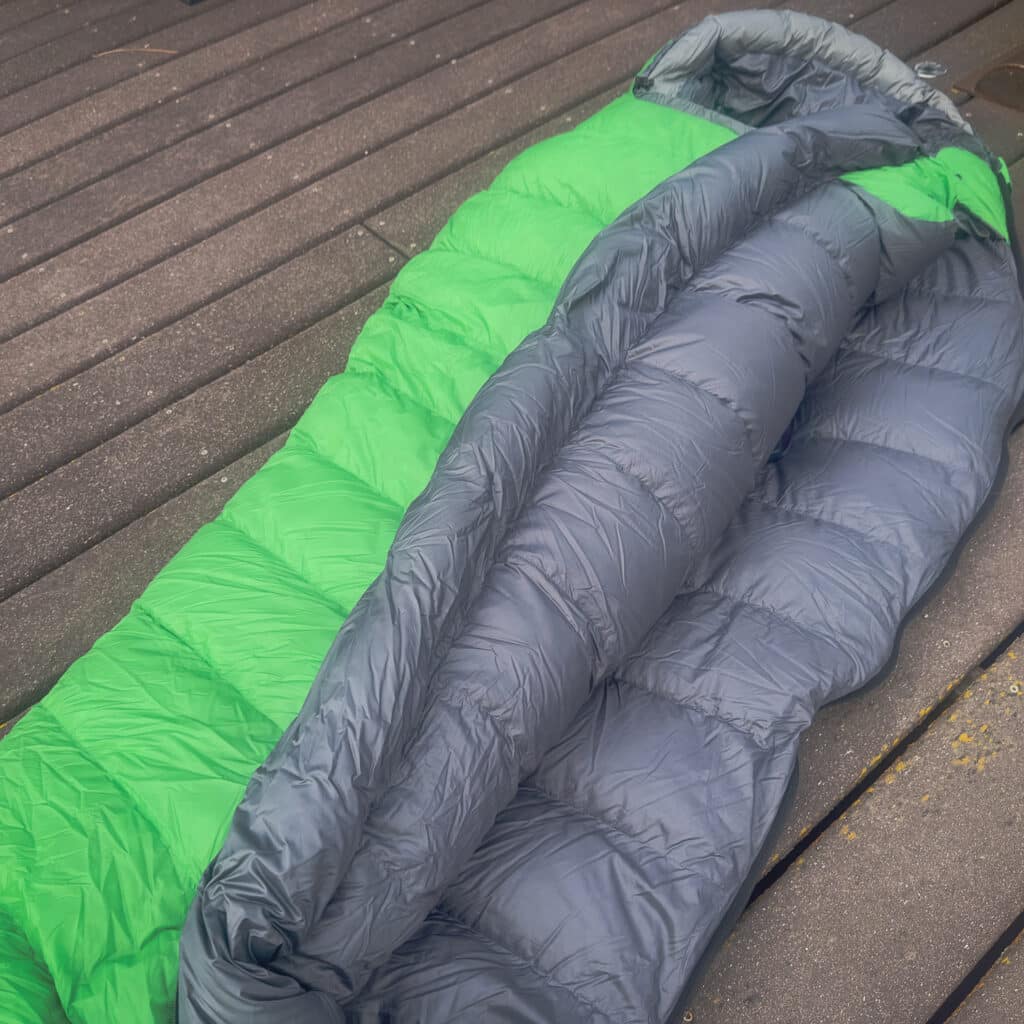
The Raven (and the Lark) are designed with continuous baffles. This design should allow users to adjust where they prefer the down: evenly distributed, more on the bottom during warm nights, or more on the top during colder nights. (In theory, a backsleeper can have some range by shifting down to the bag’s top, where it will not be compressed, and it can do its thing, which is keep you warm.) As a tosser-turner-side-sleeper, I aim for the equal distribution method to keep warm. If it’s a warm night, I can unzip accordingly, which is where the two-way zipper comes in handy. I can vent on my legs, or vent only the upper torso, or, if it’s truly warm, unzip all the way and use the Raven as a makeshift blanket. But, too warm is most often not my problem. More on that later.
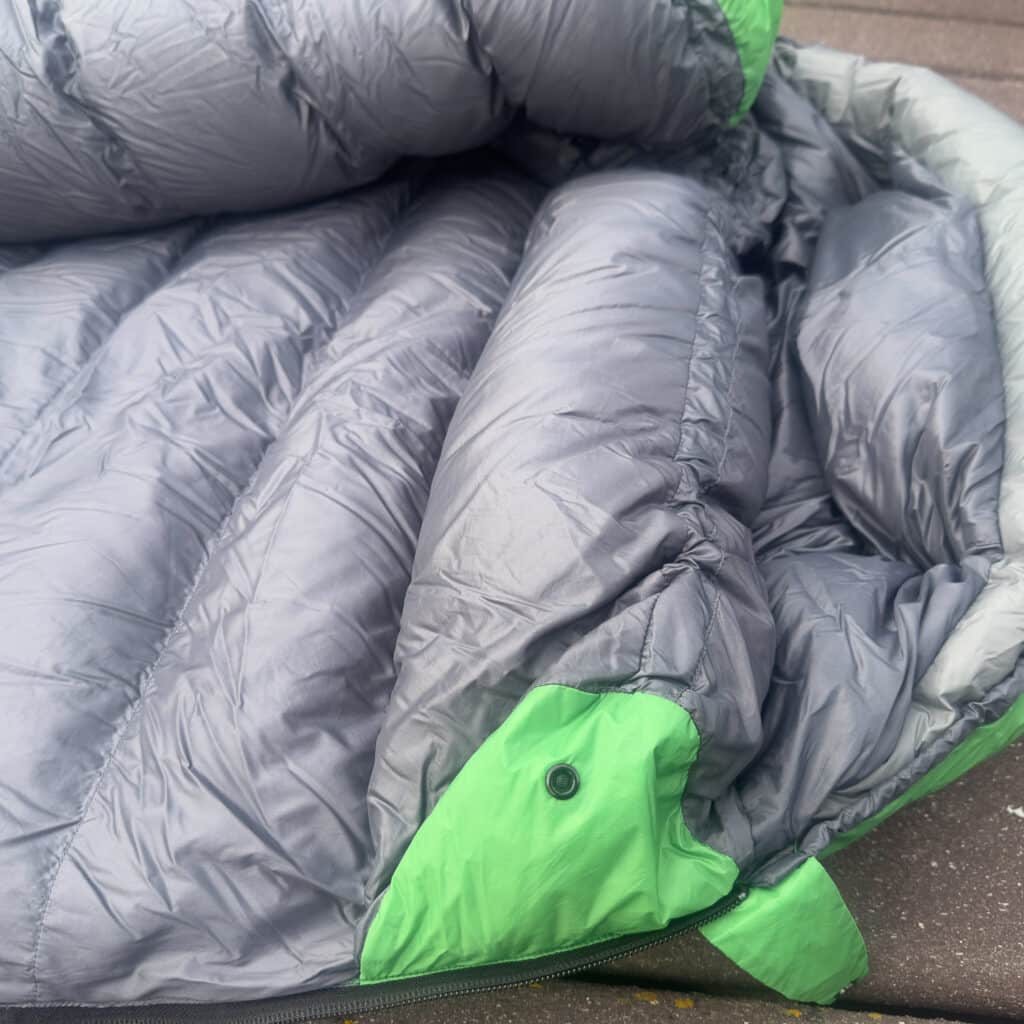
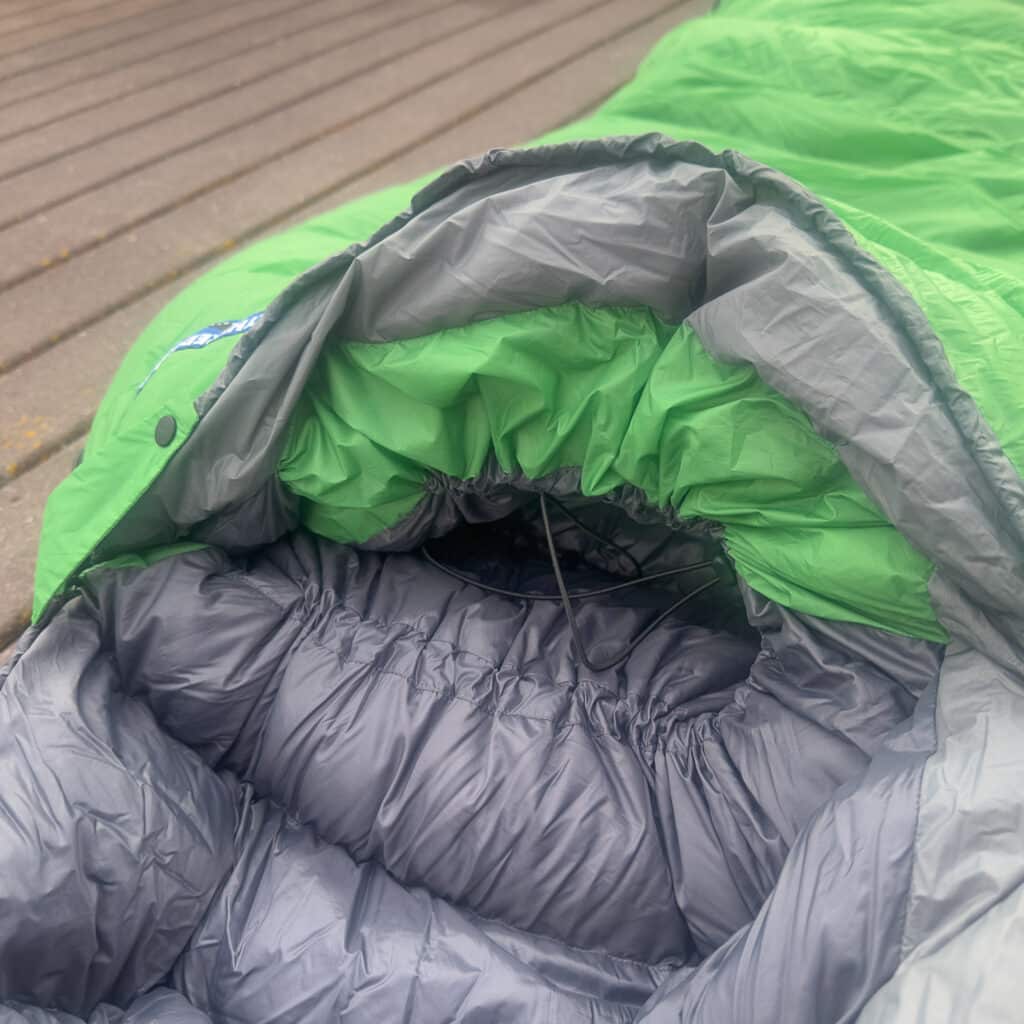
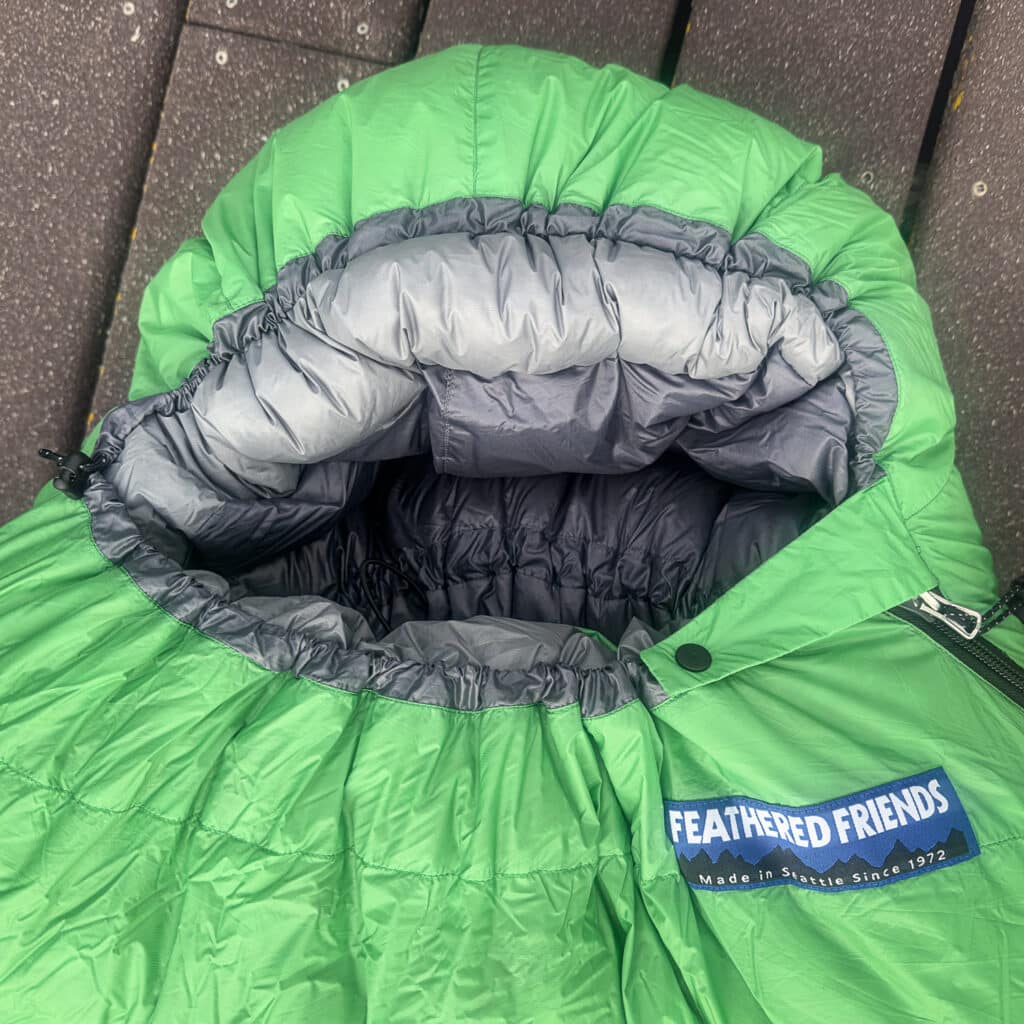
The draft collar is a bounty of down. There’s a single cinch on the right side and a button closure on the left. The cinch can be cinched, and the button buttoned all while snugged up inside the bag. As far as draft collars go, FF has it dialed. Some complain that the button/snap closure can come undone when tossing and turning. I have not found this to be a problem. To further batten down the hatches in cold temps, the hood has a single right-hand-side cinch-and-snap closure. All of it works as designed, which is to say it is optimized to keep the warm air in (once your body and the down do their job) and the cold air out. Which it does.
The UL shell fabric on the older Raven 10 UL, Pertex Endurance UL 10D, is slippery to the touch, and even more so on an uneven sleeping pad. Ensure your sleeping surface is flat, or very close to it, or you might be sliding a bit off your pad while catching Zs.
Temperature Range for a “Particularly Cold Sleeper.”
There’s a rule here, and I’ll expand on it in a related part two to this review, which will focus on sleep systems. The rule is simple: know thyself. Which, I thought I did.
FF does not use the ISO 23537 rating system for sleeping bags, a European temperature rating standard. Sea to Summit has an excellent primer on the standard; you can read it here. To summarize, the ISO 23537 standard uses lab tests to establish a comfort rating—pretty much a person doesn’t feel cold; a limit rating—a person curled up in the bag to conserve heat doesn’t feel cold; and an extreme rating—the lowest temp a person could survive while curled up. If you are bumping up against the extreme rating, maybe something didn’t go as planned. But that’s another conversation.
FF states this up front on their “choosing a sleeping bag” page: “…particularly cold sleepers may want to select a bag up to 20 degrees colder than the temperatures they anticipate experiencing.”
I am a particularly cold sleeper. Even when properly hydrated, wearing the right layers, using a high-R-value sleeping pad, amply fueled with calories, and in a tent, I am still a particularly cold sleeper. And, as reiterated in the first look, this was an experiment. I wanted to move away from a larger volume and older, TNF Inferno 0 with a limit rating of 0 degrees. The bag, which had served its purpose, had a shorter center zip that didn’t jive with my side-sleeping habit or allow me to sufficiently vent the bag on warm nights, and I couldn’t use it as a proper blanket.
My plan for colder-weather tours was to bring the Raven 10 UL, and if the forecast called for temps around 10 degrees or colder, I’d supplement with some extra layers. This, folks, will be discussed in greater detail in part two, the addendum for this review. As a particularly cold sleeper, the Raven 10 UL kept me warm (ish) around 15 degrees Fahrenheit in a mid (which is not a tent), while wearing a down puffy, synthetic puffy pants, synthetic booties, a hat, and a thin top and bottom baselayer.
(My older child, who, generally, is a very warm sleeper, could easily get away with the Raven 10 UL in temps dipping a bit below 10 degrees Fahrenheit.)
Yup, I SLEEP COLD. The Raven 10 UL sweet spot for me is in the 20-degree range, where I might expect temps to dip a bit below that. Indeed, FF markets the Raven 10 UL as a three-season bag. For solid sleepers, meaning you are not a particularly cold sleeper, this could be a high-functioning traverse bag during the colder stretches of those three seasons. In fact, for many folks, I could also see the Raven 10 UL as sufficient in sub-freezing winter temps, with the caveat that the sleep hygiene requirements listed above are met. So, to be 100% clear, FF is referring to me when they claim “particularly cold sleepers may want to select a bag up to 20 degrees colder than the temperatures they anticipate experiencing.”
I can also see someone doing a review of the Raven 10 UL and remaining perfectly toasty at 10 degrees with socks, a hat, light baselayers, and not even an excessive amount of mojo or moxie, all while catching Zs in a drafty mid tent with spindrift floating this way and that.
Closing It Out
FF’s bags, along with Western Mountaineering, set a baseline for high-quality down bags decades ago. Both companies still meet those high benchmarks. It gets more nuanced when considering dimensions, builds, etc., when, say, comparing an FF 10-degree bag with a WM bag at or near the same rating. The key here is that FF sleeping bags are sweet. Yup, you’ll pay more for them, but you’ll also be supporting a company that has, in turn, supported the climbing/mountaineering/alpinism/touring community for decades. Which is apt, because with proper care, my guess is your FF bag will last a few decades.
The caveat here is that with a UL bag, like the Raven 10 UL, the fabrics are lighter. Just be mindful of that. It doesn’t mean don’t go ahead and embrace the “tools not jewels” mantra; just be aware that if you opt into a UL product, stuff happens. Repairs can be made. If you are not concerned about saving grams, opt for the Raven 10 YF, which costs $659.00 (regular length) and sports some more durable fabrics.
Like most, if not all, FF bags, they come in a regular and “wide” fit. In the 10-degree realm, that is the Lark and Raven (wide fit). Each respective model also comes in a regular length (recommended for folks up to 6′) and a long length (FF says this length accommodates sleepers up to 6’ 6”). I tested the Lark (regular length) at FF’s Seattle store and found it a bit too snug in the elbow zone. If you are a back sleeper and prefer a snugger fit, the Lark might be the ticket.
For the warm sleeper, the Raven 10 UL will serve you well at or above 10 degrees Fahrenheit. If you are in a small tent with a partner or two, and aren’t a “particularly cold sleeper,” that comfort range should dip even further. Which, for all intents and purposes, might mean it is a sufficient winter bag for some. For this very cold sleeper, it remains a solid three-season bag and a great choice for spring traverses when the refreeze cycle is in full effect, but temps aren’t dipping much below 20 degrees.

Leave a Reply
You must be logged in to post a comment.