

Overview
We’ve talked lots about the La Sportiva Kilo family of boots on The High Route over the past year or so. Before the Kilo, La Sportiva had a hint of greatness with the Skorpius boots, which were well-loved by many as a mid-weight option. Simultaneously, La Sportiva has offered a variety of race and race+ boots over the years, including the Raceborg and Stratos series. While I don’t have my finger on the pulse of the racing world and how people liked the various full-carbon Stratos boots over the years, I gather from how many photos you see of some of the world’s best using them that they must be pretty good.
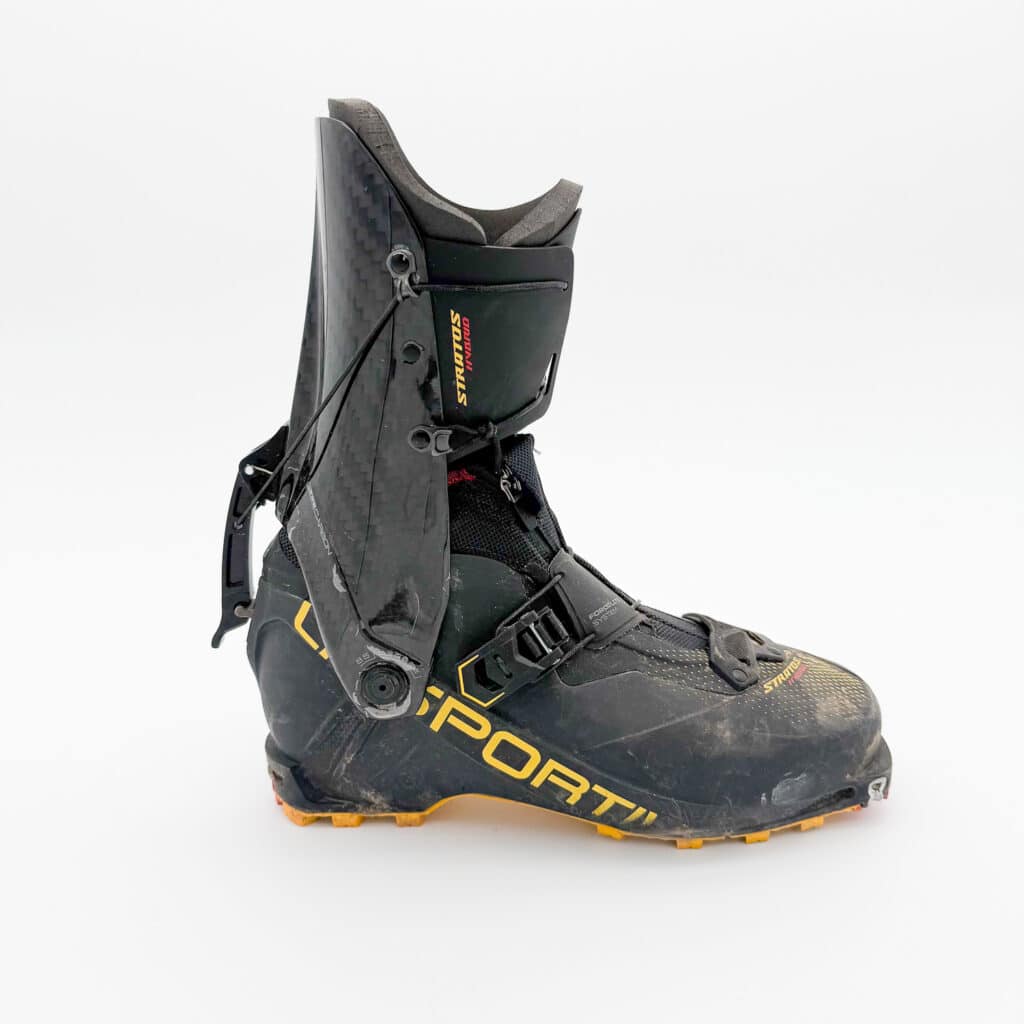
Here, we take a deeper look at the Stratos Hybrid. While it bears only the Stratos name, one could think of it as either a hybrid of the Stratos and the Kilo, or perhaps something of a Raceborg 3 (the Raceborg 2 was a relatively short-lived model). Either way, it shares a lower shell mold with the Kilo series boots and implements much of the same tech, while blending in some “classic” race tech, like a single-throw transition, a carbon upper cuff, and a bikini liner.
Like the other Kilo platform boots we have here at THR, we are impressed with the Stratos Hybrid’s performance balance, and we are psyched to see La Sportiva have a super-worthy lineup of touring boots.
Design Highlights
The Stratos Hybrid fits into what I might call the mid-tier of skimo race boots. The top tier is full-carbon upper and lower shells, while the lower tier is all-plastic models like the Dynafit Mezzalama or Scarpa Alien. The Stratos is best compared to models like the Dynafit DNA or Scarpa Alien 1.0 (or is it 1.1?).
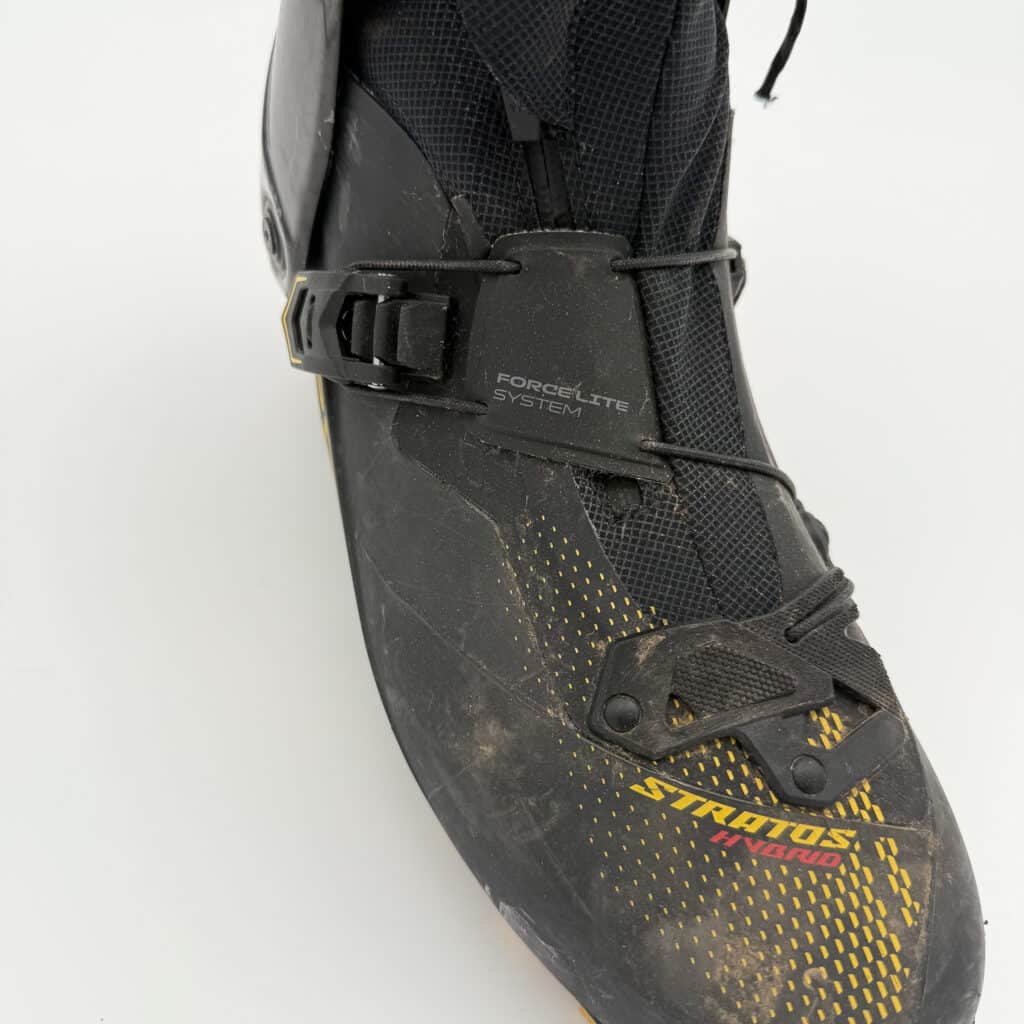
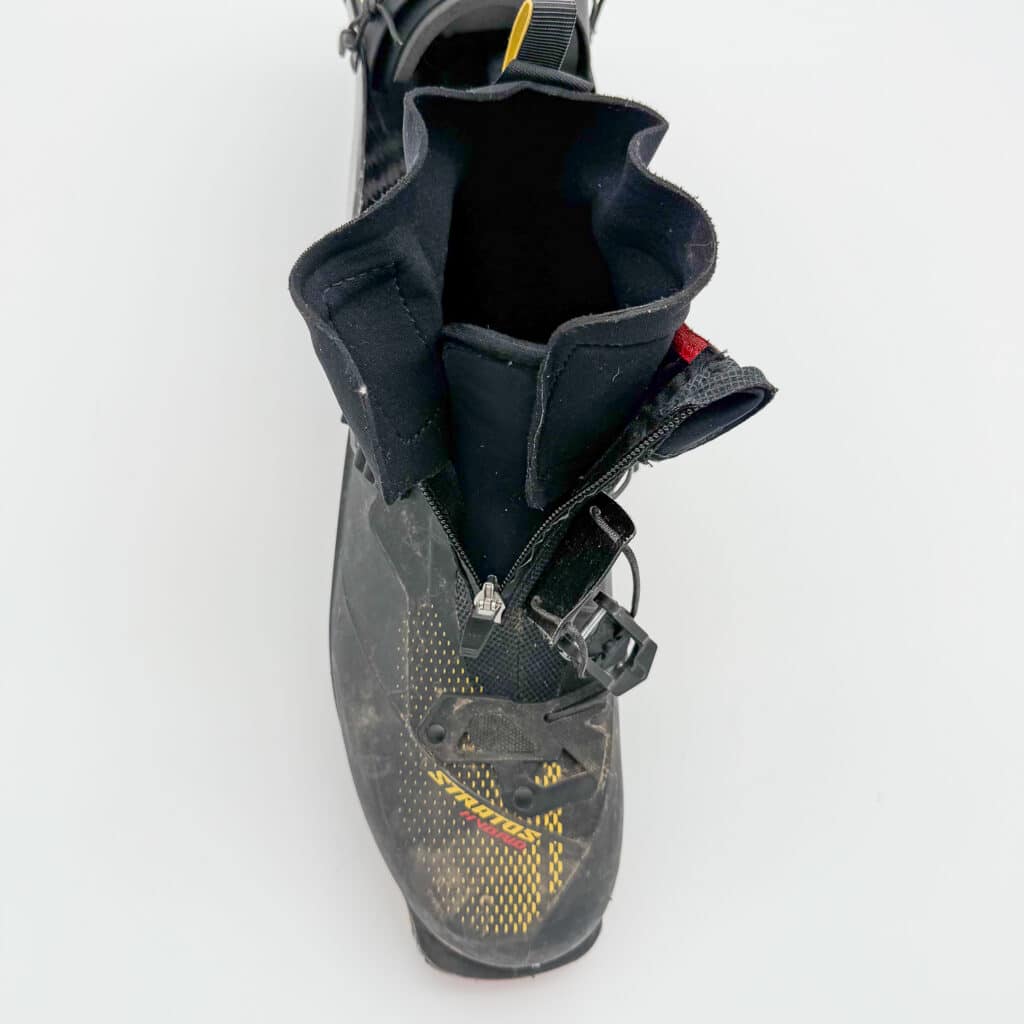
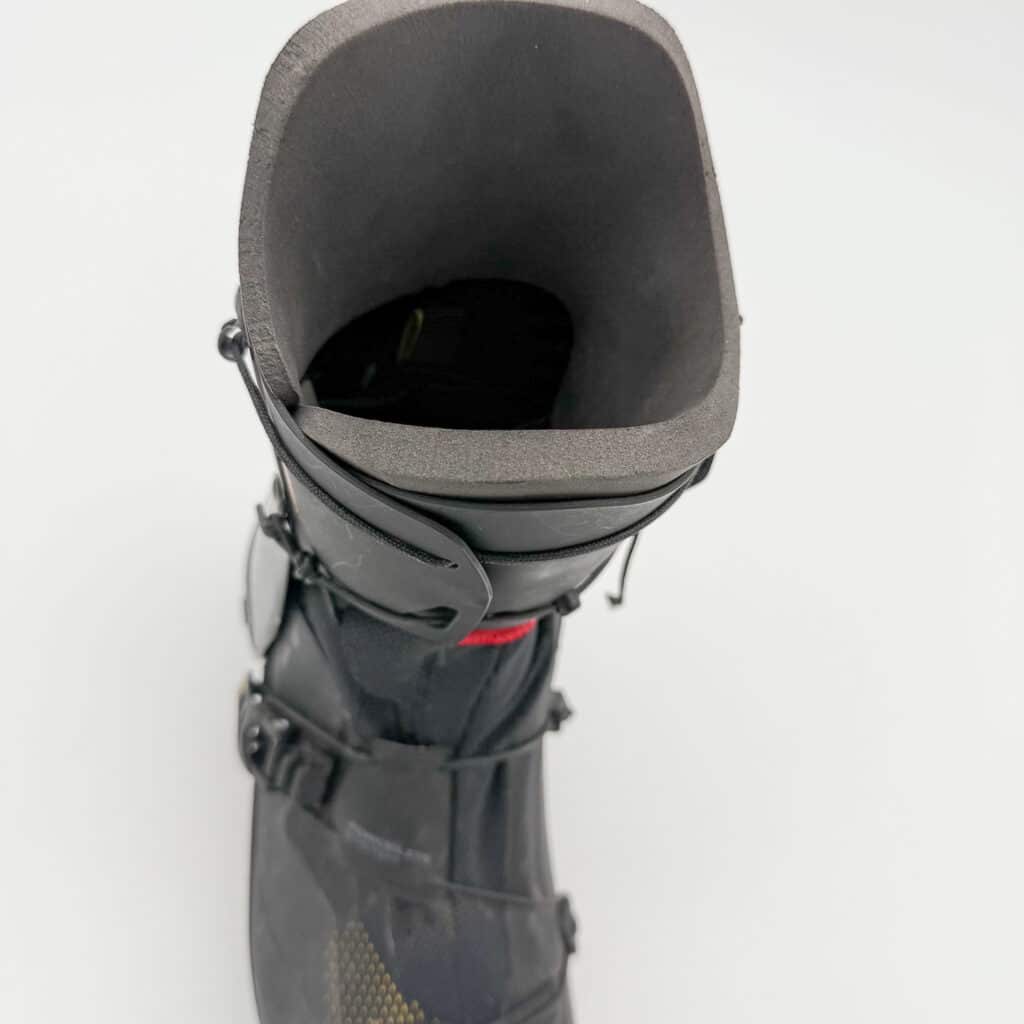
The Stratos has a few unique attributes among mid-tier models. First, a buckle rather than a BOA for the lower foot closure. This may be a positive for some and a negative for others. The Force Lite System offers a similar level of adjustment but in more of a set-and-forget style that I appreciate–move the string knot to adjust on a macro level, then you have three buckle rungs to fine-tune things. The buckle also makes the whole boot feel a bit simpler, no black magic hiding under the gaiter waiting to break and be a pain in the butt to access. The other unique attribute is the full bikini liner, rather than a tongued liner with no back. It seems most full-carbon boots use this liner style, but the mid-tier models stick with a tongue. Dynafit seems to have gone the way of the full bikini with the new DNA as well. The Stratos has comfy, variable-thickness padding that wraps the shin and calf nicely and is quite comfortable.
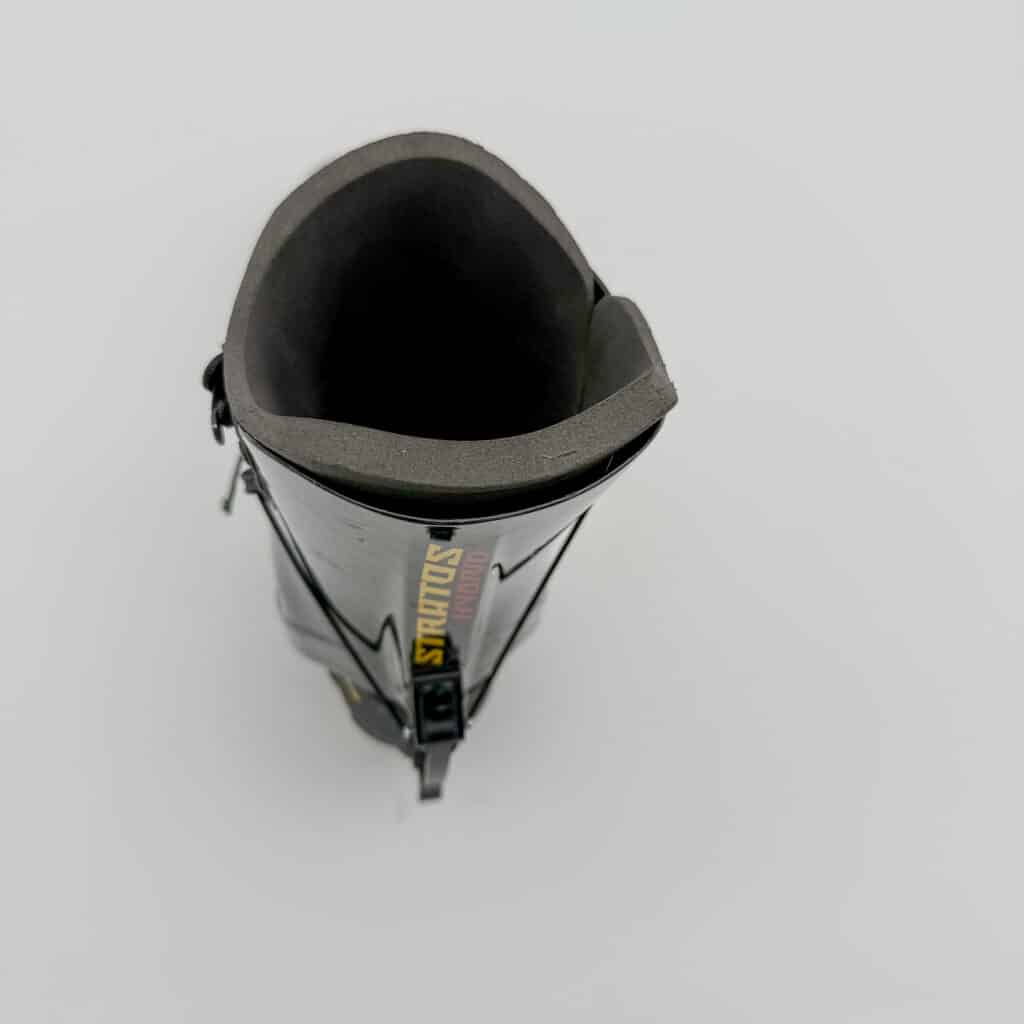
The final and perhaps biggest differentiator of the Stratos Hybrid is the fit. Eschewing the typical, very low-volume fit of many race boots, the Stratos features a wider, higher-volume toe box while maintaining a decent heel pocket. Particularly on long days in the mountains, this fit has worked remarkably well for me compared to my previous DNA models. I wouldn’t describe the Stratos as a high-volume fit relative to something like the Atomic Backland XTD or Dynafit Tigard, but relative to the super low-toe boxes and low-volume shells of the DNA and Pierre Gignoux MTNs, the Stratos is a breath of fresh air for my feet.
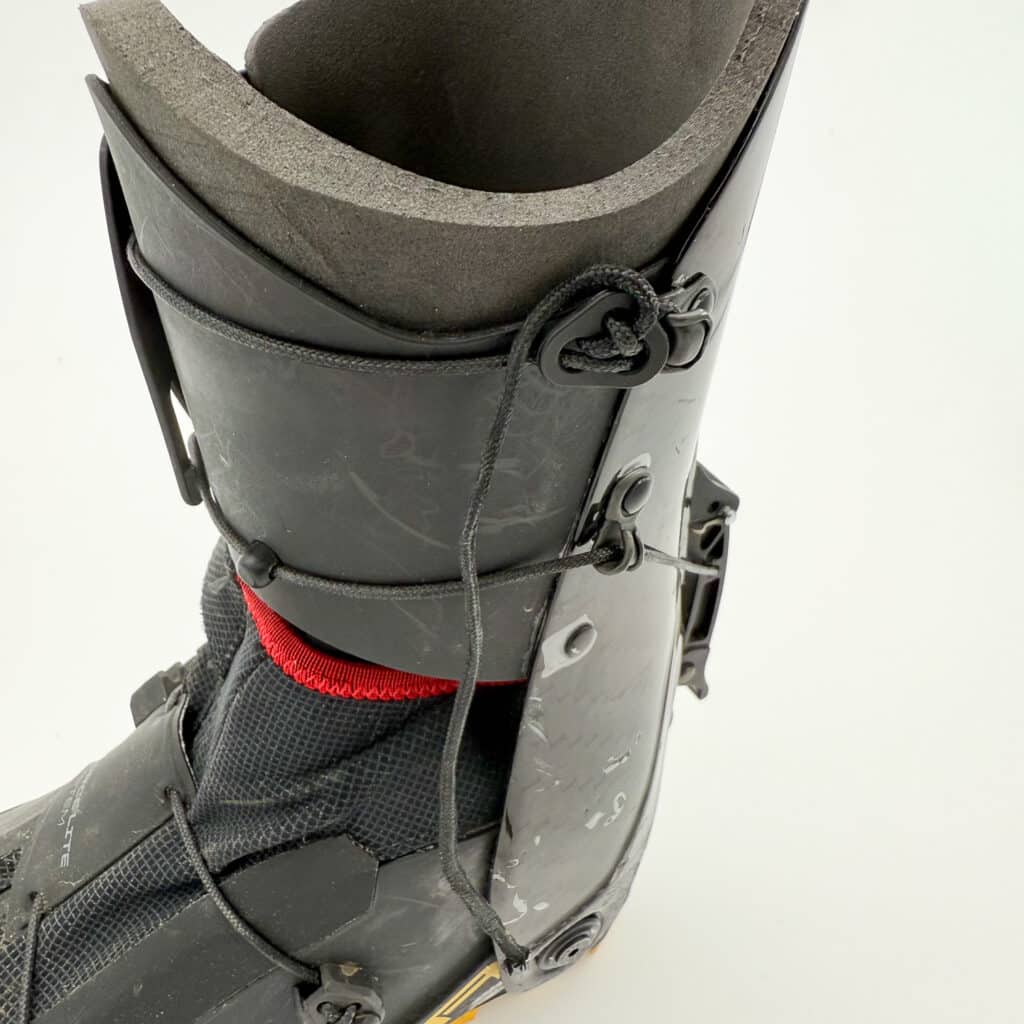
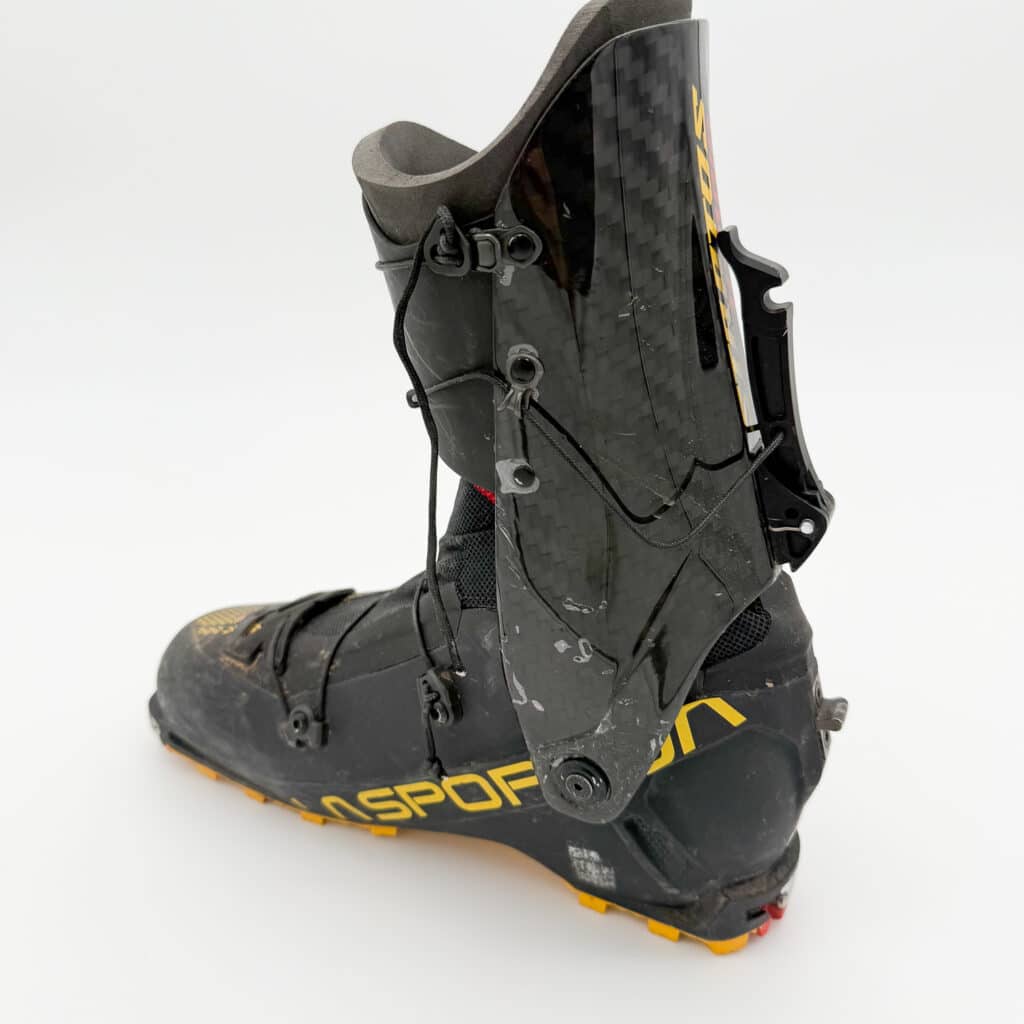
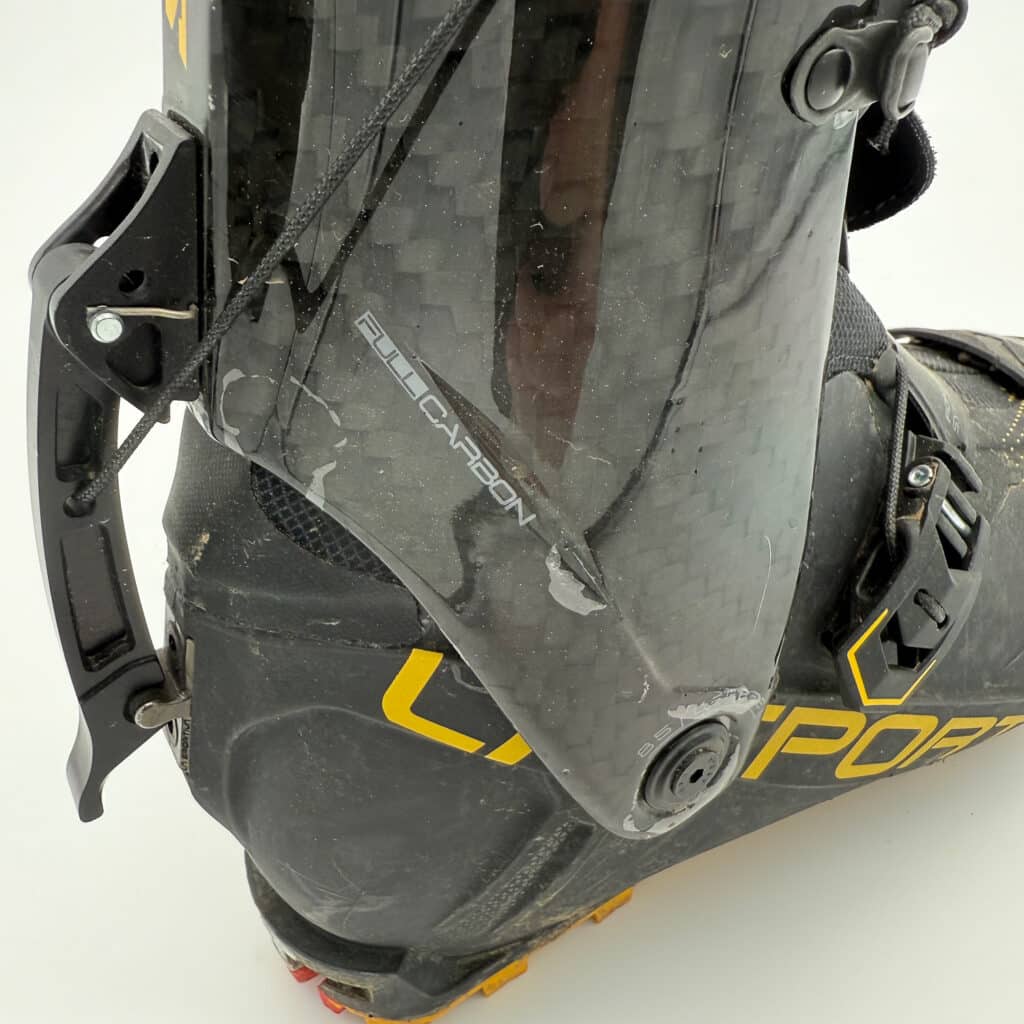
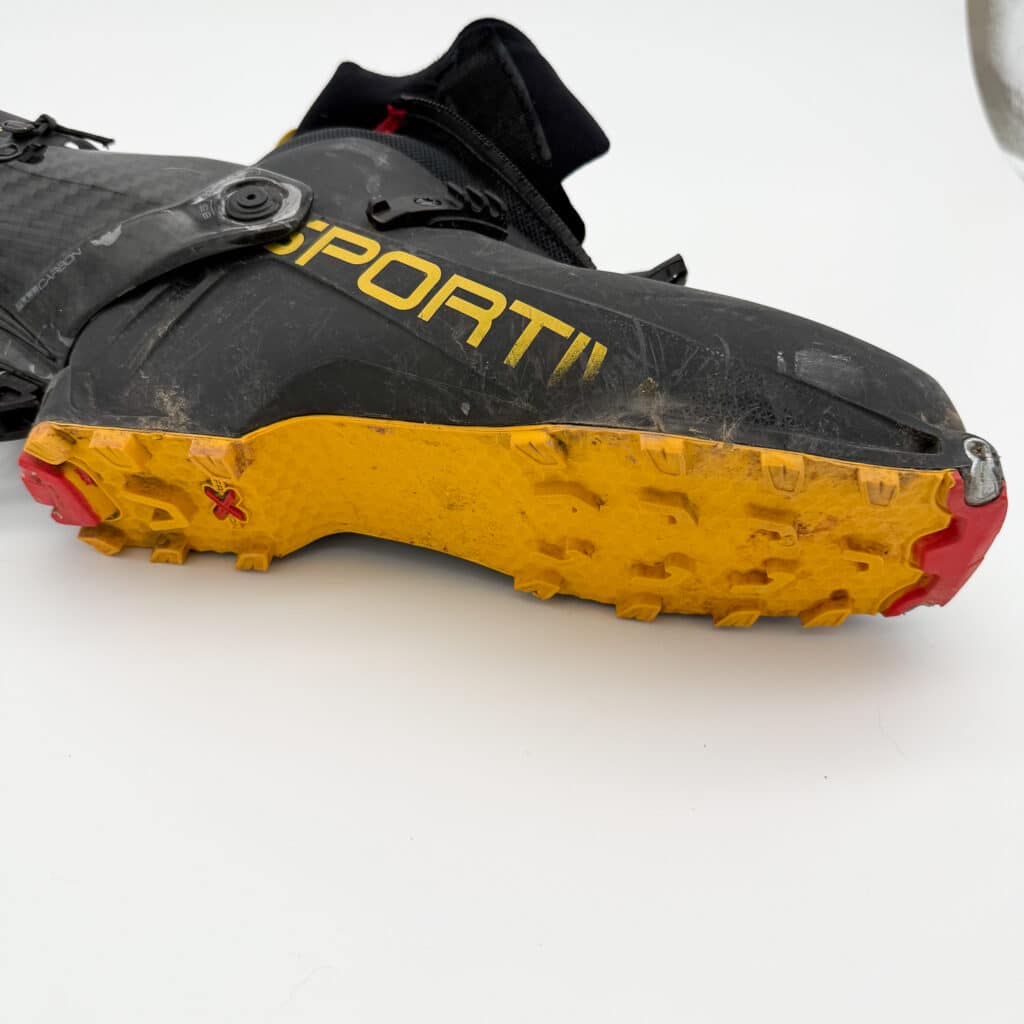
Like other race boots, the Stratos uses a string closure that hooks across the shin and tightens when the walk lever is closed—almost identical to the Alien 1.0 and not quite as engineered or user-friendly as the DNA. It sports a zippered gaiter, a string-based lower buckle, and not much else. The stock liner is sort of wrap-styled; it reminds me a lot of the stock liners in my G2 Evo mountaineering boots. A Frixion rubber outsole and tech-only compatibility rounds things out, though it’s worth noting that my Blue Ice and Dynafit crampons fit the welts just fine, and the tech toe fittings are La Sportiva/Ski Trab specials that make stepping into Ski Trab bindings extra slick with their big “on ramps.”
Fit and Bootfitting
I’m going to keep this a bit more brief and leave some links for further reading on the Kilo fit from Jason. For my foot, the Stratos fit (and Kilo XTR for that matter) has been awesome. It feels a touch wider in the forefoot than my Dynafit Blacklight 2.0s, with a snug-ish heel and enough height in the toe box for some wiggle and expansion on long days. Perhaps the most similar fit I can think of is my Tecnica Zero G peaks with a 2mm Bontex shim under the liner.
For bootfitting, the liner is thin and does take a heat mold, but it doesn’t have a ton of foam to manipulate. The lower shell is carbon-reinforced grilamid, which I think we have determined is generally punchable to some extent but not suitable for significant mods. All that being said, these are likely a good place to start for skimo boot curious folks with wide feet and/or big ‘ol bunions.
Forward lean is pretty widely adjustable by flipping the latch at the heel or moving the pin that the bayonet lever rotates on—this provides ~3 degree increments from 10-19 degrees. I am at the stock setting that I believe is 17 degrees.

Field Testing
After a few days out and some rubbing around my ankle and instep with the stock liner, I swapped out for a Pierre Gignoux (Palau) Race liner. This is a more traditional tongued liner (still only ankle height) with a neoprene/velcro closure around the ankle top to keep things snug and in place. The Palau had a bit thicker, more robust foam as well, which helped form a nicer heel pocket during heat molding. I’d be curious to try the Scarpa Alien 4.0 liner here, but the cost for that liner is a bit much for an experiment.
With fit/liner issues mitigated, walking in the Stratos is an absolute joy. I’ve read many times over the years about 1200-1500g boots that “walk so well it makes lighter boots obsolete.” Let me tell you, the folks writing that have never walked in a proper skimo race boot. There is truly almost zero friction or resistance in the walking motion of these boots, even less than my XC skiing skate boots. The performance gap between a race boot and a 1000g boot is about the same, I would say, as the gap between a 1000g boot and an average 1300g boot. It is awesome, and yes, you will walk faster.
Skiing… well, yeah, with walking that good, skiing is going to be a little different. There are two significant factors at play here: first is snow quality, second is ski selection. In perfect powder snow with not so aggressive skiing, I paired the Stratos with my Heritage Lab BC120’s. It was great, I skied a lot those days. I didn’t ski super aggressively; the snow was excellent and consistent, and the BC120 is a reverse-camber, progressively mounted ski that does well with a more balanced stance. On a more reasonable note, I most often paired the Stratos with Salomon X-Alps, Dynastar M-Vertical 88’s, and on one occasion, the Black Crows Orb. There is a strong inverse correlation between ski size and snow variability. I regretted my boot choice on a day where the spring diurnal crust wasn’t quite fully formed, and I ended up skiing breakable crust for 2000’ on a 180cm Heritage Lab BC100. Not sweet. I was far more psyched with smaller skis like the Vertical 88s and firm, 2D snow conditions–I pushed this combination into some rather steep terrain on some long spring (and fall) days this year.
Diving a little deeper into ski performance is an interesting experience. The Stratos has a bit less harsh feel than the Dynafit DNA or Scarpa Alien 1.1, which are both extremely stiff and harsh. As a carbon-cuffed, bikini liner boot, it’s still on the harsh side of the spectrum. The padded cuff is much more comfortable than the Dynafit; the padding is soft and adds some nice damping, which could be the main factor in the Stratos’s less harsh feel. It is a little hard to describe the limitations of skiing the Stratos. It is supportive and has very solid lateral stiffness, as well as a great fit on my lower foot, so precision and control aren’t the limiting factor. I think the limiting factor is the lack of fore-aft forgiveness. It is easy to feel like you are bouncing back and forth between pressuring the front of the boot and getting your butt kicked by the back of the cuff. In most conditions, this requires slower, more deliberate skiing than may be ideal, with the alternative being slightly out of control and a little loose feeling for the backcountry; I suppose that is the skimo racer’s way.
Conclusion
Final thoughts—who would you recommend these boots for, or not? How will they/won’t they fit into your quiver?
Skimo race boots aren’t for everyone—some ski tourists will be psyched on a single boot quiver with something in the 1200-1300g range. A nice sweet spot for passionate tourists seems to be a 1000g boot for long days and spring skiing, paired with a 1300-1500g boot for midwinter touring on bigger skis and more variable snow. Jason would argue that the third boot in a quiver ought to be a race boot, and that is probably true for some folks—others may prefer a 50/50 boot or something like that.
All that is to say, if fitness touring, moving fast in the mountains, traverses, or perhaps absurd combinations of powder skis and little boots are your passion, race boots are an amazing step up from 1000g boots as far as walking performance and weight. The Stratos Hybrid, to my knowledge, is the most “normal” fitting of the somewhat reasonably priced, plastic/carbon hybrid race boots, and it is a reasonably good ski performer. I highly recommend checking out the Pierre Gignoux liner options as an upgrade. After struggling with fit and not really enjoying the older Dynafit DNA for a few years, I look forward to the days I can break out the Stratos Hybrid.
Specs
Total Weight: 851g [28/28.5]
Shell Weight: 748g
Liner Weight: 103g (stock footbed)
Sole Norm/Compatibility: Tech only, full auto crampon compatible
Materials: Carbon grilamid lower, Carbon fiber upper
Fitting Notes: Same lower shell as Kilo—medium-low volume and width throughout. Ankle height liner.



Leave a Reply
You must be logged in to post a comment.