
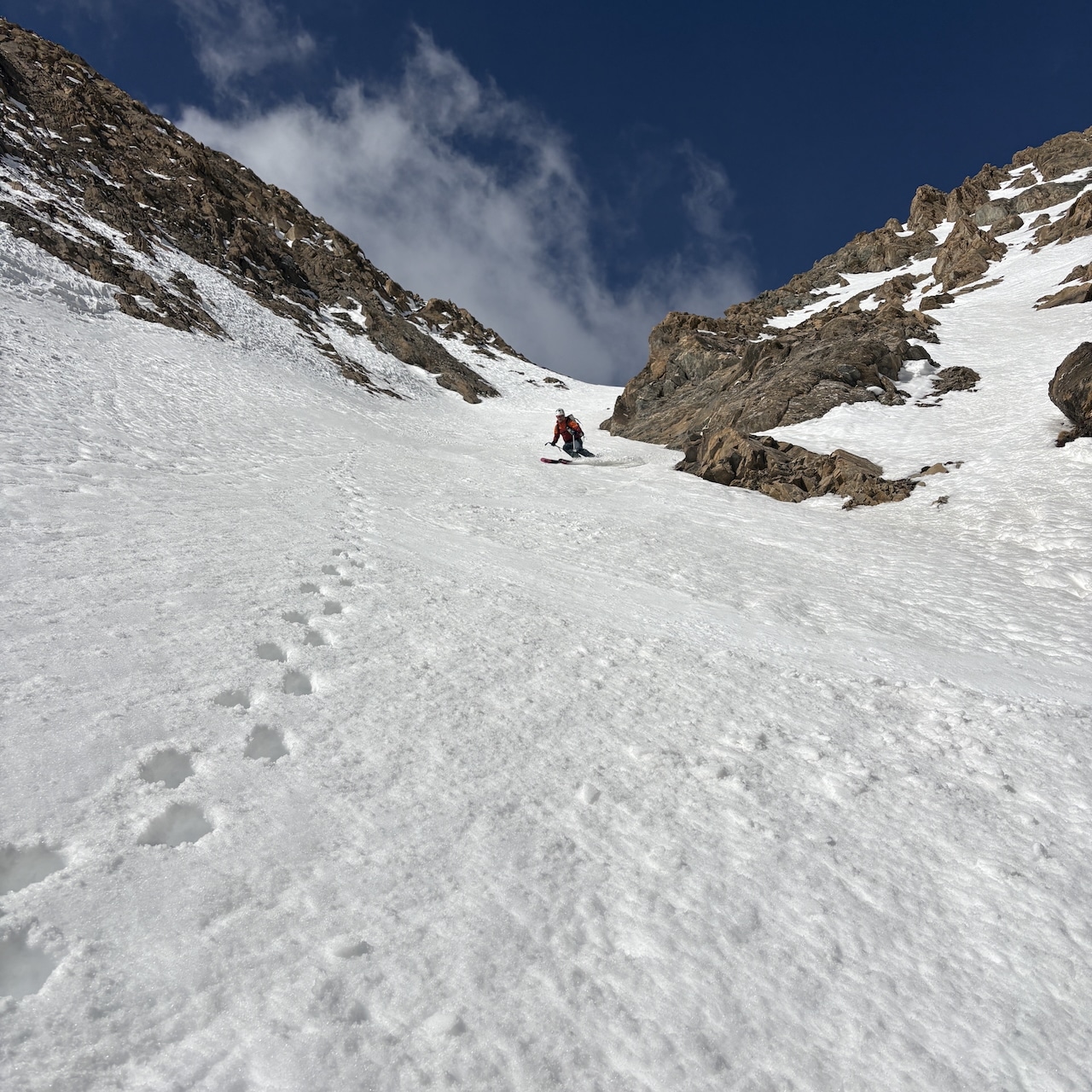
As I mentioned in the first look at these skis, they are unique. I have a fatal attraction to such baubles, always reaching for the weird, imported alternative to the mainstream product. 10% better perhaps, but not worth the fuss. I think these are worth the fuss, and I didn’t even have to import them.
Historically, I have been a Ski Trab devotee, having taken a pair of 178cm Misticos (90mm underfoot, 1150g, 23m radius), up and down almost every steep pitch I’ve skied. While I have grown quite comfortable on these sorts of skis in “technical terrain,” my partners will attest to how many times I’ve gone over the handlebars in the runout. These sorts of skis, with their minimal rocker and more minimal weight, and aggressive shovels, have serious speed limits. And perhaps I should be skiing slightly longer skis, as I’m 5’11” and ¾ and about 200 pounds. But that’s the longest size Mistico Trab makes. And the Trabs lack stability, in my opinion, particularly with any kind of speed, and tend to get quite batted around when the going gets rough, or snow starts moving around you.
I wanted to try a steep ski that could ski, and trade a little ultralight for a little more ultra-confidence. Majesty bills the Superpatrols as a “ultralight carbon technical ski for rescuers and mountain guides.” This ski has an aggressively rearward mount point (Majesty calls it the Cut Off Tail), leaving more of the ski at an equivalent length in front of you. They argue this makes the ski more maneuverable and, assuming you can stay on the front of the skis, you get more ski/gram since you shouldn’t be pressin’ those tails anyway. Rough measurements of skis I have on hand, from tip to toe piece: Ski Trab Mistico 178cm (84.5cm), Fairweather Cathedral 184cm (85.5cm), Majesty Superpatrol 185cm (89cm!). The Superpatrols also have quite flat tails and a heap of camber. The shovel is to me surprisingly rearward, and the rocker generous for my conceptions of what a “steep ski” is supposed to be.
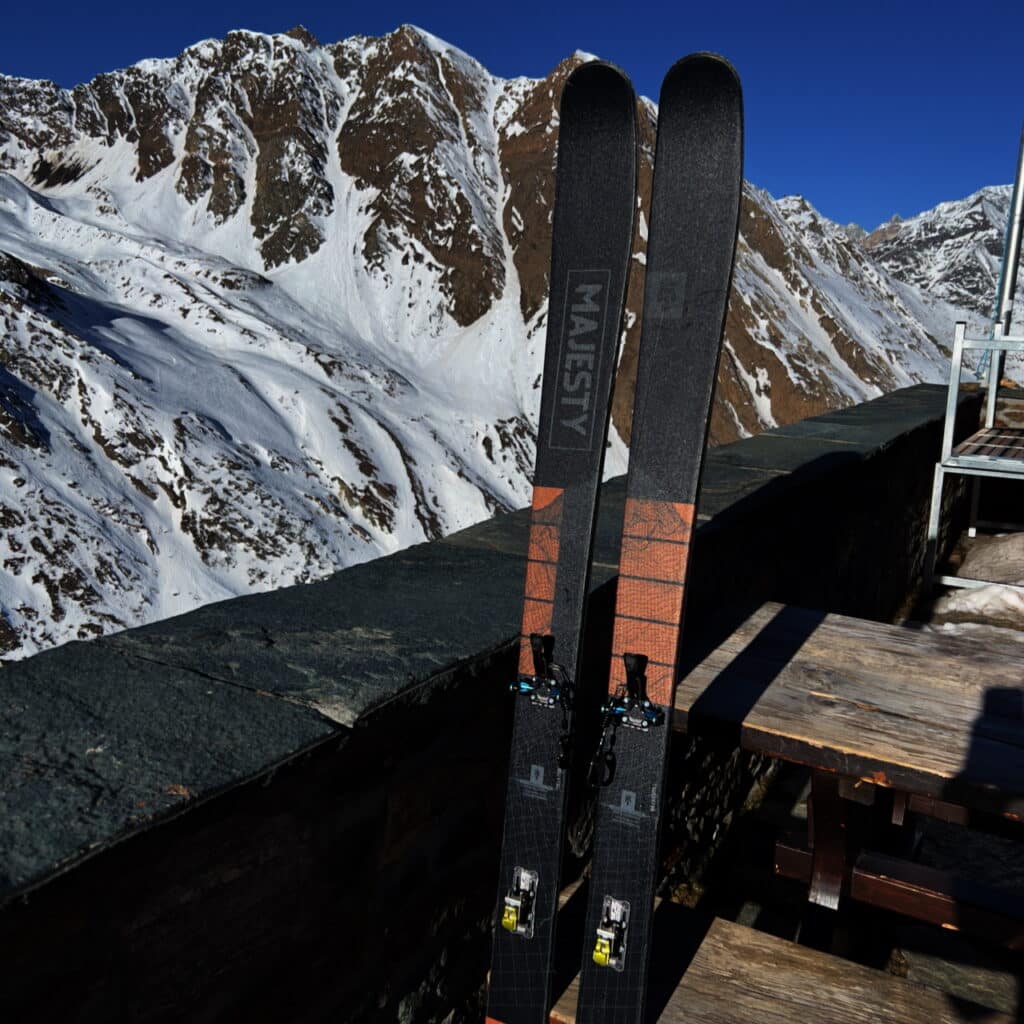
I won’t say these are easy skis. They’ve been my primary ski this winter, so I’ve started to get a handle on them. (But they make my Ski Trab Misticos, a ski a friend broke up with because it was too demanding, seem like golden retrievers.) Although I’ve kept them mounted at the recommended point—why defeat the ski’s design ethos?—I have tinkered quite a bit with forward lean and boot fit to find the sweet spot with these guys. And, in the ski’s defense, most of the snow I’ve skied this season has been bad, but what good snow I’ve slid on with these has been delightful. I would say a Backland XTD or equivalent is about the lightest boot I would want for this ski in a 185cm at 6’0”. Especially with a poor liner fit, I really felt the long front end of the ski wander in rough snow.
What’s tricky with these skis is that they have a very fine balance point. In my experience, they cannot be skied from the backseat based on the camber and the “short tails,” but, given how much ski is in front of you, over-flexing the shovels, especially one versus the other, leads to a lot of chaos. Especially when you throw some speed in the mix. This fine balance point is exacerbated for me by the interesting weight class the ski sits in. It is seductively way more robust than my other touring skis and long (so long), but not burly enough to ski like a slackcountry ski. I found myself often under or overskiing it based on my previous 1100g and titanal ski experiences, respectively. Maybe this wouldn’t occur to you if you, like most, hang out more in the 1300-1500g ski range regularly. But for such (to me) a dimensionally big ski, it has a somewhat low speed limit. In short, finding “autopilot” on these skis has taken me most of the winter and a fair number of crashes.
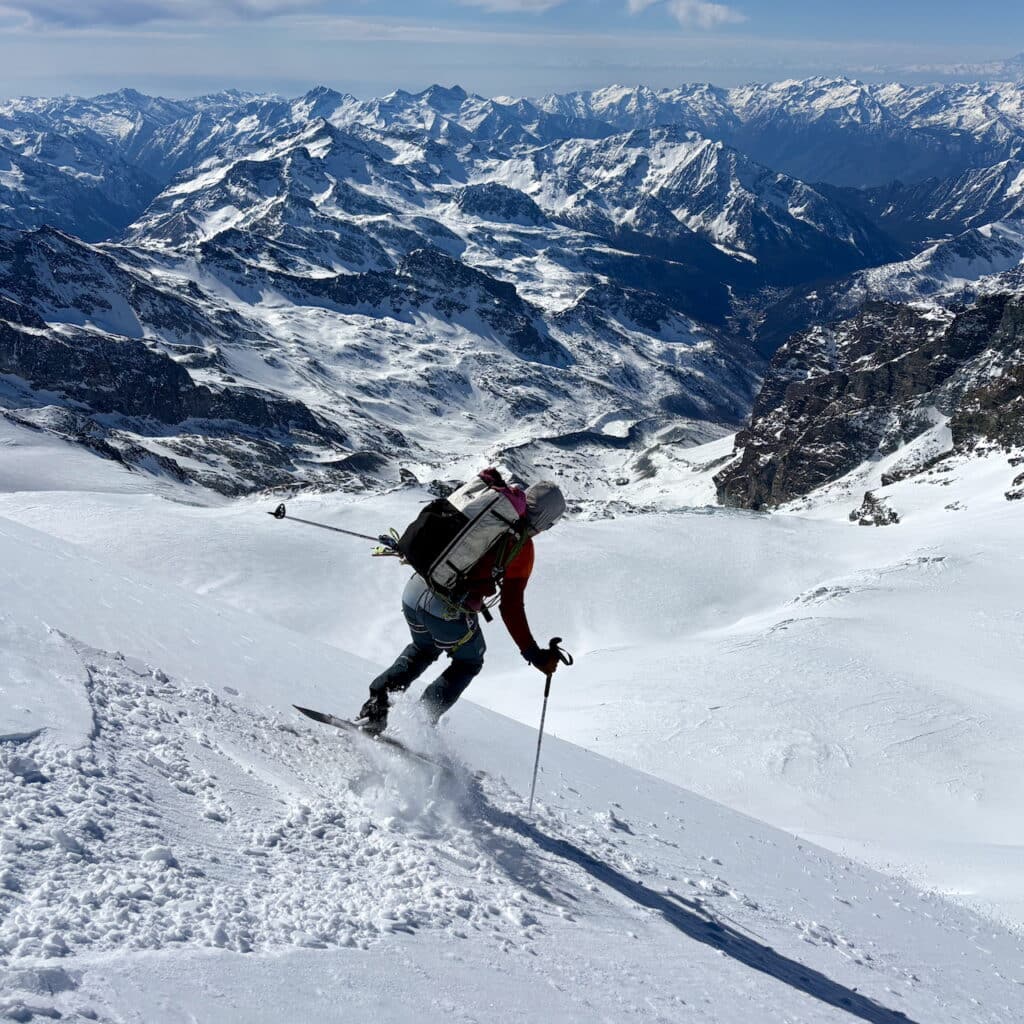
Don’t stop reading!!
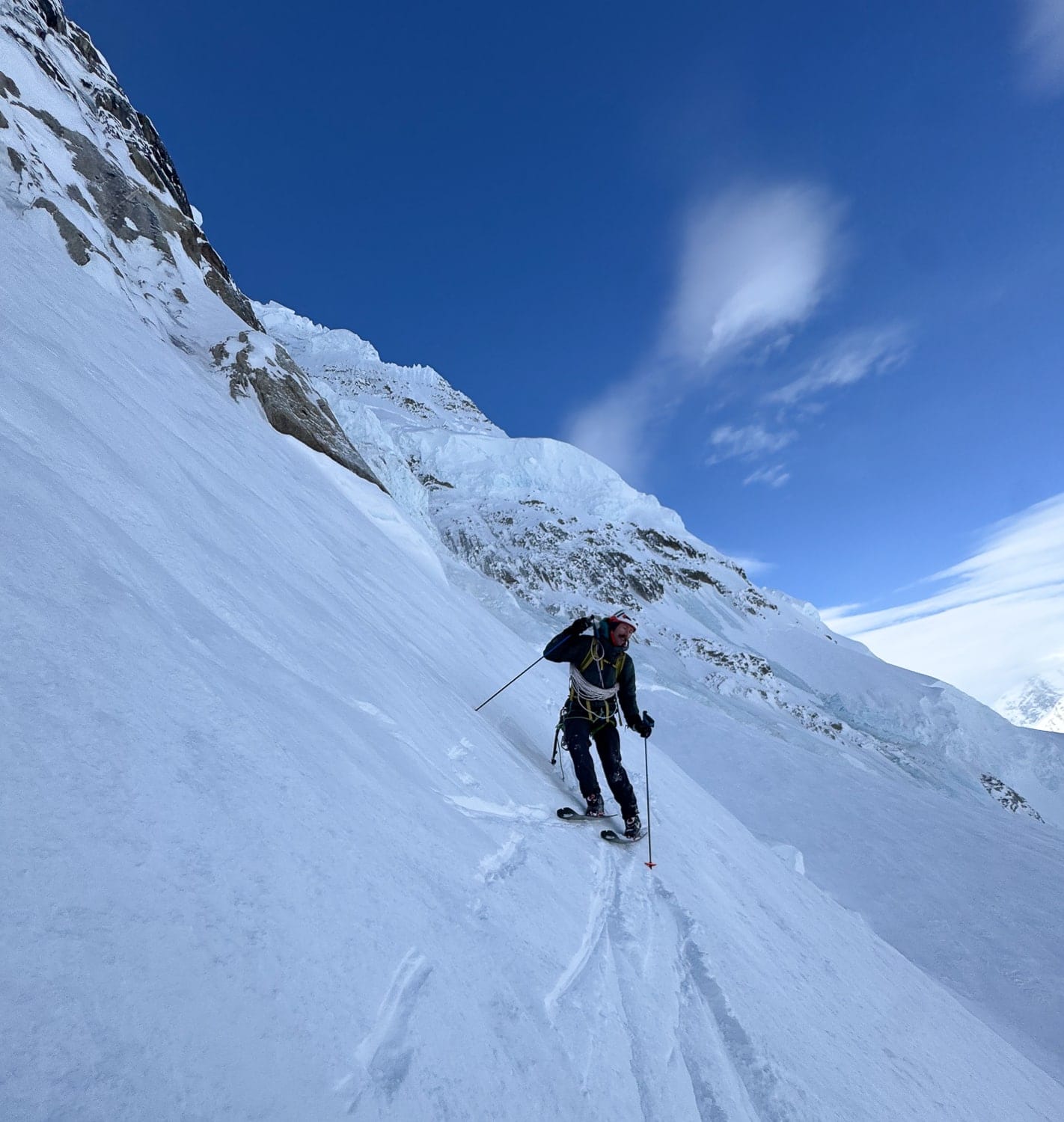
The same traits that make the Superpatrol a tough ski to learn are exactly what make it an absolutely amazing steep ski. Almost without fail, each crash was in the low-angle, after the serious stuff. From the very first steep turn, however, I have been locked in.
This ski is an interesting mix of traits for a “technical” ski. I have always imagined a steep ski to be ultralight, ~25m radius, all-camber, short, and 90mm at the widest. This ski is longer, wider, heavier, turnier, and more rockered than I thought a steep ski should be. But it’s far from an unwieldy master of none, that can hop turn. It is a hop-turn machine.
Hop turning can be more nuanced than it seems. Most folks pivot from the heel and get the tips waaaaaay off the snow. I’ve been trying to master my hop turns for years, and I think I’m making progress. So it goes that knowledge is power. Vivien Bruchez has explained it well, and I try to imitate his style: tips stay on the snow. If you hop turn with tips on the snow (or want to), this is the ski for you.
On my smaller steep skis (in my old life), I would worry about getting the right balance on the tips. Too much on the tips and they would auger into the snow, and I would go over the handlebars: bad. Too little and the tails would hang up: bad. The length and comparatively generous shovel rocker of this ski make going over the handlebars feel impossible. Every hop turn feels like a delicious nose butter, not that I’ve ever done one. But basically eliminating the over-the-bars fear has been an amazing sensation. Combine that with robust camber and a somewhat stiffer build than the twigs I’m used to, and each landing feels like it’s on Velcro: super planted. I can regularly execute 1m turns, even in challenging snow. And the enlargement of the front end through the Cut Off Tail concept also means I can hit the gas harder in the steeps when not hopping, especially where the snow is somewhat 3-D and not fly over the bars.
It’s one drawback as a specialist steep ski is its width. I know Majesty makes narrower skis, but I do find the 96mm waist to feel a little wide on the absolute firmest (and steepest) surfaces. But even among steep skiing, I found this to be a very narrow subset of conditions. The kind where if you want to ski those pitches on those days, you probably already own Dynastar M-Vertical 82s but want a ski you can ski with your friends.
Ultimately, this is a deceptive ski. It looks, if you only glance, like an ideal quiver-of-one backcountry ski. Middling weight, middling width, some rocker, some camber. But it’s remarkably specialized. Sure, it could be your one and only. It’s been mine this winter (and it’s been really fun), but I won’t say it’s the perfect all-rounder powder touring ski. Its favorite turn outside of a couloir is a farmer’s turn: round, regular, medium radius. Lean back into a hippy dad turn, however, and you are gonna be zigging when you should have zagged. In a couloir, it’s all action. Extremely lively and confidence-inspiring, but not one to “let loose,” bachelorette party style. It’s a directional ski with a lot of grip that loves to wiggle and will absolutely create a new sensation in your hop turns if you let it. And on the aprons, it’ll help you ski balanced and two-footed. They’re kind of a reverse mullet: long in the front, short in the back. But the front is more like hanging out with your friend who’s really steady on coke and full of unblinking focus than a Florida spring break party. I like that.
Specs (provided by Majesty, weight and rocker verified for 185cm)
Available lengths (cm): 161, 169, 177, 185
Weight (grams): 1310 (161cm), 1350 (169cm), 1450 (177cm), and 1560 (185cm)
Verified weight at 185cm: 1527g and 1465g individually
Dimensions (mm): 126-94-108 (161), 129-95-111 (169), 130-95-112 (177) and 132-96-114 (185)
Turn radius (m): 16 (161), 17.5 (169), 19 (177), 20.5 (185)
Shape: Flat tail, lots of camber, and modest tip rocker
Construction: Semi-cap sidewalls, bi-axial carbon fiber layup, with tip-to-tail paulownia with poplar inserts.
Price: $1095.00
Leave a Reply
You must be logged in to post a comment.